Curious about upgrading?

Wondering where to start?

Complex questions that need answers?
Is there a better structure for you?










"They managed to navigate my complex expat income and even got my Google RSU income approved as well."
"I highly recommend Alcove to anyone looking for a mortgage broker who is responsive, trustworthy, and truly cares about their clients. Thanks again to the whole team for making the process such a positive experience!"
"As founders, we're constantly jumping between things so having a partner that handled the details & made the process super clear made the buying process breezy for us. Very happy with the experience!"

“It almost felt like it was his responsibility to make it clear to me, not my responsibility to understand it.”
“I've been pretty much fully leveraged the whole time. So the sounding board on that, in terms of what was achievable, what wasn't — I think trust is just built along that.”















"Alcove has been a great partner. They look after my audience properly, keep things simple, and deliver real value. I’ve got full confidence referring clients knowing they’ll get honest, straightforward advice."

"Property is one of the biggest financial decisions people make. Alcove stood out because they take a strategic approach to lending - helping clients structure property and debt decisions in a way that genuinely supports their broader financial plans."


Adapted from audio. This article is a written adaptation of the original podcast episode. Sources and dates are shown with each figure.

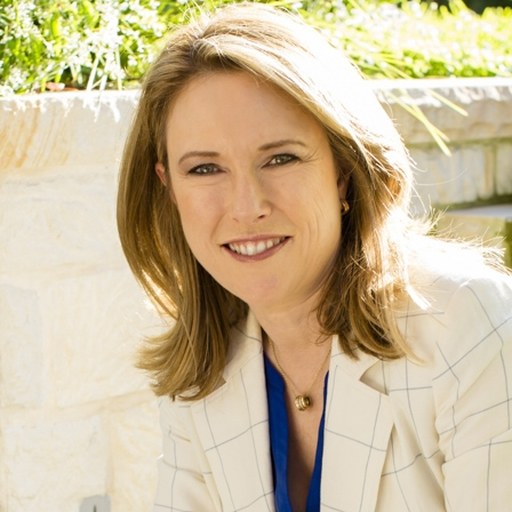
Co-host of The Elephant in the Room. Real estate agent, buyer's agent and buyer's agent mentor, co-host of Foxtel's Location, Location, Location Australia, author of Auction Ready and co-host of Your First Home Buyer Guide.

James Wrigley on Owning the Home and Filling the Super Gap
Financial adviser James Wrigley talks through the two things he wants true by retirement, and why the calculator and the client's nerves often disagree. Along the way: catch-up super caps, the proposed tax on balances above $3 million, and the retirement plan built on rent.
In this episode, we speak with James Wrigley, financial advisor and principal at First Financial.
We're going to explore how clients' attitudes to property evolve as they shift from building wealth to preserving it, while flexible financial advice matters more than ever in today's market, and how the interplay between superannuation, property and lifestyle goals is shaping long-term planning decisions.
Plus, we're going to gain a greater understanding of the federal government's proposed superannuation reform. James will also share insights into what clients really value in an advisor and it's not always what you would expect. Welcome to the elephant in the room.
This is the podcast where we love to talk about the big things in property that never usually get talked about. I'm Veronica Morgan, real estate agent, buyer's agent and buyer's agent mentor, co-host of Foxtel's Location, Location, Location Australia, author of Auction Ready and co-host of Your First Home Buyer Guide.
Hi, I'm Chris Bates, mortgage broker, currently ranked number three in the MPA Top 100 Mortgage Broker Awards. Before we get started, everything we talk about today is not personal advice, and we recommend you engage the services of a licensed and experienced professional.
Our guest today is James Wrigley, Principal at First Financial. James has spent more than a decade helping clients build and protect wealth, working closely with two key client groups, mid-life wealth accumulators and those approaching or entering retirement.
His work gives him a front row seat to the financial hopes, fears and behaviours of Australians navigating major life transitions. So we're pretty excited about this conversation today, James. Thank you so much for joining us. We're looking forward to hearing your insights.
Thank you for having me here. That's an impressive intro. Thank you for that.
Well, you're an impressive guy, James. We've known each other for a long time. If you don't know, he's big on TikTok and Insta, one of the most followed in the country. And yeah, that's for a reason. And I think what we want to do is explore that today.
I think, you know, I love these chats and probably more on the behavioral and the mindset of what you undersee with your clients. And I mean, those two key sort of points in their life? People accumulating wealth and then people retiring.
What's some of the major mindset shifts that you think they go on as they're shifting through those stages?
The earlier one, the younger one, that accumulation one, we're often having a lot of conversations with clients about you can actually get there. They've gotten to a point in their career where they're earning a decent income. They're starting to build some assets, but
The gap between where they are and where they know they need to get to for retirement, it just seems miles away.
You plug some numbers just into a basic compound growth calculator or something like that and say, well, if you just keep working and contributing to your super and pay down your mortgage and buy your investment property or whatever you're doing,
The magic of time kind of takes care of the rest, so long as you start that early enough. If you're getting serious about those kind of things in your mid to late 50s, it might be a little bit too late.
But if you're starting to think about it seriously in your 40s, for example... You've got a bit of time.
And so it's amazing to see that light bulb moment with that younger, as opposed to the retiree type client, that younger type of person where there's a bit of a light bulb moment where they go, I've got $300,000 in my super fund, but how the hell is that supposed to get to $2 million to fund my retirement?
It just happens, provided you can work and contribute for long enough. You're going to get there. So that's a big one for that younger demographic, but it's potentially a bit easier than –
what they thought it may have been um coming in to talk to us so they've got a bit of anxiety sort of around there where they're at i guess is that sort of they're coming and thinking they need a lot more than where they're at today and they feel like they're behind the eight ball like is it is it that's it they they think you know there's a bit of like you know there's a bit of like how am i going compared to the other person because you know money and finances and things are still one of these these taboo topics obviously podcasts like this you know opens the
to lead to a lot of those conversations. They're comparing themselves to others, which we try to discourage them to do as early on in the process as we can. Don't worry about the person next door. Let's just worry about you and what it is that you want to do.
Then, as I said, whether it's in that first meeting or at least part of the advice process, we're definitely at some point plugging some numbers into a calculator and saying, if you do this and you do this and you do the other thing, Now look where you're going to get to.
But it's a huge gap. And even when I look at my own personal finances, like I've got a big mortgage, I've got a bit of money in super, like how the hell does this come together for me to retire when I'm 60-something years old?
But it does if you're purposeful with what you're doing.
Well, I think that's important though, isn't it? I mean, I'm closer to retirement than both of you guys. Not that I can ever imagine retiring, but anyway, that's just because I like to work.
But, you know, I'm now looking back at the growth that I've experienced in some of my investments and imagining, yeah, when I first started, I could not imagine it. And the power of exponential growth, which is compounding, of course.
And I know I did an episode with Megan, who's my co-host on Your First Homebuyer Guide, a couple of months back, specifically on compounding.
And even though I know this, I know it deeply because I've been in this business for so long, doing that episode just brought it home so hard to me how important, and particularly with property, how important it is to hold that, you know, particularly with an investment property, not so much your own home, but to hold it more than 10 years.
That second decade, what that does compared to the first and then the third decade and if you can get into a fourth decade, oh, my God, you know. It's just absolutely mind-blowing.
Chris spoke about TikTok and so forth. I did a little graphic. I just drew it by hand. The kind of compound growth thing and people think, well, if I delay doing this thing for another couple of years, it doesn't really matter. What growth have I missed out on?
It's not the growth in those couple of years you've missed out on. It's the growth at the end, those last couple of years, and that's when – when it's really going through the roof.
So whether it's your investment property, whether it's your super, whether it's your share portfolio, whatever it is that you're doing, it's not the two years at the start that you missed out on that you've delayed. It's the two years at the end. And that's where the real returns start to make a difference.
yeah it's huge how does sort of your um you know properties what is always like you said taboo topics right um you know ex-advisor and back in the day a lot of people would just avoid it right you know like you've got a property okay cool let's just write that down and you know because i'm really looking for how much money i can put into your super fund how much money i can invest in the share portfolio how much can you afford for insurance etc so there was other priorities in the
you know, the advisor's mind, I guess. And often the property conversation was sort of often avoided. How do you think about that when you sort of get clients, no matter what stage of life, how do you approach the property conversation and make sure you cover it?
So it's often – so from a – I guess the first thing is the issue with financial advice is it's like around a licensing thing about what I can and can't say and I can't recommend property and so forth. It's not a financial product. So we have that conversation with clients up front.
But then we can say, look, we can help you through a conversation around – They're introducing you to a mortgage broker and a buyer's agent and so forth to help you get a good property.
And so we spend a lot of time for those that are more property orientated to making sure they've got good assets rather than rubbish ones that historically haven't done terribly well. And then we're looking at it from a lens of, okay, can you afford this? What are your buffers?
Have you got in place? You know, what if it doesn't work and all the rest of it? There are some clients where they come in and they say, look, you know, I want to buy another property, another property, another property, another property. And I say, look, we're not the business for you.
That's great that you want to do this accumulating of your asset stuff. It's not first financial. It's not the business to be able to support you to do that from, you know, if you're 100% into property and you're,
Doing trusts and you're trying to maximize your borrowing capacity and all the rest of it, you need to be talking to a really strategic mortgage broker. There's certain buyers agents out there that are really big on that strategy perspective.
Do you think they're missing a trick though, those people?
You know, I get them coming to me and they're so property focused and it's like they're just, they're ignoring their super, they're ignoring other asset classes, they're buying, a lot of them are buying really shit properties because they're trying to maximize their borrowing capacity to get to another one instead of actually thinking that, and they're wanting yield and they're not understanding that it's not really the best asset class for income.
And, you know, I mean, I'm answering my own question there. I mean, what tricks are they missing? Because I can't advise them in those other spaces, but I'm always telling them to go and talk to a financial planner before they make this decision on the property-only strategy.
Yeah. So where it works best is where we're kind of tag-teaming backwards and forwards with the property person, whoever they may be. There's a group down the road from – from where our office is that we've referred clients to over the years.
And so, you know, there'll often be an introduction one way and then they'll come back and say, you know, this thing's going on. They know when they get to a limit of what they can and can't do. They also know there's other opportunities out there and so they'll kind of come back.
But some people don't want to hear anything other than property. And so, you know, they're the ones that we have to say, you know, we just can't help you. It's great, you've got these good ideas and all the rest of it, but we just can't help you.
And where you guys have spoken about it and a lot of others have over the years is we ideally want them to have on your own home. That's great.
And look, as little number of good quality investment properties as you can rather than this strategy of let's go and buy 15 crap ones all over the place and cross our fingers and hope for the best.
If it means you buy one decent one in Melbourne or Sydney or Brisbane or some other where there's a big population, then so be it. And then, okay, you're done with the property. Now what are we doing with the other strategies? You've got the property.
Let that do its thing for the next 10 or 15 years. You need to pay down the debt somehow, but what about your super? What about the share market? What about these other things that you're doing? Because it's too much of a good thing. You don't want to have too much of it.
It sounds very aligned to what we obviously do. I think we used to put you to sleep anyway when you were putting your kids down. You used to listen to the elephants. So you're well-trained. But the home is becoming such a big asset, right?
So like, you know, when they first get that home, they get their sort of forever home, let's call it, and they've got a big mortgage attached to it. And that limits their other options for other investing. Or you get a client that maybe has... wants to upgrade in their, say, 40s.
Or you get someone in their 50s who is starting to think about retirement, but really wants to stay living in this big house in retirement. How do you sort of approach their home in terms of their thinking and helping make a good decision there? Because it's obviously often their biggest asset.
Yeah. So we talk about two, as you're getting towards retirement, we talk about two key things that we want to have happen. You need to own your own home outright, wherever that may be, whatever it's worth, but that's the number one priority.
And so whether you're doing the whole rent vesting thing or what, however you get to owning your own home by the time you're retired, if you can do so, that should be number one. The reason why we have that number one is that
The whole Centrelink healthcare card age pension system, all the rest of that, like the support that the government can give you if you don't have a whole lot of other assets. It's far better for you if you own your own home than you don't.
The uplift in assets that you can have for an age pension, I think it's something like $250,000, the difference between a homeowner and not. So all the cards are stacked towards owning your own home. Now, there's a lot of different paths to get there, but we want to be there.
And so we talk about you want to own your own home and then enough money and other assets to help support that retirement. Yeah. And so there's a conversation that we're having to say, well, what does your retirement look like? What do you actually want to be doing?
Where do you want to live? Do you want to go on holiday? Are you going to be supporting your kids? What does that mean from a financial perspective? And then we have to have some serious conversations with them to say, well, can you afford to continue to live in this particular house?
You're in and around Sydney. Sydney's a bit of a Certainly a very different market to down here in Melbourne. It's really common for someone in Melbourne to be able to pay off their one or one and a half million dollar house in the suburbs of Melbourne and have a pretty decent super balance.
But we do a lot of work with people in Sydney that are that corporate type couple, earning household incomes, nudging a million, somewhere between 500,000 and a million, and they want to do the upgrade and they're taking on millions and millions of dollars worth of debt.
I have to say to them, it's all well and good. You might be able to buy this house and pay it off, but what else have you got?
And so you're going to retire with a $7, $8, $9, $10 million house only to then have to downsize because you've got nothing in super and you're used to living this particular lifestyle.
So I think the Sydney market, certainly with the clients that we work with, it's a bit of an outlier in terms of the size of the mortgage, the value of the houses.
And the number of people that we talk to that have to downsize to be able to get as much money, to get the money that they really want to live the retirement that they need, doesn't happen so much in Queensland, doesn't happen so much in Victoria, South Australia and WA.
It's not even a New South Wales thing, it's a Sydney thing because the house prices are just so expensive.
Such an interesting nuance there. I never really thought about it like that, that that's, you know, one big difference between Sydney and the rest of the country. And you can see property prices. I mean, Sydney is absolutely decoupled with everybody else, you know, like we're just a different league.
And in fact, I quite often talk to clients about, if they don't have a foothold in the Sydney market and they can afford one now, that window may close because the reason that the market will continue is because of all of us that do have equity in this market.
But, you know, certainly, I mean, how would you, I guess, what's something that you really wish more Australians understood about the relationship between superannuation and property? Because if you had two major assets, if you just had your own home and you had super, how do you think they should be looking at that?
Yeah. So I think people leave super too late. They concentrate on, I'm going to buy this house, I'm going to pay off the house. And then when my house is done, my kids are a little bit older, then I'll worry about what I'm going to do next.
But they forego in that, one, they forego this time in the market, compounding returns type of thing that we're talking about before. But they also forego a truckload of tax concessions as well. If you put
We get this question a lot, and it's not advice, but we get this question a lot where people say, should I put more into my mortgage or should I put more into my super? You put the numbers into a calculator.
The calculator every day of the week says you should put more into your super and then worry about your mortgage later on.
Wow.
Because you're putting... The dollar that you're putting into superannuation, you're doing that pre-tax. And so there's only a small amount of tax that you have to pay on the contribution that you make to superannuation.
And then chances are you're balanced or you're growth, you know, super fund, whatever it is that you may be in at a particular point in time, historical return on that is far higher than the interest that you're paying on the mortgage.
And so provided you've got, as you said before, provided you've got your foothold in the market, you've actually got the house and it's going to participate in the growth in the market.
Then the numbers in a spreadsheet would say the next best thing for you to do is forget about trying to pay off your mortgage really quickly. Try and pump your super as much as you can.
Because at least under current rules, and it depends how old you are, the rules may very well change.
Once you get to 60 and you retire, if you really had to, you can pull some money out of your super funds to pay off the last of your mortgage if you don't do a downsize or something like that. Some people that we talk to, they get that.
But it also then comes down to an emotional thing. How do I feel about continuing to have to pay this mortgage for another 25 years until I'm 60 years old versus not?
The numbers might say one thing, but how you feel about those numbers and continue to have that mortgage hanging around matters as well. And so that swings what people might do with their money.
And it's fascinating. People's... attitudes towards who, I mean, I sold our advice business back in 2020. God, it feels not that long, but it was five years ago and things are always shifting. Right.
I think, um, and generations of people getting older and, you know, that's just natural, but people are sort of, are they taking a bit more control of their super? They sort of, they reframing it to is actually my money because the balances are compounding, right?
Like you were say 35 and now you're, you know, 42 and your balance was, you know, a hundred grand. Now it's 300 grand. Like, Are people reframing it a little bit and owning it a little bit more and have consolidated their supers and are understanding the concessions and contributions a lot more?
Is it still a big process for you educating clients?
Look, they are, but I may be a bit of an outlier in my response, I guess. So I do a lot of videos online, Instagram, TikTok, all of these kind of places. And so by and large, the new clients that I'm talking to at the moment have come through from some online channel.
They've been watching video after video after video after video. And so it's at a point now where they're coming in and they're saying, yeah, I've done my five-year catch-up. I've used my concessional cap. There's a presentation I do on the whiteboard where I talk about super.
And the number of times I've grabbed the whiteboard mark and they're like, I know what you're going to do now because they've seen these videos. So I think some of the people that are coming in to see me are probably a little bit more educated than otherwise would have been.
But certainly there is. There is this bit more of an ownership that's being taken. I've seen around that 40-year-old mark when the balance is starting to – if someone's been working in a corporate career for a while, they're probably $300,000, $400,000, $500,000, $600,000 depending on how aggressive they are.
It's starting to talk some pretty serious dollars there. Whereas it's the people that only have the $100,000 to $200,000 when they're in their 40s or 50s. They're taking no ownership of it because they say, oh, it's so insignificant. It's not going to make any difference.
I've kind of lost the window to make the most of my super almost is kind of the mentality that they're coming in with.
Yeah. One of the things I say was, um, you know, if you say, have you got a share portfolio? They say no. And I say, well, have you got super? And they're like, yeah. And I'm like, well, that's your share portfolio. Right. And then they're like, oh, I've got it.
And then it almost flipped their thinking a little bit to, you know, actually I do need to take care of it. That's my share portfolio. I didn't, you know, it's my diversification. And I mean, the five-year catch up thing, um, I mean, can you sort of explain that?
Because I do think it's something that's sort of been, the news cycle is pretty quick, right? And, you know, I guess it was all over the news a few years ago, but it sort of gets forgotten about and people don't really know, understand that if you don't use it, you lose it.
And it's an opportunity you sort of really want to stay on top of.
It's a big opportunity. So it's a set of rules that allow you to contribute up to the unused caps from previous financial years. So it's the last five financial years.
If you haven't used up all of your concessional cap, so last year it was $27,500, for example, if you haven't contributed your full $27,500 for last financial year, the unused amount carries forward and it's a rolling five-year period. And so there's an opportunity there for people.
In order to be able to access this limit, your balance, your super balance has to be less than $500,000 at the end of the previous financial year. So for the 40-something-year-old and sometimes the 50-something-year-olds that we're doing advice for, they might be like right on the edge there.
And depending on how much you've contributed to superannuation or not, like we needed some advice for someone earlier this year that he hasn't been in a PAYG job for a number of years and hasn't contributed to super. He hadn't contributed to super for the last five years.
And so he had like $120,000 that he could put into superannuation coincided with the sale of an investment property that had a really big capital gain on. And so he's just stuck $120,000 into super that he'll get a big tax deduction for. So it saved him.
Now, there's a bit of a tax saving there, but it's also just the boosting your super and getting the compounding going on. So it's the last five years of unused caps that you haven't used. For anyone that's looking at it, myGov's the best place to go.
If you go to your myGov account and navigate through to the ATO section, they'll tell you whether you've got it or you don't and how much you have available that you can use up.
Yeah, if you don't use it, it's sort of, you know, I guess what I sort of found is that, you know, when clients came to me in their 50s, and that's why I stopped working with them, to be honest, and
is that they want a magic bullet, right? They'd want this sort of magic. They'd come in. They know that they probably have left it too late. They're full of anxiety. They're full of excuses, I guess. And then they'd sit down with you and say, right, can you fix it?
Can I retire in five years? And it's like, well, you probably should have come to me 20 years ago. And I think this is one of the things where I think a lot of the 30s and 40-year-olds are like,
are going to regret it one day when they go, oh, I could have used this five-year catch-up. I could have put in the concessional cut because now I'm in my 50s and I want to pick up the pace.
I can only put in $30,000 a year and it's just getting tighter and tighter to put more money into super. Is that sort of how you sort of frame it to a lot of those younger ones? Is it that they just don't see that opportunity as clearly as they should? Yeah.
We do. So if they've got money sitting in their offset account or something like that, you're getting close to losing this. And if you're a high income earner earning in a top marginal tax rate,
The dollar that you put into your super fund, near enough to 50 cents of that's going to come back in a tax refund. So we're sitting there saying, okay, well, you've got $25,000 worth of catch-up available to you, for example.
The downside of putting this money into super is you can't touch it until you're 60 years old. You're going to put $25,000 in. When you lodge your tax return, near enough to half of that's going to come back. So you're going to get $12,000 or $13,000 back in a tax refund anyway.
So your offset account is going to drop by $12,000. You put a whole lot of money in your super fund. For the higher income earner, the contribution that goes into the super fund is taxed at 30%. So it's a difference between marginal tax rate and the 30%.
But hey, there's still a win there for them.
One of the complaints, I guess, or concerns around super is the changing rules.
And, you know, they have changed sort of over the years and a lot of people think, oh, you know, I don't want to lock all that money away and then find that, you know, the rug's going to be taken out from me.
And obviously the federal government is proposing quite a significant change but only to a small percentage of superannuants, if you want to call it that. What are your thoughts on what's proposed?
I mean, if you want to sort of give a quick snapshot of it, I mean, we can, but I'm sure you'd be better equipped to do that than us. What are your thoughts on that?
And I guess what could you see, what sort of other changes could you anticipate and would you be talking to clients about?
Yeah. So the conversation of the rules changing around superannuation comes up often and there's this extra tax division 296 that they're talking about, which I'll explain in a second. But what we talk to clients about is to say the government needs to encourage people to save for their own retirement.
And the only way that they can encourage people to do that, at least in the current environment we are, is to give them some tax concessions. And so you can be pretty confident that money in superannuation is likely to continue to be the lowest tax environment that you have.
Because if they started to tax that too heavily for everyone, not necessarily just those with the big balances, if they started to tax it too heavily for everyone, people would spend the money and then they would have more people on the age pension and we can't afford to have more people on the age pension.
So they need to continue to have this system in place. But the government's They're trying to find some money to deal with our aging population and reducing that kind of tax base that we're going to have as an aging population.
So there's this extra tax that's proposed at this stage, probably likely to happen, but we'll wait and see when Parliament sits in late July. where they're proposing to introduce an additional tax on super balances over $3 million.
Now, what's being missed in all of this is it's not just as simple as, okay, I had $3.5 million and now I've got $3.6 million, so I have to pay 15% tax on that $100,000 that my balance has gone up. There's a calculation that goes into it where
the earnings on your balance, some of that is proportioned to your $3 million, if you were there, and some of it is proportioned to the balance that's above.
We had a new client that made some inquiries in the last couple of weeks, and I worked through some numbers with him just recently, where his self-managed super fund is $3 million, near enough to $3 million on the dot.
And he's hoping, that crossing his fingers, he's got this highly speculative investment in his super fund, but he's hoping it's going to double in the next 12 months.
And so we were going through an exercise to say, well, are you better off having that money in your self-managed super fund and it doubling and then you selling and paying some tax? Or are you better off having that in your own name and it doubling and you paying some tax?
And the conclusion was, even though there's this potential extra tax in the self-managed super fund, he was still better off in the self-managed super fund. the not is old enough to have a pension fund. And so there's some tax concessions for having a pension fund in your super fund.
So I think it's a big problem for a very small number of people. And even they talk about these 80,000 odd people that are impacted by it, even those, the vast majority of them, it's probably not a terribly big deal for anyway.
It's only a very small subset of those $80,000 that have got their super funds tied up in liquid assets, in the properties and commercial properties and big farms and those kind of things, where all of a sudden,
They may have to pay a bit of extra tax on the balance and they may not necessarily have the liquid assets or the cash to cover the tax. I'm on a personal mission to help more people make better property decisions.
You know, most people don't realise that they can cost themselves hundreds of thousands of dollars over the medium to long term when they make property decisions without all of the information that they need.
And what I do is help people with tricky real estate problems, which often masquerade as simple questions like, should I sell my investment property because the interest repayments are hurting or should I buy before I sell or the other way around?
You can connect with me and access all of the tools that I've created to help you make better property decisions at veronicamorgan.com.au. And there you will find resources for first home buyers, details about my buyer's agent mentoring program.
You can connect with my Sydney based property management and buyer's agency teams, Australia wide vendor advocacy, or ask me for introduction to the small group of buyer's agents that I would personally recommend across the country. That's veronicamorgan.com.au.
If you're looking to buy your first home, thinking of upgrading to a new one or purchasing investment property anywhere in Australia, we would love to carefully guide you through this journey and importantly, get the finance right. Reach out via my website, alcove.com.au.
Just on that, though, isn't that person with the speculative investment, and I haven't been watching this stuff that closely, to be honest. I'm just sort of like, I'll deal with this, you know, understand this, where it actually gets legislated.
And I think this is, you know, it's been kicked down the road and there's a news article and the media has been sort of all over this, right? The AFR has been writing so many.
The Fin Review loved it. There was about a week there they were running two articles a day.
Yeah, so there was no, you know... I guess, story behind that, right? There was no interest they were trying to please. But on that speculative investment, that's one of the dangers, right, though, isn't it, from my understanding?
you know, it goes up, let's say you've got a share and it goes up from two mil to four mil, then, you know, even if you don't sell it, you have to pay tax on it's unrealized gains. Right.
And, and, um, and then it drops to three mil the next year and you've already paid the tax. Is that, or is this in this client in particular, he says, look, if it, if it doubles, I'm out. Um, and no matter what I'm selling.
So if there's a big gain, I'm selling anyway, I'm not gonna, this isn't a long-term hole. This is just a, a sort of buy and sell.
That's it. So for this particular example that I was just explaining, yeah, it's a when this thing doubles, I'm out anyway. So it's a case of where is the best place for you to hold it. But you actually make a great point that the worst way that this new tax system
comes into play is that we have in the first 12 months that it comes in and who knows when it actually comes in. It's supposed to be from the 1st of July, but parliament doesn't sit until after the 22nd.
So do they backdate it to the 1st of July or do they postpone it another year? Who knows? But for whenever it does potentially happen, the worst thing as such that can happen is in that first year, markets are good, whether it's property or shares. You have a good year.
You have to pay this tax on the unrealized gains that you're talking about. And then the following year, it comes down.
You'll then trigger a loss, but it's like a kind of a paper loss that you carry forward to offset against future increases. So in year one, you paid some tax. Year two, it's come down, you carry a loss. Then in year three, if it went back up, you can use your loss.
It's actually a better outcome if the reverse is true. So if you're above but then in year one it goes down and so you trigger a loss to carry forward into future years and it'll absorb kind of an increase going forward. Yeah, the worst outcome is year one up, year two down.
So we've talked about your own home. You talked about superannuation. But how do your clients or people that you help anyway typically view investment property as part of a broader strategy? Yeah.
So they'll use it as a means to build their assets through those accumulating years. So there's some tax concessions around it, negative yearing and all the rest of it, that the capital gain isn't taxed too badly with the 50% discount that we have. But then there's the leverage that comes with it.
And so being able to put down a small amount of money, borrow a whole lot of money, buy this bigger asset, and you get the compound from there.
We often have to have – we're often having to have conversations with clients around when they get to kind of the end goal, this retirement type goal, where is the income going to come from for you to live off?
So then people want to have their own home and they want to buy a couple of investment properties and they say, oh, we'll use the rent from the investment property to help fund our retirement. And then we have to say to them, well, look, what are you actually earning in rent now?
And then you've got land tax and you've got – Council rates and you've got agent's fees and the hot water service breaks down. What have you actually got left over to spend? And then they kind of realize, oh, actually, it's not going to be enough.
Sure, I might have a couple million dollars worth of property, investment properties. That's great. On paper, it sounds like I'm doing really well. But from a cash perspective, there's really not much there to live off. And so we're often then looking at the selling down of investment properties.
Ultimately, it comes to how much do you have in other assets to be able to support your living needs. If the property is not contributing a huge amount to the cash flow, the heavy lifting has to come from somewhere else. Some people have those assets, some don't.
And so some can hold their properties through retirement and others have to sell.
This is something I talk to a lot of people about.
And particularly when they come to me in their 50s, like I was talking to somebody the other day and they don't own their own home. And, you know, they're talking about, I don't know, where they've got into some money now.
Maybe they sold a business or something, but I don't know where the money came from. But it was a very general conversation. But I want to build a property portfolio. And I'm like,
It's too late.
You're in your 50s. Get a really nice home for yourself that you can afford and hopefully pay it down as soon as possible. But you need to look elsewhere for income-producing assets. And go and talk to a financial planner. I mean, they don't want to.
I'm like, well, you're going to have to because you can do whatever you can to buy a property now, but it won't do what you want it to do, you know.
And it's a really common belief that I'll just get a property and then they don't even think, some of these people don't even think about how they're going to pay it down before it's supposedly going to, you know, the rent's going to pay for their retirement.
It's a really common belief I come across a lot. And just recently I've had probably about three instances where I've had similar conversations with people. So, you know, if I was to send them to you, you'd probably say, look, they're not the ideal client because they're squandered more decades before.
But like what sort of, I guess, conversation would you have with someone in that situation?
I'd be having very much the similar conversation to what you're having. So if someone's coming in, you know, we're five years off from wanting to retire, we're going to buy this other investment property and say, well, How the hell are you supposed to pay the debt off?
Even if you magically could pay the debt off somehow, what income is that going to pay back to you? It's not enough for you to live off. You're setting yourself up for you're going to buy this investment property now. You're crossing your fingers, hoping that it goes well for you in five years.
The one thing that's almost guaranteed in this equation is you're going to have to sell that property at the end. You can't go into retirement with the debt. And they say, oh, I'm going to get a rental income. So yeah, the rental income is just all going back to the bank.
There's nothing left for you to spend. So that property has to go unless you win the lotto and you can pay off the debt. Otherwise, that property is going to have to go.
So then you look at it and say, well, is it a really good use of your money to pay stamp duty and all these other kind of costs associated with buying the place in the first place, only to then five years down the track have to get out of it and pay a whole lot of other costs to get back out of it to pay off the debt so that you've got something to live off.
But that type of person, as in my comments earlier, is to own your own home outright. So do all that you can to live in a house that you own outright. And then as much money in other things without debt that you can to support yourself.
So that's often topping up super as much as you possibly can. If there's money left out that you've got enough that you can hit your caps, hit your contribution caps, then it'd be investing money outside of super.
But we're often discouraging them to take on debt, moving away from that because you're just not going to be able to pay it off in five years.
James, you've got the client that's, say, a bit earlier in their journey, right? They're in their 40s. They've got their house. They don't need to do any major renos. They're sort of happy there.
They've got a long runway with the kids and schooling, and every time it's a long way off, and they enjoy working, et cetera. But they've got heaps of equity, and they've got quite a lot of capacity, right? Maybe they could buy an investment property, but they just don't want to.
How do you sort of... get them to take action on, you know, they're already maxing out their super contributions and releasing equity and dollar cost averaging into funds and debt recycling, etc. How do you approach that conversation to explain the benefits in doing so?
Yeah, so we start from
We start from a conversation to say, well, actually, do you have to? Lots of people come in and say, I've got so much equity in my home. Great, you're paying off your house. You don't have to go back to the bank and borrow this equity and do something else with it.
It's not lazy equity. You're just paying off the house. You need to pay it off eventually. And so we want to start the conversation with, if you keep doing these things, you're maxing out your super, you're paying off your mortgage, you're doing these kind of things,
Is that going to get you to where you need to get to? And some people that we go through this exercise with, sure, there might be a few tweaks around some of it, but by and large, they're heading in the right direction.
They just need time to kind of take care of the rest. And then you've got others that let them continue to just do what they're currently doing isn't going to be enough for them. And often that's, well, it's not enough either on two fronts.
One, they're not going to pay off their mortgage by the time that they're hoping to. Or two, they may pay off the mortgage, but they're not going to have enough in investments to lift the retirement that they want to.
And so then that's when we're starting to have conversations with them about doing something more. Do you need to do something a little bit more aggressive here? Your house is worth a whole lot. You don't have a terribly big mortgage on it. There is some equity that you've got in there.
And then we're talking about, well, what are the things that you – if we were to go down the route of borrowing money for investment purposes – What are you comfortable investing that borrowed money into? Some people will say it's only property. Some people will say it's only shares.
And some people will say it's a combination of both.
And then that then dictates where we head in terms of the advice strategy. So maybe it is this debt recycling that you're referring to, where they're putting all of their surplus cash into paying down the mortgage, but they've got a loan facility secured against the house.
And on the other side, they're slowly drawing on that to build up some shares. A couple of clients I've done advice with in the last couple of years have, without any involvement from a financial advisor, used that strategy
incredibly well that just about paid off their house retiring with three or four million dollar share portfolios couple million dollars in in their super fund and they don't have the issue that the property investor has because they've got four million dollars in a share portfolio that's that's chugging out heaps of cash to them and so they don't have to go through this exercise of selling down the properties like the property investor does
We don't even want to talk about, you know, buying property in your self-managed super fund because that's – I think we'll probably all agree on that for the moment. But I am curious, you know, because somebody comes to you and people do have blind spots, right?
You know, that they might be pro-share or pro-property. And as an advisor, it's not always –
It's not always in the client's best interest that you just go, okay, well, I'm going to go with what you're comfortable with because it might not be the best thing really, but sometimes they emotionally don't want to do the best thing for them. I mean, you touched on that earlier. Yeah.
So I guess what is a common financial blind spot that you would see, maybe even amongst high-income earners, something that you see quite a lot that you think people just, they're missing a trick?
The super one's a big one. We've done a lot on that. Another big one that a lot of high-income earners come in with is they kind of start this conversation saying, well, we're paying too much tax. We need to do something to reduce our tax and so on.
Let's take a step back from that to begin with. You don't want to be doing something just to reduce your tax. You want to be doing something because it has these other benefits for you. But then, yes, do it in a way where it may help your tax position.
But then we're also having a lot of conversations with... high-income earning PAYG employees where you kind of have to start the conversation by saying there really isn't anything that you can do about it. Like, good on you, you're earning this big income, but it's not a business.
And so there isn't any particularly structuring that you can do around the income that you're earning. You're earning $600,000 a year as a PAYG employee. You can top up your super, do some negative gearing on an investment property or do the debt recycling around a share portfolio.
You might bring in a little bit of borrowed money for some deductions, but there's no silver bullet there that's going to drastically reduce your tax bill. You just need to accept that you're a high-income earning employee. You have to pay a corresponding amount of tax based on on the income that you're earning.
What we then, that kind of deflates them a little bit and say, oh, why am I even talking to you in the first place?
Yeah, yeah, what are you worth?
But then to build them back up again, We start to have a conversation about what you really want to be focusing on is not making the tax situation any worse than it already is.
What I mean by that is then owning assets that are producing an income that you'll have to pay tax on. We don't want to be owning them in your name. Maybe that's in a super fund. Maybe that's in a trust name. Maybe your spouse is earning less.
You can start to be a little bit more creative with where you're owning these assets. rather than the high-income and they're continuing to buy more and more assets in their own name, which just makes the tax situation any worse.
Not much you can do about their income, but the investments you've got a little bit more control over.
Well, it's a privilege, isn't it, to be talented enough and work in an industry that pays you that well. But you've had a lot of success, you know, with your TikTok and Instagram, and Chris is an avid watcher, I do believe. I need to follow.
I'm not on TikTok, but I will check you out on Instagram. It sounds interesting that even in the demographic you're going for, if you're sort of going for people in their 30s and 40s, I would have thought the TikTok generation was a bit younger than that.
So interesting that that seems to have cut through for you. What would you put that down to?
The comment that I get all the time is you explain this in a way that makes sense to me.
And there's also the other comment that comes up a lot is to say, you know, my accountant doesn't tell me quite so much of this stuff and my financial advisor doesn't tell me so much of this stuff. And I think where that's coming from is that I'm putting out a lot of videos.
It's like you're not talking to your financial advisor every day or every second day. Yeah.
So you can't expect your financial advisor to be telling you all of these different things that I'm telling you every second day, because they're not calling you for two and a half minutes every second day to tell you something. So there's a bit of that that's going on.
But it gives me a bit of an insight into just how the general population is feeling about things. We spoke about the Division 296 tax, and I've said this to a couple of clients. From the comments that I get online,
I don't think there's been one other change to superannuation in the nearly 17 years that I've been working in financial advice that has disrupted the confidence in super like this particular proposed tax has. It's astronomical, the feedback that I get online.
And if the statistics are anything to go by, they're people that probably don't have $3 million in super, nor are they probably ever likely to get there. Some of the younger ones will. So I get these really interesting insights, I guess, and a bit of a pulse on to how a
How is the average Joe feeling about certain things that are going on? But then, yeah, there's certain cut through to particular types of clients that we want to work with and we get some inquiries from it.
Interesting about the average Joe, though, because I always remember back to the election, Labor was never meant to lose or the franking credits thing back in 2019.
And again, a lot of people didn't understand and it would never apply to them, but it was confusing enough that it worried people or worried people who thought parents might be affected, their retired parents might be affected.
Is it a little bit like that, that it's like, it won't affect me but it might and when I work it out that it does or how it does, I don't want to have agreed with it or approved of it or something.
I mean, is it a little bit of that going on that it's because it's complicated that people immediately think it's a bad thing for them?
100% I do. A lot of the comments are, I'll put up the videos and say, why would you put more money into super? The government's putting more taxes on super. But yeah, it's still a whole lot less than the marginal tax rate that someone's probably paying on the money outside of super.
And you can't expect these rules not to change. But yeah, it's disheartening. Well, I don't know what the right phrase is, but a lot of people... Yeah, not putting money into super or really not taking it seriously right at this particular point in time.
And it'll change eventually because of these extra changes that might happen.
And I guess it sort of goes to the fact that, I mean, I think it's a fact, but we have a very low level of financial literacy in this country. So you're doing your bit, I guess, to chip away at that.
But the reactions and the responses would come from a place of, I don't really get it yet. I had someone, it was a dinner the other night, and someone said a similar thing. It's just going to tax me more. I just have to pay more tax.
And it's like, yeah, but you only pay more tax if you earn more. And I want to actually, one year, my goal is to pay a million dollars tax in one year. I really do. And not from selling a property either. I want to do it from earnings.
Because you earn so much on the other side to pay the taxes. Exactly right.
I think there's the worry here, though, is there's a canary in the coal mine. Like, if you open up this door... Does it spread? You know, one of my clients who is a massive Bitcoin investor, he freaks out about it. You know, who's to say they don't move it to that, right?
How funny that you'd be, hang on, how funny that you're so not risk averse that you'd be big in Bitcoin and you worry about that.
Well, a lot of it, a lot of it, because a lot of the crypto money is anti-establishment, is anti the world, do have a bit of a doomsday on the world. And that's encouraged them to get into crypto really early.
And they've got into crypto because they've been alternative in terms of their thinking. And that's meant that they've gone for this alternative money supply. And they've probably got the, not so much. And so anyway, I think that's why I think a lot of them are a bit worried.
I mean, AMP went on this bit of a, you know, thing as well to say, oh, you know, you're 20 today, you're voting for something that might affect you in 30, 40 years time. And I don't think that was the real right play, if I'm honest.
I think it sort of misses the point. I mean, James, obviously everyone who listens to these podcasts usually are, you know, property confirmation bias, property, property, property. How do you encourage someone like that to say, hang on a sec, I'm being, I'm too pigeonholed here. I'm just... I'm just confirmation biased.
I'm just everything's property. To actually go, hang on a sec, I just need to start to build a share portfolio because I feel like it is something that is quite scary for people. People go and spend $1, $2, $3 million on a property and it's just, you know, it is what it is.
There's this confidence there. But putting $1 million into the share market is really scary.
Or even $100,000.
Well, that's right. Exactly. And that's true. How do you encourage people just to build up that confidence and, you know, reframe their thinking to, I'll put $10,000 a month into the portfolio and get our confidence to know that it's going to be okay.
Yeah, so it depends how extreme someone's starting point is. And look, some people just don't want to hear it at all, and it is what it is. But you need to just build the experience. I describe it as the education.
It's like parents when they're trying to help their kids setting up share accounts and so forth. And I say to them...
The best thing in those first couple of years whilst you're setting it up, it's not the returns that you're going to earn, it's just the education of the ups and downs and just getting a feeling of how this thing plays out. We want to start there.
Whether that's someone that's 50-something years old and they've never owned some shares before or they haven't taken any interest in their super fund, albeit their super fund is probably 95% in shares anyway.
And it's then just trying to peel back the curtain a bit to the share market and just get them used to the ups and downs that happen. You don't want to be playing this game of I'm going into some speculative thing and it's going to make me rich.
Chances are it's going to make you broke. And so you just want to be in the blue chips, the indexes, those big kind of names that
You and I and everyone else knows and we interact with them every day. The likelihood of something like that going broke is pretty slim. And then you start small and you build it from there.
I spoke about the couple of clients we've been doing some work for over the last 12 months or so that have got $3 and $4 million share portfolios. That didn't happen overnight. They started small and they added to it and added to it and added to it.
And then once they've got a bit of confidence about them and they see a big downturn in the share market or something, that's when all of a sudden they get really aggressive.
And that's when they've made a fair bit of money out the other side, you know, with COVID or whatever in the downturn.
Well, even when Trump first did his tariffs, I mean, at the time, I actually dicked around and I didn't take advantage of that. And I thought, oh,
God, and the next minute was bouncing back up and I just checked my balance yesterday and many of them are higher than their peaks at the moment. Not all, but you know what I mean? Like you just look at the V curve.
I was shocked at how quickly it all bounced back and I missed that opportunity. It was very quick.
Well, you didn't see Donald Trump's Twitter account. You didn't see the post, it's a good time to buy. If that's not insider trading, I do not know. I don't know.
No, I don't follow Twitter, actually, and I'm not on Twitter. But I knew it, but I just didn't get around to it. That's what I'm talking about. You know, I just went, oh, yeah, yeah, yeah, and anyway, wasn't focused on it myself.
Yeah, I think the money that poured in maybe – Some of the investment platforms and things from different comments that I've heard since then. Well, a lot poured out, obviously. The money that poured into share markets during that period of time, astronomical numbers. Well, there you go.
Which kind of goes to show, as much as we've had different periods of doom and gloom in the economy, for all this cash to be pouring into share markets, it had to come from somewhere. It had to be sitting on the sidelines somewhere.
And to move quickly into the share market, it was probably sitting in cash. Yeah. All right.
Let's go here, James. Property Dumbo. You probably had thousands of them that you've seen or maybe not thousands, but can you share maybe a couple with us if you've got time? I'll share my own property Dumbo story. I love them. Go.
That might be an interesting one. So it was the first property that I bought and I'd gotten to it, I assume probably in my 20s or something. And I'd I'd set this number. I said, when I'm earning this particular amount of money, I can't live at home anymore. I've got to move out.
Rent money is dead money. I didn't know any better in my 20s. I went along and bought an apartment off the plan.
At the time, there weren't that many apartments around where I bought this place, but I got delayed and eventually got built. And that was around kind of GFC type time. Ended up buying it for $490,000.
And by the time I moved in, there was like probably a couple thousand apartments within a few Ks of there. And then ended up selling it for a fair bit less. Ended up selling it for less than what we bought it for.
And then I happened to be just flicking on real estate a number of years later. And I'm like, oh, this is my apartment again. It's up for sale again. And it was sold the second time for less than what I bought it for off the plan to begin with.
And this, you know, the second time it was being sold was... I would have been close to 10 years later.
And then the bit that kills me even now is that the house that we subsequently moved into, we rented for a period of time and then bought a house a couple of suburbs a little bit further out than where we were in the apartment.
I could have bought that same house for the same amount that I bought the apartment for. Don't do that. And I ended up paying like $830,000 or something for the house that I ended up buying.
So it cost me $350,000 in the changeover by buying the apartment versus not buying the house a few suburbs out. Even if I didn't live in it, I could have rented it. But I didn't know any of that stuff back then. I know it all now.
Oh, you shouldn't have added the second one in there, James. That just makes it more painful for yourself.
Few investors do that. Well, actually, it doesn't.
You got out earlier and did something else with your money, so it's actually better.
Well, you went the second investor, but that's often the one that people don't want to face, right? I mean, you can lose money on a apartment. That's already difficult enough to face, but when you think about the opportunity costs
um and that's what a lot of investors don't think about is right it's that's the one that really burns them and you know a lot of investors is they bought that apartment okay didn't work all right well i'm not going to buy anything at all so i'm not doing any investing so then the opportunity cost is not just that time frame it's you know that house you could have bought you know and then held that for another 20 years and so um yeah that's the one that's often people don't want to go there because it's sometimes too painful have you got any others for us
Then the other ones maybe not so – like it's, again, my own story, not necessarily a Dumbo, but I reckon this is encouragement from the two of you and listening to your podcast over a number of years is just getting to a point of just kind of taking a leap.
Like I've just got to do something. And so we ended up going from – the house that we're in, we ended up buying an old place that we knocked down and, and, and kind of rebuilt and the stars aligned that we were doing all of that through COVID.
Uh, you know, listening to you guys, it kind of gave me a bit of confidence to say, no, I've got to do this upgrade at some point.
You know, Chris, you talk a lot about the property upgrade and we were in that stage and a couple of kids and work was going all right, income was growing, those kinds of things and we needed to do it. And so we, we took the leap and, um,
And so we knocked down an old place. We built a new one. Did all of that kind of just through COVID before the building prices, before building got out of control. So we had a fixed price contract.
And then the valuation that we've had done subsequently, the house is probably worth about half a million dollars more than what we paid for the old place and then the building on top. So I kind of feel like we recouped the loss from the original apartment.
But, you know, that was just taking a leap. And then I look back on that now and it's like it was scary as anything at the time to take on this massive mortgage. But, you know, we've been in the house three or four years.
There's a bit more money back in the bank account now. Things are a little bit more comfortable. I look back on that and I'm like, God, I'm glad I –
took that leap to to buy the place that we did and did you need to do it then or did you did you sort of fortuitously sort of say well if I delay it to when I actually need to do it it's it's not you know there could be an opportunity cost of doing that so you sort of you sort of have to jump do it when it doesn't feel painful right because otherwise it you know you may be waiting too long
Yeah, so the house we were in, it was a little three-bedroom house on a tiny little block. And it's kind of been the people that we sold it. It's only around the corner from where I live now. The people that we sold it to had their first kid there.
They're probably planning their second kid. And they've moved on to a bigger house. And so it's really great to see this particular house. It's like the starter house in the area. It was us 10 years ago. We passed it on to someone else. There's a young guy that's in there now.
He'll no doubt be there for a few years and have his kids and move on.
Gotcha.
So we just had the second child. And then it was actually timing, just timing was right. It was a deceased estate that we purchased the house from. And it was right around when COVID was happening and share markets are falling and all the rest of it. And we just put an offer in.
And I suspect the agent was on the other side saying, you know what, this property market might fall. You better take this offer. We could only put a 5% deposit down. That's the only cash we had in the bank in the offset account. She accepted our offer and then off we went.
Well, it's nice when timing works for you like that and obviously no one could have predicted that the market would bounce so quickly. It had a little bit of a shake at the beginning of COVID and then it took off pretty smartly. And then, of course, building costs as well.
So I actually did a massive big reno and literally moved in weeks before COVID lockdowns and so I was – very happy and relieved, especially when I could see what was happening to prices afterwards. So well done.
And James, it's really great to meet you and thank you so much for your time today. I think it's been a really good chat. There's been lots of discussion around property and other investments that needs to happen around property and often doesn't. So we really appreciate your time.
Thanks, Veronica. Thanks, Chris. Thanks, James. Talk soon. If you have a question that you'd like us to answer in an upcoming Q&A episode, you can send us a voicemail or written question via the website, theelephantintheroom.com.au, or you can email us directly at questions at theelephantintheroom.com.au.
If you like what you're hearing, please share this episode with others you feel would benefit. And while you're at it, why not leave us an iTunes review? Five stars would be great.
I know that sounds a bit cringy, but we have it on good authority that every review helps make it easier for other people to find out about us and hear what our amazing guests have to say.
Key takeaways
- Wrigley wants two things true by retirement: the home owned outright, and enough in other assets to fund the life the client describes.
- He said a homeowner can hold something like $250,000 more in assets than a non-homeowner before the age pension is affected.
- Sydney was described as the outlier, with corporate couples on $500,000 to a million taking on millions in debt and often having to downsize later.
- Unused concessional caps carry forward five years, and require a balance under $500,000 at the end of the previous financial year; one client used about $120,000.
- The proposed Division 296 tax on balances above $3 million had not passed at recording, and he said the worst sequence is a gain in year one followed by a fall in year two.
- A couple of million dollars of investment property throws off little to live on after land tax, rates and agent's fees, so the plan often ends in selling down.
How Does $300,000 in Super Become $2 Million?
James Wrigley, principal at First Financial, works with two groups: mid-life accumulators, and people at or near retirement. The accumulators arrive anxious, with a decent income and some assets but a gap to where they need to be that looks miles away. The light bulb moment, he said, is the client asking how $300,000 in super becomes the $2 million retirement needs.
His answer is time rather than cleverness. Put the numbers into a compound growth calculator, keep contributing, keep paying down the mortgage, and the arithmetic does the rest. Getting serious in your 40s leaves room to work with; mid to late 50s, he said, might be a little bit too late.
It's not the two years at the start that you missed out on that you've delayed. It's the two years at the end. And that's where the real returns start to make a difference.
James Wrigley, 6:06
Why Own Your Home Outright First?
Two things have to be true by retirement, on Wrigley's telling: the home owned outright, whatever it is worth, and enough in other assets to fund the life the client actually describes. He put the home first partly because of the age pension: he said a homeowner can hold something like $250,000 more in assets before it is affected. Updated: the gap now runs to $267,000, with full pension asset limits of $333,000 for a single homeowner against $600,000 for a single non-homeowner (Services Australia, as at 10 September 2026).
The sums differ by city. In Melbourne he called it common to pay off a one to one and a half million dollar house in the suburbs and still hold a decent super balance, though Cameron Kusher later mapped five capital cities pulling in different directions in the portal's listing and search data. Wrigley's Sydney clients are corporate couples on household incomes between $500,000 and a million who take on millions in debt to upgrade, and may retire with a $7 million to $10 million home, little super, and a downsize ahead.
Should You Pay Extra Into Super or the Mortgage?
Licensing stops Wrigley recommending property, and he was careful that the super-or-mortgage question is not advice. He was blunt about the spreadsheet, though: the dollar going into super goes in pre-tax and is taxed lightly, and the historical return on a balanced or growth fund has beaten the mortgage interest rate.
The calculator every day of the week says you should put more into your super and then worry about your mortgage later on.
James Wrigley, 15:20
Then he put the emotion back: the money is locked until 60, and how someone feels about carrying a mortgage for another 25 years is a real input. The rule he thinks gets forgotten is carry-forward of unused concessional caps. He described a client out of PAYG work for years who put about $120,000 in, timed with a large capital gain, for near enough to 50 cents in the dollar back at tax time.
| Condition | As Stated in the Episode |
|---|---|
| Window of unused cap | The last five financial years, on a rolling basis |
| Concessional cap referenced | $27,500 for the prior year |
| Balance test | Under $500,000 at the end of the previous financial year |
| Where to check | The ATO section of myGov shows what is available |
| Trade-off | The money cannot be touched until 60 |
| Example given | One client used about $120,000 of unused cap |
As described at 19:35 to 22:43. Figures as stated on air.
What Is the Division 296 Super Tax?
Division 296, the proposed extra tax on balances above $3 million, took up much of the conversation. What gets missed, he said, is that it is not a flat 15 per cent on the increase above the threshold, but a calculation apportioning earnings above and below $3 million. At recording it had not passed. Updated: a redesigned version received Royal Assent on 13 March 2026 and applies from 1 July 2026, taxing realised earnings rather than unrealised gains, adding a 40 per cent tier above $10 million, and indexing both thresholds to CPI (Parliamentary Library Bills Digest 26bd048, as at 10 September 2026).
He thinks it is a big problem for a small number of people. Of the roughly 80,000 affected, the hard cases hold property or big farms inside a fund, where a bill can fall due without the cash to pay it. The larger effect is on sentiment: he said the Financial Review ran two articles a day for a week, and the loudest online reaction comes from people who will never have $3 million in super.
I don't think there's been one other change to superannuation in the nearly 17 years that I've been working in financial advice that has disrupted the confidence in super like this particular proposed tax has.
James Wrigley, 43:22
| Sequence for a Balance Above the Threshold | Outcome Described |
|---|---|
| Year one up | Tax falls due on the unrealised gain for that year |
| Year two down after a year one gain | A paper loss is carried forward, but the tax has already been paid; called the worst outcome |
| Year three back up | The carried-forward loss can be used against the increase |
| Year one down first | A loss is banked early and absorbs later increases; called the better outcome |
As described at 29:46 to 30:51. Wording as stated on air, about a tax that had not passed at the time of recording.
Can Rent Fund Your Retirement?
Investment property, in Wrigley's framing, is an accumulation tool: leverage, the capital gains discount, a small deposit controlling a bigger asset. The trouble is the retirement plan built on the rent. He walks clients through what is left after land tax, council rates, agent's fees and the hot water service breaking: a couple of million dollars of property throws off very little to live on.
The one thing that's almost guaranteed in this equation is you're going to have to sell that property at the end. You can't go into retirement with the debt.
James Wrigley, 34:38
He is not a believer in the lazy equity pitch; the first question for someone with a paid-down home is whether to borrow at all. Where more is needed, he described clients who ran debt recycling without an adviser and retired with a near paid-off house, three to four million dollars in shares, a couple of million in super, and no properties to sell.
Is the Rent Really Going to Fund It?
This episode weighs a portfolio against super as the thing that pays for retirement, and either way the debt has to be dealt with before work stops. If you are sizing up an investment property loan, our team can work through what it costs to hold and how it gets repaid.
Investment Property Mortgage BrokerSources referenced: The Elephant in the Room, episode 395, "Own Your Home, Max Your Super: A Real Talk Guide to Financial Freedom", released 27 July 2025. Hosts: Veronica Morgan and Chris Bates (Alcove). Guest: James Wrigley, principal, First Financial. Figures are quoted as stated on air. Figures marked as updated were re-checked on 2026-09-10 against Services Australia Assets test for Age Pension and the Parliamentary Library Bills Digest 26bd048 for the Treasury Laws Amendment (Building a Stronger and Fairer Super System) Act 2026.
Press play on these