Jayden HurvitzEight, nine years ago, we were buying the same houses in Maroubra for one, 1.2, 1.5 million that are now going for eight, nine, $10 million. Again, we have to educate our clients when they come on to us and say, look, we've got four or five million, we want a big house.
Maroubra, it's becoming challenging. It is becoming more and more competitive because of the price points and all these other suburbs are becoming too expensive. They're starting to move out further and further. Our motto is buy without regrets and so...
If you can buy a property that will serve you for 10 years as opposed to three years, that will serve you well. Buying a great property today, that's not just what it's about.
It's also getting something that could be ripe for improvement when the time is right for that investor or for the next buyer.
Chris BatesYou think about, right, lifestyle, what's important to you? How do you get to work? What do you need for your family? What amenities like parks and shops? Then you look at the budget.
Welcome to Street Secrets. I'm Chris Bates and my mortgage broadcast is 2013.
And in this podcast, we're going to be interviewing Australia's leading buyer's agents, ones with decades of experience, have the local insider knowledge on the street, and can really help you with your buying process, no matter whether you're a first home buyer, upgrade or investor.
In this podcast, you'll get access to Australia's leading buyer's agents' minds every week on a Thursday. What's the word on the street?
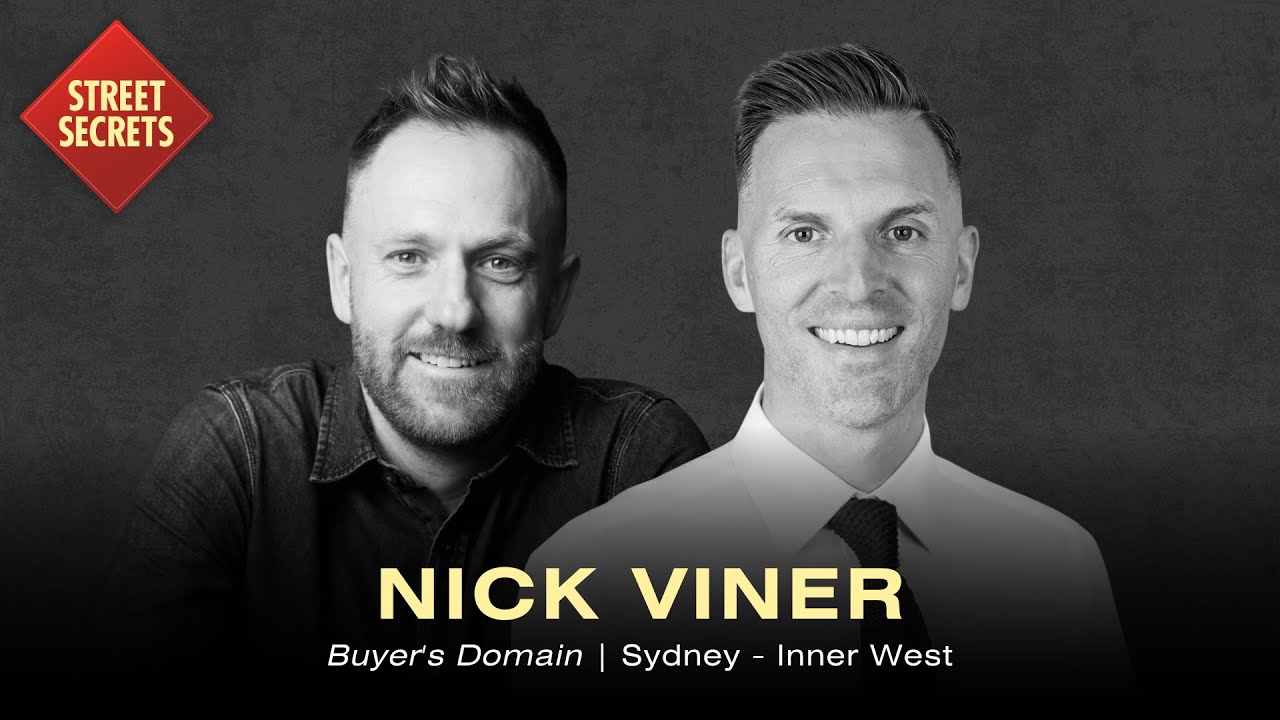
Welcome to Street Secrets. I'm Chris Bates in the studio today with Jaden Hurwitz. How are you doing? Good, Chris.
Jayden HurvitzThank you for having me on.
Chris BatesI'm excited. Thank you for coming on. I've respected your business from afar for some time. And, you know, today's every episode is a bit different on this.
I say that every time, but we're going to talk about an interesting part of the market, a part that everyone loves reading about, you know, domain, like reporting about it. It's in the papers, but it's It's a super complex market and it's sort of the upper end of the Sydney housing market.
And I thought there was no one better to get on than yourself. So thank you so much for coming on. Thank you again for having me. It is an interesting pocket.
Yeah, it's super complex in terms of the vendors, the type of clients you're working with, you know, even the transactions are done differently and the agents you're dealing with are the top agents in the country, right?
But you know, before we go to that, I mean, let's just unpacking your story coming into before you were a buyer's agent, how long you've been a BA for, like, how did you end up here?
Jayden HurvitzYeah, great question. So I started a renovation business. I bought my own apartment and realized the costs associated with renovating were way too high. So being an entrepreneur myself, I said, well, let's just see how I could start my own business and help other people.
And I started a business which I ran for a couple of years. And I was going around helping people renovate their apartments, got to see a lot of beautiful properties. And then I got to a point being young and ambitious, I wanted to get into the tech space.
So landed up getting into tech, which ultimately took me to New York. So for around 10 years in New York, I was running some of the biggest tech and advertising startups. I was responsible for growing their sales teams, their operations teams, their planning teams.
And I was able to scale those businesses from five of us to 300 off of ours. Ultimately, the biggest thing for me was just client experience, giving our customers the best experience in the world. And it was all about creating that journey.
And in saying that, that allowed me to come back to Australia which was around 10, 11 years ago where I joined my sister and business partner, Carly Skernick, in the buyer's agency world. And I owe so much to her. But she was in the real estate game for many years.
She worked at Ray White Double Bay. She had a really incredible career and ended up going to the buyer's agent's face. And this was in the early days of the VA side. And she said, Jay, come back here. Let's see what we can do.
And I joined her at another little buyer's agency when there were only two or three in the eastern suburbs. And Carly and I, within probably the first few, I'd say the first two to three months, we landed up closing around $40 to $50 billion worth of deals.
And I said to her at that time, I said, look, I know how to run businesses. You're brilliant at what you do. I've learned so much from you. let's create our own company. So a few days later, we started one buyer's agency. And 10 years later, this is where we are.
Chris BatesYes. I mean, let's talk about like where the evolution of that business. I mean, a car has been obviously a lot in the eastern suburbs, you know, you know, we're talking back all the way to the early 2000s, right? And so, you know, you've got deep market knowledge on that market.
And it is an interesting pocket of the world. And how are you sort of you know, applied not only her knowledge and the way that you think about the customer experience, but and to tailor an offer to a particular type of clientele, right? It's not a sort of a mass market.
It's a highly, you know, highly priced, but also a scarce product you're trying to trying to purchase.
Jayden HurvitzLook, I think back in the day when we first started, our biggest goal was to try to explain to people what a buyer's agent did, right? But back when we started, it was such a new concept. Not many people had heard of a buyer's agent.
We were selling the concept to people to try to explain how we worked. And again, this was back in the day, 10 years ago, we were buying some huge properties for $3, $4 million, the same properties today that are at $20 to $30 million.
So as you can imagine, back then it was still a high price point. And the clientele we were dealing with, they needed service. They need a guardian. We had to explain exactly how we're going to help them. And again, we're dealing in a market where you've got a lot of smart people, right?
A lot of people who know how to negotiate and a lot of people who have bought and sold many properties. So we had to continue to explain our value to them day in and day out.
And I'd probably say 50% of our job at DetailM is really explaining the value of a buyer's agent. And then once we got them on board, we had to showcase our experience.
We had to showcase our value and how not only are we going to find them the best properties, but how we're going to secure them and be able to secure them at the best prices.
So it's, as you can imagine, Chris, it's evolved so much where now we don't have to go in and pitch what a buyer's agent is. It's going in and really showcasing our years of experience and the billions of dollars that we've brought to the eastern suburbs car clubs these days.
Chris BatesEastern suburbs market, I mean, you can be quite out there with the marketing or you can sort of potentially play into a bit more of a, you know, hard to find us sort of, you know, it seems like you've taken the sort of the second option. I mean, what's the driver behind that?
Jayden HurvitzListen, Carly and I, being brother and sister, we've come from very humble beginnings. And our dad has always taught us to just be humble. It's all about your integrity. Be quiet. My dad is a very successful entrepreneur. He started from absolute scratch and built a business up very silently.
So the way that we, Carly and I, try to conduct our business is in the same fashion. We don't need to publicize ourselves. Again, we could always be doing a lot more marketing and publicity, but we try to keep it under the radar.
Even a lot of the purchases that we've made over the last 10 years, a lot of people wouldn't know about them just because we don't kiss and tell. And again, privacy and confidentiality is so big in our world because we're buying for people that they don't want people finding out about their purchases.
A lot of high profile people, a lot of divorces, everything that we do, we try going. And again, it's something our team is also very foster, right? There's no arrogance, there's no ego. And we are in a game when there is a lot of ego and there's a lot of arrogance.
But again, the way that we go is we play nice with each other. We play nice with the agents. Our biggest motto is leave the ego at the door the minute you come into the office.
Chris BatesI can think of a number of clients who bought at four and five and you're not far off, right? It sounds crazy, those numbers you said at the start, but their properties are probably worth 10 to maybe even closer to 15 mil. They've gone up three times in five years.
And if they did a reno, it'd be worth 20 plus. and sometimes easier and sometimes it's not. And so it has changed a lot, particularly in certain pockets at the East. And then some of those were maybe not the tip. They wouldn't be able to rebuy the house they've got, right?
They wouldn't be that buyer. And as the buyers shifted as well, what are some of the myths around the housing market in the East where
Jayden Hurvitzknow who's driving that market and you know and where's the wealth coming from and and why is it just so attractive to the buyers and people then if they do make a profit they quickly then just reinvest it back into that market look it's the same question i get asked every day and i'm sure you do enough straver on hills does is we're in a peninsula where there's only x amount of pieces of land there's x amount of houses yes with all the lr changes they are building more apartments but they're not building any more houses there's only x amount of land and there's a lot more demand there is
than supply. And I look at a lot of our clients that started with us 10 years ago. We bought them $2 million apartments and probably around four or five months ago, I bought one of them a $30 million house. And the reason was they kept moving. They found the right apartment.
And again, this was very much part of our job is to go and advise them. But ultimately we found them something that they can add value to in a great location, something that ticks a lot of boxes, something they could easily sell it, rent it.
And ultimately what they did was they rent and they took the risk at the time. They renovated it, they did something beautiful, and they bought their $2 million apartment.
They renovated it, they sold it for $4 million, and then they bought their $7 million house, their next $12 million house, and so on and so forth. We find that the clients that ultimately are taking the risk are the ones reaping the rewards, right?
Because majority of our clients that come to us, I'd probably say that even 90, 95% are asset rich. And majority of them are from purchasing and buying their houses, taking the risk.
Or again, for many clients' houses over the last couple of years where they didn't do a thing and they sold it a year later and made a 20, 30% return. So again, it's all about timing.
Chris BatesYeah, I mean, the scarcity is there, but it's also got this desire to even pass the point of what other people may think is fair value. It's this sort of overconfidence and this attraction to be within this pocket.
You know, there's always a ridiculous premium on the harbourfronts on the eastern side of the ridge versus the western side or the lower north. Why is it so powerful, that pocket and so much wealth concentrated there? Why does it just keep coming back there?
Obviously, it's accessible to ocean and the city and stuff like that, but it's so much deeper than that, I feel.
Jayden HurvitzGreat question. I think the biggest thing that we found, and again, we've got clients that would look in Rose Bay, for example, but wouldn't look in Dover High. We've got clients that would look Rose Bay, Bellevue Hill, but wouldn't slightly go to Vaucluse.
So again, I think a lot of the buyers, they want to be one, where the schools are. Two, they want to be where their friends and family are.
And again, we say to our clients all day long is if you're willing to open up your brief and looking at kind of suburbs a few down, you'll be able to get exactly what you want and more.
But again, time in and day in and day out, we actually find that they're willing to compromise on something smaller and always be in the location. It's the number one thing that comes up.
And I probably said the number one conversation we have with our clients is if you're willing to compromise and actually move a little bit further, you can get everything you want. But people are willing to stay where they are, pay a bit of a premium and be happy.
Chris BatesObviously, the schools are a key part of that, right? They went to that school. They want their kids to go to the same school. There's a bit of that. There's intergenerational wealth. The parents are there. The grandparents are there. Their version in their mind of success is to live in that pocket.
So that really that you feel like it's holding down. And can you sort of give an understanding just how much intergenerational wealth you are seeing to that next generation, the parents are giving it earlier than ever?
Jayden HurvitzYeah, look, I think in the eastern suburbs, Mark, a majority of our first home buyers, and when I say first home buyers, I'm saying our clients that are coming to us buying their first homes that are anywhere between four and 10 million are coming from parents or grandparents.
A lot of the new guys that we see across the board, especially a lot of our company, are the one or $2 million clients. Again, they're obviously taking the risk to do that, but it's definitely been passed across generations. There's no doubt about it. That's the only way.
I mean, there's no way someone's coming in and buying a $10 or $15 million house as their first, second house, unless they've ultimately sold their business. Unless, again, as we can imagine, COVID made a lot of people very, very wealthy.
And again, there are a lot of markets, especially with what's going on in the world that are doing very well.
Chris BatesLet's talk about that LMR change, you know, and not just LMR in terms of the Rose Bay story, but there's a lot going on around Edgecliff Station. There's a lot going on at Bondi Junction. There's a lot going on in other parts of the east, et cetera.
So we all know what's happening, right? Like in terms of the developments and stuff like that. Like, I don't want to make this about this is happening here and this is happening here, but I feel like it is playing into the psychology of not just buyers, but also people living in the suburb.
And I don't know, because I don't have these conversations deep with these people that are in the market as much as you would. And how do you think it's changing and how are they feeling about it all?
Jayden HurvitzLook, I think there's two sides to it. On the first side, a lot of my clients have made a lot of money over the last couple of years. And reason being is that we helped them buy their houses that were three, $4 million.
And overnight they were selling them for $9, $10, $11, $12 plus.
right without having to do anything so let's say a lot of owners that couldn't be more excited right they've got the house that doubled their value double even tripled it overnight they're great there are also a lot of buys that have come to us saying we don't want to leave where we are we're so happy but we feel like we're going to be boxed in so again some people are loving where they live some people couldn't be happier to move so i think there's that side of it on the other side of it which is probably
The biggest side of my job at the moment, and it comes into a lot of the due diligence we're doing is I'm potentially going to buy a house here. And within the next three, four, five years, there could be a six or eight story building next to me.
How do we guarantee that's not going to happen? And again, it's the hardest thing for us to be able to go to our clients and say, we can't guarantee it. But for us, we do a lot of due diligence.
Again, we speak into developers day in and day out to understand the feasibility of apartment blocks. We're also trying to understand like what developments are happening. We've got map and backend systems to understand what plans are being put in and how far it's been moved.
You look at something like I looked at a map the other day of Rose Bay and we just looked at how many DAs have been submitted. It was scary to see the reds and that's just submitted, right? That's just submitted recently. Then it will be all the proof.
And then we also know a lot of developers that are about us in that. So it's pretty scary from our end to go in to deal with the infrastructure. I mean, for a lot of buyers, they want to be in Rose Bay, in Double Bay, in Bondi Junction, in Edgecliff.
It really actually limits our buying capacity at the moment because if you are in an LMR zone, a lot of people don't want to go near it. So it will be really interesting to see what happens over the next few years.
Chris BatesYeah, I think if you're playing this market, and I'm glad you answered it that way, because I do think you've, you know, the DD you had to do before was nowhere near this type of, you know, the collective of the, you know, and they've got these action groups anywhere in the country, every suburb's got them.
It's not just eastern suburbs, but the power of the people would always, you know, if someone lost a DA and it wasn't fair, there'd be a hundred submissions on it, right? And it that would win and it wouldn't happen and they'd be going to land in Rome Accord.
And he was never worried of eight storey apartments, but it has shifted so dramatically and we have no idea how this is going to play out as a worst case, as a best case, as a medium.
And I think as a buyer, when you're in the market, you've got to be, I guess if you've got your welfare, you've got to be careful, but also if you're answering it You know, you could easily buy the wrong site and regret it, right?
And so, you know, and you're really spending a lot more time there and trying to improve your knowledge because it's so complex, this development space, way more than just normal resi, right?
Jayden HurvitzYeah, mate, it's a different kettle of fish. And for us, we really, really have to know what we're talking about. Again, the team and myself, we spend a lot of time with architects, with planners, with talent planners. We're also working with a lot of developers as well. They are educating us as well.
And again, these big-time developers, they're learning every day on the job.
So for us, it's just a matter of trying to make sure we have a checklist and we have to go through each specific box to make sure that if we're about to buy a beautiful house that could be covered around an apartment, our clients understand the best and the worst case scenario.
If we were buying apartments, what could happen? There are even apartment buildings that are now in the LMR zone that are trying to work. How can they start going a few stories higher? So again, there's no one to protect it from it. In my opinion, it's going to change the eastern suburbs dramatically.
Is there going to be an oversupply of apartments? Most probably. The infrastructure, the traffic, again, we're seeing day, as I said, day in and day out, buyers are coming to us going, well, I don't want to live here now. I don't want to live here now.
So that's why, back to your question before, the areas that are not in the LMR, where you've got houses that for most developers don't make commercial sense, everyone's now pushing there. And realistically, again, that's just going to push the prices up in certain pockets of Bellevue Hill, Rose Bay and Double Bay.
Chris BatesYeah, absolutely. The sanctuary. I mean, that's ultimately what people want from luxury properties. No noise, complete privacy, the view, the nature and the desire. If that is compromised at all, it completely is not what they're going to be paying tens of millions for.
I mean, can we talk about this sort of the new wealth? Like there's a new generation of wealth coming through. some through Bitcoin or some through tech or some through whatever it might be. And as well, actually, people move to Australia just due to being more of a safe haven.
It's maybe people from different nationalities all over the world. It's from Asia, from India, from America, from the US, from Dubai. It's not as one dimensional as sometimes people make. So can you sort of highlight just how diverse
and how attractive that pocket in particular is to just a lot of wealth from around the world.
Jayden HurvitzAbsolutely. Look, again, it's one of the most bizarre pockets in the world. It's in Australia, the most beautiful place in the world. And then you come to the East, find me somewhere more beautiful in the world.
I mean, we're seeing, specifically after COVID, and we're still seeing a cap drop, every day we wonder, where is this money coming from? It's not slowing down. I mean, the amounts of calls that we get, I'd probably say on a weekly basis, were somewhere in for a $15, $20 million budget.
Again, it seems like so much money in the world, but trying to find a 15 to 20 minute dollar house, exactly what they want in the area they want.
There's not many of them because the people that have bought them or the buyers that have bought them, they're not moving for the next 10 years. So again, we'll show our clients as much, everything we can within that pocket or within the area. But again, there's not. And that's, again, what's happening now.
It's also changing the whole structure of eastern suburbs, right? Where a few years ago you were buying waterfront houses for $20, $30 million. Now a lot of those waterfronts are $30, $50, $60, $70.
So what we're seeing is a lot of these buyers are now going into different areas, buying pieces of land and building their dream houses. And those pieces of land should have gone for $12 million. Now they're going for $16 million.
So again, when all this intergenerational wealth and all this new wealth is coming in, it's pushing up the prices. So again, it makes it difficult for everyone.
Chris BatesYeah, I mean, you made a good point there as well. Like, you know, the compound homes, like, yeah, the Mishki guys and the, you know, like, I'll buy this house, I'll buy the neighbor. And I mean, that's been going on for generations, but it was the Packers.
It's such a desire to sort of get the biggest foothold in your land. And every time that happens, it just reduces the housing stock compared with all this LMR. And it's almost like that's not going to slow down. It's almost like that's the desire to get more and more landed.
It's going to make it more challenging.
Jayden HurvitzThat's what I always say. Now it's probably... It's the best time. It's not going to... Look, everyone wants to be in Australia. And if you look at the migration, I mean, we were recently at a talk with REA and they were talking about the search history from India.
And it is every year, year and year, it is growing exponentially. and the amounts of queries and searches that are coming. And again, we can start to see it already. We've seen a lot of influx of Indian buyers coming down to the eastern suburbs where we didn't three, four, five, six years ago.
So we're going to see a lot of changes. Again, the Chinese, what we found is buyers have slowed down and we're going to see a lot more Indian buyers. And again, especially what's happening in the world. Australia is a pretty safe place. I mean, from my level, it's very safe and beautiful.
So we're going to see it just get more and more challenging to purchase property, in my opinion.
Chris BatesYeah, I think that's one of the migration numbers, but also the wealth of part of those migration numbers is a... is people moving here and they're bringing all their wealth with them for the safe haven and their confidence that it's going to be a great store of wealth.
And, you know, Australia is always bats way beyond its averages there. And I think, you know, any global unrest is sort of only making that worse, right? And getting more money coming here. When you talk about the agents in this space, how important is it?
You can't just, for example, start a buyer's agency and then start a transaction on $20 million properties, right? The agents selling those are 15, 20 years deep in thousands of transactions. And how are you as a team, I guess, still competing with that?
Because it's like they dominate that market so much, but you still need to be on their good side.
Listen, agents, I'll say our biggest clients this far, right?
Jayden HurvitzWell, you have to have the best relationships. And I think that's what makes us one of the number one teams in the area is we have the best relationships with these agents. And as I said to you, the reason is no ego. And we leave the bullshit at the door, right?
At the end of the day, we don't want to play games. We want to work with these agents. We want to get deals done. They're trying to get an ultimate goal. We're trying to get an ultimate goal. And we work really cohesively together.
And again, you see a lot of these agents who have been doing this for 20, 30 years. Again, the VICE agency, the business is very new. It's 10 years old. But we've seen a lot of these agents who are absolutely brilliant work with us more than ever.
And if anything, they're actually the biggest advocates for us because they know how challenging it is to work with so many buyers when With us, they know that our buyers are, they're ready to go. They want to find a property. And the minute they find something, we'll do all the due diligence.
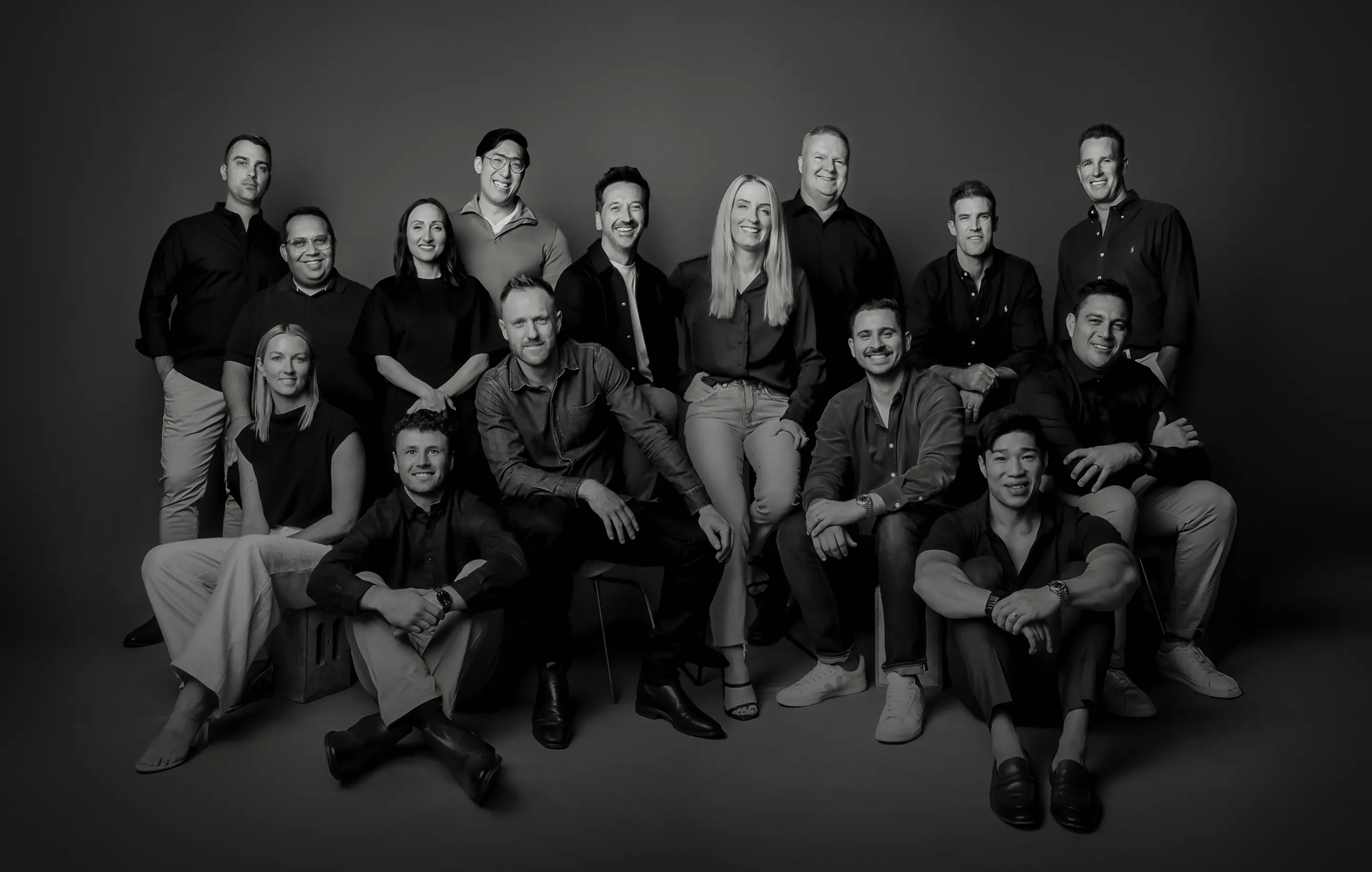
We've got everything covered and we get them on the properties. So it's working really well for us at the moment. And again, we have such an incredible team, Chris. We've got 13 people in the team and between us, everyone has their relationships with specific agents.
so we're able to make sure that across the board everyone has specific relationships we have with so many some more so with others i'll say probably over the last two or three years more than ever agents are working with buyers agents so well it's a great synergy how can you not
Chris BatesThey will, but I think they also are very careful on who they want to work with, right? Because absolutely, they always want more buyers. The level one thing would be, okay, you've got buyers, I've got sellers, let's just work together.
But they often are so advanced in their skills that they can see straight through the inexperience and they'll take it like a little bit on a ride and they don't really get the advantages that someone more experienced would get.
And I do think that's a real challenge, I think, particularly if you're a client of one of those new industry buyers agencies that And the team I do think matters, I think I've reflected on.
It's just you can cover so much more ground, whether it's opens to agent calls, to even just tracking portals and off markets and sniff out things on a much scale. There's only so many minutes in the day, right? And a team really helps you.
Jayden HurvitzAnd I think for us as well, we can put our money where our mouth is.
Jayden HurvitzWe've been able to buy some of the best and biggest properties in Australia. We've dealt with these agents over the last 10 years. So they know how we work. We've done deals with all of them. We're not newbies. And again, we cut the crap, right? We're here to get deals done.
We want to make sure that both parties are happy. And realistically, it makes a lot easier to work with that when you have the reputation and you could back up.
Chris BatesYeah, it's 5, 10, 20 million. But there's also like another element to it, right? There is tiers. How do you sort of break it down, you know, in terms of the pockets? Like, how do you see it?
Like the Vaucluse, sort of Dover Heights pocket is a totaled wire pool to the Bellevue Hill. How do you and your team break it down?
Jayden HurvitzGood question. So look, it depends in which different markets. You've got the apartment markets. You've got the first home buyers, right? Then you've got your more luxury apartments where you've gone from 46 million. Then you've got your semi market, which is your North Bondas and the beaches.
And then once we start going up 10 billion, 15, 20, 30, you're looking at Rose Bay, Bellevue Hill and Vaucluse. And then start taking a step further where you've got your point pipers and your water, your Vaucluse waterfronts and Darling Point waterfronts. That's essentially how we break it up, right?
So just depends on each client, what they're after, because most people come to us, they want specific suburbs and specific criteria, but it would always start with location first.
Chris BatesYou know, there's quite big price discrepancy, right? Like if you're on this part of a suburb versus this part, right? What people value can be enormous, you know, and, you know, they'll discount something, you know, particularly say it's further up the peninsula, you know, and it's a little bit extra to work.
So what are some of those compromises you're finding that people really value in your pocket?
Jayden HurvitzWe had a client a few weeks ago that We bought something across the road and it was significantly cheaper than something that had sold across the road. But that was closer to the water, even though this one had views.
So again, clients come back to us and again, we get clients that come to us with the strictest list you have ever seen. Our job is, one, to educate them. So we actually got to show them what's available in their budget.
Two, we got to educate them through the process and make sure they understand what their budget can buy. And again, if they've been realistic, we will always tell them straight to their face. At the end of the day, we want to give them a good experience.
We want to overdeliver and we want to show off. And if I can't do that, there's no way I'm going to continue working with them or we're going to have a great conversation that's going to say, well, This is exactly how we want. So again, it all depends, right?
We've got clients that come to us saying, look, I'd love a beautiful waterfront import paper. I've got $35 million. The truth of the matter is, it's a fortune of money. But realistically, $35 million unfortunately doesn't buy you a waterfront import paper.
But what we could potentially do is have a look at maybe a few houses back. We can start to have a look potentially in Vaucluse. We can have a look at a few different options. And again, we guide them and educate them through the process.
Chris BatesDo you think that the next generation of buyer value something different to what their parents and grandparents did? So, you know, maybe it was the Volclues. I'm just putting it out there.
And now they want to be maybe a North Bondi now, or maybe they want to go to Watson's Bay where their parents wanted to be in Rose Bay or...
You know, like this, it feels like that because the market's priced on not just now, but it's also based on the past and, you know, and future growth isn't guaranteed to be the same, you know, the same metric isn't meant to, can't always say that.
So is there any sort of gut feel when you look at the East where, you know, you find that the money is going to transition within the East and stay there, but some parts are going to get even stronger and some parts are the next generation are probably valuing a bit more. Absolutely.
Jayden HurvitzLook, we find, and again, we've got clients that, let's say their schools are in Rose Bay or Bellevue Hill, they will not even go, yeah, four floors. Back in the day, even though their families were born, they were born there, their families, 20 minute drive.
So again, I would say more so now more than ever, many people that were born in certain areas are actually moving away. They're moving to where their friends are. We get a lot of buyers that are now
Moving to the beaches, again, the beaches probably over the last five, seven years is just becoming more and more competitive. You look at Bronte, Clovelly, Coogee, South Coogee. It's moving further and further away.
And again, even Vaucluse, there are many times where we found a lot of buyers won't meet Vaucluse and allows us to get some really good opportunities in Vaucluse. Vigil, Rose Bay, everybody wants to be there. And again, you look at that market and it is absolutely going through the roof.
Limited supply, people are pushing the prices up more than ever. It's where everyone wants to be. So we go through different, like, again, you go through different, it's a property market. We're going to go through times where everyone wants to be in Vaucluse.
Then we go back and go, all right, people are happy to be in Vaucluse or Bellevue Hill. Some people are moving further into the beaches. But I would not say, to your question, I would say people are actually starting to change now more than ever. They want to live the coastal lifestyle.
Chris BatesIt's funny you say that. That was actually one of my gut feels is that, you know, there was a price premium you would pay on the Ninchilla and, you know, the Rose Bay.
The Bellevue Hill, though, it's, I mean, I lived there for three or four years and, you know, it's pretty nice looking out across the harbour there with the north aspect and the green and, you know, and it's quieter and you can still get to the beach and you can still get to the city and you can still get, you know, into Paddington or Wallah really easy.
So it's a good spot. And then you're right, like the schools, Scotts and, you know, Cranbrook and, you know, they're just such a huge part of, you know, that generation. And the grandparents want to give money to the kids because they want their kids to go to the school they went to.
And it's such an intrinsic demand there. But I do find that, you know, the beach lifestyle is something that's really valued with the next generation. And
know they'd much rather put it on the coast along the the north bondi or the brontes or you know even going i remember 10 years ago talking about maruba and and down there and it was it was always like but you know but you know i find a lot so many clients wanting to go down that pocket now as well
Jayden HurvitzNine years ago, we were buying the same houses in Maroubra for 1, 1.2, 1.5 million that are now going for 8, 9, 10 million dollars. Again, we have to educate our clients when they come up to us and say, look, we've got 4, 5 million, we want a big house.
Maroubra, it's becoming challenging. Obviously, their pockets are there, but it is becoming more and more competitive because of the price points and all these other suburbs are becoming too expensive. They're starting to move out further and further as the weeks go on.
Chris Batesyeah and at the end of the day um places always gentrify they always are moving and um you know but at the end of the day it's still only 20 minutes to the city right so it's not like they're uh you know we're sort of land locked in there not just with uh you know ocean and harbour and just topography and you know hills and it's not so easy just to increase density it's it's not like a flat piece of land where you can just go up forever and so do you think that's one of the things that gives it just such that
know either the the lifestyle because it you know creates those views and those moments and vistas and things like that but it also does also make it quite challenging and to add a lot of supply and congestion and sewage exactly look again people want to be in rosemate for close
Jayden HurvitzAgain, it's so close to everything. At the end of the day, yes, it does take a little bit longer to get to the sea, but you've got shop to area. The challenge with Maroubra, and as you start pushing further, it becomes a little further away, right?
And again, most of our clients come to us and they say, we want to make sure that we can, especially, I mean, we look at our clients that have recently had children. They come to us, they want to be close to coffee shop shops.
They want to push the brand to a coffee shop. We're a little bit harder. But unfortunately, as time goes by, our five, six, seven million dollar buyers are starting to move out and they actually have to figure it out.
Because what they want in Vaucluse or Rose Bay, the semi market is now starting to go up in the five and a half to six, six and a half to seven.
I mean, even over the last few weeks, we've seen, especially in the beaches and even around North Bono, we've seen the majority of these semis that are going for six to seven million dollars, which was never the case a few years ago.
Chris BatesJaden, it's been a really good chat and I think it's good insight into just the behavior on the psychology around the Eastern market. I do think it's way more complex than people just naturally think if they haven't really been exposed to it.
But then the fundamentals are still there and if not getting stronger with all the change. But I do think there's going to be winners and losers a little bit, like the status quo of what got us here doesn't mean it's going to continue.
And I think that people have got to be really careful at the moment with all the change of making sure that the property is going to become more livable, not less livable and pockets are going to be more livable. And people are going to want to demand that and pay for it.
And it's not as cut and dry as it was, say, three years ago. And so you do need expert advice more than ever. Jaden, thanks so much.
Thanks so much for listening today. We hope you got lots of value out of it. If you'd like to speak to our guests today, there's links in the show notes on how you can get in contact.
And if you're buying your first home, upgrading, renovating, or need any finance-related queries, obviously we'd love to help. There's links in the show notes to us as a mortgage broker, and we look forward to next week's episode.