Curious about upgrading?

Wondering where to start?

Complex questions that need answers?
Is there a better structure for you?










"They managed to navigate my complex expat income and even got my Google RSU income approved as well."
"I highly recommend Alcove to anyone looking for a mortgage broker who is responsive, trustworthy, and truly cares about their clients. Thanks again to the whole team for making the process such a positive experience!"
"As founders, we're constantly jumping between things so having a partner that handled the details & made the process super clear made the buying process breezy for us. Very happy with the experience!"







.png)






"Alcove has been a great partner. They look after my audience properly, keep things simple, and deliver real value. I’ve got full confidence referring clients knowing they’ll get honest, straightforward advice."

"Property is one of the biggest financial decisions people make. Alcove stood out because they take a strategic approach to lending - helping clients structure property and debt decisions in a way that genuinely supports their broader financial plans."


Adapted from audio. This article is a written adaptation of the original podcast episode. Sources and dates are shown with each figure.


Co-host of The Elephant in the Room. Real estate agent, buyer's agent and buyer's agent mentor, co-host of Foxtel's Location, Location, Location Australia, author of Auction Ready and co-host of Your First Home Buyer Guide.

Wally Gebrael on when a granny flat actually stacks up
Wally Gebrael has overseen more than 2,500 granny flats since 2011. He walks through what a block has to offer before a build is possible, what the numbers look like now, and where owners get caught out.
In this episode, we tackle the uncomfortable truth about granny flats. They're talked about everywhere, but poorly understood by most people making big financial decisions around them. From minimum block sizes to council rules, costs and design trade-offs, there's a growing gap between what homeowners think is possible
and what actually stacks up in the real world. To lead us in this discussion, we've invited granny flat expert Wally Gebrael, who has spent more than a decade working at the coalface of Australia's granny flat boom.
Having overseen thousands of builds across multiple housing models, Wally brings a grounded perspective on what works, what doesn't, and where most people often get caught out when they're planning, buying or building with secondary dwellings in mind. Welcome to the elephant in the room.
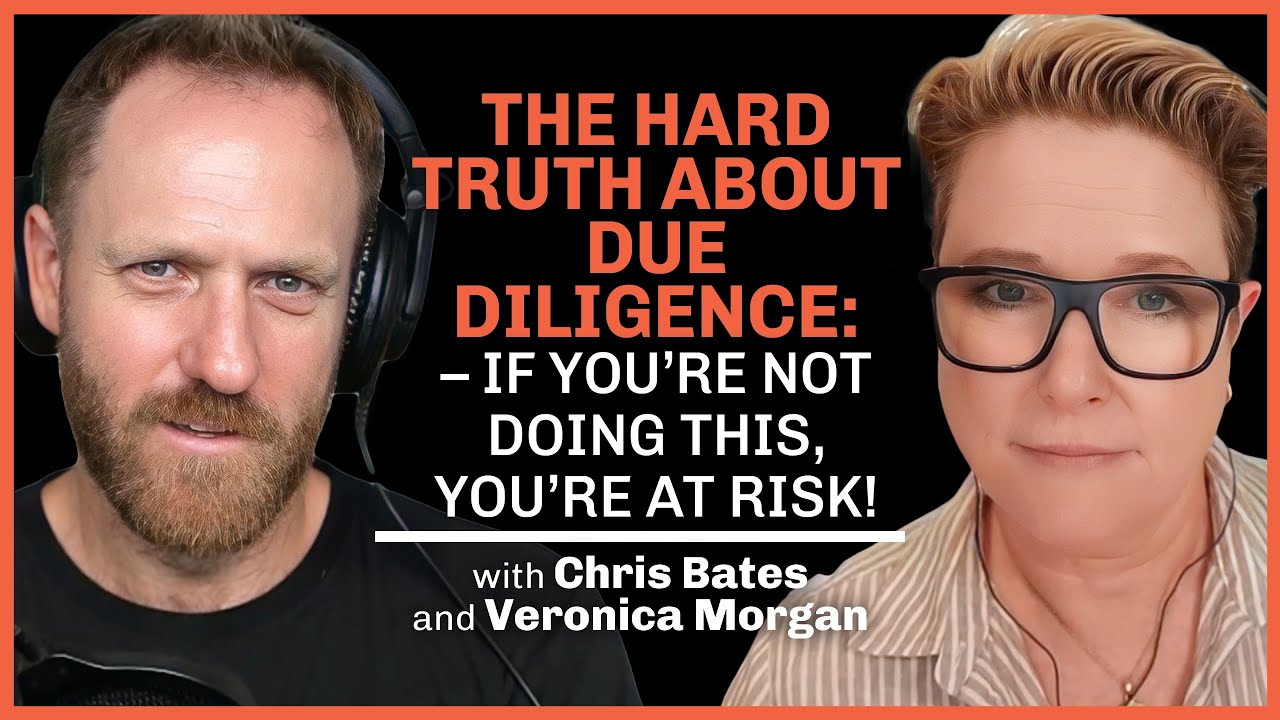
This is the podcast where we love to talk about the big things in property that never usually get talked about. I'm Veronica Morgan, real estate agent, buyer's agent and buyer's agent mentor, co-host of Foxtel's Location, Location, Location Australia, author of Auction Ready and co-host of Your First Home Buyer Guide.
Hi, I'm Chris Bates, ex-financial planner and mortgage broker, currently ranked number three in the annual MPA Top 100 Mortgage Broker Awards. Before we get started, everything we talk about today is not personal advice, and we recommend you engage the services of a licensed and experienced professional.
Our guest today is Wally Gebrael, co-director of Granny Flat Solutions, New South Homes and Tiny Home Solutions. Wally has overseen the delivery of more than two and a half thousand Granny Flats since founding Granny Flat Solutions in 2011.
He also works across broader housing models and established the Granny Flat Foundation, reflecting a strong focus on practical outcomes and social impact. So welcome, Wally. This is a conversation that we haven't had very often on The Elephant in the Room.
In fact, we did with a legal expert talking about granny flats a couple of weeks ago. But we are very happy to be talking to you today. We really want to learn more about this growing space. Do we call it that?
Fantastic. I always love when we're doing new episodes. I think 400 odd now. And yeah, we haven't really covered this.
And I think typically, you know, you could have covered this from, you know, an investor trying to throw another property on the back of their block of land somewhere and trying to increase their yield. But It's also, you know, a lot of owner-occupiers, right, trying to actually build them for growing families.
What's sort of driving that sort of revival alongside the investor?
When you look at the cost of buying a house these days, I'm based in Sydney, so talking about the Sydney market, and I'm sure it's the same in other states. But yeah, like trying to buy a house these days is, you know, the median house price is over a million dollars.
And if you're young and can't afford to buy a million-dollar house, well, then you've got parents who have got big backyards and thinking for a fraction of that price, we could do it a grand for the backyard. The kids have got a kickstart. somewhere to live.
And at the same time, it's increasing the value of the property. So it's sort of a win-win.
And you're seeing it on the other end as well. Like sometimes their parents have, you know, maybe haven't got enough wealth behind them. The kids have, and they've got the house and they're actually, you know, four grannies or, you know, maybe a surviving widow or something as well.
Like the typical, what a granny fight used to be, I guess, originally for.
Absolutely. So yeah, we do get a lot of downsizes as well. The big family home is no longer needed, so they'll move into the granny flat and rent out the house or give it to the kids to live in and look after them.
So yeah, it's sort of a mixed bag of different needs, I guess.
You said something interesting or very casually when you sort of answered the first question that we threw at you, and that was adds value to the property.
We do want to talk a bit about that because I'm not so certain in all cases it does add value or it might add some value, but does it add more than the cost or does it then impinge on capital growth depending on what was done?
So I'd love to tease out the best solutions in this space versus those that actually don't necessarily deliver in terms of adding value.
Yeah, it was a very generic statement, but insane, isn't it? I mean, look, I've done a lot of research through realestate.com just to find properties with granny flats on there and then try to do a comparison just from my knowledge just to see, hey, how much more are you adding?
I can generally look at one and think they must have spent $150,000, $180,000, $200,000, whatever it was, and then compare them to another similar property. I'm no expert in the field, but I've sort of got a grasp of it.
I do find that those properties that do have a granny flat, and I'm talking about a good granny flat, not a garage conversion, not that I'm knocking them, but I'm talking about a proper granny flat, they do sell for that on average at $200,000 more.
I find that's asking price. So I don't think that it's adding a significant amount. In other words, if you're spending $20,000 to build a granny flat, you're not going to sell your property for $500,000 more. So you do get your money back.
So from what I've seen, we work with a lot of property investors, their model is not to build a granny flat and sell the property. They don't see huge capital growth in that.
I think where the growth is, is from an investor's point of view, where all of a sudden, rather than just renting out the front house and getting $600, $700 a week, wherever it might be. They've got more value now because that granny flat also yields another $400, $500 a week.
Spend that extra $200,000 to buy a property means the yield is going to be higher. When I talk about adding property value, it's not from a resale point of view. I'm probably talking more from an investor's point of view, higher yields and returns and so on.
In saying that, I've seen cases where, and this is a classic example I've shared with many people, we built a granny flat... It must have been eight, nine, 10 years ago, maybe now on a property in Wayland in the western suburbs.
And right next to us, there was another property, another grand flat being built by another company. And we built a really high, the customer asked for a really high end one. That was for his family to live in.
Whereas the one that was built next to you was very sort of standard, very flat roofs. I think it was a vinyl clad and not that there's anything wrong with that. But again, a very, very different type of model to what we were doing.
Anyway, in the end, he realized that his family wasn't going to move into it, so he had to rent it out. So, there were two granny flats literally next door to each other, both on the market for rent.
Now, at the time, I recall very, very clearly, his one got a lot more interest. I think he ended up getting $380 a week at the time. The one next door really, really struggled. They were both 60 square meters, both had two bedrooms, one bathroom.
But the quality of the build and the inclusions made a huge difference. Now, I can't remember how much the one rented for. Traditionally, it was under the $300 a week, whereas he was getting $380 and his one rented out straight away. So there's value in building a good quality building.
And sometimes we add something on that's not to that high aspect, then it can devalue from a rental point of view. And I believe they've devalued the property value.
It's more sometimes there's probably clients who come to you and say, you know, I need a granny flat, but, you know, it's just not the right block or it's just hasn't got enough backyard.
Like, is there a lot of clients sometimes that, you know, they just don't expect it's going to cost what it's going to cost, right? And what are some of those case studies where you sort of rock up and just go, this is just really not going to work?
And honestly, that happens a lot. I mean, if you look online, you look at what the minimum requirements are for a granny flat, it says, you know, 450 square meters of a 12-meter frontage.
So, you know, probably 70% of the properties, you may tick that box and you think, great, I can build a granny flat on there. But yeah, the reality is when you go out there on some of those blocks,
There might be big trees in the backyard or some easements, which we see quite often, drainage easements, things like that. And that straightaway rules out the blocks. You might have a big backyard, but if there's a diagonal drainage that's running right through there, that's limiting what you can do there.
So it's not just a numbers game. It's all about being able to physically build from a planning point of view as well. But yeah, we've been out to many where we said, look, I don't think this is the right block for it. You don't have the space as much as you think.
And even though it's a 60 square meter footprint, I often tell people you need at least 100 square meters of available land, at least as a minimum.
By the time you add your setbacks, your front, you know, between the buildings, the sides, the back, you want to leave a bit of backyard for the front house as well. Because again, that's something that can reduce the value when I have not given the front as a backyard.
So all those types of things. So I often tell people at least 100 square meters is what you need. Yeah, so people might go out with the tape measure. I've got 70 square meters, 60 square meters, but that's just, it just doesn't, yeah.
It's a good point that you raise there about, you know, thinking about the front house as well, because I know I've seen it a lot where there's no backyard at all for the front house. It's like, oh, they've got a front yard. Who cares?
It's like, well, nobody actually wants to send their kids out to play on the trampoline in the front yard. And then there's privacy considerations. There's a whole lot of things. But again,
It is interesting too with the, you know, it's widely acknowledged we've got a housing crisis, you know, looking in all directions for solutions to this. And a lot of people are saying, well, oh, granny flats are a logical solution for those people who've got a block that's big enough for it.
But not all councils are necessarily supporting that. Are they?
So, you know, I came across someone very recently that they were expecting that just because they had a certain size block of land, a little bit what you're saying there was big enough technically in terms of 450 square metres or more and 12 metre frontage.
But it's like the council doesn't view it that same way. So what are the hurdles that they have to get around in terms of planning rules?
So in 2009, the state government introduced a policy, back then it was called the 2009 Affordable Rental Housing SEP, and basically it forced all councils to allow granny flats. Whether their planning controls said yes or not, it sort of overruled that.
So sort of councils have to quickly jump on board and start allowing them. In saying that, that legislation, while it still exists, there are some limitations. So for example, if you're in a flood area or a high bushfire area, conservation area, heritage area,
Northern Beaches, we've come across a lot of scenic protected environmental zones. They're ruled out. So in those particular cases, it's not as straightforward to get your granny flat approved. So you can't go through a private certifier. You'd have to go through council in those regards.
So whilst councils do acknowledge and they are pro granny flats these days, you still go through the whole hurdle of getting neighbours to agree to it, council to agree to it.
And again, in those, for example, environmentally sensitive areas, if you're trying to remove a tree for a granny flat, there's just no way they can allow that.
And understand that if you're in a flood-affected area, well, then there's a big risk on council ticking the box saying, yes, you can build when it's a flood area. So, look, we still have to overcome all those issues.
If none of those apply, so if you're in one of those areas where none of those things apply, then it's a very simple, straightforward CDC process where you engage a private certifier or council and basically tick some boxes.
We apply our setbacks, our heights, our landscaping, and it's so easy to get them approved.
You mentioned earlier about sort of converted garages being at one end of the spectrum and sort of a very simple flat roof vinyl clad structure somewhere in the middle and then something more high end, which I'm sort of have seen some of those sort of more high end ones.
They look a little bit more like chalets perhaps. What are the options people have? And maybe there's a bunch of cowboys out there flogging these really cheap and nasty granny flats. I don't know because I'm really not spending much time in that space.
What are people thinking when they first think I'm going to put a granny flat in? Are they thinking I'm going to go and buy a kit home and do it that way? Is that one of the options?
If you can give us, I guess, an overview of what people will be thinking and what they should be thinking.
Often the first question I get asked when somebody wants a building and I say, is how much does it cost? And often just by giving them an indicative price, sometimes it rules people out because they are looking for just a real budget. Some people ask for- A fixed caravan. Yeah, exactly right.
And people do ask that and they say, what about trying to buy a kit from you? And I say, look, we don't do kit homes, but it is an option. But when you really, and I've done the numbers myself, I looked at the cost of buying a kit, for example.
But by the time I still get my plans approved, do all our site costs, put our peers in to start, and I've got all the labor to put that kit together. You might save a bit of money, but only if you're very hands-on.
If you're engaging trades to put together for you, then honestly, there's no real saving in time or in cost either. But yeah, different people have different needs. Some people do just want the room for family to live in. It could be just a room with a bathroom.
Don't necessarily need full two bedrooms or a full kitchen. And some of them are very budget conscious, which is fine. I mean, everyone's got budgets they need to stick to. But it really does depend on the situation.
And like I mentioned before, a higher spec granny flat is likely to rent out for a lot more and attract more people. So a lot of the ones that we do are customized. So we have customers saying, this is my backyard, what can I fit on there?
And then, you know, if they've got a really nice home, it's got nice views, well, it's almost criminal to put a little shack or a little box on there that doesn't take advantage of the views or it doesn't look like the main home, which just feels like being dropped in there.
I take that personally when somebody says that's what they want to do. I feel like they're really diminishing the value or the opportunity they've got on that block. So, they're the ones that would say, look, you've got a great opportunity here. Let's design something that takes advantage of those views.
You know, if North's on that side there, let's put our living room to the back and put some glass sliding doors and take advantage of that backyard and those types of things.
So, the other types of things that we try to encourage, not for any cost reason or anything, but just we want to be proud of the finished products and what we deliver. So, yeah, it's always best to design stuff that's going to be suitable for the block and for the area.
But if it is a garage conversion they need, that's not something we do, but I've seen many, many of those and there are companies that can do that. They can just refurbish a garage just for somewhere to live in. It could be a very cheap rent. That's...
what, you know, leads for different people and that's okay.
Given that sort of variance, what are we talking for cost? If you're looking at a 60 square meter build, a garage, if they're just doing converted garage, obviously it's going to be smaller than 60 square meters, but maybe not right up to custom.
I guess people could spend half a million if they wanted to on all bells and whistles, I imagine, granny flat. But what would be a typical budget that people need to be thinking about if they're going to build a quality dwelling?
We try to be as transparent as possible. So when somebody says, what's a granny flat cost? I'd say, look, I really need to see the block and need to understand what it is you want. Is it brick? Is it cladding? Do you want tarred roof? Colourbond roof? What's your block like?
Is it sloping downhill? Is it sloping towards the road? Because again, there are different service connection considerations there. What's access like? You know, we use small dingo, which is going to be on site for two weeks, just taking small loads of soil out to the front.
Or can we bring a big excavator in, which all the site works we've done in a day? So there are so many considerations. But to answer your question, Rocky, I often tell people our pricing in Sydney starts at about the $160 mark.
Then from there, it's going to really depend on the site itself and then what people need. You mentioned before half a million dollars and that might sound absurd, but we have actually done a project on the northern beaches, which cost a bit over 500,000.
It was six square meters and it had a nice view, but this is probably the nicest block I've ever seen. It had full 360 panoramic views of the ocean and it sat up on top of a cliff. So it wasn't so much just the building itself that cost the money, but access.
So it was in a very steep downhill from the street, went straight down. I'm talking more than 40 meters from the front boundary to the back. And so even we had to crane in several excavators to do groundwork just to get that ready. And then just establishing and start putting up fencing.
It was a high wind area. So every one of those fencing panels have to be, we had to put stakes in the ground and cement them in just to hold them up. So all of those things, before you even start building, you're at $150,000 to $20,000 before you put a slab down.
That's a commitment to having a granny flat. Some people might be deterred by that if they think, well, it's really just too hard, too expensive. I guess if you've got that type of property, you might have a bit more money than the average person.
But I know that house you're talking about.
But we don't have the finished result. It's all floor to ceiling glass and real high-end finishes. It's just really nice.
What about the council approval process? If it's just a CDC, so that means basically you just fulfil development control plans, right? And as long as you fulfil those requirements, you can build whatever. The neighbour could come home one day and just suddenly discover that Granny Flat's been built next door in their backyard.
Whereas if you've got to go to council because you've got those other mitigating circumstances like trees, environmental concerns, heritage concerns, etc., etc., How long does that add to the process? Do councils, do they, I mean, they're often blamed for slowing projects down. How much of that is regulation?
How much is poor planning or unrealistic expectation? What sort of things can really derail a project or really, really grind it to a halt?
Yeah, look, with councils, it's always going to be council specific. There are some councils which are a lot easier to deal with when it comes to grandfathers and others who would find excuses or reasons to slide down an application and, you know, find any reason to knock it back.
Look, as a guide, I tell people, once we get through the DA process, they need to allow at least six months extra. Now, in some cases, we can get them approved in a month or so. You still get a clear construction certificate and so on. So they're great in those circumstances.
But there are councils which you can very easily, a project can sit in council for three, four, five, six months. I'm thinking of specific project at the moment where it's been, a DA was approved back in 2020, just before COVID. In that DA consent, there was a deferred commencement.
So in other words, they said, it's been approved subject to you getting an easement through the neighboring property. So that just threw a spanner in the works because they've said, yeah, you can build it, but just before you do, please go invest another $40,000, $50,000 to $60,000 in an easement. So
Owners decided, you know, let's not worry about it. And then they thought, okay, we might as well do it. We really do need to provide accommodation. So then COVID hit. So then they put that on hold.
And then by the time they got around to doing it, council said, oh, your time's run out. You know, this has been to be done in a 24-month period. And they pleaded and argued. And council said, I'm sorry, you know, that 24 months is up.
And even though it was COVID, they wouldn't give you an extension of time. So they started the process again. And it's only just been approved now. So then this... We're in 2026. So late last year, they approved it second time around with the easement and everything else.
But to me, that's just red tape that's going through council. And the reason they went through council was, and this is probably a very good lesson, they had every opportunity in this particular project to go through a CDC process, in other words, avoid council.
But they thought they wanted to challenge the reset back. So instead of a three-meter reset back, which is what a typical grain flat requires, they thought it'd be a waste of space. Can we try to challenge it? Let's try one-meter setback.
And there are cases where councils have approved that, if you can justify it and there are merits for it and so on. Some councils will allow that. In this particular case, they did.
But they said with that, because of the way the block slopes and what we had proposed as a drainage system, they said, no, it can't be done. We want it done this way through an easement and so on.
But had they done it as a city city with a three-metre setback, this would have been approved back in 2020. They would have had four or five years of living in that grain inflight, whereas we're now in 2026 and they haven't started building yet. So...
I mean, that's a very isolated, rare case, but there are cases where people go through council because they want to challenge something.
They shouldn't and we always encourage them not to, but if that's what you want to do, we're happy to challenge council and it's in our best interest to fight them and try to get this approved.
But in some cases, it takes a lot longer and from an investor's point of view, I'll often tell people, hey, do you really want to wait six extra months? Try to get through to your council.
Yes, you might lose an extra meter of your backyard, but you're going to be going for a lot quicker and get your extra $3 or $4 a week. So, think of it that way. That's six months of lost rent. Yes, you've lost the meter of your backyard, but you've still got enough backyard.
Some people are very fixed in the way they think and I definitely want to push back and let's go through council and there's a risk you take in doing that.
Obviously, you're in the Sydney sort of central coast, you know, the Sydney greater region, I guess. House prices are very expensive, you know, and the cost for a granny flat and, you know, it can probably be recouped, whether it's in rent or, you know, like you said, around capital value.
But we've seen lots of clients over the years, I'm going to buy in a regional town, it's going to buy a big block, I'm going to throw a granny flat on it. You know, do you find that if you, just with all your experience, your granny flats, like
you know, often it works for you and all of your clients because they're in real buying sort of affluent areas really where their house prices are very expensive and they can get their money back.
And once you start stepping away into sort of the more regional or more outskirts of other capital cities, it's really hard to make it stack up from an investment point of view. Is that your sort of belief?
It depends on the area. I mean, we do a lot of work around Newcastle, sort of Cessnock, around those areas. There seems to be a big push at the moment to buy those areas because they're still quite affordable. And I mean, that's not quite rural, but it is out of Greater Sydney.
It seems to be affordable and the rental numbers are still stacking up. So there's sort of been a – I've found over the last probably – 12, maybe 18 months, it's been a bit of a push up north a bit. Again, that's truly to make it stack up.
When you talk rural, rural, it's a bit more limiting. So, not so much with space. You've got heaps more space and some councils. So, I'll give you an example, Hills Shire and Hornsby Shire Councils, and they're not rural, they're Sydney, because they've got a lot of rural areas in their local government area.
They actually allow you to build bigger granny flats in about 120 square meters in some cases. So that's like double the size of a standard granny flat. So we're talking three, four-bedroom granny flats now plus a garage. It's a house. That's because you're in a rural zone.
But when you talk out of Greater Sydney, so again, we do some work in areas like Orange. We don't work in Coffs Harbour.
And the cost there, if it is from us because we're a Sydney-based company, so for us to transport material up there, it does cost a bit more than it does in Sydney. As for rentals, I honestly don't know what the rental marks are like over there. Access is great.
They're the best ones to work on. We're not navigating past, you know, a side one meter wide path to. Deliveries can be placed anywhere on site. Again, you look at some Sydney areas where they've got a very small front yard, big backyard, but small front yard. Well, my bricks are delivered.
Where's that going to go? You know, it's delivered in the front. It's all going to be hand delivered to the back, but it's got to sit somewhere. So, you know, residential is great, but some cases you've got those site things that we've got to look at and consider. Yeah.
What was the price of a granny flat like when you were doing this, you know, let's say 2018 or something, like what would a granny flat have cost there? You know, you said $160,000 now, you know, or $200,000 granny flat today would have been, what back then do you think?
When we started this business in 2011, our annual price was $100,000. And when I say starting price, we did so many granny flats in that $100,000, $110,000, $120,000 price point. And the truth is from about 2011 to about 2019, That only jumped up a few percent.
So, we started about $100,000, but 2019, our starting price was about $120,000. And then as soon as COVID hit, that started to climb.
Now, we're still delivering a similar or same-size product and still two bedrooms with a bathroom and a kitchen and laundry and everything else, but just the price of labor and materials went up. So, right now, the average price is around that $180,000 to $200,000.
It was a very slow creep from 2011 to 2019. And then...
Over those few years, it started to just very sharp incline and probably over the last 12 months or maybe even 18, 24 months, it sort of plateaued a bit. So, it's not going up as crazy as it was during COVID.
I'm on a personal mission to help more people make better property decisions. You know, most people don't realise that they can cost themselves hundreds of thousands of dollars over the medium to long term when they make property decisions without all of the information that they need.
And what I do is help people with tricky real estate problems, which often masquerade as simple questions like, should I sell my investment property because the interest repayments are hurting? Or should I buy before I sell? Or the other way around.
You can connect with me and access all of the tools that I've created to help you make better property decisions at veronicamorgan.com.au. And there you will find resources for first home buyers, details about my buyer's agent mentoring program.
You can connect with my Sydney based property management and buyer's agency teams, Australia wide vendor advocacy, or ask me for introduction to the small group of buyer's agents that I would personally recommend across the country. That's veronicamorgan.com.au.
If you're considering a property move such as buying your first home, upgrading, renovating or investing, the team here at Alcove would love to help you think through your decision and get the finance right. Please go to alcove.com.au to reach out.
What should people be focusing on when they are budgeting for a granny flat?
You talk about sort of a more high-end finish is important, and obviously some of the hidden costs, such as the site costs, can contribute to the overall costs without really, you're not going to get that back in rent, for example.
So what should they be thinking about when they're budgeting for a granny flat?
I believe it's careful planning. For me, I always think that's the most important thing because you've got 60 square minutes to play with. That's the maximum we got. And I've always said this, we all can give a bit of a wow factor. It's got to be functional space.
So I think from a planning point of view, that's very, very, very important. You want to make it feel light and open and maximize the sun and not just make it dark and dingy. So that's one thing. But in terms of factoring in budget and so on, the site does play a big...
impact on that? So I'm not sure if I'm answering your question correctly.
Well, it's just because everyone's going to be thinking, particularly investors are definitely going to be thinking, I want to keep the cost down, right? Because they're just thinking about income. They're not even thinking about, like you said, they're not even thinking about resale, which means they're not even thinking about overall value.
They're just thinking about income. So if that's the case, they're going to obviously want to keep the cost down. An owner-occupier, it'll depend who's they're intending to live in now.
Are they going to rent it out or is it going to be Airbnb or is it going to be their elderly parents or the kids, as you say? I mean, so I imagine all of these things will play into what they think is going to be important.
But from a design point of view, like as you're talking, I'm thinking to myself landscaping. Because I'm thinking you need privacy and you want to feel like if you're going to be living in the main house, you want to be not feeling like you've got another house in your backyard.
You want to sort of feel like you've got a little bit of privacy in your own, you know, your own designated area. And likewise, the people living in the granny flat would want to feel like they weren't just wedged up against the side fence and they've got no outdoor space.
They're sharing the driveway to get to, you know, to get access. So these are sorts of things that
Like you said, from a design point of view, I would imagine people potentially not even thinking about, but they would need to be if they want to end up with a product that enhances the value of their home.
Honestly, yeah. I think that's probably one of the biggest factors. And we're always having, our design team are always having those discussions with clients. And they'll say, okay, what side of the property, for example, do you want your tenants to come to walk down? Is it the left or the right? Yeah.
that type of thing say okay so if that's the case you want to come down the right hand side that's great but you've also got yeah where's your living room in your house you know that's on the right wall consider maybe putting on the other side because they're going to walk past your living room every single day so yeah fencing comes into play landscaping um good design and then yeah just use the space i think um cleverly space is again i'll come back to that a bit but it is important if you've got two good sized bedrooms
That seems, honestly, I'd say 90% of the projects we do, if not even more, are all two bedrooms. That seems to be a good mix of living space and bedrooms and bathroom and kitchen, and it's great. We've done a lot of three bedrooms, but again, you've got 60 square meters to play with.
So when you're adding a third bedroom, you're taking that space away from somewhere else. So all of a sudden, you've got three small bedrooms and maybe a small living room. Well, that's not really practical. If you've got more bedrooms, it means you've got more people, but you've got less living space.
It's sort of a... That two bedroom I find is a great balance. It gives you enough space. So that's really, really important. And even though you're not living in there, even if you're trying to rent it out, your occupants need to be comfortable and ever live in there.
It's still a granny flat, but it's still a house at the end of the day.
I think 60 square meters is a bit tight for a generous two bedroom. You know, you've got, like you say, your people got to be comfortable living there. It's got to be appropriate scale and size. I mean, do people try to squeeze in mezzanine bedrooms and things like that? Are there height limits?
And where does the 60 square meters come from? Is that basically state government mandated?
It is state government. Yeah, correct.
And what about other states? Sorry, I'm throwing questions at you here, but I'm curious to know what other, we've got listeners across the country. So a lot of these principles we're talking about apply, it doesn't matter where you are, but do you know much about the regulations in other states?
A bit. So I'm doing a bit of research on Melbourne at the moment. because we do get a lot of inquiries in Melbourne. I do know you can do 60 square meters there as well. But in ACT, you can actually do 90 square meters.
Different planning rules and ways of getting things approved, like don't necessarily have like a CDC approved process like we have here, but you can get 90 square meters and that extra 30 square meters, another 50% of the size, it's Huge. That's significant. But yeah, you talked about height before.
So yeah, like there's a, under CDC, you can actually go up to 8.5 meters, but there's like a formula you use. So the further you are to the, closer you are to the back fence, the lower it's going to be.
As you move further right from the side and back fences, we can go higher and higher. That's to prevent or to make sure there's no privacy issues and so on. So based on that, you can actually do a two-story granny flat. If you've got at least eight meters of your back fence,
and two and a half to three meters of your side fences. So it's not going to be suitable in all residential areas, but if you've got a large block of land, you can actually build a two-story cranny flat. So yeah, we've done quite a few with mezzanines.
They didn't quite go to the full two-story. They went maybe one and a half meters, part of it one and a half stories. So that is common. It is common to try to maximize that space rather than just having a roof void.
They've turned that into a little space where you could put a bed in there or a mattress and sleep. Funnily enough, we've had cases with councils because there were flood effects that have actually asked for a mezzanine to be built.
So in the case if there is ever any flooding, they've got like a refuge space. We can climb up into it and just sit there until the water levels subside.
That astounds me that they'll let you build a granny flat in a flood zone.
Well, okay, so the best way to explain that is if there are different categories of flooding, the higher the category, the less likely they're going to allow you. But they also look at things like, without getting too technical, where the flood is.
So your block might be flood affected, but your street might be. So they'll look at that and say, okay, well, if there's ever a flood in the street, these guys are going to be stuck here for a while maybe.
And, or if it just touches through their land, well, then we want to make sure they're safe as well. So, that's come across now. I've done that three times. Now, all the northern beaches where they specifically asked for that.
Now, we're sort of a low to, pardon me, a medium to a high risk category. The building itself was over the flood heights, but they wanted to be overly cautious and ask for a mezzanine to be built.
Obviously, there would have been a boom with COVID just for you with investors, borrow at 2%, 3%, get a yield of 4%, 5%, or just a margin to make. You would have seen people at home, just there's a renovation boom, right?
And people needed an office and needed more space and weren't going on holidays, et cetera. But do you find, have you found that investors have died off with interest rates going up dramatically? Because if you're paying like 6% plus on your 200 grand to do your granny flat,
And you get your extra $400 a week or $500 a week rent. And then you pay tax on that. And it's when interest rate's quite low and that's quite a decent amount to make.
Or have you found that just through this whole process that even though rates have gone up, you've still found a lot of investors see money in it, even though build prices have gone up and rates have gone up, just because rents have gone up and there's a rental crisis, it's still made the numbers stack up?
After COVID or even during COVID, you're spot on. I think more people working from home realized what they need done on their property, whether it's improvement or they need more space or whatever. But even so, no, I honestly think there's been a larger number of investors now.
And it's because, again, they might already own an investment property. So rather than going out and buying another property, they'll just double the rental income on their current property. And when you look at the returns on a $200,000 investment – It's significant. I'll give you some examples.
I keep going back to Northern Beaches. That's to me where we've done a lot of work and I found the rents are incredible. We've done a few around the Curl Curl area where the granny flat is getting $850 to $900 a week.
And in the front house, it might be getting about $1,200 a week. Now, they would have spent – I don't know the exact numbers.
I'm sure they would have spent a lot of money on my house in Curl Curl, but they might have had to spend another $250 to $300,000 on the granny flat. The return on that granny flat investment of $300,000 is way higher than –
what they would have spent to get that $1,200 a week for the main house. From a numbers perspective, it still adds up. A lot more people are starting to see that. We try to hold seminars and educate people about things like that because it's not only grannies living in there.
People are renting them out or downsizing or upgrading, whatever it might be. The numbers just add up.
I think this is where sometimes people get caught out with the Airbnb and I think granny flats are sort of, yeah, you've got your house, you know, you've got a backyard. You don't really use it that much. You don't need it. You got to keep living there.
You go, well, you know, I could put a granny flat on there. I don't mind privacy changes or it's going to affect me. We can design it quite nicely. they go and they build it and they rent it out.
And yeah, they make a bit of money because like you say, it's $850 a week rent. But then it also affects their capital gains tax on their home, right?
Because you now have got an income on your home and, you know, then you're going to pay, you know, some capital gains tax where you would have got full tax-free growth on your home. Like, do you think it, you know, people even think about these things or they're even aware of it?
And, you know, there's dangers there if you haven't thought about that?
I think A lot of property investors do think about that because they're usually, not all, but usually a bit more savvy. They know about capital gains and all that type of stuff.
So they're the ones that will do their homework and research and come to us saying, I know I'm going to be, this is no longer a primary place. Well, it's still a primary place of residence, but there's going to be capital gains now applied to this.
Or others would be saying it's an investment property, I'm paying land tax. But as a property owner, yeah, it's something you do have to think about because there's a percentage of that property which now gets attributed towards capital gains. Again, we'll always help people get advice on that.
It doesn't affect your land rates, though. I get asked that a lot. So your rates don't go up. They'll go up if you ask for more bins because you might need a second set of bins. But that's about it.
It just doesn't look at the value of the property being more now and therefore you're paying higher rates. It's a good one. Bins are pretty cheap, though.
It's the unimproved land value, isn't it? I mean, that's what you're paying rates based on and also you're paying land tax based on.
But I think that it is an interesting one for owner-occupiers to sort of consider tax implications on their own home because they'd have to pay tax on the income as well if they're living in the front house or if they're living in the back house.
But are most of your clients sort of investors or do you have people that are actually building them for the family to live in? And if that's the case...
Have you come across situations where you've had, say, an elderly parent part-funding it or you've got sort of a kid, you know, an adult child part-funding it? And which direction do you point them in to make sure they set things up correctly?
All those cases we've pretty much had, I think. What I find for the younger ones, they probably struggle the most to get, say the mom and dad might own the property, for example, and mom and dad are older, they can't take out a loan anymore.
So for the child to come take out a loan and own the property, there are some implications and issues to look at there. But again, they'll be speaking to a mortgage broker, to the bank and trying to figure something out.
I've seen cases where the parents have put the kids on the title just so that, you know, obviously that means you're paying a bit of a stamp duty, but by having them on the title, it means they can now borrow money on the property or somehow they find out the money's taken loan and they'll have an agreement between the landowners and, you know, the kids who are building and lending them the money or whatever.
So, yeah, honestly, we've seen quite a few different cases. We tend not to get involved too much in the financing, but... Our salespeople do, I don't like to call them salespeople, but the speakers who would often say, hey, just a few things you might want to think about.
How are you going to fund this? Not because we're concerned, but just have a think about how you're going to get your finances because particularly if you don't own the block, you might not be able to get the funds and things like that.
I think it's important to have a good mortgage broker or solicitor and those types of people on your team because those things come up. And accountants, I should say, as well. Because, yeah, there are things you've got to consider.
I mean, we do work for people who own the property as self-managed super fund. And that itself is a very different language. But, yeah, that's a mindfuck. Exactly right. So there are lots of implications with that as well. You often can't borrow to do that.
We get a lot of clients who will fuck themselves to not take our loan. And, yeah, there's so many different scenarios.
Who's advising them on that in the first place? Have they come to you after a financial advisor has given them that advice or is it that they bought the property through a buyer's agent for argument's sake who sold them on the idea of putting a granny flat out the back?
I mean, typically, where would they get the idea if they bought that property in a self-managed super fund?
The question we get asked, hey, am I owning my property in my self-management? Can I build a granny flat? And I say, look, you can, but before we go down that rabbit hole, just check the requirements. I'm not a salesperson. I don't want to just take your money and start the project.
That's not me. I'd rather people do their homework, come to us and say, look, I've found this. Is this correct? Again, I won't give advice, but I'll say, look, this is what I know. Go get the right advice.
But like I said, because we've done a few self-managed super funds now, I do know that you can't always borrow money to improve the property. So I'd say, look, unless you're funding this yourself, this might be an issue for you. You may not be able to build it.
I mean, it does really frustrate me just going back to that capital gains tax thing. I think we suffered a lot in your scope, positioning pretty hardly for, because you've got a rental crisis, right?
And everyone's got backyards, a lot of older age, 60s, 70s, and if they could convert that to a granny flat and they get to keep living in the property, it makes sense, right? And then they're going to pay tax on it, it affects their pension and affects their capital gains tax. And
It's kind of like Scott Keck at Charter Keck a few years ago said, oh, if you rent out your bedrooms, you shouldn't be paying tax on it, right? Like, because we've got a rental crisis, we need to, and I think Granny Fire is a prime example as well.
Like, we should be able to, you know, really encourage people to do it without these major tax consequences that they just have to deal with.
You're right. I mean, there is a massive shortage of housing at the moment. And that was the reason why this was introduced back in 2009 to try to alleviate that problem or provide more housing.
But there's other things as well, which almost contradict that because one thing we haven't touched on are council contribution fees. So as soon as a grading flat's approved, whether it's a CDC or a DA, most councils put their hands out and ask for a contribution, a developer contribution.
Now, depending on which council you're in, some of them are reasonable. It might be 1% of the bill price. Even if it's $20,000, it's $2,000, not too bad. Some councils, it's $20,000 plus and more. And I don't understand that.
I mean, that's a significant amount of money to pay as a contribution when they should be trying to encourage people to build and whatnot. So that's a big one.
So that's something we do advise people about as well to check with their local council, find out what the contribution fee is because that's often a surprise to some people.
Getting your plans approved and ready to start building is one thing, but before you start building, you've got to be able to fund that extra $20,000.
Wally, do you have any examples, and I'm sure you do, of some property dumbos for us? I imagine there's a number of mistakes that people could be making in the granny flat space.
I think the one common thing that I see a lot is people come to us and say, I've looked, I've gone through 15 properties, maybe this is the right one.
And the first thing we do is look at the contract and say, did you know there's an easement in the backyard and you can't build? So a lot of people just want to buy a block of land because it's cheap and they want to build a grand family.
They want to get their rental returned. That's great. If you can, fantastic. But often I'll say when it's really cheap, there's probably a reason for that. There's something hidden. So I do a lot of those.
So they've gone out and they've put their deposit down and come to us and then realize they can't even build or it's in a heritage area.
At least they come to you before they've actually gone and entered into an unconditional contract.
I wish they would.
I wish they would, but some of them don't. That's a real dumbo. Yeah.
That's a real dumbo. But one of the classics for me is, it must be about five years ago or so, one of our clients was a builder. And being a builder, he knew everything. So everything that we did, he wanted to challenge us on. And that's fine. Nothing to hide.
Whatever questions he asked, we had answers for. Everything we do was to standard. So I never was concerned about that. But the funniest was when – and so I'm office-based these days. I do a lot more work in the office and whatnot.
But for some reason, I've been out to that site quite a few times because he challenged people and – I was the one to go out there and try to resolve what happened.
But I remember this one very, very clearly because we did a frame inspection with the client, walked through, everything was okay. A few days later, the certifier went out there to do a frame inspection and I remember him calling me directly and saying, you guys have really buggered this one up. It's...
There's windows, a place they shouldn't be. And there's, you know, the plan shows two bedrooms, only one bedroom. I was like, no, you're on the right, you're on the wrong property. This can't be right. And it's, you know, show me photos. That's not our project. He goes, no, it is.
So anyway, I went back out there and the owner had gone back in after we'd done our framing and created a few openings, windows. He'd knocked out a wall to make one of the bedrooms bigger and moved the bathroom wall over. Like it just caused that many problems.
We had to put the project on hold. It It cost him so much money more. And he was like, no, but I'm a builder. I know the certification building and this stuff.
And that's just one of those cases where I think if people think they know everything and just leave it to the experts. I've had other cases where the owner went and moved the surveyor's pegs because he didn't think that the pegs were in the right location. Oh, God.
He got home from work and he saw pegs and he said, that's not where it's going. And he's pulled them out. I said, I've got to get a surveyor back out here. He's going to charge you. He said, that's not where they go. I said, that's not where the building is going.
That's just a peg for, you know, where to run his string lines. Just let us do our jobs. We're the experts. Yeah, we've had a lot of clients say they want to save money so they want to do their own, bring in their own trades and things like that.
We do have a process to make sure that obviously a license is ensured and whatnot. We've just seen lots of substandard work and then it becomes our problem. I've seen it all. Everyone thinks they're an expert these days. They're some of the most common.
We've come across those in the past.
What a classic. All I can think of is you've spoken a number of times about drainage easements and when I think drainage easements, I often think about sewer diagram and where the sewer line runs underneath the house. And in New South Wales, that's a standard document that goes into the contract of sale.
It's a prescribed document. In Victoria, you're going to get one.
But in Queensland, even though recent, in August last year, legislation came in to increase vendor disclosure, so vendors have to disclose a whole bunch of stuff, still, as not part of that package of vendor documents that need to be disclosed to buyers, there's no drainage diagram in there.
So you could still buy a property in Queensland thinking that you can put a granny flat or a pool or anything else that you might be wanting to put out in your backyard and settle on that property, go unconditional.
not even realize that you cannot do what you are hoping that you're going to be able to do to it. So, you know, when you said that about the buyer that brings a contract to you, at least you can find out that information in the contract.
But there's a lot of people buying properties in some jurisdictions without that information and really critical information that they would need to know before deciding that it's going to be their investment strategy or their family home strategy.
Yeah, absolutely. And honestly, we do see a lot of that. And if you're buying a property, it's easy because that information is available through the contract.
But if you've owned it for many years and you don't have that copy of that contract, we'll often tell people, I need you to purchase a storage diagram, a title, a DP, a 10.7 planning certificate, just so that we can, from a desktop perspective, initially look at it and say, okay, these are some planning restrictions or there is a sewer running through your block or things like that.
At least give us some advice on that before we start talking about permissibility and whether we can build there. A sewerage is not as bad as drainage with stormwater. At least with sewerage, there are processes where you can encase the sewer or do it on top of it.
If it's an actual drainage easement, that you cannot do it on top of.
On my other podcast, Your First Homebuy Guide, we often do whole Dumbo episodes, which is really, it's usually on a story we found in the news and we deconstruct it as to if these people had known these things before they bought the property, they could have avoided a lot of heartache and a lot of money being wasted.
And one of them was a property, I think it was in Epping. These people had bought this property and had a drainage easement across the backyard. So they actually bought it with a house on it.
And they could have renovated the house, they could have lived in the house, but instead they got gung-ho and decided to demolish that house before they even got approval to build another one, and then because they then discovered there was a drainage easement, they weren't able to build anything on the block.
So all this stuff was all discoverable before they bought, it's actually in the contract. It's not even like they had to ask, it was there. But so people do some pretty crazy stuff. Wally, that's been a very informative chat. It's been good to understand some more of the things to be thinking about.
If you are thinking about putting a granny flat in, that's for sure. And Chris, are you thinking about doing it at your place?
I do need more space though. My grandparents and, you know, all that stuff when they visit. So, you know, there's a massive need of it in society. And I've seen clients do it really well. And I've seen clients come to us when they put granny flats on places.
And I think, hang on a sec, you should have just left it as grass. You're probably not going to get A lot of people aren't in that market going to want a granny flat and you basically just limited your buyer pool dramatically.
But then I remember this one guy up at Central Coast, he's pretty switched on, his client, and he had a corner block, he had two access, he got it all through council. He added a huge amount, way more than the cost of a granny flat.
So I've seen it also go extremely well as well. Thanks so much, Wally. Absolute pleasure. Thank you.
If you have a question that you'd like us to answer in an upcoming Q&A episode, you can send us a voicemail or written question via the website, theelephantintheroom.com.au or you can email us directly at questions at theelephantintheroom.com.au. If you like what you're hearing, please share this episode with others you feel would benefit.
And while you're at it, why not leave us an iTunes review? Five stars would be great. I know that sounds a bit cringy, but we have it on good authority that every review helps make it easier for other people to find out about us and hear what our amazing guests have to say.
Key takeaways
- The online minimum of 450 square metres and a 12 metre frontage is only a starting filter; trees, easements and access rule out blocks that appear to qualify.
- A 60 square metre flat needs at least 100 square metres of available land once setbacks and the front house's backyard are allowed for.
- Sydney starting prices have moved from $100,000 in 2011 to about $160,000 now, with an average of $180,000 to $200,000.
- Build quality changes the rent: two identical sized flats next door to each other let at $380 a week and under $300 a week.
- A granny flat on average adds around $200,000 to an asking price, so the case is usually about yield rather than resale.
- Council developer contributions, capital gains on a main residence and self managed super fund borrowing limits all arrive after the build decision is made.
Why Are People Building Granny Flats?
The episode opens on simple arithmetic. A young buyer who cannot reach a Sydney house price often has parents sitting on a big backyard, and for a fraction of the cost of another house the family builds out the back. The million dollar median quoted on air has only got heavier: the ABS now puts the mean New South Wales residential dwelling at $1,304,900 for the June quarter 2026, the highest in the country (updated: ABS Total Value of Dwellings, released 8 September 2026).
It runs the other way too. Downsizers who no longer need the big family home move into the flat and either rent the house out or hand it to the children.
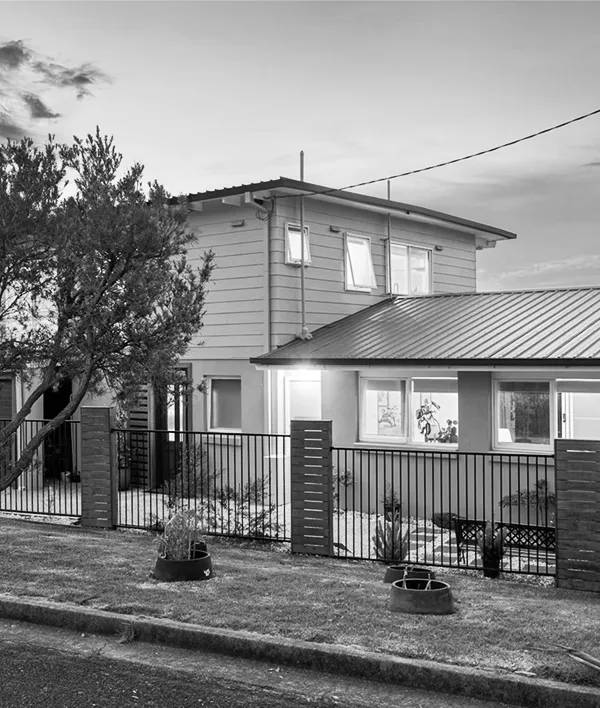
The investor case is different again. Rather than buying another property, an owner doubles the rental income on the one they already have. On a build of around $200,000, Wally Gebrael argues the return on that second dwelling can beat the return on the money already sunk into the front house.
What Size Block Do You Need for a Granny Flat?
Search online and the minimum requirements look easy: about 450 square metres with a 12 metre frontage. Roughly 70 per cent of properties tick that box, which is where the trouble starts. Big trees, drainage easements running diagonally across the yard and awkward access rule out blocks that look fine on paper.
The footprint is 60 square metres, but the working number is bigger. Setbacks, the gap between buildings and leaving the front house a usable backyard mean at least 100 square metres of available land. People go out with a tape measure, find 60 or 70 square metres, and assume that is enough.
Even though it's a 60 square metre footprint, I often tell people you need at least 100 square metres of available land, at least as a minimum.
Wally Gebrael, 7:21
Planning sits on top of that. A 2009 state policy, the Affordable Rental Housing SEPP, forced councils to allow granny flats whether their own controls said yes or not. The exceptions matter: flood, high bushfire, conservation, heritage and scenic protected zones push a project out of the complying development path and into council, where approval is far less predictable.
| Where | Maximum Size As Stated | Condition Mentioned |
|---|---|---|
| New South Wales, standard | 60 sqm | State government mandated size |
| Hills Shire and Hornsby, rural zones | About 120 sqm | Rural zoning inside a Sydney council area |
| ACT | 90 sqm | Different approval pathway, no equivalent CDC process |
| Melbourne | 60 sqm | Based on research the guest was doing at the time |
As described at 20:03, 26:26 and 27:25. Figures as stated on air.
How Much Does a Granny Flat Cost to Build?
The cost story is unusually clear. Prices barely moved between 2011 and 2019, then COVID broke the pattern, labour and materials climbed sharply, and the average now sits at $180,000 to $200,000 for the same two bedroom product. The last 12 to 24 months have plateaued.
Sydney pricing is quoted from about $160,000, but the site decides the rest: brick or cladding, roof type, slope, and how the soil gets shifted. On one Northern Beaches cliff block, access alone meant craning in excavators and wind rated fencing, and the job passed $150,000 before a slab went down.
| Point In Time | Price | What It Covered |
|---|---|---|
| 2011 starting price | $100,000 | Many delivered at $100,000 to $120,000 |
| 2019 starting price | About $120,000 | Only a few per cent of movement across eight years |
| Sydney starting price now | About $160,000 | Before site specific costs are added |
| Average price now | $180,000 to $200,000 | Same size two bedroom flat, kitchen, bathroom, laundry |
| Northern Beaches cliff block | Over $500,000 | Craned excavators, wind rated fencing, steep access |
As described at 13:42, 14:06, 21:29 and 21:51. Figures as stated on air.
Does a Granny Flat Pay for Itself?
Rent is where the case is made. A second dwelling might add $400 to $500 a week, and quality changes that number. Two flats went up next door to each other in the western suburbs, both 60 square metres and both two bedroom. The higher specified one rented immediately at $380 a week; the standard one struggled below $300. Around Curl Curl, flats are quoted at $850 to $900 a week against a front house at about $1,200.
But the quality of the build and the inclusions made a huge difference.
Wally Gebrael, 5:52
Resale is a weaker story. Comparing listings, Chris Bates puts the asking price difference at around $200,000 for a proper granny flat, so the money comes back rather than multiplies, and he has seen owners shrink their buyer pool by building where grass would have served them better.
Then the tax and fee tail. Renting out a flat on your own home brings part of the property into capital gains, which frustrates both hosts given the rental shortage. Taxing a dwelling that adds supply sits awkwardly beside Robert Pradolin's case for counting secure housing as economic infrastructure rather than welfare. Rates do not move, because they follow unimproved land value. Council developer contributions land after approval, from about one per cent of the build price to $20,000 or more.
What Goes Wrong With Granny Flat Projects?
The most common mistake is buying first and checking later. Buyers put a deposit on a cheap block, bring the contract in, and find an easement across the backyard or a heritage listing. Sewer lines can sometimes be encased or built over; a stormwater drainage easement cannot. Veronica Morgan notes a drainage diagram sits in the contract in New South Wales, but is not part of required vendor disclosure in Queensland.
When it's really cheap, there's probably a reason for that. There's something hidden.
Wally Gebrael, 38:23
The other trap is arguing with council. One project chased a one metre setback instead of the standard three, was approved subject to buying an easement through a neighbour's property at $40,000 to $60,000, stalled through COVID and lapsed after 24 months. The complying development path in 2020 would have given the owners four or five years of use.
Then the human failures: a client who was himself a builder moved walls after the frame inspection and halted the job; another owner pulled out the surveyor's pegs because he disagreed with them.
Thinking About Building Out the Back?
A granny flat is a renovation decision with a cost and tax tail attached, and the block decides most of it before a builder is called. Alcove can talk through how renovation finance fits a second dwelling and what it returns.
Renovation Mortgage BrokerSources referenced: The Elephant in the Room, episode 425, "When a Granny Flat Makes Sense and When It Doesn't", released 2026-02-22. Host: Chris Bates (Alcove). Guest: Wally Gebrael, co-director of Granny Flat Solutions, New South Homes and Tiny Home Solutions. Figures are quoted as stated on air. Figures marked as updated were re-checked on 10 September 2026, against ABS Total Value of Dwellings, June quarter 2026, released 8 September 2026.
Press play on these