Veronica MorganIn this episode we're talking with former New South Wales Fire and Rescue Commissioner Greg Mullins and in the aftermath of the devastating wildfires in Los Angeles we're going to explore whether something of this magnitude could happen in Australia and if so what is being done to mitigate the risk.
welcome to the elephant in the room this is the podcast where we love to talk about the big things in property that never usually get talked about i'm veronica morgan real estate agent buyer's agent and buyer's agent mentor co-host of foxtel's location location location australia author of auction ready and co-host of your first home buyer guide
Chris BatesHi, I'm Chris Bates, mortgage broker, currently ranked number three in the MPA Top 100 Mortgage Broker Awards. Before we get started, everything we talk about today is not personal advice and we recommend you engage the services of a licensed and experienced professional.
Veronica MorganOur guest today is Greg Mullins, who is a founding member of the Emergency Leaders for Climate Action, a growing cohort of former senior Australia fire and emergency service leaders who have observed how Australia is experiencing increasing catastrophic extreme weather events that are putting lives, properties and livelihoods at greater risk and overwhelming our emergency services.
Greg has had a distinguished career in fire and rescue, which began back in 1972 when he became a volunteer firefighter before moving to a paid role in New South Wales Fire Brigades a few years later.
And he progressed through the ranks and in 2003 was appointed as both Chief Fire Officer and the CEO Commissioner. Now, over his career, he's gained international experience through working with bushfire fighting authorities in the USA, Canada, France and Spain.
And he's also served on numerous committees and associations and is currently chair of the New South Wales Ambulance Service Advisory Board. He has also received a plethora of awards, including Officer of the Order of Australia.
And upon retirement, he's rejoined the Volunteer Bushfire Brigade, where he started out in 1972, also volunteers as a bush regenerator. So, Greg, we are honoured that you have taken the time to come and speak with us and our audience. And thank you and welcome.
Greg MullinsOh, really happy to speak to you, Veronica and Chris.
Chris BatesYeah, absolutely. Greg, good catch here, Veronica. This is a conversation that we absolutely want to have. And I think it's really important.
I mean, Greg, would you have imagined, I mean, in your wildest nightmares that what happened in LA sort of last month was possible, you know, entire neighborhoods, over 10,000 buildings destroyed by like a wildfire in winter. I mean, it was, it was pretty tragic and horrible, really.
Greg MullinsLook, unfortunately, Chris, yeah, it wasn't even in my wildest nightmares. There's a sense of inevitability worldwide that something like this was going to happen. The timing of it was I was gobsmacked because it's winter. And I've worked in Los Angeles.
I've worked in California with fire agencies. I was there. in 2019 at a big fire in Sonoma County. And I'd worked there from 1995 and been there a number of times. So I had a pretty good grasp on their fire risks and they've just been escalating, escalating, escalating year in, year out. And
For example, 2017, they lost 12,000 buildings across the whole of California through the whole fire season. Oh, wow. 2018, they lost around 20,000, including the city of Paradise was obliterated. That was 18,000 buildings burnt.
So this, coming into the suburbs of Los Angeles, having worked there,
It was a huge shock because the fire morphed from being a bushfire or a brush fire, as I call it, or wildland fire into an urban conflagration. And there's a whole lot of reasons for that that I'm sure we'll cover. But this is the trajectory of climate change.
I've just read a report about bushfires in England and the incredible increase, hundreds of percent increase in the number of bushfires that they're getting. And this is a symptom of climate change. changes.
Chris BatesLet's, let's double down on that point there. See, I don't understand the words. He says urban conflagration. Yeah. That, I mean, what does that, what does that mean?
I mean, we're completely not, I personally, I'm a complete novice on this stuff and I do find it, you know, it really interlinks to our property market. Right. And I think people need to understand. So what does that really mean?
Greg MullinsWell, look, traditionally we've thought of bushfire risk being on the fringes of suburbs and towns and cities where there's an urban bushland interface, and in the US they call it the urban wildland interface.
So that first line of homes, first couple of lines of homes, yes, definitely at risk, and that's where we'll focus our prevention efforts and our building construction standards. But as you get further from the bush, It's fine because you might be impacted by embers, but really no major risk.
But an urban conflagration is when a fire moves from the bush, buildings catch alight, then the radiant heat and flames and sparks from those homes set fire to the ones around them. It becomes logarithmic and it was driven by... Incredible winds that you couldn't stand up in.
160 kilometer per hour wind gusts, 100 kilometers per hour sustained. So hose lines, even the biggest hoses firefighters had were turned to mist. They couldn't fight these fires and they ran out of water, which always happens. Wow.
So house after house after house, went kilometres into suburbia. People who couldn't even see the bush from their home, their houses burnt down. So it stopped being a bushfire and became, as I said, an urban conflagration, just lots and lots of buildings on fire.
And they just, with that wind, it just pushed through and kept going until the wind dropped.
Veronica MorganSo it was the unfightable fire.
Greg MullinsAbsolutely unfightable. And you... firefighters have priorities. Now, first one's saving life. Second one's saving property than the environment in that priority order. And the firefighters in Los Angeles were on priority one, save lives.
And often it was their own lives, sheltering as the fires came through and fire trucks were burnt and firefighters received burns. I'm really pleased, but frankly, quite astounded that no firefighters lost their lives.
Veronica MorganYeah, incredible. Let's rewind a little bit. In early 2019, you formed the Emergency Leaders for Climate Action, a coalition of 34 former fire and emergency service chiefs from throughout Australia.
And you tried to warn the federal government of an impending bushfire disaster, but were ignored. Do you believe that the catastrophic fires that we experienced back here in 2020 were avoidable?
Greg MullinsNo, they weren't. And this was the thing. So we were trying to advise the government, look, there's a catastrophe coming. The current fire chief are trying to warn you, but they can't get through the bureaucracy. They can't get through to the prime minister.
We're allowed to cut around that because we don't work in that bureaucracy anymore. But they have asked for extra aircraft. They're going to need the military, the scale of fires that we were going to get. You might remember down in Victoria using the Navy to evacuate people.
We knew that was coming and wanted to say, look, the arrangements are archaic. The military will tell you that. The fire and emergency services will tell you that. They need an overhaul to make it easier. There are a whole lot of practical measures they could have taken, but
Look, it came down to political ideology. And at the time, we had a government that denied there was such a thing as climate change happening. And so they couldn't listen to us because we said the two dirty words, climate change, and became political, which is...
Worldwide, what a shame that physical science is seen as political. If only people could see it as the threat it is and join up and say, yep, it's a unity ticket. Here we're going to do something for our grandkids.
Veronica MorganAre governments listening now or do we still have that problem?
Greg MullinsNo, it changed on the day. You know, this will sound really political to people, but it's just fact. The day that the Albanese government came to power, they were on the phone. I got a phone call from Chris Bowen asking me if I'd speak to Anthony Albanese.
Chris Bowen's first news conference, he invited three former foreign emergency chiefs and we took over his press conference in Parliament House. But it was to show, it was symbolic to show, well, this is a government that will listen and look. They are listening.
They do consult regularly, widely, and they're not frightened of saying those two words, climate change. And look, some people would try to have people believe they're not doing much. They're doing a lot, but they're getting stymied in parliament with some legislation. So all these political games go on.
Chris BatesWhat can we do for the, let's say for the fire risk, and particularly to say those things, right? Saving lives and property. But what can we be doing and what should we be doing? And what are the, you know, is what happened in LA, that urban fire?
I mean, I don't know if that's really happened here, unless it's been in a bushfire area before. Like, have we had seen things like this? Are we just sticking with the lucky country and these things aren't going to happen here? Like, there's no reason why it shouldn't, I guess. Yeah.
Greg MullinsWell, you've had people like Commissioner of the Rural Fire Service come out and say, absolutely, it could happen here. And it's actually happened in Australia before. We had 1967, 1,400 homes in Hobart wiped out. It went right into the suburb, 62 people killed. Wow.
Black Saturday, 2009 in Victoria. Mm. 2,000 homes destroyed, whole towns just about wiped off the map, Marysville, Kings Lake.
Um, so we, and the, as we saw in 2009, Black Saturday, then Black Summer, which went for six months, started in winter and went through to autumn. Um.
We're getting worsening weather conditions, getting hotter, drier, and stronger winds. So it's, again, it's an area of inevitability.
In Black Summer, we breathed a sigh of relief in New South Wales because the fires didn't come into Sydney suburbs and the Blue Mountains, Lower Blue Mountains, where traditionally we've lost the most homes. Yeah.
Had we had fires in those areas, like Northern Beaches, Sutherland, Hornsby, the Hills, Lower Blue Mountains... Under the weather conditions, nearly 50 degrees, gale force, westerly winds, 5% humidity. So catastrophic fire weather conditions. We would have lost thousands more homes. There's no two ways.
Any researcher, fire officer with any knowledge of history and fire behavior would tell you.
Like the fires in Los Angeles, they would be unfightable in this terrain. Right.
We have this air of inevitability, but Chris, you said, what can we do? There's a lot we can do. I mean, from the big picture of emissions reduction, cutting pollution from the burning of coal oil and gas for long term for our grandkids to reduce risk.
But right now, our building construction standards, a lot of people say, oh my God, it costs so much.
That's an investment in your future, you know, so building to the construction code, the deemed to satisfy, so there's Australian standards for building in bushfire prone areas, the planning standards, asset protection zones, they're all there to protect you.
Having a bushfire plan for you and your family, which might be as simple as saying, if it's catastrophic fire danger, we're going to the city for the day and we're going to watch the movies. We're not going to be in our home because it's too precarious. That's how you save lives.
But to the fire and emergency services, hazard reduction burning is a huge mitigation tool, which is becoming harder and harder. Because what we're finding, it's either too wet or it's too hot and windy. Yeah.
And you might recall in October there was a hazard reduction burn on the northern beaches in Sydney that escaped. Yeah, yeah, yeah. Emergency warning. I got called in when it became a fire to assist in controlling that. And one week before that burn had been cancelled because it was too wet.
And then on the day, unforecast winds came up and it escaped and it took off like a summer wildfire in 24 degrees. Mm-hmm.
Veronica MorganThere are a number of stakeholders, though, involved in landscape management, right, and bushfire prevention. You've got national parks, you've got state-based bushfire services, traditional owners, local councils, individual property owners. And these groups are not always in agreement around things such as backburning.
In fact, there's been quite a lot of controversy over the years. How can these be reconciled in a manner that is sensitive to the threat?
Greg MullinsYeah, look, I've got to talk mainly about New South Wales because that's where I know best. But the arrangements are replicated in some way right around Australia. But in New South Wales, they have bushfire risk management committees that get a risk management plan and operations plan together.
But it's got all the stakeholders. So you've got... Rural Fire Service, National Parks, Forest Corporation, Fire and Rescue, local councils, local Aboriginal Land Councils, Nature Conservation Council, farmers, they're all there.
So that's the first way that people get all these interests on the table and that's where they're resolved and they come up with hazard reduction plans but it's based on pretty advanced computer modeling of fires. They'll do hundreds of runs using different fuel loads and different weather conditions.
And it'll show where areas are most vulnerable to fire. And then they'll say, right, we need to burn right next to the homes here. And there's more of a push to have increased burning closer to assets. Because that'll mean when the fire comes out of the big,
open areas, the intensity will drop. And often it's very hard to manage fuel levels out in the broader landscape.
It's still a valid strategy, but what we're finding with increased fire weather, more days of very bad fire weather and more frequent in terms of how many years between the big fire seasons,
The Bushfire Research Hub at Wollongong Uni, that's one of their key recommendations to the Near South Wales Bushfire Inquiry was more burning close to assets. So that'll be a focus into the future.
And also then the last part of that is emergency warnings that will come through on your mobile phone, your fixed line.
Heed them. If it says shelter in place, don't get in your car because you'll die. You know, and the agency's saying that now they know that the language might upset people, but they say, I say, if you get in your car or you run, you will die. Wow.
Getting to a solid building, if it catches fire, stay there as long as it can, then step onto that ground. That's how serious it is because we wouldn't go there before 2009 because we knew we'd upset people. But now it's about saving lives.
Chris BatesYeah. So funny you say about the backburning, which just makes me quite scared because I'm looking out right now on our, we're backing onto a reserve up in Northern Beaches in Sydney and they were trying to do the backburning here and we get the letters in the mailbox.
We're going to do a backburning on Thursday and Now, we only just moved to this property a couple of years ago, and I was quite a bit excited to see the backburn, right? Because, you know, let's see what's happened. And I'd come home, and then sometimes, and that wouldn't happen.
And then the next week, it was saying it was happening, and I'd come home from work, I'd go to the city, and it wouldn't happen. And it just kept on happening. So they were finding it really hard to find a day to do the backburning, because like you say, those conditions...
mustn't have been right to do it. So what happened wrong with that other one in Northern Beaches, though, where they did do a backburn, but it just took off? Did they just get the day wrong? Did the weather change on them? Is that also a problem that they're so fearful that, yeah.
Greg MullinsAnd this happens. We had a fire at North Head a number of years ago. One had a fiddle town out the back of Hornsby, Victoria. Western Australia, it's happening right around the country where it's either you can't burn it because it's too wet. No matter what you do, it won't light.
And if you get a week of hot, dry winds, it just crisps up. And once it lights, it just takes off into the treetops and it's away. And that's what happened. So they had a weather forecast for Beacon Hill, sorry, Oxford Falls, where that burn was.
And it said winds maybe up to 10 kilometers per hour, maybe gusting a little bit above that, but they ended up gusting to 20, 30 kilometers per hour.
And it was just that because we'd had three hot, dry days or warm, dry days, the bush had gone from being too wet the week before to very dry. And every spark that's jumped over the fire trail started a new fire. And then you had 20 fires joined up and
In the middle, no trails in the middle, had to wait for it at the property lines. It'd be just terrifying.
And this is the bind and you get, and I'll say a lot of armchair experts out there, shock horror, I get on social media, say what mongrels the fire services are and we, you know, and if you burn, oh, all this motion, I had my washing out and. We're trying to help.
Maybe zip your mouths and just go and join your local brigade. That'd be helpful.
I'd make no apology for saying we should actually do their research and see what we're trying to do. And we don't try to stuff up. It's just getting harder and harder.
Veronica MorganYeah. Now, how are bushfires changing as a result of warming climate? You know, I've heard stories about they create their own weather events. I mean, that is absolutely terrifying. In fact, there was a dramatization on the, I think it was the ABC, which was following the 2020 fires.
I actually, I felt traumatized watching the thing, let alone, you know, potentially being in a fire. Yeah. So, and I would imagine that obviously this is intensifying as a result of climate change.
So can you sort of explain to us, I guess, what the difference is and how that impacts on emergency services as well? Because your planning and training and resourcing must have to scale up exponentially.
Greg MullinsYeah, look, so first point, most fire seasons will be normal and we'll be able to have days where fires get away and we might lose some homes, but not hundreds or thousands of homes. And people shouldn't think, oh, every summer, you know, doom, gloom, we're all going to die. No.
But it used to be about once a decade in New South Wales, 10 to 13 years, you'd get a very bad fire season. That was the pattern. It's now down to every five or six.
So the return of very bad fire weather. is more frequent. It's about halved. The fire seasons are longer. So the legislation in New South Wales says fire seasons from 1st of October to 31st of March.
But now black summer started in July, burnt through winter, and we were losing homes in September. Wow, yeah. And that had never happened before it was mid-November, before it was hot enough, dry enough, windy enough.
Veronica MorganSo that's funny. We also had fire and rainforest too, didn't we?
Greg MullinsYes, so places that have never burnt before are burning, like ancient Gondwana rainforest up on the north coast, subtropical rainforest in Queensland, Peridgian Beach, places like that were burning. So we're getting, and there's fires at the moment in Gondwana.
so-called rainforest in Western Tasmania that never used to burn in the Highlands of 2018. So that's that. But look, the fire weather you're talking about. So the fire weather, it's hotter and drier than it used to be. When I was a, I started as a firefighter, as you said, 50 something years ago.
What is it? 53 years. Oh my God, I'm old. So I was very young when I started with my dad. He was a volunteer firefighter, but
The hottest day you'd get, maybe 41, 42 degrees back then. And during Black Summer, I was folding a flyer in December 2019 in the Blue Mountains and at Penrith as we drove through, it was 49 degrees. And it was just, you almost got heat exhaustion stepping out of the air-conditioned truck.
And so the fires just exploded and we had at 1am, so we had fires burning at night as if they're burning during the day because the increased temperature, it doesn't, you get moisture increase at night. It didn't happen. And because it was hot, the winds kept blowing.
So you had different weather conditions at night, which is when you try to put fires out because they generally sit down or they don't sit down in the west. Now that generating their own weather systems, there's a thing called pyro convective storms.
So pyro means fire, convective, the convection columns. So you get storm clouds form out of the smoke column. So they push up 10, 13 kilometers into the stratosphere, become a storm cloud, but there's no moisture.
So there's no rain, but you get... The downbursts, the wind squalls, you know, 150 kilometer per hour squalls coming from every direction, trees falling down, fires going. You know, if the storm collapses, the wind just rushes out everywhere in every direction at once.
It's my definition of hell on earth. I was under one at Bateman's Bay on New Year's Eve 2019.
We just had houses burning as far as we could see and we were just dodging falling trees and there were animals burning to death around us, kangaroos, things like that. It was just horrific. So this used to be rare. 1978, 2018.
About 60 events, but in a six month period, we had more than 40 in Black Summer because it was so hot and that heat was able to punch up into the stratosphere and bring those incredibly dry, strong winds down to the surface and lightning starting new fires 30 kilometers away.
So we knew something was changing from 2003 when Canberra burnt. We had, again, there's another suburban fire, 485 homes destroyed in one afternoon. And it was the world's first recorded large-scale fire tornado.
So trees half a metre thick were pulled out of the ground, ripped out of the ground like weeds or snapped in two. Wow. Ripped roofs off homes. God. And they burnt down. So this is new. It's a worldwide thing. California, they're getting the same. It's hilly terrain where there's hilly terrain.
Black Saturday, 2009, 173 people killed. A lot of them were in King Lake. Yeah. And they couldn't escape because they had one of these monsters above them and there was nowhere to hide.
Veronica MorganGod, it's horrific. You know, from the outside, it seems that fire services are overwhelmed in the face of these sort of mega fires. You know, I can't even imagine why anybody would want to be a volunteer. You know, it seems absolutely terrifying.
So moving forward, how do emergency services gear up for these increasingly demanding fire events?
Greg MullinsYeah, look, so firstly...
Now, if you want to be a firefighter, do it. It's one of the most rewarding things you could ever do. You learn new skills. You meet really cool people. And you help. You get to help. And I...
So people think I'm a bit mad. I, you know...
40 year career in fire and rescue and I went back to being a volunteer but I love it I love it because I'm out there helping people and you learn how to protect your own home and own family so that's number one um so there's a recruitment plug there you go if you can be a firefighter you're going to help your community and yourself um
So fire services, yes, on the worst years and the worst days, like Black Saturday, like January 2003 in Canberra, and like Black Summer, they'll be overwhelmed. But most days we win.
And you just keep plugging away until you can't do any more. So we've got to factor in. And that's where the other risk management issues things come to play, so how we construct our homes, where we place them.
So asset protection zones, so cleared areas so that the flames don't reach your house. Ember protection, building the homes so there's no embers can get into your roof and set your roof on fire or under your deck.
And then, as I said before, the warnings, the final bit is get out of there or shulker now. So information, so people know what to do. With all of those things put together, hazard reduction, sorry, I forgot that, but that's the huge one. With all of those together...
We mightn't be able to put out big fires, but we can certainly save lives and property, and we do our darndest. But it takes everyone. You can't just sit back and say, oh, the government should do this.
No, if you live in a fire-prone area, you have a personal responsibility to do everything you can to listen to the advice and to act on it and have your plan. Mm-hmm.
Veronica MorganI'm on a personal mission to help more people make better property decisions. You know, most people don't realise that they can cost themselves hundreds of thousands of dollars over the medium to long term when they make property decisions without all of the information that they need.
And what I do is help people with tricky real estate problems, which often masquerade as simple questions like, should I sell my investment property because the interest repayments are hurting or should I buy before I sell or the other way around?
You can connect with me and access all of the tools that I've created to help you make better property decisions at veronicamorgan.com.au. And there you will find resources for first home buyers, details about my buyer's agent mentoring program.
You can connect with my Sydney based property management and buyer's agency teams, Australia wide vendor advocacy, or ask me for introduction to the small group of buyer's agents that I would personally recommend across the country. That's veronicamorgan.com.au.
Chris BatesIf you're looking to buy your first home, thinking of upgrading to a new one or purchasing investment property anywhere in Australia, we would love to carefully guide you through this journey and importantly, get the finance right. Reach out via my website, alcove.com.au. What's your thoughts, Greg, on the insurance side of all this?
Because, I mean, I hate saying things unless I really know the truth behind it all. But I was just having a chat about the LA Fires. They were talking to me about the insurance over there. And basically, I think a lot of the insurance kind of verified this as well.
So I could be talking out of school. They basically did a runner on a lot of... the homeowners there last year and said, look, you guys are just too risky to insure. And a lot of these people who lost their home just couldn't get insurance. Like they, the companies just bailed on them.
Is, is, and is that sort of an issue in Australia? Are we going to start to see that? You know, we've heard that with flood areas before where insurers don't want to go, but are we going to start to see that more and more in Australia?
Or do you just see premiums are going to have to rise dramatically and that forces people not to take it? Um, yeah. What do you think?
Greg MullinsYeah, Chris, look, so I've got to address the Los Angeles and California situation because it's quite unique and it's not like here.
Greg MullinsI'd argue that the government in California took a wrong turn. Some years ago, they regulated the insurance industry and said, you can't raise premiums. You've got to apply. A bit like health industry saying, you have to apply and we'll tell you.
So what happened over time as the bushfires got worse and more and more properties were lost, you know, 2017, 2018, thousands and thousands. A lot of the companies said, well, we can't do business if we can't price to risk.
We're not offering $100 policies when they should be $175 because we'll go out of business. So they left. And then the government had to come in with a government-funded scheme called the FAIR scheme, which only does the basics, basically get rid of the debris and... you know, maybe half rebuild.
And it's now got more claims, about 650,000 people under that. And they haven't got the cash reserves to actually pay out. That's a government scheme. So that's California. So it's a bit unique, but there's a knock-on effect through reinsurers internationally.
So prices are going to go up here as a result of California. What's happening here is, The Climate Council on its website has a risk calculator. You can put in your postcode and it will show you what your risk is into the future due to climate change.
And it's been calculated by climate scientists, insurance reps, and it's not 100% of course, but it's current sort of knowledge. It's being updated at the moment. But look, insurance companies...
There's an estimate that by 2031 in 25 homes in Australia will be uninsurable because of the increased flood risk, fire risk, storm risk.
And what they look at is per annum, if you're likely to be impacted once a year, once a year every year by an extreme weather event, that costs 1% of the cost of your home, you're basically uninsurable.
So say you had a $300,000 home, that means $3,000 worth of damage. Insurance companies will go, well, we'll cover you, but it'll be $20,000 a year. Or no, we're not going to cover you. Or we won't cover you for flood, because it's almost certain.
You know, you live somewhere that's going to be inundated. So they're the changes. And, you know, people think, oh, those terrible insurance companies making profits. Well, their profits are going down because of the increased
Natural disasters worldwide. You saw the floods in Spain, the fires in Maui, in Hawaii, in California, here.
It's not a very profitable business like it was. So people blame them saying they're making cash. But actually, and that's a concern to governments because if people lose their homes and they've got nowhere to live, Where does that fall? Onto you and I through our taxes. We have to house them somehow.
So you need a strong insurance industry to have resilient communities. And resilience means taking a hit and bouncing back as quickly as possible.
Veronica MorganWell, you also need a construction sector that can supply the labour and the parts, the materials.
Because, you know, and again, I could be talking through my head here, but my understanding is that down the South Coast, there are still people living in caravans that lost their houses in 2020, 2019.
Greg MullinsYeah. Look, and that's the, and the other, now they, those poor people, they were hit by, The worst fires they've ever had. I think on New Year's Eve, 650 homes down on the south coast destroyed.
And that was three times more homes than had ever been destroyed in the whole of New South Wales in a summer before that. And that was just air. You know, we had just under 2,600 homes that whole summer in New South Wales alone. Then they were hit by floods.
We got the flooding rains in February. Oh, yeah. And so they're living in tents and caravans and flooded out. And so this is increasingly – so watch California. When the rains come, you'll see the mudslides. Because of the denuded hillsides, people say they should have burnt. Well, same as us.
It rained for three years. It couldn't burn. They've got to be very careful because the brush, the chaparral and all the other species that have that basically very thick scrub. It holds the hillsides together. And once they get rain, those hillsides are going to let go.
Oh, my God. Yeah. There's a whole lot of factors in California different to here. And one of them I should have touched on before is a lot of those homes are built to earthquake standards. So they're light construction.
Greg MullinsThat means they burn really well. So a lot of things there that don't apply here. So, um, and it's not that we're better, it's just, we're different. We've got a different risk profile.
Chris BatesJust on that, Greg, is that we've been building homes in, let's say Western Sydney, I'm not picking on that as an area, but the construction and all these new house and land packages that we're building is, you know, when you talk about that urban sprawl, are those more susceptible, A, because of where they're located and the heat and the, um,
And, you know, the way that we built them, is that a higher risk?
Greg MullinsLook, I'm loathe to say yes because I don't want people to go, oh, my God, I'm at risk of a firestorm. But the vegetation out there is quite different. So when they –
When we build subdivisions in New South Wales, there's perimeter roads. It's built to the bushfire planning code, which reduces the impact of embers and direct heat and flame.
Veronica MorganThey also take out every tree. Sorry? They take out every tree too.
Greg MullinsOh, yeah, which is a bad thing. Another issue, yes. They need the trees and they're not, you know. An individual tree is not a fire risk. That's great. It's shade. It does a whole lot of things. It cools things down. So, um,
One of the worries is they're built so close together. Yeah, that's what I'm thinking, yeah. They're different construction to California.
They're mainly brick, so they're not, you know, a lot of homes in California look like they're cement rendered, but it's actually ducko, which is one-inch chipboard with a bit of wire and a bit of concrete on it, and that's how it flexes in an earthquake.
I couldn't work out why homes were burning so fiercely when I was on fire trucks in Los Angeles back in 1995. I thought, what the hell? And they showed me why. So, look...
There's places, it'll be legacy building stock, older buildings that weren't built to bushfire codes that would be most at risk. But could it happen with storm force winds on a day of 49 degrees, 50 degrees?
With major fires and embers. Yeah, we certainly could. You know, places like the Blue Mountains, the Dandenongs, Northern Beaches, Sutherland, Hearst Hills, Adelaide Hills. There are areas, steep terrain, heavily watered with lots of homes around it. Yes, fires can go into suburbia.
Yeah. I think I'm actually in one of those zones right now.
Veronica MorganI mean, I grew up down the shire and my parents lived, we lived on a bush reserve and I think it's quite a miracle really that we never actually had a fire on our doorstep.
But in the years since I moved out of there, two streets away, there were houses lost and it did happen. But And that does seem like your obvious risk area, that type of setup, right?
But I guess when you're talking, you know, Chris's question there was really about the new subdivisions out west where the houses are close together. And there's urban heat islands out there as well, too, because they've all got monument-coloured roofs and no trees. It's oversimplifying things, of course.
But there'd be, and you talk about legacy buildings. I mean, does that mean, you know, old weatherboards or does that mean, is that predominantly the type of risky property?
And when people go to build in these areas that are adjacent to bushland, you know, obviously you buy an old house like that and then you don't renovate it. You can just live in it as it is.
But the minute you start to, you want to renovate that house, I know that you've got development control plans and everything. various things that's going to put in place or impose on you requirements to bring that property up to code, correct?
So what are some of the things that make, I mean, you talked about not allowing embers to get underneath the roof fees and various things, but what are some of the things that if you are living in an area that is adjacent to bushland, that if you've never renovated your house or you haven't thought about it, what should you be doing?
Greg MullinsYeah. Look, most house fires in a bushfire start because there's leaves in the guttering. Well, a lot. I won't say most, but a lot. There's leaves in the roof gutters. They catch fire.
The flames go up under the colour bond or the tiles, set fire to all the dust and stuff that's in the roof space. And people say, I saw the house explode. It's an urban myth. Houses don't explode.
But what they're seeing is the embers started a fire maybe 20 minutes before, 15, 20 minutes before. The ceiling space is blazing. Then all the gyprock sags and burning stuff goes into every room. And all of a sudden, people see the windows blow out and flames come out. It's called flash over. Right.
It's a normal thing. transition in a house fire, but it's from the roof catching fire. So you want to make sure that your gutters on a bad day, block the downpipes, fill them with water, always keep the leaves clear. So put gutter guard on.
Any penetrations under the roof, get a builder, you know, cut some nice bits of chip rock, put it up so sparks can't get into the roof.
On a bad day under doors, Put wet towels so the sparks can't come inside. Welcome mats. I've seen a welcome mat catch fire and burn down a house. So welcome embers, which is, oh, no. Anything really flammable, bring it inside.
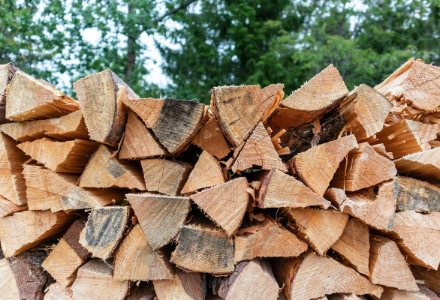
Plastic furniture and decks, wooden decks, if you can get under it, that's where sparks will catch a lot. So put a sprinkler under there. Live off tricks like that. If you've got a wood pile for winter and it's next to the house, well, thank you.
You know, the bushfire will go, thank you, I'll set fire to that and burn down that. Move it away. Have your wood piles away. Don't have dry gardens around the perimeter of the house. Keep them wet. Don't let, you know, lovely native thick mulch right up to the side of the house.
Move it away or keep it wet. Just have close main lawn. So there's lots you can do. And look at where the fire will come from. In New South Wales, usually the west, north or northwest. And so what's the slope?
The bigger the slope, the faster the fire will come at you and the bigger the flames and the more embers. So clear it back as much as you can without cutting down the big trees. Seek permission for that. But scrub grass.
Veronica MorganDo fires run faster uphill or downhill?
Greg MullinsUphill. Right. So if you – no, wait until you do an experiment. The kids might listen and do it and burn their fingers. But heat goes up. Okay, makes sense. So we know chimneys. Yep, of course. And it's the same in the bush.
If a fire starts at the bottom of the hill, it races up. It preheats everything above it. The flames get longer and longer. Right. It races up and then goes – goes over the top, drops sparks down there and then slowly, more slowly burns downhill.
So we often try to catch a fire as it comes over a hill and knock it down.
Veronica MorganWow. And so if you're building your house on top of a hill, it's sort of, I mean, you want to catch the view, right?
But like it's all the natural things that you'd want to do if you're building a house in this sort of environment, but typically could be one of the most dangerous places.
Greg MullinsYeah. So look, what councils will then say to you and the Rural Fire Service and other, you know, if it's a CFA in Victoria, the CFS in South Australia,
They'll say, look, your bow level is flame zone or 40. You're on a steep slope looking west. That's where the fire is going to come from.
You must build to Australian standard 3959 or have a steel-framed house, the Steel-Framed Housing Association standard. Um, no penetrations, double glazed windows, but you also have to have an asset protection zone. So you must clear back, you know, 40 meters.
You can't have scrub and grass within 40 meters of your home. And we'd recommend you plant tree, deciduous trees or whatever that aren't flammable. So there'll be things like that. People go, oh, this costs so much.
If you want to live there and you want home to survive, just go Costa doing business. I'll get to live in this beautiful spot with this beautiful view and if a fire comes, we'll survive it. So it's just how it is.
Chris BatesIt's funny because we've got to do a reno. Ours is pretty much, and we're back onto this reserve, right, in the bushfire zones, et cetera. And so hearing that, so your view on it is, is it, and even do the fire standards go far enough?
Like, you know, there's all this BAL 40 and et cetera like that. Like, do you, do you just build a house that's, you know, invincible to the fire a little bit? Do you, do you really? Can you?
Yeah, I mean, is that how serious people should really be taking it if they are in these areas?
Greg MullinsLook, there's a bit of discussion around after Black Summer.
I think the construction code... Last variation for fire. I'm not sure. It might have been 2020. So part of the formula for Bell is the fire danger index, or it's now called fire behaviour index, and they've got to update that.
But places on the mid-north coast of New South Wales where it said, look, maximum fire danger index is about 75, 80, they had 120.
Because of the weather. And that's the weather they can get. And the weather's getting worse. So the fire danger indexes are climbing and the building codes possibly aren't keeping up. Right. So, and that drives more measures in terms of construction materials, windows, where the house is sited.
So I can see... changes coming in future as we get worse fires.
They'll build in the experience of previous fires and more and more they're going to have projections now that we've got the Australian Climate Service saying, look, here's where we'll be by 2030, 2040, 2050, temperature-wise, weather-wise. And that's going to drive up fire danger indexes.
So they'll be able to get ahead of the game where we'd lost all that research capability under the previous government because they just killed it.
Chris BatesI remember back in, is it 2025, wasn't it? Is it 2019 or 2025? 2019, yeah. I've got bad asthma and, you know, I remember it being really tough and almost, when these sort of summers come, is it really advisable if you're,
your health does get compromised, is it really dangerous to be living in cities when they are under these severe conditions? And what's that like long-term impact if this is happening more frequently, right? What does that mean for our cities when the people who have got health compromised for these conditions?
Greg MullinsIt's not good. So during back summer, most people don't realize at least 417 people lost their lives as a result of smoke. Really? Wow. Babies were stillborn. Mothers breathing in that smoke for weeks on end. The placentas stopped doing their job. Yeah, okay. Wow.
Um, so there's a direct correlation to low birth weight and sometimes stillbirth. So this stuff is dangerous and it's, um, you were, there was nowhere to escape in New South Wales. So from, I went up the North coast to fight fires and.
I think I flew into Coffs Harbour and then was ferried up to Grafton. You couldn't see, it was like fog every day, but it was smoke. And Sydney, came home to Sydney, couldn't breathe. And I had a chronic cough for a year after those fires and so did every other fiery, I think.
And if you had a compromised system, if you were an asthmatic or had cardiovascular issues,
It could make you very, very sick. And this is when I was in California in November 2019 for the Kincade fire in Sonoma County, San Francisco looked like Sydney.
Later on that year when I came home, you couldn't see the Golden Gate Bridge because of the smoke. And this is another factor in... this escalating issue as the planet warms.
And I spoke to a climate scientist while I was there at Stanford University, Chris Field, and it was really chilling. I'll never forget what he said.
He said, Greg, what you have to understand is that Mother Nature, because the planet's warming, she's using fire as a tool to turn forest into scrubland, scrubland into grassland, grassland into desert. And it's now unstoppable.
And it was because in California, Northern California, because of reduced snow and snowpack, they've got millions of hectares of forest dying and Alaska, same thing, because of these beetles that burrow into the bark. Needs to die every winter because it was too cold for them.
But now with warmer winters, they stay alive and they kill the trees. So all those dead branches are falling down. And when it burns, the fires are far more intense than they ever were for millions of years. So it kills everything. Wow. It doesn't really grow back. So there's all these...
rolling effects and I'm sounding, you know, people will listen to this and go, oh God, but there's hope. You know, there's so much we can do.
And in terms of being homeowners in hazardous areas, don't go, oh my God, we've got to move into Surrey Hills and go get a home unit and kick the windows. No, there's beautiful places where we live. We're very lucky, so lucky to live in Australia, but get involved, understand the risk.
You're going to pay extra to live there, but usually that's worth it. And get involved with your volunteer emergency services so that you know what you can do.
Chris BatesI mean, you've been eyeing it for me, to be honest, on this and what I'm going to embark on and us living here as a dad and, you know, and kids and houses and, you know, you've got to be a responsible homeowner, right, for the other neighbors and, you know, because that's the thing is if everyone's taking efforts, it would more likely succeed, right?
It's the house that maybe don't and then they catch a light and then it catches the next one. So you need everyone in on it.
Veronica MorganIt's like immunization. Yeah.
I mean, we haven't really had a humorous side to the show yet, but can we, you know, a property Dumbo is, you know, like a story sometimes that we can learn from or a mistake or, I mean, it doesn't have to be humorous, but, you know, we do like to lighten things up.
Have you noticed anything you can share? Look, I...
Greg MullinsYeah, I do recall pulling up at someone's property. It was locally, actually. It was some years ago, a big fire coming up the hill. And there were these 44-gallon drums. And I thought, I wonder what they are. And we sort of said, I will shulker behind them as the fire comes up and
And a bloke ran over in his singlet and his shorts. And he said, mate, that's some aviation fuel.
Uh, cause he had a mate who's got a helicopter and I thought I'd get it out of the shed in case the shed caught fire, but I'm getting out of here because if it blows and we're sheltering behind it, we're like, whoa.
Veronica MorganOh my God.
Greg MullinsOut of here. So, and you know, you, you get some strange things happen, um,
Veronica MorganI'm going to add one, which is not really funny, but it's a warning, I guess. And you can add to this, Greg, I'm sure. But jumping in your pool is not a good idea, right? If there's a fire.
Greg MullinsNo, it depends what sort of pool it is. Above ground pool, no, don't, because it might fail. But look, an in-ground pool is fine.
What happened, this is grisly, and I won't go into full details, but 1939 bushfires, mainly in Victoria, but also New South Wales, there was a Royal Commission and a number of people died jumping into above ground water tanks. Right, yeah.
That were on a bit of a stand and they basically boiled.
Veronica MorganYeah, well that's.
Greg MullinsWell, you know, the people would have died slowly and fallen asleep. So there was advice from then, don't get into an elevated water tank because they won't save you.
So if you've got a dam or an in-ground pool, yes, or a creek, standing water, as long as the heat can't get under it, yes, that's a good place to be.
Veronica MorganWell, that is really interesting because I had in my head from some report years ago with somebody jumped into a pool and they had met the same fate as the people who jumped in the water tank.
But now I'm thinking about it in terms of the elevation of these properties, even though it was an in-ground pool, potentially underneath was a hill. So, you know, it was potentially, can't leave it out.
I'm glad that I brought that up because that was an urban myth in my head that you can't jump in your pool. But I think if that's good advice, if you find yourself in that situation, it's good to know the facts, not my idea.
I'm going to put myself up as a Dumbo there.
Chris BatesThere you go. No, no.
Greg MullinsLook, there's a whole lot of urban myths like broken glass in the bush will focus sunlight instead of flame. And when I was a kid growing up at Terry Hills, we'd go and pick up broken glass because it'll start fires.
But that was an urban myth from that Royal Commission in 1939. No one's ever been able to replicate it. Wow. Someone said, oh, I saw this and I think it was a broken bottle. Did it. Wow, let's put that in the report.
Chris BatesYeah. But actually. No evidence. No. Yeah, classic. Greg, thanks so much for the chat. I do think it's enlightening. Excuse the pun there. I didn't mean to do that. But yes, thank you for coming on.
It's actually a really important episode and it's 300 odd episodes, never covered this and I think it's long overdue. So thanks so much for coming on, Greg.
Greg MullinsThanks, Chris. Thanks, Veronica.
Veronica MorganYeah, really appreciate that. Thank you, Greg. If you have a question that you'd like us to answer in an upcoming Q&A episode, you can send us a voicemail or written question via the website, theelephantintheroom.com.au, or you can email us directly at questions at theelephantintheroom.com.au.
If you like what you're hearing, please share this episode with others you feel would benefit. And while you're at it, why not leave us an iTunes review? Five stars would be great.
I know that sounds a bit cringy, but we have it on good authority that every review helps make it easier for other people to find out about us and hear what our amazing guests have to say.