Curious about upgrading?

Wondering where to start?

Complex questions that need answers?
Is there a better structure for you?









"They managed to navigate my complex expat income and even got my Google RSU income approved as well."
"I highly recommend Alcove to anyone looking for a mortgage broker who is responsive, trustworthy, and truly cares about their clients. Thanks again to the whole team for making the process such a positive experience!"
"As founders, we're constantly jumping between things so having a partner that handled the details & made the process super clear made the buying process breezy for us. Very happy with the experience!"






.png)







"Alcove has been a great partner. They look after my audience properly, keep things simple, and deliver real value. I’ve got full confidence referring clients knowing they’ll get honest, straightforward advice."

"Property is one of the biggest financial decisions people make. Alcove stood out because they take a strategic approach to lending - helping clients structure property and debt decisions in a way that genuinely supports their broader financial plans."


Adapted from audio. This article is a written adaptation of the original podcast episode. Sources and dates are shown with each figure.


Co-host of The Elephant in the Room. Real estate agent, buyer's agent and buyer's agent mentor, co-host of Foxtel's Location, Location, Location Australia, author of Auction Ready and co-host of Your First Home Buyer Guide.

Ryan Bennetts On How Development Sites Are Found, Priced And Secured
Site acquisition specialist Ryan Bennetts explains how developers pick sites, amalgamate owners and structure deals after the low and mid-rise rezonings. He also sets out where the pressure is building on approvals, builders and buyers.
Today we're going to explore what actually makes a good development site in today's planning and funding environment. How long sophisticated developers are prepared to hold land before turning soil and what rezoning truly means from a feasibility and capital perspective.
We'll also dig into the realities of amalgamating lots to create a development site where policy, ambition, vendor expectations and commercial logic don't always align. We've invited Ryan Bennett, an acquisition specialist, to join us in this discussion. He's got more than 14 years experience across commercial real estate, construction management and acquisitions.
Ryan brings a frontline perspective on how developers assess risk, price potential and exercise patience in a market where timing can make or break a project. Welcome to the elephant in the room. This is the podcast where we love to talk about the big things in property that never usually get talked about.
I'm Veronica Morgan, real estate agent, buyer's agent and buyer's agent mentor, co-host of Foxtel's Location, Location, Location Australia, author of Auction Ready and co-host of Your First Home Buyer Guide.
Hi, I'm Chris Bates, ex-financial planner and mortgage broker, currently ranked number three in the annual MPA Top 100 Mortgage Broker Awards. Before we get started, everything we talk about today is not personal advice, and we recommend you engage the services of a licensed and experienced professional.
Our guest today is Ryan Bennett, who spends his time identifying sites, negotiating with landowners, structuring deals and deciding which opportunities are worth pursuing and which should be left alone. So this is going to be a fascinating chat. Ryan, we've got so much we want to learn from you.
Thank you very much for joining us.
Thanks for having me. Ryan, absolutely. I think this is an area that I've got very little knowledge in. I'm sure a lot of listeners do, but they can see this happening, right? AFR reporting week on week out of big sites getting amalgamated as developments, you know, potentially coming down the line.
But how difficult it is to actually find like a good site to develop and, you know, in your view, like what is that site you're looking for?
Yeah, I appreciate your enthusiasm because I get a lot of questions day in, day out of, you know, how do you do your job, even from friends and family? Like, you know, what does it take to put the ideal site together? How do I put a site together?
That's what people ask me often. It is something that I think everyone's got the ambition to do or, you know, the desire to do, but there are layers of complications, complexities, and obviously it's a difficult game and a difficult challenge.
And that's why I think leading acquisition people are, you know, well sought after by developers because, you know, sending the right people in to do the right deal is very important. I really believe that buying upfront sets a development up for a win from the outset.
And if you don't buy well and chasing your tail through the whole project life cycle, and there's an incredible amount that goes into these projects. And often when you're talking about multi-res apartment developments, as an example, they can be sort of four to five year life cycles.
It's a long time to realize upside. If you buy well, you set yourself up really well. If you don't, then it can go the other way.
I think to answer your question, some of the things that go into obviously putting together a site and the ideal site, planning is obviously a key aspect in consideration and that's really where it all starts. What areas and what zones are you dealing with in certain suburbs? So a lot of my...
time in aquacultures has been spent through like sort of trolling through zoning maps and things like that and identifying pockets within prime suburbs that have development potential. The key thing you're looking for when it comes to planning and planning controls is what locations and what precincts within any certain suburbs or pockets
can I develop in that actually allowed a landowner, I should say, to realize a upside on the value of their property by selling to a developer.
And that's a really important point upfront because talking to a landowner, they're looking at what they actually receive from the deal, but developers on the other hand, they don't wanna pay that in four to six weeks like you would if you're buying an apartment or a studio, for example.
Developers are typically looking to settle those properties in the future, sometime around ideally development approval, and therefore that requires time.
And from a landowner's perspective, that typically requires more of a premium because they're thinking, how does the market catch up or take off between the time that I sell to a developer and the time that that developer actually settles?
And that would be one of the key questions that I get upfront from landowners is, well, what if the market moves? Do I get a higher price if the market moves between when I exchange with the developer and when I settle with the developer? And that's a key point to navigate.
And that's probably the second thing outside of planning. It's dealing with landowners and landowners' expectations, landowners' questions. Educating the landowners actually what they're getting into, why the developers are looking at their land, and then that leads into the deal. What deal terms are there? What does the developer want?
What does the landowner want? Then from there, structuring a development framework, a dual framework, and then going into more contractual items like how does a contract come together? And because they're not as standard and ordinary as, again, a conveyancing contract for buying a unit, there's things like option agreements and things like that.
And then to get more complex, which I own right now, is obviously joint venture arrangements and project delivery agreements and things like that. So there's some key things that I'm thinking about upfront.
So typically, how many owners might you be dealing with for each site? Do you have an average?
I would have to go away and tell out my average. I would say it's probably too many for me because a lot of my time is being spent amalgamating strata blocks. And that's been a really interesting space, particularly in the last few years as land has got tighter.
It's the strata amalgamations has been sort of a busy area, a busy space, if you will. Now I've done a deal where I acquired 32 strata properties across five different strata buildings to form a development site.
You sort of think about sort of red brick strata blocks and might have six to eight owners each. The particular site I did, it was just over 2,300 square meters, five individual red brick blocks.
You're not just dealing with 32 owners in one building per se, you're dealing with multiple strata schemes, multiple owners' committees and corporations, so one more complex.
So the strata, you've only got to get 75% to agree, right?
If you're trying to deal with, say, four houses in a street or five houses in a street, you've got to get 100% of those owners to agree, or maybe the middle three, and then one or two of the other ones could drop off perhaps.
But with Strata, so you've got 25%, it doesn't matter, you can override them. But you're trying to coordinate five different, say five different Strata plans. That's a monumental negotiation feat, I would imagine. And patience and psychology and all sorts of stuff that goes into that. How long did it take?
That particular scenario took me about 16 to 18 months from memory to put together from initial conversations to control of the properties. And you make an interesting point around the 75%.
It's very helpful to the developers and I will say it's changed the game.
I recently looked at development sites in... In Brisbane, for developers, they don't have the benefit of strata renewal policy.
There is some proposed changes coming through, but in Brisbane, I know from experience that it's very difficult to put strata buildings together because those final owners have a lot of leverage they can hold out. The way that it's happened has taken the leverage away from the last few.
it's not advantageous to be in the last few. So it's either sort of join the masses or be in the end and then sort of come down to the sort of loggerhead developer. And you're right, Veronica, you do say like you only need 75%.
My perspective is probably a little bit different and I'll challenge that for this reason. As an acquisition specialist, you do still need 100% to develop the land. That's how you get there. So you can't turn oil until you have 100% of that strata scheme.
So yes, you need them to control the property and to commence strata renewal proceedings in the Land and Environment Court, but you do need 100% to turn soil.
And I've always taken the view that 100%, you know, on an amicable basis and, you know, sort of working with them to do a deal upfront is always better than going through the strata renewal process because you've got to put a proposal in and go through Land and Environment Court and that can take, you know, 12 to 24 months.
When you're sort of like winding it back, because now you're at the point of putting a deal together, right? And yet starting negotiation, you've really narrowed in on this side, but you might making multiple bets. Like I've got a 20% chance of pulling this one off.
So we'll try and we'll try this one and wherever I can get there, you know, you can't just put all your eggs in one basket. But now the change is obviously happening in New South Wales. Like,
You know, are all developers though, have we got an under, firstly, is there a lot of people like developers in this space? Like, or is that a bit of a fallacy?
Like, and two, they can actually want to build and have got the capability of building this stock and purchasing all this land, et cetera. And are you all sort of like, you know, looking at the best sites or is the way that zoning has been changed?
Is that, okay, if you guys don't want to sell, don't worry. I've got 400 meters here. I can just go down and get these six lots. Like, has it opened up the power for you to sort of try to look at a lot more sites?
And two, has that taken away a lot of the bargaining power for the owners though? Because then they're saying, well, look, you know, if you guys don't agree, don't worry. I'm going to do it up the road to that lot. And you're going to have apartments in your backyard.
So like, how has that changed it for you?
I probably can't emphasize the change enough, like how much the market and the environment has changed over the last 12 to 18 months since the premier announced significant changes through the LMR reforms and more recently the HDA.
The housing delivery authority, that's been an absolute game changer in terms of supply of homes in New South Wales. When you look at the three tranches of framework there and policy changes, it's been quite phenomenal how areas have changed.
And as someone who has spent the last eight to 10 years sort of trawling through some of these blue chip suburbs in Sydney, for example, trying to find two owners in Mossman or Rose Bay that want to sell next to each other at the same time, like in form A.
A 1,200 square meter development site, just trawling through zoning maps, trying to look for maybe two houses that another acquisition person hasn't noticed. That was my life. And you're trying to sort of break through. And then you look at a suburb like Rose Bay today.
I heard an incredible statistic recently that I think some 60,000 square meters of gross floor area has sold there in the last 12 to 18 months. If you say 60,000 square meters at an average of 100, you know, that's 600, 100 square meter unit, that's 600 units in Rose Bay.
And if I go back two years ago, I couldn't find two homeowners that wanted to sell next to each other at the same time. And I think, you know, that's just incredible statistics coming out of an area like that.
And I think my peers in the industry would tell you they are completely surprised that Rose Bay was included as an LMR area. Like the infrastructure constraints and the amount of traffic, but it is what it is.
And the government only decided to include an area like Rose Bay and all of a sudden the tap was gone. on. Developers were there. You saw it on the news.
There was real estate agents in cars giving you tours of the streets saying, I've got that one, that one, that one, that one, that one. And it changed overnight.
And I think areas like Karingai Council, which is for the listeners that might be interstate, it's areas like what we call that Upper North Shore, which are more leafy suburbs, where the train comes out of the CBD up through Chatswood and into the Upper North Shore.
So areas where there's beautiful heritage conservation areas with homes that have been untouched, streets which are untouched and they're sort of beautiful Federation homes all of a sudden being rezoned for development that might accommodate four, six, eight, 10 story buildings and councils in those areas in Uproar.
developers moving very, very quickly to do that. And I think what's been a key thing for me that I've just sort of seen over the years is how social media has enabled announcements like these to get out so quickly.
When I think back to when I started in agency some 14, 15 years ago, we would look at zoning maps. We would be trolling council websites to look at what areas were going to be rezoned and when we were going through council meeting units.
which was laborious to try and find any sort of mention of the word rezoning or new precincts and stuff. But now I found like with the Tods, it got announced by the Premier and the Planning Minister Scully.
And like that weekend, there was news cameras like in Pockley Avenue in those areas and agents sort of door knocking developers instantly. And I called it the circus because it was like the circus had come to town. And all of a sudden it's developers crawling over all of each other to find sites.
So I think there's been that huge change. And, you know, I've always had that saying, you've got to look at a hundred sites to find one.
That statistic, like now you can find a hundred sites so much quicker because there's so much more supply in the market, like to your question and to your point. So it's gone away from like trying to find this really special site to, you know, which site do I actually want to buy?
Because it's not going to get built out by another property in front of me or another developer because it's already zoned around you. So it's just changed the dynamic completely.
So in order to free up those houses to amalgamate and make those conversations a hell of a lot easier, I mean, greasing the pathway, right?
How much more would, on average, what sort of multiple on these homes, if they were sold them on the open market beforehand to another homeowner versus now, are we talking twice, three, four? I mean, what sort of multiples are they getting for these properties?
Yeah, you probably are talking about twice the value of the property.
I'll be up in Wallshore, if your property, it might be a four bedroom house on a thousand square meters and it might be worth three and a half to four million, you're getting offers of eight, eight and a half, nine, off the bat.
And for the listeners, developers are looking at what the planning controls can allow in your property. And they're simply working about how many apartments can I achieve on that site? And what are the values of those apartments that I can sell them for?
And then deducting their cost to deliver it essentially to give a profit margin. And then that will spit out what we call a residual land value. And that number in the feasibility
is you speak to any sophisticated developer, that is the number that you respect the most, that residual end value, because once you look at your revenue and your cost, to maintain that margin, you can pay up to that amount. Now that amount typically developers don't want to pay that amount.
That just makes that much, want to pay less than that amount to increase your profit margin. So it's working with the landowners to try and find what that sweet spot is.
Now that's a lot easier to do in these rezoning areas where they've been trying to sell their house perhaps, so they didn't think about selling their house for $4 million, but all of a sudden overnight, To a developer, it might be worth $10 million.
So a developer might go in and say, look, can I sort of pick it up for seven to eight million? So it's a premium to the landowner, but it's really good for my profitability. That's where real estate agents come in and say, no, you can sell for $12 million, sell through us.
And if they get $10 million, they're still incredibly happy. So there's those sort of gains in the marketplace. So developers have agendas, agents have agendas, landowners have agendas. And we're dealing with the incredible, let's say it's called the market to try and do deals. It's quite phenomenal.
Let's just say like Roseville, for example, right? Or up an offshore suburb, you know, flat, leafy, et cetera. Because if you've got access to lots of different sites, like you go, well, I'll give you two times, but I could do the site up here, one and a half.
And if you don't do it, then you're going to get dealt with this. So are you finding that that's compressing and better for the developer, not so much good for the homeowner? Because they're going, well, it's not really a scarcity of sites. And if I'm comparing, your site's not that great.
But I mean, there are always going to be sites that have got the view that are never going to be built out, backing onto the park. Like they're the ones who can really demand a real premium.
But do you find that, you know, just an average site in the suburb isn't going to get this premium because there's just so much choice for developers now. So it's not going to be like everyone in the suburb wins. It's going to be the ones with the real amazing, some unique site.
I asked myself the same question and I sort of try and think about this stuff, but you got to put in perspective. Like when the premier announced these changes and the planning minister announcing changes, they're talking about a number of housing, like they're talking about increased housing supply over 15 years.
Like when I look back over, I see what's happened in 12 months. saying how much is transacted in 12 months. And not every landowner has won within 12 months. But the policies are designed for 15 years for that supply to come through over time and acquire within 12 months.
And it's not intended to be. So the government has no qualms about some of them winning now. In fact, they want owners to win now, but they don't have any qualms about
Atlanta is not winning now because things might settle down for the next 12 months now because what I've seen is every developer that's needed to buy a site to keep staff employed, to keep their building arm sort of going, they've all bought sites because they need to replenish their pipeline and build up their pipeline.
a lot of those developers with those sort of needs already acquired. So they got in quite quickly because they're like, perfect. I've been looking for a site for the last 12 months in lost men and now I can't hire more, but now the whole suburb has been rezoned.
So now I can find one. What we're seeing now is a tapering off of activity and a tapering off of transactions. And a lot of agents are sort of scratching their head at the start of this year going, there hasn't been any deals taking place. So yes, some owners won early on,
Owners are still winning and realizing it's an upside, which is what the reforms are designed to do to incentivize owners to sell, to unlock land, to create more housing supply. But I think you're sort of going to see now the ebbs and flows of the market. Things will change.
Interest rates might go up and then developers sort of pull back a bit. Interest rates might go down. Developers are like, yep, the tap's turning back on. So there's so many factors, as we all know, as to why influencers, developers sort of buying, pulling back and things like that.
It's a fantastic perspective and it is interesting to think that there was this flood of activity and then it's now we're sort of sitting back and well, maybe normality or the new normal perhaps is what we're going to see.
But obviously, developer, once they secure a site, they've got one opportunity to maximize the return on that site, right? So how patient can they be? How are deals structured in order to give them that flexibility around that as well? Because I imagine they don't want to put too much cash up upfront.
And how patient will an owner be waiting for their payday?
That's such a good question because now you're getting down to like really the crux of how a developer thinks.
And this is where it gets really fascinating because, you know, if I can sort of take everyone into the mind of the developer, you know, or my mind sort of going about a new deal or trying to originate a new deal, like, you know, I try and see every deal like a blank piece of paper in front of me with a landowner.
And I'll say this to landowners, like I've got a blank piece of paper in front of me. We can create whatever sort of deal framework you want to because everybody thinks selling a property is quite rigid and robust because we've all, you know, if you bought an apartment
It's a standard contract and, you know, the terms are the terms and it's in a six-week settlement. You might have a three-month settlement.
But in the development world, I think like where it gets fascinating is, you know, lawyers are great at sort of helping a developer to carve out or structure any deal they want to.
For example, if a developer wants to do something different with it, so it might be zoned for six stories and they go, well, I think it's in a good location, you know, close to it, you know, where, you know, there's buildings nearby which are 20 stories and their office buildings and things like that.
You know, I don't think stories is enough. I do believe it's probably because it's on the periphery of the town center.
It should be 12 stories in height, you know, and they want to take a longer term view and they want to challenge the planning controls with, you know, the local deal with the state government. You know, then they might look at a different sort of deal. So they say the landowner
You're zoned for six stories, but we wanna get more and we want a flexible deal where we're gonna try and pursue more upside through planning and use our expertise to navigate the planning system and go for more and we'll pay you more of a premium.
So instead of like two times your value, we might pay you two and a half to three times your value, but that developer knows in the back of their mind what they can potentially get
And if that developer can structure something flexible with the landowner and say, look, give me three years to do it. I'll put down 1% now of the property value. So let's use some real numbers for fun.
If the property's worth 4 million and two times is eight and I say, I'll pay you 12 million, but they're going to go and double the density. They might say, that's a risk. I'll give you 1% of the $12 million now.
and I'll give you 1% of the $12 million in one year, and I'll give you 1% of the $12 million in two years, and give me three years.
If I don't get what I want approved, I can walk away, and I'll forfeit the 3% that I paid, you know, that I've paid you, and then the landowner might come back and say, I'll do that, but it's got to be 2% per year, every year, or 2% every six months,
then it's on, right? And once you've got that engagement with landowners, you can dream up a deal together. And it's very collaborative with the landowners because you've got to work out what works for both sides.
And then all three years is too long because we're an elderly couple and we simply can't do that. And then the developers like on the back foot, there's a deal there, but can I do that in two years? Then I'm stretched. And then we go, well, let's do three, two years.
And then if I need an extra year extension, I would put down another 5% at that point in time. or they will pay you an extra million dollars for an extra year. There's no one formula. It's an incredibly creative space in the deal world when it gets to that point.
Who's advising these owners? Because you want a little bad move and you could have shot yourself in the foot.
And it's not like you say, it's not as fair as listing and putting on domain and picking a good agent and just knowing, well, that's going to be pretty close to what the best price is. It's so difficult. And where does it go wrong? Because you look at these sites and it's like,
It's not always a perfect rectangle. And then sometimes there's an alleyway attached and it's like that person held out. So like, where does it all sort of blow up? Is it the owner getting greedy? Is it developer going in too hard? Like, where does it fall out?
And do they really know that their site, sometimes the key site, like you might know it, they don't know it. And should they be asking for more money? Like, so there's so much going on here for the owner that I just wonder how Who's even helping them?
Great question. The landowners in areas where you're zoned for apartments, they are often getting approached by developers and real estate agents quite often. And I think you said earlier in one of your questions, is there as many developers out there as we think? There's more, is the answer.
And there's more agents than you can even think of that want to be involved in the development space because they're typically selling an apartment or a home. But to sell a development site to a developer, that's more lucrative, right? So the agents like to get involved.
Local agents are fantastic and they'll get around and they'll build relationships with people and say, you guys are zoned to do townhouse or apartments. It's the three. Landowners are a lot more educated than you would think, particularly in these areas because of the approaches they get and they gather information over time.
I actually always find it easier when landowners are educated. And I know the question that you're asking, the tone you're asking in is the right way. It's like, can they be difficult? Can they be, you know, like how much do they actually know?
Where I think sometimes a little bit more education is a good thing because what I've found in experience is sometimes you go in there and you spend a lot of time.
It could be, you might spend 12 months educating someone on what a option agreement means, what the deal structure means and talk to your solicitor. And time kills all deals. So if you're the educator,
then another developer will just by pure luck come along at the right time and go, Ryan, you're annoying me because you've told me that I can't do this sort of deal structure.
And then another developer will come along at the perfect time and we're just like, let's just take a breather for five minutes, which I mean five days. And then another developer will waltz along and say, Have you ever thought about selling to a developer?
And they're just like, absolutely, that's all I want to do. And it's often about timing, but they tend to have a good feel of like, are they the middle property between like a group of three or four? Like, do they have leverage and things like that?
But at the same time, if they're getting a good upside, you'll typically see that they're not trying to be super greedy. And I'll try and sort of just realize a premium as soon as possible.
There's people that are beyond greedy and they would like to get in the way and they like to have all the cards. And I've got enough experience personally. If that happens, then you move on to the next one. Like I say, you've got to look at a hundred deals to get one.
So if someone wants to dig their heels and it'd be difficult, I'll leave that to the next guy.
Which is a problem for the other owners, isn't it? Because they're stuck with, you know, bug lugs up the road. He's a total deal killer. We actually, I bought three houses some years ago for a client. It was a nursing home and they wanted to extend and they wanted four.
The one that they wanted the least was the biggest pain in the neck. And he agitated and he got the rest of the owners basically, you know, we could have had a deal with the other owners at a lesser price and included them all.
But because he agitated them and got them all wound up, they all had their expectations increased through the process. He ended up pricing himself out of the deal. And the client came back saying, we've actually reworked the plans and it's actually better without his property anyway.
And so he got stuck, me left behind. But yeah, but you could certainly see how even though his was the weakest site, it didn't matter. The very fact that he was the last one to commit or the last one to agree meant that he had the greatest leverage.
And, you know, if we really needed, that was a real problem negotiating with someone like that. But if you can't walk away, a nursing home can't walk away. You know, they need to buy next to their existing facility, whereas the developer obviously can. They can sell those other sites. So I love that.
It's quite funny.
So just on the developer thing though, like there's always this idea that, you know, we haven't got the capacity in Australia to build, right? We're at a capacity restraint, right? And we can only build so much per year. Do you think though, like let's say in Sydney, it's attractive for developers, right?
A lot of them got burnt, a lot of them went, you know, some went under. I don't know how much actually went under.
Do you feel like that there is quite a lot that will shift from other states, you know, go from building greenfield estates or high resi, high density resi in the fringes and, or, you know, instead of building Western Sydney, they build in upper North shore.
Like do developers just look at it and go, well, I know we'd love to build in this. We've got experience here, but we're just going to shift no matter where it is in the country that we can actually make a profit right now.
And people will be surprised about all the new entrants in, say, the Sydney market we're talking here that will come because they can make feasibility stack up.
It's really interesting. Over the years, I've spoken to developers in different parts of Sydney as to what they're looking for. And during my agency days, I'd sort of try to iron out with people what they would buy. And is it greenfield? Is it brownfield? Is it multi-res? Is it high density?
Depending on what it is. So it's really interesting how people think. I think a lot of the developers, particularly the most savvy, they sort of might run things in parallel. So they might have a big focus on apartment development in more inner city locations.
And at the same time in parallel, they might sort of do subdivision development. and buy land out in the Western suburbs and look to subdivide because that can be quite a lucrative business, subdivision buying old lands that are being rezoned or whether it's serviced or not serviced.
And then the ability to sell through stages in a structured deals where you can sell through and then there's house and land packages and you're not getting involved in the delivery side and the delivery The focus is on the apartment side of the business. There's a lot of that.
Developers from Melbourne have always, from my experience, they've always found it a little bit harder to get their heads around construction costs in Sydney. And looking at the percentage of land value to total revenue in the projects.
And when I was speaking earlier about your feasibility, where you work out what all your apartments will sell for at the end of the day, and then land value. The other big sort of factor in that cost bit that I talked about is construction.
So I know that from experience developer in Melbourne have said like your percentage of land relative to the total project value is so high where in Sydney that can be as high as sort of 30 to 40%, where in Melbourne the land might be 10 to 15% of your total project value.
So they feel like there's a lot more fat in the feasibility, if you will, to put it crudely. But So interstate sort of in a place is interesting. A lot of developers recently are going up to Brisbane.
So there's been a shift from Sydney developers going up into Brisbane and you'll see a bit of diversification, particularly because construction has been so hard in Sydney. And when you talk about people going sort of under, it's been a lot of the building firms go under, unfortunately.
They just haven't been at five and they're probably committed to fixed price contracts. And then during COVID, costs have gone up. They've been sort of involved in fixed price contracts. And there's been a number of other issues in terms of raising costs. And then that's been really hard for them.
So unfortunately that's happened. And we've lost a big number of buildings in Sydney. I'm on a personal mission to help more people make better property decisions.
You know, most people don't realise that they can cost themselves hundreds of thousands of dollars over the medium to long term when they make property decisions without all of the information that they need.
And what I do is help people with tricky real estate problems, which often masquerade as simple questions like, should I sell my investment property because the interest repayments are hurting or should I buy before I sell or the other way around?
You can connect with me and access all of the tools that I've created to help you make better property decisions at veronicamorgan.com.au. And there you will find resources for first home buyers, details about my buyers agent mentoring program.
You can connect with my Sydney based property management and buyers agency teams, Australia wide vendor advocacy, or ask me for introduction to the small group of buyers agents that I would personally recommend across the country. That's veronicamorgan.com.au.
If you're considering a property move such as buying your first home, upgrading, renovating or investing, the team here at Alcove would love to help you think through your decision and get the finance right. Please go to alcove.com.au to reach out. I mean, yeah, obviously there's developers, right?
And then there's builders, but there has been a bit of a move, right? For developers to sort of partner with builders as well, right? And like actually bring building in-house because that hasn't been great for the developers, right? Like often that
If the builder goes under, it's not good for their developer as well. Is that the trend? Do you think that we're heading more in that way? And you're going to see a lot of builder and developers partner up?
Yeah, it's a great observation. There's been a massive push, I would say, towards developers bringing construction in-house. The reliance on external builders has been something that developers are sort of trying to move away from. And that's for a multitude of reasons. But one of the reasons is undoubtedly because some people have been
Caught at the end of a project, trying to finish the project to realize the profit and there's troubles with the builder, either them financially or there's some dispute in terms of cost because again, costs have increased for different reasons through the course of the project and the developer wants to be squared up and paid more than what the contract may have been to move on because otherwise they're losing.
So development, it is like a ultimately it does sort of, you know, you want it to be win-win for everyone involved, right? And that's when things like end anecdotally and, you know, that's, you know, you want to save on winning in, in, in a project.
But so a lot of developers looking to bring that in-house and have more control over that, then they're not competing with an external, they're sort of working it through themselves internally. So that's been a big shift.
And to your earlier question, some of these groups that operate as builder developers, what I've seen and what I've noticed is since the TODs have been announced, since the LMRs have been announced,
actually seen a migration of developers from some of the western suburb where you might call them you know sort of western suburb builder developers who are doing things you know in a revenue band which might be you know a lower revenue bandwidth being sort of more cost-effective construction they're actually used the tods and lmrs as an opportunity to step up into a more mid-market or higher market uh tier and those western suburb builder developers all of a sudden
know looking into those areas like you know might be the lower north shore of sydney or the you know even sort of trying to get into parts of the the eastern suburbs of sydney so there's been that migration from out west of the build developers because they can build cheaper than everyone else you know they can still build a good product but when you're building cheaper than anyone else you're acquiring a lower cost base in your feasibility and when we speak about revenue minus cost residual land value they're actually building for less than everyone else then even what they can pay for the land
I mean, I think the consolidation of builders, right? That's the mercy of that, right? Like, you know, if you had too much exposure to resi, maybe you went under, right?
And you had a couple of bad jobs, but if you had like doing, building some schools, I'm building some hospitals, I'm building a bit for the universities and maybe you weren't as exposed or we had a cost plus like contracts and
You know, have you seen that, that the ones that went too hard down a resi route have sort of been burnt and they're like, well, I'll build a bit of resi, but I'm not going to take on jobs just to buy work as much because I'm worried about the risk and I'll go to potential build things that are maybe a little bit less risk.
So the supply of builders for you is probably less. I don't know. Is that the way developers think?
I've seen one of the more prolific builders up in South Queensland. I won't name who they are, but, you know, they're definitely one of the more prolific ones.
You know, I think when conversations I know have been had with them about, you know, would you do like a residential project and they've, they previously were focused on residential, but they've, either shied away from residential and they're more focused on government and contract and things like that.
And with the Olympics coming up there, the focus is on that. And that's great for the builder, but in terms of the market and the development market for residential, it's put more pressure on the residential market because there's less building marketplace.
And when there's a prolific builder, that takes out a chunk of the market in terms of who can actually build it. And Southeast Queensland have always had challenges with builders. So that's one interesting thing. But
I think in Sydney, builders, naturally, they like to diversify, but I think there's going to be a fascinating thing go on when it comes to the delivery of all these LMR sites. I want to put this to your listeners as an example, if you can visualize this.
Pre-LMR, we're going back 12 to 18 months ago. Let's draw a horseshoe from Mossman at Balmoral right around to Rose Bay.
And if you draw a horseshoe coming out of the Harbour Bridge and think about all those suburbs, I think if you're looking at those developments, which were typically, they were say, let's call it on average for multi-residential, 10 to 40 apartments.
Once you bought two or three houses, 40 apartments would probably be a maximum. Forget things like Bondi Junction and things like that. But when you're talking about the leafy suburbs from Mossman through to Rose Bay,
And then I think there used to be maybe 12 to 15 builders that could do that, maybe three, four, five years ago. In recent times before LMR, I think that number diluted to, I think I counted once, eight builders that could probably service that.
Now, those eight builders were competing to develop those projects through that ring, through that horseshoe, before the low and mid-rise controls came out, where there wasn't as much supply. So it was very hard, like I said earlier, to find a site in Rossman, to find a site in Rose Bay.
Now with LMR come through and think about how many sites I sold, I gave that example of Rose Bay alone, 600 apartments where previously before LMR, there'll be 60 apartments for sale in Rose Bay maximum. And all these, like those eight builders were probably doing those eight projects.
Now what we're going to see is all this land is transacted and it's all transacted on 24 month settlements. So everything's going to settle in 24 months and every developer is going to need to look for a builder if they don't have that in-house.
So those eight builders, they need to build all of that. That's Rose Bay alone, you know, 600 units. They've got to build right through to Mossman where you've got to think Mossman's been rezoned, Neutral Bay's been rezoned, Cremorne, Camaray, Rose Bay, Double Bay, Edgecliff, Darling Point.
It's all been rezoned and it's all unlocked land that needs to be developed at the same time. So I think something's going to happen in terms of build cost because when you're finding a builder, it's all about supply and demand.
You need to find a builder and you need to pay them and make it worthwhile for them to come into your project to build it when they're competing with other... projects and other developers that want their time and attention. So I think that's going to be quite fascinating to see what happens there.
And that's why I was just talking about earlier, there's been a shift from developers being just pure developer model to a more integrated model where they have building capability in-house because I think everyone knows this is coming.
And I do speak with people in the industry, but it's quite fascinating because there's one thing you can't do and that's create builders overnight.
You know, to start a building, you can't just, you know, it doesn't like just to find manpower, to find the labor, to find, you know, yes, you can see guys like sort of seeing you guys coming out of a building firm and wanting to start up a building business.
But between, you know, having that idea and actually getting on site, like there's obviously a big setup and finding the right people to do that.
They've got access to working capital that they have to get. Like it's not simple, you know, and the ability to take all that risk as well.
There's enormous complications, if you like, or complexities in setting up a building company that can build apartments at that sort of scale and at that sort of standard because those areas are expensive areas.
And so you need to have a skill set that can deliver a quality product that's going to sell for the sort of price to make all this stuff stack up.
I say all this for a reason because it goes back to some of the first questions around like, what are the key things you're thinking of when you're going into a deal? Today, I'm trying to give a really broad sort of view of everything that needs to be considered in a marketplace.
Because the thing that's going on is everything that I need to consider in a feasibility when I'm assessing the value that I can pay for a site. So all of these things I speak about, when you have a feasibility, there's a line item for all of these things.
So when I'm looking at market fundamentals, I'm looking at dynamics, I'm looking at supply and demand of both apartments, but even builders, because if I'm buying a site that I need to settle in two years' time when I get DA, I need to go, well, what's the construction market going to be like in two years' time?
Because if I'm relying on A, then I might make a mistake and I might pay too much for the land if construction costs are going to increase over two years time because there's not enough builders to build everything.
And everyone else that bought a lower mid-rise or a Todd site before me has snagged that builder, then I'm going to be paying a premium for that builder. So there's allowances that you may need to make in your feasibility if any of the listeners are looking to buy their own development site.
to allow for escalation in pricing, utmost costs and things like that come in. And then you might say, well, at the same time, Chris gave an example of Roseville. What if there's a lot of apartments coming through in Roseville? You might escalate construction costs.
You might have to put a sensitivity scenario on your revenue because if there's going to be eight different projects available in the same street in Roseville, you've got to compete against each other. And if they all have 80 apartments in those projects, are there 640 purchases for me to go across the projects?
You're taking it out of my mouth. for our listeners might get a bit over these conversations, but I do think it's one of these things that, you know, is a huge change and way more complex than people think it is. And we're trying to learn just as much.
And hopefully you are too listeners, but we haven't ended up getting, getting anyone on who's from the sales side yet. And, I'd love to get someone like SRM on, which we probably will.
And people who actually are selling, seeing the number of buyers, lots of different developers, because I'm not sure whether there's enough buyers for all these things as well. And can they get finance for these things? Because finance is hard. But when you're buying that site,
I think your options and I don't know any of this stuff. So is the option to you have to settle if you get Council approval. But what happens if you get Council approval, but building prices go up 40% again? Can you walk away from the site?
Back to probably our deal structuring conversation we had a little bit earlier. This is where deal structuring for a developer can be used as a protection mechanism. When done wrong, it can also put you in a world of hurt and pain and trouble because you're locked into an unconditional deal.
So it's probably the right time in this conversation to use the word conditional and unconditional. And from a dealmaker perspective, that's a really important distinction. What sort of deal are you looking to do? When I spoke about that blank piece of paper earlier in terms of the deal structure and things like that,
It's whatever you and the landowner can agree to. So a developer, if I talked about an ideal scenario or a bit of a wishlist, and I said to the developer, what sort of deal do you want to do? They would always start with, I want conditionality.
I want time, I want low payments, and I want the land as cheap as possible.
On the other end of the spectrum for your listeners, if I was a developer that wasn't sort of super savvy and I was just like, I just want my first site and I'm not really thinking, I just want the land locked in, I'm happy to pay market price, I'll give them a 10% deposit and I'll settle in six to 12 months.
So that's probably the, if I can sort of, you know, like... They're our bookends. And then in between is what we can do. So the conditionality is something that developers like, but landowners don't like because they don't want a deal to be conditional and have it all in the developer's favor.
And that's where a conditional deal will cost you more. So as a developer, you better hope you get a little bit more out of the planning or you better hope that the market moves. But if it's unconditional, then the developer's locked in. So To your question, it's not so much DA.
There is the basis for a subject to DA type deal. So you can say, subject to the council approval, I'll settle 14 days or 30 days or 45 days after the council approval. But again, there's no one particular way
So conditionality is really important, particularly for a deal. If the market is going to move or move backwards or construction costs increase because it gives the developer flexibility. If it's unconditional, you will sometimes see a developer go back and say, look, I know I'm in an unconditional deal.
It's going to be incredibly messy for us to, you know, Like to complete the deal, the market has moved here, the reasons why. And just because you've done an unconditional deal, it doesn't mean the landowner and yourself can't change the deal at a later point in time.
In 12 months time after signing, you can amend the contract by a deed of variation to the contract and say, look, the landowners agree, instead of taking $8 million, they're going to take $7 million. And the developer's going to release an extra 3% deposit or 5% deposit or something like that.
Or they're going to give me an apartment at the end of the project. And instead of $8 million, I'm going to take $2 million and I'm going to keep a unit. Again, in this world, there's deal creativity that you can work with.
So in a situation where you've had these blanket rezonings, it doesn't automatically translate into they're going to be able to get the development approved. So obviously that is still another hurdle in the whole process, right? Are they finding it easier to get developments approved than before?
Yeah, it's really interesting because just because an area is rezoned, it doesn't guarantee approval outcomes. Every rezoning area still requires a developer to lodge an application with council so that the DA can be assessed on its merits. And council still has a say in these TOT areas and these LMR areas.
They're still the approval authority.
That's something that a developer needs to consider. What's happened is with the TODs and with the LMRs, the earlier that a developer was buying to those announcements and those changes being implemented, the more risk they assumed and the more condition wanted in the contracts with the landowners.
They're saying things along the lines of, landowner, these are really new planning changes. These are brand new planning reforms. No one's got a development approval under these reforms. We're going to be the first. We're pioneering in this space. They're untested at council.
So we need a conditional deal where if we don't get the DA approved, we can walk away. Or importantly, if we don't get as much density as the planning controls say on paper, then we want to have an adjustment price in the contract. So we want a mechanism.
And that's a really important point because the changes, like for example, with the LMR, they're statewide. So they go all across New South Wales. So if you're in Wollongong, you all got the same planning control applicable to your property. In Wollongong, there's someone does in Newcastle or Double Bay or Rose Bay.
It is actually one size fits all in that regard. So like a town planner would tell you if you had them on that it's really important to sort of assess your individual sites on its individual merits because it's
Just because an FSR, which is a floor space ratio of 2.2 times your land area, is your control, that's not as of right. And the wording as of right is important. Just because it's 2.2, you don't automatically get 2,200 square meters of building area approved.
If you need to apply for the setbacks because you've got a heritage item next door for something like that, you might have an extra setback requirement under the apartment design guideline. or under the local controls. And therefore, you might only be able to get two times.
But if you've got two times, you can build 2,000 square meters as opposed to 2,200 square meters. If you pay that landowner based on 2,200 square meters, your feasibility is going to be really hurting from day one. And that's what I was talking about earlier about buying badly.
So approvals are really important and developers always use that to their advantage up front. But the more approvals that go through Veronica in the council over time under these new controls, you'll see more unconditional deals happening.
What's your belief on the number of, is there enough buyers for this stuff? I know you're working at a big developer, I don't want to give you insights for them, but just your broad perspective, has it been tough going?
I know the government, you mentioned the Housing Delivery Authority, obviously that was a lot around trying to speed up this approval process, but there was also the pre sales guarantee, helping developers if they do pre sales, the government would step in if they haven't got enough pre sales.
The big developers, if they're building like a really good quality product, have they got a lot more buyers than properties or is it really quite hard for them to still shift it?
Because you're talking four, five plus mil often the purchase price on these things, or even if it's three, it's still tough in this market, right?
Yeah, I mean, there's so many different market segments and the short answer and the honest answer is it's been difficult of late and it's showing off the plan. For most developers, the sales have been slower and it's something that developers need to consider in their feasibility.
So if we go back to the feasibility considerations, time is a really important factor and developers will need to allow upfront and assuming their feasibility, how many apartments are going to sell before construction, which we often call pre-sales. And that pre-sales relates to getting construction finance from the bank.
And then we talk probably about balance of sales during construction, like during the construction period, like how many apartments do you think are going to sell? And then there can be residual sales post-construction. And that's not ideal for a developer, but there might be other units still available for sale post construction.
And you'll often see developers advertising for building finish moving immediately. So there's all different scenarios and there's different market overlays. There's mid markets, there's more high end markets, there's the ultra premium luxury market, which some of those phrases get used on projects which probably aren't ultra luxury premium.
If we do think about that, I'm probably more thinking in my head just for everyone's... Everyone listening, ultra-premium would be more like sort of apartments, which are $10 million. So there's been sort of different things. But people often say that when interest rates are going up, get into the ultra-premium market because...
Those people are cash buyers at 10 million plus, like 10 to 15 to 20 million plus. So sometimes that's a good space to be when interest rates are going up because they've got the money in the bank. They're incredibly wealthy people. Interest rates don't affect them as much.
They affect the average Joe like myself. And
you know, mid-market sometimes when there's more activity from foreign countries and stuff like that looking to invest into Australia, they can be incredibly good markets to be in because there's just, you know, and we saw that back in probably 2014 when buildings were selling out in four hours and, you know, back in my agency days, I was, you know, taking developers from China, Singapore, et cetera, around in,
full drives looking at development sites and wanting to buy whatever they could because there was just what appeared to be an insatiable appetite for development and apartments in Sydney. So there's so many different things sort of going on, but are there enough buyers for all these apartments?
I think some developers would be certainly, based on recent times, hesitant to say, yes, there is. So I think- you've seen the rise of the build-to-rent developer as a result of this.
A lot of developers bring that rent sort of lens over it, and you've actually seen some of the big, more institutional developers sort of have VTR projects now.
Some of those projects, I know for a fact, started as build to sell projects, and then they got rebranded as BTR, not because they wanted to keep them, but because they potentially couldn't sell them.
Then they brought them into BTR, put great rental units in these great projects by these different developers, and then they hold it. That being said, that happened early on, but now BTR is becoming more and more of an exciting, sophisticated space, and a lot of developers are actually pure BTR focused.
It's been incredible to see some of the more progressive BTR developers sort of really make a stamp on the development landscape in Sydney. And some developers are, again, purely focused on that. And they're very sort of area-based in where that works, where that model works.
But I understand they're sort of still working through structuring and sort of tax relief and all sorts of stuff to get that model really working in Australia. So there's still change required there to make that perform. But that would definitely help bring sort of housing supply and housing affordability. It's been interesting.
Adam Hurst on years and years and years and years ago, way before he started Novus, when he was at Mervac. And Mervac was one of the firm's developers, I guess you call it, that went in down and just built to rent. And they're doing lots of great projects now.
And he's got his own built to rent company now. And yeah, it's very crazy space, but it's gonna be hard for them to build any type of scale that'll move any affordability metrics.
We've got 11 million dwellings, but it's definitely one of those things that is part of the solution.
Ryan, thanks so much for coming on. I mean, I learned a lot and I feel like I still don't know much in this space. So I appreciate you coming on. It's a very interesting part of the overall development cycle.
Appreciate it. It's been super fun. If you have a question that you'd like us to answer in an upcoming Q&A episode, you can send us a voicemail or written question via the website, theelephantintheroom.com.au or you can email us directly at questions at theelephantintheroom.com.au.
If you like what you're hearing, please share this episode with others you feel would benefit. And while you're at it, why not leave us an iTunes review? Five stars would be great.
I know that sounds a bit cringy, but we have it on good authority that every review helps make it easier for other people to find out about us and hear what our amazing guests have to say.
Key takeaways
- Residual land value is the figure developers respect most: revenue from the finished apartments, less delivery cost and margin, sets the ceiling on what can be paid for a site.
- Strata renewal needs 75 per cent to start proceedings in the Land and Environment Court, but 100 per cent before soil can be turned, and that court process can run 12 to 24 months.
- One amalgamation Bennetts ran took 32 strata properties across five red brick blocks, just over 2,300 square metres, and 16 to 18 months to bring under control.
- Owners in rezoned streets have seen offers at roughly double the standalone value, though Bennetts says the reforms are built to release supply over 15 years, not 12 months.
- Conditional deals cost a developer more but protect them if the market or construction costs move; unconditional deals are cheaper and far less forgiving.
- Rezoning is not approval, and with land transacting on 24 month settlements the shortage of builders is shaping what developers can afford to pay.
What Makes a Site Worth Buying?
Ryan Bennetts identifies sites, negotiates with landowners and decides which opportunities are worth pursuing. His starting position is that the purchase decides the project. Buy well and the development is set up from the outset. Buy badly and you chase your tail through a cycle that can run four to five years.
Planning is where it starts. Bennetts described years spent trawling zoning maps for pockets inside prime suburbs where the controls would let a landowner realise an uplift by selling to a developer rather than a homeowner. Landowners are the second layer. Developers will not settle in six weeks the way a unit buyer would, and that time is what a landowner charges for.
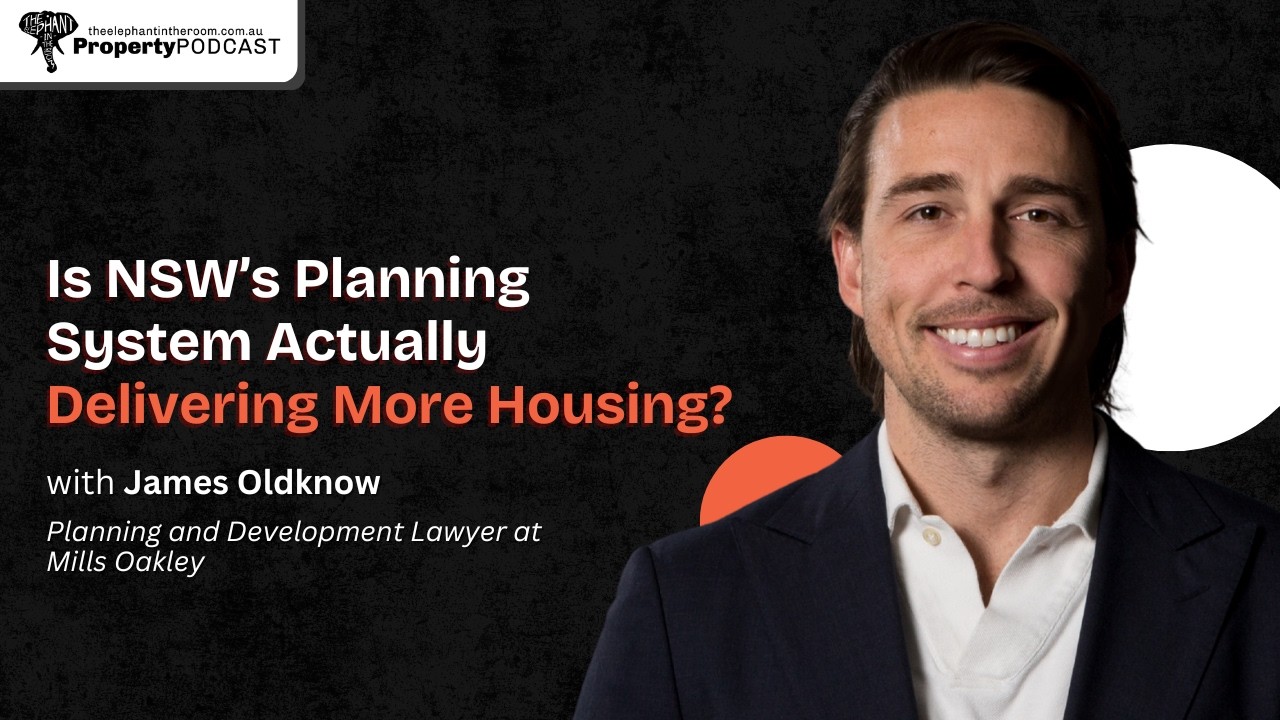
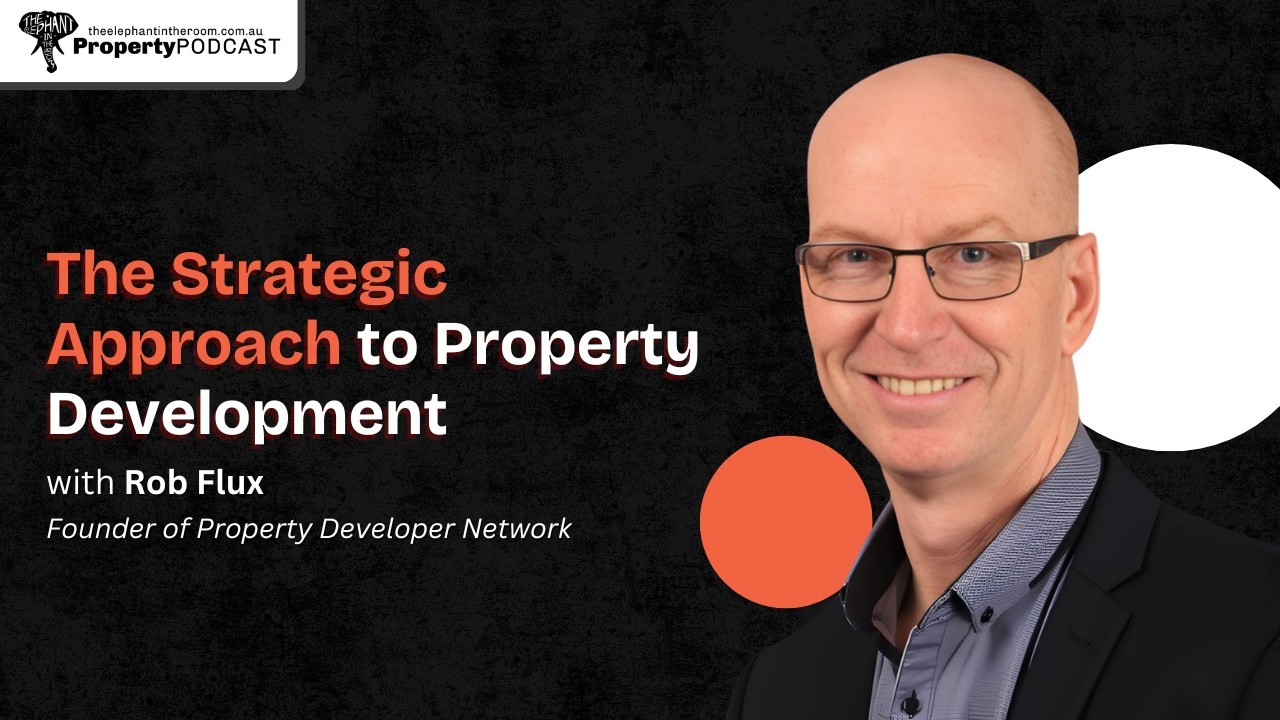
One figure sits underneath it all. A developer works out how many apartments the controls allow and what they would sell for, then deducts delivery cost and margin. What is left is the residual land value, the number Bennetts said sophisticated developers respect most and none want to pay in full. Rob Flux makes the same case from the other side, arguing that nine in ten developable sites never turn a profit, and that the sorting happens before anything is bought.
I really believe that buying upfront sets a development up for a win from the outset.
Ryan Bennetts, 2:26
How Do You Amalgamate Strata Blocks?
Assembling a site means assembling owners. Bennetts described acquiring 32 strata properties across five separate red brick blocks to form a site of just over 2,300 square metres: five strata schemes and five owners corporations, not one building, and roughly 16 to 18 months to bring under control.
Veronica Morgan put the familiar shortcut to him, that strata renewal only needs 75 per cent to agree. Bennetts challenged it. That 75 per cent lets you start renewal proceedings in the Land and Environment Court, but 100 per cent is needed before soil is turned, and the court route can run 12 to 24 months. Brisbane has no equivalent policy, so the last owners keep real leverage.
What Did Rezoning Change for Owners?
Over 12 to 18 months the low and mid-rise reforms, the transport oriented development areas and the Housing Delivery Authority reset where developers can look. He cited roughly 60,000 square metres of gross floor area sold in Rose Bay in that period, about 600 apartments, in a suburb where two years earlier he could not find two neighbours willing to sell.
The scramble was public: news cameras in the streets and developers door knocking through upper north shore streets where Federation homes suddenly carried four to ten storey potential. He called it the circus coming to town.
For owners in a rezoned street he put the uplift at roughly double: a four bedroom house on a thousand square metres worth three and a half to four million might see offers of eight to nine million. The reforms are built to deliver supply over 15 years, and after the first rush he is seeing transactions taper off.
I've always had that saying, you've got to look at a hundred sites to find one.
Ryan Bennetts, 12:30
Why Do Developers Want Conditional Deals?
Bennetts described every new deal as a blank piece of paper. A development contract is nothing like a standard conveyance, so options, joint ventures and project delivery agreements are all available on whatever terms the two sides agree. The example below has a developer chasing density beyond the zoned height.
| Element | Amount | Note |
|---|---|---|
| Landowner's current value | $4 million | Value of the property as it stands |
| Two times the value | $8 million | The going uplift in a rezoned street |
| Price offered for a flexible deal | $12 million | Developer aims to double the density |
| Payment on signing | 1% of $12 million | Three year term sought |
| Payment at year one | 1% of $12 million | Landowner may push for 2% instead |
| Payment at year two | 1% of $12 million | Or 2% every six months if negotiated |
| If the approval is not won | 3% forfeited | Developer walks away |
Illustrative example given at 19:38 to 20:17, quoted as stated on air.
The pivot word is conditionality. A developer's wishlist starts the same way every time, Bennetts said: conditionality, time, low payments and cheap land. Landowners resist it because the flexibility sits on one side, so a conditional deal costs more. An unconditional deal locks the developer in, though a contract can still be amended by deed of variation.
| Deal element | Experienced developer's wishlist | Developer buying a first site |
|---|---|---|
| Conditionality | Wants the deal conditional | Accepts an unconditional deal |
| Time | Wants as much as possible | Settles in six to 12 months |
| Deposit | Low payments | 10% deposit |
| Land price | As cheap as possible | Happy to pay market price |
The two bookends as described at 39:13 to 39:48.
Rezoning is also not approval. Every rezoned area still needs an application assessed on its merits, with council the approval authority. The low and mid-rise changes are statewide, so the same control applies in Wollongong, Newcastle and Double Bay, and every one of those sites still has to stack up on its own numbers. That is part of why early buyers wanted price adjustment mechanisms.
Just because it's 2.2, you don't automatically get 2,200 square metres of building area approved.
Ryan Bennetts, 43:16
Why Are Builders in Short Supply?
Delivery is the constraint Bennetts keeps returning to. Across the horseshoe from Mosman around to Rose Bay he counted maybe 12 to 15 builders capable of 10 to 40 apartment projects a few years ago, and about eight by the time the new controls arrived. That same eight now face land transacted on 24 month settlements across a string of rezoned suburbs. You cannot create builders overnight, he said.
That is one reason developers are bringing construction in-house rather than relying on builders who may fall over late in a project. It is also why western suburbs builder developers, working from a lower cost base, have stepped up into lower north shore and eastern suburbs sites, where cheaper construction lets them pay more for land.
At the other end, sales have been slower off the plan. Pre-sales unlock construction finance, so the feasibility has to allow for how much sells before, during and after construction. Bennetts linked the rise of build to rent partly to that, noting some started as build to sell.
Wondering What Your Block Could Become?
Rezoning changes both what a site is worth and what could be done with it, and not every owner in a changing street wants to sell to a developer. If the answer is to reshape the home you already own, Alcove can talk through how renovation finance is structured around a build.
Renovation Mortgage BrokerSources referenced: The Elephant in the Room, episode 430, "Inside the Business of Property Development Site Acquisition", released 2026-03-29. Host: Chris Bates (Alcove). Guest: Ryan Bennetts, site acquisition and origination specialist. Figures are quoted as stated on air and have not been re-checked against current data.
Press play on these