Curious about upgrading?

Wondering where to start?

Complex questions that need answers?
Is there a better structure for you?








"They managed to navigate my complex expat income and even got my Google RSU income approved as well."
"I highly recommend Alcove to anyone looking for a mortgage broker who is responsive, trustworthy, and truly cares about their clients. Thanks again to the whole team for making the process such a positive experience!"
"As founders, we're constantly jumping between things so having a partner that handled the details & made the process super clear made the buying process breezy for us. Very happy with the experience!"






.png)





"Alcove has been a great partner. They look after my audience properly, keep things simple, and deliver real value. I’ve got full confidence referring clients knowing they’ll get honest, straightforward advice."

"Property is one of the biggest financial decisions people make. Alcove stood out because they take a strategic approach to lending - helping clients structure property and debt decisions in a way that genuinely supports their broader financial plans."

Adapted from audio. This article is a written adaptation of the original podcast episode. Sources and dates are shown with each figure.

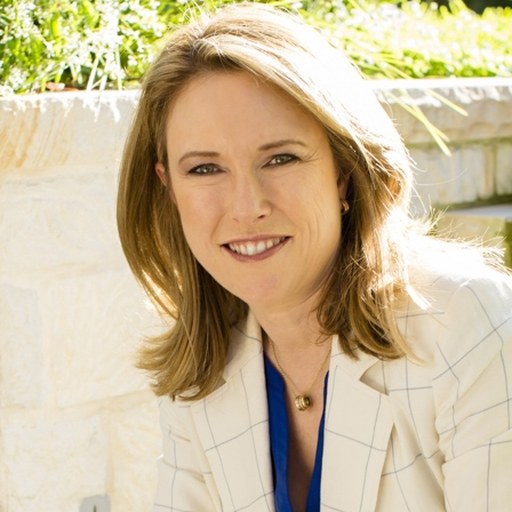
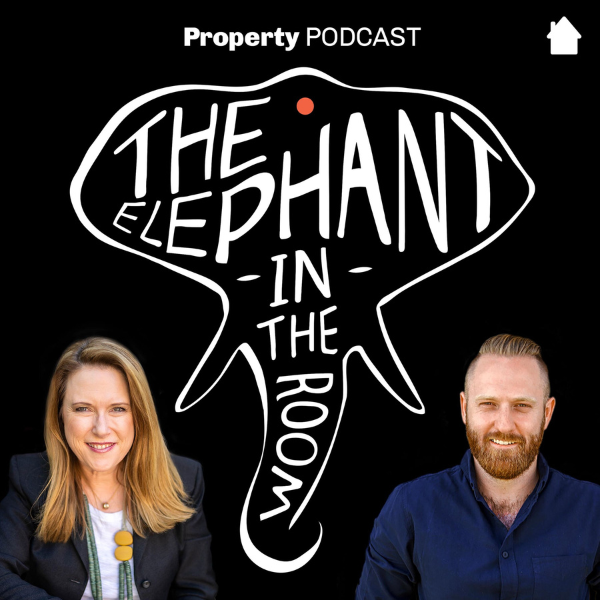
Co-host of The Elephant in the Room. Real estate agent, buyer's agent and buyer's agent mentor, co-host of Foxtel's Location, Location, Location Australia, author of Auction Ready and co-host of Your First Home Buyer Guide.

Rob Flux On Why Nine In Ten Development Sites Do Not Pay
Rob Flux says most sites that can be developed will never turn a profit, and the difference sits in the work done before anything is bought. He walks Chris Bates and Veronica Morgan through site constraints, funding, feasibility and the numbers he uses.
In this episode, we explore the distinction between property investing and property development and why so many investors underestimate what really changes when they make that leap. Small developments are often talked about as a natural next step for active investors.
However, with rising costs, varying planning controls and more complexity at every stage, it's rarely examined with the honesty it deserves. To unpack that, we're joined by Rob Flux, an active property developer and founder of Australia's largest community of small to medium developers.
Having delivered multiple six and seven figure outcomes, Rob works closely with the people at the exact point where investing stops and development begins. Welcome to the elephant in the room. This is the podcast where we love to talk about the big things in property that never usually get talked about.
I'm Veronica Morgan, real estate agent, buyer's agent and buyer's agent mentor, co-host of Foxtel's Location Location Location Australia, author of Auction Ready and co-host of Your First Home Buyer Guide.
Hi, I'm Chris Bates, ex-financial planner and mortgage broker, currently ranked number three in the annual MPA Top 100 Mortgage Broker Awards. Before we get started, everything we talk about today is not personal advice, and we recommend you engage the services of a licensed and experienced professional.
Our guest today is Rob Flux, an active property developer and the founder of the Property Development Network, Australia's largest community of small to medium developers.
He brings a grounded view of the risks most developers don't see coming, the assumptions that cause deals to unravel and what actually separates a calculated development strategy from an expensive lesson. We are looking forward to learning a great deal today. Thank you so much for joining us, Rob.
I think we've been tackling a lot, a bunch of really new topics recently. And this is something I don't think we've really gone to in great depth. So we're welcome and we're all ears.
Thank you, Veronica. Thank you, Chris. Welcome. Glad to be here. So first time on here. That's great. Open to anything, folks. My journey had 20 years of buy and hold. So I've kind of got that investment world and the development world.
So I'm probably able to answer those how do I segue type questions if that's where you want to go.
Brilliant. And also, should you segue?
We've covered so much on this podcast. And one of the key stories I wanted to delve deep into this year is, you know, how to manufacture growth, how to sort of build equity through developing, through doing it wisely. I think it's on our listeners' minds.
And we've seen, obviously, Veronica and myself just having clients go through the experience. Some do it well. Some have, you know, really regret it at the end of it. And some doing well on the first one and not so well on the second one.
I mean, over the years, you've obviously had some good projects and some bad ones. I mean, when you think about it, where does the common property developer really go wrong from the start?
By not giving it the due justice it deserves, it in itself is a career path. And like taking on any new career path, you have to go through a learning journey and a learning cycle. The biggest mistake I see people make is that 90% of development sites that are developable are not profitable.
And they listen to a real estate agent tell them the potential of the site, and they don't actually realize all the hidden costs that actually go into that. And so it's a hidden trap for young players.
I just want to hit you on that 90%. Is that sort of you being sort of hyperbolic or is that actually an evidence-based number?
Well, have I got actual science? No, but I've been running this community for 13 years. We've got 34,500 people in it. I guess it's anecdotally witnessing everything that happens plus my own development sites. So is it 90? Is it 85? Is it 91? It's there and thereabouts. Yeah.
is a great place to start, right? So nine out of 10 sites you look at, even though you could develop them, you're not gonna make any money.
And then the one in the 10 that you do pick, so the first thing is making sure you get that one site, but it's not game over then, you're guaranteed to make money.
But when you sort of go through your process and you had 10 different development sites sort of available, and we're talking sort of mom and dad, you know, smaller type developments here, we're not talking sort of six, eight level apartment blocks that the big end of town play in.
And, you know, natural transition or they're a bit hungry to sort of grow their wealth fast. I mean, when you think about nine or 10, how do you just sort of cross them out pretty quickly? What are the mistakes people often make?
They look for a reason to keep it and not a reason to throw it away.
So that's something that I guess we teach in our thing is to say, if you can assess a site in under 10 minutes and throw it away, then you can look at more sites in less time. And that's really the key. So zoning is the maximum potential of a site.
And every real estate agent will tell you it's zoned for this. That's what possible. But there are so many constraints that tell you whether that potential can ever be achieved.
And if you just go straight to what are the constraints, what are the things that are actually going to stop this thing from going forward, you will eliminate a lot of your pain.
Right, so I could put a four lot townhouse development on here or six or something, but then they haven't really thought through the constraints. And so what are the things that, you know, might turn that to a five or a four, right? And the feasibility gets ruled out.
Like what are some of the things people don't think about?
the obvious things from a site analysis perspective. So you've got things like what is called an overlay. So an overlay is a piece of information that goes on top of the map that tells you what additional challenges you may have to address.
So there might be flooding, there might be bushfire, there might be, I guess, landslides, there might be underground mines underneath sites. soil contamination, all sorts of things like that. There's basic things like contours. Which way does gravity work? It only goes downhill.
So when we're looking for how do we get stormwater and sewer and those sorts of things off the property, it needs to have a pathway out. So there's elements like that. Then there's the dimensions of the property. So you might have 1000 square meters that's 10 meters wide and 100 meters long.
Or you might have 1000 square meters that's 20 meters wide and 50 meters deep. Very different dimensions, very different outcomes that you're actually going to get. And so when you start to layer all of these things together, what we're really looking for is what is the showstopper?
In 10 minutes, what we're looking for is can we rule out the development potential? So I'm not looking at profitability yet in that first 10 minutes. I'm looking at the development potential and I'm looking at the obvious things that are actually needed for this particular demographic in this particular area.
And I guess the other bit of challenge that people don't do is they kind of pick up any site anywhere and they try to force something into it as opposed to, look, I'm trying to create a specific kind of product. Where does that product work?
What area is actually needing that particular product and try to find that. So what we find is a lot of people will say, well, I can build a particular product. Let's just say it's three townhouses, but they might build it for a young family.
But in that particular area, the demographic wants aging generation and they don't want that. They don't want stairs and they don't want backyards and maintenance. And so you're building the wrong product for the wrong person.
So there's a lot of homework that goes in that says, well, I want you to be a strategy expert. I want you to be a council expert. And I want you to be an area expert. If you can do that, you can narrow it down.
You can look at more properties in less time.
And I think this is just, you know, we're just sort of trying to unpack this, right? Because we're not saying, and it's huge, we talk about the pros of this and where it goes well.
But when you sort of think about looking for development sites, are you looking for a needle in a stack? Are you looking for something that is sort of just popped up and not many other people are looking there to do those developments?
Or are you looking for the stereotypical councils that are pro-development, but you're just looking for the best site within those suburbs?
There is heaps of areas where development is possible. But what you'll find is we've got a massive population growth happening, mostly from international migration. And for state government, they have to work out where are they going to put that?
Where are they going to put roads and hospitals and infrastructure and those sorts of things? So they are pushing them towards very specific areas where most of that density is actually going to go. So the first part is we start looking, where are people going?
And then when we start going there, then the next thing we go is, is that council ready to receive those people? Because often the council's not, right? And they take many years to go through a planning cycle refresh and they're not necessarily ready to receive that.
Then you go, how many opportunities does that council have given the thing that I want to do? Then how many people are doing the thing that I want to do so I can get evidence of other people going before me? And then if I reverse engineer those people, were they profitable?
And what you'll find is that there's a very, very sweet spot where we want just enough evidence that we can cookie cutter that and do it ourselves and not too much evidence that Joe Public, who's ill-informed, is getting involved and paying way too much and blowing out the price points.
And if we can find that sweet spot, then that's where we're in that 10% margin.
There's a lot of time that needs to be obviously taken and patience and also that consideration of being more willing to walk away than to walk towards that goes into that, of course. But, you know, you're talking about new areas.
I would imagine the opportunity for small to medium developers in greenfield sites or, you know, new areas to develop would be a lot less than say an infill site. Would that be fair?
It's actually the infill sites that actually are where all the opportunity is.
That's what I'm talking about because, you know, like obviously you need to be able to build at scale, develop at scale if you're going to go into a new area.
Yeah, I might give you some stats that are trying to give some insights into this. And most people don't really understand these stats, but these ones I can say are real stats. These are not Rob making up stats.
This changes from council to council, but anywhere between 80% and 90% of all housing and construction that actually occur in any particular council changes. is a six pack and below. They are the small scale in-field development.
The large, I guess, expansion, so the urban sprawl and that sort of thing, I guess there's few developers doing few projects that do a whole bunch of properties in one hit, but majority of them are taking up a big backyard and carving it up and turning it into, taking one dwelling and turning it into many dwellings.
And so when we look at that, that drives the small scale developer, it also drives, I guess, the small builder, and that's where most of the construction actually occurs.
Yeah, so you've got Greenfield Estates, a lot of development there, high rise apartments in certain pockets, obviously a bit of development happening there, but in most councils, most of the development that happens is a small scale infield.
And buying within these suburbs though, like how important is that sort of made it one of your steps there where are a lot of other people doing what you're going to do?
Like, is that sort of the ingredient that often a lot of people miss is they go into a suburb, they go through the whole process, They build it. They even build it what the market wants, but there's just no scarcity because other people are doing it at the same time.
Correct. So there's a basic pattern that looks like a bell curve that occurs in every single suburb that goes through a development cycle. There's absolutely nobody has done anything. Too many people are doing anything to, hey, nobody's doing anything ever again.
And if you're the first person into the area, I'll call them a market maker. That person is either an absolute genius or alternatively, they are rolling the dice and they don't know what the demand is. They don't know what the sale price is going to get.
Then you've got, I guess, the early adopters. They see that market maker. They see them make money. They recognize that one is not a trend, but they are smart enough to say, we think that we can actually, I guess, back that in.
At that point, Joe Public, who lives in the area, starts to see all this development starting to happen. They are not as emotionally mature from a development perspective. They get emotional in the purchase price and they start shooting the price point up.
So once Joe Public gets involved, that's where it starts to go off the rails. So we're looking for the evidence of the early adopters before Joe Public starts to get involved.
Then what happens, Joe Public peaks the market, but they're still getting in the market once it's gone off the boil, because again, they're still not emotionally, I guess, aware of whether these numbers actually work.
And then what happens, there's so much activity happening in the area that every taxi driver and Uber driver that comes into the area sees the construction and starts giving you advice to say, you should be developing in this area too.
And at that point, those people are actually not just losing money, but often going broke. So what we want to do is be very early in that cycle. And if you understand how to read the numbers, data tells a story.
And if you can read the story a little bit like the matrix where you've got the ones and zeros coming down, you can actually start to see the patterns. You can start to see, are you early in the cycle? Are you late in the cycle?
Is this an area I want to get into?
It is very interesting because certainly I've been on the sales side originally and being on the buying side of residential property for 26 years now. And in that time we see, and also I'm a local specialist, so I'm not trying to be everything to everybody.
I only know a fairly distinct patch in Sydney. And certainly over those years, you see certain market conditions, which brings out the competitors for these smaller sites. some crazy prices and then you'll see market conditions change.
I would think it's not purely just that local adoption of Joe Public as well because one of the things I hear about from a lot of small developers, particularly if they have a building business as well, is that they have to keep their trades occupied.
And so sometimes I will actually buy a site, slightly overpay for a site, even take one with slightly less profit expectation in order to keep the crew active. That just adds another level of complexity into this whole analysis, doesn't it?
So that happens in certain market dynamics, but not in all market dynamics. So at the bottom of COVID, at the end of COVID, when all the activity started slowing down, that was absolutely categorically happening, okay, where they needed to keep their trades happening.
But I guess in the peak of it, when there was a building boom happening, none of the developers, none of the builders were actually doing that because they were already building and they were cashing in. So you're going to find phases where that starts to occur.
You're also going to find other market dynamics to be aware of. So investors, so a buyer's agency will say, look, this area is going off. And then all of a sudden, everyone starts buying in that particular area and they cook an area very fast. Then you've got, I guess, the emotional purchaser.
The emotional purchaser is not putting any science at all into it. They're looking at, is this close to the school that I want to take my kids to? Is it close to work? What's the amenity? And they will pay more for it. And there's no science to it.
They're not really in it for the money return. They're looking for the lifestyle return. So you've got to analyze a site on everything. What would, I guess, a normal investor pay for it?
You've got to analyze it for what would an emotional purchaser pay for it, and then what would a developer pay for it? And there are times when we would pay more, and then there's times when you would have to give it to us for free.
Rob, I mean, you can obviously get a buyer's agent that, you know, I believe you can do some yourself around sort of developing sites, right?
But, you know, once you've bought it, like the game, you know, it's one of the problems with sort of trying to manufacture growth, because you've got to do the work, right? Do you find that, what are some of the challenges at that point though, right? Like,
getting their plans lodged quickly, you know, getting it through council, picking a builder, like even, you know, a lot of them probably even DIY, like how often does that stuff people up, right? You know, you said nine in 10 sites.
So often people make that big mistake and they get the, let's say the one in 10, they've got a good site.
Where do they often go wrong after that in terms of the product and getting it delivered? There's multiple layers where that starts to occur. So firstly, most people have been indoctrinated with residential lending.
And so they assume that residential lending is the correct way to actually do property development because you can get low interest rates from the bank. The challenge with that is you have to prove serviceability.
You have to prove to the bank that you want to own it for 20 or 30 years, but you don't want to own it for that long. You want to flip it and cash in. And so you're at conflict with the bank and their policy.
So you're telling lies to the bank to tell them that you are going to keep it. So there's all sorts of challenges that go in just from a funding side. But then those who understand, then there's more commercial funding.
So commercial funding looks at the deal itself and they go, well, we don't care so much about your serviceability. What we care about is the deal, a good deal. Now they are sharing the risk of the project with you.
So their interest rates are a little bit higher, but because they're sharing the risk with you, they're going to lend you more money than you would probably be able to borrow under a serviceability type model. So that's how you start to do bigger projects and more projects at the same time.
Yes, you get your funding right, which, you know, I agree that you got to be really careful, particularly with resi lending through the bank. And you can very quickly, very easily run out enough lending there. But obviously going into maybe private funding or commercial funding, et cetera.
You know, obviously the cost is higher and that really puts a lot of pressure on the whole time, right? Like the time from when you settle to when you can sell, the longer that is, it also adds a lot more risk with that sort of first mover advantage, right?
So if you're going to do it, you've got to get in and out. Do you find that sometimes people just assume they've got way more time than they actually have and that blows a lot of their profit because they just take too long?
Yeah, a fair statement would be to say, if I'm an investor, time is my friend. The longer I can hold it, the more the market's going to do the uplifting. If I'm a developer, time is my enemy. I need to move fast.
I need to get in and out as quick as humanly possible because holding costs will consume a project in no time flat. So it's velocity of money that makes property development actually work. So that's kind of the first element there. The other one I'd say, they go in with the wrong entity.
They try to do it in their own personal names. They're assuming capital gains tax when that's usually going to be things like GST. And they don't understand, should I do it in my personal name, in a company name, in a trust, that sort of thing.
And whilst I can't give advice here, because we're not allowed to do that- Doing it in your own personal name is bad, bad, bad, bad, bad because you pay income tax at the maximum tax bracket and what you earn and what you keep will not be the same.
So this finance, these are all not even around the actual property itself. You know, like, actually, you've got to get all of that background set up. You've got to get your team set up as well, because you use the wrong builder and you can blow it all.
There's just so many external things to the actual choosing the right site. So it's all assuming you've chosen the right site, you can still blow it if you get these other elements wrong. And it is a cash flow game too, isn't it, really?
Because if you run out of cash at any point of time, you're really stuffed, right? Yeah.
You've touched on probably the biggest point and cash flow is the biggest element of it. And rather than owning a property, controlling a property is a much better outcome. So if I can control a property, then there's the opportunity to potentially do that with no deposit, no serviceability.
So if I did a joint venture with a landowner, for example, I'm not buying it, but I am controlling it.
If I did it with a money partner, if I did delayed settlement with early access, if I did an option contract, there's lots of ways that we can control a property and say the cash flow element, I'm either kicking the can down the road and needing that cash later on in the cycle.
But some instances I'm avoiding some costs altogether, right? So as an example, if I did a joint venture with the landowner, they've probably owned it for 20 years. their holding costs are zero because they bought it for 200K, 200 years ago.
But if I bought it, I'd be paying full interest rates at full market price today and stamp duty and all sorts of things like that.
So when we actually analyze all the costs, the acquisition model of how we control the property has a great impact on our profitability as well and a great impact on our cashflow.
But if someone's coming without any experience in development, never done it before, what do they have to offer a joint venture partner? You know what I mean?
If I've got a property that's developable and I don't have the cash or the smarts to do it, and I'm going to engage with a developer who has all that experience, I'm not going to go with a newbie, am I?
Well, there's a couple of statements that I'll make here. So the first one, everyone has to do deal number one. If you look at the big developers in the world, you look at your Harry Triggerboffs, your Mirvacs, your Lendleases, they all started with deal number one, like way back.
So I want people to know that it is very much achievable. While we're talking on some tricky things here, they're more checklist items to actually go through. They're not obstacles that are insurmountable.
The next thing is, if I already own it, then I want to start with the concept of, do I want to do this as a one-off transaction? In which case, I probably don't want to know everything and I might partner with someone.
Or do I think that this is going to be the litmus test of, hey, do I want to take on a career because I think there's opportunity?
In which case, maybe I want to get some education or have somebody sitting over my shoulder to actually show me the ropes and not make the mistakes.
So when you start to think about it from that perspective, it changes very much how you engage and who you engage with to actually get the job done. I would very loosely say there's passive investors. So I would buy it and hold it and not do much. There's active developers.
So that is people like myself who come in and force property straight away. And then there's the person you're talking about, which is a semi passive. So they know that development is going to give them the uplift, but they may or may not want to be doing all the work themselves.
And so you can get into property development in any of those ways by, hey, I know that this site has development potential, but I'm going to wait 20 years until the city comes my direction, then it's going to be worth the mozza. So that's a passive way of doing it.
It could be, hey, I've already owned it for 20 years. It already has come my way. Do I partner with someone or am I the one going in and am I actually doing the work and actually taking that control of that site today? So lots of different ways to tackle the beast.
It already comes down to risk appetite and, I guess, the desire to do work.
Do you think that development, you know, you can buy quality assets at any time. Often, you know, you might be going against market cycles, but, you know, you might want to diversify across the country or you might just want to go where, you know, in Sydney or Melbourne or wherever it might be.
But with development, do you think that there's always a good time, there's always good opportunities to develop, but potentially not in your city, right? Because some cities are, you know... Obviously, when there's fast growth and land prices are going up, obviously that de-risks you a little bit. So how do you envisage it?
Like, is there always money to be made? Just sometimes it's easier than others? Or do you think it's best just to go to different parts of the country and avoid playing in certain markets when it's much more difficult?
I would say very much. You can make money in any market cycle, up, down or sideways. And it is much better to work geographically convenient to home. you're going to have to go out to site numerous times during the life cycle of the project.
And if a consultant gives you a phone call and says, hey, can you whip out and have a look at this at lunchtime? You don't want to say, well, actually, I've got to wait till Tuesday or I've got to wait till the weekend to actually get some time off work.
Then I'll get flights and accommodation and taxis and car hire. And then the consultant says, well, actually, I'm going fishing that weekend. Can you make it the weekend after? That just adds holding costs. It adds risk.
You can pay a project manager on the other end to do the work and inspections for you, but that's additional cost and they're looking at it through their eyes, not through your eyes. So if you can do it at home or close to home, that's always going to be a win.
Do you find that with this place as well?
Like depending on how well that first development goes, often they're going to that next one with an overconfidence bias and what they made on the first or the second, they often blow on the third just because they naturally just get too confident and they start taking on too much risk without really assessing the right move.
Yeah. upwards market cycle, almost anyone can be a hero. So I can buy a shitty site, I'm buying one of them, the market goes up and I'm selling two shitty sites, but because they've both gone up, I made some money in the process.
It was the capital growth that did the work, not the development. So it's very easy to get the false sense of security to say, hey, the development made the money, but it wasn't, it was the market. And so when you understand those elements, you go, well, I made money the first time.
If you don't put the science in, if you didn't learn the lesson, then the second time when the market's starting to shift, you're going to buy the same kind of shitty site. And next time around, you won't get the same level of forgiveness out of the market. Now, we're quite fortunate right now.
We're in a market where everything's going up and there's a huge amount of demand on stock because we've got this massive shortage of 1.2 million homes that we need in the next five years. So almost everyone is going to look like a hero in the current market if they choose wisely.
But the danger is you're going to look like a hero on the first deal. What's going to happen on deal number two?
I've seen that happen so many times. It's not funny. When you say everything's going up, there's some areas that are going up more than others. I mean, whereabouts are you based, Rob?
Home base is Brisbane, but I split my time between Brisbane and Sydney from a where I live perspective. But I am most weekends in a different city. Today, I'm in Perth. I guess on Friday, I'll be in Melbourne. The following Sunday, I'll be in Sydney. So we run these networking events everywhere.
I'm kind of roaming the planet.
But I mean, it is true though that different locations, I mean, Brisbane, let's go to where you're mostly based. I mean, Brisbane's been going gangbusters.
But it's interesting what you talk about being choose a local site because of the logistics of you being able to get onto site to make decisions and all the rest of it and keep the costs down in that regard.
But also what I've seen a lot of developers get wrong is they build a product that it might technically have the bedrooms and bathrooms and parking that is required by local buyers, but they don't understand the style, the finishes, the flow of a property, the elements that really will set one development against, you know, put two townhouses next to each other.
One is aesthetically fitting what that market wants versus the other one, which ticks all the same boxes, but is ugly. You're going to get two very different results, aren't
Absolutely. So the first thing is you need to understand the demographics of the area. What is the age group that is actually going to be leaving your product? What kind of product are you actually looking for? Understand the price points that they're at. Are they high socioeconomic? Are they low socioeconomic?
You need to build appropriate to that. And then when you understand that, then you need to I guess, be building cost appropriate. So you can have a luxury look and feel, but not necessarily spend luxury money.
If you know, I guess the small elements where you can spend a little bit more and it makes everything else have an uplift. So you can build relatively nicely on a budget. I'm on a personal mission to help more people make better property decisions.
You know, most people don't realise that they can cost themselves hundreds of thousands of dollars over the medium to long term when they make property decisions without all of the information that they need.
And what I do is help people with tricky real estate problems, which often masquerade as simple questions like, should I sell my investment property because the interest repayments are hurting? Or should I buy before I sell? Or the other way around.
You can connect with me and access all of the tools that I've created to help you make better property decisions at veronicamorgan.com.au. And there you will find resources for first home buyers, details about my buyer's agent mentoring program.
You can connect with my Sydney based property management and buyer's agency teams, Australia wide vendor advocacy, or ask me for introduction to the small group of buyer's agents that I would personally recommend across the country. That's veronicamorgan.com.au.
If you're considering a property move such as buying your first home, upgrading, renovating or investing, the team here at Alcove would love to help you think through your decision and get the finance right. Please go to alcove.com.au to reach out.
The ones that are a bit further down the line, maybe they've done a few, they've got a lot more cash resources, they've got more relationships.
They're the ones who, A, definitely get the one out of 10 site, but then B, can actually play where they can make a much better margin because they can build something that's more scarce and it's a high price.
So do the same amount of work, you know, a four or five site, but get a lot more, you know, profit as a percentage because they're playing the more affluent markets. Like, is there more money to be made for the ones who have got a lot more money, if that makes sense?
there's a two-tiered market when you're talking about that. So what you're talking about is a legitimate opportunity where the high net worth individuals, what they want is convenience. They want to be able to walk into something and it be finished and they'll pay a premium for that particular product.
So you can make money in those markets, but it can be challenging to get into those markets because it's expensive to get in a more expensive product to build. Equally, you can make money out in the cheaper in the burbs as well. So I'll give you an analogy.
If we look at hamburgers, okay, you've got grilled hamburgers and they sell their hamburgers at 16 bucks a hamburger and you've got McDonald's and they're selling their hamburgers for two bucks a burger. Who's making more money, right? So 50 cents a hamburger, but a lot of hamburgers.
So you don't have to be in the high affluent areas to make it work. But when you're starting to go into the lower areas, then scale starts to be the thing that starts to become, how do I get efficiency out of the project?
How do I buy cheaper, but build more stock out of the same land? And so then there's the graduation between those two areas where you don't need to build as much, but it's not as expensive to buy either. The key thing is, though, where is the population going?
Because it doesn't matter how good the site is. It doesn't matter how good your feasibility is. It doesn't matter how good your project manager is. If nobody buys it, you never get paid.
Is there so much about where population is going or just where there's general demand? I mean, because, you know, for example, I know a lot of aspirational suburbs, for example, where it's not that so much of people are going there. It's just that if they can afford it, they will go there.
know when there were markets turn you'll get buyers going there that had previously looked elsewhere because they didn't think they could afford it you know what i mean so there's there's areas where you've got fairly pretty stable population and you've got quite a lot of churn and then you've got other areas where i guess they're you know people are moving into an area and i guess when you've got lots of bigger developments that's going to bring more people into an area and i guess if you're building small developments there's a scarcity element and
something potentially appealing about a different product. So is it as simple as that, just trying to work out where population is going, or is it more around where the demand is regardless of everything else that's happening?
That is where the population is going.
But they're already there in some cases, they might be renting or they, you know what I mean? It's like, are they going there or they're already there and they want to upgrade or, you know what I mean?
Look, there are definitely going to be opportunities for people wanting to upgrade out of their existing dwellings into something new. So that will always be in existence. But it's not the level of demand where a pure supply and demand issue, I don't have enough stock, we need to create stock.
So when we start to look at that, population growth is the biggest driver that impacts that. Now you've got interstate, you've got intrastate, and you've got international migration. International migration is by far the biggest driver of all of that, depending upon where you are.
If you're in Melbourne, you've got a lot of international migration, but a lot of interstate leaving Melbourne going to places like Southeast Queensland and Perth, for example, okay, and Adelaide to some extent. If you're in Perth or Brisbane, you've got the international migration plus the interstate migration.
So you've got a double whammy starting to hit you. So it's looking at, well, where are the double whammies as opposed to just a single whammy and go, well, that's probably where a bigger demand is. But then it's, what is the demographic of that movement?
So it's not just, is it people, but what do they want? So I'll give you a funny little anecdote. Most people think that property developers are these evil people that rape and pillage the earth. But property developers are actually the makers of community.
If we look at Australia 240 odd years ago, we're a one lot land subdivision. So every house, every school, every shopping center, everything that we have is because a developer looked at the demand of what was coming and put the opportunity in front of someone before they realized they need it.
And then an investor is usually the person who's buying that. So investors are our clients. Whereas a lot of people are coming from that investor's world and thinking, hey, I'm looking at the demand after it's arrived. We're looking at it before it gets there. And that's the difference.
It's just say, by understanding those dynamics, we're putting the solution before people realize they need it.
I think you've got like 30-odd thousand people, I think you mentioned earlier, that have come through and are part of the community. And what portion of those come in and go, hang on a sec, this is going to be way too complex. This is way too risky for me and my risk profile.
Or they try one, it didn't work, then they sort of bail out. Because there's so many ways, even if you've done a course, to get it wrong. Is it very few that sort of... stick and do development after development after development because it's just so challenging to replicate it.
And you're often just one development away from sort of blowing all your hard work. Like what have you seen? I mean, you're doing it for some time now, so you would have seen people come and go out of the community.
How many people get a gym membership and don't go to the gym? It's the same question. So I would say there would be 50% of the people who come in and go, is this something for me? And it's not. And that's okay.
And then you've probably got about 30% of the people who will have a go. They might do one project, maybe two. And then they go, it's harder than I thought. It's not really for me. They'll still have made some money, but it's not their jam.
And then you've got 20% that are the old Pareto principle, 80-20. The 20% are the people that are actually going to make a full time gig of it. And then you've got 20% of the 20% who go on to be, I guess, the Mervax of the world and that sort of thing.
So it's always a sliding scale, but that's even in the investing world. How many people buy one property and never end up getting to six?
Do you think it's one of those things you can get excited by and you're like, this is great. And then you start to unpack it. And hopefully sometimes you better have to do that than just go out and rush and just trigger happy.
A thousand percent. Don't be trigger happy. This is not get rich quick. This is get rich and that needs hard work.
So when you do your feasibility, right? Like it's simpler to use. How do you break it down? Like what is going to make a site like attractive and like what percentage margins?
And obviously you could break it down really detailed, but if you had to quickly sort of calculate a site, how would you think about it? What were some of the elements?
I'll start by saying feasibility is a very misunderstood terminology and the intent of that is not really there. Most people don't realize what they're meant to be doing with it. Feasibility is about identifying every problem on the site and then costing the solution to it.
A lot of people don't look for all the problems. What they do is they just go, what are the opportunities? So if you don't identify the problem, then it won't appear in the feasibility. The feasibility looks fantastic, but in the end, the problem still turns up.
So that site analysis side is the most important part. I need to understand what problems I'm actually going to try and solve on this particular property. Then I need to be very good at my sales research. What am I buying it for? What am I selling it for?
And then the feasibility is just the adding and subtracting of the two of those. So it's a very simple concept that with practice you can do on the back of an envelope.
You don't need very high level sophisticated software to actually do that when you're practiced at it and you are an area expert and you know your numbers really well. And so from that perspective, we're aiming for, I guess the stereotypical 20% profit on cost, okay?
Assuming that we're doing a project that lasts about two years, okay? Now there are many projects that will be much, much faster than that. So that's a sliding scale, but that's about a 10% annualized return as a profit on cost.
But if I did a project that finished in nine months, for example, I might be happy with an eight or 9% return because annualized that might be closer to 12 or 15% annualized.
Are you doing like a return on equity? So your total cost site plus all your taxes to buy, plus your build, plus, you know, taxes, holding costs, let's say totals $2 million, you want to make at least $400,000 at least.
So you've got to, if it's a three-town development, you've got to be selling at, you know, 2.5 or something like that. So, you know, your million dollar site or your 1.5 has got to turn to three 900,000 or something like that. Like that seems quite low, right?
Because you're putting in quite a lot of cash. And do you think that's a success if you get that?
Let's pivot that a little bit because profit on cost is not necessarily cash out of your pocket. So a cash on cash return is a very different measure on that.
So on that same property, my cash on cash, I may have only needed $300,000 for a deposit and I may have only needed $150,000 for the, I guess the running of the deal. Everything else was borrowed funds. Okay. So when I look at it that way, that's a 50% cash on cash return.
right? But if I didn't borrow any of the money, sorry, if it wasn't my cash and somebody loaned me the cash, then I didn't put any cash in. Now it's an infinite return. So when we look at cash on cash, right?
So profit on cost is the only way to arbitrarily be able to compare one project against the other, because how you fund that might be different. And so that 20% model, then how you acquire that, the cost of capital will then impact the, I guess, your percentage cash on cash return.
That's fascinating, but also, I look at that and I think, ooh, that, for the risk that you're taking, that seems low for me, because I think the market could swing, it could swing up, and yay, it's cream, you know, you think you're a genius, but it could equally swing down, and you could get completely caught because you can't choose when you actually finish that versus, you know, what the market is going to do, regardless of your best intentions.
Absolutely. But that's why you want to be an expert at it before you just go in, because you shouldn't just be randomly jumping into a market cycle at any point in time.
So you need to be able to do a feasibility to say, if I could buy it now and sell it instantaneously, if I could materialize that, I guess, in today's market and sell it, because that's how your bank assesses it, would it make money?
And then I'm going to stress test that on where I think the market's going. right? So if I think the market is going to go up, then that return is just going to get better.
If I think the market is going to go down, then how much do I think the market is going to go down? And if I, let's just say I had a 5% market swing, could I live with the consequences of that?
And if I can live with the consequences of that, I'm still going to be profitable. I just won't be as profitable as before. And so it's very possible to make money in every market, but there are times when you need to be more cautious. Absolutely.
Is there any buffers in that as well?
Like do you put like obviously 20, but part of your costs you put in a 10% sort of buffer that if I make a few mistakes or there's a blowout here or I forget about that cost or something like that, you know, your own cost is actually quite a bit more if you don't have those sort of blowouts.
Yeah, you should always have a contingency in, but noting the contingency should only be on the unknown elements. So I know the purchase price. I'm not putting a contingency on that. I know the stamp duty. I'm not putting contingency on that. The unknown element might be the cost of construction. Okay.
So now as an experienced developer, I'm putting a 5% contingency. As an inexperienced developer, they might put a 10% contingency. Now that is factored into the feasibility upfront. You deem it to be a cost and you hope to never spend it, but you budget as if it has been spent. Okay.
And then when you run the project, you do everything humanly possible to not spend it. And then that ends up in cream. And so if you've done your site analysis correctly and you've identified all the problems, then the likelihood of actually triggering something in that contingency is much lower.
We've been talking about people getting started in this sort of style of accelerated investing, shall we call it, development versus investing.
But I do come across quite a lot of people who do their own two-pack, right, with the plan to either hold one and rent it out and live in the other one or to sell one and end up debt-free and live in the other half. And we see this quite a bit.
What are your thoughts on that as a strategy for people?
That is the most common place that most people start. Now, it really comes down to, we said there's three different kinds of investors. If you're a passive investor, then you're likely to hold that asset with some debt associated with it. And debt, as we said before, as an investor, debt is your friend.
But as a developer, that first project, I would probably sell everything, get all my cash back, reload that cash, and then go, well, I don't want to do a duplex this time. I want to do a four-pack.
and do slightly bigger because the effort to do the four pack and the effort to do the two pack is almost identical. The only thing that changes is the amount of capital that goes into it up front. Remember, if we're using commercial investing, they're looking at the deal itself.
So I need capital to go into the bigger deal. If I cash in, I've got the capital. So when I start to do that, I can go, well, I can do two this time and I can do four next time. And then I can do six the time after that.
And then at six, this magic formula starts to kick in. So if we remember our 20% profit on cost, when we hit six, if we sell five, it pays off the cost, which means that the six ones now own free and clear.
And it is interesting too, because then of course the danger, if the first one or two were a bit easier, the market was forgiving, all that sort of stuff, then you're taking greater risk as well. If you get it right, you can end up owning one clear.
If you get it wrong, you could erode everything because you haven't learnt those lessons along the way. So it's a fascinating exercise in human behaviour, really.
And also, I guess, you know, the first one, if it goes well, and you think, oh, I'm a freaking hero, you know, it might wet your appetite to do it again and again, but I guess some people might find the trauma of it all just too much, you know, the stress of all of that money, you know, however it has translated.
But also, I think some people enjoy a build and being involved in a build more than others as well. I imagine there's a temperament that goes, that lends itself to this more than, say, a dozen. Would you say that'd be fair? Yeah.
And it's fair to say property developers make money by solving problems. So Joe Public doesn't have time. They don't have the skills. They don't have the knowledge. What they want is a solution. If we can give them a solution, then we have to go through the pain points for them.
So we get paid for the privilege of solving that. And it's really understanding that those problems are inevitable as part of it. What we want to do is to have better quality problems, right? So you can't have no problems. You just want a better quality one.
So I want a better site, not a worse site. And if I know how to do my site analysis correctly and I'm farming in the right areas, then my probability goes up for success. And it's the education piece up front to say, have I actually given this justice to learn what I'm doing?
Rob, can you sort of reflect on, you know, obviously no names, you're just talking area, you don't need to talk suburb, but, you know, where it's really gone well, right? Like what were some of the things that you, like you said, solving problems, what were the things that they overcame?
Not just the market doing well, but like they genuinely got an amazing result and return on equity and, you know, return on costs much higher because they were much smarter in the way they approached things.
I won't give one example, I'll give hundreds of examples. Every month at our networking group, we have a member of our community share a real deal. So they shared the good, the bad and the ugly of a project.
And we've got on record about 360 different projects that have been captured from start to finish, all the issues, challenges and problems. But there's some common themes that come across all of them. And that is, did I actually understand what I was doing before I went in? Did I just naively buy it?
And if I did that, then the kinds of problems I have are going to be very, very different to did I put the effort in? I did put the effort in, then the kind of problems that I start to come up against are more logistical challenges.
So how do I have this relationship with this town planner or the architect or the builders not building to the speed that I want? They're more conversations and people management and the problems change, right? But they never go away. But it's then my project management skills become really important.
So firstly, I need to understand the process and then I need to execute the process. It sounds overwhelming, but it's actually very achievable if you look at bite size problems. So if I don't know my strategy and I don't know my area, then I'm looking at everything everywhere.
But if I just solve one problem, what strategy do I want? Now that's going to narrow down the areas where that works. If I then choose the area where that's gonna start to work, then I can go, well, what are the rules in that council?
And then when I know the rules in that council, I can then analyze the suburbs in that area and go, which ones of these are in that 10% margin? And it's just really, we're talking about elephant in the room. How do you eat an elephant? One bite at a time.
So we wanna break it down into those bite-sized chunks and just go, if we can do that and just worry about the problem right in front of us, we wanna know the big picture. We wanna know where we're going.
And every decision takes us there, but we're dealing with one problem at a time.
I guess it's being really aware, right, of your own, you know, commitments, family, work, you know, your ability to manage, deal with stress, people management. It's like a death by a thousand cups, right? If you don't know what you're signing up for and you...
you know, this is not going to be an easy journey. You know, your expectations are there. That's why they don't do another one after. They just wasn't expecting the cause and the stress through the whole journey to be as great as it actually is.
Like, there's just so many things that can come up, right? They can basically kill your profit, right? And like, that's frustrating. I think I reflect on a client in DuPont and I'm, You know, and it was very late in the journey, still trying to sell two of the four townhouses.
And, you know, it was just like no energy for it. Like wanted to be moving on to the next thing, but still had to get rid of these townhouses. And, you know, and so it's quite painful, particularly when you know you're not going to make any money, right?
That's generally a reflection of the person that didn't put the effort in up front. And so they've gone in ill-informed and they've discovered as they've gone.
Whereas if you put a little bit of effort in upfront, follow a couple of projects that other people have done, reverse engineer those, learn from the mistakes that they made, learn from the things that they did well from that, that's gonna give you an insight into, hey, should I even be contemplating this pathway?
Because it's not for everyone, definitely not. But for those who it is right for, and there's a lot of them, it is a very achievable way to accelerate. Now, I touched on my journey before, I did 20 years of buy and hold.
I bought my first house at 18, my first investment property at 21. On paper, I was retired at 38, but I got divorced at 37, put all my toys back in a cot. So it took me 20 years to get to that first point.
Going into property development, I did it in six the second time. And if I lost it again now, given that I'm a little bit more practiced in the process, it'll only take me the second time.
So it's one of those things where if you give it the right, I guess, justification of effort and you put the effort in, then the outcome is there. But it's not get rich quick. It's get rich. You've got to put the effort in. I would say approximately 15 hours a week.
And somewhere around the nine to 12 month mark, you're probably going to be deal ready. That doesn't mean in a deal. That means that you are ready to identify a deal and then take on a deal.
And then from there on, the first deal might be anywhere from nine to 24 months in duration before your first payday. So it's a lot of effort to get to the first payday, but then it accelerates so quickly after that. Generally, it's one of those compounding interest type outcomes.
And I love that it's the work. It's not get rich quick. It can get rich, but you really do need to lay the foundations and get it all right.
And just even talking about some of these exhaustion that would come from having a deal, you know, you're not going to make any money out or you just got to offload this product that you've built. I've seen it on the buying side.
I've walked through properties that are struggling to sell brand new because they didn't get the floor plan right or they didn't get the finishes right. And that's not even knowing what other...
problems that they may or may not have solved well during the actual construction phase and whether or not they did identify those issues with the site at the beginning. But I see that the product was wrong. So to finish this off Rob, do you have an example of a property dump for us?
I love a story about a mistake.
Everybody knows that gravity only runs runway and you can't push your junk uphill. It has to go downhill.
So whenever you've got a block that slopes towards the rear, then either the sewer line is at the rear or you can't do anything with the site unless the sewer pipe is deep enough that even though the rear of the block is to the rear of the property, the sewer line is deep enough that it can actually gravity feed down to the sewer.
So I'm smart enough to know that. And I came across a site where the sewer line was in the middle of the block. And in that particular instance, I went and got my due diligence done, I guess, by the appropriate expert. And he said, yes, it's absolutely deep enough.
And unfortunately, after we got the development approval, council said yes. And when we went to go construct it, that's when the engineer went, oops, that was the apprentice. And they didn't quite get that deep enough.
So in order to make gravity work, we had to put a two meter retaining wall at the back of the block and put a lot of fill in. Now we still made money. We still made quite a bit of money, but I guess even though you do the homework, sometimes things can happen.
And that's where contingency comes in. Contingency did pick up that particular element, but it can go wrong even for the best of us.
Yeah, a lot of people don't think about water. Water in all its forms.
It's funny, I've got a friend who's very close to guys that's doing one development right now. I mean, on his second last project, it was a power line. He just...
didn't realize he's gonna have to move it and it took ages to get it through council it's just just didn't think how when he was building this side and and you know the council wouldn't so it's like done it so many times just assessed everything but it's just one of these things you just didn't think about that
you know, really burnt the project. And so I think it's, I think you're 15 hours a week for nine, 12 months is like mandatory sort of training, right?
And if you're willing to do that and then you're at the end of it, you're still keen and you're ready to do it, then you're actually going to potentially get the rewards, but you've got to do that training. And so I loved how you said that. That was good advice.
What I'd suggest for anyone thinking about is this for them and they're not really sure or anything like that, just turn up to one of our meetups. We have industry experts every month talking to town planners, civil engineers, architects, talking about common issues and challenges. And we have people sharing their real deals.
So you actually get to see the good, the bad, and the ugly of a project. And you'll actually get to speak firsthand to people who are out there and actually doing it so that you can actually believe that it's doable for you too. You'll get a real feel for the insights.
There's only so much we can cover in a short podcast like this. The thing I want people to walk away with is it is very possible. 80% of the construction in this country is done by small scale, novice part-time developers. So we are the backbone of the construction industry.
So there's a ton of us out there. being the engine room for our housing market. And that's why at the moment we're, I guess, as an organization engaging with multiple state governments.
And we've got the biggest planning reforms that have happened in the last 50 years happening at the moment where they're fast track approvals. Things used to take 18 months before in some places are down to 10 day approvals.
So it's never been easier to get approvals because they know that this housing shortfall is so big and federal, state and local governments are all working together to get the job done. They just need an army of people to do it for them.
It's funny you say that, right?
So if you can get patent booked by Architect Design Plans for a dollar, get approval within 10 days, so the time that you settle on a site, you've got your finance all sorted and you've got your builder there ready to go, like your whole cost and your time could be much faster, right, without the issues of architects and build a quality product and get that approval basically instantaneously.
And so that is a huge risk taken out of the system, right, if you can cut that uncertainty out.
So you're talking specifically about New South Wales there with their patent books. Every state government has different initiatives. They're doing slightly different things. So I guess every now and then we run an event to actually give people an update on what all of that's happening.
So we've got one of those coming up in this little while called Developer Launchpad, where we just go through what that market analysis is and what the legislative changes are. So anyone keen, they should, I guess, come and have a listen to that. Thanks so much, Rob.
If you have a question that you'd like us to answer in an upcoming Q&A episode, you can send us a voicemail or written question via the website, theelephantintheroom.com.au or you can email us directly at questions at theelephantintheroom.com.au. If you like what you're hearing, please share this episode with others you feel would benefit.
And while you're at it, why not leave us an iTunes review? Five stars would be great. I know that sounds a bit cringy but we have it on good authority that every review helps make it easier for other people to find out about us and hear what our amazing guests have to say.
Key takeaways
- Flux says about 90 per cent of sites that are developable are not profitable, a figure he called anecdotal rather than evidence based.
- Zoning sets the maximum potential of a site; overlays, contours and dimensions decide whether that potential can ever be reached.
- Every suburb moves through a cycle, and the window he wants sits after the early adopters and before local buyers push entry prices up.
- Residential lending is built on serviceability, which conflicts with a plan to build and sell; commercial funding prices the deal instead.
- He works to roughly 20 per cent profit on cost over a two year project, with contingency applied only to unknown costs.
- He put the run up at about 15 hours a week for nine to twelve months before someone is ready to take on a first deal.
Why Are Most Development Sites Unprofitable?
Rob Flux spent 20 years buying and holding before he moved into development, and he told Chris Bates and Veronica Morgan the two are separate careers, not two rungs on one ladder.
The biggest mistake I see people make is that 90% of development sites that are developable are not profitable.
Rob Flux, 2:39
Veronica Morgan pushed on whether that 90 per cent was evidence based. Flux said it is not. He has run his community for 13 years with 34,500 people in it, and the figure comes from watching those members and his own sites. Is it 90, is it 85, he said, it is there and thereabouts.
The filter he described takes ten minutes and is built to reject rather than approve. Zoning is only a site's maximum potential. Constraints decide whether it can be reached: overlays for flooding, bushfire, landslide, old mines or contamination, contours that decide whether stormwater and sewer drain downhill, and dimensions. A thousand square metres at ten metres by a hundred gives a very different outcome to twenty by fifty.
When Should You Buy Into a Suburb's Cycle?
Flux described a bell curve he says every suburb moves through. First the market maker, genius or dice roll, because nobody knows the sale price yet. Then the early adopters, who have seen one result and back it in. Then Joe Public, who lives locally, sees the activity and buys emotionally. By the time rideshare drivers recommend the area, he said, those buyers are often going broke.
The window he wants sits between the early adopters and Joe Public: enough evidence that the product works to copy it, not so much that the entry price has blown out. Reading a suburb that finely is what Morgan does on her patch, where the inner west grades out as many small pockets rather than one. He also argued the volume is in infill rather than greenfield: depending on the council, between 80 and 90 per cent of housing and construction in a council area is a six pack and below. Morgan added that small builders will sometimes overpay for a site to keep their trades working, which Flux said depends on market conditions.
How Do You Fund a Development?
Several failure points sit away from the site. Most people, he said, have been indoctrinated with residential lending and assume a cheap bank loan is the right tool. The problem is serviceability: the bank is told the borrower will hold for 20 or 30 years when the plan is to build and sell. Commercial funding prices the deal instead: a higher rate, shared risk, and usually more borrowing.
If I'm an investor, time is my friend. The longer I can hold it, the more the market's going to do the uplifting. If I'm a developer, time is my enemy.
Rob Flux, 16:38
Flux was explicit that he is not allowed to give advice, then said developing in a personal name means income tax at the top bracket, and that people assuming capital gains treatment are often dealing with GST. On cash flow he preferred control over ownership: a joint venture with a landowner, a money partner, delayed settlement with early access, or an option contract. A landowner of 20 years carries almost no holding cost; a buyer today pays stamp duty and full interest.
What Does a Feasibility Study Cover?
Feasibility is about identifying every problem on the site and then costing the solution to it.
Rob Flux, 34:03
Most people, he argued, run it the other way and list the opportunities. A problem never identified never appears in the numbers, so the feasibility looks fine and the problem still turns up on site. Contingency belongs only on the unknowns: not the purchase price or stamp duty, but construction, at around 5 per cent for an experienced developer and 10 per cent for a new one.
He also warned about reading a rising market as skill. In an upward cycle capital growth does the work and the developer takes the credit, which is how a good first deal becomes an expensive second one. His own worst surprise was a sewer line an expert confirmed was deep enough and was not, found after approval. A retaining wall and fill fixed it, inside the contingency.
| Measure and scenario | Figure | As described |
|---|---|---|
| Profit on cost, project of about two years | 20% | Roughly 10% annualised |
| Profit on cost, project finishing in nine months | 8% to 9% | Closer to 12% to 15% annualised |
| Cash on cash, $300,000 deposit plus $150,000 to run the deal | 50% | Everything else borrowed |
| Cash on cash, none of the developer's own money in | Infinite | Where someone else lends the cash |
As described at 35:07 to 36:47. Figures as stated on air.
How Long Does a First Development Take?
Flux put a number on the run up: about 15 hours a week, with most people deal ready around the nine to twelve month mark. A first project then runs nine to 24 months before a payday. Of those who come through his community, he estimated half decide it is not for them, 30 per cent try one or two projects and stop, and 20 per cent make a full time gig of it.
After a first project he prefers to sell everything, recover the cash and step up, because the effort in a two pack and a four pack is almost identical. On his arithmetic, at six dwellings and 20 per cent profit on cost, selling five covers the cost and the sixth is owned outright.
Developers, he said, get paid for solving problems, and the problems never disappear. The aim is better quality problems: a better site, a known council, an area you understand. Or, in the show's own terms, you eat the elephant one bite at a time.
| Step | Time stated | Note |
|---|---|---|
| Rule a site in or out | Under 10 minutes | Looking for showstoppers, not profit |
| Become deal ready | 9 to 12 months | At roughly 15 hours a week |
| First deal, start to payday | 9 to 24 months | Ready to take on a deal is not the same as being in one |
| Development approval under fast track reforms | 10 days | Compared with 18 months in some places previously |
As described at 4:13, 46:37, 47:03 and 50:57. Figures as stated on air.
Thinking About Building Rather than Buying?
Small scale development changes how a project is funded, held and taxed, and the structure has to be settled before the site is bought. If the first step is reworking what is already on the block, Alcove can talk through how renovation finance sits against a build and sell timeline.
Renovation Mortgage BrokerSources referenced: The Elephant in the Room, episode 426, "The Strategic Approach to Property Development", released 2026-03-01. Host: Chris Bates (Alcove). Guest: Rob Flux, Founder, Property Development Network. Figures are quoted as stated on air and have not been re-checked against current data.
Press play on these