Curious about upgrading?

Wondering where to start?

Complex questions that need answers?
Is there a better structure for you?








"They managed to navigate my complex expat income and even got my Google RSU income approved as well."
"I highly recommend Alcove to anyone looking for a mortgage broker who is responsive, trustworthy, and truly cares about their clients. Thanks again to the whole team for making the process such a positive experience!"
"As founders, we're constantly jumping between things so having a partner that handled the details & made the process super clear made the buying process breezy for us. Very happy with the experience!"

“It almost felt like it was his responsibility to make it clear to me, not my responsibility to understand it.”
“I've been pretty much fully leveraged the whole time. So the sounding board on that, in terms of what was achievable, what wasn't — I think trust is just built along that.”










"Alcove has been a great partner. They look after my audience properly, keep things simple, and deliver real value. I’ve got full confidence referring clients knowing they’ll get honest, straightforward advice."

"Property is one of the biggest financial decisions people make. Alcove stood out because they take a strategic approach to lending - helping clients structure property and debt decisions in a way that genuinely supports their broader financial plans."

Adapted from audio. This article is a written adaptation of the original podcast episode. Sources and dates are shown with each figure.
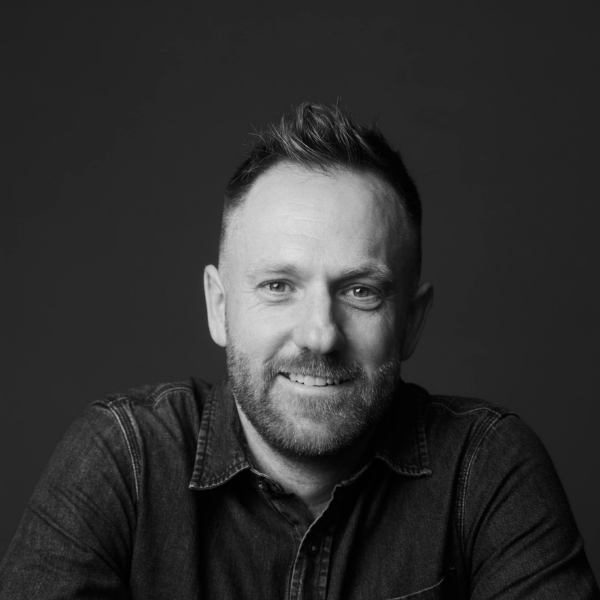

Co-host of The Elephant in the Room. Real estate agent, buyer's agent and buyer's agent mentor, co-host of Foxtel's Location, Location, Location Australia, author of Auction Ready and co-host of Your First Home Buyer Guide.

Tim Riley On Group Builds, Co-Housing And What They Actually Cost
Tim Riley has put together ten collectives and 82 homes since 2010, with the buyers acting as their own developers. He walks through the joint venture structure, the equity it demands, and the savings it has actually delivered.
In this episode, we're chatting with Tim Riley, founder of Property Collectives, and we're going to explore the idea of group builds. We'll unpack why deliberative development is gaining traction, how group builds work in practice, and the types of buyers this model suits best.
We'll also learn how Property Collectives is advising private and public sector clients on scaling these ideas to address broader housing affordability and sustainability challenges. We'll If, like us, you're curious about innovative housing models and fresh thinking, keep listening. Welcome to The Elephant in the Room.
This is the podcast where we love to talk about the big things in property that never usually get talked about. I'm Veronica Morgan, real estate agent, buyer's agent and buyer's agent mentor, co-host of Foxtel's Location, Location, Location Australia, author of Auction Ready and co-host of Your First Home Buyer Guide.
Hi, I'm Chris Bates, mortgage broker, currently ranked number three in the MPA Top 100 Mortgage Broker Awards. Before we get started, everything we talk about today is not personal advice, and we recommend you engage the services of a licensed and experienced professional.
Our guest today is Tim Riley, founder of Property Collectives, a trailblazer in a deliberative development movement that's reshaping the way Australians think about building and buying homes.
Since 2010, Tim's work has enabled hundreds of people to take control of their future housing through the Bargrupa model or the group build model, creating high-quality community-led housing in some of Melbourne's most desirable neighbourhoods. We have not covered this topic before in the eight years we've been doing this.
So thank you so much for joining us, Tim. We're very much looking forward to an interesting chat today.
Yeah, no, that's having me on.
And like Veronica said, we haven't. And it's not that we wouldn't want to, because if you came to us in the first year, we would have absolutely chatted to you. It's nice to have kind of meet you and have this conversation.
I think these are the best conversations for Veronica and I, because we're sort of two school children trying to learn here. And I think that's what's exciting for us in this situation.
And not just the social and the purpose of what you're doing, but we are going to be a bit novice here and, you know, we're a bit fishy out of the water. And so...
Can you sort of explain to us what you sort of do and, you know, and how it really is a different way of approaching things?
Yeah, sure. Look, it's been a 15-year journey, which is a big theory now.
And I suppose when it all boils down to it, we're developers and development managers and development advisors. And...
For me, it sort of started back in 2010 when I got together with a friend of mine who's an architect, and we were sort of at the age where we were starting to look at getting into the market ourselves for our first homes.
And we weren't really seeing much around that was within our price point in the areas that we were, you know, wanting to live. And the quality wasn't there. I had been involved with a joint venture townhouse development previously that had finished a couple of years before.
So I'd sort of been exposed to the development process through that.
And I sort of said to my friend, Dan, well, look, you're an architect. I could do this. And we got a couple of friends together. Ended up building four townhouses in Northcote. And so the structure was pretty simple. It was a joint venture structure. You buy the land collectively.
In that instance, we all had a 25% share of the joint venture. And then we put in the money as the developer. As co-developers. So we put in the cash and then we borrowed collectively. And then at the end of that process, we all ended up with a townhouse at cost price.
And then we rolled off the commercial loan for construction into individual home loans against your strata townhouse.
Right.
So that was sort of the first project. And at the time I thought, well, maybe other people might be interested in this. So thought of the name, got a little core flute sign put up on St. George's Road in Melbourne and started to get a few phone calls.
And 10 years later, we've put together 10 collectives together. building 82 homes and sort of the largest project we're starting to build now, which is 21 homes. Yeah, it looks awesome. Using essentially the same approach, right?
Like, I mean, the structure's evolved a bit and, you know, we've learned a lot along the journey, but at its core, it's sort of this joint venture structure
which operates in a similar way to a co-op. You know, you sort of have one member, one vote. All the decisions are made by the management committee, you know, within the joint venture.
So that way everybody maintains control, you know, like major decisions are special majority decisions and then sort of more straightforward decisions are simple majority.
But it means that people can... you know, have a say over, well, what property are they buying? What's the design? Who's the builder? Who's the architect? You know, and yeah, so that's kind of it in a nutshell, right? Yeah.
And so the groups that you've assisted, they effectively engage you as a sort of a project manager or in some sort of A managerial role? Is that the way it is?
A development manager that turns into a project manager once, you know, once you've gone to contract with the builder. Yeah, got it.
So they're buying it at cost, but that would include some fees, some consulting fees for you.
Yeah, so we are effectively a fee-for-service development developer, right? So, and the structure has changed over time. Like Early Doors is that first project that I...
um described you know like i was a joint venture and i was developer you know so wearing full hats and over time um i've been involved with projects where you know i've done it with my family members and friends as well right um but um where it's got to now is that um sort of our last
Two projects have been more co-housing projects.
So I think what's happening is that there's groups of people out there that are interested in this idea called co-housing, which is sort of a philosophy of trying to live together in a more intentional way where people are wanting smaller footprint but more high-quality, high-performing homes with more generous communal space.
Yep. And they're typically...
not really that interested in car parking so they they're sort of happy to maybe share a car or just have a on-grade car park rather than have a Double lock-up garage, those sorts of things.
And, you know, the market doesn't really deliver that sort of outcome. So we finished a project in West Brunswick in 2024, which is 10 apartments designed around a central shared courtyard with only six cars for the 10 houses.
And then the project we're doing now in Eltham, which is 21...
Wellings is supporting a community of people that want to create this co-housing sort of way of living space.
Yeah. We've had, um, Jeremy McLeod from breathe architecture with the nightingale group, um, on before. And, um, I mean, as soon as I found about that, you know, I think it was project one. I heard about that.
Um, and, uh, I've tracked their journey very closely and I absolutely love what they've been building. And, um, it seems to be a similar model, but in a, but this is a bit different. I mean, it seems like you've got a little bit more ownership in it.
You sort of, rather than a bit of a ballot system and they're controlling everything, it seems like they're much smaller and, um, You know, besides the design benefits, maybe the community, I mean, you're going to be friends with your neighbours or maybe not if it doesn't go very well.
But there is an idea of a community that you're doing it with and rather than just moving and buying an apartment and not knowing who anyone is. Yeah.
Is there some real tangible financial benefit or does that often get just not so much the focus because you're not getting the benefits of maybe what a developer would have access to, the negotiation power and I don't know, maybe buy us the site a bit better or maybe you can get funding cheaper or you know what I mean?
Is there usually a big financial benefit or is that really not that large? Yeah, look.
The answer is it's varied, right? Like we've done 10 projects and they're not all the same.
I think, you know, the most challenging project we've ever done sort of broke even, right? And then the most successful one, there was, you know, probably close to a 20% difference between what they were valued at completion and then what it cost, right?
Um, on average across all of the projects and some haven't completed yet. Right. That, um, sort of estimate that the average across all the projects, the saving has been around about 10 or 11%. Right. Okay.
So, um, that there is a saving, but I think what I also find is that, um, to your point, a lot of the people that are coming through and they're interested in the sort of social or environmental benefits around what they want to try and create.
The financial is absolutely important, of course it is, but it's not necessarily the most important thing for them.
And, you know, the Victoria Street project's a good example. That group really wanted high-performance homes.
And that project we delivered through COVID, so it was like a COVID project. So there was some, you know, rude shocks when we went to tender for the builder on that project. And there was major cost overruns.
Um, but we stripped that project back to a baseline specification that worked for everybody. Um, but we did it in a way that meant people that wanted to spend more on the building performance, they could.
Um, and in the end, that group decided to still spend that money and deliver those homes, um, to the standard that they, they wanted, right, which, um,
was more about, for them, building homes that for the long term would have close to zero operating costs, right? That was value to them. It wasn't about... what this is going to get valued at at the point we hand over the keys, right?
And you're sort of over to the owner's corp. Yeah. It's more thinking about, well, what's their lives going to be in 10, 15, 20 years, right? And that's an interesting thing for me, right? Yeah. Actually, at that point with that project, I was like,
I was surprised during that process to the extent that that group kept on putting, you know, investing the extra money for all the bells and whistles on a high performance home, right? Yeah.
I guess in a way you've got to sort of work out the ethos of each group at the outset in a way so that you, because you, collective decision making and there's some either or choices to be made.
And I would imagine too that some of the sites, you know, I was reading up on this, you know, one of them, I think you had from four bedroom homes to one bedroom homes in the same complex. And so therefore you're dealing with,
Potentially like-minded individuals wanting to buy in, but with different finances, different needs in terms of their accommodation. Do people typically come to you as a preformed group or do you help, you know, compile these groups? Are you an introduction service as well?
We are a bit. I mean, I think the fact that we exist is giving small groups a bit more confidence that this is an option.
It's typically how groups form is, you know, there'll be probably a cohort of maybe three to five households and they've been talking about doing something like this for a while. Yeah.
And they'll find out about us somehow and we'll then work with them. We sort of created a pretty structured process to work with them understand what their vision is and then start to define that.
So that is about trying to articulate for them or pull it, get the information out of their heads around, okay, well, what are your communal aspirations? What are your personal requirements in terms of spatially, like how many bedrooms are you interested in, townhouses or apartments or, you know,
What are your locational preferences? What can you afford? And a lot of the groups will form around a location, right? Yeah. We want a certain range of suburbs because we've always lived here or we want to get into this area, right? So the location is really important.
So there's sort of their communal and sort of like individual aspirations and then there's budget as well, right? So that's a really critical one. It's like, you know, how much can you afford? From a total cost perspective, from a mortgage perspective, do you need a mortgage?
You know, how much equity have you got to put into these things? So we get a good sense of what the brief is, you know, up front, and then we work with them through a process of refining that and overlaying property strategies onto that.
Because it may be that they come to us and they really want to get into, you know, suburb A, but by the time we've worked out what their budget is, you know, that they're
Their initial brief might say, we want to get into suburb A and we want to have a community of six or seven dwellings, but our budget is X, right?
And by the time you then go through that process and say, well, if you want to hold your budget, it needs to be suburb B, C, D, and actually it needs to be 15 dwellings. You know, it can't be that small.
So through that process, everybody kind of gets on the same page around the realities of the market. This is what their original vision was. And we come up with a very detailed acquisition brief around what sort of property, you know, this group.
Because that's the thing too. You've got to have the availability of the type of site that might lend itself to this as well. Like, so that would have to be part of the process, right?
Part of the considerations. Yeah, that's right. We get pretty pointy as sort of. At the end of that process, you know, we're looking for, I don't know, 1,500 square metres in a neighbourhood residential zone or a general residential zone. We want a couple of access points.
It'd be great if it was a corner site that, you know, having a rear laneway would be better. And, you know, we get really, really pointy on that.
And through that journey, and it can take, you know... four, six, eight, nine months, right, for that to play out.
Because you're also competing with developers for those sites, right?
We are, yeah, yeah. But during that journey, other people will sort of be approaching us, be interested in a certain location, so we'll introduce them to the group as it's sort of forming. And then also that process means that that group will
can have the confidence to put out what they're working on to their friends and family as well. So the group sort of starts to come together slowly. But yeah, then when we're ready to buy, yeah, we're competing against other developers. But I think because...
Because it's a build-to-hold model, when we have gone to purchase sites, we've been pretty competitive, right? Because we're not focusing on a four-year build-to-sell timeframe.
So we're not having to factor in agent costs. You know what I mean? There's lots of advantages to the model, which means we can... All things being equal, you could probably pay, you know, a dollar more than a specific individual developer for that site. Does that make sense?
Your feasibility is different. You're not, you don't have to worry about resale at that point, at the point of completion. Do you ever get investors as part of the group?
Yeah, we have, we have over time. I mean, there's been 10 collectives now, and so there's been a bit of a mix. Mm-hmm. I think there's been, I think it's close to 80, there's about 75 members of these collectives.
And a lot of the projects sort of that got up, you know, around 2015, 2016, that sort of time, we had quite a few investors coming through.
And at the time, you know, and I'm still happy to work with investors, but I suppose the thing that we were trying to be very clear around, um, joining was that we wanted investors who understood that they'd be working with owner occupiers and the intention of the group was to build something of quality and intention was for it to be a longterm investment.
Yep.
Um, because I think to sort of have a dynamic with an investor who was just looking to sort of like flip at the back end, you know, it means decision making's not going to be smooth. Yeah.
Um, so we have had quite a lot of investors, not many investors coming through in the last couple of projects. It's been more about, um,
People that want to create a community and be owner-occupiers sort of together. Yeah. And I think that's just a reflection probably of where the market's at, you know, in many ways.
Tim, you've done 10, you said. You've had some challenges where, you know, different owner-occupiers and maybe there's been some issues with development costs, you know, running people.
And that's meant some people can afford it and some people can't like, um, you mentioned there around investor issues that, you know, that, that maybe doesn't work sometimes with the model, if it's a different strategy or goal, like what are some of the other challenges with this where, you know, you've learned over the years, oh, that that's, that's a bit of a tricky one that we have to manage.
And maybe we need to put in our process now that we're asking those questions up front because, um, that would have stopped those issues.
Yeah, we learnt a few big ones early on. Um, probably one of the critical ones is the way that we allocate dwellings.
So you can imagine a group buys a piece of land off a concept plan and some planning, town planning advice, and you know, but you don't have a planning permit, right, so you don't know exactly what you're gonna get. Um.
So in the first project, we sort of went out very early and people kind of got quite wedded to their dwellings before we had the permit, which caused some problems when we had to adjust the designs through the planning process, right? Yep, yep.
So what we sort of moved to was an approach whereby people join nominating a dwelling type, and the dwelling type is more about the size of the dwelling and the number of dwellings.
Um, but unit selection only happens after you've got the planning permit. And then you get two valuers, at least two valuers, to value all of the units.
Um, because you might have two dwellings that are exactly the same design and dimensions, but one might have northern aspect and, you know, look over a forest and the other one might, you know, have a southern aspect onto a, to a road or something, right?
So we get those two, two valuations. Um, we work out what's the average value per dwelling. And then, um, people select based on the average, average proportional value of each dwelling. And then that is the amount of the costs that they need to pay for their home, if that makes sense.
So it's a very transparent process.
Yeah. But do you ever have them fighting over the one, like, you know, the two, the two, they're the same except for the outlook and the aspect, I mean.
Well, you use, well, okay, so then you're sort of using then the relative value to self-select, I suppose, around the cost of that dwelling.
Yeah, but what if they could both afford it? Like, I mean, I know if I could afford the good one, I want the good one.
It's a good point. So, look. Structurally, when it comes to the order of selection, it is first in best dressed, right? So there's that circuit breaker. So there's a protocol. There is a protocol.
So if you join the project earlier, you get the luxury of having a wider choice. If you join at the end, you might not have as big a choice. But a lot of the groups kind of just try and negotiate that through the process, right? So there's minimal conflict.
Not to say that there never is, but we have that order of selection as a bit of a circuit breaker, right? Yeah.
What are the biggest challenges in, I guess, getting a collective off the ground? Because, you know, you've got financial, logistic, cultural. I mean, you've already talked about the fact that you're sort of all agreeing that, you know, that there's a number of dwellings that you need.
Each dwelling has to have a fair amount of accommodation to suit everybody who's buying in. And then you might get to council. You might buy a site. Then you might get everyone's put money in to buy the site.
you get to council and council is not going to let you have that many dwellings, you know, so then that, I guess, logistics could be really, um, sticky, but, but culturally as well, because you're managing design decisions and you, and you've, you've got to try to, you know, and too many cooks for the broth and all this sort of stuff.
So how do you sort of get to a point where actually someone, someone's going, there's a, there's a, I don't know, I guess a casting ballot or, or how, how do you work that stuff out?
Yeah. Yeah, well, it's a bit, there's multiple ways, I suppose. And we've gotten better at it over the time, over time, the number of projects we've done.
Yeah, you know what you're doing, yeah.
Look, we leverage a thing called the plan of work, which is Royal Institute of British Architects design process. And what we really like about it is that it breaks up the whole development process into seven gates. Right.
Um, you know, the first few gates are around, um, uh, what's your brief and benchmarking line. What's, what are you, what are you trying to create for? And then you get through to concept plans, town planning drawings, you get your permit and you do your documentation, et cetera.
So, but what's really good about it is you can overlay that on your actual development program and communicate really clearly to the group. We're at this point. And actually the upcoming decision for you is to endorse this decision, right?
Because, I mean, like the name of your show, like what's the best way to eat an elephant? One bite at a time, right?
Yeah.
There's no other way to do it, right? And, you know, all the decisions in building something, there's so many decisions, right? Chunking it out using this plan of work, I think has worked really well because you can keep,
a group really focused on what they need to do to organize, to make that decision at that point, and then we move on to the next step, right?
Yeah, I like it.
So that's been really good. And our Elfin project, which is the 21 homes that we're building, I mean, I actually... I always had a bit of a mental block around doing a project that big. And actually, I think 2019, I went on holiday to Europe and went to Berlin.
You sort of mentioned about the Baugruppe, which is very popular in Germany. And I went to meet a developer manager that was doing larger projects in Germany. And one of my main questions was like, how do you... How do you manage such a large group, right?
Because until then, we'd sort of been doing four, six, eight dwelling projects, and I quite liked that size, because my analogy was, like, if you have a dinner party and you have six, six or seven people around, like, everybody gets to talk to one another at dinner party, right?
But if you get 15 people around, you have little factions breaking in. It's a function. Yeah, like... So his feedback was that in his experience, the group recognises the fact that it's a big group and it organises itself.
And in our Elton project, that's borne out because that group has organised themselves to empower smaller groups of households who are more interested in elements of the
So design or the landscape or sustainability initiatives to take a lead in the decision making and they've empowered them to. almost make decisions on behalf of the group, right?
And so that's been, it's worked really well, particularly for us because we know, okay, well, we need to get some guidance around, you know, some topic, right? Well, I know who to go to because I know who's in that group, right?
So from that perspective, you know, there are tools out there for groups to sort of work through this. I mean, the model that they're using is called sociocracy.
And, you know, they've nerded out on this technique of, you know, working together and coming up with just a way of, having consensus decision-making, but empowering other people without having to feel you've lost control, if that makes sense.
So these people, particularly in the Eltham Project, they all know each other or have they grown, is that group grown organically?
No, they've grown together. So, yeah, it sort of started, it was probably about...
I'd say there was about six or seven households at the start and it was two family groups, some parents and their kids that really wanted to do it.
Multigenerational.
Multigenerational. And they sort of heard about co-housing and wanted to sort of create a community.
Um, and then we worked with them through that sort of process I'd described.
Um, and once we got to the point where, um, they wanted to go ahead, we sort of then, um, work with them to run a couple of info sessions with their friends and family, a few more people sort of join.
And then, um, we put it out to the, to the sort of property collectives network, a few other people joined. So when we bought that land, um, We had 11 households out of the 21. So we had sort of half already. Wow.
And then we've progressed since then to add, we've got 19 and we're just about to start building now.
It's quite a leap of faith, isn't it? Because, you know, you're building an extra two dwellings now, aren't you? And you're hoping there's going to be...
The nuance with that one is that we actually, the 21st dwelling is actually going to remain in shared ownership as a house that everybody can share.
So they want to have a house for shared meals, but also there'll be a little, there's a mezzanine in it, so it'll be a little co-working space for people that want to have a co-working space. So it's basically going to be a multifunctional
So everybody that's buying into that project, they get their title over their townhouse, their private residence, but then they also have a share of this dwelling, which is for everybody's use. So we only need the 20, given that the 21st is going to be shared. Do they?
I'm curious, has anyone sold out of any of the developments? Yeah, that was my question. And is there an extra criteria that anyone who buys needs to, a bit like company title in some buildings, they need to be interviewed by the other owners to make sure that they're a cultural fit?
Has either of those two things happened?
No, there's definitely been sales, you know, post-completion, you know, And we've never... Look, ultimately, it's up to each group to sort of decide the nuances of how they want to operate, right?
But no group has ever put any restrictions on it because at the end of the day, I think everybody recognizes that what they're doing is they're going through a development process. There's lots of ups and downs. There's lots of risks for them to negotiate.
So putting some sort of restrictions on sale at the back end because... It's a four-year process, right, to build something. I think things happen for people, you know.
So there's no – it's a pretty vanilla kind of structure at the back end. You end up with a townhouse or, you know, your own title and an owner's corp. I think what happens is, though, that people that are looking to buy into that
There's obviously, depending on the design response, you know, it's been designed in a certain way, right? So people that are coming in to purchase that, they're obviously responding to the fact that they like that design, right? Yeah.
So that ethos that that group had sort of at the start is still sort of following through, you know, in that respect. Yeah. or the other way around.
You can connect with me and access all of the tools that I've created to help you make better property decisions at veronicamorgan.com.au. And there you will find resources for first home buyers, details about my buyer's agent mentoring program.
You can connect with my Sydney-based property management and buyer's agency teams, Australia-wide vendor advocacy, or ask me for introduction to the small group of buyer's agents that I would personally recommend across the country. That's veronicamorgan.com.au.
If you're looking to buy your first home, thinking of upgrading to a new one or purchasing an investment property anywhere in Australia, we would love to carefully guide you through this journey and importantly, get the finance right.
Reach out via my website, alcove.com.au.
Yeah. And then all the structures and the splitting of the blocks and the loan and the strata of the community, all that's done like it would with any other development. So there's no issues really around resale you find where they can't get lending on it or anything like that.
No. Well, I mean, I think that's one of the advantages of the model, particularly during the development phase is, you know, you've got this group buying power playing out.
And to your point before, like there are different individuals or different households with different financial situations, but it's sort of the power of the group means that, you know, everybody can be working together to buy something that as individuals they couldn't afford on their own.
That works, you know, to a certain extent with construction funding as well. Like the banks will want to understand what's the takeout strategy for everybody. Like everybody's going to be proportionally responsible for their share of the construction, paying out the construction loan at the back end.
And obviously the bank DD means that, you know, there's a fair bit of, you know, information sharing around what that strategy is for people and the bank's normally do sort of like a takeout assessment on serviceability for the individual's share of loans at that point.
But having said that, you know, the banks are still, it's still commercial loan. And so there's still, you know, if we've got in the Eltham example, 19 sales out of 20, they're actually, we've got good debt coverage there.
They're not so worried about that because it's 18 months or, you know, two years into the future post the build.
You know, the rubber hit the road, I think, for people obviously toward the end and they have to actually get a home loan, you know, against the property once it's subdivided. Yeah.
Yep. Have you found that other people around the country are doing this as well, or is it a very Melbourne thing?
So far, it's been Melbourne only.
We've definitely had interest from other states over the years, New South Wales, regional New South Wales quite a bit, and Perth and Queensland, but no groups have gone on to do it, I think.
I'm not sure. I'm not sure. I mean, look, obviously we're in Melbourne and, and so there's a familiarity or a comfort level there. Um, I know, you know, could you do it?
Do you think you could?
Yeah, absolutely. You could. I think, I mean, there's, Um, like, like any developer, you know, sort of breaching out into a different state, you would need to collect a different sort of set of, um, subcontractors and consultants that have that sort of local, you know, local knowledge and local expertise. Yeah.
But structurally, for sure, you know, we'd be able to support groups interstate. It's just, just wouldn't physically be present as much as we are. And, you know, COVID's been good for that rather because everybody's now on video. So, you know, those barriers aren't, that big anymore, I don't think, really.
I have a group of friends we regularly talk about, you know, when we retire, we want to, you know, get a plot of land down the Kangaroo Valley and build something exactly like you're talking about.
You know, we want our own discreet space, but also because we love food and wine and we probably have a big veggie garden and we have a communal cooking area and dining. And so we can break away when we want to, we can be together when we want to.
Um, so I'm, I'm, when I read up on, uh, your, your website, I was like, I'll clock that for when we're ready. I think that sounds like a great idea.
Yeah. I know. You know, I think those things you're talking about, they're actually pretty universal, right? Like, like not that many people who kind of don't want that outcome. Um,
It's just how to get there. It's just how to get there.
And, you know, I think thinking about it, you know, particularly with the last couple of projects, we've got a lot of people who are coming up to retirement or in retirement and they're looking to sort of create that outcome but also wanting an intergenerational element as well.
Yeah. So, you know, for me, yeah, it's been interesting to see how it's evolved and people kind of now using, I suppose, the structures and the process that we've set up to create those different outcomes, right? Yeah.
So obviously you've done a lot in the inner north of Melbourne. I think it's very similar to Nightingale. Nightingale seems like they've gone into different states now. They have done some in New South Wales and I believe in Perth and things like that.
So why do you think it seems to be that inner north? Is it the people in inner north of Melbourne are a little bit more...
You know, open to, to living around other people and a part of the community or direct it to the council or is it just the feasibility makes sense and getting the land like. Yeah, yeah.
Um, look, I, I think there is something. There must be something attitudinally. I mean, I, I don't know. Right. But I mean. Now, I mean, I live in one of the projects that I built in Northcote, so I'm sort of familiar with the area.
I do think there has to be some sort of high correlation with voting for the Greens, whatever that means. You know what I mean? Like, if you think about the inner north of Melbourne, like, it's a pretty sort of leftist kind of area. Yeah.
Maybe those sorts of, you know, people are just additionally more in tune to.
They're not individualist.
Yeah. Cooperating more. Yeah. And, and, and, and doing things together. Um, so I feel like there has to be something around that. Um. But, you know, and then we're doing this project in Eltham.
It's not the inner north of Melbourne, but Eltham as well has a bit of a similar. Yeah, arty hippie vibe.
Correct, yeah. Yes.
Yeah, yeah.
So, you know, I think, you know, the acorn hasn't fallen too far from the tree there, I suppose. Yeah.
I mean, they've had a lot of success. I'm not comparing it just to Nightingale. It's just, it's a model that.
It is different though, Chris, because Nightingale, they're the developers and they find buyers for it, where effectively what you're doing here is... More ground up, right?
Yeah, way more ground up, yeah. They've had some pretty, I mean, from my... limited understanding of this, right, is that they've had some pretty sensational architects have been a part of it.
And it's almost been, I don't know whether it's pro bono, I don't know whether they get a discount at all or they pay full freight, but it's almost like the architects who are sustainably minded and they want to, because, you know, like I think a lot of architects who come into the industry,
Going there because they want to make a lot of money. They're going there because it's a creative industry, right? And new models like this, that's exciting. I mean, if I was an architect, having to design for 20 different households and the challenge of that would be exciting.
So have you also found any benefits like that or is it you end of the day, you're just competing like another developer a little bit to pay full freight with architects? Yeah.
And, you know, a lot of the members that join these groups are actually, they have, we've had lots of architects as part of the group because they're urbanists, right? Like they care about the city. They want to create good bits of the city, right?
So they kind of can understand the value of this approach.
And similarly, you know, professionals in the built environment, right? So there are a lot of those people that kind of, Because the cognitive leap in terms of doing this for someone who's just not in the industry at all, it's further, right, than someone who is in the industry, right?
Well, I guess if you're in the industry and you have a desire for this, because a lot of people do have this sort of desire, then, you know, you see it as an opportunity to create it, as opposed to pie in the sky, it's all too hard and, you know, so you're creating a vehicle for that, I guess.
So I could sort of see how that people would jump on. I mean, if I was in the right sort of group, as I said, you know, our retirement strategy, I'm totally, I'm on board. The right bunch of people.
But to your question about the architects, you know, I think the challenge, well, not the challenge, just the reality of what we've done and our journey is that
you know, we've sort of started quite small and we did a lot of smaller projects and that was quite deliberate from our perspective because, you know, it's an intricate sort of process and I've never wanted to over-promise and under-deliver, right? And so from that perspective, from an architecture perspective,
perspective, it's more intricate work and it's probably not really a profitable job for an architect to do, right? And, you know, architects a lot of the time are artists anyway, right?
To a point, they're in it for the outcome and, you know, part of the problem with these industries, you know, architects don't get paid what they're worth, right? That's a problem, right? I think as we've gotten and done bigger projects, we then started to take on more capable architects.
And those projects just being bigger mean that they can actually afford a fee that can pay the architect for their time, right?
So there's a sweet spot sort of thing. The small four, you know, the four townhouses really struggling to get the architect fee off the ground. It is.
Like a four dwelling project is just struggling to pay anyone, right? Like it's a hard slog. Whereas, you know, you start to get up to, you know, 10, 20 or 25 or something like that. And
That space is going to attract a better quality architect, engineer, builder, you know, all those sorts of things.
And in many ways, while the size is getting bigger and that might feel a bit more risky, it's actually not because you're getting a better quality team, you know, like to be able to deliver that, if that makes sense. Yeah.
You are also working on a housing co-op approach to delivering more affordable housing without a government subsidy. Do you want to tell us a bit about that?
Yes. Yeah, I've been working on this for a couple of years and I suppose it was really born from a few friends of mine who are in the industry who'd sort of been very interested
interested in sort of the Zurich and Vienna housing markets and how those cooperatives within that context are able to deliver affordable housing, like really high quality affordable housing.
So they were sort of interested in understanding, well, how does that work and how could those co-ops structurally translate to an Australian context? And one thing that
I've always been conscious about with the building groups is that I've never sort of said that it's affordable housing because it's not. Because we're operating in a private market and part of the challenge for me with any sort of new group is just making sure that that...
individual household understands the process, understands what their responsibilities are, but also has the equity capital, right, to be able to support the project through to completion. So those projects haven't been very cheap.
You know, I think the average cost across all of our projects is sort of like $1.1 million, you know, for a completed home. Average value is sort of being around $1.2. So I'm like, look, How do you take some of the good bits of the model around the social stuff?
How do you make it more affordable?
And so we sort of worked with these colleagues. We got a couple of grants from Business Council of Co-ops and Mutuals and actually the Lord Mayor's Charitable Foundation in Melbourne.
And that sort of paid for us to do the naval gazing and kind of look at how this housing co-op structure could work in an Australian context. And, um, we're at the moment, we're trying to, um, get a pilot project off the ground. We're trying to find a landowner to work with, but.
where it's quite different is that it's predicated on a long-term land lease. And I'm not sure that you guys have done any shows about, about, um, lifestyle communities or the, the land lease communities, which is, uh, It might be an interesting show for you to do, right?
It would be an interesting show. And it was only not that long ago, one of the solutions to the housing affordability a big developer said is land leasing. And I was like, yeah, that's great for you. Yeah, yeah. And I can see why you might want to do that.
But yeah, let's just think this through.
At a really high level, what the land lease does, and it would need to work on sort of like a 50, 60-year land lease. is you take – and our model would still pay for the land lease, like a rent to the landowner for that 50, 60-year period.
But you're starting to look at property as a cash flow proposition rather than sort of like a capital account strata proposition. And spreading land payments over time means that –
Members of these co-ops, they'd buy in, they'd have to pay a fee to become a member, but that would give them a right of residency for as long as they become a co-op member for the home that is built for the co-op.
And then instead of paying rent, they'd pay a monthly residency charge, which is just set to cover the costs of the co-op. So it's like a co-ownership model. where the members of the co-op own the building and they control that land lease.
And our numbers indicate that, you know, you could deliver that residency charge at around 10% less than the comparable market rent. And that that structurally...
because it's set on a, against a cost base, you know, over 10, 15 years, you'd start to see a big delta between what market rent is and what the residency charge is because, um, the members are really just responsible for paying off the expenses of the co-op rather than, um, um, paying a landlord, whatever the market, prevailing market rent is, if that makes sense.
Because, you know, market rent's actually not tied to anything.
Yeah, yeah, well, what we'll pay, isn't it?
How much, yeah, how much the market will pay, yeah.
Is that sort of a bit like community land? We interviewed Carl Fitzgerald from Grounded.
Oh, yeah, yeah.
You know, a community land trust, that type of idea?
It shares lots of land. similarities. The intention is to try and minimize the land costs in delivering affordability.
Community Land Trust is slightly different in the operational phase of how it works, but there's examples overseas of a Community Land Trust having a co-op come together to build the buildings and then the Community Land Trust providing a land lease to the co-op.
And so the sort of landowner that might be prepared to do that is along the lines of your green voting, but just happens to have some assets behind them. Because there's a fairly altruistic component to this, isn't there? Because...
You know, like you're going to basically commit, you're not going to be able to do anything else with your land over that period of time and maybe ever. And, you know, they're forgoing potentially some significant upside if they develop it themselves. I mean, what's the enticement for a landowner?
That's where I think, you know, I think.
model you talk about in this one differ in that a community land trust is really relying on land being gifted, right? Whereas this approach is about having a long-term land lease and actually still getting paid for that lease, right? But
Look, I think it remains to be seen who these landowners are. Our focus has been local councils, face-based organizations. But also, we're in the process of putting in an EOI for...
a regional housing solution grant, which is being run by the Gardner Foundation, which is there to support dairy industry. So we actually suspect that this model could work really well in regional areas where they're suffering key worker housing issues.
There might be regional businesses with surplus land that could devote part of their land on a long-term ground lease, you know. Interesting. Yeah.
Well, we'll put some links in the show notes to some of the work that you guys have been doing, including on that.
Do you have a property done by Forrest?
Yeah, I do.
And it's probably not fair, and I probably shouldn't say specific names, but, I mean, you're sort of going –
Go on.
The number of times I've sort of come across potential projects where a well-meaning architect has worked with a landowner to create a design outcome, particularly in this sort of co-housing space, but in the absence of...
real numbers has sort of made me feel for the landowners who have sort of gone down this road where they've sort of got
I'm very caught up in a design response, but without having that reality check on financial feasibility. What it's going to cost to build. Yeah, along the way. One example was a project in the Blue Mountains.
And last year or the year before, an architect contacted me who'd done the design for the landowner. Um, and put together a design for 12 dwellings, sort of in three clusters with a big common building, common building, and it got the Kermit.
Um, um, but now it was time to deliver it. Um, and I looked at the feasibility of it, um, and there was sort of just no way that it could actually be delivered, given the market context around value and construction costs and all that sort of stuff.
Mm-hmm.
So that landowner ended up deciding to sell the land with the permit.
And I'm not sure what sort of happened with that, but it was, well, just a, when you said, you know, you want the Dumbo of the week, I thought, well, if I could get one message out to people that are sort of thinking around about,
You know, creating these sort of co-housing projects, it's sort of to do the work on the numbers really early doors without going too far down the road on your design response.
Because the last thing you want is to spend two years and spend tens of thousands of dollars getting a design that can't be delivered.
I mean, you've got to really have a numbers mindset to it, right? You've got to come in there like a developer. I mean, often these people, maybe if it was all downsizers, right, who were cashed up and, you know, then they go, well, who cares?
Let's just, this is our home to the grave sort of mentality. And that's a bit different, right? Like if the valve's coming low and it doesn't really matter and you're overspent, who cares? But often a lot of the people at different stages of their life just haven't got the cash to...
to not be able to get finance on the other side. And it sounds like you've also got to put in a little bit more cash to get going. I don't know if, you know, when they buy the land or they commit to buying the land, do they put in, you know, 20%, 25%?
How does it sort of work from a funding point of view? Do they put in 25% of the build or is the bank often covering the whole build? Yeah. Or is it some have got cash and then some are borrowing?
So then maybe it's allowing the overall project to be... Yeah, it's a funny one.
Okay. So from a construction funding perspective, the market... We're going to buy the land.
How do you buy the land?
Okay. So land typically... We've got sort of 60% LVR for the land purchase on the properties that we've bought, right? So the group's having to come up with 40% equity plus your stamps, right?
But what happens if I'm a first-time buyer? I can't come up with a 40% deposit. No, no, no.
So in that respect, that 40% is coming from the members of the group, right? So it's a proportion of that 40%. But your point's a good one.
I mean, the members of our groups have overwhelmingly been sort of downsizers or retirees or upgraded, but we've had very few first home buyers in the project because of the point you're making, right? Like equity is the hardest thing to come by.
And so it's much easier for downsizers to kind of get involved in our project because of that fact. And then through construction, we might get 60, 65% loan to value or 70, 75% of cost.
But ultimately what it means is people are putting in, you know, 30, 35% of the cost of their homes in cash, right? Which is more than you would have to if you're buying off the plan, right, for a new home. Yeah.
So that is the challenge, is sort of like, how do you make it more accessible to more people? And that's partly why we're sort of looking at this housing co-op model, because you're really, really reducing the amount of equity people need to get stable with quality housing, right?
It's really hard to do in the current system with the models that we've got, right?
Yeah, and I guess in the current system, in order to get into the property market, a first-time buyer has to be really thinking of a stepping stone strategy.
They start small and they don't always do this, but really they need to buy a good asset that goes up in value so that they are able to then make the jump to the next asset.
the next layer, next level when they need to upgrade, whereas potentially with a co-op, you could afford to buy your forever home at the beginning of your process, you know, you can forego all of that. You don't end up with the same ultimate asset.
No, but maybe you've got more disposable income to invest in other. Yeah.
I mean, I feel like
You know, it's going to be really interesting the next, you know, 10, 20 years, right, in Australia because, you know, we've got these housing targets and a big part of the target is infill apartments. You know, that's where the governments want to see this activity.
Well, they're not really infill because they want to demolish first.
True. Okay. But, you know, well-located metro apartments. But I think the challenge is that, you know, under sort of the off the plan, in the off the plan market, those are currently only feasible if they're luxury, right?
So they're not, that sort of product is not going to get built for first home buyers. And even if it was, I'm not sure apartments are a great capital growth asset anyway, right?
Then that type of apartment is terrible for a first home buyer.
That's right. So... So that's where I think, you know, maybe there's a role for this housing co-op model from a production perspective because it doesn't need the premium pricing to sort of like get off the ground, right? So we'll see.
It's a very interesting and evolving space. And it's great that there's people such as yourself trying to crack the nut effectively. So it's why we wanted to speak to you. Thank you so much for your time, Tim, today. It's been a very interesting, very different chat.
So we spoke to Carl some time ago. Might be time to get him back for an update chat too. And, you know, I think it's important for us to understand what's being done out there. I mean, obviously it's a small scale what you're doing there, but it's inspirational and it's possible.
There's a demand for it. So, yeah, really appreciate you sharing your stories today.
No, thanks for inviting me. Yeah. Thank you, Tim. If you have a question that you'd like us to answer in an upcoming Q&A episode, you can send us a voicemail or written question via the website, theelephantintheroom.com.au, or you can email us directly at questions at theelephantintheroom.com.au.
If you like what you're hearing, please share this episode with others you feel would benefit. And while you're at it, why not leave us an iTunes review? Five stars would be great.
I know that sounds a bit cringy, but we have it on good authority that every review helps make it easier for other people to find out about us and hear what our amazing guests have to say.
Key takeaways
- Property Collectives has assembled ten collectives building 82 homes since 2010, with close to 75 members across them.
- The joint venture works like a co-op: one member, one vote, with a management committee deciding site, design, architect and builder.
- Savings have averaged around 10 to 11 per cent against valuation at completion, ranging from breaking even to close to 20 per cent.
- Members contribute 40 per cent plus stamp duty on the land and 30 to 35 per cent of build cost in cash, which has kept first home buyers out.
- Dwelling selection happens only after the planning permit, priced off the average of at least two independent valuations.
- A separate housing co-op model, built on a 50 to 60 year land lease, aims at a residency charge about 10 per cent below market rent.
How Do Group Builds Work?
Tim Riley started Property Collectives in 2010, after he and an architect friend found nothing at their price point or quality in the Melbourne suburbs they wanted to live in. They pulled a few friends together and built four townhouses in Northcote, each holding a 25 per cent share of the joint venture and each ending up with a townhouse at cost price. The commercial construction loan then rolled into individual home loans against each strata townhouse.
The structure has been refined since, but the core holds. The joint venture runs like a co-op: one member, one vote, with a management committee making the calls. Major decisions need a special majority and routine ones a simple majority, so the group keeps a say over site, design, architect and builder. Property Collectives is the fee-for-service development manager, becoming project manager once a builder is contracted.
Groups usually arrive as a cohort of three to five households. Riley described a structured process for drawing out the brief: communal aspirations, bedrooms needed, townhouses or apartments, location and, critically, budget. A group might want six or seven dwellings in one suburb and learn that holding the budget means a different suburb and fifteen dwellings. The output is a pointed acquisition brief, and it can take four to nine months.
Do Group Builds Save Money?
Ten collectives have been put together, 82 homes in total, with close to 75 members through them. On the financial result Riley was direct: it varies. The most challenging project broke even. The best showed close to a 20 per cent gap between valuation at completion and cost. Reading that gap honestly means separating the value the work created from the value the market added anyway, the split builder Rebeka Morgan works through when she costs a renovation.
On average across all of the projects, and some haven't completed yet, the saving has been around about 10 or 11 per cent.
Tim Riley, 9:33
He was equally clear that this is not cheap housing. The average completed home has cost about $1.1 million against an average value of about $1.2 million, and equity is the binding constraint. Land has been bought at around 60 per cent of value, so the group finds 40 per cent plus stamp duty, and members put in 30 to 35 per cent of build cost in cash. That is more than buying off the plan asks, and it has skewed membership towards downsizers, retirees and upgraders rather than first home buyers.
The offset is what a group can reach together.
It's sort of the power of the group means that everybody can be working together to buy something that as individuals they couldn't afford on their own.
Tim Riley, 32:31
| Scenario | Figure As Stated On Air |
|---|---|
| Most challenging project | Broke even |
| Best result | Close to 20% gap between value at completion and cost |
| Average across all projects, some not yet complete | Saving of around 10 to 11% |
| Average completed home | About $1.1m to build, about $1.2m in value |
As described at 9:16, 9:33 and 44:00. Figures as stated on air.
| Stage | Debt | What Members Fund |
|---|---|---|
| Land purchase | About 60% LVR | 40% of the price plus stamp duty |
| Construction | 60% to 65% of value, or 70% to 75% of cost | 30% to 35% of the cost of each home, in cash |
| After subdivision | Individual home loan replaces the commercial loan | Each member's own serviceability, assessed by the lender up front |
As described at 3:59, 33:04, 53:43 and 54:54. Figures as stated on air.
What Goes Wrong in Group Builds?
The early lessons were about allocation. On the first project people became attached to a specific dwelling before the planning permit existed, which caused problems when designs changed through planning. Members now join nominating a dwelling type rather than a particular unit, and selection happens only after the permit. At least two valuers value every dwelling, and members pay the average proportional value of the one they take. Order of selection is first in, best dressed.
The other challenge is the volume of decisions. Property Collectives uses the Royal Institute of British Architects plan of work, which breaks development into seven gates, overlaid on the actual program so the group knows which single decision is in front of it.
Scale worried him until a 2019 trip to Berlin, where a manager of larger Baugruppe projects told him big groups organise themselves. At Eltham, the 21 home project now starting construction, the group has empowered smaller clusters of households to lead on design, landscape and sustainability, using a consensus method called sociocracy. Eltham had 11 of 21 households committed when the land was bought and 19 now, and the 21st dwelling stays in shared ownership as a common house.
Why Does a Housing Co-Op Cost Less?
Riley has spent a couple of years on a separate housing co-op model, prompted by colleagues interested in how Zurich and Vienna co-operatives deliver high quality affordable housing, and funded by grants from the Business Council of Co-operatives and Mutuals and the Lord Mayor's Charitable Foundation.
I've never said that it's affordable housing, because it's not. We're operating in a private market.
Tim Riley, 43:27
The co-op model rests on a 50 to 60 year land lease that still pays rent to the landowner, turning land into a cash flow proposition rather than a capital account one. Members pay a joining fee for a right of residency, then a monthly charge set to cover the co-op's costs. Riley said their numbers point to a charge around 10 per cent below comparable market rent, with the gap widening over 10 to 15 years because it tracks a cost base rather than what the market will bear.
His closing warning was about feasibility. He described a Blue Mountains project where an architect designed 12 dwellings in three clusters with a common building and won a permit, only for the numbers to fail. The landowner sold the land with the permit attached.
The last thing you want is to spend two years and spend tens of thousands of dollars getting a design that can't be delivered.
Tim Riley, 52:25
Thinking About Building Rather Than Buying?
A group build puts you in the developer's seat, which changes how funding is structured from the land purchase through to your own home loan. If you are weighing a build or a major works project, how renovation finance is assessed at each stage shapes what is possible.
Renovation Mortgage BrokerSources referenced: The Elephant in the Room, episode 392, "Building Community, Not Just Property: Inside the Property Collectives Model", released 2025-07-06. Host: Chris Bates (Alcove). Guest: Tim Riley, Founder of Property Collectives. Figures are quoted as stated on air and have not been re-checked against current data.
Press play on these