Curious about upgrading?

Wondering where to start?
Complex questions that need answers?
Is there a better structure for you?






"They managed to navigate my complex expat income and even got my Google RSU income approved as well."
"I highly recommend Alcove to anyone looking for a mortgage broker who is responsive, trustworthy, and truly cares about their clients. Thanks again to the whole team for making the process such a positive experience!"
"As founders, we're constantly jumping between things so having a partner that handled the details & made the process super clear made the buying process breezy for us. Very happy with the experience!"












"Alcove has been a great partner. They look after my audience properly, keep things simple, and deliver real value. I’ve got full confidence referring clients knowing they’ll get honest, straightforward advice."

"Property is one of the biggest financial decisions people make. Alcove stood out because they take a strategic approach to lending - helping clients structure property and debt decisions in a way that genuinely supports their broader financial plans."

Adapted from audio. This article is a written adaptation of the original podcast episode. Sources and dates are shown with each figure.


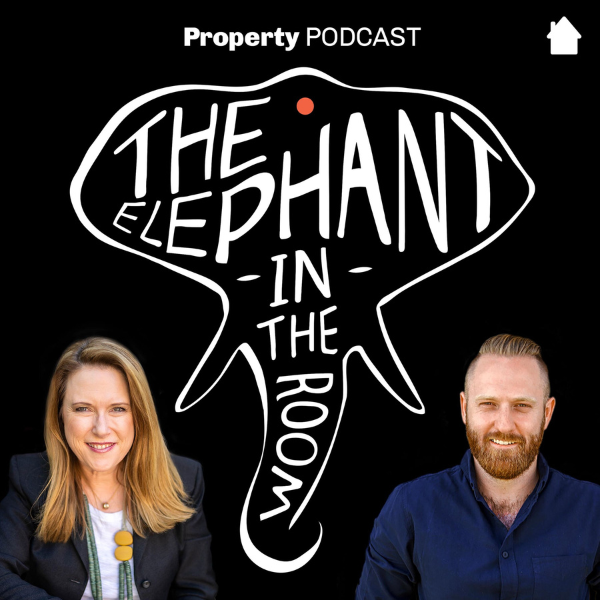
Co-host of The Elephant in the Room. Real estate agent, buyer's agent and buyer's agent mentor, co-host of Foxtel's Location, Location, Location Australia, author of Auction Ready and co-host of Your First Home Buyer Guide.

Ross Elliott: What If Australia's Housing Crisis Isn't About Housing?
Ross Elliott argues that Australia keeps planning its cities around a centre most people never work in. On this episode he sets out what that assumption has cost the suburbs.
Australia keeps building outward, more land releases, more greenfield estates, more infrastructure promises that arrive a decade late, if at all, while the policy debate circles endlessly around density as our apartments in the inner ring are the answer to our housing woes.
The question nobody is asking clearly enough is whether the suburbs we're building right now are designed to function well in our cities or whether we're just doing the same thing over and over and expecting a different result.
Ross Elliott has spent the better part of four decades at the intersection of research, policy, construction and development. And what makes his perspective worth our attention today is that he has watched the same mistakes repeat across multiple property cycles with almost no institutional memory to show for it.
Welcome to the elephant in the room. This is the podcast where we love to talk about the big things in property that never usually get talked about.
I'm Veronica Morgan, real estate agent, buyer's agent and buyer's agent mentor, co-host of Foxtel's Location, Location, Location Australia, author of Auction Ready and co-host of Your First Home Buyer Guide.
Hi, I'm Chris Bates, ex-financial planner and mortgage broker, currently ranked number three in the annual MPA Top 100 Mortgage Broker Awards. Before we get started, everything we talk about today is not personal advice, and we recommend you engage the services of a licensed and experienced professional.
Ross Elliott, welcome. Today we want to explore what Australian suburban development is getting wrong at the planning level, where the gap between policy intent and built outcomes is widest, and what the research in the next Australian city has revealed about housing that's being created today. And thank you so much for joining us.
Thanks for the opportunity. I was looking forward to it.
Ross, I actually don't know where to start with this one because there's just so much in the development sort of planning, you know, place. And we've just, you know, like what Veronica said there, we've sort of made some mistakes and we've repeated them.
And I guess I'm getting nervous with, you know, post-budget and we're going to go on another building boom and building for investors.
And so when you think about sort of the way that we've been designing sort of our cities, just what are some of the fundamental things we've just been getting wrong and just repeatedly just keep making the same mistakes? So, I think we've been subject to a lot of mythology, right?
And I think the mistake we've made when we've come up with planning schemes for our cities is we haven't tested the myth against the facts. So, myth number one has been this idea that the city centre is...
the economy of the city and that pretty much everyone works there and that if anyone could afford to live close to the city centre they would because that's where they probably work and that's the best place to be and the only people who live on the outskirts are the people who've got no choice and they're forced to live out there and endure really long commutes
to their office in the CBD. Now, nothing could be more wrong, particularly. The census, every four years we have the census, it tells us that between eight and nine out of 10 people live and work in the suburbs of our cities. They get up from a suburban bed
they go to place of work, right? They're not working in the inner city. Sydney is a little bit different. Sydney might be around 15%, maybe a touch higher. But certainly Brisbane, Melbourne, Adelaide, Perth, all the other major cities, it's largely a suburban economy. And yet...
our planning and all of our infrastructure has been on the assumption it's got to be in the middle. Now, a couple of things have really started to change. Many years ago, the 1970s, 80s, and 90s, and even maybe the early 2000s, saw a big boom in white-collar
financial property and business services. And they tended to agglomerate in CDDs. That drove a lot of new office development. That really started to slow down as technology took hold. That industry stopped growing and the industries that started growing faster
were things like health and education in particular. You do not see people in lab coats, right, or gowns walking around the main streets of your CBD. So health and education, these are largely suburban industries. So the suburban job market was growing faster than the inner cities.
Then we had COVID. And all of those people who apparently just couldn't bear to be away from their glorious CBD office, given half the chance, said, no, I'm going to prefer working from home, if you don't mind. Two days out of the five, I'll be working from home. This is now normal.
And what we've got now also knocking on our door is AI. I don't know how big of an impact that's going to have on classic city administrative support roles, but it's going to be significant.
Atlassian, who at one point were going to occupy a new Taj Mahal in the middle of Sydney, have cut their workforce by a big chunk and they've tried to offload some of that space. We're going to see that happen on a broader scale. What does all that mean?
I think increasingly we're having the evidence right in front of us that the nature of the economy has changed, spatially that's changing how our cities are evolving, and our planning should actually anticipate that instead of clinging to this old notion that it's all about the city centre and that that's where all the infrastructure needs to go and all the amenity needs to be delivered and the suburbs are basically just dormitories.
That's the prevailing view, and I think that's where we've gone wrong. So, I mean, you're like, I guess when you look at a metro map, right, all roads lead to Rome, you know, all the get into the city. I mean, Melbourne's designing like a ring road and a, you know, a ring metro.
You know, is this sort of the future we should be thinking about is how do people move across our suburbs rather than how do people get to our cities? And, you know, but I think that it's really hard to redesign cities, right, and suburbs. And
you know, freeways when it's sort of all been built on one model that is probably the wrong model, right? Yeah, well, it's a legacy model and a lot of that infrastructure lasts a heck of a long time, right? So you can't, it's hard to undo it.
And people will say, oh, look, if we were London or Paris or New York, we'd have subways and this wouldn't be a problem. But we're not cities of 30 million people. And they built that stuff a long time ago.
We can't, I mean, a train tunnel, a train line costs, I don't know, a billion dollars per kilometre now. It's crazy. It's just madness. I think there are ways around it, though, Chris.
I mean, I think looking at some of the suburban centres that over, say, the last 30, 40 years have seen next to no public investment in amenity or infrastructure upgrades.
There's a significant opportunity, I think, for these places to become a much more central community hub where you might access, it might be for workplaces, but it could also be for health, for education, higher education, training, retail, shopping, entertainment, even recreation if the facilities are there.
so that you don't have to travel long distances to access those things, that it's within a shorter commute. So we set up a series, if you like, of suburban business districts rather than one central business district. And we nurture them so that people can live closer to work.
I think that is part of the solution. There's no easy way.
So like, you know, I'm in Sydney and so I think, oh, well, don't we have that in Chatswood? Don't we have that in Parramatta? Don't we have that in Castle Hill? Don't we have that in Miranda?
You know, there's a Liverpool, there's a number of Bankstown, there's a number of these suburban hubs, if you like. Yeah, you do. Yeah. So does that mean that we've done it well? Well, I think Sydney is probably ahead of the pack in many respects.
I mean, what's happened at Parramatta, for example, I think is fantastic. But it took a long time. Yeah. And they had to fight really hard, you know, what they got.
Now they've got the public transport connection, the light rail, Walker Court, and they're invested massively in the Parramatta Centre with the university that established their healthcare. I mean, it's a city in its own right.
So there would be people living in and around Parramatta who would probably really, if ever, visit Sydney, right? Sydney proper. So I think that's an example of what can be done better. But as I said, it wasn't easy. They had to swim against the tide to get anywhere for a long time.
Go ask David Borgia, who at one point I think was the mayor, that he certainly led that whole Western Chamber of Commerce push for Western Sydney. He spent the best part of a lifetime trying to get people to back what they've got there now.
I mean, did we go wrong, though, 200 years ago? Like, you know, came into there, or 250 maybe, but go into the harbour and go, oh, this is a good place for a city. Build it on a, you know, a waterway. And... I mean, in Brisbane, let's build it on the river.
And then let's just have three or four big cities. Let's not have 20 smaller cities. And is that one of the challenges we have as Australia, and particularly with our property market, is that it's just so hard to go and restart a city.
And it's really difficult to do, because we're such a big country, to do things like fast rail. You just mentioned there how expensive it is. We're sort of stuck and we're pigeonholed in this model of, just make our current cities bigger.
But then when we've tried to do that, we've gone, well, let's just build a lot more high density housing. Let's build a lot of greenfield estates. Let's build them as cheap as we can. And let's forget about this missing middle a little bit and just densifying our suburbs.
And what's your sort of take of that model that we've built and, you know, I guess alternatives? So, I mean, the history, you can't avoid the history and why the cities were built up and around the places they were reflected a lot of local circumstance.
In Brisbane's case, being on the river, it was the first point of fresh water that John Otsey found. So they established it initially as a penal colony. They needed access to water. The city grew up as a transport, the river served as a key transport artery before there was rail or roads.
Same in Sydney, up around the harbour, the inner harbour area, all of those walls, that was industry, right? Same in Melbourne. We then went through a process where the industry simply changed and left because either the industry died or it decided it needed to be better located near a major transport artery.
So there was this thing. In the 1980s, under the Hawke-Keating government called the Better Cities Program, which a lot of people wouldn't realize, was the first time we got kind of serious about urban renewal.
And what it did was it partnered with local governments to say, we need to look at this hollowing out of our inner cities. which was underway at the time, and make them appealing again so that we actually bring more people close to the centre.
So I'm not arguing against myself about the Emerald City idea here, but this is exactly what happened. Some of the really run-down areas in our cities, it might have been New Farm here or Balmain in Sydney. I'm trying to think of where it might be in Richmond, maybe in Melbourne.
These were hard areas. shitty industrial areas. No one wanted to live there. They were cheap real estate because it was crime and all of that sort of stuff. They are now some of the most expensive parts of our cities.
What we didn't do while we were renewing the inner cities, what we didn't do is look further afield and look at some of our suburbs and our regions. And Chris, I think you're exactly right. We're now putting nearly all of the population growth pressure into primarily three urban centers.
We don't have tier two cities in the same way that Europe or the United States does. 70-something percent of our population is concentrated in the top four or five cities in the country. It's crazy. Yeah. It's crazy. To get to 70%, I think you get to about 150 cities across the US.
There are the big ones. There's the New Yorks and there's the greater LA region. But when you step down, there's an awful lot of them that you would call mid-tier cities. We haven't invested in those mid-tier cities.
So why would someone want to move to an Armidale or an Orange or Bendigo or Ballarat? Well, some nice buildings and maybe more affordable housing, but The jobs typically aren't there because the services may not be there. The education establishments may not be there.
The general amenity of the town may not be as appealing. So we haven't even made them a trap for people to say, well, look, I could actually live my whole life.
out in a regional city because I've got just as much access to all of the essential infrastructure I need and education, healthcare and doctors and there's government schools and non-government schools and I've got all of those things that I need and it's more affordable.
But isn't that because we just don't have a big enough population? What are we now, 26 million? 27. 27 now. 28 tomorrow.
It's getting bigger. You know, America's 330 million, you know. I think Italy is 60 million or something in a tiny little place. And if we had more people in a smaller landmass, then we would have, it'd be easier to build these cities that sort of joined, interconnected, if you like.
You know, got vast distances to get between them. Isn't that really at the core of why we haven't? We've got too much space. Yeah. No, I don't think so. I think we've really, in a planning sense, we've fallen into the trap. It's all about the big city. It's all about the inner city.
It's all about the tall towers. I just don't think we've invested strategically in alternative tier two cities to make them... uh, competitive economically, uh, and to make them attractive for, for people to want to live in. Otherwise people would be moving there in, in much greater numbers than they are.
And businesses would be looking at locating in those centers because, you know, you're gonna pay, you're gonna pay a lot less, uh, You're going to have probably a more amenable workforce who have got a better quality of life because they're not driving themselves around paying an outrageous mortgage for a tiny shoebox.
It's puzzling to me why we haven't done it.
There is no national settlement strategy. We have one of the highest rates of population growth in the Western world. Years ago, I saw a report from the World Bank that said that countries with a population growth rate of above 2%, maybe two and a half, are really only third world.
But most of the developed world is growing much slower. Australia is growing faster than that. We have parts of our cities that are growing at 4% or 5% per annum. It's insane. We cannot keep up. Blind Freddy can see that we cannot keep up because traffic's getting worse. There's ramping at hospitals.
Schools are congested. You've got to get on long waiting lists for the schools and all this sort of thing. I mean, no national settlement strategy is kind of bizarre. If you're going to run a pretty high rate of growth, you would be thinking, where are they going to go? Yeah, disperse it.
Instead, they're doubling down on density. Well, that's an interesting thing too, isn't it? So that's been sort of the favourite go-to solution, simply say we go up, not out.
The difficulty with that is that not everyone wants to be in the inner city of the up or they may not want to be living next to a train station because they don't use the train because they don't work in the CBD, right? That's where the trains go.
Why would I want to live next to a train station? Well, there are stops in between. I mean, you can go. You don't have to go all the way. That's a good point though, right? Yeah. And the problem with the ARP, of course, is that in this market, it's phenomenally expensive.
It's at least three times the cost of a low-set project home, at least three times. Some people, Bretton Institute and others, will say, oh, yes, but look, that infill high density is cheaper overall because it's making use of the existing infrastructure. Well, that would be true if the existing infrastructure had spare capacity.
And that's the big presumption because there generally is no spare capacity. And we're starting to find now that the rates of density in some parts of our major cities is stretching the infrastructure to its limits. I'm talking about stuff you can't even see. There's stuff beneath the ground.
So water pipes, fresh water pipes, some of them are 100 and something years old. But how do you dig up... It's very disruptive and it's very expensive to dig up and replace an existing sewer main somewhere, simply because it's now reached its peak capacity or its peak performance load.
So the argument that up is cheaper, it just fails to me on two counts. And yet that's apparently for many people the preferred model of urban settlement. I don't know that it's delivered any of the benefits that it promised before.
And it's sort of ruining our suburbs too, to be quite frank, in many cases, it's having a, it's creating scars.
But if you go out, you know, you do have a much greater span of land to provide infrastructure to, you know, you can argue you don't need a train line to get into the city, but you do need to get from suburbs across suburbs.
You do need to have schools and universities and all that sort of stuff, right? Parks, you know, once you start spreading out further and further, look at Melbourne, you've got this wide, vast expanse that you've got to be providing infrastructure for. I mean, that's the argument, isn't it?
That it's more expensive, although now in the government's, the recent budget, there's an allocation for that. But how do you reconcile that? Well, I think because it goes back to how we've been planning and releasing that land. I mean, it's just been housing. It's been housing, housing, housing, housing.
At some point, who's asking the question to people who live in those houses? They're going to need schools and hospitals and they're going to need, you know, all the other things that we take for granted. A lot of the suburban areas took the best part of 40, 50 years to evolve and develop.
Some of these things have been 10 or less. So the failure to me is, we've seen this in Queensland, Southeast Queensland, the previous regional plan for Southeast Queensland, which is being reviewed now, thank God.
The previous plan was an epic fail because it assigned places like the city of Morton or Logan or Ipswich with very high rates of population growth. And no jobs. They didn't even think about the places of employment or the social infrastructure and where hospitals and schools. It was just big dormitories.
So literally, the best our planners came up with, with that previous plan, was to say, all right, we're going to have a massive dormitory with 300,000 people over here at West Morton. and you're all going to commute somewhere else for work or for hospital. I mean, that is a disaster.
That was accepted wisdom. That's what scares me. So if you go into the case of Melbourne, that sprawl, which is what it is, if it's not supported by the infrastructure at the same time, then it's not serving anyone well.
The difference between that and, say, a master plan community is totally different because in the master plan community, you've got scale, but you've also got – the resources and the amenity that the people want, whether it's parklands or retail or other places of work, plus, very importantly, schools and hospitals and so on.
So who's done that well, though? If you think about pockets of Australia where you go... I mean, I'm thinking about Springfield. I haven't been there, to be honest. I'm just plucking a name.
But places where it's commutable to the city, let's call it, or they're going, right, let's... And it has to be a big developer and a big site, right? Because if they haven't got that, then they can't allocate parklands and commercial, et cetera. So...
You know, but you've got to own a lot of land, you gotta have a lot of cash and a lot of funding. So has anyone really been able to pull that off, you can think of, that has actually created a little mini hub outside, you know, that ticks those boxes?
I think there's good examples in every city, actually. Yeah, right. In Adelaide, I think Adelaide had the very first master plan community in Australia. It was developed during the 1970s. I've forgotten the name of it at the moment. In South East Midlands, you've got Springfield. Yeah.
And the interesting thing with Springfield, that was private, right? It was private. One family. Yeah, one family. Oh, no, Bob Sharpless as well, a partner. Okay. Sheer determination, though, because no one took them seriously. No, I took them seriously for a long time.
In fact, they have a special act of parliament for Springfield, which I suspect was given to them simply to shut them up so they would go away and just leave us alone. No one thought that they would get to the growth rate they've achieved, but they have done it.
They're building a town centre or a city, if you like, a city square with a lot of retail offices, medical, university offices, They've got the train line there now. They've got a training ground for the AFL, for the women's AFL.
People live and work in Springfield now who have no need to go to the city of Brisbane. So it does work. And then even on a smaller scale, you've seen projects. We're working on a new book. Suburban Futures is working on a new book on suburban renewal in Australia.
And some of the sites I think are really very interesting. The Brickworks project. Brickworks in Melbourne, Burwood, I think, is a new shopping centre and town square there. It's achieved a very high sustainability energy efficiency rating, won some global prize for it.
But they've also redeveloped all of that land in and around it into a mix of housing with different price points and different housing styles. So that was a large, very large industrial site. hectares in size and what they've achieved there on a fairly small footprint in every principle is good.
It's not just a sea of roofs. It's the key thing. So it doesn't have to be on a fringe greenfield. It's those infield sites. You've got a bit of commercial. You've got the studios. You've got the family apartments. You've got the two-bedders. You've got the
you know, different styles so it doesn't feel so homogenous. And it sort of creates a little mini community. It does. And it's thought through everything, you know, the green space and not just about trying to sell as many apartments as you can. No, exactly. I mean, that's a win-win for everyone, right?
It's a win-win for the developer likely to sell it, win-win for the homeowner and the community. But that's just not what we've done prior with the high density. We've just gone, let's build it, sell it to investors and see how much money we can make, right? Yeah.
Yeah, I think that's been a shame right across Australia is that we've allowed that investor appetite to drive a lot of our urban outcomes, if you can put it that way. Is that your fear, given last Tuesday's budget, that that's...
Because if you are going to encourage investors to buy new, investors are very budget sensitive. What they would value is different to what an owner or occupier would value. And their budgets are smaller and they're ultimately focusing on yield.
And so if someone's not willing to pay a lot more rent for it, then they can't really afford to pay more money to build it. So you're just going to replicate the last 2015 boom where you go... Build it as cheap as you can for the cheapest product you can.
And so I can, as an investor, buy it for the cheapest price. Does those concerns pop up again for you? Oh, that budget. Wow. I struggle. There aren't many Australian governments that have ever understood property very well.
Typically, they haven't come from anywhere in the property industry. They're not parliamentarians with a development background or a planning background or engineering background. So I don't know where they're getting their advice from, but whoever is providing advice should just be sacked tomorrow because it's really bad.
So that budget, I think what they're trying to do is cool off the investor competition for established housing products in our major metro areas by saying,
Just while you're there, Ross, because I think you're right, but is it the regions? I'm feeling like it's also the regions because you spoke about this, what was it called? The filtering, when we're moving people to our regions.
And that to me is where a lot of the investors have gone over the last four years.
And it's basically moved, you know, like if I was in someone in Brisbane and I want to move to, you know, a region or Perth or, you know, it's basically where a lot of the affordable options are for families and they've just been pushed out by investors.
So it's kind of like the, I wonder if that's also part of it as well.
Yeah, well, they're trying to cool the established market because the view is that there's too much investor competition, particularly with first home buyers, but others, and that's driving up the price because we've had an insatiable appetite for residential. as an investment.
And then they've tried to say, right, we're going to remove the benefits from the established market and we're going to direct them all to the new supply market. So that's going to generate this wave of supply and everyone's going to be happy. What they don't understand is that the supply side is inelastic.
It's really sticky and it's really slow. So if you can go find a site capable of delivering, I don't know, a thousand new homes on an urban fridge somewhere, and the approval is going to take you less than,
two or three years and building it's going to take you less than another two or three years, you're doing really well. I don't think they exist.
The supply response, because of the way we've slowed down our regulatory systems, our planning approvals, all the rest, it takes longer now to do exactly what we used to do 10, 20, 30 years ago. It just takes longer. And at the same time, we're accelerating demand. Guess what's going to happen?
Slow down supply, accelerate demand. So we've got to pull more money into the new housing sector. That's fine, but it's going to be incapable of responding, in my view, fast enough so that you get that supply-demand equilibrium.
It's going to be out of whack, and I think you're going to see the cost of new housing go up significantly, and therefore rents in the new housing market will go up significantly as well because the yield has to follow.
So there's other issues there too. I mean, like we've talked about this on the show many, many, many times where a developer has one opportunity to maximize the return on that site that they have.
You know, they can't sort of develop it today and then develop it again in three years' time when they're going to get a better outcome. So, you know, even if you loosen up all those development controls, make it easier, make it quicker to get sites out of the ground, unless it stacks up,
it's still not going to come out of the ground until the developer decides that's the time, right? So that's an issue. Now, maybe there will be some developers that go, great, I can actually drop my build quality and I can provide a lesser quality stock.
I can sell – I can cram more of them into it and I can sell more of them because – Investors are going to be crawling all over me now for it. So maybe that will change things.
But also, you talked about the development process slowing things down, but if you want to plan it properly, don't you need to slow things down and to make sure that we can actually get better master plan communities rather than just more roofs or more high rise developments? Sure.
Well, maybe, maybe, maybe not. First thing you would do is slow down demand. I mean, we're reporting demand and it's, you know, you elephant the room, not to borrow the phrase from your show, but, you know, the ray of immigration, it's self-inflicted.
We do not have to grow as fast if we know our supply side is moving slower. But the other thing I'd say is we are going slower for no benefit.
So we are not actually delivering a better because we've now got so many more processes for people to go through. Except that it's more expensive because if it takes longer, it gets more expensive. So we've slowed stuff down without any benefit, as I can see, in terms of the outcome.
And we've also made it very difficult. Developers, I think...
In the main, many of them are more inclined to be innovative in terms of the housing form and style and all the rest of it, the configuration of lots across the large estate, the use of localised recycled water, et cetera, et cetera, et cetera.
But quite often they're prevented from this by highly prescriptive rules. So the local planning authority says, you will do it this way. That was 10 years ago. That book was written 10 years ago. I want to do it this way. This is the way of the future.
This is what people are asking for. Not too bad. Here's the book. These are the rules. Do it. So I don't know that we're seeing a lot of innovation in the market simply because the rule books are too old and we're too slow to change them.
Personally, I doubt that developers, if developers could deliver a quality product at a lower price, I think they would. But so much of it is now built in, it's baited in. to the whole development formula, the whole feasibility is you don't have much room. The National Construction Code is now, what, 2,000 pages.
It used to be a couple of hundred. Wow. What have we really gained from all of that?
Well, I mean, I think you're understeer to overseer, right? And then you get the New South Wales government come in and they're like, okay, it's not working. You can get patent book, which I actually don't mind the patent book.
So you can get, yeah, pick good architects, but you can override your councils, stay significant in development. and just go and build, right?
And then that also then upsets sort of communities and, you know, whatever, and property values and, you know, what's potentially even feasible and brings a whole uncertainty to the whole city, to be honest. That's sort of the response. And what's your take on that? Because it's been very heavy handed.
I mean, not to say that we don't need to be, it's not about being nimby. It's just saying that the current approach to try to catch up is you've got to try to almost go a bit too hard and not bring the councils or communities along for the journey. Yeah.
Well, I've always had the view that NIMBY is a term that gets used by people who've got a lot of disdain for democracy because, put it this way, if you're living in a residential street with a bunch of detached houses,
And your house is your biggest single investment. It's everything about your financial future, your family, your home life. Just everything is tied up in that house, right?
If someone then comes along from some remote planning authority and deems that we're now going to be introducing investor-grade rental townhouses into your street, you're going to be furious. And that's fair enough. And that's why you have elections.
So I don't see that people objecting to this imposition is terribly wrong. My personal view is that if we're going to introduce more, and I see there's great arguments for introducing density, not just residential density, but workforce density.
We have big chunks of our cities where some of these old, I mentioned the brickworks before, right? That was a huge site in Melbourne. They made bricks. It was a smokestack industry. It was pretty smelly. It was dirty.
It's now the shopping centre has won some sustainability award and it's now a lovely community. We have other sites like that across our cities that... Some people say you've got to preserve that industrial land because one day we might need it for industry again.
Industry has no interest in being in streets that are too small for a B-double. They want to be out near a main transport arterial, so they've left.
Now, if you had to repurpose a broken-down old industrial area, that's where you'd introduce density because I don't think anyone would say, oh, hang on, no, we really want the rats back building, you know. In fact, the Four Leaves sign has been there so long, even the sign's heritage listed.
That's what we want. And in every case that I can think of where there's been a redevelopment of some of those older uses into a higher density,
it's been mint right people love it no one is saying i want that back we had one here in brisbane uh it's called west village it's a site of an old ice cream factory classic built a brick building maybe three stories they literally made ice cream there uh it was redundant the original proposal by the developers um sekisui was for a number of towers and an open space but
But that was knocked back actually by Brisbane City Council. They said, no, the height limit there is 13 or 14 stories, whatever it was at the time. Called in by the state government, a lot of argument amongst the community. They didn't want towers. It was permitted by the state who overrode the city.
An agreed development plan was put in place. It is now so loved. And no one is walking around, mind you. I think there are up to 20, 25-story towers in there, but they've done a terrific bit of open space with retail, dining, entertainment. There's architect practices have gone in there.
It's a fantastic part of West End. No one is walking around in there calving the stories. I don't care because they're looking at –
And they say, this is wonderful. So they got the height, but what they delivered was the on-ground experience.
So I think if you're going to do density, you've got to do it in the places where it's not going to offend people, where it's taking an old, redundant use and giving it a new life and a new meaning.
and in my rule book at least where you're incorporating a large mix of uses so it's not just a dormitory it's not just high-rise towers of of uh of of apartments but there are also other things to do there and that i think is the key rather than invading people's um streets and uh you know threatening if you like in their view uh their investment um
Is there enough though? Is there enough of these? I mean, I agree. There's like so many Colgate, the sugar mills to the, you know, lots in Melbourne are these warehouse conversions to the tea buildings in Surry Hills. Like there's absolutely, I think they're the best developments out there, right?
The bit of the old with the new. And I think they're quite expensive to actually do as well though, because it's, You're not starting from a slab or a hole. You're having to work with some heritage, but it's a much better product.
But is there enough of land and sites available to add any meaningful density? Do we have to go above our train lines? Where are we going to find this land? I know they're doing the Paddington HMAS and they're selling off sites and stuff, but it doesn't feel like it's that much. Yeah.
No, I think you're probably right, Chris. I don't think there is enough. And that goes back to the issue of demand. Why are we driving demand so fast into just a few spaces? Brisbane City, Melbourne, chiefly. That's it.
Why aren't we trying to drive, look at a settlement plan that says we want to get a lot more demand? Economic activity and housing, it all goes together with the social infrastructure into your Armidales and your Oranges and your Ballarats, Bendigos, Geelongs, Sale.
Up here, this part of the world, it might be Toowoomba. No reason it can't be Bundaberg, Gympie, Nambour. There's plenty of opportunity. Those places have plenty of land. What they don't have is the other things that people would live there for.
You've chaired the Brisbane Lord Mayor's Better Suburbs Initiative since 2019. So after, what, five, six years? Seven now, doing that. I guess, what are you seeing in terms of improvements up there? I hope it's not seven, Veronica. That's a bit depressing for me.
Look, we're getting runs on the board. It did take a long time. The first precinct that properly got out of the starting blocks was at Stones Corner here in Brisbane, where a developer, Mark Stockwell, an Olympic swimmer from back in the day, had a large site.
And he said to me, look, Ross, we're looking to do a development proposal here. What do you think? I went out there one day with Mark and we walked around the whole precinct.
And the interesting thing about Stone's Corner is that the council had spent $20 million, which is not a lot of money, but to a council that's significant, on restoring Hanlon Park, which was... Prior to that, it was just grass with a large concrete drain right down the middle.
So an engineer had come along and designed it to move the water away. And that's exactly what you got. They completely rewilded the creek. It's a fantastic bit of parkland now. So there's barbecue areas, children's playgrounds, you know, all the rest, peeing and cycling.
So that park actually added to the whole amenity of Stone's Corner. And Stone's Corner was a... It was certainly past its prime. Like, it was dying in the bum. Lots of fall-east signs in the village. Crime was creeping in. It was clearly on the down-and-out path and identified as a renewal opportunity.
What I said to Mark at the time was, look, if you just come along with a proposal for your one site... you're probably gonna get shot at by all of the people who just hate development, full stop.
Why don't you collaborate with some of the other property owners in the area and come up with a vision for what this precinct could be? The prevailing neighborhood plan was 15 years old. So a town planning instrument that was dictating development of that area is 15 years of rubbish.
Hope we're out of that. So these guys, they did, they collaborated, worked with them for a little bit. They engaged a designer who I also worked with to kick around some of the ideas and concepts. And that was then presented to the council as a market-led precinct renewal strategy.
And it passed through, it ultimately passed through the council chamber with a unanimous vote. And I'm told that that's never happened. So you've got, it's a political council in Brisbane, governed by the Liberal National Party, but you've also got a Labour opposition and you've got Greens. They don't often agree.
In fact, they rarely ever agree.
But then this is... In this instance, it was unanimous. Wow. In support of Stone's Corner. The process happened quickly as well. So the neighbourhood planning process of changing the town plan used to take five years or more. This thing went through, I think, about 18 months. As a result...
There are something like 1,400 new dwellings proposed or have been considered for development assessment and some already under construction. There's some new offices have gone in there to restore buildings and it's a huge outcome. It's not built yet. It takes a long time. But that, I think, has been a fantastic outcome.
And in addition to that... There are now council-led initiatives for Wynnum, Sandgate, for Chermside and a number of others where basically we've looked at the precinct and said this used to be much better, a much better condition.
Industries have gone, businesses have closed, the demography of places change. There might be housing that's available, may not be the housing that's wanted or needed, and the opportunity is to concentrate the planning change to facilitate new investment in a much smaller footprint.
And I think that's the other key to it, Veronica, is if you do a traditional neighbourhood plan might have taken in two or three suburbs, which basically meant you pissed off a lot of people because there was uncertainty about what does all this planning stuff mean? I haven't explained it to me.
I'm in this street over here. What does it mean for me? It's big. It's unwieldy. And unpopular. It didn't lead to much change. But by focusing on a smaller precinct, you were able to concentrate the development industry's minds, concentrate the planners' minds, the designers and the community.
And like I said, they were taking over. This is proposed for what was a pretty run down parts of Stone's Corner suburb. To see them renewed is the sort of thing that I think the community said, yeah, we'll support that.
So it's been a slow process, but I'm really pleased with where it's at now. And the forward pipeline of these suburb renewal precincts is quite strong. It's just the construction market at the moment is not helping because no one can really make anything stack up unless it's very high-end products.
And that only works in a few parts of the city. And I don't think Sydney and Melbourne are any different in that regard.
No, we're hearing the same thing, but you've also got a problem of an Olympics that's been built up, facilities have been built up there.
That was kicked off by private industry, a developer. How do you get more of that happening across our other cities?
Well, I think that's where the Better Suburbs Initiative that Lord Mayor founded, that's where it comes into it because we can talk to them. Why aren't you – you should be collaborators, not competitors.
And there has been a thing where, you know, developers and development industry like to, you know, it's secret school stuff. I'm not going to show you my drawings. I'm not going to tell you my FISO. I'm just going to concentrate on my site because we're competing in the same market.
The lesson was, though, that if they do collaborate, and work on a better vision for the whole precinct. There's room enough for everyone.
And I think if that could happen elsewhere in Australia, I think people would be surprised at how willing the industry is to work with councils if they all went together and said, look, we're sitting here with a 10-, 15-, 20-year-old town plan for this area and for our properties. It doesn't work.
We can't take forward planning on a case by case, site by site basis because it's hugely costly and there's a great deal of uncertainty, which means risk. What if we all work together and came forward with a plan that is something you can engage the community with?
And if the community says, yeah, look, we're cool with that, and then you'll allow us to get on with it, I think you'd see a lot more change happen.
What bothers me a little bit sometimes is councils and other planning, and this might be what happened in New South Wales, it takes a very top-down, father's-knows-best sort of attitude and says, this is what we're going to do because this is what we know best, this is what you need, even though you don't want it.
You don't know how much you need it. Or that people who don't actually live here, we're doing this for them because they're going to come in here and live here one day and you're going to have to suck it up. Now, that top-down approach, it's resisted and understandably resisted.
But if you can work more bottom-up, I think it's a much better approach.
I mean, true bottom-up is actually the buyer, right? Like it's actually truly going, what's the local community? What's the buyer pool? What do they really want? Is it not? And what can actually developers sell? You know, what are they going to pay for? It's not even what the council says.
It's not even what the developer wants. It's really understanding the buyer pool, right? I mean, are you worried, though, with Brisbane? I mean, we talk about Sydney's challenges with the zoning. I mean, are you worried that Brisbane... It's been also pretty relaxed from a development point of view.
I mean, it was leaders in off the plan. It's got a lot of bigger blocks that could get subdivided. Like, is there... Is it just going to go through a, well, there's these little precincts, absolutely, but is it just going to go through a building?
But when the economics do stack up, because it is quite relaxed in terms of my understanding that they can go up and they can subdivide. And so you are going to see a lot of developers and builders and when the numbers do stack up, they're going to build.
Well, yeah, you hope, well, A, yes, I hope so. B, I've never heard anyone describe the whole planning assessment or development assessment system or the planning system as relaxed. they're very stressed people at the moment trying to deal with clients.
Although the many will say, oh, at least it's a hell of a lot better than Sydney.
That doesn't mean it's easy. I think, you know, it's still particularly difficult to get approvals. It's difficult. If you get an approval, there might be many conditions attached to that approval, which the applicant might find unworkable. And that might mean the project is shelved or mothballed for a long time.
That's why a lot of approvals don't proceed. Then you've got the general commercial viability of building. Just finding enough and sub-trades to make it happen is difficult. So obviously there's going to be a lot of activity in Brisbane because it seems to be where a lot of people want to live.
The Brisbane local government area is largely built out now. It's the largest local government area. In the country, there's a population bigger than Tasmania, a budget of about $4 billion per annum, but it's largely built out. So for Brisbane to accommodate more people, yeah, density is going to have to be what happens.
My view is I could see it in, as I said, the number of those suburban centres where you've increased its intensity, but also make sure we provide the jobs and things that the people who live in those dwellings are going to need locally.
Across southeast Queensland, a lot of the growth is going to spill over, and that's where you're going to see Logan and Ipswich and, say, Moreton Bay accommodate a significant proportion of that extra growth. But once again, not just houses.
So if that's going to be the plan going forward, please don't just plan for housing and housing alone. Understand that everyone who lives in the house needs access to a whole range of things. How are you planned for that? How are you dealing with what that's going to do for congestion?
So the federal government's put some money aside for that in the budget. Do you think that's enough? I don't, actually. I think it won't go far enough. They've modelled that, I think, on a thing that the state government here introduced called the Residential Activation Fund, which is used to unlock...
land that was being held up, particularly because of utilities, water and wastewater connections, or the scale of the existing facilities weren't enough to service a large population, that sort of thing. So I think what they've announced is a larger version of that.
My issue is that there's a problem with the business as usual approach of the utilities companies in that they're largely monopolistic. It's not a contestable market. There are plenty of innovative ideas out there which they're resisting because they don't have to. They don't have to say yes.
So throwing money at a problem doesn't make it go away. It might even entrench it.
I think they could make that money go a lot further if at the same time they dangled the carrot that they wielded the stick on. And they said to those utilities companies, right, you're now going to be, it's contestable. People can bring alternative designs to the table and they will be accepted.
People can bring alternative financing designs to the table, they will be accepted. And just to break up, monopolies never work wherever they exist. But just to try to break up that status quo that's slowing everything down or adding enormously to costs.
And look, at the end of the day, the $2 billion, whatever it was, it was announced. In terms of the scale of what they're doing, there's the same government that's driving demand. It's totally inadequate.
Obviously the budget was very much around forcing people to, investors to consider new builds and not establish, but when the Brisbane market and Sydney and Melbourne are very similar, like Melbourne particularly, the apartment marks are owned 60, 70 plus potentially percent depending on buildings and locations by investors.
You know, a lot of first home buyers and current investors won't be looking at them, right? So, and a lot of investors might want to be selling these assets, even though they've got, you know, negative gear and grandfather, they are going to be paying high CGT from next year.
Are you, you know, is that a sort of concern at all when you think about like, you know, is there enough first home buyers to sort of want to buy these? And then the prices, because apartments have gone up a lot in recent years.
I mean, if you can't build them, I mean, that's the problem. That's exactly, that's right. Yeah.
You can build it. It's going to cost you minimum $1.2 million plus for a two-bedroom apartment. So there aren't that many people who can dish out. That's certainly not first-time buyers. Even if you've got the bank of mum and dad, there just are not that many buyers at that level of market.
So what's happening here and happening elsewhere in the country is that the only high-density stock now being delivered is very high-end. Because they're the people who can afford to pay. So where does that leave the rest of us?
That, I think, is my big problem with this argument around the density, particularly now that it's so unaffordable. No one in the industry has ever seen prices come back. Build costs. Yeah, yeah, yeah. When has that ever happened?
Yeah, yeah.
And so they can't build them. So the replacement cost is higher. So that supports the market because it's going to be undersupplied for some time because they're just not going to be able to build anymore.
And so while there might be some investors bailing, they will have confidence that they're unlikely to see much supply for some time because developers just won't be able to make it work. Yeah, okay. Ross, can you finish this with a, you go. Everything's going to slow down because of that.
At the same time, they want to split it up. All the indicators are that it's about to slow down. Yeah, exactly. So you're actually only amplifying it by not giving, you know, supporting prices, which is what developers are waiting on to make feasibility stack up.
So have you got a property Dumbo for us? It's just a story, a bit of a tale. We like to end on a bit of a humorous note. Just a property, whatever. It doesn't have to be yourself. It could be anyone, just anything, just a little tale to lighten it up.
I'm tempted to say anyone who believed for the 50th time that there'd be no change, that's Dumbo. That's got to be real Dumbo, hasn't it? That makes us all look stupid.
No, I think there's been a few things over time that I've spotted in terms of opportunity and I didn't back myself. I did some research once on heat mapping the southeast according to where the greatest demand might be for seniors, independent living seniors.
It was some developers and I should have put myself into that deal because at the time, they picked up some sites in some very, what looked like counterintuitive locations at a really good price. And they were smashed with the demand. It just absolutely worked brilliantly.
That's the problem with someone like me whose background has been in research and whatever for years. You don't tend to be the risk taker developer.
No. Developers roll big dice, you know, and I'm not a punter. So the punters, they're very intelligent punters. But yeah, that's probably myself once or twice there with some of the things I quoted in the market that didn't. Yeah.
Just before we do wrap up, you know, you talked about history of cities and I've been reading a book currently by John Birmingham. It's called Leviathan. I don't even know how you pronounce that. Leviathan. Have you read it? It's the history of Sydney and it's fascinating, I have to say.
But we also interviewed a historian, Margaret Cork, with her book called Brisbane, A River with a City Problem. Oh, yes. Back episode 228. If anyone wants to go back and listen to that, that's such a fascinating story, fascinating book, fascinating episode.
Also, on Netflix, Melbourne's got a documentary on Lost Melbourne, which is equally fascinating.
Like you say, the way a city started sort of gives clues as to why it's continuing. But you've also released a book of essays called The Next Australian City and it won a Planning Institute's overall prize.
Do you want to just quickly share your core argument of that book? You know, what is someone going to find if they read that book? So it's an edited series of articles, and they're all quite different. And we didn't curate the broad spread of opinions.
It was a book talking about largely the suburban experience of Australian cities, about how we got there, the history of how they evolved and all the rest of it, and where they're going to go in the future and why. But as you can imagine, there were so many different opinions. Yeah.
We didn't discount any. You've got all of it from the crazies out this side to the crazies out that side. It's all canvassed in this book. The chapter I loved the most was actually submitted. We've got a few international chapters in here. It was by a couple of Canadian authors.
One, I think, an academic, the other is a practicing planner, and they set up a thing over there called the Institute for New Suburbanism. But if you read the Canadian chapter, it is exactly us. It's uncanny.
It's as if they all went to the same university, all went to the same conference, and came back and so on, and then getting the opposite outcome of that that was promised. That's us all over. Maybe going back to origins, I mean, they're also a Commonwealth country. They are.
Maybe that's got something to do with it. They are. Roughly equivalent population. Very interestingly too, they've been running until recently a very high immigration program and they've slammed the brakes. So they've slammed the brakes and guess what happened? Rents have fallen and vacancies have gone up.
So, yeah, it's the Canadian experience, I think, has got a lot of lessons in it for us here in Australia. We're working on a new book at the moment dealing with suburban renewal across Australia, including case studies. So we're looking at the brickworks. There's one in Melbourne, Pentridge Prison.
I really like the Pentridge Prison project by Shaya because of all the things that you would attach to a – a former Briton, I think the childcare centre to me is the best because they're never going to escape. We've got in Sydney. There's the property Dumbo there.
You've got in Sydney that marvellous, the mill or the grounds at Alexandria. I mean, that's an absolute cracking project because it is surrounded by industry and the activity inside of it is not. I think it was the sixth most Instagram place in the country at one point. It's a fantastic project.
And here in Ipswich, we've got Nicholas Street Precinct, which is actually an Ipswich City Council-initiated project, and it's a great outcome. So we're having fun pulling all that together at the moment. We're looking to get that. You've got the wharves in Brisbane there.
Yeah. That's a pretty amazing spot. Yeah. Yeah, I mean, I love that stuff. I mean, I think it's amazing for our cities. It makes it more interesting. They're making places, you know, precincts to actually visit and tourist attractions. And, you know, it makes it nice to live around them.
It just makes our cities better, right? And I think we just don't do them enough. You know, and I think it's more that we focused on what we have got and making it better rather than just building. Exactly. Would be smart. Exactly. Yeah. That is exactly. Making more of what we've got.
And quite often just letting the proponents do things differently. If you're very prescriptive, you put too many boundaries on what can and can't happen. I'm a big fan of accidental cities.
And the cities that we love to sort of talk about around the world were largely delivered before we had town planning as we know it. So there's just accidents happening. And that makes them places of curiosity, of value, of intrigue. If it's too planned, it's too hygienic.
Yeah, it feels like everything's being reconstituted.
Ross, I really loved that chat. I really did. Thank you so much for your time. Thank you. And, yeah, it's a conversation that, you know, I think we need to be having more and more and the budget couldn't have made it more timely. So thanks so much, Ross. Thank you. Thanks, folks.
Thank you. Thanks for your time. See you soon. If you have a question that you'd like us to answer in an upcoming Q&A episode, you can send us a voicemail or written question via the website, theelephantintheroom.com.au, or you can email us directly at questions at theelephantintheroom.com.au.
If you like what you're hearing, please share this episode with others you feel would benefit. And while you're at it, why not leave us an iTunes review? Five stars would be great.
I know that sounds a bit cringy, but we have it on good authority that every review helps make it easier for other people to find out about us and hear what our amazing guests have to say.
Key takeaways
- The census shows eight to nine out of ten people live and work in the suburbs, with Sydney's inner-city share nearer 15 per cent.
- Around 70 per cent of Australians live in the top four or five cities, and Elliott says we never built the tier two cities that would relieve them.
- High density runs at least three times the cost of a low-set project home, and the infill savings assume spare infrastructure capacity that often is not there.
- A two-bedroom apartment costs a minimum of $1.2 million to build, so the only new density being delivered is high-end.
- The budget pushes investors towards new supply, but Elliott calls the supply side inelastic, sticky and slow, so costs and rents may rise first.
- Stones Corner shows a precinct-led plan change passing unanimously in about 18 months, against five years or more for a traditional neighbourhood plan.
Do Most Australians Work in the City Centre?
Ross Elliott starts with a piece of mythology he says has shaped Australian planning for decades: that the city centre is the economy, that almost everyone works there, and that people on the outskirts are there because they have no choice. The census, he says, tells a different story, with between eight and nine out of ten people living and working in the suburbs of their own city. Sydney is the exception, and even there he puts the inner-city share at around 15 per cent.
The office boom that made the CBD look central ran through the 1970s, 80s and 90s, driven by finance, property and business services clustering together. Elliott says that growth slowed as technology took hold, and the industries that grew fastest afterwards, health and education, are suburban.
Then came COVID, and two days a week at home became normal. Now, he says, AI is knocking on city administrative roles, and he points to Atlassian, once set to occupy a new tower in central Sydney, cutting staff and offloading space.
Our planning should actually anticipate that instead of clinging to this old notion that it's all about the city centre.
Ross Elliott, 5:05
Why Does Australia Have No Tier Two Cities?
His second theme is where growth goes. Elliott says roughly 70 per cent of the population sits in the top four or five cities, where the United States would need something like 150 cities to reach the same share. Australia, on his reading, has no tier two cities.
So why would anyone move to an Armidale, an Orange, a Bendigo or a Ballarat? He answers his own question: the housing may be cheaper, but the jobs are often not there, nor the services, the education establishments or the amenity. Those places have land; what they lack is a reason to live there.
He describes parts of our cities growing at 4 or 5 per cent a year, with the strain showing up as worse traffic, ramping at hospitals and congested schools. In Sydney's established suburbs the pressure runs the other way, as an earlier conversation with a city east buyer's agent about chasing the scarcest thing a budget can reach showed.
There is no national settlement strategy. We have one of the highest rates of population growth in the Western world.
Ross Elliott, 14:25
Is High Density Cheaper to Build?
Density is the default answer, and Elliott thinks its cost case is weaker than people assume. High density, he says, runs at least three times the cost of a low-set project home. The argument that infill is cheaper because it uses existing infrastructure only holds if that infrastructure has spare capacity, which he says it generally does not.
The constraint he returns to is the part nobody sees. Some fresh water pipes are a hundred and something years old, and replacing a sewer main at capacity is disruptive and expensive. He also puts a floor under the product: a two-bedroom apartment costs a minimum of $1.2 million to build, which is not first home buyer territory even with the bank of mum and dad.
The result, he says, is that the only high-density stock still being delivered is very high-end. He is not opposed to density itself, but wants it directed at redundant industrial land and mixed uses rather than dropped into established detached streets.
Will the Budget Actually Increase Housing Supply?
The conversation follows a federal budget that shifts investor incentives away from established homes and towards new supply. Elliott's objection is the mechanics, not the intent. The supply side, in his words, is inelastic, sticky and slow, and the system takes longer to do what it used to do 30 years ago.
Push money into new housing while demand accelerates, he argues, and the result is higher new-build costs and higher rents, because the yield has to follow. Chris Bates adds that developers will not build until the numbers stack up.
On the funding attached to the budget, Elliott says it looks modelled on a state Residential Activation Fund used to unlock land held up by water and wastewater constraints. He calls the amount inadequate against the demand the same government is driving, and says the utilities are monopolistic enough to resist change.
What they don't understand is that the supply side is inelastic.
Ross Elliott, 25:03
| Step | Time As Stated | Context |
|---|---|---|
| Traditional neighbourhood plan change | 5 years or more | Covered two or three suburbs at a time |
| Precinct-led plan change (Stones Corner) | About 18 months | Smaller footprint, industry and community engaged together |
| Approval for about 1,000 fringe homes | Under 2 to 3 years | Elliott says you are doing really well at that pace |
| Construction of those homes | Another 2 to 3 years | Follows approval, before any settlement |
As described at 25:18, 25:33 and 38:26. Figures as stated on air.
Where Has Suburban Renewal Worked in Australia?
The most concrete part of the episode is Stones Corner in Brisbane, where Elliott chairs the Lord Mayor's Better Suburbs Initiative. The council had spent $20 million rewilding Hanlon Park, previously grass with a concrete drain down the middle. A developer with a large site was told to work with neighbouring owners on a precinct vision rather than lodge into a neighbourhood plan already 15 years old.
That market-led strategy passed the council chamber unanimously, which he was told had never happened, and took about 18 months rather than the five years a plan change used to take. Around 1,400 dwellings have since been proposed or assessed, with similar work now at Wynnum and Chermside.
He offers other examples: Springfield, privately driven and now with a town centre and a train line, and West Village, where towers taller than the community wanted were accepted once the ground-level experience was delivered. His preference is bottom-up precinct change over top-down imposition.
| Model | What Was Delivered | Outcome As Described |
|---|---|---|
| Fringe dormitory (previous South East Queensland plan, West Moreton) | 300,000 people | Assigned high growth with no jobs or social infrastructure; called an epic fail |
| Private master-planned city (Springfield) | Town centre, retail, offices, medical, university, train line, AFLW training ground | People live and work there without needing Brisbane |
| Industrial infill (Brickworks, Burwood) | Shopping centre, town square, mixed housing styles and price points | Won a global sustainability prize; not just a sea of roofs |
| Inner-city renewal (West Village, Brisbane) | 20 to 25 storey towers | Height exceeded the local limit, but the open space, retail and dining made it popular |
| Precinct renewal (Stones Corner, Brisbane) | About 1,400 dwellings proposed | Unanimous council support after a market-led precinct plan |
As described at 18:20, 20:50, 21:22, 32:59 and 38:46. Figures as stated on air.
Buying into New Stock Off the Back of the Budget?
This episode argues that incentives can move faster than the supply they are meant to unlock, which changes what an investor is actually buying. If you are weighing new builds against established stock, our team can talk through how an investment property loan behaves over a full cycle.
Investment Property Mortgage BrokerSources referenced: The Elephant in the Room, episode 442, "What If Australia's Housing Crisis Isn't About Housing?", released 2026-06-22. Host: Chris Bates (Alcove). Guest: Ross Elliott, chair of the Brisbane Lord Mayor's Better Suburbs Initiative and editor of The Next Australian City. Figures are quoted as stated on air and have not been re-checked against current data.
Press play on these