Curious about upgrading?

Wondering where to start?

Complex questions that need answers?
Is there a better structure for you?










"They managed to navigate my complex expat income and even got my Google RSU income approved as well."
"I highly recommend Alcove to anyone looking for a mortgage broker who is responsive, trustworthy, and truly cares about their clients. Thanks again to the whole team for making the process such a positive experience!"
"As founders, we're constantly jumping between things so having a partner that handled the details & made the process super clear made the buying process breezy for us. Very happy with the experience!"

“It almost felt like it was his responsibility to make it clear to me, not my responsibility to understand it.”
“I've been pretty much fully leveraged the whole time. So the sounding board on that, in terms of what was achievable, what wasn't — I think trust is just built along that.”















"Alcove has been a great partner. They look after my audience properly, keep things simple, and deliver real value. I’ve got full confidence referring clients knowing they’ll get honest, straightforward advice."

"Property is one of the biggest financial decisions people make. Alcove stood out because they take a strategic approach to lending - helping clients structure property and debt decisions in a way that genuinely supports their broader financial plans."


Adapted from audio. This article is a written adaptation of the original podcast episode. Sources and dates are shown with each figure.

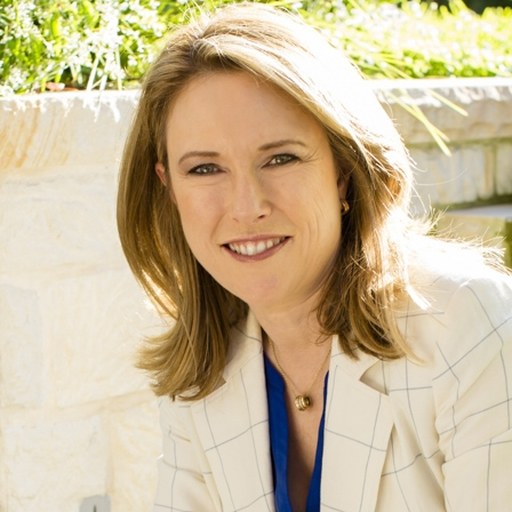
Co-host of The Elephant in the Room. Real estate agent, buyer's agent and buyer's agent mentor, co-host of Foxtel's Location, Location, Location Australia, author of Auction Ready and co-host of Your First Home Buyer Guide.

Eliza Owen on Brisbane's Boom, Hobart's Slide and What the Data Hides
CoreLogic's Eliza Owen explains how Brisbane's median dwelling value passed Melbourne's while its houses and units both stayed cheaper. She also covers Perth's investor share, Hobart's retreat and the new Women and Property survey.
In this episode, we're talking with Eliza Owen from CoreLogic and we're going to explore the reasons behind Brisbane's meteoric property price growth, which has recently moved the city into third place, pushing Melbourne's dwelling values into fourth place, with Sydney and Canberra sitting in positions one and two.
We'll also dig into why property investors' love affair with Hobart seems to be well and truly over and why Perth is clamming a special spot in their hearts. Numbers may not lie, but is it possible that data could be misleading us?
Plus, Eliza's been working on some new research around women and property, and we're going to hear some interesting findings.
Welcome to the elephant in the room. This is the podcast where we love to talk about the big things in property that never usually get talked about.
I'm Veronica Morgan, real estate agent, buyer's agent and buyer's agent mentor, co-host of Foxtel's Location, Location, Location Australia, author of Auction Ready and co-host of Your First Home Buyer Guide.
And I'm Chris Bates, mortgage broker, recently ranked number five in Australia out of over 18,000 brokers in the annual MPA Top 100 Mortgage Broker Awards. Before we get started, I need to let you know that nothing we say here can be taken as personal advice.
We always recommend you engage the services of an appropriate and experienced professional.
Our guest today is Eliza Owen, who was appointed the Head of Research at CoreLogic Australia in 2020. She spent almost a decade as a housing market researcher, reporting extensively on key issues including housing affordability, credit conditions and the impact of COVID-19 pandemic on housing market performance.
And in addition to her role at CoreLogic, Eliza is passionate about sharing her knowledge with broader consumer audiences and serves as a State Advisory Council Member for New South Wales ACT with CETA. Thank you for coming along today, Eliza. We always love chatting with you. I always love coming on the pod.
Thank you for having me back.
I haven't actually looked at this. I probably should have. How many times you've been on? And are you our most favorite guest? I reckon.
I think I am.
Yeah. Do you reckon, Veronica? She might be.
And you know what? We sometimes refrain because I think, oh, can't get Eliza again. You know, that's really pushing the friendship. But, you know, I personally, I think you're refreshing because, you know, you always bring a different dynamic and a bit of,
A little bit of levity is the word to this heavy topic.
I mean, going back to November, we were chatting before we started here that, you know, people were feeling exhausted, right? And, you know, a lot of the CoreLogic commentary, you know, from your good friend Tim was the annual growth rates were really slowing, you know, the peak growth rates had passed.
And I guess on our side, we were seeing biophatigue absolutely, like, You know, the pre-approvals and these buyers have been looking for years and, you know, and that November time came and the listing started drying up and we saw like a renewed sense of energy, I guess, again in January.
With CoreLogic, you look at the numbers and the figures and the growth rates and do you think that that's what was playing out there? The consumer was just fatigued. It wasn't that...
growth had finished and that this boom had ended because that was what a lot of commentary was starting to show like hey maybe 2024 is going to be this year of negative growth what should take coming you know fast-forwarding two or three months down the line what should take on 2024 have you guys flipped again and like more positive on you know growth's coming back like what are you thinking
Yeah, I think you kind of hit the narrative exactly. So at the end of 2023, there was these converging factors. You got a 25 basis point rise in the underlying cash rate and so a further lift in interest rates. But importantly, high interest rates were starting to work on slowing economic conditions.
So you get the household savings rate in the wake of higher interest costs, higher cost of living, whittles down to just 1.1%, which is the lowest level since 2007. You had a fall in retail trade.
So growth in retail trade, the new figures just came out today, actually, but that's sitting well below its historic average. And the unemployment rate has started to rise. So all of these impacts of a slowing economy, plus that further increase from the cash rate, I think we're starting to dent capital growth.
And it's reflected in the figures. We got down to a growth rate nationally of just 0.2% in December.
But then again, there was this kind of turn. We get into the new year and we start getting more positive news. Inflation was not only coming down, but it actually beat RBA forecasts from the end of last year. The monthly CPI indicator released has shown that again.
We've seen a 6% jump in the consumer sentiment index through February. Auction clearance rates have... been remarkable, like averaging high 60s off the back of mid 50s last year.
So I think there's been this renewed sense of optimism about the market, some confidence restored off the back of steadying inflation and interest rates. I question the sustainability of it because the economy is still slowing and it's not like interest rates have come down yet. But
I think once you do get a reduction in the cash rate, it shows how sensitive the market is going to be to that.
All right, so that's the scene now. We're almost at the end of the first quarter of 2024, and when I say it's sort of positive, it's positive in the sense that the whole nation, you look at aggregated data, is a plus. However, you break into that and not everyone's winning.
You know, like Sydney led the charge on these price rises back in the beginning of 2023, and Sydney's still in positive territory in terms of growth, but it's much, much lower. And you've got other cities that have really been forging ahead. Melbourne's suffering, and we'll get to that.
But I think what I wanted to start off talking about, this really interesting situation where you've got Brisbane dwelling values – higher than Melbourne. Like never would have thought that would happen.
So it's interesting to understand, I guess, why is Brisbane, you know, from your point of view, looking at the data, why has Brisbane done so well? And also I think what's really fascinating is that while Brisbane's median dwelling value surpassed Melbourne's in January,
The median house and unit prices are both lower in Brisbane than in Melbourne. And I sort of know how this can be, but I'd love you to explain it. Because, you know, basically what you're saying is that dwellings in Brisbane are more expensive than in Melbourne.
However, if you look at houses, they're actually cheaper. And if you look at units, they're cheaper too. So how does that work? How can those two things be true?
Yeah, that's a great point, Veronica. So it's probably worth unpacking that first. When I talk about the median dwelling value, I'm talking about this measure where CoreLogic takes every single dwelling that we can see across the Brisbane market and across the Melbourne market.
And we're imputing a valuation on each of those properties based on sales data, based on the attributes of individual property. So when I take the middle of all the housing stock, it's higher across Brisbane than it is across Melbourne.
But the composition of those markets is slightly different, namely that Melbourne has a lot more units as a portion of its stock. So that means if I look just at the unit market, there can still be a higher value across Melbourne relative to Brisbane.
If I look just at the house market, the typical house across Melbourne is still more expensive than
than Brisbane but when you put them all together it is partly compositional that because Brisbane has more houses and houses tend to be more valuable that pushes up the median of all wellings having said that even if you look at the difference between houses across the two cities over time and units in the two cities over time the gap is really closing
It looks like around late 2022, when we were in the midst of a downswing off the back of rising interest rates, the gap between houses for Brisbane and Melbourne – Brisbane was sitting about 14% lower – As of February 2024, that gap's narrowed to just 4.6%.
So Brisbane houses are starting to catch up. And if we look at the same data for units, Brisbane was sitting about 17% lower in that same period of late 2022. That gap has now reduced to 5%. So even at the individual house and unit market level, Brisbane's chasing Melbourne.
And it's probably, you know, if we keep seeing trends go the way they are, than they would probably catch up over the course of this year.
Fascinating. What on earth is going wrong in Melbourne then?
Melbourne's seen a lot of unfavorable migration trends through the pandemic, particularly when it comes to internal migration.
So at its height, Melbourne was losing tens of thousands of people a year because more people were moving out of Victoria more broadly to other states and territories, and to be honest, That's a pretty unusual trend for Victoria.
You'd expect it for New South Wales, but historically net migration trends have been a little more stable and a little more positive.
Now, post-COVID lockdowns, we are seeing a stabilisation in net internal migration. You've got a strong bounce back in overseas migration, but overseas migrants don't really buy when they first come to Australia. The vast majority of them are renters.
So in the purchasing market of Melbourne, there's not a lot of appetite because the conditions aren't right. Interest rates are too high. Property prices are too expensive. And a lot of those people who have come from overseas are probably more keen to get a rental than they are buy a property.
So there's a lot of fundamental demand for housing across the Melbourne market. People need somewhere to live, but that doesn't mean that everyone there is ready to purchase. Brisbane, I think, is a very different story.
You've seen peaks of, I think in the June quarter of 2021, net internal migration to Queensland peaked at 50,000 people. Sorry, that was over the course of the year to June 21.
And since then, net internal migration has come down, but it's remained very elevated. So it's kind of like supply and demand to the extreme. If you think of the shock of that massive spike in internal migration, that's not something that the property development industry would have been prepared for.
It's not something agents would have been prepared for, not something governments would have been prepared for. And so this has created a real demand shock in the market. And that's why you're still seeing listings that are, you know, 20%, 30% lower than where they would usually be. So is it sustainable?
I think the further we get from the pandemic, the more we learn about that. The first thing I would say is that Brisbane growth rates are still very elevated, but they are coming down. So at the end of last year, the Brisbane market was still growing by above 1% a month.
That's now settled to about 0.8%. And we will get to a point where affordability constraints become too much in Brisbane. And those prospective buyers who may have been moving from New South Wales or Victoria may decide it's more economical for them to stay put.
So there will be a cyclical response to this boom. But, you know, I think it's an adjustment upward. Yeah.
rather than a correction to pre-COVID prices, there seems to be this lasting normalization of hybrid work arrangements or people just reevaluating their lifestyles that has enabled the stickiness of this capital growth, not just for Brisbane, but for major regional centers, even more remote regional areas as well.
Just what we're seeing, the Brisbane's coming back again and now Sydney buys again. Like I didn't think I'd be saying this three months ago. So 2020, before 2020, you know, people wouldn't really make those big lifestyle changes up to Brisbane. Like they talk about it.
It'd be like a handful, you know, as percentage. It wouldn't be that much. And they'd much want to stay around the city and even moving to Central Coast or Wollongong. Then obviously it went nuts, 2021, 2022, 2022.
It started to really wane. And then last year, everyone was hugging the city, the remote work, hybrid work. And I do think that generally people have got by fatigue and then they've come back this year and they've said, is this realistically going to happen in Sydney?
You know, are we actually going to get... Because borrowing capacity is really tight. That's not going to be able to change. They can't change that fast. Savings are limited. No intergenerational wealth. I need a solution. Why are we just trying to bang our head against this drum in Sydney?
I know work want us back in the office, but... I'm going to have to take a risk here. I'm going to have to potentially, you know, move to Central Coast again, move to Wollongong's coming up, Newcastle. You know, people are starting having those conversations again and then Brisbane's coming out of it again.
So I do think there's this force of people, you know, because Sydney's staying so strong, people are going, hey, My affordability is not going to change. My borrowing capacity is not going to change.
And so I think that's maybe the next wave of, it's just how many people decide to continue to go up the coast and how flexible work sort of plays out. Is that sort of your take?
It's a good point, and I think it's important to note beyond the hybrid model and work flexibility, we are losing skills in Sydney. We are losing, as the Productivity Commissioner noted, a city with no grandchildren.
So I'm experiencing that anecdotally with a lot of my peers who are teachers, who are admin workers, who are even working in property. They are finding jobs.
their work opportunities locally in Wollongong, Newcastle, because they want to raise a family and they can't afford to do it in Sydney.
That's actually something I'd never actually considered. But one of the things that I was thinking about when you were talking there, Eliza, is that the Brisbane growth is what you're sort of talking about isn't necessarily a bubble per se. It's sort of like a raise in values that will set a new bar.
And that's because it's largely driven by relocations, which is owner-occupied demand, right? And so, I guess it would be good to talk about the contrast between what's happened in Hobart and what's happening currently in Perth.
Were those driven by investors or are, you know, is Perth driven by owner-occupiers and relocations to the same degree Brisbane was or is there a lot more investor participation in those markets?
And I guess what's on the nose in Hobart and why is Perth so popular? Yeah, that's a great point.
I don't have visibility of interstate purchases of investment property from a data perspective. If you look at the ABS data, it does show that a lot of the growth in new housing finance for WA is being driven by investment.
The market share of investors has grown dramatically and the actual volume of finance taken out by investors for property purchases in December last year was a billion dollars. And that's pretty much back to where it was in 2014 around the height of the iron ore boom. Wow. The difference is that
Interest rates are much higher now than the declining interest rate environment of post-GFC. So that gives me a little more confidence in the sustainability of the Perth boom. But, you know, a lot of it is very investor driven. It's a combination, though. So if you look at, again, the internal migration data.
So the trend for internal migration in the year to June across WA was sitting at just under $12,000, $12,000, 12,000 people in the year to June, right?
That's also very changed from, you know, the bust situation that we had between 2014 and 2020. For many years, net interstate migration to WA was negative. So that's flipped now as well and suggests this is a combination of state, interstate movements and investors.
I mean, Perth is just at that price point that is sustainable under the current interest rate level. If you take a median household income at the moment, which is a hundred grand thereabouts,
um under a owner-occupier variable rate of what six and a half percent at the moment you know a purchase price of 690 000 which is the median across perth is going to be the sustainable mortgage right or the serviceable mortgage under current interest rates compared to say taking out a mortgage for a 1.2 million dollar property in in sydney or whatever
Yeah. And you've got a house versus an apartment. Exactly.
And I think for Tasmania, again, The trend is kind of there in interstate migration. So it was negative by about 2,600 people in the year to June 2023. That's where migration data is to at the moment.
But given the state of the housing market across Hobart, I imagine that that negative interstate migration trend is continuing. Yeah.
What other, I mean, obviously the internal migration is obviously really quite critical here. What other key things are you looking at when you're sort of trying to interpret or understand why the price is playing out the way they are?
So I think price point is an important piece of it. So again, just talking about the relative affordability, the fact that high interest rates are skewing buyers to more affordable markets. Yeah.
Another really interesting trend to come out of this high interest rate environment is that the nature of the buyer who is participating is generally a lot more wealthy. So The Age had a good article out about this the other day.
They had CBA lending data from their half yearly reports, which basically showed the share of high income borrowers, we're talking annual incomes between $200,000 and $500,000 a year,
they were taking up a greater and greater share, getting to about 30% of the mortgage market by the end of last year, which compared to the distributions of what we were seeing earlier on in the pandemic is extremely high and probably speaks to the unequal nature of the housing market under these high interest rates.
Is that your chart that's had the owner-occupiers and the investors separated out and you really could see in the higher price brackets, you know, the participation in the investor space?
Yeah, CBA had that. The Age article, I think, was just looking at all borrowers. Yeah.
Yeah, I mean, absolutely. That's unfortunately what's happening right now.
When borrowing capacity is really tight and the way borrowing capacity works is the household expenditure measure, like the HEM, which is the minimum expenses that they're going to assess you on, that really hits you on a lower income and it doesn't hit you as much as your income goes up.
So not only do they have higher income, so they're going to have more capacity anyway, then they've got a second kicker because they're on a higher income, they've got a higher multiple income
And then finally, I'd say that higher income, there's potentially a higher chance of wealth inequality and that's getting passed down.
I mean, Eliza, is there anything that you can see where you are seeing this transfer of wealth in your data or is there anything that you've seen that supports the narrative that money's coming down from grandparents and brothers and sisters and parents and
That's really starting to turbocharge the market because we can absolutely see that. We see that deposits and, you know, when people, someone comes to us and says, oh, what can you borrow? And we say X, but your deposit gap is Y to enter at the price you want.
All of a sudden that deposit comes from somewhere sometimes. And yeah, that's obviously not everyone's got access to that.
Yeah, so Ahuri have done some research into this. They put out a paper last year looking at the mechanisms of financing first-term buyers. And that report does summarize some of the research of an increasing role of the banker mum and dad, which...
you know put in other terms is that kind of idea of wealth begets wealth and those that own property and come from wealthy families are more likely to be able to access the housing market more easily you can also see that when you split out rates of home ownership over time where you can see the rate of home ownership has fallen most dramatically among the lowest income cohorts
as well as young people reliably across income cohorts as well. So, yeah, I think there's plenty of evidence that points to that issue. And it's been, you know, pickety and it's been a major part of the global economic narrative as well, how much real estate contributes to driving wealth inequality.
With the investor argument, I think it was different in 2016, 2017. There was generally a lot of first-time buyers and investors are your stereotypical investor. They had a house or a property and they were buying their first or their second or their fifth investment property, right?
I think the numbers are getting really skewed because, you know, yes, sometimes they've already got a property, but a lot of the investors, I would say they're actually first home buyers. They're actually buying investment properties because they just don't think they can buy somewhere to live in.
They really should be upgrading. I mean, I had three of these on Tuesday where they all were at a similar point, different means, but they all had a place that was too small for them and they all wanted to upgrade in the next three to five years.
But they all came to us thinking they wanted to buy an investment property because there's a fear of doing that upgrade because higher interest rates, It feels like a big mortgage. I want to do something because I've got lots of equity.
And then because of how borrowing capacities are so tight right now, the amount they can borrow for investment properties is quite on the smaller side, I would say. And that's enforcing them. We stop them.
We have those conversations and how, hey, this is the reasons you potentially should consider upgrading first. But I think that's then pushing them to places like Perth, right, which are a bit more affordable.
And so you're getting this skew of people who should be upgrading or should be buying their first home and then buying these investor properties. So they look like stereotypical investors, but they're actually, you know, first home buyers or people who are wanting to upgrade.
And so that money can retreat because if a true investor puts the money there and says, I'm going to leave this in 20, 30 years, But a short-term investor, like a first-time borrower, they will absolutely unwind that money.
So you could easily see this flip, I think, where money goes and then money comes back, particularly if Perth is getting driven by East Coast buyers who are just going there as a money grab.
And so I would just say that there's this story that's getting perpetuated that Perth's got this amazing run, gross fundamentals, blah, blah, blah. It's getting driven by investors. That's what you just sort of showed, those numbers. But those investors don't want to leave the money there long term.
They want to bring it back. What's your sort of take on that? Have you got any other...
Just that it's all if, right? Because I don't know that it's East Coast investors that are driving the WA market. I know investors are a large part of it, but so are interstate movers from the internal migration data.
In terms of the little data we have on rent vesting, which I think is fair to say kind of what you were talking to. So that's a very small portion of the mortgage market. We're talking like sub 5% usually when we look at the first home buyer cohort.
And even in some recent surveys that we've done of homeownership, It points to about 2% to 3% of the population being non-owner occupiers who own an investment property.
So most of the investors in Australia own their own home.
Yeah, and I just wonder if that's, you know, while stereotypically that would have been the case, I wonder is a kind of growth rate of that market share, you'll come back in a few years because, you know, particularly if people can't afford to buy or they can't afford to get what they want, they don't want to leave the money in the bank and they will, and then potentially don't want to buy a high density apartment or they might actually...
I don't want to do this. I'm just going to go buy. And so I think that you could find this, particularly on the higher interest rates as well, it's more likely because it's actually cheaper to potentially rent than own. And then it's easier to afford an investment property because it's tax deductible.
So I think that's going to be interesting to watch.
How do you measure who's a rent investor versus who's an owner-occupier?
So I would say a rent investor is someone that owns their principal place of residence. Wait, what did I just say? Sorry.
A rent investor is someone who doesn't own the home that they live in, but they own an investment property. Yeah. How do you measure that?
We did a survey. It was actually related to our Women and Property Report, but it was basically trying to understand people's ownership status, if you like.
So rather than just doing what you have in the ABS, which is looking at owns own home with or without a mortgage, we said, what describes your living situation in your own home? I do not own my own home. And what describes your property investment situation?
I own at least one investment property, et cetera. So by cross-referencing that data, we're able to derive the portion of Australians, of adult Australians that don't own their own home, but they own at least one investment property.
And so is that the first time you've done that survey? Yes. Yes. So that's the baseline now. We'll have to see whether that's a growing cohort or not. So then I guess we'll get to work out whether or not Chris's theory could bear out.
Anecdotally, just recently I've done a number of strategy sessions with people who have are in a situation now where they want to buy a family home or a home and have been rent festers. And it hasn't, the people I've been having sessions with anyway, it hasn't served them.
No. Which is terrible. And they think they've been doing the right thing and, you know, so that I find, oh, that's quite heartbreaking actually. Yeah.
So, especially in the face of rising prices we're talking about, you know, because they get left behind and they've got to pay tax when they sell those properties in order to buy that home.
And they have to sell them if they want to buy a home because they can't possibly borrow the money to buy a home as well as keep them. So, and it's not until about, you know, four, five, six years down the track that people, it dawns on them.
And it's like, oh, talk about opportunity costs. So, yeah, interesting. Can we talk? More about your Women and Property Report because I know that you have done some new, you've used some different methodology in terms of what you've been looking at.
So I'd be keen to understand what you wanted to know and what you discovered.
Yeah, I think basically we found that we were getting to a kind of limitation with our previous methodology. And part of that is to do with changes in data provision over time. But what we used to do was we used to look at as many properties as we could.
We would take first name information. We would use agenda items. API or sort of software to infer a binary male, female to that name. And there was no middle, right?
If you had a name like Sam, it was just allocating the gender based on what was most commonly used as a male name or a female name. And I think it definitely gave us some worthwhile insights.
And there are some insights we garnered from that that have carried over to the new methodology, but it was just becoming more and more limited. So we sort of regrouped and we said, okay, let's actually just do a survey. Let's engage a research company.
So we commissioned a survey with Lonergan Research and they surveyed a representative sample to ask about gender and the relationship between gender and dwelling ownership.
So this allowed us to have the people view rather than the property view, which is what we'd been going off previously. And basically we found a good level of parity between ownership of males and females. Um, we found a lot more in co-ownership.
So we found out that one in, um, sorry, same-sex co-ownership. So one in eight, um, homeowners, uh, in Australia own their property with a same-sex partner.
Um, and we also, sorry, sorry, one in eight total or one in eight owned by women? one in eight total. Yeah. And, and when you say same sex partner, as in like a, like a ownership or like a, yeah. Okay. Wow. Okay. Yeah.
How interesting. Yeah. So that, that was a really, um, solid finding. And we also through the survey method, we got to just learn more things about people as well, how old they are, how much income they had, um,
what their motivations were what barriers they faced and one of the most interesting stories to come out of it for me is that even though there's pretty much equal ownership of at least one dwelling whether it's an investment or owning one's own home it's marginally higher for women by the way but it's less than one percentage point differential between males and females and
But at Gen Z, which I think the biggest shock of the report for me was that Gen Z are now at an age where they're buying property. But the ABS was defining adult Gen Z as 18 to 29.
And there was a big disparity in dwelling ownership between females in that age group, about 27% owned at least one dwelling, versus males in that cohort, 52% reported owning at least one dwelling.
So it sort of suggests that young men are actually getting onto the property ladder a lot earlier. Once you get into your older generation, so millennial, Gen X and baby boomers, women have much, much higher rates of homeownership. But yeah, there was an incredible discrepancy.
And when you looked at the motivations and said, why haven't you bought a property yet? For most young women, it was factors of, I don't have enough saved for the deposit. I don't have enough for the stamp duty. I can't afford the ongoing costs.
The most commonly nominated response for why young men hadn't bought property, I'm not ready to. I don't want to do it yet. So there was a greater sense of autonomy as well in those responses among young men.
who didn't own a dwelling because they kind of chose not to own a dwelling in a way. Whereas for young women who have lower incomes on average, there's that affordability component holding them back.
And it might be that because of the pay gap between men and women over time, maybe women need more time to accumulate the savings to break into the housing market.
I'm on a personal mission to help more people make better property decisions. And you can find out all about what I'm working on at veronicamorgan.com.au.
And there you'll find resources for first home buyers, details about my buyer's agent mentoring program, access to suburb help for investors, or if you're looking to buy your dream home or an investment property in Sydney's inner west, eastern suburbs, or lower North Shore, you can connect with my team at Good Deeds Property Buyers.
If you're thinking about buying your first home, upgrading to a new one or purchasing an investment property anywhere in Australia, we would love to carefully guide you through this journey and importantly, get the finance right. Please reach out via our website, wealthful.com.au.
Don't forget that you can download our free full or forecaster report. Which experts can you trust to get it right? Theelephantintheroom.com.au.
Oh my God, that's so fascinating. I know, it's so interesting. I'm going to ask you some questions as to whether that's representative of the youth of today or the young adults of today or how do the women in older cohorts catch up?
And in reality, I guess what you're looking just as a, you know, yes, no answer, isn't it? Do you own a property? Do you own a home or not? As opposed to the actual wealth in homes, in property.
Yeah. So we did ask, and it's hard to get enough of a breakdown for a representative sample, but on the whole, I can tell you that women do have on average lower income
home values relative to males there they have a higher level on average of outstanding debt relative to males and so the average equity position for women is lower not too much lower it's about five and a half percent but again i think the two could be related right if you have
Young men getting into the property market sooner, maybe they have time to accumulate more equity in their home and pay down their debt so that on average it looks a little bit disparate.
And if they are actually earning more money than their female counterparts, which – There was some recent data that came out which was company-specific, which was mortifying.
So, you know, obviously that's just going to compound that problem, isn't it? But I think it's quite interesting and heartening to think that older cohorts of women have actually said that pretty much there's parity in terms of actual whether they own a dwelling or not. The actual wealth position, however, is...
Not disappointing, expected to be honest, but disappointing. What else did you uncover? And look, I think it's interesting too, CoreLogic, a big data house, you know, quantitative data coming out your ears and then you've got an engaged qualitative process here. So you're actually getting, like you said, stories.
It's a much very different type of data source, isn't it?
It is different and it sort of comes back to what we've always talked about with CoreLogic. It is a massive big data powerhouse, but it's always been from the property perspective, not as much the people perspective. So it's been very exciting for us to be able to do this kind of research.
The other big finding for me, which is actually something that we were able to identify in our previous methodology, is that there's an investment property gap. So for men, the rate of ownership of at least one investment dwelling was just over 14%. For women, it's 12.5%.
And that gap extended to other investments as well. So men had a higher share of investment in other asset classes, almost every other asset class we surveyed for except long-term deposits. And the biggest gap was in shares.
So the portion of males that owned shares on the whole was actually 12 percentage points higher than Relative to the amount of females, we found that people who invested in property were much, much more likely to own other investments as well.
So there's probably something about, you know, the relative sophistication of a property investor that they might have more knowledge about the investment process itself. They might be more exposed to financial literacy, economic education.
And we know that that's a problem between males and females more broadly as well, because you get declining rates of women in even studying economics at the high school and university level over time.
Do you think this plays into the, you know, there's more men that probably use, you know, gambling and, you know, that there's this fascination with, you know, being a bit more, a bit more aggressive in their risk profiles and things like that.
Do you think that this plays into a little bit where, not just much the education, but just men sort of looking to gamble almost and that's why they want to leverage their money a little bit more?
I actually think there is something in the socialization of males, even from a young age. For example, the RBA and the Women in Economics Network have done a lot of research into why girls don't take finance and economics.
And even that has indicated that males show more interest in things like shares at the high school level. I mean, property, the gap is less, right? So there's probably something in the physical, tangible nature of property that maybe women are more comfortable with.
Whereas for more sophisticated things like shares, cryptocurrencies was perhaps unsurprisingly another investment class where men were a lot more comfortable.
prevalent um speaking to the gambling element but um yeah i i think that you're you're right in that there is probably something around the socialization of men that is different that encourages that more adventurous investment or um yeah
interest. I think about like anecdotally, I'm only talking about myself and my friend cohort, but certainly my male friends always have been a lot more willing to talk about investing in various asset classes. It's not typically the topic of conversation with women.
We'll talk about a hell of a lot of things, not necessarily that. I mean, obviously when it comes to property and I'm always talking about it, but you know, I might be a bit of an aberration, but
You would also find potentially a narrower focus of conversations potentially with some of my male friends that were more likely to talk exclusively about that sort of thing and sport, of course. There's stereotypes here, of course, but just thinking about that, it's no surprises, I guess. Yeah.
There's that natural inclination from a lot. It's gendered, obviously, and I'm a breakout of the stereotype. However, there are stereotypes that exist for a reason.
What is scary is that...
We don't seem to be moving a long way. I guess, look, with women, we have a biological fact. The fact is we have babies. People born with male bits can't.
They might have children other ways, but, you know, you've just got this sort of situation where the woman gives birth, and so even by virtue of that, you're taking time out. You know what I mean? There's just a whole different setup for women versus for men.
And I don't know how to get around that because, you know, it's, I mean, obviously I'm not in the policy space on this.
I know. I feel like we're getting out of our wheelhouse.
I don't mind it, but I feel like we're getting far from the property. Well, we are, but it comes back to the property because the reality is that, you know, what I wanted to ask you about was how many, how do you separate out women that own property with their male partners, right?
Yeah. Males that own with male partners versus female that own with female partners. I mean, because the reality is that a lot of, I mean, are you only looking at women that own houses on their own and comparing them with men that own houses or properties on their own?
Or you're looking at ownership in that sort of more holistic way where women are part owners of properties with their male partners if they have a male partner. And so that's why it sort of goes back to that thing about the biological imperative as well.
If people are in that traditional relationship where they're having children or da-da-da-da-da, Their financial contribution can often be different to men. And then they might get divorced and that might be reflected in that too. But look, it's all very complicated. But in terms of your research, how is that accounted for?
Yeah, so we basically asked whether people own their properties solely or jointly. And as I think you were kind of getting to there, women do have a slightly higher rate of joint ownership
So the rate of sole ownership for males was 50% versus 48.5% of women. And then we said, okay, so you identified as owning a property jointly with someone else. How do you characterize that relationship? So for men,
The people that owned with males, um, 82% owned with a husband or boyfriend, male partner.
But of people that owned with females, it was a little bit less, so 79.8%.
So, yeah, there is evidence, I think, of a little bit more maybe codependence when it comes to women and their property ownership.
And that probably, it starts to fall out of the scope of our report, but I agree with you that there is a vulnerability there for women who say, uncouple, don't get the house and then try to get back into the housing market.
And the Grattan Institute's actually done a little bit of research on that. And due to the gender pay gap and accumulating stamp duty, for example, that can present problems. So there is that vulnerability there. Another thing that I found really interesting was the
A commonly cited barrier or challenge for women who owned at least one investment property was the time to search and inspect properties, which wasn't as prevalent a barrier for males. So it's almost like women face this more kind of time poor element as well when investing.
trying to attain ownership or search for investment, which I thought was interesting and could come back to what you were talking about in the caring responsibilities, whether it's caring for children or older parents that people fall into.
But I think one thing that was really promising for me and kind of that is a positive about property is that that gap in equity that we've looked at is so much less than an asset like superannuation, which actually is tied to workforce participation.
And it's more like 30% between women. So ways that you can look to address those barriers come back to things like the socialization of employees.
Men and parental leave as opposed to just women in carer roles or compensating women for their caring time, whether that's adding superannuation to parental leave payments, things like that, to help try and bridge that gap.
I would say with our clients, you know, once we've definitely, I think, you know, the access to information is better than it's ever been, right? You look at the success of, you know, female podcasts, you know, they're right at the top. You have some huge followings there. So there's a desire for this.
I would say from, you know, when I talk to couples, you know, usually one does most of the talking. You've probably seen this as well, Veronica, right? I reckon it's pretty evenly split.
And I would say, you know, I would say women think about things probably a little bit more about the, not just the art of property investing. Like the, I would say that, you know, when we start talking about not just the numbers, let's say, the things that really drive the owner-occupier market.
And, you know, I think, and so I think that's an interesting thing. When it's time to search, I think like that, I think maybe they do focus a little bit more on the,
The other factors. Yeah. I see this too, Veronica. Like when you got a buyer, they're probably like, it's all right. It looks good. I'm happy with that. And then maybe the other side of the relationship saying, well, I don't like this about it. I don't like the light. I don't like this.
And maybe that plays into it. So I think there's a little bit of that. Yeah. Which is actually a good thing because I think that there's been research. Women are actually better.
stock share investors because of the gambling element where men are kind of like trying to go for those short-term returns and women maybe a little bit less like push the button, less trigger happy, but then, you know, sit back and let the thing do its thing. They're actually better at like less trading.
And so I wonder if there's elements in it as well for that time to search. They believe that you need to spend time and you actually need to take effort to find the right property, but men maybe go, oh, it's all right. Let's just buy something. I've got pre-approved. Let's buy anything.
That's a good point. That's a really good point. And we did also ask one of the aspects we had within the survey around challenges was finding the right property. And so that was 28% of males identified that as a challenge versus 34% of females.
So it does maybe reflect a little bit more selectiveness. It could also be due to things like if women have less money that they're dealing with, they have a smaller pool of properties. I don't know.
But yeah, When you were saying that about the time to search, that's exactly where my mind went as well. It's because they actually probably would allow more time and be more mindful that it is a serious thing to do and to spend, you know, Be more careful in the way they approach.
Now, I'm not saying all men are not careful. I'm not saying that. But certainly when we, in Your First Homebuyer Guide, so with Meighan Wells, I've got Your First Homebuyer Guide, which is an online course for first homebuyers. So we talk one-on-one with the people that become members in that program.
And we have quite a lot of single women. We also have a lot of couples where the woman is the one driving the need to educate themselves, you know. So some men do too, don't get me wrong. But when we look at the numbers, it is really predominantly women driving this.
And I know that in my buyer's agency business as well, quite often it's the wife, you know, in a heterosexual relationship, you've got the wife or the female partner dragging their male counterpart, you to the table because the male's thinking, well, I should be able to do this.
What's wrong with us that we can't do this? You know, you're just overthinking this. This is, you know, like, just relax, will you? It's easy. And the woman's like, hang on a minute. I'm not overthinking it. This is serious.
I need to actually spend some time learning to make sure I'm making the right decision. So there is, you know, somewhat gendered, but we're certainly seeing that play out in your first home buyer guide. There's no doubt about that.
And, um, when the guys come on board and they're sort of that scales peeled off their bodies, they're like, oh, when they slow down, they sort of get it. They go, they're like, oh, oh, oh my God, that's good. You know?
And we've got, we've got a number of converts that, you know, they've been dragged along and now they're like, yeah, we totally get it. We're so thankful that my, my partner, um,
for doing for spearheading this and the same in my in my buyers agency business in fact years ago i did survey interviewed the husbands who had been reticent in coming on board where the wife had really been pushing pushing dragging dragging as to why and i wrote an article about this i can put the link in the um
In the show notes, if anyone's interested, it is quite fascinating because of the male mindset and why they were resisting getting help and why they just wanted to do it quickly, but also why they wanted to spend less money than their wives.
And they're just thinking that their wives wanted to blow the budget and just get the best of everything. But the wife's thinking, well, I'm spent in a more traditional relationship this year, right? I'm spending more time at home with the kids. I know where I need to be walking distance to.
I know what works around here. I know where the parks are. I know where all this sort of stuff is going on. And you're not in the home all the day because you're off at work.
And he's going, well, yeah, I'm working 12 hours a day, six days a week to pay for this bloody thing. You know, so they've got this sort of –
those traditional roles. And the fact is in this society, we still have those roles in many, many cases. And when you've got little kids, it's really hard not to in many times as well. So, you know, navigating that and actually getting everyone equally heard is a real challenge.
That's why we call what we do property therapy. But, you know, so there is, I think, a very, there is a gendered way at how people approach buying property. And I think it's interesting to see that that sort of seems to have come out in some of that research that you've done.
Yeah, it's a great report and I hope everyone has a read of it. I'd love to get more feedback on it and what areas we should be digging into more.
Because once you understand the nuances of who's missing out on ownership, whether it's to do with gender or income, you can then look at ways to empower those who are missing out. Yeah.
Eliza, 2024, what do you think? We're not going to do a full forecaster report this year. We're going to try to spice it up and do something different. Oh, no. So there's no fear. Are you going to be splicing an audio clip with... Yeah. Oh, jeez.
What is your take? If you had to think through some key things that are going to... I know you mentioned interest rates before. I would argue that People are already trying to front run interest rates. You know, I think buyers are already in their head that say interest rates are coming.
And I think they probably may...
be over expecting how many interest rates will come i think there's a potential that's already getting factored in is rate cuts haven't even and in terms of their willingness to stretch um what's what's your sort of take on how this year could play out um and anything that you know people need to be really careful watching i mean like mortgage stress for example or what is there anything the data points that you go oh i'm really just i don't think we're out of the woods here this is what's worrying me
Yeah, I'm also very interested in that question of how responsive are consumers to news of a reduction in interest rates rather than just a reduction in interest rates, because there's actually a lot of disparity between what the average consumer knows.
And, you know, there is an economic literacy and financial literacy gap there. But maybe people have just had to become more accustomed to learning about that sort of Dynamic.
I think there's got to be a limit to how powerful the news of a rate reduction can be on the market just because interest rates are still high and economic conditions are only going to continue deteriorating. The labor market will continue to loosen.
That will have an impact on mortgage serviceability, but in a localized way, lower socioeconomic mortgage belt kind of areas where we'll probably see a higher volume of listings coming onto the market.
as prices soften 2024 i think is going to be the work down of the construction pipeline as well that's because approvals came down in 2023 so there's not as many urgent new commencements it's about taking what is under construction which is about 230 000 dwellings at the
and working that down so that could help to add to a kind of fundamental supply as well i think this uh you know growth that we get in 2024 it's got to be lower than what we got through the pandemic 2021-22 cycle because we don't have the same low interest rate environment to stimulate that um
Rental growth, I think, has got to slow. I can't see that being sustained at such a strong growth rate. And that's probably going to come from more share housing. So I guess that's kind of some things that I see happening for the market this year.
But look, at the end of the day, I think the fundamentals for price growth are still there. And as far as I can tell of the market at the moment, it seems to have avoided a cyclical downswing. Interesting.
Eliza, I'm curious, you've been, you know, in this space nearly a decade and in that time there's been lots of, you know, little mini cycles, if you like, and there's also been your normal seasonal cycles and et cetera, et cetera.
Are you seeing that, you know, when you first started out, you know, the sort of the elders that may well have mentored you early on would have sat you down and shown you all the property clocks and the typical behaviour of property markets and things that are going to trigger certain things to happen, et cetera, et cetera.
Are you seeing that this is – it just continues in that way or are you seeing that there are different drivers and different –
elements that impact the property market these days than would have been the case when you first started?
I think the principles are all still there that, you know, demand for property is going to be driven by things like real income growth, economic conditions, access to finance.
The, I guess, extraordinary events of the past few years have accelerated the
aspects of the market, like the growth of more remote areas and smaller capital cities.
And then there are things that are taking a lot longer than I think people expect, like the move or the embrace of higher density living and apartments by first home buyers and things like that. So, yeah, I think the fundamentals of it are the same.
It's just that none of my mentors were predicting a global pandemic, right? And all the extremities that we've seen in policy response from that.
I guess that sort of says it doesn't, intervention is what's going to throw out any patterns.
Yeah. And that'll be something to look for in 2024 as well. I think we've already seen the Queensland government do a little bit of a boost to first home buyers for new homes, right?
A temporary concession, um, which in the context of increasing your housing target, you know, that kind of policy response is something that is easily going to increase demand for newly built homes. So, you know, there, there are going to be those sorts of things to watch out for this year as well. Um,
But, yeah, it'll be another interesting year, no doubt.
Cool.
Have you got a property Dumbo for us?
Oh, no, she's come unprepared. Our most regular guest, our most common. That's my Dumbo.
He's forgetting about the Dumbo.
So you've given us sorry, you've given us plenty. And I think you're right. Intervention is going to be one thing. I think it's going to be hard to argue for it, but I think the bank's going to try their best is to relax serviceability and to increase borrowing capacity if it's
It's going to really, you know, using that CBA data, banks are all going to perpetuate a story that there's this, you know, happens and happens, which is absolutely what's happening.
And that's going to encourage, you know, APRA to step in, reduce the service giving buffer, bank innovation, longer loans, you know, 5% deposit, you know, there's going to be this desire to, and then I think we were just about to record another episode here around, you know, negative gearing and,
Is this a tax policy change? The budget's really only, what is it, May, so a couple of months away, and it's going to be interesting to see what they do around housing stress, rental stress, because it is such a big topic.
I think there's going to be quite a lot on the table to change. You can see that with Chris Minns and the government as well, trying to change zoning. So, yeah, I think it's going to be a big year of stories where people
the rental crisis, housing affordability crisis, homelessness crisis, mortgage affordability crisis. There's lots of pressure on the property market in lots of different ways. So thanks so much for the chat.
Yeah, thanks again for having me. Absolute pleasure. Great to see you.
If you have a question that you'd like us to answer in an upcoming Q&A episode, you can send us a voicemail or written question via the website, theelephantintheroom.com.au or you can email us directly at questions at theelephantintheroom.com.au If you like what you're hearing, please share this episode with others you feel would benefit.
And while you're at it, why not leave us an iTunes review? Five stars would be great. I know that sounds a bit cringy but we have it on good authority that every review helps make it easier for other people to find out about us and hear what our amazing guests have to say.
Key takeaways
- Brisbane's median dwelling value passed Melbourne's in January 2024, partly because Brisbane's stock is weighted towards houses.
- The Brisbane to Melbourne house gap narrowed from about 14% in late 2022 to 4.6% by February 2024, and units from 17% to 5%.
- Net internal migration to Queensland peaked near 50,000 in the year to June 2021, and listings were still 20% to 30% below usual.
- Investors took out a billion dollars of housing finance in WA in December, close to 2014 iron ore boom levels, on a Perth median of $690,000.
- Among Gen Z adults, 27% of women reported owning a dwelling against 52% of men, though ownership is near parity across all ages.
- Owen was watching a loosening labour market, about 230,000 dwellings under construction and how buyers react to news of a rate cut.
Why Did Brisbane's Median Pass Melbourne's?
Brisbane's median dwelling value moved above Melbourne's in January 2024, yet the median Brisbane house and unit were both cheaper than Melbourne's. Veronica Morgan asked Eliza Owen how both can be true.
Owen unpacked the measure. CoreLogic imputes a valuation on every dwelling it can see, then takes the middle of that stock. Melbourne holds far more units, and houses are worth more, so composition alone lifts Brisbane's median.
The segment gaps were closing anyway. In late 2022 Brisbane houses sat about 14% below Melbourne houses and units about 17% below, and by February 2024 those gaps were 4.6% and 5%. Updated: Queensland's mean dwelling price reached $1,130,600 in the June quarter 2026, ahead of Victoria, where values fell 1.6% over the quarter (ABS Total Value of Dwellings, released 8 September 2026).
How Much Does Migration Drive Brisbane's Growth?
Net internal migration to Queensland peaked at about 50,000 in the year to June 2021 and stayed elevated. Owen called it supply and demand at the extreme, a spike no developer, agent or government had prepared for, with listings 20% to 30% below usual.
Victoria ran the other way, losing tens of thousands of people a year at its height. Internal migration had since stabilised and overseas arrivals had returned, though Owen noted most new arrivals rent rather than buy.
Brisbane's growth rate was easing, from above 1% a month late in 2023 to about 0.8%. Owen expected affordability to persuade movers from New South Wales and Victoria to stay put, a cyclical response rather than a return to pre-COVID prices.
Beyond the hybrid model and work flexibility, we are losing skills in Sydney. We are losing, as the Productivity Commissioner noted, a city with no grandchildren.
Eliza Owen, 13:34
What Is Driving Perth Up and Hobart Down?
On Western Australia, Owen said ABS figures showed most growth in new housing finance was investor driven, with the December figure at a billion dollars, close to iron ore boom levels of 2014. Updated: WA investors committed $5.1 billion over the June quarter 2026, within a national $37.1 billion that fell 10.2% on the quarter (ABS Lending Indicators, released 14 August 2026). The cash rate she called high then, 4.35%, sits at 4.35% again as at 12 August 2026 (RBA).
On a median household income near $100,000 and an owner occupier variable rate around 6.5%, Perth's median of $690,000 was serviceable in a way a $1.2 million Sydney purchase was not. Net interstate migration to WA ran just under 12,000 in the year to June.
Hobart is the mirror image, with Tasmania's net interstate migration negative by about 2,600 people in the year to June 2023. Chris Bates argued east coast rentvestors could pull money out of Perth as fast as they put it in. Owen was cautious: rentvesting usually sits under 5% of first home buyers.
| State | Net Internal Migration, as Aired | What Owen Linked It To |
|---|---|---|
| Queensland | Peaked near 50,000 in the year to June 2021, elevated since | Demand shock, listings 20% to 30% below usual |
| Victoria | Losing tens of thousands a year at its height, now stabilising | Overseas arrivals mostly rent rather than buy |
| Western Australia | Just under 12,000 in the year to June | Interstate movers plus heavy investor finance |
| Tasmania | Negative by about 2,600 in the year to June 2023 | Weak Hobart market conditions |
As described at 9:02, 10:09, 10:39, 16:06 and 17:20. Figures as stated on air.
Do Women Own as Much Property as Men?
CoreLogic's older method inferred a binary male or female from first names on property records. Owen said that had become too limited, so the team commissioned Lonergan Research to survey a representative sample. That people view, rather than a property view, found one in eight homeowners own with a same sex partner.
On owning at least one dwelling there was near parity, marginally higher for women. Among Gen Z adults, defined by the ABS as 18 to 29, about 27% of women reported owning a dwelling against 52% of men. Women who had not bought named the deposit, stamp duty and ongoing costs, the same hurdles the show weighs when it asks what a 5% deposit actually gets a first home buyer.
The most commonly nominated response for why young men hadn't bought property, I'm not ready to. I don't want to do it yet. So there was a greater sense of autonomy as well in those responses among young men.
Eliza Owen, 32:02
The gaps widen past ownership itself. Women hold lower average home values, higher debt and an average equity position about 5.5% lower. Owen set that beside superannuation, where the gap runs closer to 30%.
| Measure | Men | Women |
|---|---|---|
| Owns at least one dwelling, Gen Z aged 18 to 29 | 52% | 27% |
| Owns at least one investment dwelling | Just over 14% | 12.5% |
| Owns property solely rather than jointly | 50% | 48.5% |
| Named finding the right property a challenge | 28% | 34% |
| Average equity position | Higher | About 5.5% lower |
As described at 31:14, 34:04, 36:04, 41:39 and 46:08. Figures as stated on air.
Who Can Still Afford to Buy in 2024?
Owen pointed to a report in The Age using CBA half yearly lending data, which put borrowers on incomes between $200,000 and $500,000 at about 30% of the mortgage market by the end of 2023. She read it as a market made unequal by high rates. Bates tied it to the household expenditure measure, which bites harder on lower incomes.
Asked whether the data shows family money at work, Owen cited AHURI research on the bank of mum and dad. Ownership rates have fallen most among the lowest income cohorts, she said, and among young people across income levels.
For the year ahead she was watching how consumers respond to news of a rate cut rather than the cut itself, a loosening labour market pushing listings out of mortgage belt suburbs, and the working down of roughly 230,000 dwellings under construction. Updated: 243,864 dwellings were under construction in the March quarter 2026 (ABS Building Activity, released 8 July 2026).
At the end of the day, I think the fundamentals for price growth are still there. And as far as I can tell of the market at the moment, it seems to have avoided a cyclical downswing.
Eliza Owen, 53:37
Reading the Numbers Before You Buy?
One national growth figure can hide four very different markets, as this episode shows. If you are weighing a purchase across state lines, the way an investment property loan is structured matters as much as the suburb you pick.
Investment Property Mortgage BrokerSources referenced: The Elephant in the Room, episode 323, "The Data Conundrum: Brisbane's Boom, Hobart's Decline, and Perth's Renaissance Revealed", released 2024-03-10. Host: Chris Bates (Alcove). Guest: Eliza Owen, Head of Residential Research Australia at CoreLogic. Figures are quoted as stated on air. Figures marked as updated were re-checked on 10 September 2026.
Press play on these