Curious about upgrading?

Wondering where to start?

Complex questions that need answers?
Is there a better structure for you?






"They managed to navigate my complex expat income and even got my Google RSU income approved as well."
"I highly recommend Alcove to anyone looking for a mortgage broker who is responsive, trustworthy, and truly cares about their clients. Thanks again to the whole team for making the process such a positive experience!"
"As founders, we're constantly jumping between things so having a partner that handled the details & made the process super clear made the buying process breezy for us. Very happy with the experience!"
“It almost felt like it was his responsibility to make it clear to me, not my responsibility to understand it.”
“I've been pretty much fully leveraged the whole time. So the sounding board on that, in terms of what was achievable, what wasn't — I think trust is just built along that.”









"Alcove has been a great partner. They look after my audience properly, keep things simple, and deliver real value. I’ve got full confidence referring clients knowing they’ll get honest, straightforward advice."

"Property is one of the biggest financial decisions people make. Alcove stood out because they take a strategic approach to lending - helping clients structure property and debt decisions in a way that genuinely supports their broader financial plans."

Adapted from audio. This article is a written adaptation of the original podcast episode. Sources and dates are shown with each figure.
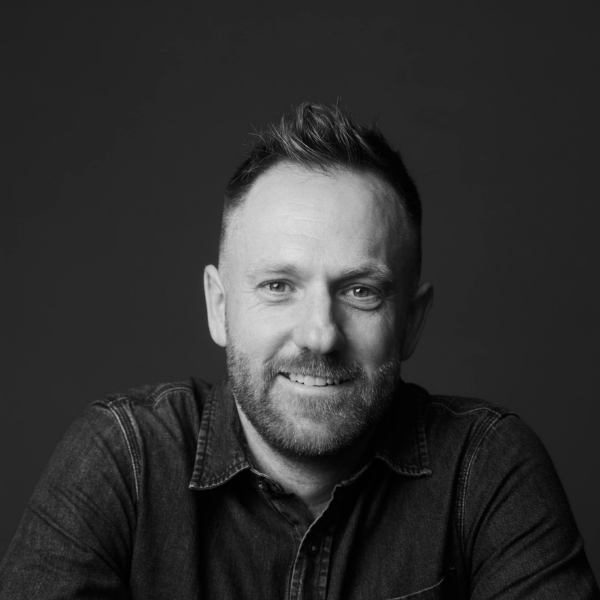

Co-host of The Elephant in the Room. Real estate agent, buyer's agent and buyer's agent mentor, co-host of Foxtel's Location, Location, Location Australia, author of Auction Ready and co-host of Your First Home Buyer Guide.

Shannon Peach On Building Apartments Meant To Be Homes
Shannon Peach runs development at Milieu, a Melbourne business that has stayed owner-occupier focused and boutique in scale since 2010. He talks through planning fights, sustainability as standard, apartment mix, and why buyers keep comparing the wrong things.
It's no secret that we are not fans of buying the stock that is built by most developers. But we are pragmatic about this because more housing does need to be constructed. Is it possible for developers and builders to be driven by purpose rather than profit?
Or is this just a pipe dream rather like organic food where only a small portion of society can actually afford to pay the premium? Welcome to The Elephant in the Room. This is the podcast where we love to talk about the big things in property that never usually get talked about.
I'm Veronica Morgan, real estate agent, buyers agent, co-host of Foxtel's Location Location Location Australia and author of Auction Ready.
And I'm Chris Bates, mortgage broker. Before we get started, I need to let you know that nothing we say on here can be taken as personal advice. We always recommend you engage the services of a professional.
Don't forget that you can access the transcript for this episode on the website as well as download our free full or forecast report, Which Experts Can You Trust to Get It Right?
Today we're going to explore the possibility of architecture as a tool to affect positive social change. It's an exciting idea and one that's held by Shannon Peach, the director and head of development of Milieu, a Melbourne-based firm that views development as a creative act.
Shannon has experience managing multiple medium and high density residential and mixed use projects across Australia, working in collaboration with a number of architects and interior design firms. And we're very excited to be having this conversation with you today, Shannon. Thank you so much for joining us.
Thank you, Veronica. It was lovely to be invited here and nice to meet you as well, Chris.
Oh, good. Thanks for coming on, Shannon.
I guess as a builder who's, you know, from the outside in, is looking like you're trying to build a better product for a better quality of life for the people who buy your buildings, do you guys see yourselves as like out in front and trying to drag the rest of the industry up or do you see the industry's already systemically making that change?
Yeah, it's really... Interesting point. In one way, I guess, we kind of think of ourselves as having blinkers on as much as possible. We try and stay in our lane and stay really true to, I guess, the principles of why we established the business.
And we've been doing, heading in the same direction of owner-occupier focused business. boutique scale developments since day one, since we started over 10 years ago now.
And through that time, there's been all sorts of market conditions.
I think when we first started out, apartment development was certainly the majority, and I think statistically the majority, is still investor-focused apartments and apartments
larger tower-type buildings and really these kinds of multi-residential that's built more as a commodity rather than focusing on that they're going to be homes for people.
So we've always tried to stay true to our principles and then
Through various property cycles, developers of all scales and locally, nationally, internationally have, I guess, all started to see the value in moving into that space.
So there's definitely a lot more competition at our scale now.
You know, so the business started, what, 10 years ago? I think you joined, what, seven years ago?
2010, yeah. So it was, yeah, a conversation between Ross and Michael. So, yeah, just a kind of an aspiration and really a vision for a type of business and
At the time, Michael and I were working together for another development business. So we've both worked in development professionally our entire careers. And Ross was recently retired out of a family business. Construction business.
So they got the business on its feet whilst Michael and I were still working. And once we had a bit of momentum, we quit our day jobs and got our sleeves rolled up full time in about 2013.
So it's obviously there's a passion. There must be a passion underlying this.
Why would you bother going the hard way when, you know, plenty of other developers are just punching out cookie cutter stuff, flogging it to investors, flogging it to first-time buyers, people who don't know any better, making a profit and cutting them run. And whereas you guys are approaching it very, very differently.
And look, to be quite frank, I see synergies with, in a way, how I approach it. being in the, you know, the real estate space, you know, it's the vast majority of people see the opportunity to make money and it's easy relatively to make money.
It's easier actually to make money than it is to make these decisions to actually go down the values-based path. And then a lot of people think you're an idiot. But then again, there's this whole argument about the 21st century business versus the 20th century business.
And the 20th century business model is very much that profit focus, profit first. Whereas in the 21st century, there's a lot of sort of academia around this and a lot of thought leadership around this, that business is really moving towards this sort of purpose-led business.
So it's not to say we don't want to make a profit, but it's just to say that purpose is number one. Profit, you know, hopefully will follow if you've got good viable purpose. Do you see that it's changing?
I mean, the thing is that now that particularly in Victoria and in Brisbane and now coming in Sydney, we're seeing evidence that people aren't making any money. So the buyers of the properties that have been buying the cookie cutter stuff haven't been making any money.
You've seen evidence that they're not that great to live in. You've seen evidence of defects. You've seen evidence of really of a very broken system in terms of development. 10, 11 years down the track, is there a glimmer of hope?
Is there a potential for a movement, more of a groundswell in favour of development in a different way?
Yeah, I think so.
We have, yeah, it is certainly the more expensive, less profitable path to go down is, I guess, investing in quality design and quality construction, which is paramount to how we approach it.
In terms of passion... You're absolutely right.
Everyone in the whole team is extremely passionate about what they do and committed to the same cause, which is to be creating beautiful homes for people that people are going to enjoy. We're going to have...
an ongoing relationship with the people that live in those buildings and the people that walk by them. So, yeah, we don't know any other way apart from staying true to that passionate commitment.
It's certainly a groundswell across our industry and many other industries, I think, as you said, that people really want to see investment and, yeah, more homes, more density for people that is something that they can be proud of many, many years into the future.
Yeah.
I mean, Shannon, you mentioned a few things here where some of the problems. So firstly, a lot of apartments have been for investors. And so you guys have gone down the owner-occupier route. You've also sort of highlighted that it's not so much just around the building. It's the community around that building.
It's the, how does that fit in? You know, a lot of the problems with the old way of building apartments is you just build them as high as you can. It doesn't matter if it looks good from the outside, as long as you can sell them, I guess. Yeah.
How does sort of Milua sort of approach the high density in the middle rings?
You know, where do you guys sit on that debate where, you know, traditionally apartments are getting built in little pockets and maybe say around Collingwood, sort of Fitzroy or South Yarra, but it's not sort of spreading across the whole city. How do you guys see that?
Yeah, we're obviously huge advocates for densifying the middle ring suburbs of our big cities, the places in which they already have existing infrastructure, social and educational and employment infrastructure that can be better utilised by densifying those areas.
Um, unfortunately, I guess NIMBYism is, um, is pretty synonymous with Australian culture, about as synonymous as Mate Pies and Johnny Farnham. Um, so...
I don't think it's solely symptomatic of a generational or a class divide. I think it's probably just as a result of decades of really clunky and patchy planning policy implementation. And unfortunately...
What it means is we program and budget for all of our project applications to be decided by the VCAT, the State Planning Tribunal here, because there's just not enough clarity about what is good design and what should be built where.
We even take it as far, and this is probably contrary to many within our industry, but we think that more mandatory controls on planning would just make it a lot clearer for everyone.
I agree.
It's a level playing ground.
As a Sydneysider, though, whenever I go down to Melbourne, it's been a while, I'm always interested because it does seem like Melbourne buildings, the newer buildings are more interesting. And I guess I'm not talking so much about residential here, but I'm just, you know, they're more interesting to look at than Sydney buildings.
Yeah, it's a fine balance, I guess, because you do want innovation. You do want just not to be building a box, essentially, within a pre-approved planning envelope.
Yeah, I guess some flexibility in terms of design controls does lead to some pretty interesting architectural outcomes. And, yeah, we're really lucky.
We work almost solely with local architects. I guess, yeah, it sort of heralds back to...
milieu and being by definition referring to the space or environment in which one lives or is influenced by so this means we're inspired by the culture of our cities and our buildings responding to the places that they're designed or built for so it's not a case of a milieu aesthetic and plonking a building that looks like us in every location that we want to develop in nor is it
working with one architect that just has one style and we use that everywhere. We use architects who probably their office is in within walking distance.
Probably they walk past the site on their way to work and they really understand the social and neighborhood fabric and can design a building that really responds to that. We look
overseas certainly still though for inspiration we've got um one initiative that we we started it was kind of one of these lockdown initiatives um where we we were spending a bit more time at home and um we were really jealous i guess of of how architects had this um sort of collegial kind of um support um networks and that they
They are often part of groups that share and support each other's ideas. So we thought, what a great opportunity if we could actually do this within the property development industry. So we created an initiative called Building Better Cities and we reached out to
a number of overseas developers who were doing, uh, stuff that we, we really respected. Um, and they were, they were all so excited to, to hear from us. Um, so we kicked off earlier this year with, um, so we've got Arise who are from Victoria in British Columbia, Canada.
We've got Alloy who were in Brooklyn, New York and, um, Parabola who are in Edinburgh in the UK, um, And we catch up four times a year and we have kind of interesting discussions and design presentations about what each other's doing around the world.
And it's really interesting because you can explain we had to start with explaining Melbourne and how the city came about and how it differs to other cities in Australia.
And I actually had to explain this whole notion of pretty much since settlement, property development and wealth creation out of property has been like linked hand in hand with Australian culture and what it meant.
It was just, it's not something that's common around the world and it's bred, yes, some pretty unique attitudes towards unable to decouple this idea of a roof over your head and wealth creation.
which all of our work is obviously linked to.
It is interesting, though, isn't it, because it's who creates wealth and for who and when.
So like I was talking earlier, the cookie-cutter type developer, they're creating wealth for themselves at the front end and then passing assets on to people that ostensibly are wanting to make wealth out of buying them, but it sort of stops there in a way.
For many of them, not for everyone, of course, but for a lot of them. So, and I find that fascinating too about the attitude to property overseas. And how do you think now that you've sort of got this collaborative, if you like, what do you call yourselves?
A group, just building better seed as an initiative. Now you've got that. Yeah. I guess what perspective have you gleaned from these meetings? I mean, this is quite fascinating. What can we apply here? Where are we so unique and how does it manifest in ways that are good and bad?
Yeah, I guess in terms of nuts and bolts, just understanding what's common and what's not unique about the different types of typologies and the kind of densities that people want to live in.
But it's probably as much about... just it leads to introspection about, well, why do we do what we do here in our city or in our country in terms of, yeah, the method of providing housing? Like, what is our business here to do?
We're really here to...
um fulfill a role of providing um more quality housing um as the the country's population grows it's not that's not the government's job it's it's it's private businesses job so we just have to understand um why we do what we do and how to do it better
So when you're looking at these companies around the world, what is it about them that you respect? What are the things that they're doing that we should be doing here in terms of lifting the quality?
I mean, the reality is this Sydney, Melbourne, Brisbane, Adelaide, Perth, housing boom, Hobart, everywhere, right, is creating it harder and harder for people to get a housing solution themselves, right? And it's really at a tipping point, really, where people get very frustrated. If not, they're going to leave the city.
And so we can't grow our cities unless we produce a better option for people to live in homes. And so, you know, and that's sort of the problem is we've gone and built what we've built for the last 20, 30 years. And that's not what people really want.
And so we've got to play catch up. Yeah. What some of the things that you're looking at around the world where you're thinking, you know what, we really need to apply that to our Australian buildings because that can really provide a valid alternative to, you know, the houses that they can't afford.
Yeah, I think sustainability is probably one of the most common themes that is now evenly worried about and evenly shared around the world.
So sustainability has really become front of mind for purchases I've found here in the last three to four years to a point where people now see the value and they're actually willing to pay for it. I remember saying only five years ago people were aware of,
ESD initiatives and things that were available to them, and they thought they were good, but
probably weren't willing to pay an extra dollar or a hundred thousand dollars for it as part of the probably I think that mindsets mindset has really shifted in the last three years especially people now understand it and They're willing to invest in it personally and
potentially financially. I know like we were, we're the world leader in, in rooftop solar, but, um, I think that there's, yeah, now lots of other, um, European and North American technologies, um, that are now becoming available to us. So, um,
Yeah, we approach sustainability slightly differently on our projects, depending in what area they're in. But we kind of have a broad brush mandate that sustainability is as standard on all of our projects. So...
we made a commitment that and it's not a hard one to do we we just sort of really just sat down we we have a sustainability committee at milieu we catch up um four times a year and we really just tried to identify what what was the easiest stuff that we could do what was the low-hanging fruit that we could just adopt that people would appreciate so one of the big ones is just going fossil fuel free
We just needed something to push us to move from gas-centralised hot water to electric-centralised hot water to go from gas cooking to induction cooking, which is arguably a more premium offering.
And then just committing owners' corporations to buying 100% green power but at the wholesale rate. It took a bit of work, like it took a bit of head scratching to work it all out. But we worked it out in the first project and we've rolled it out on half a dozen since then.
And that's just a really, really easy one that everyone appreciates.
But are you putting solar panels on the roofs of all your developments?
Yeah, so in addition, we'd always needed some solar PV, but we now just sort of take the mandate of maximising whatever available roof space there is for as much solar as we can.
I looked at a development the other week, recently completed here in Sydney, and had these lovely roof gardens, beautiful. You know, one was a herb garden and, you know, these lovely soft spaces and all the rest of it.
And then I sort of walked around the corner and I could see all this remediation work being done because less than a year old and it's already leaking. So, you know, often there's this...
There's this great intention to do these lovely things, but the execution and the design, fundamentally waterproofing is all about design, right? Absolutely. As well as execution. It's all wrong. So I guess there's so many challenges. It's not just deciding you want to have a sustainable building, is it?
How do you then turn it into something? Yeah.
You're absolutely right. So that's been our focus for the past few years. The next few years is certainly this idea of quality assurance and making sure it's something that's
probably um just not being front of mind for the industry as the gates really opened in in the last 15 years in multi-res this idea of of quality construction and and foolproof um
design um so yeah we're working on lots of of initiatives um where we can we can improve everyone and to your point before about um what that means for for other people within the industry
we just try and do the very best job we can and we hope that that sort of means that everyone will raise the bar alongside of us.
I mean, that's the thing, isn't it? If you can build a better quality product, you start doing better because you start selling them, you start growing, you start producing more products, other people start copying you and then the industry starts to sort of shift down the line.
In terms of like the ongoing sort of quality, I mean, there's not much to protect consumers, right?
If they go and buy a new apartment over a certain amount of levels, you know, is there any sort of things that you guys are doing different to protect your buyers, to give them extra confidence, even though, you know, they can look at other previous projects, but beyond just saying, hey, here's the keys and good luck, you know, is there anything you guys are doing different to the industry?
Yeah, well, I mean, a lot goes for previously completed projects. And that's, I guess, a point of differentiation that we like to highlight for potential purchases. So we have an initiative that we do called Open Home.
So every time that we finish a project, we do. We furnish a number of the dwellings and we invite anyone and everyone to come through on a Saturday before the new owners move in.
We usually will get sort of between 500 and 1,000 people through on a day. A lot of them are industry and a lot of them are just people who follow our business and what we do.
Hopefully, some of them are future purchases and hopefully, some of them are people that wouldn't have considered apartment living as appropriate for them. So, what it means is that we get this kind of face-to-face interaction where people can come through and, I guess, see the quality.
Um, and that there is a connection between the promises that we make, um, during a sales process and actually the, the end result. Um, and I think that's probably about the best confidence as a, as a developer that, that you can give someone. So we.
we really just say to people who are unsure or I say to anyone who's looking to buy off the plan or multi-residential is just education and research.
Gather as much information as you can about who the developers are, who the builder is, what they've completed, things like Google reviews or any kind of review platforms. Yeah. Because we trade on our reputation.
So I guess the big problem is that, and I know this from looking at buildings and thinking, okay, if say it's five, 10 years old, who was the developer? Who was the builder? Where do you get that information? It's quite difficult to come by in many cases.
And then you've got the situation of Phoenix companies as well, you know, that developer will just basically set up a company for that particular, it's called number one, you know, rights road or whatever is proprietary limited is the actual company name. So it is quite difficult to, in many times get that.
So I guess, you know, if I put words in your mouth, you're sort of saying that if the developer's really transparent about who they are and who stands behind this, then it's easier to get that information. So in a way, that's a warning sign.
If you can't get the information, that should give you some alarm bells. But I think, you know, the real test is like five years down the track, 10 years down the track, then you have an open home, you know. Because then you say, right, how is it worn? Has the building had issues?
How do we deal with those issues? How are you sort of giving, well, I guess what novel ways are there of giving purchasers more confidence that they're actually buying a product that you'd stand by? And I'm not asking this as a sales pitch for you guys.
It's just for the listeners I'm saying that. But more to understand what can be done that's different. And I don't even know what you're going to tell me to be honest. but what can be done, what can developers do to actually stand by their product better?
Yeah, well, I think that having an ongoing commitment and ongoing relationship with the residents, the owners' corporations, if you ever want to find anything out about a potential building, talking to the owners' corporation manager will probably reveal a fair bit of information.
Yeah, we encourage people to go and walk past or drive past our buildings that are those five or six or seven years old now. We also have another of our business.
So we're... property development is our primary business.
Early days we established a building arm of the business to deliver our earlier projects that were of a slightly smaller scale, so that's sort of five to ten dwellings, but we quickly realised that
There was probably too many competing interests and we didn't want to become a construction company as well as a development business. So after delivering the first sort of five or six projects,
we decided to outsource the construction to others.
And now we work with a really close but high-quality group of construction businesses who do repeat work for us, and we have a huge amount of confidence in their ability to deliver.
So there's that connection as well that people can understand as well. who built the building and what does that construction company stand for as well.
We've got Millie Hospitality, so we quickly realised that doing mixed-use buildings with commercial space as a ground floor
that these spaces were really, really important for the ongoing, I guess, amenity for the neighbourhood and for the residents and could be a great opportunity for community curation and enjoyment.
So we had the great idea of establishing a hospitality business. So we've got three restaurants now to within our buildings. And that's just, yeah, I guess another touch point in terms of how we work.
we're still physically inhabitating it. Yeah, part of our buildings that are five-plus years old.
I'm interested in that mixed-use thing because, like, you do see so many buildings and obviously we're Sydney-based and you see these buildings with these office slash cafe slash commercial space underneath. And I'm guessing it's a requirement of councils that they do that. I'm guessing. Often, yeah.
So many of them sit empty for years, these spaces. So clearly there's a – and I guess with COVID too and the work from home movement, the requirement for a lot of small businesses to actually have an office space is pretty diminished now. So, you know, how do you –
I mean, well, the first part of this question is, is that an imposition, a planning imposition on developers? And so you've gone and put your money where your mouth is, I guess, and actually put some hospitality spaces in here.
But how do you then make sure that they don't become white elephants and just you ticked a box, that's what you had to do in order to get the building approved. But beyond that, you know, it's over to whoever, the poor sucker that bought it.
Yeah, well, I think you're right. It is quite often a zoning control that commercial activation is required at ground level.
Yeah, it's an ongoing...
It's an ongoing thing that we are always working to improve and better upon because we can't, as much as we'd love to, we can't establish a restaurant or a food and beverage business for every single mixed-use development we do.
We, whether it's, um, food and beverage office, um, we're doing, um, a mixture of uses at our, um, Brunswick East, um, project that'll hopefully finish at the end of next year. But, um,
Who knows with a two-week shutdown of construction?
But, yeah, there'll be a multitude of uses there, being food and beverage office and a social tenancy, which is something that we worked on with Moreland Council, that we're talking with not-for-profits about subsidised rent for a community cooking school that trains up
um in one of the people we were talking to um sort of new Australians who who want to get training within the hospitality industry work um with the not-for-profit so the idea of I guess curation um is is an extra piece of of work where we're very hands-on in
every single aspect of property development and project delivery from we do all of the development management all of all of the project management we sell all of we have milieu sales business so we sell all of the the dwellings ourselves you'll meet the first person you'll meet will be a milieu person and the person who hands you the keys will be a milieu person
so that really needs to continue into this idea of curation um to make sure that we're partnering with businesses that that can establish themselves and and prosper and that that works for for everybody it works for um the residents it works for for our reputation long term um if we can find someone that can can establish and
Then those people that we were telling to go and drive past our building that's five or eight years old, they still see that business, the ground floor going strong. That's a great, that's as good a marketing or sales tool that we could come up with.
Shannon, in your experience, there's lots of people, we've got a massive problem with housing, I guess, that suits families. You know, it's singles, you know, rent something, they're not that bothered.
They may want to buy, but then, you know, potentially there's lots of one-bedders, there's lots of studios, there's lots of two-bedders that might suit couples.
But when you start to get to this sort of family formation phase, there's a lot of people, their only options they want to consider is a house or a townhouse. And they don't want to look at apartments because a lot of them are too small or they're two beds, et cetera.
How do Milu sort of think about building a product that, do you go for that target market? You know, because do you try to build lots of three beds? Do you try to make them very family friendly buildings?
Or do you, a lot of developers just sticking to what they've always done, you know, just still building the ones and two beds. Like it's a big sort of leap and the way you do everything changes if you think about that as your target market. So how are you guys approaching that problem?
Because that's the problem that's, I feel that's going to keep on getting worse if there's not a solution for families.
If you like what you're hearing here, please share this episode with others you feel would benefit. And while you're at it, why not leave us an iTunes review? Five stars, please. Every review helps make it easier for other people to find us and hear what our amazing guests have to say.
We love hearing your questions and we're planning more listener Q&A episodes. Please send your questions in. You can send them via the website, which is theelephantintheroom.com.au or directly via email to questions at theelephantintheroom.com.au.
Yeah, absolutely. And I don't think it can sort of be mandated by another set of planning rules that you have to have X amount of dwellings of a certain size. It needs to be something that's self-sustaining and that the market can respond to.
But I guess, yeah, no, I think about it in terms of...
Again, it's a point of difference between investor-style products where the sizes are kept tight to maintain low price points, to maintain rental yields. But...
I guess, investing or purchasing that style of product that I guess suits a limited pool of buyers, I guess comes with its own associated risks.
We're, I guess, first and foremost occupied with trying to design and deliver good homes. So by that I mean appropriate amounts of light and air, storage, outdoor space, enduring and durable materials. That's kind of...
I guess, in a sense for us, that's, um, we just build apartments that, um, are great homes and therefore will, will appeal to everyone, um, as, as a home.
Um, in terms of who our, our market is, it's quite interesting that it doesn't matter who
At what price point area or neighborhood or suburb or part of the city that we do a project in, the spread of demographics doesn't change that much because we don't develop in the pure urban.
investor kind of hotspots, like the kind of CBD ring hotspots. The market segments or demographic segments don't change a lot. So all of our projects will have one, two, three, three bedroom apartments.
The mix of those is reasonably consistent across those and I guess we don't go after, we're not saying this project is suited to families or this is only suited to first home buyers.
We offer a range and it means that we end up with a really great, diverse, natural community in there. So we've got, I can think of a number of homes
families that, that live within our, our projects, um, and they might be living in two bedroom apartments with, with two kids, they might be in three bedroom apartments.
Um, I, I know of, um, I guess a, a, a downsizer, um, she lives in a, in a beautiful three bedroom apartment. I know of a, a downsizer that lives in a, in a, in a one bedroom plus study apartment. So, um,
We don't try and get too caught up or overly occupied on just targeting types of products for certain people, just building, yeah.
How do you determine the mix then, the one, twos and threes?
Yeah, I guess it does get slightly tweaked with the area that they're
the area and the style of project that we're doing, but consistently, um, the bulk of, of the mix will be two bedroom, um, typologies.
And then we just, we, we basically from there work out, um, what the appetite for, for one bedrooms might be and what the, the appetite might be for, for three bedrooms or more.
Is there a reason why, I mean, the cost, I mean, the three beds, it's a, you know, it is something that we find that a lot of developers just don't want to go for it, right?
They just, they sit on the sort of the twos and the ones and it's a sort of growing problem where there's just not enough three beds. There's been a problem for decades.
When you're doing the numbers on what's going to make it profitable for you and what you can sell, you're probably always going to be able to find, because you've got quality product. You're always going to have enough people to buy your one beds, your two beds, your three beds.
Is there a sort of financial reason though why you still go back to building predominantly two beds? You know, is it make more money building two beds and one beds for you?
There's a lot of factors at play. I think in terms of depth of market, two-bedroom apartments in our city fringe, middle ring suburbs is what's most desired.
So a two-bedroom apartment can flex all the way from one person buying their first apartment and having a bedroom and using the second bedroom as a dining or an extra living or a workspace.
It can accommodate a couple so that you have enough room and robe space for two people to comfortably live.
Um, as I said, we, we know of, um, uh, a family who have, um, primary school age children who, um, live in comfortably, um, in a two bedroom apartment in, in North Fitzroy, um, all the way to that, that kind of, yeah, um, older downsizes.
So the two bedrooms, um, so a lot of people for a lot of, of things, um,
and then i guess there's there's always going to be um smaller percentages is there like a financial like when you're doing your costings you say look if we build a hundred percent three beds we make this amount of profit if we build sixty percent two beds twenty percent three birds twenty percent one beds we make this amount of profit like is there like a because i just don't understand why developers continually just keep going down the one and two beds
when there is a growing sort of pressure on, you know, that family market that can't afford houses, right?
And... Is there a formula? Is that what you're asking, Chris? Is there a commonly understood formula amongst developers?
No, no, there isn't. But there are, I guess, factors or constraints that often push you into a mix that's... not exactly perfect or what you might desire.
So some of the things I can think of is you have to consider how many car spaces you're going to provide depending on your mix. So what we find is even if we're
two or three kilometers from, from the CBD, everyone still wants a car space, at least one, one car space. Um, it's, it's something that, that many developers have, have tried, um, decoupling, but yeah, it's, it's interesting. I don't know.
I think it might be just a mindset of purchases that it's less of a, a wise investment if, if they don't buy a car space, but. We need a car space soon.
It's interesting you say that because City of Sydney, I think buildings, anything built since 1984, I think, nobody who resides in that building can get a parking permit to park on the street.
Yeah, it's common in Melbourne as well.
Yeah, and then the council has also said, well, you can't have parking for every apartment. And I have to say there are buildings there where you've got one-bedroom apartments with no parking and they struggle to sell. They really do. Yep. And so the gap between those and those who parking is quite significant.
I'm wondering, is there a higher dollar per square meter that you get for a two bedroom apartment sale versus a three or a one?
uh one bedroom certainly cap out at a certain certain price point there's kind of just a mindset and depends on the suburb or the area but there's it doesn't matter they can't be too big generally um because people just have this mindset like it's one bedroom um i could go down the street and and buy a two bedroom for that price so um
Yeah, we certainly put a collar around the sizes of the one-bedders to make sure that we're responding to the price point requirements.
Three bedrooms, I guess, typically will be placed at higher levels within apartment buildings.
They might be going for a downsizer demographic, someone who's generated wealth out of owning a house for a long time and might be after something better appointed, higher internal amenity.
So they're probably going to attract a higher per square metre rate, not just a higher price point.
but there'd be fewer buyers in that category.
Certainly fewer buyers, yeah. Yeah, you're talking about depth of market. So we always try and look at... I guess we'll develop up the plans and also...
where the envelope of the building is obviously dictated by the planning process and What space you're left over with can sometimes dictate the size of or where your apartments are going Brunswick East was probably one example where We we have 43 apartments there and
because of the building envelope, we ended up with the best apartments design or the floor plate breakup meant that we had almost 50% three bedders in that project.
But we looked at the project, we looked at the location and the amenity and it's facade on all four sides, plus it has an open air circulation atrium in the middle
So we thought this is probably one of the projects that could support half the apartments, 21 of the apartments being three-bedroom apartments. And they've all sold. There's one still to go, but I just spoke to our sales director earlier who thinks he's sold it.
And that's due for completion at the end of next year? That's that one?
Oh, yes. Well, as of yesterday, it was due for completion at the end of next year. Now... Subject to lockdowns. We're going to have to catch up sometime somewhere.
Do you see any difference in terms of... I mean, the obvious ones are like, oh, we need a home office or, you know, changes since COVID, right, in terms of buyer preferences. Yeah. You know, is there any sort of things that you're thinking people are really asking for? I mean, maybe it's sustainability.
You've noticed a trend there in terms of people are more conscious of materials or, you know, solar energy, et cetera.
But is there being some things that you really think you're going to stick around now where over the last couple of years, you're really changing the way that you build or the type of things your building is going to offer? Yeah.
I think it's really underscored the types of initiatives and the types of product that we were already championing.
So I think we were talking about it before, sustainability, people working from home, as I am today, have a greater appreciation for how much light, how much fresh air, how much direct sunlight at their home, how energy efficient, how...
how good the heating or cooling works have this greater appreciation over the last year and a half because they're there and they're not um i used to be one of those people sort of out the door as the sun came up and and got home when it was dark and you didn't really
father about sort of knowing how energy efficient your house was um a great certainly a great appreciation that which means people are um interested more in learning and adopting more sustainability and more efficient buildings and then on on the space front um i think again in terms of um
really good quality designs using um square meterage um efficiently and appropriately having great storage um and just going like one thing that we we're always challenged by is is this apples and pears kind of mentality when people say well
I want a two-bedroom. We say, okay, well, great, our two-bedroom. They start at $895,000 and people say, $895,000? That's ridiculous. I can get a two-bedroom apartment down the road for $700,000. And you say, well...
I don't doubt that, but please, can we tell you about, I guess, all the things that go into designing and building our apartments and the kind of amenity that we're offering?
And then can you go and ask the same questions about the $700,000 apartments and come back to us when, I guess, you've got a good read of it?
Yeah, I guess it's underlining the value proposition and the value that people see in saying, well, if it's a two-bedroom, two-bathroom apartment, yeah, I want it to be 85 square meters. And I understand that that's going to push it above $900,000. But it's a worthwhile investment.
It's a great home that is going to...
um be um coveted by people in the future and and um i'm gonna be able to to resell it um with with strong demand because it's a great home that that many people want to live in it's how we started the business and i guess that's
the kind of test, um, the mindset that everyone in, in our team brings to designing every nook and cranny of, of every apartment is, is would we live in this and, and will we be proud to invite our family or friends over? I think we're not noticing the apartment.
Yeah. It goes to scarcity.
Yeah. Doesn't it? I think we're noticing a big, yeah, we've noticed a huge difference where clients are definitely more picky. Um, And that's a great news for us. That's what we love, right?
We want our clients to be super picky with what they're purchased, to say no to most things and then go hard when they find the right property, right? And try to get a quality asset. And that usually takes longer.
Maybe they need to spend more than they were hoping to spend, but they get a quality asset at the end of it. But I think you've made a really good point where...
what's driving that pickiness is they have been spending a lot of time in their home uh maybe in a home that they don't love even if it's just renting and they uh you know the light and the air and you know what those frustrations are really when they're in that new space they're saying look is this i can't imagine sitting there all day if i'm working from home and you know not getting any light and i definitely think that's flowing through to buyers wanting a better product and
What that means is that it's kind of decoupling the market. The stuff that was the great assets and will continue to be great assets have got even more steam behind them. And then the things that were going to struggle before are going to probably even less buyers are wanting them.
So you're splitting the market in two. And I think developers are going to start to find that problem as well. Yeah.
In terms of the resale value of your apartments, now this is, it's highly publicized out there that, you know, the returns people making off the plan in terms of their resale value and, you know, the amount of money that people lose on apartments and in property just generally across the whole country.
Have you looked at your projects in particular? You've got a good track record now in terms of, you know, it's not a couple of years, it's, you know, seven to 10 years on some projects.
And sort of seeing how their resale values have performed to similar apartments, like you were talking there, that $700,000 apartment, you know, we know that that's probably going to resale really poorly, right?
But when we look at our past projects, you know, they've all sort of grown at a slightly better rate than the market. Have you ever done any research on your apartments proving that a better quality product will resale better and actually be a greater financial return for you?
Yeah, it was actually something very early days that we just started doing as a hobby, I guess. I mean, we always had as part of the vision, I guess, to be able to
brand the project so that the instead of just naming them a girl's name or something pretty like that that the projects would have a locationally based name usually the street name and that they would have milieu a kind of endorsement by milieu that stays with it so we're always interested when resales came up just out at
pure um just kind of rubbernecking we wanted to say wow i'll i'll make selling is selling apartment what's he asking what did we sell it for and then what it what did it it um what did it end up selling for and we just by chance um saw this consistent theme which was um
I guess the journey between committing to an off-the-plan purchase and moving in might be 18 months or so.
And then by the time someone's lived in the property for 12 months, I guess two and a half years is a long time in a lot of people's lives, and that didn't suit them anymore, so they were looking to move it on. And we saw...
a really consistent theme of about 15% growth, um, from what they purchased off the plan, um, to what they were selling for 12 months. And I don't know how it kept consistently working, but we saw it a dozen or more times. And, um,
yeah it's it's uh it's interesting and we're we're pretty pretty proud of that because um yeah i think people were seeing the value and and getting some capital in terms of your turnover rate in terms of well you know we had a client trying to buy um an apartment in sydney last week and um
know it wasn't typically in an area that i'd want to see a client buy um so it was around that sort of surrey darlinghurst sort of um pocket you know bordering on where there's lots of apartments right um but this apartment was super scarce you know it had a never to be built out views it was north facing edge parking good floor plan etc um
And, you know, what we could easily say in that building, there was very low turnover, you know, in that building. There's not many sales in the last couple of years in that building. There's quite a lot of apartments in the building still.
And so you saying that your number of resales in your apartment is much lower than typically you would say in other apartment buildings. Or have you done any research around that?
Yeah, they don't come up that often. It's pretty consistent across all projects that, I guess, of buildings that are 10 to 60 apartments. We might see maybe...
three or four turnover in the first three years.
We've had lots of repeat purchases as well, have been in a position to be able to buy one, hang on to it, and then buy a larger or smaller apartment in a newer project and rent their first purchase out.
No more consistency apart from that, but I think
um one of the the nicer things to recognize is that there's never more than there's never more than one apartment um in any any project for sale so we don't get that um kind of investment grade glut where you'll drive by a building and see four boards from four different agents out the front um with you know some buildings actually ban sign boards i think for that reason um
Yeah, yeah, exactly, because they wouldn't have any frontage left.
It just doesn't look good. It's not a good look. Do you have a property dumbo for a Shannon?
A dumbo? Probably just what we were talking about before in terms of people not doing their homework and not comparing apples with apples. I've...
We've obviously, in our business, we end up selling to a lot of friends, families, team members. I think seven of our team members live within our projects, our completed projects. So, we get lots of really interesting feedback. Yeah.
Um, probably one that, that springs to mind was, um, a really good friend of my mom's, um, wanted to buy an apartment in one of our projects. She'd come to a couple of open homes. She thought it was fantastic. And, um, yeah, she said she was the typical salesperson. Oh, great apartment.
What's the price? Oh, that's way too much. I can get something for way cheaper than that. I said, fine. Don't let me say I told you so. So she went down the road. She bought what looked to be a great project.
I sort of had known who the developer was and what their record of delivery was like. She bought it.
and then i think two and a bit years later she said uh she told my mom who told me can't can't get in contact with the developer no one's returning her calls they've got the 10 deposit she doesn't know what's happening the sunset date's not up for another three years or something what can i do and i said well
First of all, you could have bought a Millie project and you could be living in it by now. But, yeah, there's not much you can do apart from have a good professional advice.
So employ the professional services of a good conveyance and maybe a buyer's advocate. Yeah. who can help you do that legwork and research and speak to people and Google as much as you can before making that big commitment.
Because once you've done it, basically, you've got a very slim chance of getting out of it.
Well, yeah, they are.
Governments are trying to favour legislation and protections for consumers a little bit more. They made a few changes a couple of years ago.
But, yes, no, if you've handed over a 10% deposit for maybe four or five years, you're well behind the property market in the eight ball if you haven't got a... if you haven't got a good completed product at the end of it.
Yeah, I know it's pretty sad. Well, that's a sad Dumbo. Did she end up, has she in there yet?
Or is she still waiting? I think she's got her money back now. Oh, wow.
So she's lost X amount of years.
Yeah, yeah, two and a half years.
Out of a rising market.
Yeah, and I'm still trying to sell her an apartment.
Oh, some people cannot learn.
It is interesting, though. I think the thought process happens even if you're buying established property. You know, people find it really difficult to compare what's actually valuable and they compare the wrong things. They might be comparing fixtures and fittings. Oh, they're not that much different, but it's the location.
You know, even a client yesterday was saying, well, if I wanted to buy closer to the train or closer to the beach, it's going to cost me X more. I'm just going to go for something a bit cheaper.
And, you know, when you can sort of fast forward a few years later, you can go, well, if you did pay a bit more today, what's that going to be worth?
You know, and I think people really find it hard to potentially pay a bit more, but then obviously get a better product that they can sell one day. They find it hard to think years down the line. Yeah, it is a challenge whether you're buying established or new. It's still a problem.
I think what we're seeing though is...
Price versus value. I think what we're seeing as well, though, is there's a huge movement to frustrate buyers out there. And I think Melbourne's, A, you couldn't look at property, but now you can.
But we're seeing a number of clients come to us and send us new townhouse developments, for example. And what's actually driving them to these decisions is just the
the frustration of not being able to buy established, um, because they've been out there and they see a billboard and then all of a sudden it looks really pretty glossy brochure.
And, um, you know, there's going to be a lot of people that make that decision to buy these sort of apartments or townhouses. And I think you're right.
I think that what they need to go through is really trying to learn how to compare apples and apples if they are going to go down this route, because Um, you can get stuck like that, you know, play a 10% deposit, lose three or four years, get more product at the end.
So, um, you know, there needs to be a lot.
Yep.
We try and go the opposite way to most and we actually include as much detail as possible in our marketing collateral.
So we'll tell you about all the bells and whistles, about how the centralised hot water works, about how the acoustic properties or the thermal properties or...
all of those elements work, we'll commit to the brand names of the tapware. Oh, really? Not all like. Because we've done, we don't try and reinvent the wheel every time.
We cost things appropriately and we put them in our marketing collateral and we stick to that. And I think that's Something that, yeah, hopefully a lot more of the industry leads in that direction.
Certainty and transparency. I think that's, you know, it's encouraging.
More transparency and more certainty helps the whole industry, I think, because more people will be comfortable with buying off the plan.
Hopefully they demand more. That's good. Consumer-led. Consumer-led change. Well, thank you, Shannon. Really appreciate your time.
And it's good to have insights into the ways in which some companies and some players are actually trying to do things different and forging ahead in a new way. And I think this is great. We want to encourage it.
Thank you. I'm very lucky that I wake up and love what I do every day. So thank you very much. Awesome. Really appreciate Shannon.
Like Veronica said, I mean, we are going to need to build a lot of new housing stock, not just houses, apartments, townhouses. I think the challenge is actually building a better quality product.
And so, yeah, it's going to be interesting to see how many actually join that or fall back to old ways and start building investor stock because investors are back in the market now. So yeah, we've got to cross our fingers, I guess. Thanks a lot, Shannon.
If you're looking to buy your dream home or an investment property in Sydney's inner west, eastern suburbs or north shore, my team and I can help you buy without regrets. Reach out via my website, gooddeeds.com.au.
If you're looking to buy your first home, thinking of upgrading into a new one or purchasing an investment property anywhere in Australia, my team would love to carefully guide you on this journey. And most importantly, get the finance right. reach out via our website, wealthful.com.au. Thanks for joining us.
We'd love to see you again.
And remember, don't be a dumbo.
Key takeaways
- Milieu began in 2010 and has stayed owner-occupier focused and boutique in scale, a route Peach calls more expensive and less profitable than the alternative.
- The business budgets for every project application to end up at VCAT, and argues more mandatory planning controls would make expectations clearer for everyone.
- Sustainability is treated as standard: fossil fuel free buildings, induction cooking, wholesale-rate green power and maximised rooftop solar.
- Two bedroom apartments carry the bulk of the mix because that is where the depth of market sits, while three bedders draw a higher rate per square metre from a smaller buyer pool.
- Tracking their own resales showed a consistent pattern of about 15% growth from the off the plan price, with only three or four turnovers in the first three years of a building.
- Peach points off the plan buyers towards research: the developer's track record, review platforms, the owners corporation manager, and professional help before signing.
Why Build for Owner-Occupiers?
Milieu started in 2010 as a conversation between Ross and Michael: a vision for a type of business, not a pipeline of sites. Peach and Michael were at another development business at the time; Ross had retired out of a family construction business. By 2013 all three were in it full time.
The direction has not shifted since. Peach describes a business owner-occupier focused and boutique in scale since day one, through every market condition. When Milieu started, the statistical majority of apartment development was investor-focused, much of it tower stock built as a commodity rather than as homes.
Veronica Morgan puts the tension plainly: it is easier to make money punching out cookie cutter stock than to take the values-based path. Peach agrees quality design and construction is the more expensive, less profitable route, but says the team is committed to the cause. Developers of every scale have since moved in, so there is far more competition at Milieu's end of the market.
What Slows Apartment Approvals?
Peach is an advocate for densifying the middle ring suburbs, where social, educational and employment infrastructure already exists. He reads the resistance not as a generational or class divide but as the result of decades of clunky, patchy planning policy. NIMBYism, he says, is about as synonymous with Australian culture as meat pies and Johnny Farnham.
Milieu therefore programs and budgets for every project application to be decided by VCAT, the Victorian planning tribunal, because there is not enough clarity about what good design is and where it belongs. Homeowners doing far smaller work hit the same fog, where which approval stream a job falls into is rarely obvious upfront.
We even take it as far, and this is probably contrary to many within our industry, but we think that more mandatory controls on planning would just make it a lot clearer for everyone.
Shannon Peach, 10:31
The business works almost solely with local architects, often ones whose office is within walking distance of the site. The name refers to the space or environment in which one lives, so there is no Milieu aesthetic to be plonked into every location. During lockdown the team also started Building Better Cities, meeting quarterly with developers they respected in British Columbia, Brooklyn and Edinburgh.
Is Sustainability Now Standard?
Peach says sustainability became front of mind for purchasers over the previous three to four years, to the point where people would pay for it. Five years earlier, buyers thought ESD initiatives were good but would not pay extra.
A sustainability committee meets quarterly, and Peach says the approach was to work out the low-hanging fruit buyers would appreciate and adopt it everywhere. Going fossil fuel free was the big one, worked out on the first project and rolled out on half a dozen since.
| Element | Standard On Milieu Projects |
|---|---|
| Centralised hot water | Electric, replacing gas |
| Cooking | Induction, replacing gas, described as arguably a more premium offering |
| Common power supply | Owners corporations committed to 100% green power at the wholesale rate |
| Rooftop solar | Available roof space maximised for as much solar PV as possible |
As described at 19:31 to 20:55. Inclusions as stated on air.
Morgan raises the counterpoint. She saw a new Sydney building with roof gardens, then found remediation work around the corner because it was leaking at under a year old. Peach agrees intent is not enough, and says quality assurance is the focus for the next few years.
Why Are Most Apartments Two-Bedroom?
Chris Bates presses on the shortage of apartments that suit families. Peach does not think rules mandating dwelling sizes would work; the mix needs to be self-sustaining. Milieu's answer is to design good homes first: light and air, storage, outdoor space, durable materials. The demographic spread barely changes by suburb or price point, he says, because the business avoids investor hotspots.
The bulk of the mix is consistently two bedroom, because that is where the depth of market sits. Other constraints push the rest around, including car parking, which almost every buyer still wants even close to the city.
| Typology | Who Peach Sees Buying | Pricing And Depth Of Market |
|---|---|---|
| One bedroom | A downsizer he knows lives in a one bedroom plus study | Caps out at a price point, so sizes are collared to suit |
| Two bedroom | Singles using the second room as living or workspace, couples, and a family with primary school age children in North Fitzroy | Bulk of the mix; a two bedroom starts at $895,000 |
| Three bedroom | Downsizers after higher internal amenity, and families | Usually placed on higher levels; higher rate per square metre, but fewer buyers |
As described at 36:16 to 48:47. Figures as stated on air.
Brunswick East is his exception: the building envelope meant 21 of its 43 apartments were three bedroom, and Peach says all but one had sold.
How Should You Compare Apartments?
The frustration Peach keeps hitting is a price comparison that ignores what is inside the price. A buyer hears $895,000 for a two bedroom and says they can get one down the road for $700,000. He asks them to hear what goes into a Milieu apartment, then ask the same of the cheaper one. His property dumbo is a friend of his mother's who did not: she bought elsewhere, could not get her calls returned, and had a 10 per cent deposit held with the sunset date years off.
Confidence comes from completed work. When a project finishes, Milieu furnishes several dwellings and invites anyone through on a Saturday before the owners move in, usually 500 to 1,000 people.
There's never more than one apartment in any project for sale, so we don't get that kind of investment grade glut where you'll drive by a building and see four boards from four different agents out the front.
Shannon Peach, 56:39
Tracking their own resales out of curiosity, the team saw about 15 per cent growth between the off the plan price and a resale about 12 months after moving in, a dozen or more times over. Turnover is low: three or four sales in the first three years in buildings of 10 to 60 apartments. His last word is on disclosure.
We try and go the opposite way to most and we actually include as much detail as possible in our marketing collateral.
Shannon Peach, 62:31
Weighing A New Build Against A Renovation?
This episode is a reminder that the finish you can see is not the same as the build quality you cannot. If you are comparing a new apartment against buying something older and improving it, renovation finance is usually where that comparison gets decided.
Renovation Mortgage BrokerSources referenced: The Elephant in the Room, episode 203, "Shannon Peach | Developers and Builders: Driven By Purpose Not Profit", released 2021-11-21. Host: Chris Bates (Alcove). Guest: Shannon Peach, Director and Head of Development at Milieu. Figures are quoted as stated on air and have not been re-checked against current data.
Press play on these