Curious about upgrading?

Wondering where to start?

Complex questions that need answers?
Is there a better structure for you?










"They managed to navigate my complex expat income and even got my Google RSU income approved as well."
"I highly recommend Alcove to anyone looking for a mortgage broker who is responsive, trustworthy, and truly cares about their clients. Thanks again to the whole team for making the process such a positive experience!"
"As founders, we're constantly jumping between things so having a partner that handled the details & made the process super clear made the buying process breezy for us. Very happy with the experience!"

“It almost felt like it was his responsibility to make it clear to me, not my responsibility to understand it.”
“I've been pretty much fully leveraged the whole time. So the sounding board on that, in terms of what was achievable, what wasn't — I think trust is just built along that.”















"Alcove has been a great partner. They look after my audience properly, keep things simple, and deliver real value. I’ve got full confidence referring clients knowing they’ll get honest, straightforward advice."

"Property is one of the biggest financial decisions people make. Alcove stood out because they take a strategic approach to lending - helping clients structure property and debt decisions in a way that genuinely supports their broader financial plans."


Adapted from audio. This article is a written adaptation of the original podcast episode. Sources and dates are shown with each figure.

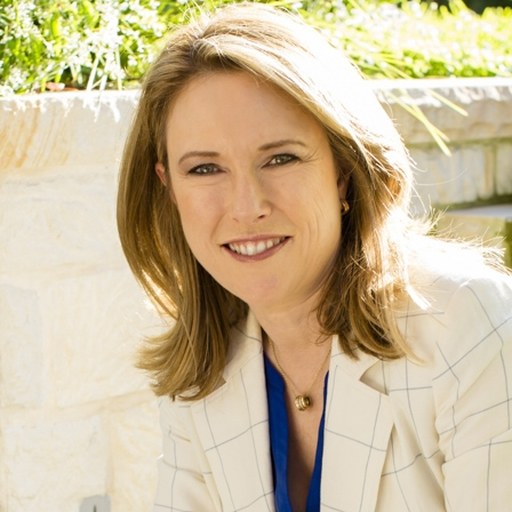
Co-host of The Elephant in the Room. Real estate agent, buyer's agent and buyer's agent mentor, co-host of Foxtel's Location, Location, Location Australia, author of Auction Ready and co-host of Your First Home Buyer Guide.

Property vs Shares: Peter Thornhill on Why He Owns No Investment Property
Peter Thornhill thinks Australians have a genetic defect when it comes to property, and holds none of it as an investment. He explains why he still owns a home, and what he does with the equity in it.
Residential property investment and cash flow. There are plenty of enthusiastic property investors, entire forums in fact, who exhort the wonders of buying property for yield. We know that there are better income-producing assets available for investors, so what's behind the enduring appeal of real estate?
Is it because we think we understand property while the share market, for example, is driven by God knows what? And isn't the share market more volatile than the property market? Bricks and mortar are surely safer investments than shares we can't touch and feel, right? Welcome to The Elephant in the Room.
This is the podcast where we love to talk about the big things in property that never usually get talked about. I'm Veronica Morgan, real estate agent, buyer's agent, co-host of Foxtel's Location, Location and Location Australia and author of Auction Ready.
And I'm Chris Bates, mortgage broker. Before we get started, I need to let you know that nothing we say on here can be taken as personal advice. We always recommend you engage the services of a professional.
Don't forget that you can access the transcript for this episode on the website, as well as download our free full or forecast report, Which Experts Can You Trust to Get It Right?
Today's guest is Peter Thornhill, principal of Motivated Money. And not since we first interviewed Martin North have I been more curious about how this chat will unfold. Peter actually cancelled this interview before we enticed him to rebook. Why, you may ask?
Well, to quote him, I have a pathological dislike of property and will not be able to give any tips of value relating to property in any way except don't buy it. Aha! So why do we want to hear what he has to say?
Well, while he might dislike property, we find our values are aligned. Peter believes the share markets are guided by forces beyond reason. The ups and downs can be linked to collective human behaviour, not logical continuum of cause and effect. Sound familiar?
He believes that there is no such thing as a market crash, why investing for the long term is the surest way to tap the market's riches, why market volatility is not a measure of risk and why looking backwards can damage your wealth.
So let's find out more about how this self-confessed 100% shares man approaches investing. Thank you so much for rebooking, Peter. We are very much looking forward to this chat. Great. Looking forward to it as well.
Thanks for coming on, Peter. I've been reading a bit of your stuff and watching you in different spots. And I agree with Radhika, there's definitely a values alignment in terms of philosophy around investing and the longer term. So today's chat's going to be really interesting.
Well, let's just start there on the property side, because we are a property podcast. We're going to talk about lots on this episode. But that sort of comment, I guess, where does it sort of come from? What's your views around residential property in Australia? Not so much commercial.
And what's your sort of thoughts around the dangers of its dominance, I guess, in society and the problems it's caused? Well, there's a variety there. As far as I'm concerned, I think the Australians have a genetic defect.
This love affair with property. Yeah. I can sort of understand the reasons. Our experience as Australians, you know, our history is not great. And a lot of what was the knowledge that was brought
historic knowledge that was brought into the country by the migrants has pretty much evaporated as we've established our own sort of world.
And yeah, property, one of the sad byproducts of property is that so much money is sunk into residential property. The majority of the savings of this country are in residential property.
Which means that most of our Australian companies are owned by overseas investors. Which means every year tens of billions of dollars flow out of this country.
Oh, yeah, I mean, that's a really interesting perspective. I've never thought of it like that. I know I've looked at, I think the latest figures are that the property market or residential property market is valued at almost $10 trillion. I think superannuation is, what, 3.5 and the ASX is something like 3.
And so that does put in perspective the dominance of the Australian property market as an investment vehicle. But, of course, you mixed in with that as well. is people's homes, right? So it's hard to sort of tease that out.
But I've never really thought of it in terms of, well, as a consequence of that, the rest of our investment vehicles, i.e. companies, are predominantly owned by overseas investors. That's quite fascinating. Why is that a problem for us? Tell us.
It's sad because the bulk of the productive capital of this nation is sunk into residential property, which is totally unproductive And because our savings are so low, we have as a country have to suck in foreign capital to fund all of this.
And unfortunately, the residential property performance is unlikely to ever be able to repay that debt.
So, yeah, I agree. So you've got the issues with our profits and our capital returns in companies going offshore. Do you have any idea of what percentage of our ASX is owned overseas? Do you have any idea on those numbers?
Oh, God, I've actually picked up the stats just recently, so I can't off the top of my head. But it is, for example, 40% or 50% or more,
just off the cuff of Commonwealth Bank is owned overseas. Yeah, yeah, yeah.
And, you know, you can run through every company and some of them, the shareholding is 50, 60, 70, 80 percent of the company is owned overseas, which means every year when they pay their dividends straight out the door of this country.
And just to give you the background to why I think we have this problem, our parliament is made up of Australians. And if you've ever bothered to get the register of pecuniary interests for federal parliament, it's freely available.
The bulk of the politicians in Australia are into negatively geared property. Yeah. The tiny minority of Australians
That is the contempt with which the leaders of this country treat the backbone of the nation. No, I'm with you, Peter, here. And I think another element is the savings elements, which you sort of rightly mentioned.
So if you're in a lot of debt and you think that investing in your home is the right thing, then you don't go and say, I'm going to keep paying off my mortgage because, hey, I've got a bigger mortgage, I need to pay it off.
And B, I don't keep putting more money in my super. I don't start to drip feed money into shares because I just want to pay off my house. Or, you know what, I'm doing all right financially. Let's just upgrade our home. Let's not invest in a business.
And so we stifle, stifle job growth in the future and innovation, don't we? Because everyone just becomes homeowners and paying off debt rather than investing in productive assets like starting companies and investing in companies. Do you see that issue happening? you know, really hamstringing the Australian economy over the next decades to come?
Oh, it's going to get worse. And we used to make cars in this country once.
We used to do a whole lot of things in this country once, but we've shuffled all of that offshore so that we have to import. One of the saddest statistics that I got as part of my normal presentation
We were selling iron ore at the time I set the slide up at about $200 a tonne. And we are re-importing it at $20,000 a tonne in the shape of automobiles.
And we're the clever country? Yeah. I don't think so.
So let's dig a little bit into that because, and I wish I'd sort of known we're going to go down this path because I probably would have done a bit of research, but okay, the automotive industry was subsidised by the government for many years.
So how does that sort of, I guess, add up in terms of the way you're approaching this right now? Well, I guess it was jobs and it was all, you know, largely domestic jobs. the government now is subsidizing residential property to the most extraordinary extent.
It's turned its back on industry and now it's subsidizing property. which would you rather, subsidising productive enterprise? Yeah. It's been subsidising property all along. That hasn't been a replacement, but I 100% get what you're saying about the...
I see also, I mean, I've heard some of these politicians talk about their investment portfolios. I can tell you right now that a lot of them are really crap assets, so they actually don't even know what they're doing. So they might be deciding that buying property is the right thing to do, but...
And anyone who advises anybody to buy property so that they can negatively gear is really very sort of single focused in terms of their advice. And they're not really getting the point. I could never come to terms with that. Why was losing money a good idea?
But you have to understand that Australians that, you know, losing money, paying less tax. is the way to go.
It's so ingrained though, isn't it, Peter? I mean, there's obviously a reason why people would do it, right? So the growth on that asset potentially outweighs the loss, right? But Peter, I think a lot of people don't go that deep. I agree.
I think a lot of people come to us and shouldn't I be doing it to get a tax saving? Shouldn't I be buying an investment property to save on my tax? I'm paying a lot of tax. Why don't they stop working for God's sake? It's a good point. Yeah, yeah. Yeah, I agree.
It's a really ingrained thought around negative gearing. And I should buy something that I can get depreciation and I can get tax write off. And, you know, a lot of accountants, you know, bless them, you know, go down this route and they say, look, you need to go and buy an investment property.
The Australians, for God's sake, what do you expect? Yeah, that's true. What do you think of our sort of success, though, in terms of our super system, though, Peter? Do you see that that has been something that's been a real enabler, you know, to sort of combat this over-reliance on property? Yes.
And the fact that the Liberal government, it was starting to destroy it because Paul Keating was the master of this. Yeah. And, you know, when I think about it,
things that he did as a labor party member were more liberal than one would have expected in any event yeah that's that's to one side yeah i think it's um i don't know it's just a sickness that runs deep right through society just to show you how crazy i am and i mean i acknowledge i'm a misfit but i think that's a byproduct of spending 18 years working abroad
my apprenticeship in England for 18 years is what totally rescued us. I gear into shares, right? Our banks love property. So I've offered up the title deeds to my apartment and I've borrowed money. I've asked for a mortgage.
And so they've given me a reasonable rate. If I asked them for an investment loan, they'd immediately double or treble the interest rate. So I'm ticking along on a 2.7% home loan, quote, and I've invested that in shares. Yep.
The shares are paying me more than 4% with the franking credits. The 2.7%, I get a tax deduction because it's an investment loan. The bank is paying me to borrow money from them. Yep.
I mean, but I'm mad because I'm making money and I've got to pay tax. Yeah. I should be shot. I know.
I love it. I want to pay a million dollars worth of tax every year. I really, really, really do because it means I've earned a shitload more than that. So, you know, bring it on. I think – and it does – it taps in, I think, this whole negative gearing idea.
And I'm in favor of negative gearing if it's done properly. And, you know, I think that people – you should get a tax deduction for your investments, right? How it's structured and whatever and, you know, we can get into the argument the nitty-gritty. So the principle of it I'm in agreement with.
However – What it does, this idea of the way in which negative gearing is sort of promoted in this country is very much around so you too can become a property owner because we all love property and also so you too can pay less tax because we all hate paying tax.
And both of those are really flawed arguments on their own because they need interrogation and yet, like you say, basically people aren't doing the work to really work out what a good investment is or what the numbers tell them because most people don't even know if their properties have done well or not.
Like I have said sometimes in my presentations, you know, when I'm prime minister, I'm going to change the system. I'm going to knock negative gearing on the head. And as they have in England, first time home buyers get a tax deduction for the interest they pay.
Now, when that worked fine, but then people started to get greedy. So what Maggie Thatcher did was she capped the amount of the loan interest that you could claim as a tax deduction. So that the people at the bottom of the pile got the maximum benefit and 100% tax deduction.
And if you wanted to play silly buggers, okay, well, you're not going to get the tax break. So negative gearing doesn't exist in other countries like it does here. And this, as I say, is exacerbated by the fact that our parliament is made up of Australians, for God's sake.
Do you think it should then be, you know how you just mentioned there, pulling out equity and buying into shares, which there's a few points around that. I mean, the first is the confidence to leverage. I mean, people are very confident to leverage in a $1, $2, $3, $4 million house.
But to leverage into shares, the confidence is maybe $40, $50, $100 grand, right? And the ability to leverage into property is just so much greater, right? How do you sort of see that and the ability to borrow against homes?
Like if you wanted to, for example, buy, do those shares and borrow at 2.7%, it's very, you can't do that with a margin loan, right? You know, you'd be paying sort of four or five or 6% with margin calls.
So by being a property owner, then gives you the ability to use that equity and leverage to borrow at cheap rates, to buy shares. So do you feel like you need to be a property investor with shares or do you feel like you don't even need property at all?
you don't need property at all. You know, it's the issue here is that's the only thing basically that banks will take as security unless it's a margin loan. And then that brings in a whole other lot of issues.
The, I have successfully used, I call it dividend recycling. Yeah. So in Australia, You have to own a home because there's absolutely no security of tenure.
In civilized countries, you can get long-term residential leaseholds, not goddamn holiday lets, which we have here. 12 months, 60 days notice to quit.
I cannot tell you the number of times our three sons have been moved over and over and over and over again. So there is no security of tenure, which is, again, one of the key factors affecting people's association.
If you've lived in a civilized country, France, Belgium, Germany, Switzerland, Holland, England, you get long-term residential leaseholds. You have absolute security of tenure. So you don't need to own.
And they treat it as their home.
Right.
But to get that long tenure, you need someone to provide it. So you either get the government to do some type of social housing, right? You get the corporate sort of institutional investor to do things like build to rent, which is, you know, growing. Or you need the mum and dads or the...
you know, the everyday Australians to buy investment properties and then to actually commit to a long lease. Because the problem is with a long lease, it's very hard to sell. Your capital value is, it's not, you know, unless you're selling it to another investor and the owner occupier drives the market.
So, you know, investors don't really want to give long leases, not because they don't want to be a great landlord. It's just if their life plan changes and they want to sell, it's much harder to sell something with a lease in place.
And so that's sort of the issue in the system is that mum and dad's investors, their life is unpredictable. They may need to sell at some point, so they can't offer a five-year lease. How do you sort of feel about that? So really it needs to be another solution. Dead easy.
When I'm Prime Minister, negative gearing goes out the window. I will give all the tax breaks to Merit and Stockland, Mervac, Lend, Lease, and they must build... to rent, to lease. They become the landlords and they become professional corporate landlords like you have overseas.
And if they sell the properties, I will tax all the benefits that they would have received and I want to create. But they must offer minimum 30-year leaseholds.
Bring on, when are you going, when are you running?
I think the other thing around here is that Australians aren't, you know, we're not known for being great savers and great investors and having that sort of discipline around, you know, regular contributions to an investment fund. Hence why superannuation is compulsory.
You know, hence, I guess, also the idea of owning your own home or even owning an investment property is effectively forced savings as well. You know, once you commit to that mortgage, you've got to keep paying it back. The consequences if you don't are pretty high.
So, you know, if this... And I love this idea of Utopia. It's great. And I do think that we need to actually have a much better solution to housing in this country. So these are really good things to be discussing.
If we had that security, are we sort of likely to have a lot of people that will basically just go and spend everything and have a great time, you know, rather than actually put down and say, right, I'm going to squirrel away and be really diligent and disciplined in how I invest?
The problem we have is that all the old rules have disappeared. And as I'm acutely aware from the thousands of presentations that I've done, the feedback has been the current generation...
feels that they should have today everything that it took my wife and I a lifetime to achieve. And that's the belief, you know. And I'm sorry, but they're going to discover that they can't.
But if you make housing easy for them to have and give them that security, then that's going to encourage them to think like that, don't you think? I mean, if you have this aspiration, you have to say, I was having this argument with my uncle the other night. He's, what, 78.
He was saying, oh, the youth of today, they just want to be handed to them on a platter. They don't want to work hard. And yet I've been interviewing a lot of first home buyers on my own.
My other side hustle, my other kick is Home Buyer Academy, you know, helping first home buyers learn how the process of buying a property. And they are very disciplined. The people I'm talking to are very disciplined, very focused. They're not, you know, they're not traveling overseas and having $60,000 weddings and
and eating that much avocado on toast, you know, they are really making a lot of sacrifices to get there.
So, you know, obviously some people were prepared to do that, but without that sort of, that really, really big hurdle that they have to, or that mountain they have to climb, you know, isn't that taking away the incentive to actually make those sacrifices?
Well, I would hope not, but I understand what you're saying. Mm-hmm. The, you know, going back when we left Australia on a working holiday for 18 months, we didn't come back for 18 years, but that's another story.
So we ended up buying our first house in London. My principles are spend less than you earn, borrow less than you can afford. And so I, we managed to raise a piddling deposit to buy this little terraced house in Clapham in London. And
We had a mattress on the floor. We had sheets pinned up over the windows. And that was how we started.
And I don't think anyone today would start that way. Everyone's expectation and buying what you can afford.
We have so much pressure here in Australia because of the way property prices are being boosted, boosted, boosted the whole damn time with a government that's dedicated to boosting house prices. because they want to be reelected.
So the last thing they're going to do is get in and, you know, bring house prices back to a reasonable level. Yeah. So our children are cursed. But there's another element here. My dad could live and die one town, one house, one job.
How many people today are going to live and die? One town, one house, one job. Our population has to be mobile.
Now, if I've been posted from here to Kingdom Come, London to Kidderminster in the Midlands, Midlands back to London, London to Melbourne, Melbourne to Sydney, all over the shop, how much do you think we would have spent buying and selling houses on every move?
In transaction costs? Yes. I'm presuming you've added it up quite a lot. No, I haven't added it up because I was incredibly fortunate I was headhunted every single time. I haven't applied for a job since 1972. Every one of those jobs has come.
So the person who was employing me paid all those. But it is hundreds and hundreds, probably, I don't know, approaching a million dollars that have been spent in moving house to fit my career and family.
But you've also credited the way that you think about the property market and the way you think about investing to the fact that you've lived overseas. So if you were like your dad, it was one house, one job, one town, you wouldn't think the way you think now. Correct.
I would probably be sitting here with two negatively geared property students going on.
Touche. I think you'd also probably get a lot more scared when there's potentially talk of a recession. I mean, I spent four years working in London in 2007 to 2011 when the GFC, you know, pre the recession.
So they call it a GFC over there. They call it a credit crunch, a credit crisis. But in Australia, we call it the GFC. But going through that, you do absolutely understand what happens when things don't go very well as a society and businesses close and unemployment really jumps.
And you take those learnings and you apply them to the future, et cetera. Do you think that's one of the problems with it?
a lot of the younger generation in australia and just you know even people in their 30s and 40s you know they've had it pretty good as a country for for so long that there's uh no real understanding that you need to save for tomorrow because things are always going to be okay i believe that 100 the expectations are just totally out of court and the fact that the government can allow people to tap into their super the dollar you invest in super on day one is going to be worth
the most at retirement.
That if you rip out all those early dollars and you don't redeposit them until later, you've just brought that whole graph crashing down. Then expect the government to provide all sorts of subsidies for The retiree.
I mean, in the COVID, I do think that policy was very short-term minded. And I was very frustrated when they said people can take 10 grand out of super and then another 10 grand next year. And a couple could do it. So it was 40 grand without any accountability, without any checks.
Because that is just really, let's just live for today. And a lot of that money went on plasma TVs and short-term holidays and Uber Eats, etc., rather than Uber Eats in 65 years' time or 40 years' time. So I agree.
And then, you know, obviously last week the Labor won the election and the Liberal were talking about, you know, accessing super for housing. But, you know, that conversation is not going to go away, is it? You know, because we've got a $3 trillion super pool that keeps growing every year.
And, you know, you've got these sort of disconnect, disenfranchised young people with high property prices who have got
you know, a big deposit hurdle and they've got these savings in super that's tied up that's starting to grow for them because they've been putting in 10% a year for the, you know, 10, 15 years.
Do you see that, you know, the temptation is always going to be for the government to take more money away from productive assets like shares and put it more into housing because it's just keeping the system going? As I said, your parliament is made up of Australians.
You've got the blind leading the blind.
LAUGHTER
Sorry. One of the big issues that people do have with the share market is that volatility. It is the fact that they don't really know what drives it.
And I know, you know, I watch the news and at the end of the news, I have the finance segment and I watch the share market bounce around reacting to things like, you know, talk about interest rate rises and talk about, you know, wars and oil prices and all that sort of stuff.
And in my brain, I just think, how the hell does that trickle down into share markets rising, falling, crashing, going sideways, whatever? Okay. So I'd love to hear about this. Yeah. Just hold it there. The whole point is the share market, you're quite right, is volatile.
Now, as Prime Minister, I'm going to deal with that issue. Okay. So what I'm going to do is I'm going to shut the stock market and I will open it one day a year. Yeah.
It'll be my birthday. You can all come in, trade your pants off and then bugger off and I'll see you in another 12 months. I can remove the volatility by getting rid of people. I love it. So the behavioural biases. People drive the share market. They treat it like a casino.
And when their behaviour of selling pushes share prices down, they blame the share market. Excuse me.
Yeah. And when it goes screaming upwards... Who was, the share market was doing that, was it? It wasn't people buying like crazy, was it? So, I mean, if we're talking about younger people here, Peter, let's say they're in their, yeah, it's just started, they're in their 20s, right?
You know, there's been a rise of finfluences. Yeah, it's a tough one to say. ASIC are trying to shut them down. I'd say we're in that sort of camp in a certain sense, but we're towards property. But
And a lot of people in the 20s say they want to live for today and, you know, not save for tomorrow. A lot of people then go for investing that same mentality. You can see the crypto craze over the last couple of years.
You even see the Nasdaq sort of craze over the last couple of years. You know, I'm going to buy Netflix. I'm going to buy Tesla. I'm going to buy Apple, but I'm not going to buy any banks or, you know, mining companies or, you know, airports or things like that.
So I'm going to buy things that are cool rather than, how do you sort of come to terms with, you know, that they're basically, they've just finally got the confidence to invest, but then they go for get rich sort of mentality rather than let's make safe for tomorrow. Okay.
Well, let me give you two definitions. The word invest, one of the most misused and abused in the English language.
I found a wonderful definition of it. Invest, the use of money productively so that a regular income is obtained.
Speculation, buying and selling in an attempt to generate a profit, sometimes in an antisocial way.
You got it? Yeah. So let me begin by saying, you know, I'm just glad I'm not licensed to carry sidearms because there's a lot of journalists I think we'd be better off without. You cannot invest in Bitcoin. You cannot invest in art. You cannot invest in wine.
Any of that just doesn't exist. Do you know why? A, it's not productive, and B, how much income does Bitcoin produce? Hmm.
And the thing that knocks my socks off is why would you buy anything with Bitcoin? You know, let's say you wander down to Harvey Norman and you buy a washing machine with Bitcoin. Yeah. And two weeks later, you could have bought six washing machines for the same amount of Bitcoin. Yeah, yeah.
It's that joke of the guy who bought a pizza for 10,000 Bitcoins. Yeah, it's now worth 300 million, that pizza. But anyway...
So I rest my case. Yeah. It's about the productive use of money to produce an income. You don't believe in diversification, like things like gold or, you know, gold you cannot invest in. You can speculate in gold. You can speculate in jewelry, diamonds,
remember the golden rule the use of money productively so that a regular income is obtained speculation buying and selling in an attempt to benefit benefit from a fluctuation in the price Remember those two rules. So then does property align to that then?
If you're saying, you know, property rents go up over time, you know, the rent you pay in 2022 is not the rent in 2000. If those costs, the income goes up and the costs stay similar, then that's productive, is it?
There are three assets you can invest in. Remember, produce an income, cash or fixed interest, Property and shares.
Those three.
Now it's a matter of choosing if you're going to invest, which of those three. So I have a graph of the last 40 odd years of cash. And the graph, the accumulation graph for cash goes like that.
And so for those not watching the video, it's not a very steep curve. It's not a very steep, sorry, it's not a very steep gradient, correct. Yeah, easy one. Okay, the next one which has a steeper gradient is property.
Yeah. And the one that has the steepest gradient is shares. And the reason is quite simple. If you can make more money investing in cash or fixed interest, or property than you can investing in shares, who the hell is going to start a business?
I mean, what is it? The thing I used to get thrown, and this harks right back to the very beginning, you were talking about, you know, shares are just bits of paper. I immediately turn around and say, your house, excuse me, you've got a title deed.
Your property is just a piece of paper. Apparently, Coles and Woolworths supermarkets don't exist. Yeah, it's true.
And I think that and that's I guess that's what Warren Buffett says is, you know, you're not buying really shares.
You're buying you're buying part of a business and you've got to understand the company and you've got to and and and that there's a disconnect, I guess, between what a lot of people are thinking when they're looking at the share market versus really what they're actually what the asset is that they're buying into.
If you like what you're hearing here, please share this episode with others you feel would benefit. And while you're at it, why not leave us an iTunes review? Five stars, please. Every review helps make it easier for other people to find us and hear what our amazing guests have to say.
We love hearing your questions and we're planning more listener Q&A episodes. Please send your questions in. You can send them via the website, which is theelephantintheroom.com.au or directly via email to questions at theelephantintheroom.com.au.
Correct. And the volatility is just enough and the media is in your face. Day in, day out. Now, do you think it's getting worse? I feel like it's getting worse.
And certainly in the reporting with the property space, and I've been watching with interest, pardon the pun, all the reporting about interest rate rises. And the borderline hysteria around it, I don't think I've really observed in previous years. And I don't know if that's just because I've just forgotten.
You know, do you think that the media is becoming more sensationalist around the share market as well as everything else to do with investing in money? Veronica, it's becoming worse in all respects.
Yeah. When we bought that house in Clapham in London, interest rates were 13.5%. Within 18, 19 months, so this is in the mid-70s, it was at 18%.
and mortgage stress was never part of the media rant. Yeah, there you go.
It's not even, the data does not even support these claims of mortgage stress at the moment. Like, it's actually ridiculous. Yeah.
And the ABC, I have to say, and I'm an ABC watcher, and I am shocked and appalled, and I honestly haven't yelled at the television so much recently as I have been recently. Yeah.
about their reporting on interest rate rises and the impact. And it's all the way with me, blah, blah, blah. And look, they do do the nice little drone shots of all the house and land packages out in the outer suburbs. And that is correct.
Those are areas that are going to be under mortgage stress. They're more likely to be because that's all the factors that go into it. But it's not the entire market. I mean, 20% of our property value in this country is debt. That means 80% is equity, unless prices fall 40%. What is that?
Anyone could be numbers of...
Yeah. I think you're absolutely right around the media. I mean, it's like reality TV. You know, the reality TV when it first came out had to be quite boring and people found it interesting. But, you know, unless it's really ridiculously off the charts, people don't find it interesting.
Every year they've got to make it more crazy. And I think it's the same with the media around things like property. I mean, I'm the same as you, Veronica. I'll read... Most articles are related to property because I'm always trying to tell you.
And most of the time, I'm like, that's not even true. That's not right. You know, and it is just kind of creating that fear sort of mentality. Petey, I've been watching a bit of your stuff.
And I mean, what's your thoughts around sort of, you know, the dangers of where people, young people go wrong, where they pick the wrong partner and your saver versus spender. I think it's a really good learning for people to discuss. I can tell you now, again,
all the feedback from thousands of presentations, two savers, Nirvana, my wife and I.
Two spenders, not Nirvana, but hey, they're a match. Spender-saver, total and utter disaster because one of them is going to go on throughout their relationship white-anting all the financial efforts of the other.
And honestly, I can see it. I can see it. I can pick them.
I've come up with this quite a lot recently in these interviews I've been doing with first-time buyers, actually, that a lot of people are referring, you know, and the people that are doing the course, your first-time buyer course, typically is the saviour in the couple.
And there's a hell of a lot of frustration around how they've got to try to get their spender partner on board. And as we've talked earlier, it's really hard to actually get to the point where you've got enough money saved up in order to buy a property because
And it just, like you say, it gets wide-handed or undermined all the time. Yeah, I feel for them. I really do. And part of me feels like saying, just call it quits right now. Get out.
Well, Veronica, spare a thought for us because when we bought our first house, we had to have a 30% deposit and we had to save with the bank for a year. to show that we had the readies to be able to do it. Yeah.
Yeah, I mean, now the government gives 5% deposit home loans and access your super and you don't need to show any evidence, you know, guaranteed savings, all these sort of things can be, you know, bypassed.
So do you think, Peter, early on in a relationship, you know, obviously you've got your love languages that, you know, it's important to know that your partners are, but do you think that, you know, if you are at those stages or you are in a relationship, you should really have those...
big chats around like their attitudes around money and and how are you going to deal with this longer term because you know absolutely i can see these problems playing out many years down the line because they say very you know even this morning coincidentally with a client um you know the apprehension to go into a mortgage with their partner even though they've been together even though they're talking about having kids even though they're
Wow. You know, talking about being together, but they just don't want to combine finances because he knows what, in this situation, this is not a guy or girl. Plenty of guys are just even worse than girls. It's, you know, both sides of the party completely equally.
And so, yeah, do you think that that's such a key moment? Because, you know, at the end of the day, you get together, you get married, you buy a house together, and then you get divorced years down the line and completely ruin yourself financially.
So do you think people should put more effort into natting this out before they get too deep? I think it would be a very, very good idea. But as I say, I liked it. And it's served us well. Do you think there's a danger with being too frugal?
Like, do you think that, you know, when you have come from, say, you know, you don't end up, for example, experiences, you know, you don't invest in experiences enough because you're always so tight on the money and you're always trying to sort of hoard it.
And, you know, when you've got opportunities to spend money on things that will give you memories, you don't do that because you're too much of a saver. Do you see that being a problem? Well, that's probably as much as being not enough of a saver. Yeah. Being too much of a saver. Yeah.
You've got the two ends of the spectrum. They're both crazy, but hey, that's the human race. Yeah. And that's inevitable. But I think most importantly of all, and I think our generation has some role to play in this, the family life,
is the key to the success of you as an individual. If you grow up in an abusive household, you're going to carry that for the rest of your life. So there are all sorts of life skills that you learn by osmosis living within a family. Yeah.
And it's those elements that will carry you through. Now, our generation is being very, very generous to ensure that their kids don't have to put up with the hardships that we did. Yeah, yeah, yeah.
Well, that's a big damn mistake. Yeah, yeah. Because you've got to learn what it's like to fall to make damn sure you don't fall again. Yeah, I mean, I guess this is why a lot of the biggest people in the world are giving away all their fortunes, right?
Because they know that money is the curse rather than the, you know, it doesn't give you purpose, it doesn't give you meaning, it doesn't give you accomplishment, meaning, et cetera. And so, you know, maybe that's... So what are you sort of suggesting there for families? Is they be really tight around the money?
They sort of get them into work? What would be the advice to make that success? No, you know, tight is relative. Tight is relative, for God's sake. You know, I'm being relatively tight with our family. by taking them all to Disneyland in Los Angeles and holidaying on the way home. Okay.
But I'm not going absolutely mad and, you know, buying apartments for the two of them because they're, you know, they haven't saved very much money. So it's a matter of horse just setting the boundaries and making sure.
And why would you want to steal your children's dreams?
Hmm. All those little goals in life that you kick just to have them taken away and thrown at you.
Yeah, there's no real value. You don't value them if you haven't actually had to work for them. It's back to that thing about you've got to aspire and work hard for something. Yes. You know, look, I agree.
I think that, you know, look, I know that home ownership in this country has been declining. But I also know that it was sort of higher than the rest of the world as a consequence of our post-war policies, right?
And so you sort of can say, well, do we have this sense of entitlement because we're Australians and that's really, you know, how we've been set up to believe that that's our... You know, that's our birthright.
But also because the governments have not been investing in those longer-term accommodation options for people as well, and not just governments, but governments also not setting up an infrastructure so that corporations can also invest in those types of property, provision of that type of accommodation.
So we do have a bit of a problem in this country of a sense of entitlement. I definitely think that.
Yep.
But you've got to sort of come back to the realities of what we have.
We have a situation that, like you said, you've sort of done a bit of a swifty with your bank in terms of how you're using the equity in your property to invest in the share market and to leverage in the share market.
We get back to one of the big benefits of property, and that is the ability to leverage. Because if you don't already own a property with equity in it, you can't borrow money in the way you have to actually invest in the share market. Right. Yes, you can. Can you? How?
That's exactly how I did it. Yeah, but you own a home. Oh, so you're talking about someone who doesn't own a home. Yeah, yeah. Yeah, no, that's okay.
So if that's the beginnings, then what you've got to do is start investing now to create the lump that will enable you to buy a property. I mean, the property aspect of it comes later. You have to start saving day one.
Yep. I think you're right.
I think that the time is the thing here, Peter, because I think a lot of people wake up, they live their 20s and enjoy the good life, and maybe the career doesn't go as well as they thought, or maybe they do do well in their career, but they equally match that from a spending point of view, if not more, and they have credit cards and go on holidays, et cetera.
And then they finally have this sort of clear the clouds moment, I guess, and they go, oh, actually, I should start saving for my future. And now they're in their 30s to 50, if not later.
And then they've got a big gap that they want to try to, you know, they've got to, and they end up putting up more, they actually don't take action then even. They just sort of go back to living their life.
Well, that's when they go for the get rich quick stuff.
Yeah, exactly.
Because you've got to make up for lost time. And that's when they're starting to feel hard done by.
Yeah, that's right. And it's one of the reasons I did stop working with clients in their sort of 50s, 60s back in 2012. My first five years in advice was all people with 60s, 70s and 50s.
And I think what you've mentioned there, the hard done by is was a lot of the experience I would get on a daily basis that... You know, things haven't gone as planned because of these reasons and I'm not going to own it and I want you to work magic.
And the real magic was is they didn't take action 20, 30 years ago. And I can't go back in time. I can only give you advice for the next five years pre-retirement and that's save as much as you can and invest. And it was hard advice to sort of change their whole mentality.
Can I just probably digress a little bit? One of the things that I started very early on with all the house moves was when I had equity in the property, I would borrow against it and buy shares. Yeah. All the dividends. Now, this borrowing.
Remember, the interest is tax deductible. Yeah. My mortgage is not tax deductible. Yeah. So I buy shares and all the dividends from those shares I use as additional capital repayments of my home loan, which is not tax deductible.
And as my home loan starts to go down faster, I borrow a little more to buy more shares. The dividends are growing organically. I am buying more shares. So I'm getting a double kicker.
So the cash flow going around grows and grows and grows and grows.
And you wipe your mortgage out. Now, you don't have a mortgage anymore, but that wasn't tax deductible. Now, you have an investment loan, which is tax deductible, and you've still got the dividends flowing out of them.
Sounds magical, but how do you actually make sure that you buy the shares that actually pay the dividends? Ah, okay.
The...
One of the benefits of the life in England was my superannuation over there. When we came back to Australia, I was headhunted back and I wasn't sure that I was going to stay away from our home in England. So I left my super fund there.
As it turned out, we settled in comfortably and we stayed. When I retired, I had my self-managed super fund
in England so I bought and I bought listed investment companies now basically these are companies and the sole assets unlike Woolies which are supermarkets although Woolworths don't own their supermarkets by the way nor do Coles because both Coles and Woolworths know that there's absolutely no point in owning property all the money is sunk in to their business anyway I digress so
the cash flow going around wipes out the mortgage and I have used it very successfully with my children when my eldest son met married and rented they got moved they rented again they got moved they rented again they got moved and he came to me and said dad he said I'm going to buy a house he thought I'd blow my top I said no absolutely no problem what we'll do
is we will cash all the investments that you've made in managed funds at that stage.
And we will get rid of all of that. So you've now got a six-figure deposit. They bought a house they could afford.
And the deal was that with the margin that they had in the equity, they bought, started buying shares.
Yeah. And they... accelerated that process and I helped. Birthdays, Christmas, I'd throw a couple of bucks in each time. They managed to wipe out their first mortgage in 10 years.
yeah so what you're sort of talking about is like a debt recycling sort of recycle yeah it's strategy and it's um i think there's there's a bit of what you're like about your strategy is that what you're suggesting is you don't sell the shares you just use the dividends that you pay tax on anyway um and you use it the franking credits remember so you get a tax credit
Yeah, exactly. And so that income then you use to pay off your mortgage, but also to cover the interest on that, you know, debt as well, this tax deductible to slowly pay off your mortgage and then you get more equity and then you buy more shares, etc.
What I, sometimes I hear this strategy and I think it's wrong is that people then suggest you sell your shares, right? You buy some shares, you buy $100,000 of shares and then when they go up to $150,000,
you then sell $50,000 of shares to pay off your mortgage and then you pay capital gains tax and you're sort of diminishing your portfolio. So you're sort of saying do both, you know, buy your shares but just use your income to pay off your mortgage. Correct. Cash flow is the key. Yeah.
The shares, what their prices are doing is totally irrelevant. So in the UK, I have basically got four listed investment companies in my super fund, just four. They all pay...
quarterly dividends to me and I draw 12 monthly pension payments The beauty is these listed investment companies. I don't have to they're buying all the shares on my behalf It's like a managed fund, but it's actually a company.
Yeah there they own all the shares they do all the sorting out so I can get on with my life with my wife and my children and my granddaughters and And pay absolutely no bloody attention whatever to what we hold. I know what we hold.
So you just set it up and so you set up the criteria at the outset. How does that differ to ETFs? ETFs are just glorified managed funds and there are structural problems. Unit trusts, the old managed funds, this is why I left the industry.
As a unit trust, the tax rules are that any income any income and capital gain must be distributed at the end of the year.
Yeah. So if they turn over stock and have a capital gain, you get a huge distribution at the end of the year. To highlight, I was working for some of these fund managers and I was investing with some of these fund managers.
And I can tell you, to watch your quarterly dividend go from $400 to $18,000...
lands in your lap on the 30th of june and you then pay tax on it and your unit price goes south as a result sorry i am off managed funds and etfs i use listed investment companies now let me go back one of the ones in england has been going for 162 years it has just paid its 55th
consecutive dividend increase, 55 years of unbroken income growth. And how much water has flowed under the bridge in the last 55 years? That's all I need to know. I do not need to know anything else.
In Australia, I use the equivalents, listed investment companies, the old fashioned ones, because you've got the carpetbaggers of the industry coming in and creating
new ones yeah yeah i want them to have been around for a long long time and i want a an unbroken dividend history
This is really interesting for me. Sorry to interject there because, like, I'm a capital growth person. I look at – and it's probably to do with my age as well. I'm not near retirement. I'm probably nearer than I probably should be. Anyway, whatever.
I am over 50, but, hey, I'm not thinking I'm any older than I am. Anyway, the point is that I – In terms of property, I'm very much capital growth.
I believe you've got to do it for capital growth and then you've got options down the track and it's a long-term investment and then when you're close to retirement, you can look at, well, what do I have and then you can assess.
Whereas what you're saying about the shares, it doesn't really matter about capital growth as long as I actually think the company's worth what it is. The company's...
turnover and profit and their systems and staffing and the way they're set up, their customer base, all that sort of stuff, that ticks over regardless of what happens in the share market. You know, all those people knee-jerking over wars and prices and whatever do what they do.
It doesn't actually change the fundamentals of a company. So if you're in...
So if you invest in those sort of real blue chip, those companies that have been around, tried and true a long time, that don't get, you know, innovated or disrupted out of existence such as, you know, what your codex in the world.
If you do that and you focus on the cash flow, then that's really the goal here. Is that what you're saying? It doesn't matter what it's worth. No, I don't. Well, the listed investment company probably holds shares in 80 or 100 companies. You have diversification for a start.
So once you've picked up this listed investment company that's only been there for 160 years, the cash flow comes. You don't have to worry about the prices at all. You can forget it and just let the cash flow roll. Now, companies...
have payout ratios. So the amount of the profit they have, Commonwealth Bank's payout ratio is 70%. They pay out 70% of their profits, they retain 30. That enables them to, well, any company with retained profits, new product, technology, et cetera, et cetera.
So that's why dividends are a reflection of the growing profits. The growing profits and retained profits continue having the company growing, growing, growing, growing, growing. And if you've got a whole basket of these things spitting out all this cash, you need not worry one jot.
Two of the companies out of 100 could go broke and you would never know. But if you were holding individual shares and you have one of them blow up, oh, bloody share market.
Yep. What's your thoughts on the, I mean, there's lots of different investment philosophies out there.
I guess the contrarian view to what you're saying is that a lot of companies that are the fastest growing companies and the ones who are providing, who could potentially provide the biggest income in the future, you think of someone like Amazon or Tesla or, you know, Apple, et cetera.
I mean, the US payout ratios are nowhere near the same as Australia. I mean, I think it's 20 or 30% on the S&P 500 versus here it's 70 or 80%, right? Wrong.
um no isn't it is it much higher s p 500 and i have the chart for the last 60 years beats the crap out of the australian share market in terms of the dividend flow Does it in terms of the payout ratio? Yeah, and I'm more than happy to send you... Yeah, okay.
But what about in terms of, you know, I guess more the technology sector, you know? Like, I mean, you've got your big sort of, you know, industrials you speak about, right? But what about sort of places like the NASDAQ, you know?
Like, you know, you would argue that some of the growth on those companies and the share price is, you know, the capital growth completely smashes any type of income growth. What's your thoughts on that?
Is that speculation? Well, no, you just thought you could do that. And for a start, I'm never going to know if I've got high tech stocks or whatever, because the listed investment company, now I get the annual report every year.
But apart from that, you're edging me towards the yield trap. People chase high yield because they think they're going to get the best income. This is the biggest furphy of all time.
The best income producing stocks that I own, and as a byproduct of a long time owning shares, I still own some direct shares, the best income stocks are those that produce the lowest yield. What's the difference?
Because in property, yield is your rent as a proportion of the actual property value, or you could look at it as the cost of the property, depending on how you measure your yield. How are you measuring yield in this case?
Because I would think if it's high income and the stock's falling in value, for instance, well, then the yield's huge. No, hang on, hang on, hang on. Falling in value, again, I take people to task on this. The price of the stock has fallen. Thank you. So if the price is falling...
If the price is falling, the yield will rise if the dividend hasn't changed. That's fine. But you average it out over a period of time. And when the GFC hits, share prices fall, but dividends don't fall. Yeah, but just before you said that chasing the yield is a trap.
So can you just sort of tease out the difference? What do you mean by that? Well... people tend to buy high yielding stocks to get better income.
But the yield is an abstract derived from two dollar values in dividend Divided by share price. Yeah. And those two dollar values can fluctuate in either direction. Yeah. So the yield can go anywhere. So you should be focusing on what you're buying, not what the yield is.
Is that what you're saying? Right. Correct. Which is why buying the listed investment companies.
Yeah. Because their companies are not managed or unit trusts, they can retain profits. Yeah. So when the companies cut their dividends in Australia during COVID. Hmm. because the listed investment companies I use here have retained profits, they were able to maintain their dividends.
So we've sailed through with hardly any collateral damage as a result of the companies cutting their dividends because the listed investment companies were in. The other important thing to remember is I am looking for industrial companies. I'm not interested in mining companies.
because that earlier little visual I gave you of the gradient of cash, gradient of property and gradient of shares, gradient of resource companies, gradient of industrial shares, industrial shares are far and away a multiple of what the resource companies are doing.
So I'm looking for listed investment companies that predominantly hold industrial companies and have been around for 40, 50, 60, 70 years and have a history of solid dividend growth. What's in there, I don't want to know. I've got other things to do with my time.
And anyone who's going to go and buy shares, would they do their own brain surgery? Yeah. Would they do their own accounting?
No, they would buy their own properties, and so they probably would buy their own shares as well. And I think Peter makes a...
make a really good point around the yield chasing i mean you've got uh big etf providers out there offering high yield etfs for example and what they uh one of the dangers of that is yeah yeah they're sorting the shares by yield and they're putting more money into the ones that have higher yield but you're completely forgetting the whole point you're still buying companies you're still buying companies that are likely to produce you know you want them to invest in their growth and you know technology but also still pay out
dividends to an LIC, pays lower tax and then it can distribute an income. So I do think it's a great learning. One final thing, it was a conversation I had with a client today and I was just reading about you before the podcast and one of your points is you rent your lifestyle.
Can you maybe just elaborate a bit on why you think that we go wrong here and a better way to go about it? Okay, you know, Frida and I could afford to have a harbourside apartment or an ocean view apartment. We choose to have a modest apartment here in Wallara.
Our automobile is a Toyota Corolla 2005. And basically we're satisfied with that. But the cash flow from our portfolio and the super funds enable us to.
So we're in England on holiday a couple of years ago. I rented a 66 4.2 British Racing Green E-Type Jag. We spent a week touring the gardens of Devon and Cornwall. We went to France. I got a turbocharged four wheel drive Alfa Romeo.
I managed to get only one speeding fine. Thank goodness. So
I don't mind. I'll rent the lifestyle. I don't need to own it. I would never have a holiday home. We can rent holiday homes that would make your mouth water.
Yeah, it's so true. I mean, literally I was on a phone to a client this morning and, you know, they're at that sort of, do we upgrade? You know, that's a whole other conversation. Or do we, you know, buy a holiday house?
Or do we, you know, he works at a big tech company. Do we keep on buying, you know, shares, et cetera? And, you know, the whole conversation around holiday home doesn't really make sense for most people.
You know, even just the logistics around it and then, you know, when you're actually using it and then you're locked into a holiday, et cetera.
know we live in a pretty amazing world where we can do a travel and you know renting things is so easy right and so it doesn't really make sense to own a lot of things um in the world that we live no sir apart from high quality dividend paying businesses and your own home so you can fund it well i mean you you don't really need that that's just an accident of history
Because if you had the share portfolio and you were living in a country in Europe where you had a long lease, we could release the millions of dollars and we could multiply our income yet again. But we're living in Australia to be close to our children and grandchildren.
Therefore, the penalty we pay is having all these millions sunk in totally worthless property. It's worthless if you can't get the money out.
So if you're not, for example, got an income and you've got two, $3 million home that's paid off and you've got this title deed and it's like, yeah, I own my own house.
But if you can get access to that equity, so you're another client today, you know, we can pull out millions of dollars of their equity to invest into shares, etc., And so only really 20% of their house is unproductive, I guess, because the other 80% is redrawn to buy other investments, etc.
But you're right. I think it's the long lease issue, everything you spoke about on this podcast, ties us back to the age-old problem, why we've got such a big issue. Yeah, and the thing is that we haven't had a mortgage for years. I've always kept it.
I've never actually closed it, so the bank's still carrying it. So it was a matter of going back And I acknowledge that they're Australian. So I approached them in that manner and I said, look, I've got this really nice apartment in Wallara. I'd like to take out a mortgage. Oh, OK.
So I took out a principal and interest mortgage and I am drawing out a million dollars and investing it. And it's spitting more cash. Yeah. The debt is tax deductible.
And that's been built up over a long period of time. And okay, if I didn't have to buy the damn thing and I had a leasehold, that would be nirvana. But I'm doing the best I can with what I've got here for security of tenure. Yeah, I got you. Awesome.
Thanks so much for today, Peter. It was a really insightful chat. And thank you so much for coming on. My pleasure. And it's been fun.
Thanks for rebooking. I'm glad you enjoyed it. We did too. I did too.
Awesome. Cheers.
If you're looking to buy your dream home or an investment property in Sydney's inner west, eastern suburbs or north shore, my team and I can help you buy without regrets. Reach out via my website, gooddeeds.com.au.
If you're looking to buy your first home, thinking of upgrading into a new one or purchasing an investment property anywhere in Australia, my team would love to carefully guide you on this journey. And most importantly, get the finance right. reach out via our website, wealthful.com.au. Thanks for joining us.
We'd love to see you again.
And remember, don't be a dumbo.
Key takeaways
- Thornhill's first objection to residential property is not returns but where the money goes: the majority of Australia's savings are sunk into housing, leaving companies largely owned overseas.
- He works from two definitions. Investing is the use of money productively so a regular income is obtained; speculating is trading a price movement, which rules out Bitcoin, art, wine and gold.
- He borrows against the title deeds of his own apartment at a home loan rate rather than an investment loan rate, then invests the money in shares.
- Dividend recycling is the method: dividends pay down the mortgage that is not deductible, and the freed equity buys more shares.
- He holds old listed investment companies rather than ETFs or unit trusts, because companies can retain profits and keep dividends steady.
- He owns a home only for security of tenure, and would rather rent his lifestyle, from cars to holiday houses, than own it.
Where Do Australia's Savings Go?
Veronica Morgan opens by asking what is behind the enduring appeal of residential property. Peter Thornhill, principal of Motivated Money, does not start with returns. He starts with where the money is parked. Australians, he says, have a genetic defect about property, and the byproduct is that the majority of this country's savings are sunk into housing, which he calls totally unproductive.
What that leaves for everything else is his real complaint: because so much capital goes into houses, most Australian companies end up owned by overseas investors, and tens of billions of dollars in dividends flow out each year. Veronica adds the scale: residential property valued at almost $10 trillion, superannuation about $3.5 trillion and the ASX something like $3 trillion, though the housing figure mixes investment stock with people's homes. Updated: the ABS now puts the total value of residential dwellings at $12.7 trillion (Total Value of Dwellings, June quarter 2026, released 8 September 2026).
It's sad because the bulk of the productive capital of this nation is sunk into residential property, which is totally unproductive. And because our savings are so low, we as a country have to suck in foreign capital to fund all of this.
Peter Thornhill, 4:45
What Counts as Investing?
Asked about younger investors chasing crypto, Thornhill answers with definitions rather than a market view. To invest is the use of money productively so that a regular income is obtained. To speculate is to buy and sell in an attempt to profit from a price movement. On that test, he says, you cannot invest in Bitcoin, art or wine: none is productive and none produces an income.
Invest, the use of money productively so that a regular income is obtained.
Peter Thornhill, 28:51
He allows three investable assets: cash or fixed interest, property, and shares. His accumulation charts over roughly 40 years put cash on the shallowest gradient, property steeper and shares steepest, on the logic that if cash or property beat shares nobody would start a business. He is unmoved by the line that shares are just bits of paper: a title deed is paper too, and on that reasoning Coles and Woolworths do not exist.
| Asset | Produces a regular income? | How he labels it |
|---|---|---|
| Cash or fixed interest | Yes | Investment |
| Property | Yes | Investment |
| Shares | Yes | Investment |
| Bitcoin, art, wine | No | Speculation |
| Gold, jewellery, diamonds | No | Speculation |
Definitions given at 28:51 and 29:03; the three investable assets listed at 31:06. As described on air.
How Does Dividend Recycling Work?
Thornhill does own a home, and he uses it. He offered the title deeds to his apartment as security and asked for a mortgage rather than an investment loan, because an investment loan would see the rate doubled or trebled. At the time of recording that meant a 2.7% home loan invested in shares paying more than 4% with franking credits, the interest deductible because the borrowing is for investment. The bank, as he puts it, is paying him to borrow.
He calls the method dividend recycling. With equity in the property he borrows, buys shares, and uses the dividends as extra repayments against the mortgage, which is not deductible. As that loan falls faster he borrows a little more, the dividends grow, and the cash flow compounds. His eldest son used it too, clearing a first mortgage in ten years. Chris Bates names the version he thinks is wrong: selling shares to clear the loan.
| Item | Rate as stated | Context |
|---|---|---|
| Home loan secured on his apartment | 2.7% | Title deeds offered, proceeds invested in shares |
| Investment loan for the same purpose | Double or treble | What he says the bank would charge instead |
| Dividends on those shares | More than 4% | Including franking credits |
| Margin loan | 4% to 6% | Raised by Chris Bates, and comes with margin calls |
| First mortgage in London, mid 1970s | 13.5% rising to 18% | Within 18 or 19 months of buying |
Figures as stated at 11:35, 11:53, 14:39 and 34:05. Quoted as aired.
Why Do Dividends Beat Prices?
What the share prices are doing, he says, is totally irrelevant. He holds listed investment companies rather than exchange traded funds or unit trusts. His objection to the trust structure is tax: income and capital gains must be distributed each year, so a manager turning over stock can drop a large distribution on a holder in June and send the unit price south at the same time. He describes a quarterly payment going from $400 to $18,000 that way.
Listed investment companies can retain profits, which he says is why the Australian ones he holds maintained dividends while companies were cutting them during COVID. One British holding has been going 162 years and has just paid its 55th consecutive dividend increase. He wants old, industrial and diversified, and warns about the yield trap: yield is only dividend divided by share price, and his best income stocks sit on the lowest yields.
Should You Rent Your Lifestyle?
The reason he owns at all is tenure, not conviction. In Australia, he says, you have to own because there is no security of tenure: twelve month leases and sixty days notice to quit. He contrasts that with the long term residential leaseholds available in England, France, Germany and Holland. Australians who move to those countries inherit a tax problem at home, and Brett Evans of Atlas Wealth Management sets out how tax residency tests and double taxation agreements reshape an expat's property plans. Given a leasehold instead, he would release the millions sunk in the apartment and multiply the income again.
As prime minister for the day he would end negative gearing and hand the tax breaks to developers who build to rent on minimum thirty year leaseholds. Chris Bates pushes back: mum and dad investors cannot commit to a five year lease when their own plans change. Beyond the roof, Thornhill does not buy what he uses. He and his wife keep a modest apartment and a 2005 Toyota Corolla, and the portfolio pays for a rented E-Type Jaguar through Devon and Cornwall.
I don't mind. I'll rent the lifestyle. I don't need to own it. I would never have a holiday home.
Peter Thornhill, 61:51
Where Is Your Next Investment Dollar Going?
This episode weighs residential property against industrial shares on income rather than on price, which is the same question sitting behind any next purchase. If the numbers only work with borrowed money, the structure of an investment property loan decides how much of that income you keep.
Investment Property Mortgage BrokerSources referenced: The Elephant in the Room, episode 240, "Property vs Shares: Is the Australian Dream Still Worth It?", released 7 August 2022. Host: Chris Bates (Alcove). Co-host: Veronica Morgan. Guest: Peter Thornhill, principal of Motivated Money. Figures are quoted as stated on air. Figures marked as updated were re-checked on 10 September 2026, against the ABS Total Value of Dwellings release for the June quarter 2026.
Press play on these