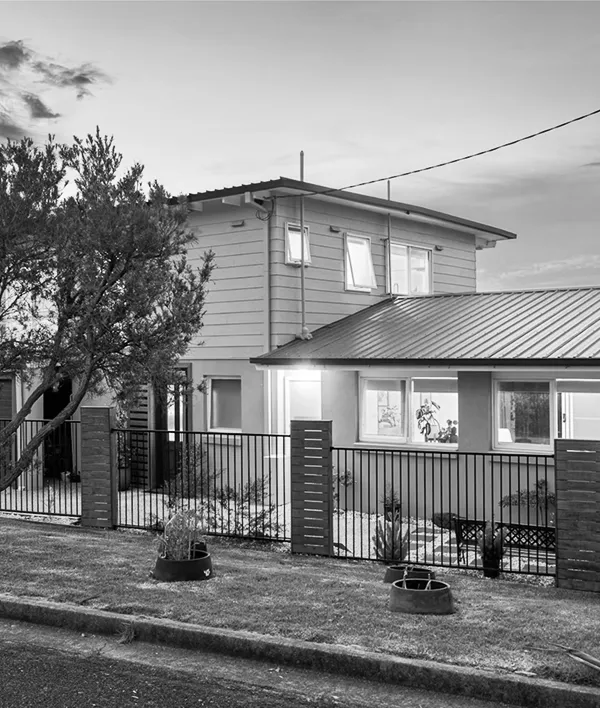
Henny RahardjaSo I generally like to have my first meeting with the clients in their family home. And the reason for that is because I like to see how they live. Are they people with a lot of things? Are they people who are very minimalist?
When you're buying a family home, you literally almost have to be part of their family to some extent to walk in their shoes, right? Our motto is buy without regrets and so...
Chris BatesIf you can buy a property that will serve you for 10 years as opposed to three years, that will serve you well. Buying a great property today, that's not just what it's about.
It's also getting something that could be ripe for improvement when the time is right for that investor or for the next buyer. You think about, right, lifestyle, what's important to you? How do you get to work? What do you need for your family? What amenities like parks and shops?
Then you look at the budget.
Welcome to Street Secrets. I'm Chris Bates and my mortgage broker is 2013. And in this podcast, we're going to be interviewing Australia's leading buyer's agents, ones with decades of experience, have the local insider knowledge on the street, and can really help you with your buying process.
No matter whether you're a first home buyer, upgrade or investor, in this podcast, you'll get access to Australia's leading buyer's agents' minds every week on a Thursday. What's the word on the street?
Welcome to Street Secrets. I'm Chris Bates. In this studio, I have a long-term friend, Buyers Agents.
I've worked with them for many years and got a lot of respect for a specialist in sort of the North Shore of Sydney, kind of following that train line, everything from sort of the lower North Shore all the way up to sort of, you know, Borough away. Henny Rahadja, how are you doing?
Henny RahardjaHi, how are you, Chris?
Chris BatesGood, good. Always enjoy chatting to you. You've always got lots going on. And I mean, your business is called OH Property.
I mean, before we sort of get into the suburbs and the areas and all the challenges you've seen on how to really become a great buyer's agent over many years, give us a bit of a background on when you joined, what made you sort of make the leap into becoming a buyer's agent and yeah, and how long you've been doing for and how's it going, I guess?
Henny RahardjaSo I'm going into my 19th year as a buyer's agent. So that's all I've been doing for 19 years is buying houses and buying properties.
And I think property is really very much in my blood because my father was a property developer and our family immigrated from Indonesia to Sydney when I was about eight, nine years old.
um and we always talk about property at the dinner table it was just one of the things we did you know property prices you know a lot of people sort of like oh don't talk about price with your kids you know but my parents were the opposite it's like they would go to auctions and they would talk about why this is a good property why it's not a good property uh you know so i very much grew up with that
But really in terms of becoming a buyer's agent, I did my bachelor's degree in business. My master's degree was in international relations and politics. And I actually spent a lot of time working both private sector and public sector.
So I work for Accenture, Microsoft, and then I did a few years for the United Nations and the World Bank. So based in the US. but working a lot in Africa and other parts of the world.
And it was really only when I came back to Sydney after that period, and I was looking to buy my own family home that I realized the Sydney property market is ridiculously biased towards sellers. And it was very much an uneven playing field.
Because everything was auction, price guide are no guides. After auction, they don't even tell you what it sells for. A lot of the sold prices are withheld. Obviously, people style their homes within an inch of its life. So they're hiring agents and professionals to cover up all the flaws.
And here I am trying to buy a property and no one was helping me.
um and i had been living in america for many years and like everyone in america uses a buyer's agent so i'm like well we're just gonna have to start one here so i'm gonna be doing that so that's when my uh partner and i started our property group and again you know we're now going into our 19th year so a very long time doing this and obviously the industry has changed a lot
Chris BatesYeah, we'll go into that a bit more, but I mean, 19 years, let's just wind back to 2007. I mean, definitely the world looked a lot different in the Sydney market. And like you say, I mean, very few buyers were active back then, right?
Like, you know, and have you always worked on the northern sort of suburbs? Did you grow up there as well? Like, have you got a real connection towards that sort of pocket longer term? Yeah.
Henny RahardjaVery much. And I think that's been a very big part of my story and my client base as well. You know, my family immigrated from Asia and our first home in Australia was in Chatswood and my office today is still in Chatswood.
So, you know, and a lot of my clients are immigrant families, whether they're from Vietnam, they're from Malaysia, Singapore, China, you name it. And it's something that I understand very well, the diaspora and the dynamics of multi-generational families.
So it's very much the North Shore. But of course, over the years, certainly when we're starting out, you kind of take the work where they come, right? We're now at a point where we can pick and choose where we work and allow us to really develop great specialization.
But we still work for clients who really, they're generally past clients and they want to engage us to buy an investment property somewhere else, so maybe inner west or eastern suburbs, and we will pop in and out now and then.
Often we do it in conjunction with other buyer's agent because we feel local specialty is very important. So we will call upon fellow buyer's agents who we trust, you know?
Chris BatesAnd that's not uncommon.
Henny RahardjaI had a client recently, very loyal clients of mine. They've referred so many of their friends and they wanted to buy in an area that I just knew nothing about. And they're like, look, can we please just pay you to buy us there? Like, we'll pay your travels.
I said, no, I'll recommend you these three buyers agents. I will trust any of them to buy for me. And that's what they've done. You know, I took no payments. I don't offer any incentives. I don't take any kickbacks. It's just really what I feel is in their best interest.
Chris BatesYeah, I mean, I absolutely see it. We've seen some clients over the years where you've, you know, your ethics and your values have absolutely shone through and stopping clients buying properties that they're in love with for the right reasons.
Because it's not the end, you know, be, I guess, forthright in having a really strong opinion because you're so educated within that local market. So, I mean, I guess also seeing you at, you know, REBA conferences and, you know, just watching how you deal with other people within that.
network i've seen that that sort of collaborative approach with other ba so that doesn't surprise me that you've you also work with clients in that way as well but before we go um let's just break down the north north shore of sydney because it's you know a lot of areas you know people you know stereotype but there's just so much going on as you sort of you know morph your way up that sort of train line not only with um you know the last couple of years with planning controls because i will talk about that a bit later but just generally with the
know the demographic shifts not only just cultures from all over the world but some that have moved here or grown up here but yeah also like a lot of people moving to sydney and you know the schools are so strong as well so how do you break it down when you think about you know driving help helping clients figure out where they want to end up along that sort of north north part of the sydney
Henny RahardjaLook, a lot of people come to us already knowing where they want to be. In terms of look, we want to be on the north. They don't necessarily know which suburbs. And that's probably where the value add comes in is educating them around what the money gets them.
So usually early in the piece, the conversation is around what bucket do you have? Okay, this is your $4 million bucket. what do you get in Mossman for $4 million? Versus what do you get in Linfield for $4 million? Versus what do you get for $4 million in Tarahumara?
So we start at a very top level and we really believe in nailing the strategy first. There's no point looking until you kind of know what will be acceptable to them. Because if you're showing them $4 million houses in Mossman and it's all getting poo-pooed, You know, you shouldn't be looking there.
You know, you probably can't afford Mosman. So let's go elsewhere. But I think a very... A very personal thing that I do is that I really connect with the clients around their family. And a lot of the conversation, I'm a mom of three kids. So I know a lot about schools.
And we talk a lot about schools and school life. What activities do your kids do? Do they do a lot of before school activities, after school activities? Are you really prepared?
I took a client who came to me out of buying a house in Neutral Bay when they have two kids at PLC in Pimble.
kindergarten like we're not talking like year 11 year 12 where they're going to be going to uni soon and i'm like great you love this house in neutral bay how are you going to get your girls to school there and back because the reality is you're both doctors and you do surgeries and you do all sorts of um you know clinics and you know after hours on call like how is this going to happen like think about the logistics guys like you're not buying a house in neutral bay you know so sometimes a lot of people come to us romanticizing
a certain image of where they want to be. And I had another client who came back from America, moved back to Australia, and they're like, look, we want to be in Camaray. We want to just nip into the city and catch a concert. I'm like, you know what?
You got two kids going into school. Good luck with that. You won't be going out at night. So we are buying a house in Pinball for you because that is close to school. And it's just understanding life cycle, right? There are different seasons of life.
And it's just about explaining that to people very early on. And, you know, reminding them that just because they're two and three years old now, and they don't go to school, doesn't mean that in three years, that commute isn't going to become suddenly very, very important.
Chris BatesYeah, I'm going to reflect in my, I've got a daughter just started school this year. My boy goes next year and you don't know what you don't know until you get there and you can all think about it and think you're prepared, but you just don't know the challenges you're going to face.
And I think A, growing up there, B, knowing those markets and then B, just obviously being a mom and the kids going through school, you're absolutely, that personal life experience helps you be a better
BA and advise clients and yeah really challenge their thinking because yes you know that's the last thing a client wants right is a property that is great in you know looks and location but it just doesn't suit their lifestyle and um absolutely and they don't even know what they don't know right in terms of areas and things like that and I think you're right if you can really limit that sort of wasting or chasing the wrong rabbit for the first few months um because clients can also get by fatigue and they just sort of yes you know completely just get desperate
Yeah. How do you think about it? So you think about the clients that are, you know, budget's obviously one part, but is there also, you know, the stage of life that you sort of really, and try to match that really to where they're buying?
You mentioned there with young kids, you obviously try to get them much closer to where the schooling long-term, you know, life, you know, uses and what other things do you sort of, because you work with lots of different types of clients, right? Not just so much younger families.
Henny RahardjaWell, I work majority actually with families and we looked at some data around who follows us on social media and who are the decision makers. And I would say more than 80% of the people who engage us are the wives and the moms who come to us.
So they're big decision makers in this process. So it's very helpful to be a female and to be able to relate to how they view the family home.
In terms of what else I consider other than sort of schooling, because that is actually the biggest part of, you know, most parents, they think about their kids first and not wanting the kids to do a one hour commute to school and back, you know, they would almost be willing to take that on themselves to do that commute themselves for work, but not for the children to do it.
But beyond that, I also look at what type of people they are. So I generally like to have my first meeting with the clients in their family home. And the reason for that is because I like to see how they live. Are they people with a lot of things?
Are they people who are very minimalist? Are they gardeners? Do they hate gardening? Are they people who like to renovate? Are they people who just want it all done?
You know, so a lot of it I need to take into consideration that just because I like to buy properties and renovate them doesn't mean everybody likes that. Some people are just, you know what, we're busy, we just want turnkey. We'll pay extra, we just want it done.
So looking at how much work they're willing to do when they buy the property is important. Because a family who doesn't like gardening, you can't buy them a house with big gardens. because they're going to hate you.
After a year, they're going to move in, they're going to do all these gardening, they're going to call you up and they go, oh my God, the garden is so much work. So you really have to step into their shoes and consider that. We have to look at their support system.
You know, are the grandparents helping the kids? You know, a lot of them, like I said, Asian families, multi-generational living. Often they say, look, my parents live overseas, but they come from India and they're here three months a year. So it's okay, do they drive?
You know, do you need to be able to, you know, for them to be able to get around on their own?
You know, you have to take into account so many factors when you are buying a family home, which is very different to buying an investment property where it's all, you know, Excel and numbers.
When you're buying a family home, you literally almost have to be part of their family to some extent to walk in their shoes, right?
Chris BatesYeah, so you get this brief, really mentioning the properties of their life, but where do you see the lot of, not so much your clients, but just generally buyers within the North Shore?
So you can see a property turnover, you're like, oh, that doesn't make me feel good, that price for that property, where some of the common mistakes people are,
misjudging when they're buying in the northern suburbs that, I don't know, might be black holes in suburbs or the busier roads or some of the mistakes that people can often not understand that the local market really values that and that property hasn't got it.
Henny RahardjaI think a lot of it has to do with council and what council would and would not allow. So people buying thinking, oh, we'll just add a bedroom at the end or we'll just add a carport. There's no garage. We'll just put a garage.
And you're like, actually, no, this council will not allow you to build forward at the building line. So that's not going to happen. or understanding the implications of being right next to a heritage listed property, understanding things like trees. You know, I work a lot in Kuringai Council, Hornsby Council, Lane Cove Council.
These are areas where there is a lot of trees. And there are things in these council areas that don't really exist in other suburbs. So for example, when I talk about riparian land, if you're in the inner west, you'll go, what, huh?
But here we kind of have to know not only is it riparian, what category riparian is it? We're talking about trees. Is it part of the Sydney turpentine and ironbark forest? Because if it is, this is the regulation around that.
So I think a lot of people perhaps buy things, buy properties thinking that they could change things that perhaps wouldn't be so easy to change because of the restrictions around the area they have bought into.
Chris BatesYeah, I think that's one of the dangers, right, when BAs aren't specialists in local areas, right? So what, you know, the inner west is buying somewhere in the lower north shore or the upper north shore and they haven't thought through how trees would affect the value of that property, right?
What you can and can't do with it. They just assume you could potentially get rid of it or they could advise the property was never going to happen. I mean, there's been lots of changes with zoning. Yes.
It's the North Shore has been one of those protected NIMBY and NIMBY corridors where very little change, but obviously that's out the bag a bit. I mean, how has that sort of changed that you go about things over the last couple of years?
Henny RahardjaLook, it's very interesting because I've heard several of your podcasts where you talk about how this impacts buyers. But what's interesting also is how it impacts the market overall. So, for example,
In the original TOD, the Transport Oriented Development, had slated Roseville, Linfield, Killarra, Gordon, four major train stops on the North Shore to be redeveloped.
There was a, you know, council sued the state government and in the end it's now basically Linfield and Gordon are taking the brunt of the development and Roseville and Killarra are kind of spared or pared back a little bit, right?
Although there are still significant, state significant development that a lot of people aren't aware about. So that's sort of like its own kettle of fish there. But what's interesting is that there was a lot of vendors then holding back from selling because they felt it was going to impact their house price.
So they didn't list their properties. And so I have clients with very, very significant budgets. We're talking ten plus here. And I can't find them anything to buy, Chris, because nobody's selling because they feel like if they sell when there's so much uncertainty, people don't want to commit to the area.
But this will pass because at the end of the day, these are established suburbs. These are the reasons why people want to live there haven't changed, which is primarily schooling, great neighborhoods, great amenities, close to shops. None of these have changed. It's just a transition period, I would say.
But what's also interesting is that as part of this redevelopment, people don't think that these households, a lot of them are selling for big bucks to developers. And they've got then between $7 and $15 million for a house that they've sold to a developer, right?
who are gonna build all these apartment blocks as part of a consolidated site. These people have a lot of spending money. So I'm just watching that as each development gets approved, I'm like, okay, yeah, that's another six households with 10 million to spend each.
So I'm actually watching the flow and effect of people who are gonna be very cashed up very soon because a lot of them sell with options, two year options, three year options, and they get money released in chunks.
But by the time these SSDs are approved or the DAs are approved, they're going to get their cash. So I think it's actually going to affect how much money swirls around in the higher end. And I think it's actually going to hold values up of the really prestige properties.
Chris BatesYeah, absolutely.
I think, um, you know, what gets built, what gets approved and, you know, how to chat, you know, councils sort of build their own sort of plan and, you know, and what, how, what happens at the next five years, you know, it's just cause you're rezoning doesn't mean it's all going to happen.
And I think it's, um, but you're right. You're right. The fundamentally the schools are still there, right. There's still the great streets. It's still leafy. There's. People with the apartments, it brings extra commercial space and it's improving some suburbs as well. There's definitely obviously people around.
Henny RahardjaPeople are just scared of uncertainty, right? People are just scared of what they can't see. Once the building is up, they're like, okay, I understand now and I can understand what it would overshadow and what it would not overshadow. So then I'm prepared.
But I feel like overall, the fundamentals haven't changed for these suburbs.
Chris BatesYou mentioned before we joined today that just, you know, you've been working a little bit with like divorcee sort of couples and, you know, it's something that's not really spoken about that much really within the property market, but it's absolutely a huge when you've, you know, got kids involved and they have to, you know, go to schools and they have to be living, you know, near those schools when you sort of families do break up it.
their needs are still, you know, if not doubled, right? They still need two places to live and often three bedrooms. And so how's that impact obviously, you know, changing obviously where you're buying, but you know, and the class you're working with.
Henny RahardjaLook, 50% of marriages ended in divorce and mine did as well. So I have very personal experience around that.
And I think what I have been trying to lobby for, and I had a round table with a federal member of parliament actually very recently, is that there is a great shortage of diversity of housing, certainly on the North Shore. You've either got really beautiful Federation homes on 900 square meter blocks,
manicured lawn, or you've got apartments. And we're talking about for the newer ones, just an average, not fancy, 1.6 million for a two bedroom apartment. But the reality is families with children
don't want to be in an apartment all their lives certainly when you've got teenagers 12 13 year olds you know they want a little bit more space they're physically bigger they need bigger rooms they need bigger living areas they want to have friends over so i feel like we are not when we talk about housing affordability affordability is one thing first of all they're not affordable because if you're talking about 1.6 you know to 2 million dollars for a two bedroom apartment it's not affordable by any means right
But another equation to housing affordability issue is that we are not creating the type of housing that society needs today.
And I think that my client base certainly now reflects the demographic changes and the changes in society, but the housing supply don't reflect that.
Chris BatesYeah, so I do think there's this, you know, because property is based on how many households there are, right? Not so much also how many people there are.
It's, you know, and so that household might only have an average of 1.5, you know, because it's half the weeks, but that's not, you know, obviously misunderstood a lot of it. That's sort of a new buyer. What about some multi-generational? You sort of spoke about it there as well.
You know, and I think this is not, you know, typically it's maybe some cultures in the past that have sort of grown up with that. It's just a big part of you know, their family sort of culture, but it's also spreading more and more to other cultures, right?
Is that a big player in the sort of the North Shore market is properties that suit, you know, potentially different generations under the same roof?
Henny RahardjaAbsolutely. So with the sort of immigrant families, often the parents live abroad some of the years and some of the months they come here and then they need a place for the parents to stay. Some actually live full time with them and they still want a bit of separation, a bit of privacy.
So granny flats are very popular now and have been for many years to serve that purpose. But also, you know, You know, having loving parents and children relationship is not exclusive only to immigrant families.
We are seeing that all sorts of families would like to look after their parents in their old age. And a lot of the times they actually combine budget. So mom and dad will say, look, I'll sell my house. We'll put the money together and then you create a wing for me.
that I can live in where I have my own privacy, I have my own door, I don't need to come help you with the kids all the time, but we can all sort of pool our funds together because Sydney is very expensive.
And that's a really great innovative way to solve housing problems, right?
Chris BatesYeah, absolutely. I think, you know, the North Shore is obviously very, you know, the kids and the grandkids and the school, it's also a double win. The grandparents get to spend time with the grandkids, the kids get help with the kids.
And if you can combine budgets, which is more and more of a necessity and potentially the parents also don't need to be as close to the city or, you know, they don't need the bigger house because the kids have moved out. And so it's sort of a, you know, suits everyone.
It might not be forever, but it can just be for a timeframe. You also mentioned around sort of the need to sort of downsize and maybe it's through gardens and maintaining big properties, but often people leave that very late because they can't find something that they want to.
How do you sort of help people through that journey within the North Shorts?
Henny RahardjaYou know, I've been very active in lobbying for people to do what I call it is a double downsize. So I sort of coined that term because I feel like a lot of my clients come to me. They usually engage by they engage me through their children.
So the children come to me and say, look, mom and dad really need to get out of the house. You need to find them something. I'm paying you. You just need to get them out of their house because they're too old. They can't manage the stairs.
And sometimes they're 85 when they come to me, you know, and I'm like,
we really need to buy you a big place because to be honest you're probably going to move into care facility in the next five to eight years and the reality is and nobody wants to talk about this because it's not pleasant but as you get on with age as soon as you have like a fall or a surgery of some kind you can really deteriorate very fast
so we really recommend that people downsize initially when their last child finishes sort of high school or even year 11 12 move out straight away so that you are enjoying still the life you can go out you can you know have a garden you know move to a smaller place but not necessarily an apartment because the issue we have is again
You are asking people who are living on a thousand square meters in Wurundjeri to move into a two bedroom apartment with no garden. It's a very big leap for them to make. And I think if you make it easier and say, you know what, why don't we first go?
from a thousand square meter six bedroom house in come you know in warunga let's then move to a terrace in kiribilli or let's move to kamare you know and then when we need to downsize you again we can do that again when you're 80. so you have a good 20 years in your first downsize and then your second downsize we look at your health you know considerations the health factors at that time
And so this double downsizing I feel is very important because it also opens up the supply chain for houses, for families who would like these bigger properties. Because what we're seeing is downsizers holding onto them for dear life because they have nowhere to go.
Chris BatesYeah, that's right. They might not get too much in their pocket, right? Sometimes from a cash point of view, because they're downsizing from a bigger house to a smaller house closer to the city, let's say.
Henny RahardjaThat's always a shock because they're like, oh my God, I bought a three bedroom apartment in Linfield, ground floor, no views, no water views or anything. It's almost four and a half million dollars, Chris. And my clients were selling a big house in Killarra and they can't get over it.
They're like, you know, we were expecting to have millions in change and give the kids early inheritance and not happening because they're not cheap downsizer.
Chris BatesNow, I mean, the good thing is that they're, you know, in that scenario, it's not like they're buying, they've got a really good asset that's going to perform really well over the next 20 years. And, you know, that's going to, they're moving into other good assets within the North Shore.
It's like, particularly if they can get into the sort of three bedders, like you said, garden apartments, there's a single level, like, They are also highly desirable for families. And so even though some are doing that move, most aren't.
And so you've got this bottleneck and all families competing on these sort of lower, maybe even similar price sort of properties that suit downsizers and families. And so they're great assets as well. What are some of the common misconceptions?
you know, I'm never going to go, I don't want to go further north than Boorunga, let's say, or, you know, or Borden.
And, you know, often there's a lot of better value for money if you go up and you've even worked with clients and, you know, move them further up the train and they go, wow, I get a lot more for my money. Is that sort of,
How do you sort of help sort of break down some of those misconceptions on the potential of either going a bit further away from the train line, which may be easier now with work from home more often, but also going a bit further away from the city?
Henny RahardjaYeah, and obviously the metro has been life-changing, you know, because now we can really explore living further away because the metro is just making your commute so much easier. But, for example, I've been increasingly looking in the northern suburbs because a lot of people have been priced out of the North Shore.
So we're really looking at Epping, Eastwood, looking in the rides all the different you know um rides uh you know we're also looking at carlingford area where you can still get a really good block of land family home say two three
And then we're talking about four or five bedroom homes, you know, and you're not that far. So I'm not saying that you have to go to the Central Coast. So I think being willing to go out of your comfort zone will open up more options for you.
Chris BatesYeah, and you're sort of there helping them sort of consider these areas, right, which they might have had misconceptions that we're not going to get there. But then you sort of mystery shop a property to them. They're like, actually, wow, this is actually better than I thought it was going to be.
And actually, the commute's good and the school is easy to get to school, etc. Yeah. You mentioned that before we joined that.
You know, the good to great as a BA, you know, I look at it from an outsider and go, God, I reckon it would take years to get really good at it, really good at it. Like you can understand the fundamentals.
You can sort of understand even how to potentially work with agents, but like, you know, getting really good. So it becomes like a sixth sense.
Like, how do you think, what are some of the things that the great do that maybe the ones that are still stuck at the okay or good stage are not doing?
Henny RahardjaYou know, there has never been as much competition in the buyer's agency space. Like literally, I feel like every week there's new players, you know, in this space. And, you know, our competition actually is not just other BAs because it's also other people moonlighting as property experts and giving advice for free, right?
Could be family, could be friends, you know, well-meaning colleagues, et cetera. And these days there's lots of information available freely online and AI will make some aspects of a BA's role redundant.
So we need to future proof as a great BA the value add that we bring that AI cannot replace. So for example, a lot of bias agents that are newer, I feel like they lack technical skills and they lack substance.
So they're good at showing up to open homes in their nice cars, Instagramming themselves, taking pictures, they sort of float in and float out, but they don't really have the technical knowledge to understand when the clients ask you really, you know, specific questions. And that's probably, again, just time.
We know with time, with experience, you know, when you've bought many hundreds of properties, you've sort of seen everything, right? So when a client asks you, oh, there's a tree, this tree is near this house, you know, how far away do I have to be to build a pool?
Okay, do you know about... you know, tree protection zone, a TPZ, you know, what is the TPZ for a eucalyptus tree or versus a turpentine, you know, so you kind of have to have these knowledge. What about concrete encasing a sewer? How much does that cost? What is the process of that?
You know, if I want to build a pool and I want to build it on top of a sewer, how does that work? How does that impact price?
um you know bushfire prone land yes you know that there's bushfire and not bushfire but do you know about the different classes of bushfire prone which is the bell rating what does about 19 mean versus about 40
You know, what does that mean in terms of if you want to renovate a property, what does that mean? So these are the technical knowledge that I feel a lot of newer entrants to the buyer's agent industry are missing. Yeah, I mean, you mentioned...
Chris BatesYeah, obviously it's the different cultures within that. I absolutely agree. So all those sort of smaller things, the DDs, the little bit of smoke, you think, oh, hang on a sec, I need to sort of suss this one out.
But while we talked about big density and there's also a lot of knockdown rebuilds within that area, your area of right. So many. And there's also a buyer at the end of it that what you like and what the next buyer wants.
And obviously you might not be selling it to the same nationality or the culture or what they value. How does that sort of play into it?
Because I feel like you've got to be really careful what you do in an area because you've got to sell it one day and you can very easily make mistakes, I would say, in that pocket.
Henny RahardjaSo I always talk about the exit strategy. I never ever buy a property without thinking about how they're gonna get out of it. And the reason for that is because you don't know people's circumstances. You don't know if they're gonna be in a situation one day where they must sell.
And I'm looking for a property that whether it's a good market or a bad market, you can sell it. Because right now we're in a market where some properties just aren't selling. You can't give it away for free. So I don't want my clients to ever be in that position.
So it's really important that they understand. I'm not here to sell anything. I don't have a product I'm selling. I'm here to give you advice.
So, for example, if we have a client buying a property and they love the property and I have to tell them, you are buying in the suburb, which has a lot of Asian clients, Chinese clients in particular. And this property is at a T intersection, which is a huge no-no for Feng Shui.
So if you want to sell it one day, I can pretty much guarantee no Chinese will buy this house. So if you are okay with that, it's cheaper when you buy because now we are buying, you also won't have Chinese competition. So you will probably buy it for cheaper.
but when you want to sell you're going to have the same problem so i don't want you calling me 10 years from now telling me that you didn't know about this because it's important that you're aware but you are within your budget getting something that you otherwise probably couldn't get
So it's just about educating them, informing them. It's about not having surprises. I really don't want to be the topic of a barbecue conversation where it ever comes up that Henny, my buyer's agent, didn't tell me about this.
And I bought a house last week for a client of mine, repeat client of mine, and their budget is very, very tight for Kilara, which is the suburb that they wanted to be in.
And the house that I've found for them, great in every way, north to rear, very good floor plan, project home, double lockup garage, internal access, all these great things.
But the big discount, and there's always a discount when you buy a property with some kind of a floor, is that there's an easement on the side of the property. And I told them, you can't build on it.
If this property didn't have an easement, you'd be going up against everyone else who wants to buy it to potentially knock it down because the land is so good. So you just have to be aware that there's a few meters setback on the side.
That's really the only negative I could find with this house. And again, given that they wanna be in Kilara and given their budget is in the low threes, you can't have everything. So they will always be a compromise.
And my job isn't to find a perfect property because there is no such thing as a perfect property. My job is simply to tell you based on everything else that is out there and based on your budget, that this I feel is the best that you're gonna get. And here are the negatives.
As long as you're aware of it and they're okay for you and you accept those, this is a really good offering for you. And that's really my job is to educate them on that.
Chris BatesYeah. And I think it's, I guess, being upfront with open, some of them would be genuine deal breakers, right? Some of the genuine, you wouldn't even bother looking at it. They would be seeing this one, Henny, and you're like, no, no, no, we're not looking at that one for these reasons.
And so you've already removed a bunch and then you're getting this sort of, okay, like you say, The dream property is often without a budget anyway. And particularly in a hot market and in a colder market, they don't really come on. And if they do come on, every buyer forms to them.
So they're even really hard to buy. Those are just as much. But, you know, so there is going to be these compromises. I guess it's trying to help the client understand what the compromise is going to be okay for them.
But also when they sell it one day, are other people willing to make that? And I think it's very rare that... people will think through that because they're just trying to get their head around all the other things as well.
And they know everyone's, I guess, got a rose-colored glasses, think they're not going to get divorced, think life's going to change, business is going to do well, that they're not ever going to have to sell it. But we all know that no property is really forever, forever often.
Henny RahardjaIf you're a buyer, you'll be a seller one day. It's just a matter of when you'll be a seller, right? So, you know, I need this to be a good purchase, you know, for families, for clients, because this is a huge amount of money.
And most of the time, if it's your home, obviously it's principal place of residence. So you don't pay capital gains tax on it. So it needs to do well for them.
Chris BatesYeah. Yeah, I think now more than ever, I think people are aware of the advantages of a homegrown tax free compared to other things.
But I mean, just final question around sort of relationships with agents, because I do think this is something that I've seen time and time again with the best BAs is that, you know, it's a long game, right? You said 19 years.
Often the directors of the companies were making the calls back in the day when you started. But, you know, how does that really help you? I mean, when they go, honey, You know, I know you're looking for this.
And, you know, I think I remember even a client many years ago, it was midnight or close to it that you got a deal done.
But yeah, how does that help you, I guess, get an advantage for your clients with those agent relationships that, you know, often have taken, you know, sometimes even decades to build?
Henny RahardjaI think we've been around for so long that they know, for example, what I'm hearing a lot, feedback from selling agents is that there are buyers agents who are not pre-qualifying buyers. So they're making offers and then they go, ah, oops, clients don't have finance pre-approval. Like this deal is not gonna happen.
And agents get so pissed off when that happens, right? Because it makes them look bad in front of their vendors. It all just goes to pieces. So they know that we prequalify all our clients.
They know that we are extremely brutally honest with everybody. We don't mince our words around this. So if we like something, we'll say it. If we don't like it, we'll say it. And they know that our clients are very well educated.
So it's great for them because our clients, if they like something, the agents always tell the vendors, if Henny comes back twice and she takes a contract, you know, she's serious.
So we're going to stand by and we're going to make sure that if she makes an offer, we consider it seriously because she doesn't muck around and she will not overpay.
So you can't keep thinking, oh, she'll just offer more because when she offers you a price, we know it's a fair price and it's an educated price. So deals get done because of that. They perhaps love some buyer's agents more than me because some buyer's agents pay whatever they want.
It's a matter of asking how much you want, I'll pay it. And they won't get that with me. But there's a huge level of mutual respect. And when these selling agents want to buy a property, they call us to bid for them. I really trust you. What do you think about this?
And the same that when they're struggling with properties that don't sell, they'll call me and they'll ask me why. So I remember one time an agent rang me and said, look, can you please come and have a look at this house? It's like prime street in this area.
I just don't understand why it's not selling. So gave me the dress, I looked at it and I said, ah, I can tell you why it's not selling because that word in Chinese means toilet bowl. So you are selling to a demographic that is currently full of Chinese buyers.
No one's even coming to your open because nobody wants to live on toilet bowl street. And that agent was like, oh my God, why did no one tell me this? You know? So sometimes it's just completely unexpected, right?
And they're really massively appreciative when you tell them these things, particularly because of my cultural background. And I understand how people of different cultural background perceive homes and perceive certain locations. And I'm giving them that information that they really don't get anywhere else.
Because there's no, you know, there's no...
book out there that tells you about how different culture perceives homes you know and you know how they interpret land of certain shape you know did you know that um you know um you know i've had indian clients and before we could buy some things they have to send their floor plan to the vashtu which is like the feng shui equivalent um in india so there are all these factors um that over the years i've just become really experienced with dealing with all these extra
you know, steps and extra layers. And the agents are very appreciative when I give them these insights.
Chris BatesYeah, absolutely. They're getting great education on the buyer side, which, you know, unless you really worked on that side, you don't really understand it, right? The feedback, the clients or the buyers, and you're only selling what you're selling, right?
The agents take years to, I'm sure the best agents out there after many years really get it. You know, they know why someone bought that property and they're selling the property and they loved it and what they didn't love and, you know, all those stories coming up.
But the new agents, obviously, are getting those learnings. But I think you're right, absolutely, like, when you're going and looking at a property, you at least know that this is a good chance of meeting a client's brief, otherwise you're not wasting your time.
And if you're going and looking at it again, you know, the client's not going to fall over, right? It's more going to come down to the, if it's the right property it is, then if it comes down to price.
And so it's a very predictable path for an agent to know when you're there rather than, oh, I'm just not sure how this is going to go.
Henny RahardjaIt's a silver platter, right? I don't muck around and I'm not a contract collector. There are some people who go to every open and they can collect contracts at every open. I don't ask for a contract unless I'm genuinely interested and I've already flicked through it at the property, right?
So they know that I'm very serious very quickly, but also that they know that I don't approach them until I'm really ready. So I don't come in and make an offer straight away. I might go away three days and I'll tell them,
I like this, I'm shortlisting this, give me three days, I'll come back to you.
And they know that. Just very clear communication.
Chris BatesYeah. And then I guess the final one of the keys of negotiation is you'll walk away for the right price, right? And you won't just get the clients to sort of pay any price just so you can get them off your books.
And if you do that time and time again, an agent knows that Hany has walked. She walked on that property.
know a few years ago so let's not yes we'll remember that so sometimes it's great for the client and also great for you as business so um thanks so much for coming on um like i said multiple times from the podcast like we've worked with henny many times um you know she's always the go-to on the the lower and the upper north shore and um yeah i just love some of the client stories over the years of what your values have really come through so thanks so much for coming on thanks chris appreciate your time
Thanks so much for listening today. We hope you got lots of value out of it. If you'd like to speak to our guests today, there's links in the show notes on how you can get in contact.
And if you're buying your first home, upgrading, renovating, or need any finance-related queries, obviously we'd love to help. There's links in the show notes to us as a mortgage broker, and we look forward to next week's episode.