Curious about upgrading?

Wondering where to start?

Complex questions that need answers?
Is there a better structure for you?










"They managed to navigate my complex expat income and even got my Google RSU income approved as well."
"I highly recommend Alcove to anyone looking for a mortgage broker who is responsive, trustworthy, and truly cares about their clients. Thanks again to the whole team for making the process such a positive experience!"
"As founders, we're constantly jumping between things so having a partner that handled the details & made the process super clear made the buying process breezy for us. Very happy with the experience!"

“It almost felt like it was his responsibility to make it clear to me, not my responsibility to understand it.”
“I've been pretty much fully leveraged the whole time. So the sounding board on that, in terms of what was achievable, what wasn't — I think trust is just built along that.”













"Alcove has been a great partner. They look after my audience properly, keep things simple, and deliver real value. I’ve got full confidence referring clients knowing they’ll get honest, straightforward advice."

"Property is one of the biggest financial decisions people make. Alcove stood out because they take a strategic approach to lending - helping clients structure property and debt decisions in a way that genuinely supports their broader financial plans."


Adapted from audio. This article is a written adaptation of the original podcast episode. Sources and dates are shown with each figure.


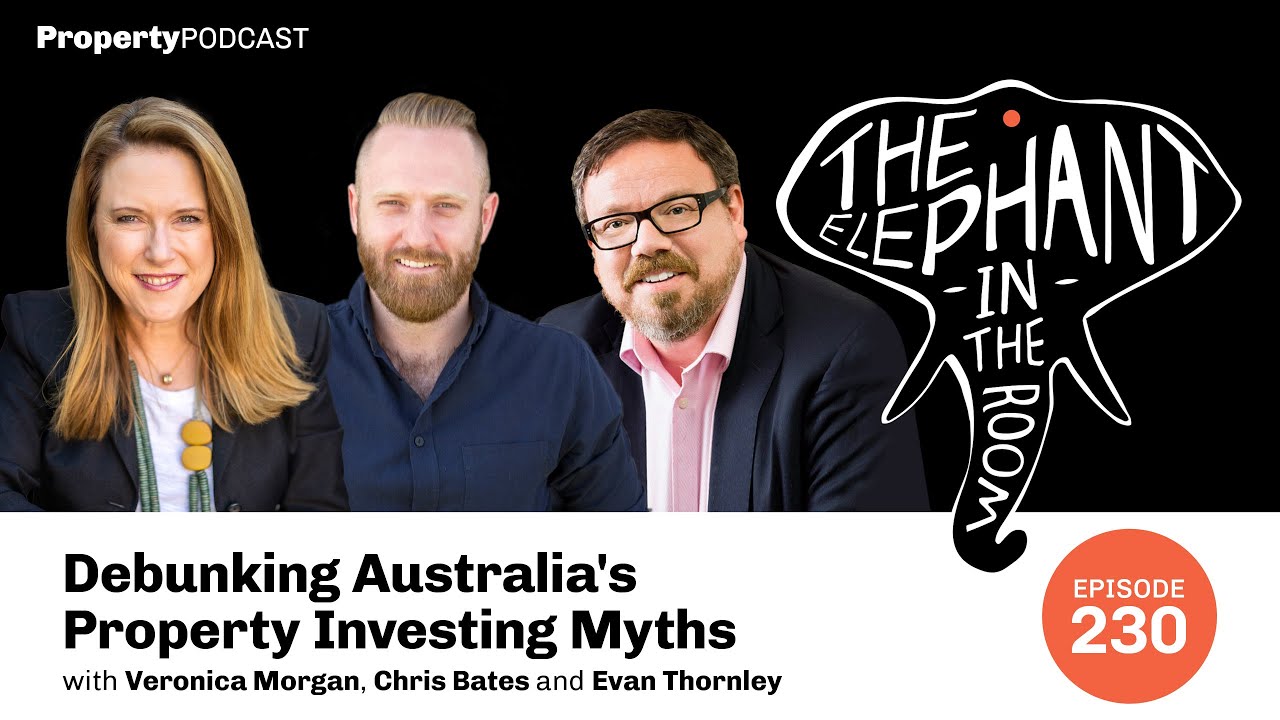
Co-host of The Elephant in the Room. Real estate agent, buyer's agent and buyer's agent mentor, co-host of Foxtel's Location, Location, Location Australia, author of Auction Ready and co-host of Your First Home Buyer Guide.

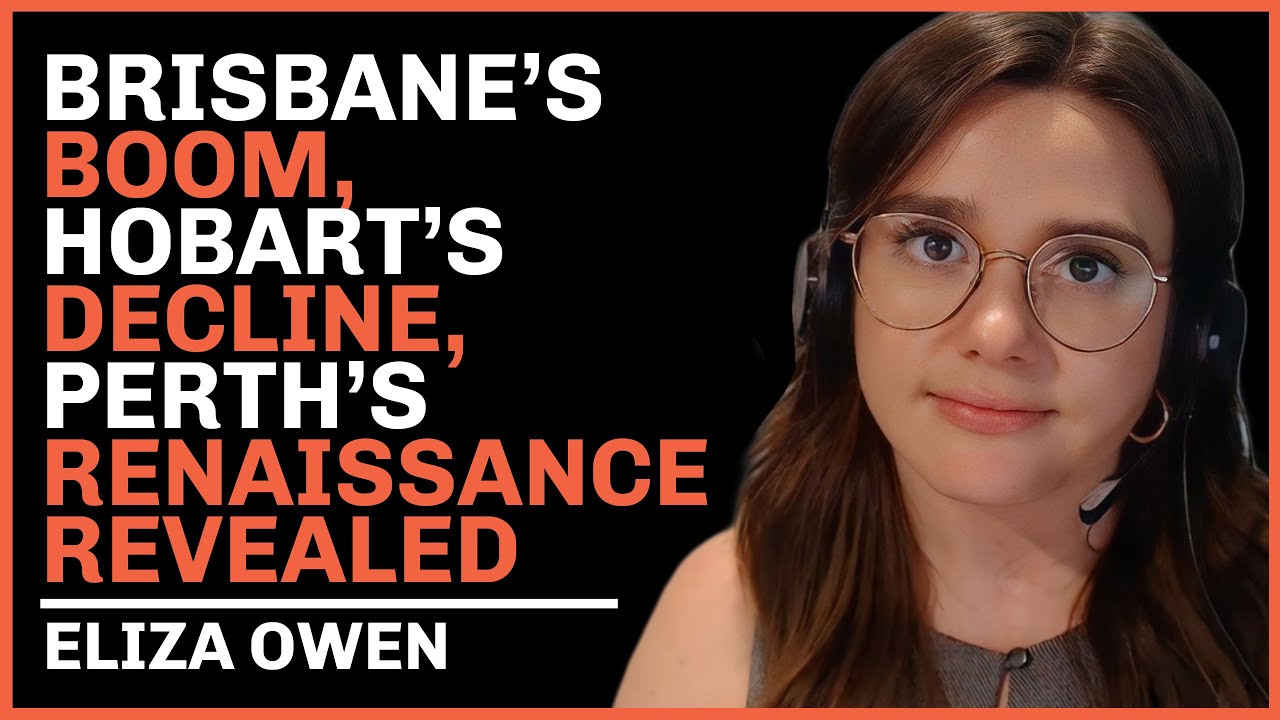
Eliza Owen on Why the Property Market Did Not Crash
Forecasts of a 10% to 40% fall in Australian property values never landed, and CoreLogic's Eliza Owen explains why the national peak to trough decline stopped at 2%. She also traces where the damage did show up: inner city rents, units and investors.
Predictions about falling property prices came thick and fast once it was obvious that COVID was going to put large chunks of the economy into lockdown. These range from an optimistic 5% drop to the standard bear warnings to brace ourselves for a 40% crash. Yet none of these forecasts have proven to be correct.
Why hasn't the Australian property market crashed?
Don't judge your property purchasing decision off the 12-month window of... performance because you're not going to own a property for 12 months. You're probably going to own a property for several years.
And that's where if we look at, say, the 10 year annualized growth rate of different sub markets across Sydney, Melbourne, Brisbane, there's not too much in between the annualized growth rates over a long period of time because markets, sub markets do tend to follow the same broad patterns over a long period of time.
Welcome to The Elephant in the Room. This is the podcast where we love to talk about the big things in property that never usually get talked about. I'm Veronica Morgan, real estate agent, buyer's agent, co-host of Foxtel's Location Location Location Australia and author of Auction Ready.
And I'm Chris Bates, mortgage broker. Before we get started, I need to let you know that nothing we say on here can be taken as personal advice. We always recommend you engage the services of a professional.
Don't forget that you can access the transcript for this episode on the website as well as download our free full forecast report. Which experts can you trust to get it right? The elephant in the room dot com dot au.
Joining us today is Eliza Owen, Head of Residential Research Australia at CoreLogic. Eliza will no doubt be familiar to you all. She's been on the podcast a few times and we spoke to her about the potential impacts of the coronavirus on the property market in episode 115 at the beginning of April.
Now, with the benefit of hindsight and all that amazing property data she has access to, Eliza is here to share her analysis on what's happened to the property market in 2020. Welcome back, Eliza. Thanks. Thank you for having me.
Hi, Eliza. I love your report a couple of weeks ago where you said the title was Why Didn't the Australian Housing Market Crash? And what made you kind of write that article?
I mean, there was a lot of consensus here that it was going to crash, obviously, but what did you learn from sort of putting it together? Yeah.
So at the beginning of COVID-19, we were trying to gather any insights we could on what might happen to the property market based on how it had performed through previous negative economic shocks. And we noticed that...
Housing market values had been fairly resilient, even increasing through events like the dot-com bubble burst and the Asian financial crisis. And even during the early 90s recession, the peak to trough decline in the national housing market value was only about 4%.
So I think just really trying to help people reconcile how you can move through the biggest economic contraction since the 1930s and still see property values increase or begin a recovery trend and just making that really clear so that we could have
I guess, better foundations for discussions around, for example, housing affordability, where there will be people finding they have less hours work or lower levels of income, more competition in the labour market. Meanwhile, property prices are rising.
So just really trying to frame why the housing market didn't crash and how to make sense of that, I thought was quite important.
Well, yeah, I mean, I guess it's now that we're sort of potentially on the other side of
That COVID sort of thing, we don't know if it's 2021, it's like 2020, but what are some of the key learnings that kind of supported the property market and why it didn't just fall off a cliff, which lots of people were sort of all the banks were predicting 10%, 15% drops, the usual property bears were out there saying 30s and 40s.
But what do you think really supported it at that sort of time, even though we had a huge spike in unemployment?
So the biggest thing was the reduction in the cash rate and how that influences the cost of mortgage debt. And I think, you know, initially we did see, it's not like prices didn't fall.
We did see an initial shock with the onset of COVID where I think the amount of uncertainty and the amount of unemployment did weigh down on the property market. But the peak to trough decline wasn't 10% nationally, it was 2% nationally.
So low-cost debt, the RBA has reduced the cash rate by 65 basis points over the year. It's now sitting at a record low of 0.1%.
And, you know, historic analysis conducted by the RBA tells us that a 100 basis point reduction in the cash rate can lead to an 8% increase in property values. It's sort of the midpoint of...
outcomes and um it it looks like that relationship has held through this period particularly as it's converged with a fairly strong recovery not just in the economy but in consumer sentiment um consumer sentiment has risen about 15 percent over the past two months um
which is just an extraordinary rebound. And consumer sentiment, the index itself is sitting above 100. So that record low cash rate has converged with this incidence of people feeling like things are much more back to normal, even if that isn't quite the same for everyone.
The second major factor that helped to insulate the property market, I believe, has been mortgage repayment deferrals where this institutional response and, you know, I've talked to you guys before about how institutions really do have a role in ensuring that the property market remains stable.
And so the Australian Prudential Regulation Authority stepped in with the, I guess, facilitated banks to be able to defer mortgage repayment deferrals. It even extended that facilitation.
So initially we were thinking, oh, there's going to be this big mortgage cliff in September where everyone's going to have the rugs whipped out from under them. And of course that bridge got extended, right, to March next year on a case-by-case basis. Right.
So mortgage repayment deferrals essentially meant that people who didn't want to sell didn't have to sell, which I think prevented an influx of distressed sales potentially coming to market. And what's interesting is that the longer that policy has been extended, the more of a recovery is happening underneath that.
So we saw that mortgage repayment deferrals peaked at 11% of housing loans. I think it was in...
May was the peak, and that's since come down to just 4% of housing loans, which is still a lot, but it's come down pretty significantly. So that's the second big thing that I think has helped. That's helped keep listings levels low.
Stock is still very low, and that's put, I think, upward pressure on prices. And the third factor is basically the idea that this particular economic downturn was a managed problem.
downturn in the sense that it was the government stepping in and physically restricting the operation of business that was in the social consumption space. So namely things around the arts, hospitality, tourism.
And the people who work in these kinds of sectors where the job loss has been most significant, according to data from the HILDA survey published by the RBA, basically analysis has taught us that people working in those sectors are more likely to be young and they're more likely to be renting jobs.
So the nature of job loss hasn't necessarily had a direct impact on mortgage holders as much as it has renters. And so that I think has potentially preserved some stability in the market as well.
It's interesting you say that around a manufactured sort of government response and the restrictions caused the downturn. When you look back at Asian financial crisis, the GFC, 1987,
A lot of it was a banking crash, a trust in the system and a fight to safety where all stock markets sort of no one knew what tomorrow would bring and everyone was rushing for the hills. But that happened in the stock market here, but it quickly bounced back, right?
So, yeah, it's a different sort of downturn or tough time compared to a banking crisis and hence why you're probably finding that you know, the stimulus and bounce back has been a lot faster because the underlying, there's not a trust issue going on with institutions. It's more a case of, can we work?
If we can work, let's work sort of thing.
Yeah, it's a very different kind of downturn. I mean, there's still going to be impact from it.
I mean, even considering how businesses operate when they've had to become used to being less labor intensive, say, and more technology dependent or more capital dependent, that could have a lasting structural impact on the labor market.
But I think we have seen, I'm not going to say a V-shaped recovery, but a fairly strong recovery across indicators like household consumption, the level of jobs and consumer sentiment growing.
which, as you say, have kind of hastened a bit of a recovery and I guess confidence in the housing market as well. And of course, just coming back to that fundamental that we've seen throughout historic negative economic shocks, which is that the housing sector itself is slower to transact.
It has longer hold periods and as such does not behave with as much volatility as, say, the stock market or equities or whatever.
Thank God for that.
It's interesting that, you know, the distinction, I guess, around where the majority of the job losses are and those people typically are renters, not owner-occupiers or homeowners.
And obviously, if they're renters, then it still impacts the property market because the landlords will be impacted if they can't afford to pay the rent. And we do know about buildings with
vacant um you know a number of buildings that i can think of off the top of my head you know that have apartments that are vacant that have been struggling to to relet they're starting to come on the market as sales so it's like there's a there's like two speed market you know there's the apartment market in areas of oversupply and then there's houses right and it's like goes back to the old-fashioned days you know all houses are much better investments than apartments and
And this is sort of, you know, it's like, ooh, right now it sort of feels very much that that is the case. How much separation is, you know, are you aware of in terms of the data that sort of tells those two different stories?
Yeah, that's a great point, Veronica. And I think what's been interesting about looking at trends in the rental market more generally is that a lot of the loss in rental incomes has been concentrated in areas where there is a high proportion of investment properties.
where there has been high exposure to overseas migration because international border closures where the vast majority of international visitors are initially renters, that's impacted certain markets more than others. Yeah. portion of people working in sectors like tourism, hospitality and the arts.
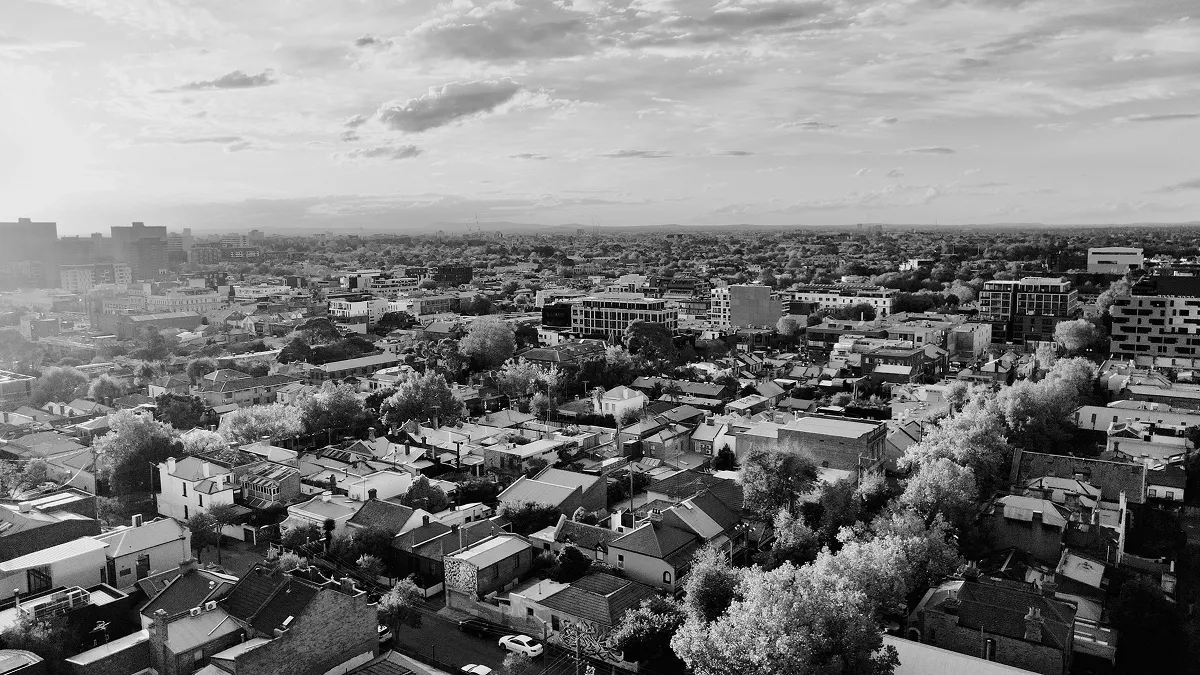
So ultimately the trends that we've seen, um, for example, across analysis we've done for Brisbane, Sydney and Melbourne is that it's the inner city rental markets that have been most impacted.
If you consider, um, Melbourne rental incomes for the unit asset, and this is even just across the whole of the greater metropolitan, the rental, um, The change over the year has been a decline of 7% and that's across the greater metro.
If you look at the change in rents for just inner Melbourne, you know, it's getting towards 10%. Yeah. The losses across rental incomes are also correlated with losses in dwelling values and
And so, again, inner Melbourne is where we've seen the value of properties drag down a bit more as well. Because, yes, as you say, a change in rental income is going to influence investor pricing and valuation of what they're going to pay for a property as well.
And on top of that, the actual investor participation in the market has been declining, certainly through COVID, but also for the past two years, ever since there was that temporary cap on interest-only lending.
So even investors who are trying to sell, who are struggling to get rental income to help subsidize or cover their mortgage, are finding they might not have as many buyers because of that decline in investor participation.
So, you know, that's certainly a dynamic where inner city rents have come down. Interestingly, the periphery of CBDs in regional Australia have generally seen, if not an increase in rents, a kind of stability in rents.
And I think, again, that kind of comes down to less exposure to overseas migration and things like that.
So is the danger really, is this the danger playing out of, you know, all of that investor stock, you know, all those buildings built specifically to be marketed to investors? Now you've got an oversupply of vacant properties because the course owner occupies typically haven't been the target market. For sure.
I mean, there's elements.
I don't actually know the data for the investor lending space, to be honest, but information published by the RBA reminds us that for people who have struggled with their mortgages during COVID because of job loss or income loss and that sort of thing, there are capital buffers that people have.
There are buffers that people have in terms of prepayments. So, you know, I've got to be honest, we have seen a pretty strong uplift in rental listings across inner Melbourne in particular.
And I'm not sure how much of that is distressed and how much of that is just pent up vendor demand coming out of a long period of restrictions. Yeah.
But, yeah, I think until we have more data, it's, you know, I'm not completely alarmist about it yet, but certainly there has been more of an impact.
Investors are definitely, quote, unquote, the losers, I would say, of the COVID pandemic, especially in those inner city markets. And more than that, the rhetoric, right, around, you know,
So when we saw the mortgage repayment deferrals were extended by APRA in their facilitation until March 2021, on top of that, we had CBA coming out and saying, well, they're going to have a moratorium on the foreclosure of loans where someone's been impacted by COVID until September 2021.
Right. But a lot of the rhetoric around that has been about keeping a roof over people's heads, not helping people keep their second or third or fourth investment property. So I think in that sense as well, like politically, there's more of an emphasis on assistance for owner occupiers.
And that would make sense. There's not a lot of sympathy out there for investors having, you know, extra properties when there's still the affordability debate, right? Yeah, yeah, for sure.
And I guess that's the worry going into 2021 is that, uh, investors start to come back into the market because nothing kind of makes me happier than seeing first home buyer percentage rising as a percentage of all purchases. I think it's, you know, especially if they're doing it right, but, um,
you know, and then the people, upgrade is always going to be a big part of the market, downsizes, et cetera. But it's when investors start rising like they did in 2013, 14, 15.
And as that happens, less, that first home buyer sort of starts to decrease and then you start to get this discontent from, you know, young families and couples and, And then it's, you know, usually the baby boomers or the, you know, the Gen X that are buying all their properties.
And then you start to create like a social issue, I guess, where, yeah. And so we don't want that to happen again, but I kind of feel like that may be happening next year just because rates are so low.
Well, I think it might occur in smaller capital city markets. Indeed, we're already seeing it rebound a bit in Hobart. I think the portion of investors in terms of the portion of mortgage finance for the purchase of property had bottomed out a couple of months ago.
I think it bottomed out in August and as of September, October had started to increase again.
What we're seeing across the smaller capital cities, even though rental markets in Hobart had recently taken a hit, Hobart dwellings still have the second highest rental yield of the capital cities with a gross rental yield of 4.6% across the dwelling market.
And then you've got in Perth, for example, rental incomes have increased a whopping 8% over the year to November. Investor participation is very low.
And I think what may happen is that we'll see that participation bottom out either this year, early next year, and then potentially start to climb as investors look for...
you know, an asset investment that can deliver potentially a positive cash flow, which you might get in some of those markets, as you say, because of those record low mortgage rates.
And WA is somewhere where first home buyer participation has been exceptionally high relative to the other states and territories. And yeah, I think that's a trend I'd be looking out for just given the
increase in rents and the long correction we've seen in the rental market so it'll be interesting to see if that plays out.
It's sort of interesting because Perth like the median price or house price in Perth is sort of low compared to what you think you know for a capital city right and is that because would that be because it's maybe intrinsically undervalued in some way?
I think it's to do with just the extent of the mining boom and bust and how confidence has played into that.
I think there's a kind of recency bias where people think that because Perth has endured such a long decline that that would probably continue to keep happening. happening.
But there is a point in the cycle where dwelling values get down to a point that people are just willing to start paying for them again. That's reflected in the higher participation of first term buyers and owner occupiers in that market.
That's reflected in the bidding up of rents as that market has tightened and corrected. And I think it's something where investors may start to take advantage of that.
I mean, that's just my understanding of how the markets have performed cyclically is that an increase in rents will usually get whittled down by an increase in investor participation.
I'm not sure if COVID and potential risks or even the awareness of the boom and bust in the mining sector would have implications for how that changes over time, if that
relationship with change but i think it it just seems like something that makes sense to me but i could be wrong i've been wrong before the other side of that coin is is in a booming market where vendor expectations overreach the willingness and capacity of buyers to meet meet them and
And, you know, I've seen it many, many times where all of a sudden you sort of get at that point where you see competitive auctions passing in because the owners just have their expectations have just gone crazy. And then clearance rates start falling.
Then people start talking about falling prices because clearance rates start falling.
they're not recognizing it's necessarily that actually their owners are just called greedy um but this happens in little micro forms and and i've seen it in sort of a more wider spread too at different times is that something that you would also anticipate yeah i mean i think that's something that you see at the cusp of a change in in the cycle more broadly i mean i think you're
describing a cycle right and human nature that's what I'm describing really well the human nature I there is an element of stickiness there where interest rates you know might start to change or affordability constraints might start to
taper growth in the property cycle and vendors may have an attachment to what they think a property is worth based on what's happened in the market over the past few years. But that does eventually have to change because otherwise they can't make a sale, right? Exactly.
But yeah, you definitely do see that for sure. Yeah.
One of the things I always track on, you do an amazing sort of monthly report. I'm always quick to download it when it's available for free on your website.
And I always look at the listing sort of numbers and you can just see, you know, for the last say five years, listings across the board have been, you know, down as a nation. But when you sort of dig a little bit deeper, yeah. It's not across every city.
Sydney, Melbourne are kind of holding up, but it's other cities where listings are just down dramatically. Can you give our listeners a bit more context to where listings are really low across the country?
Great observation, Chris. And thanks for plugging the monthly chart pack, which is available for free. Yeah, so absolutely. A trend that we've observed through 2020 is that transaction activity has been very volatile in response to social distancing restrictions. So
Basically, it was a fairly cohesive or uniform rather trend where new listings volumes had plummeted by around 30% or around 50% rather at the onset of stage two restrictions nationally.
Now we're at a stage where when you compare the volume of listings that are coming onto the market across Sydney and Melbourne, they sort of are relatively stagnant. stable, they're sort of starting to match what we saw in the equivalent period of 2019.
However, across the smaller capital city markets, we're still seeing listings volumes are very, very low. So if you compare the total stock on the market across Darwin, for example, sitting at about 40% lower than what we saw in the same period of 2019.
Of course, part of that's because it's Darwin and the numbers are always a bit more volatile when you're dealing with lower numbers there. But Perth, Adelaide, Brisbane, listings volumes are about 20% below where they were this time last year across Perth and Brisbane, about a third lower across Adelaide.
And I think that's where we've also seen more divergent performance across the capital cities as well. So Canberra, Hobart, Adelaide and Perth and Darwin as well, they've all seen dwelling value increases since the onset of COVID-19 and low stock levels are a part of that.
Sydney and Melbourne, I think there might be a bit more maybe uncertainty or motivation to sell. I do wonder if...
You know, there's just people kind of staying put amid the pandemic, maybe not wanting to move or not wanting to sell. And maybe that's why we're seeing stock on market is relatively low.
There may also be a lack of information as to whether it's a good time to sell property, whether you're expected to get the best price.
And the paradox with that, or the weird thing about that, is if you're looking in, say, Perth and Darwin, well, they've had a shocker of a decade each. And why would you suddenly stop putting your property or not put your property on the market at a time when prices start moving?
Like, isn't that a bit paradoxical? The higher stock levels when there's no price growth or negative price growth. And like obviously the lower stock levels, as you say, contribute to price growth. But then you think, oh, goody, now it's time to rush on the market. We're waiting for this.
Or is it human nature that sits there and says, oh, great, we're on the beginning of a boom, I'll wait now.
I don't really know the answer. I'm just, you know, positing.
No, I'm not exactly sure either. I sort of wondered if it wasn't the initial shock from COVID where people were resistant to sell their property because of the economic uncertainty and people perhaps anticipating that they wouldn't get the price that they wanted.
Whether that's continued through the rest of 2020, and there's still that uncertainty.
But I do think, I feel like a fairly notable trend, especially among regional markets, is that people have been less inclined to move, which may speak to the relatively low levels of stock on the market as well.
Although there's plenty of people from Sydney and Melbourne that wanting to move to regional areas. Yes, potentially. Yep.
I think, yeah. So, I mean, the regional versus capital city is one that's got a lot of attention through COVID. And we have seen regional markets outperform in terms of capital growth over the year.
So the combined regional Australian markets have risen by, I think it's about... 6%. Yeah, it is.
So combined regional markets are up 6% in value over the year compared to the combined capital city markets, which are up 2.5%. And a lot of that, it's been very difficult to discern whether that was actually caused by
people moving from cities to the regions or whether that was some other factor, right? Relative affordability, something around the different cycles of capital cities versus regions.
And usually we wouldn't really know until we get the regional migration data from the ABS, which was set to come out in March next year.
um the abs did release a provisional migration data set which gave us some insight into movement between capital cities and regions uh it wasn't down to the sort of detailed um very granular level but it was sort of that capital city versus rest of state region that data showed that um
In the Melbourne-Victoria, that dynamic in the June 2020 quarter, during the worst of economic and initial stage two restrictions, there was a big movement from the metropolitan to the regions, and it was significant on what we'd seen in the same period of 2019.
So instead of a net migration position to Melbourne of an additional 150 people that we saw in the June quarter of 2019, it was nearly 8,000 people that had left or a negative net position of 8,000 from Melbourne. Wow. Yeah.
So there was this surge in people moving from Melbourne to regional Victoria in particular, but the same story wasn't evident across New South Wales. It wasn't evident across Queensland.
So I think in some aspects that narrative, while it's very easy and it's very comfortable to fall into in terms of explaining regional price growth, I don't, I'm not confident we've got all the data we need to confirm that trend.
So there's a lot of people making decisions based on this. And, you know, a lot of my clients are talking about, oh, well, maybe I should just invest in these regional areas. I'm like, whoa, whoa, whoa, whoa.
You know, I feel like we just don't know enough and we don't know how permanent this is going to be. And also, like you say, you don't have enough information to make these assumptions that this is an ongoing thing. So that's actually quite interesting that you say that there is a discrepancy
from one state to the rest of the country. Yeah, merit mitigating.
We've been saying this stuff, you know.
Well, when you see it anecdotally, and perhaps if people go off a gut decision, maybe that is better than waiting for the data. Because once all the data's out, I don't know, you may have missed the boat.
But what I would say is, you know, population is fluid, as we've seen through this period potentially as well. But there are mitigating factors. My office has got a return to work strategy. I'm in the office now.
Prices have fallen in the inner city markets of Sydney, Melbourne and Brisbane. So maybe that could re-attract people. And the other thing about that migration data to the regions is that we noticed a deterioration in the internal migration position for capital cities recently.
really starts around 2014, 2015, where, as we know, that was when housing values were rising pretty rapidly across Sydney and Melbourne.
So that suggests to me that at least the deterioration initially, or what really prompted people to the regions initially, was an affordability situation. So maybe there have been people seeking properties in regional Australia because they're just cheaper.
Maybe rental value increases have taken place at the periphery of the metropolitan because, you know, people have lost their jobs or they're on JobSeeker or something and they found more affordable rents further from the city.
I don't know. Yeah. I don't know.
Yeah. Eliza, when you talk about prices have fallen in inner city markets, specifically, what is the data saying there? Because, you know, as I said earlier, we see two speed market houses. Oh, my God, they're just nuts.
Crazy growth and crazy competitive and yet apartments just are a lot of stock and certain types of apartments in certain areas. Are you sort of saying that in inner city areas there's a predominance of apartments and so that's what you're referring to? That's part of it, absolutely. The fact that...
So I had been researching and when I talk about a lot of the value declines in property markets, I refer to the dwelling value decline. So I'm talking about the all house and unit stock, that combined value and how that changes over time.
So often when you're talking about an inner city Sydney market, for example, that would be represented by a lot of units, right? And it has all those characteristics of it has a high investor concentration, it has a high exposure to overseas migration, and it's been more vulnerable to declines through COVID-19.
So, yeah, if we look at some of the weaker performers over the year, it's definitely been Sydney's City and Inner South, Inner Melbourne, Inner City Brisbane.
But, I mean, as I mentioned earlier in the show as well, we are sort of in more of a recovery trend now. So those value declines have started to move towards a recovery trend.
And, but definitely the stronger performers have, I guess they've correlated with more distance from the CBD. That's what I've found.
If you like what you're hearing here, please share this episode with others you feel would benefit. And while you're at it, why not leave us an iTunes review? Five stars, please. Every review helps make it easier for other people to find us and hear what our amazing guests have to say.
We love hearing your questions and we're planning more listener Q&A episodes. Please send your questions in. You can send them via the website, which is theelephantintheroom.com.au or directly via email to questions at theelephantintheroom.com.au.
Yeah, so I'm interested because for lots of reasons. We always talk about understanding when you're buying a property, whether it's to live in or as an investment, you need to go granular. You need to understand local dynamics. You need to know what's going on on the ground.
And yet you're talking sort of dwelling data, for instance, and that's of no use to an individual buyer trying to make a decision because if they rely on dwelling data, for instance, and they're saying, well, prices are falling and they're trying to compete for a house, they're never going to buy a house.
And so where does the data that you're talking about, how does that become useful? Because obviously it's useful for decision-making from various institutions and organizations. How is that useful in the greatest sense? Totally.
So I think talking, for me, in synthesizing information around the property market and COVID-19, it's allowed me to, I mean, usually when I group housing markets, I look at it at a pretty high level, right?
Because I'm a property analyst who's expected to report on the Australian housing market, of which we know there is.
no single market right yes so when I group into regions I usually group into what's called an SA4 region which is there's 88 of those across Australia and it helps me to break up capital cities and regions and in that because the SA4 boundary that we use to define markets is
is guided by the ABS, so the Australian Bureau of Statistics, who publish employment data, population data and various other demographic and economic metrics to those same regions.
So that's how I sort of can make comparisons around exposure to overseas migration and capital growth performance. But, you know, if you want to go down to a more granular level,
we certainly have those capabilities and we sell reports that are, you know, top rental market performers and top capital growth performers and things like that. And that can be done at the suburb level for sure with certain parameters, ensuring that there's enough data to create a valid metric.
But I always get so, one of the most common questions I get asked is where should I buy? Yes. It's like it's such a hard question to answer because, well, I don't know someone's situation, right?
But I would also say even when we're looking at, say, high-level geographic data or, you know, of course when you talk about 12-month windows of growth, there's going to be wildly different performance across parts of Australia, right?
But I would also say don't judge your property purchasing decision off the 12-month window of performance because you're not going to own a property for 12 months. You're probably going to own a property for several years.
And that's where if we look at, say, the 10-year annualised growth rate of different sub-markets across Sydney, Melbourne, Brisbane, there's not too much in between the annualised growth rates over a long period of time because markets, sub-markets, do tend to follow the same broad patterns over a long period of time.
So, you know, if you're looking at those sorts of long-term trends, I would say that the average long-term annualised growth rate across Sydney dwellings has been about 5% as opposed to 4% in Melbourne. I'd say for Sydney it's been, you know, above 5% in houses, about 3% in units.
So that kind of long-term trend
trend looking at that and and maybe helping people guide decisions that way um but even then like maybe you're not after capital growth maybe you want to live on a beach somewhere or maybe you want to um although i'm sure living on a beach would coincide with capital growth in some form right um you know it's just it's a very personal thing yeah right global warming and oh my god your beach is disappearing so true
Poor Byron. I know, I know.
Yeah, so it's a really hard question to tackle, but we do have data, I think, that can service both institutional decision making and broader economic information, as well as helping people with their personal property journey and researching that as well.
Yeah, one of the interesting pieces of data that I would love to sort of see, just like when you were working at one of the big listing portals, you know, the data that you were getting access to there, I'm not sure if you're allowed to look at it, but I mean, you know, search data and where people are engaging with certain listings and where, you know, there's lots of buyers per listing, for example, like that sort of data is
It's just impossible to get unless you're going to every single open home. But if you can get it as sort of a group or a suburb level, you can get some pretty good insights on where demand's shifting.
One of the things that you definitely do get is potentially... Sellers potentially do a CMA or real estate agents do a sort of valuation report on the property, which is hard to say that it's worth a lot of money because it's a lot more complex than that.
But, you know, the actual getting real estate agents
Going and doing CMAs. Are you seeing that there's a huge increase that people are doing that over this last few months? Like, upgrade is thinking, what can I sell my property for? And actually going to a real estate agent.
So, while listings aren't going up now, for example, you're getting a lot of CMAs in different cities, for example. Yeah.
Yeah, so that was a piece of metadata, basically, that we started tracking with the onset of COVID, looking at the amount of CMA reports being generated, and that predicted the volume of listings or the direction of the volume of listings by about two weeks.
So, yeah, I haven't actually checked the CMA. No.
Sorry.
You've got so much on your fingertips, don't you? What am I going to play with today?
I know. Last I checked, it was still pretty stable and matched levels that were seen this time last year. But there you go. I've learned my lesson. I need to check that every morning in case I get asked about it.
Just in case. Do you know, though, I mean, how many agents actually use that facility versus actually work it out themselves or don't bother? Because I still see plenty that don't bother. Is...
Do you have an idea of a proportion or is that another question you go, don't ask me that?
Well, it has a very high correlation when it's lagged by two weeks. So it's a correlation of like 0.9. So very high incidence of increased generations of comparative market analysis reports.
to the direct minimum of listings. And the volume of listing or sorry, the volume of CMAs generated per listing has kind of changed over time as well.
So coming out of COVID-19, we started to notice more CMAs being generated for each listing that had come onto the market, suggesting agents were working a bit harder coming out of COVID a little while after coming out of stage two restrictions.
Now it seems there's just been an absolute surge of listings, particularly across Melbourne, over a sort of monthly period amid stage three and four restrictions. There was about 2,000 listings being added a month.
Coming out of stage four restrictions, that shot up to over 8,000.
So it's just been an enormous increase in stock across Melbourne. And again, tracking how that compares with sales volumes on the aggregate, it seems that sales haven't done quite as much to absorb that new stock in Melbourne at the moment.
And I think that could weigh on the recovery trend across the city as well, even though we did see values across Melbourne increase in November. Yeah. I think it could, you know, potentially dampen momentum in that market.
Yeah, I mean, I was a bit surprised that the listings in Melbourne were so high.
You'd think, you know, if you were selling a property, you'd want to start to see some decent results of similar properties to yours, sort of list and sell, you know, have the market sort of be tested before you go through the whole effort of styling it, paying for marketing costs.
And maybe everyone's just, well, I want to get out of here. I really want to make this change. I don't want to waste any more time. I've lost all 2020 and let's just hit the market and try our luck. Yeah.
I guess that's pretty dangerous when lots of people list at the same time because you've got more choice.
But anecdotally as well, speaking to different buyers agents down in Melbourne, it seems very similar to Sydney in terms of the two-speed market, you know, the houses in good areas, still very, very low stock, massive competition, you know.
three or four strong bidders on ad auctions, you know, so, you know, there's just not enough quality properties. But when you look at those numbers, you think, oh, wow, there's lots of listings.
But it's just those two markets, which it's really kind of the vows getting lifted on the, you know, where you've got your asset at the moment.
You know, investors probably thought that they could just get away with it and, you know, the first-time buyers will buy the apartments, but the first-time buyers are saying, well, actually, you know what, let's go to Dallaswood, let's go to Geelong, let's go to Mornington Peninsula.
Even they aren't going to buy these apartments at the moment.
You know, we've been complaining about lack of stock for years, really. I think you mentioned it's been five years and certainly in Sydney, I can track it, I can see a real change in 2016. And transaction numbers change.
If I look at suburb level in the suburbs that we buy in, I haven't seen a massive difference in transaction levels over those last, say, four years.
And so that says to me that listings levels might be hiding something because there have been a lot more off-market properties and it's certainly the way in which agents are selling. And I've said this before on the podcast.
So do you have access to anything that shows, I guess, a correlation or shows a difference between transactions and listings? Because there's so much commentary around listings and so much, you know, put down to low listings.
But I wonder if the same amount of property is actually transacting, whether that's actually probably an argument we shouldn't be having or conversation that it's not, it needs some nuance to it.
Yeah, I think there's definitely a lot in that and some things that we can do, right?
So we obviously have various sources for listings information and we follow the whole property journey, right, as well as the transaction of the property. So retrospectively, we can go back and say, okay, well, how many properties sold that didn't have a listing information?
are attached to it. And in that sense, we can retrospectively get a sense of, say, off-market sales. And we have done a little bit of work in terms of correlating that with market movements.
And we generally find that in a downswing, there is a bit of an uptick in the portion of properties that are sold off-market. But I think it
I don't know that, you know, given the rebound that we've seen in listings volumes at the moment that we would see, you know, given the recovery in the market that we seem to be entering at the moment, I don't think we'd be seeing an uplift in off-market sales.
But we will monitor that data because it might be, you know, if there is a higher incidence of distress sales, maybe people want to do that more discreetly.
No, no, I'm just saying because traditionally what you're saying is exactly as we've always experienced it.
When markets slow down, then off markets go up because people are more nervous about exposing their property and they don't want to invest in marketing and all that sort of stuff because they're not convinced they're going to get their price. Yeah. But I just have noticed it seems to be driven by agents.
Their sales process now is to sort of offer or lure the idea of an off-market sale to owners. And so, therefore, there's a higher proportion of properties that does sell in that pre-listing phase, if you like. Mm-hmm. um, than before.
And, and when the market started turning again and turning up after the election last year, you know, I was expecting to see that fall away and it didn't. And agents was telling me, no, we're still selling 20, you know, some saying up to 30% off market.
Now, some of that, I wonder how much of that is just agent bull, but, but it does, you know, when I'm looking at transactions like, oh yeah, that sold off market, that did that, you know what I mean? I could see evidence of that actually being the case.
And so I just was wondering, whether, because that seems to be like a structural shift in just in the way, and I'm only talking inner Sydney, of course, because I know it's not necessarily the case elsewhere.
But it does seem to be a structural shift, if you like, in the way in which property gets to market.
Yeah. Well, as always, I've got a new research project coming away from this podcast.
We always love it. And your excellent questions.
And, you know, and on that, because you know that one of your favourite research projects that I so love is the pain and gain report, which has been delayed a bit this time around.
We don't want to take you away from that one, by the way, Eliza. I actually want... I'm waiting for the next plane again.
I love sort of all your charts, but one thing that really is quite striking is that the portion of new home sales is crazy, right? It's at 20-year highs for new houses, like detached homes.
When you look at the sort of approvals for apartments, they're sort of back to like they were in the 90s and early 2000s, so a massive...
you know contraction for the construction industry if they're building apartments but if you're a home builder you know it's basically the most you're busy you've been in 20 years now how do you think that's going to potentially play out you know obviously the home builder sort of policy was a big stimulus to to encourage that but do you see this real lag of unit approvals to sort of confidence is back for investors or how do you think it's going to play out
Yes. So construction patterns have always followed market movements and whether prices are going up or down is kind of a signal to developers whether to be letting more property to market and things like that.
The construction space at the moment, and I think the property space more broadly, is so interesting because overall this year has seen a shift from a focus on the inner city to the periphery of metropolitans and regional Australia.
It's seen a shift from apartments, as you say, with approvals sitting below the decade average to detached housing construction, which is now sort of rocketing above its decade average.
So that real divergence and shift between houses and units as well. And a lot of that has been informed by housing. policy. HomeBuilder was obviously introduced for the owner-occupier segment.
And investor participation in the market actually tends to correlate with unit sales as well, which suggests to me that investors prefer unit stock, which is a pretty safe assumption we make anyway. So the fact that
All of the housing stimulus introduced post-COVID has been directed at new property and it's been directed at owner-occupiers, has done a lot to support the detached house and land construction with a lot of that construction happening on the periphery of CBDs.
And for example, in new home sales, we've seen a significant uplift year on year in areas like Orrin Park, Gregory Hills, basically suburbs on the periphery of the northwest and the southwest of Sydney.
And it's been really interesting. I mean, there are other nuances as to how HomeBuilder has been implemented. For example, I believe in South Australia, they had more flexibility around the contract signing date and the commencement of construction.
So there's an argument that the grant was more strongly utilized in South Australia because of the way it was implemented. And indeed, we have seen new home sales increase very strongly across South Australia as well.
So I think it's just incredible how much institutional responses shaped the housing market through the pandemic and how that continues to be filtered through the banking sector as well.
So it's the start of 2021 now when this gets released. We always do a full forecast or report, so you've got to have your pretty guts to make some forecasts. But...
So if we're going to go around the grounds and a bit of tongue in cheek here, what do you think is going to happen?
You know, if we were going to, you know, do you think Perth say, you know, if we go around, do you think it would be a game to put some figures on what you think these places are going to rise over the next 12 months?
I'm probably not a good enough researcher to be able to put numbers on it.
I mean, okay, to give you some perspective, I think I said, I may have already told you this story, but I think it was this time last year, I said that the housing market was going to be at a record high by April. Yeah. And then a global pandemic happened.
So I was a bit off.
But look. Well, you were on track. I mean, let's face it, if it didn't happen, I mean, certainly, I don't know about the Australian property market, I can only speak for Sydney, but you were definitely on track in Sydney. You guys, I think by April next year.
No, I'm kidding. Okay. So, yeah, I think that property values are likely to increase across Earth, Darwin. I think the momentum will continue across Adelaide, the ACT.
ACT in particular because it's got a long way to be squeezed in terms of the affordability metrics, if that makes sense. Which sounds like a really that sounded like a really weird way to put it.
But basically, ACT is currently the third most expensive market in terms of median prices of the capital cities. But I believe it's actually the fourth most affordable in terms of local incomes.
So with record low mortgage rates and this market being particularly popular with owner occupiers as well, I think that that is set to see further increases over 2021.
Brisbane, Perth, Sydney, Melbourne, these are markets that haven't performed as well since the onset of COVID-19. Melbourne's down about 5% from where it was in March this year. However, we're already starting to see these markets being brought into a more broad-based upswing and recovery trend.
And again, it's purely off the back of that cash rate reduction. So I would expect a kind of recovery to be happening across Melbourne and Sydney. I think we already saw the start of an upswing in Perth and Darwin.
It was kind of disrupted by COVID, but I think that will continue next year.
southeast queensland um i think the house markets potentially have more momentum i think we could start to see a cap in growth rates across the gold coast and sunshine coast just because they've already performed so strongly over the past few years and i think they would start to come up against affordability constraints um
And I think the inner city market of Melbourne, until we see overseas borders reopened, that's probably more of where the risk is. I don't really see a significant recovery in rental markets or in businesses.
improvement in value performance across inner city Melbourne's unit market until we get international visitation.
Highly risky, isn't it? When you think about that, you think about buying investments in those areas and then really being at the mercy. I mean, obviously a pandemic, but other things could have halted immigration as well.
Yeah, it's a funny old world for sure.
And I think the other thing we've got to look out for in 2021 is that, you know, household debt levels or housing debt levels for households are extremely high, sitting at, I think it's above 140% for Australia's housing debt to income ratio.
So the other thing we would be looking out for in 2021 is potentially APRA stepping in again around rising house prices and rising debt levels, which might be triggered by high levels of debt to income ratio or high loan to value ratios.
So, you know, previously when we saw an investor boom and they stepped in to limit interest-only lending and all that kind of thing, now we've got an owner-occupier and particularly a first home buyer boom or led recovery, I would say.
So maybe there is room for prudential regulation around how much debt young people and owner-occupiers are getting into.
Yeah, it's really interesting because you've got what they did through the last sort of trying to slow the market. They targeted investors with interest-only loans and the banks growing their investor book.
So they said, look, if you're going to do it too fast, so then the interest rates for those went up through the roof and they kind of really discouraged sort of borrowers. But it's really hard to do it on a home buyer side because if you're going to
put limitations, you're really going to hurt first-time buyers. And it wasn't that long. It was only last May where Morrison's saying 5% deposits for first-time buyers.
You know, you potentially could see that in 12 months time where, like in New Zealand, you need a minimum of 20% deposit, which I don't think would be a good outcome for, you know, first home buyers.
And I think the big problem is now, you know, with responsible lending potentially changing is that, you know, people can borrow more than they ever can at the cheapest rate they can.
And so ultimately, you know, in two or three years time, we'll have an affordability crisis and then everyone will be like, oh, and we'll go back to the same cycle. So, yeah, I agree with you. I think late 2021...
It's going to be hard for the government and the RBA just to sit on the sidelines and say, well, Sydney's up 20%. You know, we just let it keep going, I guess.
Yeah, I think APRA has been very active in monitoring the prudential standards of the banking sector more generally, but they've also tried to... I mean, some would argue maybe a bit late in the game, but they have intervened to reduce risky housing lending. And the thing about the RBA is that although...
rising house prices are a mechanism through which low rates can stimulate the economy. I think Governor Lowe's made it pretty clear that the direction of the housing market isn't really in their remit.
So my eyes are going to be on APRA and what they come out with to see how that affects the lending space and how ultimately that will affect
price growth and transactions and things like that it's interesting isn't it because it's so hard to slice and dice the property market when you're using these big big clunky tools to stimulate they can be a bit of a pun yeah yeah yeah and then you've got a situation like you know i remember the first time we interviewed you eliza and we asked you you know um
you're not a first boy. You were looking at getting in the market at the point, you know, would you do it given everything you know? And you said, well, I think the property market might be too big to fail.
And, of course, when that happens, I still remember you saying that, and when that happens, of course, there's all these vested interests in keeping it supported and you can see it play out with all the stimulus that's happened.
And then there's the unintended consequences of prices rising and, of course, then people being locked out of the market and
And I worry that, you know, if they do start trying to clamp down, they don't clamp down on the stuff that's the riskiest stuff that first-time buyers are buying, you know, all the brand new stuff.
They clamp down on other things, you know, because they don't want to stop the economy by squeezing, you know, the new house land development and apartment building. So it's all a bit, it's all vested interests, all piling on top of each other.
And I'm starting to sound like Chris, the conspiracy theorist.
You know, I would say as well, I remember saying that as well about the property market being too big to fail. And then I am aware that there is that very big caveat in there where we talk about Perth and Darwin starting this recovery and everything.
Darwin being a star performer since the onset of COVID. But it is worth noting that Darwin dwelling values are still about 30% below their peak value in 2014. And for Perth, they're still sitting about 20% below where they were in 2014. So that was a crash.
That housing market has undergone a severe correction. So... I guess it doesn't, you know, it can't always be helped.
But if the, you know, that's the role of APRA to manage the prudential standards, ensuring the banks are not at risk of collapse. And within that, they do have an influence on
on the trajectory of housing values as well.
So it's interesting to see that you think, because I know Chris has raised this a number of times in our recent interviews, and it's interesting to see that you think that 2021 may well bring some more controls. Do you have a Dumbo for us today, Eliza?
A Dumbo. Oh, I completely forgot about the Dumbo.
Oh, you must have one. Come on, one of your friends must have done something crazy.
Oh, we don't own homes.
What have we done? Well, could a Dumbo be someone didn't take an opportunity in 2018 perhaps?
Have you got any friends that have gone regional without, who have moved or? You need a return to work thing if you've got anyone.
Oh, no, no. It's more, it's not really a property Dumbo, I suppose. But on the return to work, I did order a very fancy office chair. for my home. It's beautiful. It's like green velvet. And when I ordered it, I saw it was, I didn't check how long it would take to arrive.
And it took 16 weeks. And by the time it arrived, I was invited to go back into the office.
um i think we'll go with that because you know that is a you know we've been talking about work from home as you know being a real theme over a lot of our interviews over the last few months and so you know i think we'll accept that as a property dumbo buying the chair that didn't arrive until you went back to work sorry it's not more um directly property related but it does tie into covid and logistics and um and whatnot so there you go
Interesting point about that is at a point in time where you needed something because you were feeling the pain, you looked for a solution. And that's what a lot of people were doing at the height of COVID. They were thinking, okay, I don't want to be in an apartment.
I'm never going to go back to work or they're always going to allow me to work from home.
And I think the interesting thing is now that's not the case, you know, and you've got this real battle between employers and employees and your return to work policies and how do employers get people – well, we'll definitely get people back to work. It's just – You know, is it two days?
Is it three days? Is it one day? Is it four days? So I think, yeah, having that sort of future, you know, thinking everything's going to stay the same is not really what's going to happen over the next couple of years.
Yeah, that's a really good guiding principle is that populations and, you know, they're always reactionary. They're always fluid.
It's important to keep that in mind. Absolutely. I'm sure that if anyone or if you perhaps had said, right, COVID, excellent, I'm going to be able to work from home forever. I'm going to go and buy a couple of hours out of Sydney.
We could have called you a dumbo then since you've got to be back in the office now.
Yeah, for sure.
Thank you so much, Eliza.
That was awesome. Yeah. Sorry. Cool. Thank you, Eliza. I really appreciate you coming on again.
Thank you both for having me and, yeah, have a wonderful Christmas holiday. I hope you have a restful break.
You too. I'm very much looking forward to talking to you when the next Pain or Gain report is out.
Yes. Sorry for the delay. I'll let you know. I will let you know.
We'll look forward to that one. Have a great Christmas yourself, Eliza. Thank you. Thanks.
We want to make you a better elephant rider.
And this week's elephant rider training is... Well, it's interesting that Eliza said that the most asked question she gets is, where should I buy? And I have to say that being working on Home Buyer Academy, the most asked question that first home buyers ask us is, where should I buy?
And in fact, you probably do too as a mortgage broker, right? Where should I buy? is just such a common question. And the problem is, of course, they're looking for a short, sharp answer like, oh, these are the growth suburbs, this is where you should get into.
But that sort of misses the point. The point is property, as Eliza said, is a long game and so therefore you have to be looking with a long lens. And trying to look at short-term data pointing you in any one direction is just fraught with danger.
So we actually came up with a workshop in Homebuyer Academy, which people can go
buy for 39 bucks right and download but basically takes you through the process of how to work out where you should buy a property because the thing is that it's the answer is unique to everybody and the big problem is that most people don't pull themselves out and have a helicopter view about what all the possibilities are before they then narrow back down in and
And and so by having a really focused view, a lot of buyers think they have to be focused in where they're looking, but they don't realize that they're missing out on so many other things.
And they may not have considered what compromises they're prepared to make in one area versus another and also what their price buys them. And so there's those three P's that I've talked about many, many times, which is the price, the property itself and the position or the location.
And so you've got to systematically look at past sales to work out exactly what you get for your money. And so the idea of where should I buy being this sort of easy to answer question is,
is, you know, it's compelling, but it's completely and utterly misleading because there's a process you need to go through. And if you don't go through that process, you'll go chasing off and chasing advice that can be highly misleading. Yep.
And so I highly encourage anybody who's asking that question to go to Homebuyer Academy. It's homebuyeracademy.com.au forward slash workshop. It's that simple. And actually go through the process. Learn to go through that process. Because if you do it, it will actually save you months and months and months of your own time.
Because to do this yourselves, you need to get out there and you need to pound the pavement. You need to learn property values. You need to learn what you get in different areas. You need to think about what your needs are, not just today, but tomorrow in five and 10 years time.
There's, you know, there's a, as I said, it's a helicopter view that you need to have rather than trying to pinpoint a location and going for it that way.
I do really love this as the elephant in my boot camp, because I think it's, you know, you've got to ask, find out the questions you ask are going to potentially depends on who you're asking that question to.
And I remember, I reflect on a client, you know, quite recently, actually, she said to me on the phone, you know, where should I buy? And Just going back over her previous couple of property decisions, her learning out of that was she asked where to buy to the wrong people.
Oh, yes.
And it's, you know, there are people out there that will tell you where to buy and they're so confident and they'll pull out their little display pack and this is the right and then they've got their sales pitch. And so you've got to be super careful.
with the questions you ask because they're kind of like, you know, whatever, I guess, candy to a spruiker, I guess.
You know, it's kind of, you know, you're basically giving it up on a plate and saying sell to me and they will sell to you and they'll sell pretty hard and they'll convince you that it's the... The next growth corridor... Yeah, and there's a whole pitch behind it, airports, you know, everything.
So just be really careful asking that question because, you know, the right answer is what you talk about, Veronica. You've got to go through a process. You've got to look at your personal circumstances.
You've got to look at how your personal circumstances could change long term, you know, whether you have a family or what's going to happen with your work. Are you going to stay living in Sydney? Are you going to move overseas? You know, what can you afford? You know, are you better to wait?
you know to get a pay rise or get commissions like there's lots and lots of questions which we do with clients and ultimately we figure out okay well you know actually maybe that could be a good decision to buy now you've got a budget of say a million where are you going to get something that maybe you can grow into or if it's an investment that's a great investment so
you know, it's a whole process and it takes, you know, hours and then weeks of sort of research till you get that clarity rather than best place to buy is this suburb in this city and this is what you need to buy right now.
And the scary thing is that if you're looking for shortcuts when you're buying a property, you're almost certainly going to do your money.
Because yes, it is overwhelming. Yes, it is time consuming. Yes. Oh, yes, yes, yes. But the problem is it's so much money involved and you got one shot at it, particularly when it's your first home.
But even when you're upgrading it, you can unravel all the good work you did on the last property if you get this one wrong. You know, and this is what people don't realise the risks. And Eliza was talking about, you know, yeah, the Perth and Darwin.
I mean, when you get Darwin, that's 30% median price or median dwelling value, 30% down on what they were at peak and was at Perth was 20% down. So people had bought property. you know, that's worth 30% less than what they paid for it.
And some people would have had property that is more than that, you know, and other people would have done better and actually has property that hasn't gone down that far. And so it's not like every single property in that area went up or down at the same rate.
But for those who actually didn't sort of, follow advice from people who aren't themselves. You know what I mean? The best advice in this case is to really dig deep and look at what your needs are, as I said, now, tomorrow and in the future.
And you're going to make much better decisions if you zone out and tune out all those people trying to tell you, give you the shortcut to where to buy.
Yeah, I think if it's your first one, you do need to put more emphasis on it being a quality investment because ultimately you are going to potentially sell that one day in the future. And so, you know, taking the easy route when you're younger and it's your first property
is even more sort of catastrophic to yourself longer term. So, you know, you want to put your lifestyle to one side.
I was a client today that wants to buy an apartment in Waterloo and, you know, that's where he is and that's where his family are and that's where his friends are and, you know, through that process we realised that's not a great investment, you know, because of what he wanted and,
you know, through that phone call, you realise, well, hang on a sec, maybe I could still live in an apartment, I could still live in Sydney, I can still get a great investment, I'll be a bit further away from my friends, but ultimately when I sell that place five, ten years down the line, I'll be much better off.
And the next decision and the next decision. So be careful you ask these questions too because it's asking to be sold to. Yes.
Music
Please join us for our next episode when we're talking about the future of work. What's this got to do with property? Well, it's got a lot to do with commercial property. We talk about that, but we're also talking about how the decentralization of our CBDs will impact on property prices.
Is it a fact? Is it a fiction? Is it going to be long term? Is it structural change or not? Great episode to join us when we talk to CEO of Work Club, Soren Trampendak. Please join us.
If you're looking to buy your dream home or an investment property in Sydney's inner west, eastern suburbs or North Shore, my team and I can help you buy without regrets. Reach out via my website, gooddeeds.com.au.
If you're looking to buy your first home, thinking of upgrading into a new one or purchasing an investment property anywhere in Australia, my team would love to carefully guide you on this journey. And most importantly, get the finance right. Reach out via our website, wealthful.com.au. If
If you're a first home buyer and you don't want to miss a step with this most important purchase, join me on Wednesday nights at 7.30pm Sydney time on the Home Buyer Academy Facebook page for live Q&A. Check out the website, homebuyeracademy.com.au.
Every month, my team hosts a webinar on what we are seeing at the banks, the best rates, changing policy and their service. We also share the latest insights we hear and read that are impacting the property market direction. Check out wealthful.com.au. Thanks for joining us. We'd love to see you again.
And remember, don't be a dumbo.
Key takeaways
- The national peak to trough decline in dwelling values was 2%, against bank forecasts of 10% to 15% and bear calls of 30% to 40%.
- A 65 basis point cut to a record low 0.1% cash rate did the heavy lifting; RBA analysis puts a 100 basis point cut at roughly an 8% lift in values.
- Mortgage repayment deferrals peaked at 11% of housing loans in May and fell to 4%, holding distressed listings off the market.
- Job losses concentrated in the arts, hospitality and tourism, where workers are younger and more likely to rent, so the hit fell on renters more than mortgage holders.
- Inner Melbourne unit rents fell towards 10% over the year while combined regional values rose about 6%, against 2.5% for the capitals.
- Darwin values were still about 30% below their 2014 peak and Perth about 20% below, a reminder that Australian housing markets have corrected severely before.
Why Were the Crash Forecasts Wrong?
When lockdowns began, forecasts for Australian dwelling values ran from a 5% fall to a 40% crash. Eliza Owen, Head of Residential Research Australia at CoreLogic, told Veronica Morgan and Chris Bates that CoreLogic looked for a base case in earlier shocks, and found values had held up through the dot-com bust and the Asian financial crisis.
In the early 1990s recession the national peak to trough decline was only about 4%. Prices did fall, but scale is the point: 2% nationally, not the 10% or 15% the banks pencilled in, and nowhere near the bears' 30% to 40%.
Owen frames her report as an attempt to reconcile the biggest economic contraction since the 1930s with values recovering inside it.
We did see an initial shock with the onset of COVID where the amount of uncertainty and the amount of unemployment did weigh down on the property market. But the peak to trough decline wasn't 10% nationally, it was 2% nationally.
Eliza Owen, 4:28
What Kept House Prices From Falling?
The biggest was the cost of debt. The RBA cut the cash rate by 65 basis points to a record low of 0.1%. Owen cites RBA analysis putting a 100 basis point cut at roughly an 8% rise in values, and says that relationship held. Updated: the cash rate target is 4.35%, unchanged since 12 August 2026 after three rises this year (RBA cash rate target, as at 10 September 2026).
The second was mortgage repayment deferrals. APRA let banks defer repayments and extended that to March 2021 case by case, so the widely predicted September mortgage cliff never arrived. Deferrals peaked at 11% of housing loans in May and had come down to 4% by recording, keeping listings low. Updated: non-performing housing loans sat at 0.99% of credit outstanding in the March 2026 quarter, down from 1.08% a year earlier (APRA quarterly ADI property exposures, released June 2026).
Mortgage repayment deferrals essentially meant that people who didn't want to sell didn't have to sell, which I think prevented an influx of distressed sales potentially coming to market.
Eliza Owen, 6:39
The third was the shape of the downturn. Government restricted business in the social consumption space: the arts, hospitality and tourism. HILDA survey analysis published by the RBA points to workers there being younger and more likely to rent, so job losses landed on renters rather than mortgage holders.
Which Markets and Owners Were Hit Hardest?
The damage moved into the rental market, unevenly. Lost rental income concentrated where investment ownership is high and exposure to overseas migration greatest. Greater Melbourne unit rents fell 7% over the year, inner Melbourne towards 10%. Rental falls correlate with value falls, and inner Melbourne, inner Sydney and inner Brisbane were the weakest performers.
Investor participation had been falling through COVID and for two years before it, since the temporary cap on interest-only lending, so an investor wanting out met a thinner buyer pool. Owen calls investors the losers of the pandemic in those markets, though that verdict covers one year rather than the long-run rules of thumb tested against fifty years of Victorian sales records.
The other side was regional. Combined regional markets rose about 6% over the year against 2.5% for the capitals, but Owen is careful about cause. Provisional ABS data showed Melbourne's net internal migration swing from plus 150 people in the June 2019 quarter to nearly minus 8,000 a year later. Updated: the two are now falling together, with national values 3.6% below their March 2026 peak and the regionals down 0.4% in August against 1.1% for the capitals (Cotality Home Value Index, released 1 September 2026).
So I think in some aspects that narrative, while it's very easy and it's very comfortable to fall into in terms of explaining regional price growth, I'm not confident we've got all the data we need to confirm that trend.
Eliza Owen, 29:08
How Did Listings and Stock Levels Change?
New listing volumes plummeted by around 50% nationally at the onset of stage two restrictions. By late 2020 Sydney and Melbourne matched 2019 levels, while smaller markets stayed tight, with Darwin stock about 40% below the same period of 2019.
Melbourne ran the other way. Monthly new listings sat near 2,000 through stage three and four restrictions, then above 8,000 once they lifted, with sales not absorbing the stock.
Veronica Morgan raised whether low listing counts hide off-market selling, which inner Sydney agents put at 20% to 30% of sales. Owen says CoreLogic can identify sales with no listing attached, a share that usually rises in a downswing.
What Was the Outlook for 2021?
Owen would not put numbers on 2021, noting she had tipped a record high by April 2020 before a pandemic intervened. She expected increases in Perth and Darwin, momentum in Adelaide and the ACT.
Her longer watch was regulation. Housing debt to income sits above 140%, and with a first home buyer led recovery rather than an investor boom, any intervention would land on a different group than the interest-only crackdown. Her eyes were on APRA, not the RBA. Updated: APRA has since capped lending at six times income or more at 20% of an institution's new lending, announced 27 November 2025 and in force from 1 February 2026, applied separately to owner-occupier and investor books (APRA).
| Market | Stock Or Rents | Value Position |
|---|---|---|
| Darwin | Stock on market about 40% below 2019 | Still about 30% below the 2014 peak |
| Perth | Listings about 20% below a year earlier; rents up 8% over the year to November | Still about 20% below the 2014 peak |
| Adelaide | Listings about a third lower than a year earlier | Value increases since the onset of COVID-19 |
| Hobart | Gross rental yield 4.6%, second highest of the capitals | Investor participation already rebounding |
| Inner Melbourne | Unit rents down towards 10% over the year | Melbourne down about 5% from its March level |
| Combined regional | Listings low, residents less inclined to move | Up about 6% over the year, against 2.5% for the capitals |
As described between 12:14 and 59:39. Figures as stated on air.
| Segment | Long-Term Annualised Growth |
|---|---|
| Sydney dwellings | About 5% |
| Melbourne dwellings | About 4% |
| Sydney houses | Above 5% |
| Sydney units | About 3% |
As described at 37:23. Figures as stated on air.
Weighing an Investment Purchase in A Divided Market?
This episode shows how far rents, listings and values pulled apart between inner city units and everything else. If that split changes what you would buy next, it also changes how an investment property loan needs to be structured.
Investment Property Mortgage BrokerSources referenced: The Elephant in the Room Property Podcast, episode 159, "Why hasn't the property market crashed?", released 2021-01-17. Host: Chris Bates (Alcove). Guest: Eliza Owen, Head of Residential Research Australia at CoreLogic. Figures are quoted as stated on air. Figures marked as updated were re-checked on 10 September 2026.
Press play on these