Ben PlohlThe biggest infrastructure project that this country's seen is really, really revolutionising the Western Sydney area. That's going to create thousands and thousands of jobs. We're seeing billions of dollars poured into transport infrastructure. So the metro system is being expanded as we speak.
So that's going to take you out from where it ends now in Tullawong out to sort of Penrith, linking back up into the airport area, eventually likely to go down to Campbelltown as well. So it's going to continue that circle. Our motto is buy without regrets and so...
If you can buy a property that will serve you for 10 years as opposed to three years, that will serve you well. Buying a great property today, that's not just what it's about.
It's also getting something that could be ripe for improvement when the time is right for that investor or for the next buyer. You think about, right, lifestyle, what's important to you? How do you get to work? What do you need for your family? What amenities like parks and shops?
Then you look at the budget.
Chris BatesWelcome to Street Secrets.
I'm Chris Bates and my mortgage broker is 2013 and in this podcast we're going to be interviewing Australia's leading buyer's agents, ones with decades of experience, have the local insider knowledge on the street and can really help you with your buying process no matter whether you're a first home buyer, upgrade or investor.
In this podcast you'll get access to Australia's leading buyer's agents' minds every week on a Thursday. What's the word on the street?
Welcome to Street Secrets. I'm Chris Bates and thank you for joining us today. I'm in the studio today with Ben Plow from BFP Property Group. I've known Ben for some time now and super excited to do this episode.
It's going to be focusing on really the home buying journey in sort of Western and the Hills area of Sydney and Ben's sort of speciality in that pocket. So thanks so much for joining us today, Ben.
Ben PlohlYeah. Thanks, Chris. Thanks for having us on. I look forward to having a good chat about the lovely part of Sydney, the hills and Western Sydney. So yeah, thanks for having us on.
Chris BatesYeah. So we've known each other for some time now, work mutually on a bunch of clients, but a lot of our listeners won't know you. And so maybe let's just give a bit of a rundown. So how long have you been a buyer's agent for?
I mean, what were you doing prior to sort of starting as a buyer's agent and why did you make that shift?
Ben PlohlSo this is our seventh year as buyer's agent. So we founded the business seven years ago. Prior to that, I spent a good part of 15 years as a chartered accountant and a CFO, predominantly working in sort of private equity-owned businesses. So that was, I guess, the bread and butter.
But with property, I've been a property investor for a very long time. This is my 21st year of being a property investor. So I started when I was quite young at the age of 18. That was the first property I bought. There's big gaps in between.
But yeah, property has always been a big passion of mine and still is.
Chris BatesHow do you think the CFO sort of finance background correlates to what you do today?
Ben PlohlThis is something I get questioned on a lot. I think the big piece is integrity, right? As a CA, ethics and integrity is ingrained in you, professional standards, all that kind of stuff. So it's something that I've now brought into my business as a buyer's agent.
I think as a CFO, look, that analytical ability, ability to deal with multiple cross-section of people, negotiation, I think those skills definitely... helped me deliver to clients. Absolutely.
Chris BatesYeah. It's interesting. You talk about the ethics side coming from financial advice into broking. It's one of the things that I'm sort of really passionate about as well. I think it's important, right?
When you've been embedded in you and you've been trained to really try to hold yourself to a high standard, you're right. And I think that's where the buyer's agency needs to go, right? It needs to move into this kind of like a profession, like a chartered accountant, this same sort of professional mentality.
Ben Plohl100%. Look, I've got a pretty strong opinion on the style of business that I operate as a buyer's agent. I don't see it as a scalable business operation. I think it's still, you know, that sort of small boutique-y style. It stands well.
It allows you to really focus on client delivery outcomes, not just sales. trying to build the biggest business. So from a model perspective, we've always said, look, let's keep small and boutique, deliver an exceptional service.
Ethics and integrity is just something, again, is ingrained in me as an individual, something that we don't sway off. So again, we're not the world's biggest buyer's adjunct. We don't want to be, but do we deliver? Yeah, absolutely.
And I think we're pretty proud of the achievements that we've done over the last seven years.
Chris BatesLook, we're about seven, eight episodes in. We haven't even discussed the scalability of buyer's agents. I wasn't going to go there, but I think it's important. I think your mentality is right, I believe. I think it's not really a scalable business.
It's very hard to get industry sort of local expertise across the country and to build out a big team of the top buyer's agents across the country. I think it's extremely hard. And I think you're right. The best ones we see stay small. They stay boutique and they stay
sort of local specialists know what they're good at and build slowly from there rather than trying to help every man and his dog and across the country. So I think that's a good point, but you also, I think you grew up in sort of Western Sydney area.
So you've been living in Sydney for a long time.
Ben PlohlYeah, I grew up in the southwest of Sydney, went to school in Cabramatta, Fairfield, grew up in Liverpool as well. So that's where, you know, born and bred. So I've lived in Australia my whole life apart from a two-year stint in London about 12 years ago.
So now we call home the Hills District home. We live in Glenhaven, which is in the heart of the hills and love it up here. But yeah, always been in Sydney apart from a short stint overseas.
Chris BatesYou mentioned you were a property investor prior to becoming a buyer's agent. How do you think that helped you? But also, did it give you a bit of an overconfidence on the shift from a CFO role to a buyer's agency? Just obviously how much you also didn't know.
Ben PlohlBeing in property or having a passion for property for a long period of time, I guess, ingrained that sort of interest and that sort of ability to really understand how property markets work. But look, jumping from a CFO into a BA, Of course, it wasn't an easy transition.
I did use buyer's agents throughout my investing journey multiple times. So I've been on the client side of things as well. So did that help? Yeah, absolutely. I worked with a couple that are still in business today. I think that also instilled the curiosity around the industry. And then as CFOs, you usually...
become redundant at one point in time. So my last gig, I thought, well, what do I do now? Do I go find another CFO gig or do I follow my passion and interest in property and be a buyer's agency? And that's kind of what led us to starting.
But plenty of transferable skills, but still as a buyer's agent, there's a lot of things that we had to learn. So we started nice and small and really grasped the concepts of what we're delivering for our clients. And then we went from there.
Chris BatesYeah, so I know you do a bit of helping clients with investment properties. I mean, it's quite common that buyers agencies will do that on top of home buying.
But today we're really focused on when you do help clients with the home buying journey or investing in particular into the hills slash Western Sydney pocket. I mean, what's some of your learnings in terms of buying in that market? Because it's shifted a lot over the last six, seven years.
And where do people sort of go wrong, particularly investing in say the hills or the Western Sydney?
Ben PlohlIf we talk about investing in the Hills District or Western Sydney, I think the big challenge or thing that holds a lot of people back are rental yields. I think rental yields are quite poor and historically have been here in Sydney. So that's something that does get a lot of investors offside.
So it doesn't suit a lot of people for that reason. But from a capital growth perspective, look, it's one of the most desirable parts of Sydney, especially here in the hills. There's a lot of interest, a massive disproportion from home buyers versus investors.
So it's got that nice family orientated feel, great schooling options, amenities, parks, etc. So It is a desirable location. So from an investment perspective, people that have parked their money in this market have done quite well, provided that they could hold that asset from a negative cash flow perspective.
But if we're talking in our home buyers, we see a lot of people wanting to move outside or coming from other parts of Sydney, moving into the hills, your larger blocks, your leafy sort of streets.
We just worked with a client that sold in Ryde and bought here in my suburb of Glenhaven, which is great. So a lot of people gravitate to this area for all of those sort of family orientated reasons.
Chris BatesYeah, so I think the Hills has a lot of wealth within it that's been built for many decades. A lot of people are just reliving their childhood, I guess. They're trying to recreate that with what they grew up. They want to stay there, stay close to their family.
So you've got like a really strong, I guess, internal sort of pressure cooker, I guess, that just repeats with different generations. But you also got a lot of people moving there, whether it's affordability or it's lifestyle. Maybe sort of pick a little bit of who's moving to the Hills from overseas, also Australia.
Ben PlohlIt's an interesting point too. So we do work with a lot of expats, be it from Europe or Southeast Asia, coming back home and wanting to buy a family home. We've done a lot of work with clients doing that.
It's really that you can get that nice traditional quarter acre block or thereabouts with a sizable home, plenty of space for kids and pets, et cetera. But I think it's the access to schooling is a big thing. Yeah. Yeah, and space.
So there's a lot of parts of Sydney, be it from the inner west or that sort of ride area. I think space is definitely in short supply. So you come out to this way and you do get a little bit more.
I think over the years, transport infrastructure has definitely had one of the bigger reasons of why people have gravitated out here. The metro has really opened up this corridor. So now, look, for me, if I want to get into the city, I could be there probably within 45 minutes.
So that's a big game changer. But yeah, I guess, relatively speaking, there are certain parts of the hills that are still relatively affordable. It provides access for people wanting to move out here. But there's a big range of pricing as well.
Entry price could be $2 million all the way up to $6 or $10 million, right? And I think the record up in Middle Jewel was recently broken for around that sort of $15 million range. So it's a big, big spread in pricing, that's for sure.
Chris BatesYeah. So you've got a lot of changes happening all over the city in Sydney. I mean, what are some of the changes in Northwest sort of, you know, the Hills area?
I mean, you've got a lot of housing estates that have, you know, particularly been released over many years, but you know, there's still lack of supply, really. They release them pretty slow. I mean, you've got some apartments getting built and are you having much sort of duplexes getting built?
So what are some of the pockets where parts are changing quite fast and you've got to be a bit more careful on investing in?
Ben PlohlYeah, so if you talk about new stock along the Windsor Road from, say, Rouse Hill going down towards Windsor, on either side of Windsor Road, you've got large sort of big box development happening.
Box Hill is one of the major land subdivisions here in Sydney at the moment, and that's just rolling out progressively. You've got Riverstone as well, which is on the left-hand side of Windsor Road going towards Windsor. That's also quite a large subdivision there.
Again, it's kind of rolled out along the sort of train line as well into Tullawong as well, which is at the end of the rail line on the Northwest Metro. You've got a very large sort of development going on there.
What we've also seen as well is there's a lot of high-rise unit blocks coming up as well. So if you come back into Castle Hill, if you've been to Castle Hill for a while, it's changed significantly over the last five, six, seven years where you've got Plenty of high-rises.
It's completely changed the fabric of that city. And a lot of people coming into this area, affordability, that's kind of resulted in those unit blocks being built. And you've got the new showground precinct that's just come on board. I think the first tower's just been released.
So there's a lot of change in terms of dwelling type. But from what I can see, a lot of those dwelling types, those units, they've been absorbed pretty quickly.
Chris BatesYeah, so let's say we're not buying apartments or we're buying these new duplexes, which don't seem to be too much happening, but there's obviously new housing estates and there's a lot of challenges with buying that type of product for a long-term growth point of view, which we can talk a bit detail about if we'd like.
But ultimately, if you're buying more the housing market in say the hills, You know, you think, oh, it's just suburbs. They're leafy. It doesn't really matter where I buy in the suburb. You know, they're all just houses. Does that really stack up? What do you say?
But if, you know, you need to really overlay a number of elements to make sure you pick a better quality asset.
Ben PlohlFrom an investment perspective, we really like the older established suburbs, be it Borkham Hills, Winston Hills, where it's very much low density. You don't really have many unit blocks. You've got the older style character homes, good value add potential.
So I think from an investment perspective, you've probably seen those older, more established suburbs perform better. than those suburbs that are closer to the kind of mass-released land estates. But what to look out for, the proximity to transport, be it a bus line or the metro, is definitely high in demand.
From a tenant mix perspective, look, I think it's pretty broad across the hills. You're probably seeing very low vacancy rates at the moment. So
All those kind of areas are in demand, but I really do like those older established areas like the Borgham Hills or even older parts of Castle Hill where you can add a lot of value. I'm seeing a lot of knockdown rebuilds as well, especially here in my suburb of Glenhaven.
A lot of those older homes are being bulldozed and nice modern homes have been erected and fetching some pretty high sums as well in terms of resale prices.
Chris BatesYeah, so if you think about the older suburbs, how does it differ in terms of different parts of those suburbs? Is there pockets that are much more desirable, whether it's little cul-de-sacs that are still easy to get in and out of the suburb? And is there obviously rat runs and busier roads?
Is there any other elements that you sort of have to overlay within these pockets that can catch buyers out who are new to the area?
Ben PlohlYeah, so I'd probably say overland power lines. So we're in a part of Sydney that we're We're pretty much saturated with a lot of overland power lines in suburbs like Cherrybrook, West Pennant Hills, Winston Hills, Borkham Hills. So I think being very mindful of where they sit.
Again, usually pretty obvious when you're out looking at a home. But we see a lot of properties that a client might send it to us. Oh, what do you think about this? Just from an online perspective.
And we say, look, hang on, let me look at the overland power line system at the back. But that's one thing. Look, there's a lot of busy roads that mightn't. seem busy from the untrained eye. It's something that we come across a lot, but it's that kind of, again, local intel, right?
Know which streets you want to avoid between the busy hours of school drop-off and pickup. That could be quite deceiving because you can go to a street on a Saturday afternoon, it's dead quiet, but you go there on a Monday morning, it's a complete disaster.
And I can point to a number of streets around the hills that would have that sort of impact. So Again, that just comes with local intelligence and being in the area and knowing it quite well to be able to sort of identify those kind of, you know, those bottlenecks.
Chris BatesThe hills, it's got the name, the hills. I mean, is there issues with the land, you know, undulating land and different steep blocks and the nature? Do you find that there's any pockets in particular that you try to avoid due to those reasons?
Ben PlohlIt's called the hills and there is plenty of hills here. Look, I'm a runner and I suffer most days just to go for a 5k run because it's very hilly. But look, I think the hills are predominantly around the sort of Castle Hill, Glenhaven area, sort of Kellyville, Beaumont Hills area.
That's a bit more flat, a bit more low-lying. So, yeah, you've got to sort of avoid those blocks that are a bit more slanted and comes with runoff risks, et cetera. Look from a flood or overland sort of flooding area. No, no real issues around the hills.
There's probably certain pockets where you could be close to a creek that could... could, you know, could overflow. Obviously, going down to Windsor, which is outside the Hills District, there's some major issues out there. Places like, you know, Pitttown, which is in the Hawkesbury LGA.
Massive, massive issues that, you know, they experience when we get these sort of major flood events.
Chris BatesYeah, I mean, everyone's got a recency bias, right? And like you said, it wasn't long ago these places were multiple floodings in a winter or in a period of rain rather than over decades. So let's shift down to maybe more Western Sydney. There's a lot of talk around the airport.
Western Sydney in itself is, I think it was, don't quote me on this, one of the biggest cities in the country in terms of its economy.
It's only going to get bigger and stronger as Sydney expands and there's a lot of wealth and a whole economy, like you say, we're around Parramatta and to the airport. So how do you sort of approach that? Because it is a part of Sydney that's changing so much and so rapidly.
How do you think about that when you're helping home buyers or investors?
Ben PlohlYeah, it's the third or fourth largest economy in the country. It's rapidly growing. It's the fastest growing from a population perspective as well. Land subdivision and new housing stock has helped that.
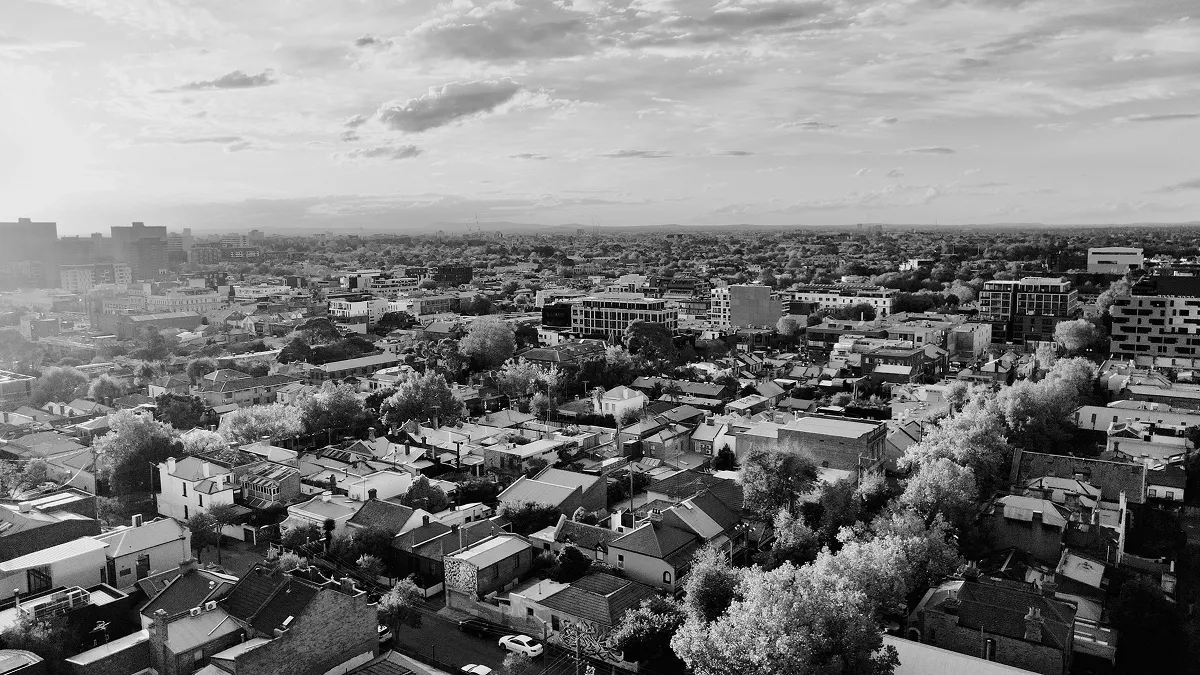
But look, I think with the Western Sydney Airport project being, I think, the biggest infrastructure project that this country's seen is really, really revolutionising the Western Sydney area. That's going to create thousands and thousands of jobs. We're seeing billions of dollars poured into transport infrastructure, so the metro system,
is being expanded as we speak. So that's going to take you out from where it ends now in Tullowong out to sort of Penrith, linking back up into the airport area, eventually likely to go down to Campbelltown as well. So it's going to continue that circle.
So from a homebuyer perspective, a lot of people gravitate to that area. simply due to affordability. And we see a lot of people that are perhaps upgrading from a unit or a townhouse, aspiring for a freestanding type of dwelling. Western Sydney is definitely one of those areas that is appealing.
So, look, I think if we talk about, say, the Penrith LGA, which is as far west as you can get here in Sydney, That completes, the whole city has completely changed. Over the last decade, you go into the CBD of Penrith and it's very different to what I remember as a kid.
You've got a lot of investment, new buildings and whatnot. And along the river, you've got some nice sort of pubs and things. It has changed a lot. And I think the reputation of the area has definitely changed as well.
So that itself is bringing home buyers and investors alike that perhaps have ignored that area in previous times. Good value out there. Capital growth has been incredible.
Chris Batesexceptionally strong and i think that that's that's likely to continue yeah i think you're right actually i think we uh um have seen that with our clients typically it would be the inner west slow and offshore east um beaches and then often they would or hills and then often they would go to central coast or north of wollongong but you know more and more clients are sort of
know looking at sort of that west and sydney corridor like you say the metro coming and you know the remote sort of hybrid work model and you can still get a house on a i think the suburbs are gentrifying a lot you know can you think about some certain pockets that have gentrified i mean you mentioned penrith before but more say just a stereotypical sort of suburbs housing market some areas that you know have changed a lot over say the last five ten years
Ben PlohlYeah, so I think you could also look at certain parts of Blacktown. It's definitely changed a lot. It's quite an aspirational type of suburb. And there's actually some interesting research that we did years ago where there's a nice clear trend.
And I think the Western Sydney area does see a fair chunk of overseas migration. You can start to chart where these people gravitate in terms of housing. And upon arrival, they'll typically buy a house or rent in places like Parramatta or Harris Park.
They'll then aspire to get their first home, be it in Seven Hills or other parts of Blacktown. And then the end destination typically is up here in the hills, be it Castle Hill or Kellyville or Borkham Hills. And that's quite an interesting circle that a lot of people, especially overseas migrants, typically take.
But if you look at that sort of even the back of Liverpool or even Campbelltown, Again, I think it's an area that we've seen massive urban sprawl and people now happy to call it home.
Again, when I was a kid growing up in Western Sydney, some of these areas weren't necessarily exciting places to live, but I think it's definitely changed. A lot of investment's gone in in terms of amenity. I think transport has definitely opened up these corridors as well.
And look, I think that's going to continue. And that itself has then attracted a lot of investors as well.
Chris BatesYeah, I think, you know, we're a very multicultural city in Sydney and I personally absolutely love it.
But I think in certain parts of, say, Western Sydney, in the hills and other parts of Sydney as well, different communities from different countries around the world, you know, sort of gravitate to certain pockets and they can sometimes drive, whether it's Chinese or Indian or etc.
So how does that sort of play into these markets, knowing what not just what you want if you're not from that community, let's say. How do you sort of factor that in terms of what you do as a buyer's agent?
Ben PlohlWe've had the great joy of working with probably mostly a lot of Indian clients. Again, being part of the Hills, it's a massive Indian population, great people to work with. It's interesting actually to see what's their definition of a great home or what's their kind of location.
And yeah, they're a culture that typically like to stick together close to their friends and family and their amenities and whatnot. It's an interesting sort of approach and even different things.
And it's something that we've had to learn as buyer's agents because different cultures have different requirements when it comes to what direction the house faces or where the front door sits. That's all fine.
So it's kind of, as buyer's agents, especially in this area, working with that sort of demographic, you've had to learn different things that mightn't be applicable to a lot of other people, but to certain cultures, it's really important. So that's been an interesting experience as well.
Chris BatesYeah, I think working with them as clients, I think particularly on home buying, investing is a little bit more, let's just get an asset. I don't really care about my own personal preferences. They always do come into it, to be honest.
But with home buyers, the things they get really excited by, the things they're really concerned about, you know, different cultures, the Feng Shui, you know what I mean? I think there's certain things you've just got to be conscious of and you might not ever be your forever home, right?
Often people aren't going to live there forever. So, you know, who's going to potentially be your buyer one day and making sure that you get an asset that does appeal to often a lot of the demographics that are buying. It's quite a big area, right, as well. The hills, Sash.
west and sydney from my sort of knowledge i might be wrong here i haven't met too many buyers agents that have specialized in that pocket and you know i have looked you know a little bit for them how are they sort of working with the agents out there and working with buyers agents is it still i guess more an immature market to say you know the the east and the low and offshore etc and how do you found that to work as a bias agent
Ben PlohlYeah. So I think in terms of the uptake with buyers agents in the Hills District, especially when I first started, it was, you're really pushing it up against the hill. It was really challenging. I think over the years, we've noticed a slight change.
It's nowhere near as what you'd expect in the inner West or the North Shore or the Eastern suburbs, but slowly year on year, we're seeing more activity and transactions being done with a selling and a buying agent. From the perspective of new entrants or other buyers agents in the area.
When I started seven years ago, there was a few that were still well-established and others that come shortly after. Now, there's a lot. So there is a lot of active buyers agents. Again, how active there are, that's another question, but there are a lot that are in the hills.
And I think that's good. I think competition is good and it provides consumers a lot more choice. From a Western Sydney perspective, there's a lot of sort of out-of-area buyers agents that are putting clients into that
market for good reason, but definitely we're seeing the uptake from home buyers slowly change over the years.
Chris BatesYeah. So you mentioned your CFO backgrounds helped you with negotiation. And so what sort of your philosophy, what sort of your mindset on how to sort of go about trying to secure the property? I mean, not so much the strategy, because different properties have different strategies, right?
But how do you sort of set yourself up for success?
Ben PlohlI think if we found a property that a client likes, the first thing is really ascertaining value. One thing is you can ask an agent what the guide is, but that's in most cases irrelevant and that's okay. It's really up to us as professionals to really determine what this asset is worth.
You've got to go through that sort of deep process of hunting down as close as possible comparables, as close as possible recent sales, but then also overlaying that with market conditions. In a seller's market versus a buyer's market, well, your negotiation tactics are going to be very different.
So ascertaining value and then putting together an approach that's going to give the client the best possible prime opportunity to secure the asset at fair market value. In the hills, we're pretty much now a 100% auction sort of campaign sort of area.
That's definitely changed over the last decade, but there's always opportunities to secure an asset prior to auction if we deem it suitable. But yeah, most of the acquisitions would be done at the auction room. There's always off-market opportunities that do float through the market.
Again, different times in the cycle that we see more versus less. And I'd say now in this pretty vibrant Sydney market, look, off-market properties are
Chris Bateseither off market for a reason and we're not seeing a good quality sort of inflow of off-market stuff again that's just the nature of the market at the moment yeah i do like that i mean obviously ascertaining the value and you know kind of like you said irrelevant what the agent wants for it's really trying to figure out what's this really worth and what's the right number for the client then overlaying like you say my market momentum and how that's changing in the time of year there's a lot that goes into it i feel a lot of clients often just say what's it worth well how long you got to sort of go through this but
I think buyization, it's one of those intangible services. I've said this on pretty much every episode. And often when clients get to the end of the process, they say, oh, yes, Spem was great because of X, Y, Z.
What are some of those things that you think the clients are surprised by, the things that add a lot of value that typically when they first engage you, they didn't expect?
Ben PlohlI think it's just being an independent sounding board, I find. When we're working with homebuyers in the hills, we're typically working with, let's just say, a husband and a wife, sometimes competing priorities.
And I think as a buyer's agent, you've got to really step in, and sometimes you're sitting there in the middle to juggle both those parties, but forming an opinion as to, well, what's the best outcome for this business? particular client and their family.
And a good example, again, just using the most recent purchase we did here in Glenhaven, it was the brief was always going to be a four bedroom home because that's what the family needed. But we ended up buying a three bedroom home, but there was good scope to add the fourth bedroom.
But it had other aspects to this deal that really stood out. It was in an area that I'm very passionate about because it's the area that I live in. And I knew that this area and this particular street was the family would love living there.
And we kind of got to the point where we said, let's just go have a look. And they fell in love with it. Yes, it had the three bedroom home as opposed to the four, but it literally had everything else box ticked. It's sometimes looking outside the brief as well.
So as buyer's agents, you always build a brief at the beginning of the process, but not being so rigid. Being able to recommend things outside of that brief, if you feel it's in the right sort of outcome for that client.
And it's being able to have tough conversations too, I think is really important because ultimately as an ethical buyer's agent that wants the best for the client, well, you've got to have those tough conversations if you feel that perhaps they are going off a bit of tangent or whatnot.
And yeah, it's kind of important.
Chris BatesI do love that. I mean, I think you're right. That's, you know, being a trusted advisor and maybe that is the CA sort of background talking there, right? The ability to sort of, A, look at the numbers, but also then challenge the thinking and being that sort of independent sounding board.
I do think that's one of the biggest value advisors play, particularly when there's multiple properties competing or You know, the emotions are getting dragged in the wrong direction because of lots of different reasons. But you've got to step into that, I think, as a buyer's agent.
You can easily just go along with what the client is and all of a sudden just secure an asset when, you know, you could see red flags all over the place and you've got to have those difficult conversations, which is an art in itself, I feel, to how to approach that.
Obviously, you know, you're six, seven years in, I do think buyer's agency is one of those things you do get a lot better at over the years as well. How are you sort of approaching your sort of development there and trying to get better? How do you, how do you think about that?
Ben PlohlYeah, look, I think like any profession, the more runs on the board, the more competent you're going to become. And you do start to learn things from different transactions. Absolutely. Look, for us, it's continuous development, be it investing in learning from the best negotiators in the country.
And we have done that this year, which is fantastic. Associating ourselves with your large industry body. So I was down at the REBA conference. earlier this year. We've got the PIPA conference coming up.
So I guess it's just being able to learn from other professionals, learn from others in the industry and just continuously learning our craft.
Chris BatesYeah, I do think it's one of those things that you can band together as an industry, particularly because there is a lot of people with a lot of experience there. And it takes a long time to get the runs on the board, right? It's like they say, those client briefs, the experience.
Okay, next time I'll factor that into the way that I assess a property. I'll have to consider that. I've never thought of that before.
etc so you know we talk about western sydney in particular you talked about the metro obviously the the roads into the city and the west connects what's some of the the challenges you see out there for a lot of home buyers is there issues with schooling is there issues with you know lack of infrastructure what's some of the things that are popping up as it is a fast growing location
Ben PlohlIf we talk, say, Western Sydney, the major issue is just the availability of stock. If we're wanting to focus on the established market, that's something that's just not going to be fixed overnight. So I think heavy competition for most good quality assets is what really challenges a lot of buyers.
Access to things like schooling. Look, I think it's changing and evolving year after year where the Hills District has been one area that has always had good quality schooling. But if you go further west, that does start to change.
And we still see a lot of people that live further out west sending kids to school here in the Hills District. So that could be one point.
But I think as all buyers, you've got to really weigh up your budget, your affordability, and then buy the best asset in the best location as possible. But I think it's always... Not thinking that that next home you buy is your forever home.
I'm not a big believer in what that sort of forever home means anyway, but it's being able to get your foot into the market. And whether that means pushing yourself further out west, well, so be it.
But you can then aspire to come further in or into a more of a desirable location over time. That's something that a lot of homebuyers need to consider and need to factor in.
Chris BatesI mentioned before around clients misunderstanding how to value a property. I mean, what's some of the most misunderstood parts of being a buyer's agent that you think the clients probably learn by working with a great buyer's agent versus before they engage one?
Ben PlohlMaybe evaluation, I think, is one thing that a lot of clients confuse themselves, but I think it's more so the process. A lot of clients still aren't really clear on, or perhaps prior to engagement, what you see other buyers.
They're just not familiar with how the real estate process works and how to complete a transaction. And we see a lot of people that miss out because they're perhaps moving too slow or they're not working with the right conveyancer that has that kind of sense of urgency.
So I think for a lot of home buyers, whether they're using a BA or they're doing it on their own, I think it's important to really...
really educate yourself on the real estate process so you can really put yourself ahead of other buyers at the time and not being afraid to move really quickly on a property that you really like.
People often think that if we show too much interest too soon, then we're going to end up paying more. Look, I don't think that's the case, but it's one having a real strong opinion on value, understanding the process intimately and moving at lightning pace if you need to.
Chris BatesFinal question. You mentioned, obviously, a lot of it going to auctions, particularly up in the hills, you said. I mean, how do you sort of approach your sort of auctions the night before? And do you have a sort of a favoured strategy that you like to use?
Ben PlohlYeah. So, look, yeah, prior to an auction, we'll always have a conversation with the client either the morning of or the evening before. I'm a pretty introverted person, but in an auction environment, you become a bit of a character, right?
You'll have to stand right next to the auctioneer or I don't like sitting, I'll always stand and just... just having a very clear strategy. I typically, again, spill all the state secrets, but bid really quickly and just try to intimidate other buyers, right?
Because at the end of the day, in an auction, it's a pretty level playing field. There's very little aside from your budget that you can control. So there's little things that you can do to put others off.
And so being able to read body language as well of other buyers, that's a real telltale sign as to whether they've got any more in the tank or not. So again, that just comes with experience.
We've done, I don't know, probably close to a hundred auctions over the years, but ones that we've won or ones that we haven't. So that does really help us when getting into the next auction environment for a client.
Chris BatesAbsolutely. Thanks so much for coming on today, Ben. I enjoyed the chat and yeah, I wish you all the success. Thanks, Chris.
Thanks so much for listening today. We hope you got lots of value out of it. If you'd like to speak to our guests today, there's links in the show notes on how you can get in contact.
And if you're buying your first home, upgrading, renovating, or need any finance-related queries, obviously we'd love to help. There's links in the show notes to us as a mortgage broker, and we look forward to next week's episode.