Curious about upgrading?

Wondering where to start?

Complex questions that need answers?
Is there a better structure for you?










"They managed to navigate my complex expat income and even got my Google RSU income approved as well."
"I highly recommend Alcove to anyone looking for a mortgage broker who is responsive, trustworthy, and truly cares about their clients. Thanks again to the whole team for making the process such a positive experience!"
"As founders, we're constantly jumping between things so having a partner that handled the details & made the process super clear made the buying process breezy for us. Very happy with the experience!"







.png)






"Alcove has been a great partner. They look after my audience properly, keep things simple, and deliver real value. I’ve got full confidence referring clients knowing they’ll get honest, straightforward advice."

"Property is one of the biggest financial decisions people make. Alcove stood out because they take a strategic approach to lending - helping clients structure property and debt decisions in a way that genuinely supports their broader financial plans."


Adapted from audio. This article is a written adaptation of the original podcast episode. Sources and dates are shown with each figure.

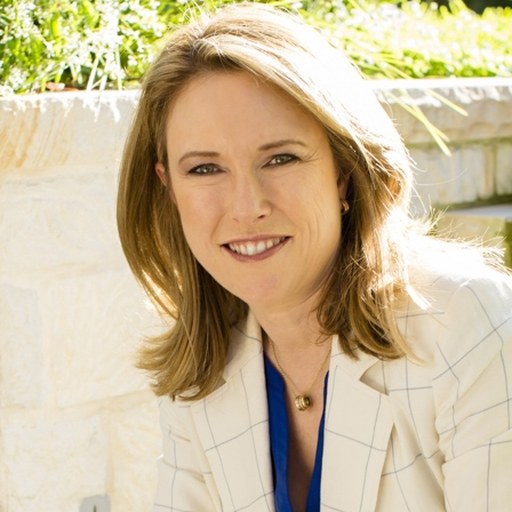
Co-host of The Elephant in the Room. Real estate agent, buyer's agent and buyer's agent mentor, co-host of Foxtel's Location, Location, Location Australia, author of Auction Ready and co-host of Your First Home Buyer Guide.

Evan Thornley On Turning Home Equity Into Investor Returns
Longview's fund gives homeowners cash now in exchange for a share of their future capital growth. Evan Thornley walks Veronica Morgan and Chris Bates through how the properties are picked and what the fund has reported to investors.
In this episode, we're talking with Evan Thornley from Longview.
We'll be diving into three big themes, why Australia's housing market is structurally broken and what needs to change, how investors can think differently about property ownership through emerging models like equity funds, and what lessons Evan's diverse career has taught him about long-term value creation in property.
This conversation should offer a unique lens on the future of housing in Australia, and we're keen to find out how Longview's solutions to some of the market challenges have been performing.
welcome to the elephant in the room this is the podcast where we love to talk about the big things in property that never usually get talked about i'm veronica morgan real estate agent buyer's agent and buyer's agent mentor co-host of foxtel's location location location australia author of auction ready and co-host of your first home buyer guide
Hi, I'm Chris Bates, ex-financial planner and mortgage broker, currently ranked number three in the annual MPA Top 100 Mortgage Broker Awards. Before we get started, everything we talk about today is not personal advice, and we recommend you engage the services of a licensed and experienced professional.
Our guest today is Evan Thornley, co-founder and CEO of Longview. Evan's background before joining the property industry includes co-founding a NASDAQ-listed tech company and Australia's largest social enterprise. He has brought his rare perspective on the intersection of innovation, investment and social impact and applied it to the problem of housing affordability.
Evan has spent the last eight years working from the ground up to understand the realities of property ownership and management, ultimately building Longview into a leader in residential property buying and management.
Over the past years, they've created Buying Boost, Home Flex and Home Equity Investments as options for property ownership and ways in which to access equity in property. And we're really keen to find out how these programs are travelling. Great to see you today, Evan. It's good to see you again, I should say.
Yeah, great to see you both, Veronica and Chris. Yeah, lovely. Thank you.
Evan, always enjoy our chats. And I remember one of our last chats where you mentioned you were going to launch these, I guess, new approaches really to residential property.
A lot of people have tried in the past to do investment property, sort of residential funds, and a lot of them haven't survived or they haven't really got any cut through. Not one, truly. Yeah. Well, there you go. So, and how's yours going?
Because I mean, I think it's any sort of new approach. We like to unpick it and I'm sure you've got lots of learning so as the days tick along.
Yeah, look, honestly, you've called it an interesting time because things are just starting to rocket off the page. So it's pretty exciting for us. Look, there's two sides to what we do, okay?
So you create a fund by making that fund attractive to investors to put their capital in, and then you deploy the capital from that fund to clients for some type of housing solution.
And so we're going to create a number of different investment structures and a number of different housing solutions on either side of the fund platform. So yeah, look, our fund is small at the moment, but growing incredibly quickly. So we're about 30 million at the moment.
That's double what it was six weeks ago. And given the volume of investor interest, I suspect we'll be moving into the hundreds of millions surprisingly quickly.
And then we've co-invested with about 100 families in their homes, mainly through HomeFlex, which is more of an equity release version of the product, but also through BuyingBoost, helping people, often young people, but by no means only young people, get more equity to help them buy their home.
And we seem to see a huge level of demand out there. Currently, we're mainly focused on HomeFlex because it's just moving really quickly and there seems to be a huge amount of demand there from people and not many other options.
But we'll probably swing back on to doing more buying boost in time to come. There's a few more friction points in that business system in terms of demand. how you work with the banks in particular, which is much easier on the equity release side.
But anyway, I can unpack all that, but we've got some traction on both sides of that market now. We've got people really enjoying giving us money and we're giving them fantastic returns. And we're really seeing a lot of interest in taking use of our products and giving people access to home equity.
I guess if we can look at them one at a time, HomeFlex, you said, is the thing that's sort of going off at the moment. So that's the product really effectively. So somebody owns their own home. So they have to own it outright or they can just own a chunk of it.
They get to access some of the equity in their home. And in order to do that, they're foregoing a portion of their future capital growth. Is that the way it works? Good.
That's exactly right. Look, I think what we've learned out there is that precisely because Australia is such an incredible capital growth market, that means two things. A huge number of Australians either have too little or too much home equity.
If you're an early stage home buyer or an aspiring home buyer, it's so hard to get enough equity to get into the market.
But for many homeowners, especially those who've owned their homes for some number of decades, they've got quite a lot of wealth there and often not necessarily much wealth elsewhere, but they can't access it. until they downsize typically.
So HomeFlex helps people access that home equity without having to sell their home or not sell it yet. A lot of our clients are what we'd call pre-downsizers in their 40s and 50s. Most of them have an existing mortgage, but they're often two-thirds, three-quarters of the way through that mortgage.
So a typical client will have maybe a $2 million home and maybe $1.3, $1.5 million worth of equity. So they've got an existing mortgage. But they'd like to access some of that equity. And so, you know, they've got a couple of choices.
Many of them, as you would know, Chris, they'll refire their mortgage and take another couple of hundred in mortgage. But not everyone wants to increase their mortgage payments at this stage in their life. And particularly given what's happened with rates lately, not everyone can.
There might be small business owners or others for whom it would be more trouble and it was worth to try and refire their mortgage. We have some other people later in life who may be looking at a reverse mortgage as an alternative way to do that.
There are quite strict rules of eligibility for that. So a large number of people wouldn't consider that option simply it's not available to them, but we don't have any of those eligibility issues. So they're all coming to us.
And even people who can get a reverse mortgage, a lot of those people are worried about the risk.
of having this compounding bill that if their house doesn't keep growing in value as fast as the reverse mortgage is compounding them, that potentially puts them in a dangerous position at a vulnerable time later in life. And our product just doesn't work that way.
So we can never put them in that sort of risk. So there seems to be just a wide range of people who are keen to get their home equity and they're starting to come to us for HomeFlex to do it.
I would imagine though that if it wasn't going to grow much in value, it wouldn't be a great investment for your investors. So how do you decide on the home flex side of things? How do you work out whether it's an asset you want to take a chunk of?
Yeah, look, having a predictive view about future capital growth is obviously the fundamental problem that we are trying to solve.
What is surprising to me is that nobody else seems to want to solve that problem because best as I can ascertain, that's probably the single most valuable problem to solve because capital growth in Australian houses is... the single biggest wealth generation engine in the entire nation.
And so you would think there'd be a lot of companies out there trying to work out how to do that. And I don't know any apart from us. So that's weird to me.
Over the years, I've sort of come across a number of players who would like to, but they've realized that it's far too, you know, the error rates are far too high. So they wind it back to go, look, the most I'm prepared to say is two years, but even that's a bit risky.
So, you know, it's a difficult nut to crack.
Look, there's a bunch of players and a bunch of property investment and property buying and investment companies out there that use a little bit of data science mainly to predict short-term capital growth. And, you know, that's a pretty established model.
There's five or six sort of reputable or semi-reputable players out there that will help you pick typically a location that was sort of suburb cycle analysis tells you on a reversion domain basis is probably doing unusually well in the next few years. buy into that area.
If you're a highly geared property investor and you go in with 10% or 20% equity and the thing's going to jump 10% or 15% in the next year or so, then get more equity and lever up and go buy another one. I get that play.
That's really nothing to do with what we're doing. We're interested in homes that are going to have enduring capital growth over a sustained period. We're not flippers. We're not levered at all. We have no borrowings at all. So we're at pure play in capital growth.
And so predicting medium and long-term capital growth is much more complex than that. I could talk about this for literally days on end, probably underwater, but just to break it down very simply from what we've learned in the last four or five years and, you know,
Our teams try to analyze every sale price for every individual property in the country for 50 years. And our buyers' advisors, like all good buyers' advisors, Veronica, as you know, have bought thousands of homes and bring just deep field experience.
So the two components to what drives capital growth for the individual property, most people think it's all about the area that you're in and are you in a hot suburb or not. And yet that matters. About a third of the capital growth potential of an individual property
is mainly driven by the area it's in. But how do you define that? Is that a suburb? Is it a census collection district? Is it a local government area? Is it the northern suburbs of Adelaide for the last few years? What area? How do you think about that and over what period?
But all of those factors are roughly one third of what drives capital growth. Two thirds is actually driven by the characteristics of the individual property, which could be different to the one right next door to it. And the dominant factor in that, this is not rocket science and you guys both know this,
Let's just start with what proportion of the value of the home is actually the value of the dirt underneath the home. Land appreciates, buildings depreciate, all other things being equal, and they're not.
The quality of the location is hugely variable in this, but all other things being equal, a property where 80 or more percent of the value is actually the value of the land underneath the home, that 80% is going to go up rapidly. The building is going to be depreciating. So
Land value proportion is the single biggest predictive variable. And so that's a considerable portion of what we do is estimating land value proportion and then looking at the quality of the location, usually more the micro location and other characteristics that might impact that a bit more.
But I'd like to say we invest in dirt disguised as houses.
You could argue, though, that the land value is deeply tied to location, you know, because the same size land... No, no, no, it is.
And you may have heard our phrase, what do we invest in? We invest in Rodwell's robust older dwellings on well-located land. So the well-located part is important, but... How one understands what well-located is, I think, is part of what you were talking about.
We had a spread in the Fin Monday a week ago where we showed some 25-year capital growth charts, which were counterintuitive, I think, to many people, even including serious experienced professionals in our industry. Particularly the Melbourne chart, I think, was the most striking one to me, where
really the inner leafy greens pretty consistently underperformed the city as a whole. And I don't know anyone who lives in those leafy inner greens who would believe that to be true. They all think that they get the best capital growth and they've all had good capital growth.
It just turns out that others have had better. So, you know, well-located is not just how proximate are you to the CBD.
How are you measuring that capital growth, though? Because there's so many things that can mask it. Like if you're in an area, for example, where there's been a lot of renovations over a period of time, well, that's built into the capital growth rate. And it's not technically capital growth. It's manufactured growth.
And also rezoning. You know, if you're in a middle wing suburb, for example, where there's a rezoning and one house gets sold annually. As a house, the next time it gets sold as a development site, it's had that big uplift from that one rezoning change and that factors into capital growth rates.
And then that gets mixed in with all the data as well. So sometimes you've got to be able to look at that and think, well, hang on a minute. There's been some bigger things at play here and it's not necessarily the case. Yeah.
Oh, absolutely. And we've got data science teams seven years into this. So we think about all of those issues. We scrub the data. You know, look, if you look at a bracket, what I call a bracket, so between this sale and that sale, right?
Maybe the thing was sold in 1993 and then sold again in 1998. And over that period, the thing did 15% compound annual growth. 15? Really? That looks like a reno, right? And you know what the telltale sign is?
if you have one period of unusually high growth, including unusually high versus adjacent properties and the area, and then it has unusually low growth after that, well, that's a dead giveaway. That's a reno, right?
Somebody's pumped capital into it, which has pumped the price up, but then that reno is depreciating more rapidly and you're not getting a real underlying land value doing the heavy work for you. And so you'll underperform in the next bracket while that gag in our kitchen is gradually depreciating itself.
So you can start seeing patterns in the data that help you identify precisely issues like that. Rezoning obviously is a huge source of capital growth, but it's real. And buying the path of progress, that matters.
A lot of the reason why the middle ring in Melbourne, for example, has largely outperformed the inner ring is because the development wave went out Over the last 15 years. So Glen Waverley outperformed Brighton principally because quarter acre lots got knocked over into townhouses and villi units.
But that was real capital growth for the people who owned those homes. But it's a once off.
And then developers then use that to promote why you should buy the townhouse which is on half the site.
Just complaint bollocks, right? Because they're exactly the opposite, right? But land has had most of its growth and now they're going to stick a large, dense building on the thing, which is going to depreciate.
You know, you're an incredible professional and so you know all these factors and I guess data science work as well as our individual advisors. We think all that through. As investors in these homes... We look at every home one by one.
We look at everything the data science tells us about that home, about that area. And then one of our buying advisors goes out and has a really good look at the property and thinks about all the things that may impact it in the future that may have impacted in the past.
And every single property that we invest in goes through that process very rigorously, then goes to our investment committee every Friday morning. We debate every single one of them for 30, 45 minutes. It's an intensive process. And I didn't know really how well we were doing.
I felt like we were making good decisions every Friday morning. But we're now long enough into the process. We're about 18 months in. We're starting to see how our properties are performing. And blame you, Diana, for doing really well. And look, our basic...
target we set ourselves was just to make sure we're investing in the top half of the distribution of capital growth, right? Mainly in the detached home sector, not exclusively, but mainly.
So if you could consistently invest just in the top half, then obviously your average performance is going to be probably closer to the top quarter. And if the average long-term is 7.2% in detached house index, so doubling every 10 years, and you're going to do considerably better than that,
then you're going to be pretty happy with that underlying growth. And I think we're just getting enough duration in our results now that I think we can start saying with increasing confidence, we appear to be doing that.
We appear to be investing somewhere on average in the sort of 75th to 80th percentile in the market. And that's a considerable improvement on the average. And so the value of the Rodwells that we invest in is indeed significantly outperforming the general
detached house price index, let alone the blended dwelling index, which has apartments and stuff that obviously bring down the average. So we're shooting the lights out to be candid in terms of the quality of the assets that we've invested in.
And then our unique structure with a disproportionate share of the capital growth in exchange for the capital that we give the client means we have a leverage effectively on the underlying level of growth. And we told our investors that we were pretty confident we could deliver them roughly double the house price index.
So If houses go up 7%, we should be able to deliver you about a 14% return on your money over a period of time. And at least in recent times, as we're starting to have enough data to give some data, we did 4.5% in the first quarter.
I just released our second quarter at 5.16% for the quarter.
So it looks like we'll probably end up delivering our investors somewhere north of 20% this calendar year. In what's still a below average market so far, we'll probably pick up in the second half. So we've surpassed ourselves on how well that's gone.
So are you tracking that via valuations six monthly or?
It's, you know, you'll understand. I mean, our team revalues every property every quarter and then we get independent valuers to do a random sample of that portfolio just to check our homework and make sure we're not marking our homework wrong. We've been spot on with the independent valuers. They pick a random sample.
I do that last quarter. We said, look, just to make sure you didn't actually pick the three top performing properties in our portfolio. So why don't you value them as well, just to make sure we aren't giving ourselves a favor. And they checked some extra ones and we were pretty much dead on.
And now we've just had the first two sales from our portfolio, both of which ended up selling in market at greater than what we had them in the book for. So I think we're pretty confident. I mean, you guys know, established homes and established suburbs, unless they're a very unusual...
you've got a pretty good idea what that thing's worth at any given point in the market, plus or minus a couple of percent. And certainly across a portfolio of 100, I think we're probably a little bit conservative in our valuations just to make sure that we're not overstating things.
And if as clients gradually sell those properties and they continue to do so above the valuations that we had, then I think our investors will have more and more confidence that what we've told them is going on in the portfolio is indeed going on.
And right now that is to put our returns in the low 20s.
I mean, it's a really interesting business, right? Tell me if I've got this grasping this wrong, right? I mean, there's 11 million dwellings. A lot of those have got houses paid off. A lot of them have got quite low debt. Some of those people are doing well financially and some aren't, right?
Some are struggling for cash. And a lot of your investors are going to be in that same cohort, right? They're probably going to be, I imagine, a bit on the older age. They've got money in super, they've got other assets, they've got investment properties. They're just looking at alternative investment strategies, right?
And how can I get a better return than putting in the bank or buying some shares, et cetera, right? So you're basically taking money from the people who have money at the older age, right?
They've got to put the money somewhere and you're lending it in some sense to the people who need the money.
To their next door neighbours who have a bit less, yeah. I mean, and honestly, that's often the case, right? I mean, literally, you might have two 50-year-olds living next door to each other in the street. That's sort of the metaphor of where we are
As you say, Chris, they probably live often in similar homes.
One of them happens to have done well and happens to have other things going on and has, you know, a mill or two that they're trying to invest in, often in other investment properties or other asset classes and then literally next door to them and they're often a bit embarrassed and ashamed about it because...
They say good day to each other every morning, but they don't want the neighbor to know that actually they're struggling a bit. They've got plenty of equity in their homes. Or they just can't do the things that they want to do.
They can't be the banker mom and dad for their kids, or they can't do that renovation. They want to invest in their small business, and the easiest thing to do would be to grab a couple of hundred grand of their equity and do it.
We're certainly not trying to be a kind of- No, no, no. I'm not suggesting that at all. We're a peer process because we're not, but we're a two-sided platform.
And there's a genuine need, right? There's a genuine need for an investment return on one side and there's a genuine need for accessing cash because they're going, well, my alternative is a bigger mortgage, which I probably can't get, or I don't want. Or don't want, don't want often, yeah.
But I do want to stay in the home and, you know, my friends- But there's still a while, five or six years till the kids graduate or till you retire or till mum passes away and you don't need to be close by or whatever reason it might be that, so most of our clients are what I call pre-downsizers.
Yeah, that's right. They might have grandkids and they want to come there for Christmases. And so staying in the home is a priority, right? And so they go, well, we want to continue living. We want to keep paying the bills, want to help the kids out or go on holidays, et cetera.
I need cash. And so this gives them the ability to stay in the home. And so what they're giving up is a bit of the growth, which they're alternative selling the property anyway, right?
And usually moving into a low growth property like a downsizer apartment, right? Yeah. If they want to stay on the capital growth train, this allows them to stay on it and usually get at least typically two-thirds of that still going to them.
So two-thirds of the capital growth on a Rodwell is much better than 100% of the capital growth on a luxury downsizer apartment. That's for damn sure.
Yeah. So I'm with you. So then this family, for example, they're staying in the home, they give up a third of the growth, let's just call it, right? Which they still get two thirds in their pocket.
They live there, they get all the lifestyle benefits, they get access to some cash, what they need to. They keep living in this property, but you don't just take every property, right?
So if I came to you and I say, I've got a busy road in a bad location, you would say, look, we're not going to invest in this because we're not going to get our investors a good enough capital growth, right? So you're very selective on the properties that you-
And look, you know, so we've built our own platform that in real time now you can type in an address and we'll do, I guess, what would be the equivalent of a bank pre-approval. Can't guarantee that we'll invest in your home, but we can very quickly say if we definitely wouldn't, right?
So we don't waste your time or our time or if we're working with a broker or some other service provider. Don't waste anyone's time. We'll give you a quick note. Of all the assets people have brought to us, we've only invested in 12%. So we are selective.
But that's partly a lot of geographies that we're really only in 70% of the asset value in the country, but we're in greater metro areas of Sydney, Melbourne, and Southeast Queensland. So we're not currently outside. And I don't think we're going to go outside those areas for the foreseeable future.
That's the vast majority of the market and we're money weighted across the three markets. So they offset each other reasonably well over the cycle. So we're well diversified both between markets and within markets. That's working great.
So I mean, the irony of this is it actually helps you because what you'll find is that you'll feel lower supply. I mean, let's say at this stage, you're not making a movement on the market, right? The size of your funds, a drop in the size- On an $11 trillion asset class?
Yeah, no. No one moves an $11 trillion asset class. No way.
Yeah, unless you're 20 buyers days and spying in the same postcode. Not that that would ever happen in Toowoomba or the northern suburbs of Adelaide to take a random example, but yes, indeed. And that means you, because naturally, let's say this fund did get a lot of momentum, right?
You would find that people are less likely to sell their houses, right, in these suburbs that you're buying because they're living in them longer. It's going to create tighter supply and then that's obviously good for you because there's tighter supply. How do you see that?
I don't think that's really a dynamic for us. I think people, you know, in every...
suburban sales agent will tell you the reasons why people sell home and move home you know the reverse mortgage folks are often their value proposition is stay forever in your home we'll let you do it right that's not really our proposition our proposition is more do the things that you
wanted to do now rather than wait till you downsize and get the money out then. We're just trying to separate a portion of the dividend, the downsizer dividend and giving it to you now. That means you don't have to do the downsizing yet. I mean, that's most of our clients.
So look, someone's going to stay 30 years and that's fine, but most of them are going to stay five to seven years and then they'll get the rest of their downsizer dividend then. And if you see our advertising, our goal is not to say stay longer in your home.
Our goal is to say, do those things you want to do now that you can't do. Yep.
Because you need a turnover of cash, right? The investors don't want to leave that money tied up for 30 years.
There'll be a lot of churn in our portfolio. And both because people sell the home now, they're ready to downsize. And some of them are doing that already in the first 18 months. But also people can buy out our contract at any time.
So you take my money, you invest it in your small business, that goes great. And you go, look, thanks, Evan, but I'll buy my capital growth back now, thanks, because my house is still going well. And I'd rather not give an ongoing third of it to you guys.
And we're like, great, do that. And so between the sales of the homes and the contract buyouts, it looks pretty likely that about 15% of our portfolio will churn every year after about year three. So that's actually a high cash flow. It's counterintuitive, I think, to most people.
It's actually a high cash flow proposition for the investor, which is surprising, I think, to a lot of people. I'm on a personal mission to help more people make better property decisions.
You know, most people don't realise that they can cost themselves hundreds of thousands of dollars over the medium to long term when they make property decisions without all of the information that they need.
And what I do is help people with tricky real estate problems, which often masquerade as simple questions like, should I sell my investment property because the interest repayments are hurting or should I buy before I sell or the other way around?
You can connect with me and access all of the tools that I've created to help you make better property decisions at veronicamorgan.com.au. And there you will find resources for first home buyers, details about my buyer's agent mentoring program.
You can connect with my Sydney-based property management and buyer's agency teams, Australia-wide vendor advocacy, or ask me for introduction to the small group of buyer's agents that I would personally recommend across the country. That's veronicamorgan.com.au.
If you're considering a property move such as buying your first home, upgrading, renovating or investing, the team here at Alcove would love to help you think through your decision and get the finance right. Please go to alcove.com.au to reach out.
Yeah, I would have imagined it was definitely somewhere to park your money.
And you can and go around again. But if you actually just want it thrown off cash to you as the portfolio churns, then you can take the money.
So interesting. And I guess you don't really have an obligation towards the person taking the money. So the homeowner, I mean, they may not be able to afford the downsize that they want to downsize if they do this. They might actually hamstring them in the future.
But I guess that's not really your issue, is it? Something that they've got to check.
I mean, of course, that's right. But I mean, let's take the typical example.
I go before someone who's got a million and a half in equity and a $2 million home, and it's going to be a $4 million home 10 years from now, or maybe it's 3.2, five or six years from now when they sell.
Okay, so they gave up 400 grand of that 1.2 million in growth, but the rest is theirs. They're going to be a pretty good place to downsize, right? I think it'd be a rare situation where it's us that has put them in a bad situation trying to do the opposite. But
But that's where the selectivity on our part is obviously mainly firstly, we want to deliver a great return to our investors. But to be honest, we only really want to do business where we're also letting the client always get a good outcome.
This I think is the fundamental difference between what we do and every other deposit gap. reverse mortgage equity release product out there. People always say, well, what's different about you guys? And I say, oh, it's not that complicated. They're all bankers and we're property investors.
And bankers have one view of the world, right? You do the work and you give us the money. And as property investors, I say the dirt does the work. The dirt does the work. Neither you nor I have to do the work. The dirt does the work.
And we're only doing this deal if the dirt is going to do the work for both of us. And if the dirt does the work, we can share the proceeds between us and we're both going to be happy with the results.
So I own want to do business with clients, I'm sorry to say, where their dirt is going to do the work for both of us. So I know the client's going to get a good result and I know we're going to get a good result.
And it's a victimless crime because the dirt's doing the work.
Where they bought good dirt. Yeah. And I guess it differs from that sort of fractional investing model, you know, BrickX that didn't survive anyway, where people were buying a share in a particular asset. You basically got a whole pool.
Yeah, no, I mean, like rule number one, diversification, right? I mean, we're in 100 properties, the lowest value of which is 700 grand, which is going to be absolutely monty, by the way. I can't wait to see how that goes. The biggest one's a $6.2 million pile on the waterfront in Gladesville.
We're in, you know, 100 properties in probably 87, 88 suburbs. I've got a few. We might have a couple in Kellyville, I think, or a few other places where we got two rather than one. So we're diversified between those three markets, within those three markets.
You look at the map of where our properties are, they're all over the map, but each one individually selected very happily. The 171 activity zones in New South Wales just got declared and surprise, surprise, while we had no inside information, 19% of our portfolio in New South Wales are inside those zones.
Because no kidding, we were trying to buy good locations and similarly with the Victorian activity zones. But really, we're always happy when an individual property does even better than we thought. But the real point is if we're really diversified, our mechanism is so powerful because of the sort of implied leverage.
Our job from there is actually not to try and be too clever, but to take out risk. Make sure everything now has the lowest risk and the lowest volatility because the returns are going to be just fine. We're not trying to pick between Sydney, Melbourne and Brisbane.
Every one of us has got a theory about Melbourne's a basket case or Brisbane's got the Olympics or Melbourne's going to outperform now at the bottom of the cycle. Everyone's got a theory. I can see different patterns in the data.
I've got all sorts of ideas and they're probably more sophisticated and well-informed than most people, but I'm not trying to be that smart.
Yeah. Well, I mean, it's huge risk trying to make one call and choose one asset.
So let's just ask, okay, what's the money weighted distribution across the three markets? 47% in Sydney, 31% in Melbourne, 18% in Brisbane. Okay. So our portfolio is going to be 47% in Sydney, 31% in Melbourne, 18% in Brisbane. We're not trying to be smarter than that. We don't need to be.
And if you backtest that distribution over 50 years, you'll see remarkably low volatility and very steady good results. So
When we spoke to you first time a couple of years ago now, I think, you were looking at a fund for investing in these rod walls as a way of almost like land banking. You were talking about looking at the middle ring and buying properties that long term you'd have a sort of
That's still the next fund. So, let me get this one to a couple of hundred million and moving fast. And then we've done two thirds of the work to then launch a different model, which will be, I guess, a buy to rent to paraphrase a vastly overused and even more overhyped proposition.
But yeah, and that's a different model. It has a different structure and a different mechanism. Its returns won't be quite as strong as this, but I think we'll be able to get like 12% returns there unlevered. So, that's very solid, but they will own those properties. So,
Well, it's a different proposition. So that's a different one.
We haven't launched that one yet. And that one's got really powerful social purpose because we'll be renting them out through the affordable housing regimes. And we have a partnership that we're building with the Council for Single Mothers and Their Children. So most of our clients will be working sole parents and their kids.
And we'll give them good, solid, secure, long-term tenancy in a well-maintained home, energy retrofitted home. at a discount to market rent. And again, the dirt will do all the work.
We will make all the money out of the dirt and we'll actually be able to give subsidized rent in that situation to the people that most need it, which is a particular passion of mine, given my personal history.
But there's a million sole parents and there are two and a half million kids in this country and housing is one of the things that makes their lives incredibly difficult.
Yeah, absolutely. What were some of the challenges in setting up these funds? You know, from a financial advice background, I'm thinking tax, I'm thinking getting a funds approved.
There's a lot of moving parts, mate. And the fund structuring and the legal structuring, the financial engineering, it's like you're dealing with a balloon every time you squeeze in one thing, it pops out the other side.
You know, to be candid, I mean, we've invested about $10 million over the last five years building this platform on whether it's the tech and data science or whether it's Quite a complex set of legal structures, regulatory approvals from ASIC and AFSLs and ACLs and all those intersecting parts.
And each part has an impact on the other parts. The tax issues are complex for the investors. You need to make sure you don't create tax issues for your clients. There's a lot of moving parts involved. behind the scenes there.
And we've done it in a blue chip way with top tier firms giving really considered advice. But we wanted to build a platform that was bulletproof, that was compliant and proper and ethical and robust and could scale to hundreds of millions and billions of dollars and thousands of homes.
It was worth the investment.
So the homeowner, right, let's say I've got, do those examples you're talking about, right? Got a house worth two mil and they give up a third of the equity. They sell it one day for three mil.
A third of the capital growth, not a third of the equity.
Yeah, no, no, fair call, fair call. Big difference. Yep, yep.
No, it's very important, right? We only take a share of the upside. Yeah.
Yeah, exactly. Yeah. So the two mil, let's just do round numbers. Yeah. Like you said, 3.2. They give you 400 grand of that, a third of the growth, right?
Plus the original capital back. Yep.
Yeah, plus the capital, right? And you gave them, what, $200,000 or something. So they give you $600,000 back. And they haven't paid any tax on that, right? Because it's all been on their home, right? So they've got an asset growing tax-free. It stays in their name.
Yeah, funnily enough, no one's paying any land tax in this model. Yeah.
You guys know that we've got a rental property management business. Proud to say, I think we're one of the best customer service property management businesses in the country with NPS scores about 80 points above the industry average.
We're very proud of that, but we know as therefore, as well as anyone in the country, what a shit deal it is to be a landlord, right? And how hard it is to make a decent return, how much those costs, taxes, hassles, unexpected surprises, negative cash flows.
I just don't think it's a very good way to invest in property.
And so the whole swing thought behind what we were doing from a property investment point of view was the only reason to invest in resi property in this country, which is close to the best capital growth market in the world and therefore the worst rental yield market, is to be investing for capital growth.
The only thing you want is capital growth. So how do we give people access to that capital growth or even that capital growth on steroids, which our model does, and none of all the other stuff? None of the other costs, none of the other taxes, none of the other hassles, nothing.
And we think that this is a killer proposition for the 2.5 million landlords and $2.2 trillion that's currently invested in the asset class, most of it badly. And sure enough, quite a lot of our investors
There are landlords who are gradually saying that, hang on a minute, I'm going to get two to three times my return, diversification, strong cash flows, and none of the hassles of being a landlord. That almost seems too good to be true, right?
I mean, where do you see this getting to in terms of size? Do you see this to multi-billions you think you can sort of get to? Yeah.
I do. Yeah. Yeah. Look, I have absolutely no doubt that there's multiple billions of capital out there that would love this level of returns with such a stark low risk stack, right?
I mean, as I'm talking to big family offices and there's people putting millions of dollars in now into the fund from larger families and other investors. I'm like, where else are you going to get mid-teens returns, right? global equities, private credit. What's your risk stack there, right?
You've got someone who's getting up at three in the morning in those funds, making sure they found out what Donald Trump said and what happened on Wall Street and whether the Ukraine's blown itself to bits. I've got somebody who gets up at three in the morning too. You know what they do?
They check the grass is still growing, the owners are still asleep, and then they go back to bed, right? That's my risk stack, right? And if I can deliver your mid-teens returns on that risk stack,
then that looks a whole lot better than every day that the fin reviews full of stories about private credit deals falling over and we know, oh, we've got a first mortgage, everything's great.
Okay, so you've got a first mortgage on a hole in the ground with a bit of concrete and the CFME on strike outside. That's a different risk stack. I don't have construction risk, I don't have market risk, I don't have financing risk, I've got no leverage, so nothing can go wrong for me.
They're established homes. There's just not a lot goes on here. So we feel that the two groups of investors that seem to be charging at us are people who otherwise want to invest in resi property and their other choice is being a landlord.
And this is a total no brainer for them or people who are building a diverse portfolio of assets from cash and fixed income at the defensive end to PE and VC and crypto at the risk end.
And in the meat and potatoes in the middle, in the mid-teens, they've got global equities, private credit and stuff like that, and we'll just lower risk at the same altitude. So that seems to be what's driving the investors is those two propositions.
Well, I mean, I think it's close to $4 trillion in super now, right? It's an attack on super, which is a different story. But ultimately, there's a lot of cash.
And you're right, when a lot of advisors and even people are DIY, right, a big part of that is where they put their portfolio.
Well, and a lot of those advisors, I mean, every advisor I talk to, They've all got clients who've got resi property investments. Most of them are bad investments. The advisor tears their hair out and says, well, I don't know why you're investing in that thing.
And then the client says, well, if I want to be in resi property, what should I do? And the advisor goes, I don't know. I don't know anything about it. I've got no product. I've got no nothing.
So there now will be every well-balanced portfolio should have the largest asset class in the country in it, right? This provides a structural industrial strength investment grade way of being exposed to the asset class.
So on the other end, you got the first home buyer product. How's that going?
We'll get back to that. That's where we started. And we're super committed to, there's a third of a generation who don't have the bank and mum and dad. And as capital growth keeps going, the truck is going further and further off into the distance for that generation. So Flip-party equity is critical.
Most of it's coming from the bank and mum and dad. Increasingly, it's going to come from government, but also from players like us and Frontier and Hope Housing and some of our other colleagues who are trying to deliver similar solutions. They're all friends of ours and I think they're all doing great work.
Yeah. Look, Chris, you'd understand this particularly working your way through with the banks. On the buy side, it's all got to go through credit and therefore they're going to say, well, hang on, who are these guys? What's the second mortgage? How does all that work?
and so you've really got to get pre-approval of your mechanism through the product approval processes of those banks and that takes years you know we've got a number of lenders that have done that work with us that are reasonably competitive lenders but the big guys aren't going to do that work until we're big volume which is a big chicken and egg so we're buying homes right our client's going to be successful one time in three there's just a lot more friction points in that process and so that was moving more slowly
I am committed and determined to solve all those friction points in time because there's a generation of people that need our money and we will. But I'm just going to build the business to scale first and make sure we're delivering great result for our investors.
And then we'll have the resources to put into smoothing that journey on the buy side.
So I guess you've gone for the easiest of the three options first.
Well, the customers voted with their feet, just reopened the doors on HomeFlex and they just poured in from everywhere. And we went, wow. We got knocked over in the flood of demand. We're like, oh, wow.
You know, we obviously have a real passion about the first home buyers, in particular the folks that don't have a bank of mum and dad. There's, you know, we really want to help.
But I'm not saying every HomeFlex deal has that, but gosh, every Friday morning at investment committee, there's normally at least one deal where you go, oh, I'm so proud of what we're doing here, right? You know, we've got a guy, Kendall Hill, I think,
Anyways, in a $1.6 million home, he's a paraplegic from an auto accident, got a payout from the insurance. He bought the home outright with that, which obviously he's very grateful for, and he's got some income through disability. He wanted to get one of those factory-made VWs that you can put a wheelchair in.
Okay. They're a couple of hundred grand. There's not a bank in the country that's going to give that guy a couple of hundred grand, right? We couldn't be happier. We like the asset. We know he's getting a good asset. He's in a good home. Gave him a couple of hundred grand.
He's bought the car. We have another couple in their mid-40s, not far from there actually. They're a $1.7 million home, a real Rodwell. He's going to have through a shock industrial accident. He's now out of the workforce and They need to make some modifications to the home. He got a payout.
They paid down the mortgage a fair bit. They only had about $450,000 left on the mortgage, but she couldn't service. They were going to have to sell the home and they couldn't pay for the home modifications. And we gave them $220,000 and they paid $150,000 off the mortgage and the home modifications.
And they're going to stay in the home while the kids, till the kids grow up. So divorce, awful stuff, right?
I can imagine that's a real case study for it.
You're sitting in the settlement conference and too much of the marital asset pool is tied up in equity in the family. And then you need the wisdom of Solomon. The only way you can get the money out to both parties is to cut the baby in half and sell the home, right?
Which is just at the worst possible time for everybody. So our first client who was a divorcee, she was in a $2.3 million period home in Elwood in Melbourne. And we gave her 250 grand, which was just enough given their other assets.
So she could then buy out soon to be ex-hubby and her and the boys got to stay in the home, stay in school. She's moving back into the workforce now, but like if they'd sold the home, she's in Frankston. She's out of here, right?
Away from grandma, away from the boys' school, away from dad. Who is that helping? Absolutely no one, right? And so both she and dad are grateful that we could do that deal. Her and the boys are staying in the home. Dad's going to be close by. He's got paid out his share.
He then can buy a home. We haven't in this case, but I'm sure there will be cases where we then give him buying boost as well. If he's buying a ride, well, and we'll help on both sides.
So there's a lot of situations where we are the best and often the only answer for people. And in a lot of those situations, I'm really proud of the difference we're making. Our model is always a win-win. Yeah, I'm really pleased with how it's rolling out in the real world.
How would you compare it, say, you've got the Victorian government as a shared equity scheme for first-home buyers, the federal government's got one too. I'm not sure if it's actually launched yet.
No, it's not actually. I'm met with the Housing Australia folks to sort of brainstorm and help them learn from our experience, and I hope we've been helpful there.
Look, I think those government schemes mainly are really good, and honestly, they can be more generous in terms of the amount of money and their effective financial returns.
And I guess the impact on capital growth. Yeah.
But also then they'll finance you into a rubbish asset that's going to get no capital growth. In fact, they'll give you extra money to go into a new build because they want to stimulate construction.
But still, I think those are great solutions to people that really often give a lot of people a chance for home ownership who would never get it or couldn't get it for a long time. The money's on very reasonable terms.
I think there's a few elements, and I've told the Housing Australia folks this, this idea that if your income goes up, you become ineligible and then you've got to pay the money back. well, who's going to refire you out of that thing?
So I think they're going to have to change those product elements because they're going to cause chaos in a few years' time. And I hope they will. And I'll listen to people like me and others who've got a bit of experience in this. But generally, I'm a big supporter of governments doing that.
Again, there's non-profits have been doing shared equity for 20 years in a range of different ways. And
People like Hope Housing and dear friends of ours and great people doing great work, giving money on very generous terms to essential workers to be able to live close to where they work, particularly in Sydney when that's not going to happen otherwise.
I think everyone in the shared equity industry, I regard them as colleagues and friends and we try and help each other out. And I want to see this sector build and I want to see it to be ethical and thoughtful about what we do together. And there's plenty of room for improvement.
A whole bunch of players that each brings their own angle or their own particular mix of what they're trying to do and how they're trying to do it. I think it's great.
And is there a reason you're not doing any sort of leverage in this sort of lending the money or getting the money from the older generation, you know, that home flex? Is it because there's no cash flow to sort of pay the cost of the lending or?
Well, I mean, the cash flow come from the churn and you can level these things quite safely. But right at the moment, I mean, again, the power of the mechanism and the quality of the asset selection basically means we can deliver really strong returns at really low risk. So why add risk?
I just don't want to add risk. I don't know anyone a dime, right? Our fund can't go broke. It can't default on anything. It doesn't know anyone anything when you're worried about interest rates. And I'm still meant to be delivering mid-teens returns and I'm inadvertently in the 20s right now.
So why would I risk that and try and juice up the returns even more with some leverage and put risk into my investors? They don't need it. We don't need it. Once the portfolio is mature and it's churning, it's throwing off cash.
Some of the big US funds that are in a somewhat similar model are now just securitizing the whole book. They're not taking money from equity investors at all. They're securitizing the book and they're getting money at 8% on the securitization rather than promising the investors fraud. Maybe that'll happen in future.
That's probably upside to our model. But right now, you know, Hippocratic Earth, first do no harm. Protect our investors' capital.
Yeah, I'm just trying to think of all the stakeholders in this. And even the ATO sort of is okay with it, right? Because they're going, well, we're going to pay no tax on the growth anyway, right? So there's no CGT there.
There's no lost revenue to the feds on this, right? No one was paying land tax on this before. No one's paying land tax now. No lost revenue there. Our investors will still pay tax, obviously, on their investment returns. Yeah, but no one's paying CGT on the asset because it's principal place of residence.
Yeah, yeah.
So they get the benefit. So the investor's not really getting much cash flow, right? So you're not promising much from a cash flow dividend?
Oh, well, no, we are because we're distributing the returns now when the contracts are realized. So when the portfolio starts churning, right, if 15% of the portfolio churns by year three, then we're throwing off cash, right?
We'll be delivering 15 to 20 or more percent money on money returns on the original investment from year three onwards. Like this thing's a cash machine as the portfolio gradually self-liquidates through churn. Yeah, yeah. You're not just reinvesting that money and just- Well, the next fund will probably have a dividend reinvestment option.
So we'll let people either take the cash or just keep anteing up. Yeah, gotcha.
All right. Have you got a story that we can all learn from? Just a bit of a tale to finish this off?
This is an old story, but it just highlights to me the challenge of being a landlord. Just remember that clients of ours, hardworking people, he's a plumber, she's a teacher's assistant. They live in El Tano Meadows, which is a pretty modest working class suburb in middle ring western suburbs of Melbourne.
Just a modest family home, hardworking people, put money aside. They got two teenage daughters and they bought two off the plant apartments, sort of one for each, saved money, sacrificed, trying to build wealth for the next generation. And we were talking, they're landlords of ours, we serve them to manage those properties.
I was talking to them and like, geez, we wish we could move to central Altona down by the beach near the railway station next to the kids' school, old town Altona, much more valuable, lovely part of the world actually.
But of course, they couldn't afford it because they put their money in the investment properties, which were going nowhere. And I said, I know this is going to sound almost like foolish, selfish advice. I said, sell the two investment properties and buy a nicer home in central Aotearoa.
We will double in value in 10 years. These things will go nowhere. You'll pay no tax on that growth and you'll get to live in a lovely home close to the girls' school and transport an amenity in the beach. That is a total win-win for you.
I mean, I'll lose the business of managing your two investment properties. I couldn't care less. And they really struggled with that decision because it sounded like they'd been really working hard and they'd been trying to do the right thing and put money aside and not spoil themselves.
But actually the best financial decision they could have made was to buy a lovely period home in central Altona and enjoy living there for 10 years. And they would literally be about a million and a half dollars better off than hanging on to these two pieces of apartments. Yeah. So that's not dumb.
These are good people. But they got sold a bill of goods by the spruikers who were selling those bloody off the plan apartments, right?
And were trading on the aspirations that they had to look after their family and build themselves a good retirement, look after the next generation, all the right things that hardworking people do. and they've been ripped off. But there's a way out, but they've got to get comfortable with that.
Well, it's hard because we've got to swallow a bit of pill. We've got a couple of clients. We're doing vendor advisory work for them. They've got three properties. We've just helped them sell one. It was an apartment in Sydney that was going backwards.
They've got a house and land package, the house that's going backwards. So that's where we're moving on to next. And then there's another property. Because until they recognize that waiting wasn't going to solve their problem.
They keep saying, oh, I thought the market would have gone up by now.
Yeah, we're just waiting for it to come good. It's a really, really challenging situation, but they've had to sort of bite the bullet and we start moving to get rid of them so that then they can buy a home for themselves to live in.
You know, we have obviously buying advisory part of our business. You know, my colleagues, Warwick and Scott McGovern and others. We used to call that changing trains. You've got to stop, get off the train.
It takes you a bit of time and maybe go to the other platform, but then you get on a fast train and not long from now you're in a much better place. It's really hard to get people to change trains. It's really hard.
It's great this client is actually taking the bitter pill and doing it with you and we all know they'll be much better off in a few years. So that was, and we tried to do that with our clients for many years.
And I guess we're just doubling down on that and saying, well, you can change trains to a better investment property. And that's a really good start. Or now you can just change trains into my fund, mate. And that thing's gone off like a rocket. And honestly, it's just a better deal.
And so landlords are cautious people. They invested in property because they don't trust the equities markets with good reason, right? They're careful people. That's why they invest in property because it's safe. And so, so many of them say to me, Evan, your fund just sounds too good to be true.
But if everything you tell me is true, sooner or later, yeah, I probably will sell my properties and put the money in the fund. I said, take your time. A minimum is a hundred grand. Just come along, put a little bit of money in, get confident, get comfortable. Don't make no sudden movements.
Step away from the vehicle. And over time, if you're confident and comfortable and you'll see the fund growing, you'll see, I mean, goodness knows how many serious investors and major families and others are now in our funds. So people will get confidence over time that there's sort of social proof.
And then over time, I think more and more of them will actually choose to cease being landlords, but still invest in the asset class they know and love and trust. We're just trying to be a better way to do it.
Yeah, interesting one. Well, look, Evan, it's been great to get an update because we've been curious as to what's been happening in your space. We appreciate your time and thanks for coming along.
Thanks again. Great to see you. Thanks, Evan. If you have a question that you'd like us to answer in an upcoming Q&A episode, you can send us a voicemail or written question via the website, theelephantintheroom.com.au, or you can email us directly at questions at theelephantintheroom.com.au.
If you like what you're hearing, please share this episode with others you feel would benefit. And while you're at it, why not leave us an iTunes review? Five stars would be great.
I know that sounds a bit cringy, but we have it on good authority that every review helps make it easier for other people to find out about us and hear what our amazing guests have to say.
Key takeaways
- Longview runs a two-sided fund: investors put capital in, homeowners draw equity out through HomeFlex or Buying Boost.
- The fund was about $30 million at recording, double its size six weeks earlier, co-invested with about 100 families.
- Homeowners typically keep two-thirds of future capital growth and repay the original capital on sale or buyout.
- Thornley puts about a third of a property's growth down to its area and two-thirds to the property itself, led by land value as a share of price.
- Reported quarterly returns were 4.5% and 5.16%, with Thornley expecting north of 20% for the calendar year, unlevered.
- Only 12% of properties brought to Longview have been accepted, across greater Sydney, Melbourne and South East Queensland.
How Does Longview's HomeFlex Work?
Evan Thornley, chief executive of Longview, returned to report on how his products are travelling. The business is a two-sided platform: capital comes in from investors and goes back out to homeowners through HomeFlex, an equity release product, and Buying Boost, which adds equity for people buying. At recording the fund sat at about $30 million, double its size six weeks earlier, co-invested with about 100 families.
HomeFlex was the side moving fastest. The typical client he described is a pre-downsizer in their 40s or 50s with a home worth around $2 million and $1.3 million to $1.5 million of equity, usually two-thirds or three-quarters of the way through a mortgage. Their alternatives, as he framed them, are refinancing into a larger mortgage, which not everyone wants or can service, or a reverse mortgage, with its eligibility rules and compounding balance.
In exchange for the cash the homeowner gives up a share of future capital growth, typically a third, and hands back the original capital when the home sells or the contract is bought out. Thornley was firm that the fund takes a share of the upside, not of the equity.
Two-thirds of the capital growth on a Rodwell is much better than 100% of the capital growth on a luxury downsizer apartment.
Evan Thornley, 19:40
What Does Longview Buy?
Asset selection carries the model. Thornley said about a third of a property's capital growth potential is driven by the area it sits in and two-thirds by the property itself, with land value as a proportion of price the single biggest predictive variable. Longview's shorthand for what it buys is a Rodwell: a robust older dwelling on well-located land.
I'd like to say we invest in dirt disguised as houses.
Evan Thornley, 9:50
Well located does not simply mean close to the CBD, he argued, pointing to 25-year growth charts Longview published in the Financial Review showing Melbourne's inner leafy suburbs underperforming the city as a whole, with Glen Waverley beating Brighton as the development wave moved through the middle ring. Veronica Morgan pushed back on what growth data can hide, naming renovations and rezoning. Thornley agreed: a bracket of unusually high growth followed by unusually low growth is the telltale sign of a renovation.
Screening is deliberately narrow: Longview operates only in greater metro Sydney, Melbourne and South East Queensland, and has invested in 12% of properties brought to it.
| Test | Condition As Described On Air |
|---|---|
| Location | Greater metro Sydney, Melbourne and South East Queensland, described as about 70% of the country's asset value |
| Dwelling type | Robust older dwellings on well-located land, mainly detached houses |
| Land content | Land value as a proportion of price, called the single biggest predictive variable |
| Growth target | Top half of the capital growth distribution; portfolio said to be tracking the 75th to 80th percentile |
| Process | Address check first, then a buyer's advisor inspection, then a Friday investment committee, 30 to 45 minutes per property |
| Acceptance rate | 12% of properties brought to Longview |
As described at 8:30, 13:32, 14:01, 20:32 and 20:46. Figures as stated on air.
What Returns Has the Fund Reported?
Longview told investors it expected roughly double the house price index, about 14% if houses grow at 7%, against a long-run detached index he put at 7.2%. The reported results were 4.5% in the first quarter and 5.16% in the second, which he said pointed to something north of 20% for the calendar year in what he called a below average market.
Valuations are done in-house every quarter, with independent valuers checking a random sample, and the first two portfolio sales came in above book value. There is no borrowing at any level, which he said strips out construction, market and financing risk. Cash returns come from churn: he expects about 15% of the portfolio to turn over each year from year three.
The portfolio holds about 100 properties across roughly 87 or 88 suburbs, from a $700,000 home to a $6.2 million waterfront house in Gladesville, weighted 47% to Sydney, 31% to Melbourne and 18% to Brisbane. The minimum investment is $100,000.
Does the Homeowner Lose Out on Growth?
Morgan raised the risk that a homeowner who trades away growth may not afford the downsize they eventually want. Thornley's answer was arithmetic on his own example: an owner with a $2 million home who gives up $400,000 of $1.2 million in growth keeps the rest. He said Longview only writes the deal where the property should work for both sides.
People always say, well, what's different about you guys? And I say, it's not that complicated. They're all bankers and we're property investors.
Evan Thornley, 26:00
The cases he described were about circumstance rather than lifestyle: an owner on disability income who wanted a wheelchair accessible vehicle, a couple facing home modifications after an industrial accident, and a divorcing owner buying out her former partner to keep her sons in the same school. On tax, discussed with Chris Bates, he said no capital gains tax arises on a principal place of residence and the structure creates no land tax where none was paid before.
| Client situation | Home value | Capital released | What it funded |
|---|---|---|---|
| Owner outright after an accident payout, on disability income | $1.6 million | A couple of hundred thousand | A factory-made wheelchair accessible vehicle |
| Couple in their mid-40s, one partner out of the workforce | $1.7 million | $220,000 | $150,000 off a $450,000 mortgage, plus home modifications |
| Divorcing owner in Elwood, Longview's first client | $2.3 million | $250,000 | Buying out her former partner so she and her sons could stay |
As described at 38:05, 38:33 and 39:19. Figures as stated on air.
Do Landlords Actually Make Money?
A second, different fund is still to come. Thornley described it as a buy-to-rent model, unlevered, targeting around 12% returns, letting homes through affordable housing regimes with a partnership being built with the Council for Single Mothers and Their Children. Peter Mares traces that shortage to tax settings and the social housing Australia stopped building. Buying Boost is slower because the mechanism has to clear each lender's credit and product approval processes, work he said takes years.
Running underneath the conversation was his view of residential landlording. Longview also runs a property management business, and he described the economics of being a landlord as poor once costs, taxes and surprises are counted, arguing that capital growth is the only reason to hold residential property here. He closed on a client story about two off-the-plan apartments held by owners who wished they lived nearer the beach.
Weighing A Growth Share Against Borrowing?
This episode weighs keeping all of a home's growth against selling part of it for cash today, and the arithmetic only makes sense against your own position. If the alternative you are comparing is an investment property loan, the team at Alcove can walk through how the repayments and the equity would move.
Investment Property Mortgage BrokerSources referenced: The Elephant in the Room, episode 402, "LongView's Fund: Turning Home Equity Into Investor Opportunity", released 2025-09-14. Host: Chris Bates (Alcove). Guest: Evan Thornley, CEO, Longview. Figures are quoted as stated on air and have not been re-checked against current data.
Press play on these