Chris BatesAll the infrastructure that's been developed over the last seven to ten years with roadways and Brisbane Metro and Cross River Rail and all of those major projects have now made Brisbane a proper city. Our motto is buy without regrets and so...
If you can buy a property that will serve you for ten years as opposed to three years, that will serve you well. Buying a great property today, that's not just what it's about.
It's also getting something that could be ripe for improvement when the time is right for that investor or for the next buyer. You think about, right, lifestyle, what's important to you? How do you get to work? What do you need for your family? What amenities like parks and shops?
Then you look at the budget.
Welcome to Street Secrets. I'm Chris Bates and my mortgage broadcast is 2013.
And in this podcast, we're going to be interviewing Australia's leading buyer's agents, ones with decades of experience, have the local insider knowledge on the street, and can really help you with your buying process, no matter whether you're a first home buyer, upgrade or investor.
In this podcast, you'll get access to Australia's leading buyer's agents' minds every week on a Thursday. What's the word on the street?
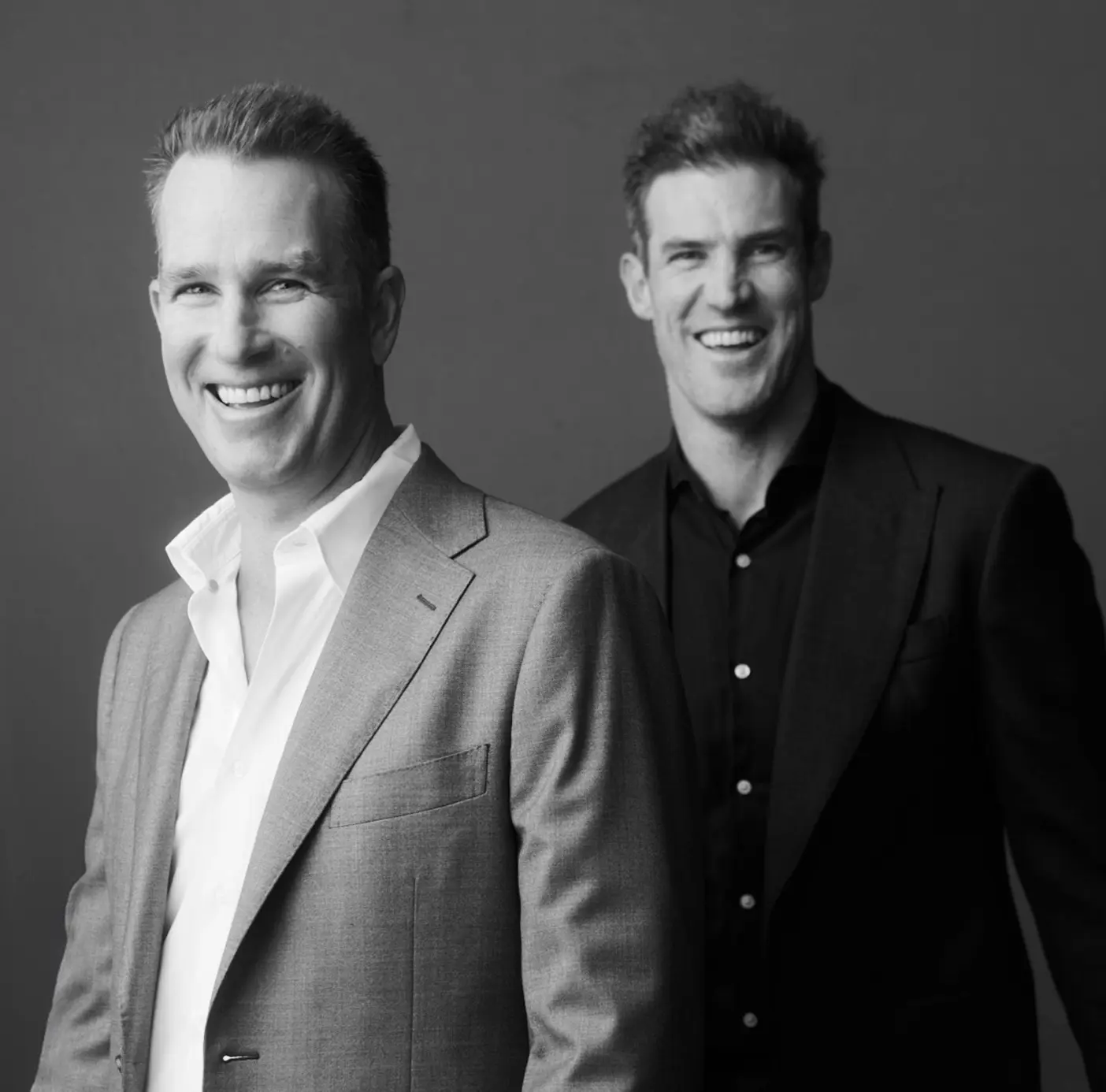
Welcome to Street Secrets. I'm Chris Bates in the studio today with James Fruittemerg. How are you doing? Very well, mate. Thank you for having me. No, we've known each other for a long time. I've worked with the team for many, many years. Today, we're going to go a bit deeper.
Obviously, PMC Property, which is where you head up the business. Obviously, you've got different offices that you added on in recent times. Obviously, the Brisbane market and the Northern Beaches market in Sydney have been where you and Will have Divided and Conquered.
So today's talk is going to be about the Brisbane market and I guess your sort of unique proposition within that market, because it's not just yourself, you obviously got a team up there in Brisbane. Yeah, before we get into that, I mean, let's just wind back a bit.
What you were doing sort of before you started, buyer's agency, you know, what got you into the industry and sort of how long you've been doing it for?
Yeah, absolutely, Chris. Started my career going through doing property economics at uni and then did the valuation degree. So I started off as a residential valuer back in 1999. So I'm probably one of the, shall we say, older gentlemen in the industry these days.
But I moved into a buyer's agency in 2007, primarily with...
an investment-based group at that stage. So I sort of learnt a few of the tricks of the trade back at that stage and then just gradually progressed to starting another business with Will, my business partner, for a national valuation firm. And then we kicked off PMC back in 2014.
So I think this is year 19 for me. So I think I've seen it all with GFC, growth markets, quiet markets, COVID, everything. So it's been a good pedigree to get to this state.
Yeah, I mean, the valuation background is a... Yeah, not super common. Everyone comes into a buyer's agency from different backgrounds. But I mean, do you think it's hard for you to always switch that hat off? Obviously, that's how you've been trained.
And how does it really help you in a day to day in terms of, you know, being able to grow the buyer's agency business out?
The valuation gives you a really good basis of construction studies, as well as obviously how to analyze property values. So I think the construction studies part is probably a heavier knowledge base that we can pass on to the team. The interesting part about valuation, you're always trained to be super conservative.
So when you're in a rising market and you're trying to be super conservative, it makes it very difficult for clients to get in. So that's probably been one hat we've had to say to clients.
If we're looking at historical evidence, here's where we see the numbers sitting, but you've got to be nimble and a little bit more willing to move with the way the market's moving and then sort of navigate it that way.
But it builds a lot of trust for clients where they know that your core is based around the value of the property rather than letting emotion take over.
While we're there, actually, I mean, being conservative, where do you think that comes from and why do you think that the evaluation industry is like that, not just through training and how do you sort of guide clients to what the emotional sort of true value of the property is in the market versus what a valuer might think?
The value is naturally all the risk falls on the valuers from the back. So I think naturally it's sort of been hit into you by your managers to reduce risk for the firm, keep your numbers fairly conservative. Don't be unreasonable, but that's naturally just the way you're trained.
I suppose the way that navigates then with clients now is, as I sort of mentioned, you're looking at historical data to work out where you see the value.
And then when we're starting to talk about where's the emotional value or where's the rest of the market seeing the value, the area specialisation, which I'm sure we'll touch on today, having those relationships with the agents and getting the insight as to where others in the market are all seeing value if you've got multiple offers in a $10,000 or $15,000 range versus one outlier who's an extra...
50,000 ahead of them, well, naturally market value is where the three or four are, not where that one emotional buyer comes in.
Yeah, I mean, that's a good understanding, right? It's what you actually have to pay in this market versus what it's actually worth on paper three or four months ago. It can really move quite fast, right? And if you don't really have the current market price, you can always just be chasing your tail.
I mean, when you think about the Brisbane market in particular, obviously being within it for a long time, I mean, how do you sort of see it evolve and where is it at in its sort of story right now?
It's been pretty fascinating, to be honest, Chris. I think having started valuing just before year 2000, we had all this concern leading into the millennium and the millennial, what was it called? Millennium bug or whatever they had was the worry back then.
And then going through, Brisbane had incredible growth in 2003, 4, 6, 7, before GFC hit. So it's just fascinating to see how the dynamics in a market play out. Then rolling in through to COVID, it's just been an incredible run for, I suppose, the Brisbane market.
But I think people lose sight of when you have your downtimes as well. So Brisbane was pretty quiet from probably 2010 to 2017, 2018. We had a huge oversupply of apartments. So you had to navigate as the market shifted.
You have to be well and truly ahead of the game to know where we're just talking about. In a rising market, you've got to be willing to sort of flex upwards.
You need to be fully on the ball to understand when the market's turning, when there's a slight shift in sentiment so the clients don't go beyond where they probably should be as the market turns. But I think Brisbane's just had an incredible story for quite some time.
There's obviously Olympics still in the future as well, which is going to be or is something that a lot of investors and homebuyers are still talking about almost constantly. Probably every one and a half people we're talking to is mentioning Olympics as part of their conversation.
But it's definitely had such a strong run that we're due at some point in the not too distant future to have a bit of a stabilisation phase within our cycle, we expect.
I mean, what do you think is driving that, Ryan? Obviously, you said, yeah, Investors Olympics. I mean, that's part of it. But I guess the expectation is going to be to put Brisbane on the map, a global city, et cetera. But I mean, it's a lot deeper than that.
What do you think has been driving the Brisbane market, particularly on the recent run? And what will continue to drive it long term?
COVID sort of obviously flipped a lot of the markets on their head a little bit, and we had pretty big population influx into southeast Queensland. The other element that's sort of come since COVID is we've seen businesses shift sort of their main offices to Brisbane.
So you've had Santos move their whole office from Adelaide up into Brisbane. You're getting other larger companies starting to take more office space and improve that dynamic of, oh, well, we can get a high-paying, quality, high-end job in Brisbane. It doesn't have to be Melbourne or Sydney.
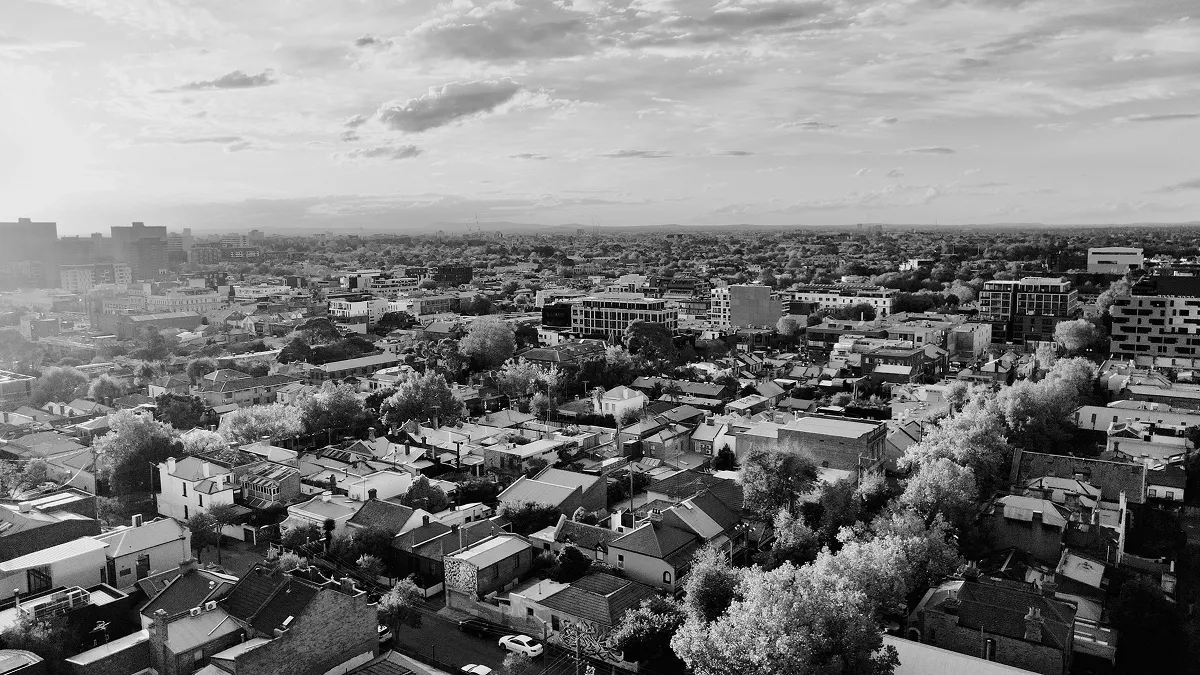
So I think that that's sort of bringing a bit of wealth with it. All the infrastructure that's been developed over the last seven to 10 years with roadways and Brisbane Metro and Cross River Rail and all of those major projects have now made Brisbane
a proper city we were probably a bit of a country town compared to Sydney and Melbourne even I'd say even probably six or seven years ago in the late teens early 20s so just seeing that development I think has given people a lot of comfort and confidence that The lifestyle's good.
Everyone seems maybe a little bit more, or maybe I'm biased in Queensland, everyone seems a bit more relaxed up here than necessarily down south, but still willing to work hard and really make it happen. So I think that's really driving the attraction towards Brisbane.
And in the future, I think that's still the attraction as it expands further. And it feeds into the Gold Coast and the Sunshine Coast because the way development's going at some point over the next 10 or 15 years, it'll probably all be blended together.
But I just think that attraction of being able to get to the coast still reasonably easily, but still having good lifestyles is what's the attracting driver.
Yeah, so the job's no longer a problem, let's say, you know, in terms of career progression. It makes sense for, you know, workforces to sort of look at the Brisbane market.
I mean, there is that annoying thing over daylight savings where you play around with the hours and I never know the time to call my business partner. I always call too early.
But then, you know, obviously that East Coast, right, and a lot of migration and, you know, the grey crusade, I guess, as people sort of get a bit older, they...
don't have like the cold as much and they've always want to go up the coast is you see that's the big shift right not just the older generation it's the younger generation particularly the exodus out of sydney maybe they can't afford to to buy into the sydney market or wanting to get out of the melbourne victorian market do you think that that's been a huge you know shift than say say 10 years ago where people were stuck in those cities a little bit more
yeah absolutely chris it's it's quite an interesting dynamic because it's not all the boomers sort of suddenly moving and then kids following it's actually almost in reverse at times where the kids are growing up in sydney going we can't afford this we need to move so they're moving to southeast queensland and the parents are going well
We still want to be near the grandkids. And that's something. So then they're making the secondary move. So it's more being driven by, I suppose, an element of affordability, but also attraction that they can still get a decent paying job. And then the parents are coming with.
So you're getting almost like a double population lift when that happens.
Yeah, if not triple, right? The friends also come with them as well, right? And then the more friends come and we've seen massive groups of friends or families go there. You mentioned the interesting point there around the Brisbane to the sunny coast and the Gold Coast.
How do you think that they all interlink? I mean, I know that you've got offices in those three places, but they are sort of becoming one in some sense, then how do you see their buyers are going to think about them longer term? Yeah, it's an interesting dynamic, Chris.
I think as you look at some of these development expansions that go on, I mean, you can drive, if you go towards the Sunshine Coast, you drive through pine farms and then suddenly you pop up in Banya and there's 600 houses on 120 square metre lots, just jammed door to door sort of thing.
So I think there's a lot of
investments that are being bought in those areas saying this is going to be next growth corridor but the reality is it doesn't provide the convenience it doesn't provide the lifestyle that a lot of people are looking for and i think you'll find that those markers will just get saturated with renters and investors and then as we all know any property market where you've just got a surplus of renters as opposed to owner occupiers
The maintenance doesn't get done. The yards look a little bit more untidy. The streets are cluttered with cars. It really doesn't create that sense of this is where I want to live. And so I can see a lot of these markets while pricing is forcing people out of the cities.
there will reach a point where people still look for that convenience and that comfort and accessibility. You might have a quick win and then it stabilises and levels out for a long period of time.
I do still think people see the three cities, Sunshine Coast, Brisbane and Gold Coast, as very distinct and different cities. And there is quite a different vibe to workforce, work from home levels as well. Sunshine Coast have probably seen a significant increase in employment where it used to be probably 10 years ago.
before Sunshine Coast Uni Hospital went in and created a huge employment hub around that. It was probably a lot more retirees, whereas now you've got a lot more younger generation working there looking for that lifestyle balance too.
So I think as an overall balance, while they might all merge, you're still going to have three quite distinct cities that people want to be buying. Yeah, I think you make a great point, right?
You know, you've got the Brizzo market, which we'll double down on in a second, but then you've got, you know, the new sort of Sunshine Coast beaches market, and then you've got this middle ground there and the vice versa down sort of the Gold Coast.
It's, you know, it's a whole other market in itself, right? And these sort of middle zones, um,
you know, a lot of investors sort of get sold the dream ride on the research and, you know, it's sort of this growth corridor in between, but that's kind of the danger zones in our view as it sounds like similar to you.
And, you know, while they're getting closer and land's getting tighter in the middle, it doesn't mean that's the stuff that you want to be buying. And so you've got to really know those three local markets and what's driving them.
When you think about the sort of Brisbane market, obviously you've got to, you divide and conquer a little bit. You sort of split it up into different buyers agents and that's quite unique up there because
You know, a lot of people just sort of, it's a smaller place in, say, Sydney, Melbourne, where it's very common to try to own a patch. But why do you think that that's so important now than it may not been, say, five, ten years ago?
Do you need to be able to cover a lot more ground? And why do you do that?
Yeah, a lot of it's driven by affordability, Chris, I suppose, to an extent.
If we're trying to cover a little bit more ground and clients have got a tighter budget to try and get in, while we don't say we can be all things to all people, the reason we got into this industry was to genuinely help people get the right property in a market where it's going to grow or get their right home exactly where they want to be.
So Brisbane, as it's grown, the population obviously is increasing.
the number of properties being listed for sale and selling is obviously gradually increased over time so we have then gone well in order to actually bring value to what our clients are doing each buyer's agent to be a expert to know every property that's coming to go through all the properties that are on the market they can only cover six or seven suburbs each
outside of that they're going to drop the ball they're going to miss something it'll go live on the market without us knowing and and that's when you you have that fear factor of your client sends you a message saying hey i saw this has hit the market and you hadn't mentioned it and and we want to be front running that market and and seeing 90 plus percent of what's coming so our teams just had to divide and conquer and just gone we're going to be an area specialist in these six or seven suburbs and every now and then we'll have a client that's looking in
to buyer's agents areas. We'll find out what is their core suburbs. That will be their dedicated communicating buyer's agent. And then the team will just run in the background together.
So the reason probably we've done it before a lot of others have is good talent in the buyer's agency world is extremely difficult to come by. There's a lot of new people coming into the market. They don't have a lot of property experience. They don't have the sales experience.
They don't have the negotiation understanding. They don't know how to be a marriage counsellor. You're helping a couple trying to work out what they actually really like and what they don't. So to get that skill set within a buyer's agent is difficult.
So we've just been fortunate that we've found the right people and then been able to put them on the ground in their specific areas to be an expert.
You mentioned absolutely the multiple skills, the great bias agency needs, everything from the trusted advisor to the valuing to the relationships sort of building is so much there.
But when you think about the bias agents that just sort of fly in and try to sort of invest in, because it's such a hot spot in Southeast Queensland, right? If you think about where do people want to invest?
you know, just due to affordability and budgets, like, you know, that's great and sunny out there and I'll just go and buy it.
Like, where do you think that they often just go so wrong, particularly in the last few years, obviously the Brisbane market's gone up and rising ties have lifted all ships together with the cost of construction's just ballooned, right?
So the value to replace, you know, high density or to basically build sort of greenfield estates has obviously gone up a lot. is really restricted supply.
So where do you think that these advice agents that aren't sort of local specialists within the southeast Queensland market or of just very heavily investor focus, where do you think they're really challenged in understanding what will protect their clients when markets do cool off, not just, you know, advantage of sort of when rising tides whistle ships?
Yeah, absolutely, Chris. And I think it's not even just southeast Queensland now. You're getting a whole heap of buyers' agents going, we're going to fly in and fly out of Geelong and areas like that. And even Perth, I'm sure there are a lot of buyers' agents doing that.
So I think where they really go wrong is they just look at the fact that you can buy a house and land with great depreciation in a growing market. And the market's growing there because it was never a market.
It was greenfield sites and now it's house upon house upon house and stage upon stage. And I think a lot of them look at it and go, well, the land value is increasing with every stage. Yes, absolutely it is because that's the way the developers are making the money.
But then you go, well, when that's all exhausted, then what happens? You've got to... super non-unique looking home that looks exactly the same as everything else down your street. And how are you going to differentiate any sort of uniqueness factor?
The other consideration with a lot of these new developments is while you do get some home buyers in there, Our focus is buying in markets where we've got 75% to 85% home buyers and 15% to 25% investors.
So that way we've got a market where the schools are good, people are taking pride in their properties, it's close to transfers, it's close to cafes, it's close to where they want to be, where employment's going to be. Whereas the investors will buy where they're just hoping they'll get a better depreciation.
Our cash flows, if we buy for an investor, is raw numbers. It's going, you have to spend this much every year to hold onto the property. And then if you get a tax deduction, that's an added bonus.
Whereas so many of these new developments, whether it's inner city high rise or whether it's land subdivision sort of stuff further out of the city, It's a cash flow based investment where after depreciation, guys, it's looking like it's going to cost you $3 a week.
What that does is it gets people to buy in for the wrong reason. And we used to hear a lot of people say, and we try to not knock it out of them, but they say it's just an investment. No, it's not just an investment.
You're buying a home for someone else to live in, and you're buying something that you really want to be appreciating in value. And once these developments reach And we've seen it in the past in Brisbane. You had Forest Lake back in the early 90s.
You had the first couple of stages of Springfield Lakes in the late 90s, early 2000s. And then they just plateaued for seven, eight, nine years because the development was complete.
So that's probably the concern we have with a lot of these emerging communities between Logan to the Goldie or heading up towards the Sunshine Coast as well.
Yeah, a lot of the arguments they'll say is, oh, we're not buying the new stuff, we're buying the older houses, you know, the blocks of land, whether it's Ipswich or sort of the Moreton Bay or whether it's down toward Logan.
And obviously they've gone up a lot, right, because, you know, there's been a sort of The interest rates and a lot of buyers have been pushed further and further out.
But I mean, do these concerns, particularly when you're entering this late in the cycle and if investors start bailing, because they're not driven at 25% investors, they're pushing way beyond that.
Is it a concern for you when you think about the Brisbane market, where the risks are sitting in terms of, you know, I have to mention at the start that when tough times come, that it's not going to affect everyone the same?
Oh, definitely, Chris. There's pockets where it sort of weathers a storm, regardless some of those inner city in demand home buying pockets, whether any changing market with maybe a blip of half a cent or one and a half percent change. You look at the fluctuation in your more
and this is probably showing my age, but the mortgage belt territory, which is what used to be referred to as that sort of middle ring to further out of the city area where when mortgages or interest rates were changing, they felt it.
And I think we'll see that, especially as interest rate environments change. I think we will see a dramatic change in those markets where people have pushed their just almost out of desperation to try and get in or just wanting to be as close in as they can be.
But I think we'll genuinely see a bit of a change there if the market has a shift with interest rates.
So the Brisbane market was a bit sleepy, I would say, a decade ago. And in terms of just entertainment and lifestyle, and that was sort of, like you mentioned at the start, a bit more country, more laid back lifestyle.
But it seemed like there wasn't any sort of desire to sort of really upgrade. And really, I mean, there was people sort of, Do you think that it was like a chicken and egg problem? Obviously, the prices start going up and people say, oh, it's actually a good investment decision to upgrade.
But it also meant that people had the desire and want to do that. So do you feel like that it's just become, you know, just due to job security and people's confidence around the economic sort of situation in Brisbane that they've just really desired to upgrade their home? And that's the...
real sort of thing that's been you know the shift do you feel like obviously there's always investors always first-time buyers but this upgrader take my profits and reinvest it back in property and is that the thing that's sort of been really driving the market
Yeah, it's quite interesting, Chris, because to be perfectly honest, I mean, I've been buying here for 16, 17 years or nearly 20 years now, but the shift even in the lead up to COVID was slow. So even that 17, 18, 19, you started to see a bit more of an upgrade.
We were probably referring to as the top end of town was probably $2.5 million at that stage, whereas now the top end of town is probably 15 to 20. So that's a pretty dramatic shift in less than a 10-year window.
But I think the change that came, and I hate to use COVID as a driver, but I think people built a lot more confidence in going, people now want to live here. And I find it an interesting dynamic that people made a change.
They could have gone to Perth, they could have gone to Adelaide, they could have gone anywhere else in the country, but they went southeast Queensland is where we want to be. We want fresh air, we want beaches, we want lifestyle. And I think once people realised that, they went, wow, the lifestyle's
actually really good, we can still get our job, we can still get paid or we can still get back to see our friends in Sydney, Melbourne with an hour or two flight.
And that just accelerated the willingness for people to go and do major scale renovations and new builds that maybe started a year or two before COVID, but then it just accelerated from the early 20s onwards. And now you can see
There's now this whole dynamic in play where homebuyers are going, I want to upgrade my home. I'm going to do a major scale renovation. But hang on, that's so expensive. I could go and buy something that's already done. It might cost me the same at the end of the day.
But instead of a two to four year journey with architects and construction and the hassle of moving out and things like that. They're just going for the dynamic of something complete. So that's then pushing that top end of the market to being a stronger market again.
And yet there's still plenty of people that are happy to get in there and spend that money.
So I think while lifestyle is a big driver, I think the comfort that they're not going to overcapitalize with what they spend on their homes or on a new build is giving so much confidence and comfort that they're willing to do it.
you touched on a thing that i've seen as well in the brisbane market is the um the expats coming back they look at sort of maybe they're living in you know southeast asia or they're in sort of dubai or london or somewhere else in europe and um yeah they come back and they're like yeah we get to the family stage and we're sort of over this expat life now and
Can't afford Sydney, don't we want to go back to Melbourne? And Brisbane's been sort of often their choice, right? Even if they're not from Brisbane.
And I think that's been a huge driver as well, because a lot of people have moved home over the last sort of five years and continue to do so.
If you think about sort of the agents, do you find that before the gap between the you mentioned the top end has risen a lot, but even within suburbs,
Do you find that, you know, the gaps between the better streets, the better aspects, the better frontages, that the bigger, better blocks just wasn't as sort of, you know, noticeable?
Like you sort of were a little bit, you know, people would have just have a natural ceiling on prices and whether you bought in the best street or the worst street, that gap was a bit tighter, but that's really shown that the quality assets are there.
you know, that's getting baked more and more into prices. Have you seen that shift as well as people are being a lot more understanding of, you know, what they're willing to put a value on and willing to pay for it? Yeah, absolutely, Chris.
I think it's a fascinating change, especially when you start talking new constructional major scale renovations as the Older generation, if I can refer to it as that, probably includes me nowadays, used to be chasing that thousand square meter block and wanting all that huge amount of space around them.
It's not in demand as much these days. Everyone's wanting convenience. They're wanting low maintenance. They want to be able to go to the coast on the weekend. And so there's been an interesting dynamic shift to that. bigger home on a 400 block with no yard.
We probably went there about six or seven years ago. And then people have gone, well, actually, maybe that's a tiny bit too small. We want a 600 block so the kids can still run around the yard, the pool's in the corner and we've still got a good size home. And you're seeing those...
blocks because they've got a slightly wider frontage the ability to design a beautifully presented home from the street rather than feeling like you're compressed in has just driven that market and you're starting to see that gap widen for the the 400s to the 600s while there's obviously a difference in land value you're seeing the demand you'll you'll get a lot more people wanting the 600 than the 400 because of that
little bit more space from neighbors a little bit more space to entertain and and they're on the desirable streets they're the ones where people are going we don't want to cut it up we want to have the space and you get these beautiful tree-lined streets with a scattering of renovated queenslanders and new contemporary builds and it just starts to create a vibe where
where people want to live and then they'll pay the premium to be in those streets and then aspect for southeast queensland is a big one you're west facing homes while it's not as much of an issue further south to my understanding in queensland a west facing entertaining area unless you're getting a spectacular city view is just getting a little bit too hot to entertain in in summer so people looking for more of that east northeast sort of aspect from the rear and get the breezes and everything
Yeah, I think you made some good points there around sort of the changes in buyer preferences, how they shipped over time. And COVID has taken people on a bit of a journey, everything from working from home five days to three days to hybrid.
And it sounds like obviously a lot of things that have been experienced in Sydney and sort of Victoria are absolutely applying up there. Even though people are going to the office a bit more up there, you're sort of returned to work much stronger. But if you think about the sort of
Overweighing some of the risk factors in the Brisbane market, obviously you're very pro-development. You do like to flood your city every few years.
What are some of the things you like to make sure that when you not just have these rose-colored glasses, a lot of people would probably fly out there and think, God, look at what I can get for my money compared to other markets.
And then they can rush into buying properties that are just that price for a reason. And what are some of the risk factors that people often overlook?
Yeah, that's interesting, Chris, because we undertake sort of 12 or 13 different due diligence checks before we even get in the car and go and look at the property. Probably the biggest mistakes we've seen people make is, as you mentioned, we like to flood the city every few years.
We have multiple different flooding maps.
and not so much just purely river flooding that's reasonably clear but there is a lot of overland flow because we are quite a hilly city a lot of people don't really pay attention to what the overland flow looks like and that's what that is is just pathways for water if we get heavy storms which obviously we do in summer so that's a that's a huge consideration for a lot of people don't really consider retaining walls and and properties built in below ground level is again very common because we've got
quite hilly suburbs a lot of people won't even take that into account and you can never stop water penetration once you're built in up against the earth so that's a couple of the major mistakes we see people making but i think the the real element that comes with the area specialty in brisbane is
Each suburb has multiple pockets and you can have a dramatic shift in some of the suburbs. You could have $250,000 to $300,000 difference by just being one side of the road versus the other.
And people can get easily swept up by agent conversations and look at the sales evidence and they go, go and look at those ones. And they go, oh, that seems about the same. Great, well, we'll buy it.
But you might be different school catchment or you might be in a high density zoned area and things like that where... home buyers who are driving the market, and they're the ones that will get emotional and pay the premium and move the market, won't want to be in those pockets versus the others.
So they're probably the major risks, major mistakes we see.
It's probably better designed than other cities. Obviously, the river does make a bit of challenges. You've got to cross it, et cetera. There has been a pro development mentality in Brisbane, hence why we had a lot of apartments that got built, some good, some not so good.
But how do you think about that as well? Because I guess it's more certain than other cities going through a major change right now than dealing with what they thought was never going to happen is happening. And then how do you sort of overlay that?
You know, suburbs as a city is fast growing, right? You've got more people there, roads get busier, trains, but also you have to house all these people.
So how do you sort of overlay the future of Brisbane's development and making sure that clients get properties that, you know, are going to take advantage of that, but not get massively limited in price growth or affected?
Yeah, it's sort of a different tact for obviously home buyers or investors. So for your home buyers, it's really understanding what appeals to them. Do they love quiet suburban neighborhoods? Or do they want to be in amongst the hustle and bustle? That sort of thing.
So that would probably dictate a little bit more. From an investment perspective, What we're looking at, some clients want that ability to get upgraded from change in zoning. So we stay pretty tight to the town plan.
And at the moment, they're sort of going through a potential change of expanding areas around shopping centres and train stations to increase the density, being a little bit further from them. So we take that into account.
If we're looking and going down the apartment path or a townhouse path, again, it really comes down to that scarcity factor.
So if we've got suburbs where there's a lot of character protection, which in Brisbane there is, so all your pre-war homes, so 1946, there is an aerial photo on council that shows you all the homes that were there before that. If it's there, you've got to keep those. So the suburbs where...
We have a lot of character protection. You know it's going to have to be renovated, not bulldozed, and you're not going to end up with apartments. So we know there's a bit more of a scarcity factor in those areas, so it gives us a bit more comfort of growth.
So that's just a few of the elements I suppose we consider, depending on what a client's trying to achieve.
So to wrap it up here today, I mean, agents is just such a big part of the role in buyer's agency. I mean, how do you guys really make sure that, you know, you're maintaining those relationships, but also deepening them year after year?
It's often a misunderstanding, you know, it's us versus the agent, but You know, how do you sort of work with agents and build that trust that gives you a bit of an advantage than say someone who's sort of new to the industry trying to have a crack?
Why, you know, agents are much more comfortable dealing with say someone like yourself?
being the fact that our guys only look after six or seven suburbs, they've got their agent list, they know everyone who's coming into that market or leaving that market. So our team has somewhere between three and five touch points with all of those agents every week.
Could be phone calls, could be texts, could be email, could be actually being at their inspections, private inspections.
you're building that relationship just through longevity it's like with anything you meet someone at a at a function and you say good day then you might catch up with them for a coffee and you build a bit of a friendship around around life rather than necessarily purely around property and and that's really what a lot of our team does and
what it allows us to then leverage on is we, because they're negotiating with the same agents constantly, week in, week out, they're getting to understand their style, they're understanding their dynamic.
Our team, we've got an in-house trainer, travels through all of our offices, who's been a senior buyer's agent, who's been a mortgage broker, who's been a sales agent, and just helps our team
work on their dialogue work on the relationship building and and work on how to enforce that relationship with the agent and get them in somewhat our corner which then gives our clients a huge advantage so the area specialization is the biggest part of that but only if your team is then talking to those agents constantly because the second an agent walks out of an appraisal we need them to go hey pmc i've just appraised this do you have anyone
Or I saw your brand might suit this client. Do you want to come and have a look?
And that's the advantage we get over most of the others who try to come into a market or into a suburb when they haven't been there for months and the agents just won't favour them because they go, well, you don't know the market.
Yeah, I mean, I do think it's something you can't shortcut, right? You mentioned earlier how it's hard to sort of scale the business. You guys have done it, you know, but you haven't done it in the way of just a hiring spree and just filling the boots.
It's sort of a slowly getting people who are great people and then taking time to train them over time.
it's really hard to build those relationships with agents, you know, and they've seen people come and go and, but yeah, the sort of knowing they're going to see you at the next open home, knowing that, you know, they actually like working with you and you're not going to stop them around, I think has a huge advantage versus, you know, not just a buyer entering the market, but also other BAs that aren't,
as familiar in that market just don't get the cut through jay's been a good chat definitely learned a few things and um it's been always great referring to our clients to you over the years you're in super safe hands with the not just yourself but the broader team and in different offices as well so thanks so much for coming on today no thank you for having me really appreciate it
Thanks so much for listening today. We hope you got lots of value out of it. If you'd like to speak to our guests today, there's links in the show notes on how you can get in contact.
And if you're buying your first home, upgrading, renovating, or need any finance-related queries, obviously we'd love to help. There's links in the show notes to us as a mortgage broker, and we look forward to next week's episode.