Curious about upgrading?

Wondering where to start?

Complex questions that need answers?
Is there a better structure for you?










"They managed to navigate my complex expat income and even got my Google RSU income approved as well."
"I highly recommend Alcove to anyone looking for a mortgage broker who is responsive, trustworthy, and truly cares about their clients. Thanks again to the whole team for making the process such a positive experience!"
"As founders, we're constantly jumping between things so having a partner that handled the details & made the process super clear made the buying process breezy for us. Very happy with the experience!"

“It almost felt like it was his responsibility to make it clear to me, not my responsibility to understand it.”
“I've been pretty much fully leveraged the whole time. So the sounding board on that, in terms of what was achievable, what wasn't — I think trust is just built along that.”















"Alcove has been a great partner. They look after my audience properly, keep things simple, and deliver real value. I’ve got full confidence referring clients knowing they’ll get honest, straightforward advice."

"Property is one of the biggest financial decisions people make. Alcove stood out because they take a strategic approach to lending - helping clients structure property and debt decisions in a way that genuinely supports their broader financial plans."


Adapted from audio. This article is a written adaptation of the original podcast episode. Sources and dates are shown with each figure.


Co-host of The Elephant in the Room. Real estate agent, buyer's agent and buyer's agent mentor, co-host of Foxtel's Location, Location, Location Australia, author of Auction Ready and co-host of Your First Home Buyer Guide.

Cameron Murray on Why Supply Is Not the Housing Fix
Economist Dr Cameron Murray argues that density and supply are different things, and that no city has ever made its housing cheap by upzoning. He also questions who is really in the housing crisis.
In this episode, we're talking with Cameron Murray from Fresh Economic Thinking, and we're going to explore whether we're fooling ourselves if we think the affordability crisis can ever be solved. And in fact, are we even fooling ourselves by referring to the current rental crisis as a crisis?
Have we been here before or just called it something different? Or are the yimbies onto something? Will rezoning sort this problem out once and for all? What are the biggest myths and misconceptions that drive housing policy? And possibly the biggest one, is supply really the answer?
Welcome to The Elephant in the Room. This is the podcast where we love to talk about the big things in property that never usually get talked about.
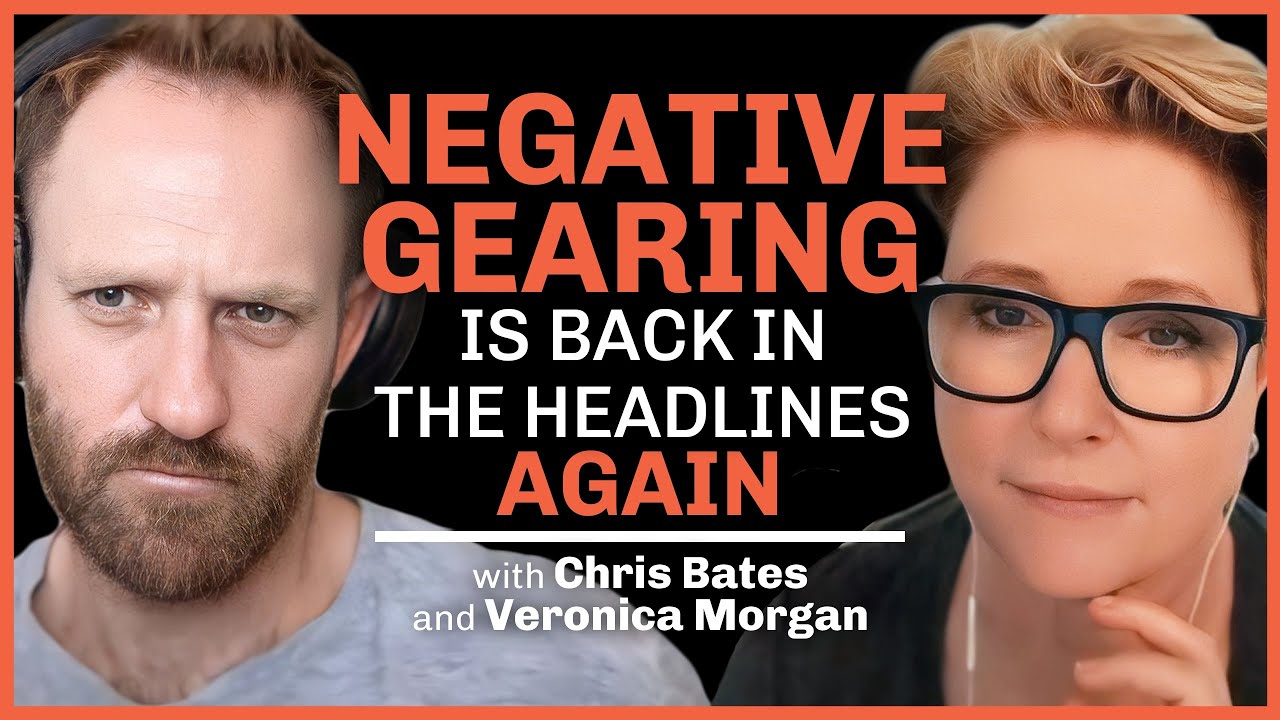
I'm Veronica Morgan, real estate agent, buyer's agent and buyer's agent mentor, co-host of Foxtel's Location Location Location Australia, author of Auction Ready and co-host of Your First Home Buyer Guide.
And I'm Chris Bates, mortgage broker, recently ranked number five in Australia out of over 18,000 brokers in the annual MPA Top 100 Mortgage Broker Awards. Before we get started, I need to let you know that nothing we say here can be taken as personal advice.
We always recommend you engage the services of an appropriate and experienced professional.
Our guest today is Dr Cameron Murray, who describes himself as an economist specialising in property and urban development, environmental economics, rent-seeking and corruption.
Cameron has built in himself a bit of a reputation for pointing out the hypocrisies and illogical irregularities of our opinions and commentary around the property market. Recently, he launched his new book called The Great Housing Hijack, The Hoaxes and Myths Keeping Prices High for Renters and Buyers in Australia. If, like us,
you appreciate the absurdity of we as a society talking about the need for affordable housing while simultaneously not wanting the value of our own homes to fall, then I'm sure you'll enjoy this chat. Thank you so much for joining us again today, Cameron.
Thanks for having me back, Chris and Veronica. Great to be here.
Absolutely. Good to have you back. And congrats on the book. I always laugh sometimes prior to pressing record on this podcast. We have a chat and we're like, uh-oh, we probably should have pressed record. And today was one of those examples. Cameron, why did you write the book?
What was the bigger play and what motivated you to? A lot of effort, so what made you ready to do it? Yeah, you're right.
A book is a bit of effort, but I've been participating in public debate about housing for more than a decade. I spent four years at the University of Sydney doing research on housing supply.
And I realized that so much of what passes for informed debate just is untethered from either economics or the empirics of what's happening out there.
And in fact, I thought there were so many different ways in which the debate was hijacked or it was incoherent that I needed a book-length discussion. attempt to try and straighten all those misconceptions out because it's not that people are wrong in one direction.
There's many, many different ways where we misunderstand property. And I think, you know, I also wanted to get in the book that the economic incentives for different groups to promote a public debate that isn't quite grounded or informed, but one that hinges on their preferred stories.
So there's that element to it as well.
Do you have some misconceptions yourself? I guess when you thought when you were writing the book, it's going to say X, Y, Z, and I've got all this sorted out and I've just got to get my research to back up my argument, blah, blah, blah.
But when you've actually started digging, you know what? That is not the way I thought about things. And actually, is there any that really popped to mind?
I think one big thing that I changed my view on between starting the book and today is the idea of using superannuation for housing.
I've been a critic of super, but I was still sort of sold on the idea that it would unleash this wave of buying and just push prices up and have no effect. But You know, when we try and be consistent with your thinking, well, super is just another part of your income, right?
And, you know, we don't get upset when people use their income to buy houses and our incomes go up because that, you know, if your argument is that using super to buy houses just has no net effect because prices go up, well, that's true of all. all income.
In fact, pay rises don't work because people just use it to bid up housing. So it's all for nothing. Let's not worry about pay rises.
And so you sort of to be coherent, you have to sort of give up that thing and say, well, you know, every dollar spent on housing by someone with a super account could also have been put in their super instead of buying a house. It's exactly the same trade-off today, right?
Because you can put extra in your account if you're below the threshold. It's exactly the same trade-off.
Now, it might be true that there is a little bit of a barrier to certain people and you might get a little wave, but then the question is, well, why are they willing to pay more and why won't that wave quickly subside?
And the other point is, why is super different from a first-time owner's grant? Well, because it comes with the opportunity cost of growing its value in your super account. It's not free money.
A first-time owner's grant, if you don't use it to buy a house, well, it is free money because you don't get anything. And so super allows you to take that decision and not rush in and get the grant, but wait for that same opportune time.
Oh, well, I'm going to build up my super for another three years knowing I can use it for a house deposit. So you don't get that rush to the exits.
So that's one big one where I changed my view because as you'll read in the book, I spent five chapters trying to explain the big economic forces, what I call the five equilibria in property markets.
And if I'm going to be consistent with myself, I've got to acknowledge that, oh, okay, well, super is not going to change those greater forces and it might allow people to shift into a house earlier than otherwise, but with very minimal price of
I think it's great to hear you talk about your own sort of expansion of thinking or the evolution of your thinking. But I really would love you to talk about those five at market equilibria because I found them fascinating.
And in almost like a planetary thing, I almost sort of visualize it in my own mind. It's like, you know, all the planets orbiting the sun. And because, you know, you move one and it has an impact on the other and they sort of all jostle and then adjust themselves.
And so if you can explain, I guess, the symmetry of the property asset markets, as you call it, because, you know, I guess we can boil down the real reason that nothing has changed in a way due to this equilibria, right? Is that fair to say? Yeah.
Well, yeah, let me just unpick a bit there, Veronica. So let's just, maybe before I get into those, I better lay some groundwork here that when we say we're having a housing crisis, we're not all having a housing crisis.
Yes.
This is, I think, the big, when, as you said in the introduction, are we really having a crisis? Well... I thought we were, and I thought the audience for my book would be those that think we're having a housing crisis.
So when I've been on my book tour, I ask the audience to put your hand up if you're a homeowner. Keep it up if you're having a housing crisis. Okay, hardly anyone.
I've actually had no one who's a homeowner leave their hand up in like six events with more than 100 people at each. And then I get them to put their hand down, and I get the renters to put their hands up. And maybe I get a quarter or a third of people renting.
And I say, leave it up if you're having a housing crisis. And maybe a few, maybe four or five out of 100 or 150 have their hand up. And I'm like, well, hang on a minute.
Are we supposed to have this massive once-in-a-generation housing crisis and yet almost nobody, if I round to the nearest 10%, it's zeros, right? Is nobody's having a housing crisis in this room. What are we actually talking about? And so that gets to the point of this symmetry.
Rising rents are an investment return burden for landlords and for homeowners it's a capital growth burden. You're leveraged into this home, your mortgage is a fixed rate or fixed dollar amount and your value goes up 30% or your leveraged equity stake goes up enormously.
That's not a crisis, is it? That's exactly what you want.
And so this is the symmetry part, and this actually points to the political difficulties of doing things about property, is that every dollar benefit for a renter in the form of lower rent or a lower price for you to get into purchasing is a dollar loss for a landlord who's getting less investment return or a dollar loss for a seller who's given up the chance to get a higher price in the market.
And so we have this tension, this symmetry between two-thirds of households who own homes and the 18% of households who are landlords and the 30% who are private renters, of which only a small fraction are being out-competed in rents by the top half of that 30%.
So it's actually 10% or less of the population having a crisis. And to be more specific, a lot of the reason rents are going up is because incomes are going up. It's not a situation where, oh no, rents are going up, it's a crisis because my income's not.
someone else's income is going up to make the rents go up. Because if no one's was, no one would pay those rents. So you've got to be a bit more coherent in your thinking. And that's where these five equilibria or the five forces of property come from.
And they help explain where does the asset price of housing come from? It can't come from nowhere, right? It's got to be relative to something. Where does the rent come from? It can't just... You know, supply and demand is not an explanation, right? It's a tautology.
Because we know in economics, right, supply doesn't mean how many things there are. Supply has a very specific meaning in economics. It means the willingness to sell of owners of objects, items, products within a certain period of time. It's how willing you are to sell.
And buyers' demand means how willing you are to buy in that period of time. And so when you say prices go up because of supply and demand, what you're just saying is buyers and sellers set the prices. What's that tell? It's nothing.
You may have just saw the guy holding the pen who wrote the contract set the price. It doesn't contain information. The question is why? Why did the seller hold out for that price? Why was the buyer willing to pay that?
The five equilibria sort of answer those why questions in a more sophisticated way. The first one is about asset prices. Well, where do they come from?
Well, they come from the fact that you can take a dollar from a property asset, sell that property asset, and put that dollar into any other asset in the economy. And that ability to exchange means there's an equilibrium there.
People will only exchange if they think they're slightly better off swapping from one to the other. Now, the analogy I use to explain equilibrium is the supermarket checkout, right? So you've got two checkouts open. If one checkout has three people in the queue and one has 10, it's not an equilibrium, right?
Because you can jump from one queue and swap to the other and get out of the supermarket faster. Right. But six in each or six in one and seven in the other, getting very close to equal is an equilibrium because there's very little benefit from swapping.
And so in the asset market, where the asset price comes from, that equilibrium force is from the ability to swap a dollar out of housing and into any other asset and vice versa any time you want. And that's why we see during COVID, we dropped interest rates. Why did we do that?
Well, to make the cost of taking your dollar out of the bank and putting it into property lower, right? To make the price go up until we return to that equilibrium where the yield on properties come down so that you're no better off switching from cash into property.
Renting money costs the same to become your own landlord, costs the same as renting a house to become an occupant of someone else's home. So asset prices come from somewhere. And if we look historically, yields track the macro settings in the economy. They fell from the 80s and they've converged down.
And that's why prices went up.
It's not because of supply. It's not because of anything magic. It happened all over the world where there's those asset price sort of variables at play, if that makes sense.
I love the spatial equilibrium. I can't remember who we interviewed some time ago that talked about spatial equilibrium. I was like, oh my God, that is the word for the ripple effect.
And what I used to call the reverse ripple effect when the market slows down and the market contracts and everyone goes back to where they wanted to buy in the first place. And your supermarket queue perfectly illustrates that.
Like, yeah, that's exactly what buyers do when they're buying property and renters do, I imagine, as well. That's right.
And so the supermarket queues there are just location A and location B, right? And if the benefit of switching from one to the other makes sense, then you do it, right? That's exactly right.
So all these sort of things and this zero-sum game in terms of like, you know, if somebody's going to lose something, somebody else is going to gain something and vice versa, you know, that sort of explains why really nothing fundamentally changes.
And in your book, you do talk about all the vested interests and, you know, politics in particular and why certain circular arguments are put up and irrational arguments. But there's a couple of arguments that come out, and they seem really logical on the outside, right?
The supply argument is one, and certainly I watched a recent Q&A episode on the ABC. You were on the panel, a bunch of politicians, and I couldn't even watch the episode. I don't know how you sat in the chair for that long, to be quite frank, because I had to turn it off.
I was just yelling too much, yelling at the television, you know. Um, and it was, everybody's coming up with the same, the same answer. They're all convinced they're right. And, you know, you could just see that they were incomplete even in their thinking because of whatever political background I'm coming from.
Um, the other one that seems so logical and there's lots of very well, um, very credentialed economists that, that, that purport this and that's the zoning. The change of zoning is going to solve the problem. Peter Tulip is one example. We interviewed him a few weeks back. Um,
But you come out and you say that neither are really going to solve the problem. You know, so I guess if we can pick them off, we start with zoning. Can you explain why a change of zoning won't immediately create a development boom?
Yeah, well, I can because zoning is not stopping people building houses.
So you can build, look at the 2010s in Sydney, right? Building 60,000 homes a year and then it collapsed by half.
Why?
Did zoning suddenly stop people building? Or was zoning, shouldn't zoning take credit for the building boom itself? There is, you know, one of those five equilibria is what I call the absorption rate equilibrium. It's how quickly property owners choose to develop homes each year, right?
And there's an equilibrium there. It's not that they will develop as many as they're allowed to, because every home developed today can't be sold tomorrow, right?
If the price is higher tomorrow, you're crazy for building a home today and pushing the price down when you could slow down how quickly you build and sell at a higher price tomorrow. That's why we have these master plan communities that take decades and decades.
um to get built out and it's not that there's a physical constraint because we know when the market picks up they can not not double not triple not quadruple but increase how quickly they build by a factor of 10 if the market's there and then when the market gets soft they decrease it again
And so, this is the reason. I mean, zoning can regulate the density. And I think this is one of the biggest confusions in property, is to call density dwellings per area of land and supply dwellings per period of time of projects of any density.
And
Assume they are the same thing, that if you allow more density per site, that you will do exactly the same number of projects, but force into the market those extra homes, which is not true because you don't have to build a certain number of projects each year, right?
And so this is why Lucy Ellis, former deputy governor of the Reserve Bank, was asked at the Filinski inquiry into housing supply Have you done some research on housing supply? Where are the examples of cities that have made homes cheap by upzoning? And she said, oh, we've looked and we can't find any.
The only times houses became cheap were during recessions and depressions. So the question is, well, hang on a minute. There's this idea...
Based on this confusion of density and supply that is dominating the public debate, and yet no one can even point to a city, not today, not any time in history, that made housing cheap through this assumed mechanism.
I'm going to ask you that.
And now it gets all the airtime.
Yeah, I'm going to ask you about Auckland in a minute, but you do make an important distinction also between planning approvals and building approvals, or building commencements even. So rather than call for rezoning, perhaps we should be calling for mandatory commencement of existing approved developments.
I mean, governments can assist with funding if this is the bottleneck, you know, surely that would change the conversation.
I agree. In fact, last year, Lendlease, who owned nearly 40,000 housing lots undeveloped and approved, one of Australia's biggest listed companies, sold their portfolio of undeveloped housing estates to Stockland for $1.3 billion, I think.
And at the time, I said, hey, if you want more housing built, instead of the Housing Australia Future Fund, which is $10 billion to buy non-housing assets, why don't you take 1.3 out of the 10 and buy housing assets and start building these 30,000 homes? And everyone goes, oh, no, that's silly.
You can't do that. I'm like, why is that silly? Why does it make sense to buy Apple shares and BHP shares and hold them for 10 years before you buy houses?
Since I've written the book, I have this new analogy of the magic suit. You may not have heard this, but the treasury officials, when they go to work, they put their suit on and they go, housing, that's a terrible investment. What a cost. We can't impose this cost on the community.
Worst thing to spend our money on. Get home, take the jacket off, get on the phone to the mortgage broker. Can I have another million bucks? I want to buy a house in Sydney. It's the best asset you can spend money on. There's nothing better in the world. Which is it?
Is it this terrible cost imposition that we shouldn't spend money on? Or is it the best asset you can own in the world you want to leverage and borrow millions of dollars to buy? It can't be both.
And so we've got this bizarre situation where we talk about housing as a cost when we go, should the public sector build housing? No, no, no, it's a big cost. Let the private sector do it. They're going, well, it's not a cost. It's an asset. It makes me a return.
And then you can see this logic when you look at the
annual reports of the Land and Housing Commission, which now has a new name in New South Wales. They opened the housing stock, the public housing stock, and the value of their assets in 2013 was something like $34 billion. The value of those same assets in 2019, $54 billion.
It's a fund that owns houses that made $20 billion in the 2010s. Well, that sounds like a housing fund to me, right? And yet we've got this weird debate where like anything but houses, right? We can spend money on anything but houses. And it really blows my mind sometimes.
odd. Yeah. So Chris Minge is obviously doing a lot of changes at the moment and a big part of that is to rezone. What you're sort of saying is that even though that's rezoning areas that are, like some of them where, you know, maybe it's easy to build apartments now anyway, right?
The reality is like there's enough land there and there's enough zoning. But You know, a lot of those areas, they are trying to push back on NIMBYs and they are trying to change things that are super desirable areas that would, you know, there'll be a lot of downsides in these areas.
But ultimately, even if they do change it, there's time for them to buy the land. It's time for them to accumulate a big enough lot to actually maximize the value. It's
time for them to get their application in, then they might say it's actually not better to build it now, better to wait because there's a bit of a supply coming to market. So the zoning itself, yeah, maybe that will create more supply over decades, but you're not going to create enough supply.
You're instantaneous in the market that's going to change prices and affect things because developers will just rule and say, well, actually, it doesn't make sense yet.
Yeah, well, I think you're also sort of slipping into that density and location dimension, I call it, right? So, yeah, there will be more homes at those locations, but probably fewer at other locations. And yes, those homes at those locations might be higher density.
But in terms of the number of them, we don't know. And it's unlikely to make a material difference, like be a quantity that makes a material difference on price, right? Because it's also true that you can't just make a location cheap by building more houses there because people will move there. Yeah, exactly.
I can already pay the premium to move there, right? And so what you're doing is you're taking people who would have lived in a house elsewhere and putting them there. Yeah.
There might be good planning reasons for density in one location above another, and I actually genuinely agree that densification can be done very, very well and should be the sort of desirable planning outcome, right? Densification complementary with public services transport parks, right? Boom.
It works really well in many cities, but none of those cities are cheap. And the better the amenity and the accessibility of that location, well, the more you're willing to pay to be there rather than somewhere else.
That's your equilibrium, right? Which of your equilibriums is that one?
Yeah, you can change the composition of where people live.
You definitely can ban building more homes in Bondi Beach. Fine. Okay. So then the same number of people will live there. And the people who can't live there, guess what? They'll live somewhere else. And when they go to buy a house in that market, you know what?
They might buy new houses and get them out of the ground.
We confuse an economic question about quantities with a planning question about locations and densities because only property owners choose that quantity. They can do as many projects as they want. Planners just say where you can do it and what hoops you jump through, which is a good debate to have.
We should have those debates. I actually like that people care about their neighborhoods because it's way better than the alternative. But we've got to face that what we're doing here is not changing the price of homes.
We're negotiating about where different types of things should go, how they should interact with each other, where commercial should go, what streets should be upgraded and which shouldn't. Yeah, fine. Let's have those debates, but let's not pretend we're making housing cheaper for everyone at the same time.
No, it does. Auckland is touted by rezoning exponents as all the evidence we need to prove that this works, right? But you don't agree.
You're saying that the evidence that they're pointing to isn't actually evidence or it's misleading or it's been misattributed to the rezoning. So can you explain where you're coming from with that?
Sure, Kim. So here's the thing. As you would know, as people involved in property, it goes in boom and bust cycles everywhere in every city all the time. In Auckland, they had a 2000s boom, like most cities around the world, and a bust after the financial crisis.
It lasted around until 2012, 2013, and then approval started picking up, the market began to normalize. In the middle of this process of the market normalizing, there was an upzoning that allowed townhouses in many locations where previously detached houses were around.
And the composition of housing shifted towards townhouses from detached houses and apartments. And everyone's saying, well, look how many new homes we got. I'm like, well, yeah, but there's a compositional question here, right? Because you're in the middle of a construction boom, just like Sydney had, right?
And if you want to credit the upzoning in Auckland, are you also crediting the 2010s boom in Sydney on upzoning? No, you're not. You're in fact saying the opposite. So you kind of try to have your cake and eat it.
Well, when there's a boom in Auckland, because we could see the upzoning, we're going to credit that. In Sydney, we can't see it or we're not going to credit. We're actually going to say changing zoning would have got the opposite, right? It would have got an even bigger boom.
So, I wrote a critique with my colleague Tim Helm. He's the research director at Prosper Australia. It's Australia's oldest think tank, actually, founded on the ideas of Henry George. He was one of the few people who actually read front to back one of the first big articles, academic articles about awkwardness.
There's some major issues there, and one of them is drawing a straight line from the bottom of the trough of approvals three years in advance through this time series that goes in boom and bust cycles and saying, oh, without the upzoning, it would have just been this straight line at the bottom of this trough.
Why? It doesn't match the data at all. There was also some other data issues, and we can actually see now in Auckland they're having the biggest crash in building approvals ever. In the last 12 months, the market's completely ground to a halt.
What's more interesting is if you use the method that was applied to show that the building boom was due to upzoning, that method tells you that the crash currently being experienced must also be due to the upzoning, right? You can't interpret it both ways.
You know, you can't take the upside as due to downzoning, but not the downside. So yeah, and I mean, people in Auckland aren't super happy with housing. And I think you'll find that there will be another big bust like they had during the financial crisis that lasts for four or five years, perhaps.
But there was also talk about falling rents and falling prices. Is that because of that compositional element of median price calculation? Is that what you're talking about? It was a different type of property, which is, of course, going to have an impact on the median.
Very good question. I'm not 100% clear on the price metrics or nor the rent metrics and how the compositional shift of new homes entering the market has changed that.
There is an effect.
The likely effect is to be lowering the median due to the major change in the composition of new homes. So that's definitely true. The other catch is that during 2020, you know, New Zealand locked their borders for nearly three years, right? And just like in...
Sydney and Melbourne, people fled the major cities. So it's very hard to see the COVID effect wash out of the data yet, right? So you've got this 2016 upzoning that couldn't have really had an effect until the mid-2018 from anyone actually building anything, right?
Because I think it was December 2016. And then 18 months later, you close the borders for nearly three years and people fled the cities. So I think the jury's out. And the fact that it's such an important city in the whole world, right?
We have the whole world's cities to choose from for our evidence. And this is the only one where we think we've got some. It's almost indicative of the issue, right?
Like if it was such a great thing, we wouldn't all be focused on this one 2016 planning change in this pretty niche city from a world perspective, right?
So I think the jury's out. How do you feel about behavioral finance, Cameron, and, you know, the impacts of human behavior in the housing market and how it affects their decisions? I mean, you spoke very early at the start about the equilibrium. You know, you get a dollar here, it's a trade-off.
But that's just not so simple, right? When we live in our homes and, you know, there's no confidence bias in prices and, you know, you have to go on the transaction costs and that could be part of the financial decision. But, you know, you've got friendships, you've got relationships.
It's not so simple to make these moves. And, you know, You know, the rental crisis, you know, not being able to rent and the emotional elements and how does this all come into your thinking?
Because it's very hard to put like numbers on this, but it has such a huge impact on our market and yeah.
Yeah, you're definitely right. I mean, this is one of those, as I wrote in the book, in my chapter on cycles, we don't really know why the market goes in cycles. Economists in general don't have good theories about this because...
I think of these market cycles, and you're right, there's got to be a behavioral element there sometimes, right? Because right now, yields are, whatever, 4%. Interest is 7%. Why am I buying this gross yield of 4%, right? Why am I doing that? Why am I leveraging interest return?
I've got to have a behavioral, psychological rationale for that. And that happens every cycle, though. It's amazing how predictable...
we are and so the way i sort of reconcile the idea is these cycles are like the tides right these forces are out there but you can get king tides and you can get regular tides but in general there's an average water level you actually can't deviate far from there
There are limits to how much being swept up in this cycle can go. There are limits. And it's actually quite interesting. We're in a part of the cycle now with rising interest rates in the face of sort of a second wave of rising prices in many areas.
And if I read the history books, one great book called The Land Boomers, I think his name's Michael Cannon, wrote about the 1880s Victorian land boom. Now, 140 years ago. And he said, well, we thought the boom was over because interest rates went up from 2% to 6%, which...
Sounds uncannily like today. Prices paused for a year. Everyone thought it was the end. Guess what? They went up for another couple of years. So it's this late stage irrational price boom in the face of high interest rates with very low yields. And I wrote about that on Fresh Economic Thinking last year.
I said, hey, guys. Just look at history. I know we all think adjustment to interest rates is instantaneous in housing, but it's not. Every cycle, there's this last little bit where everyone looks at each other confused and says, who's borrowing at these high rates to buy at these prices? And they do it.
Some people do. So, yeah, look, there's a behavioral element there. And I just, I don't know. Australians are interesting too because property is such a big part of our culture. Yep. Right? Everybody talks about property.
So I think we have the potential to have greater swings than other places, maybe in Europe, that don't. Although maybe the Spanish, for example, learned their lesson after the financial crisis and the memories are still a bit raw of losing hundreds of thousands of dollars on property. Yes, it's an interesting one.
I'm on a personal mission to help more people make better property decisions. And you can find out all about what I'm working on at veronicamorgan.com.au.
And there you'll find resources for first home buyers, details about my buyer's agent mentoring program, access to suburb help for investors, or if you're looking to buy your dream home or an investment property in Sydney's inner west, eastern suburbs, or lower North Shore, you can connect with my team at Good Deeds Property Buyers.
If you're thinking about buying your first home, upgrading to a new one or purchasing an investment property anywhere in Australia, we would love to carefully guide you through this journey and importantly, get the finance right. Please reach out via our website, wealthful.com.au.
It's interesting too that your analogy around the tides I thought was interesting and you plot that out in the book and there's a section you talk about why you were predicting in the beginning of COVID that prices were not going to fall 30% like all the other economists, the bank economists who were out there.
And at the time, we had discussions on the podcast, you know, Chris and I with many people and I'm like, hang on a minute, I'm thinking from a behavioural point of view, you're a bunch of people, you're locked in houses and
And you've got all your activities in those houses and schooling and work and all the rest of it.
If you feel under any pressure that your house is not big enough, you're going to come bolting out of those gates the minute we get out of the houses and you're going to want to buy a bigger house. That's just human behavior. And then you saw the sea change and the tree change.
So people reacted in potentially – Could argue predictable. Some people will say unpredictable. But certainly, so I'm looking at it from the behavioral thing. I'm thinking I can see prices actually going up because interest in buying or buying activity going up.
And you plotted out, well, according to cycles, it's just illogical that it could possibly go down 30% because if that's the case, this would be a massive anomaly, never happen in all the cycles. in all of the time that I've been tracking, right?
So I guess the two things go side by side in the sense that economics or data is just a reflection of what people actually did under any given circumstances, right? So with regards to- Exactly right.
But just always be wary that, sorry, just let me say, always be wary that after things happen, they always make sense in retrospect. Of course. It's amazing how quickly we can justify what happened after it happened. Oh, that makes perfect sense. You'd have to be an idiot not to think that.
But before it happens, oh, it's a very different world.
No, the thing is we were recorded having this. That's true, but we were recorded having this conversation, so there is evidence of that. You don't seem to be a fan of yimbis, right?
And I often wonder myself whether it isn't the main difference between an imbi and a yimbi that the former own property and the latter rent and want to own. And it seems to be that that yimbi activity is very much concentrated in, you know, valuable areas or areas where land is valuable. Yeah.
So, can you expand on your thoughts around Yimbyism?
Yeah. It's, it's a puzzling, it's a puzzling group, um, and it's pretty funny, actually, as a, as a, um, how would I put them, a cultural movement? Yeah, it's, it's a really bizarre thing, um,
But yeah, I mean, it's nice to have more people interested in the design of cities and what good densification looks like. So I guess I see a lot of them similarly to them on that respect.
But the feverishness of their lobbying that, oh, if you heritage list a building, it's going to make houses expensive, ignoring the whole difference between density and supply, ignoring the huge stock of available zone capacity that people are patiently waiting on until the next cycle.
Um, so I do find it's a bit out of proportion. At the end of the day, also, they're NIMBYs for often things like nuclear power, or they're NIMBYs for new highways, or they're NIMBYs for many things, right? You go, hey, we need a new highway to open up the sand.
Oh, no, no, highways are bad. It just leads to more congestion. Okay, so... Is it just a matter of tastes and preferences here? Which is fine. Participate in this conversation about densification.
But, you know, just put aside those big philosophical sort of nobler than now sort of ideas. We're all NIMBYs about something. Let's just find where we can agree and what we think makes the city better.
And let's actually also put to the side this idea that somehow people who care about their neighborhoods are making them bad. I think that's it. That's just puzzling to me. I've worked in property development. My first book, it's called Ridged now, is all about political favoritism.
Of course, the property industry is hugely involved in politics. As I like to put it sometimes, it's The premise of the Yimby idea is that somehow a bunch of suburban grandmas have pulled the political strings more effectively than the most politically connected wealthiest group of people in Australia's history.
How did that happen?
That is actually a very funny way to look at that. Yes.
Yeah. Right? And look, and it's kind of a good thing in general that we do give people some political power and representation at a local level. You know, there's a balancing act politically there.
But this whole, you know, creating this binary, creating a nemesis of the grandma who moved somewhere, spent their whole life investing in enablers is bad because they like it the way it is. I mean, can we just get over it and say, hey, where do we agree? What does good densification look like?
Because I've been, you know, I was in my local community group and it makes a really big difference. Densification, when it comes with public service upgrades, road upgrades, things that people like, park upgrades, people could really go for it.
If the buildings look good, comes with things that make the suburb better, people really go for it. But the experience in general is the opposite. In my community group, we had to lobby for five years to get one traffic light to cross the road. right?
There's like 5,000 new apartments at the end of the street. No one can cross the road. And we had to protest in the street and lobby like crazy. I'm like, is this really what densification looks like? Can't it be better? And if it was better, people would like it more.
So anyway, I think there's a lot more common ground than they let on, but, um, It makes such a good headline. As I say in the book, the media just loves headlines. They don't want to know the facts. Now we're having this debate because it's a great acronym, great headline.
We've got a hero and a villain. What more could you want?
Cameron, there's lots of things that you would say the fundamentals that support price growth over the longer term, which we could talk a lot about.
What are some of the things that you think that people are factoring into their view on housing and residential property that could be a negative to, or really stop the longer term trend? Or do you think that the You know, all the other things just completely outweigh that.
Is there anything that you think that people are missing that, you know, that overconfidence bias, that's something that people, it's gonna be iceberg? Uh, that's a good question.
Uh, as I said, property markets go in cycles, so it's always a puzzle when that is. I'm gonna predict there's gonna be a next correction. I'm not gonna tell you when it is, but, uh, I, I'm gonna be prepared for whenever I, it, it comes. Yeah, no.
Look, if you zoom out over time past each cycle, property just tracks the macro economy, right? It tracks the level of nominal incomes in the economy because what do we use to rent houses? Nominal incomes. Who are we bidding against? Other people and their nominal incomes for better location.
Notice of the rental equilibrium. People bid up housing, they buy more and better housing until such time as essentially the market on average spends about 20% of their income on housing.
And that was true in 1911 in New South Wales' first inquiry into rent, true in 1990 in our first survey of income and housing, and it's true in 2021 in our most recent survey of income and housing. This is just how the market operates. And so a lot of what we've seen recently
In terms of the rental market, it's just a reflection of that broader inflation in the economy and the broader increases in income. And that's why it's happened everywhere in the world. And that's why it's happened in regional areas where people thought there was lots of supply.
All of a sudden, rents in the Gold Coast dropped 65% or 70%. Hang on a minute.
I thought we had lots of supply here. Well, it's because people with higher incomes are living there now, and they're bidding out for those better locations. And that's happened in second-tier cities around the world. We've had over 20-plus percent inflation in the last few years.
That's got to flow through to rents as well. And one little mistake I should probably mention that people talk about They say, oh, wages aren't keeping up with rents. And that's true. But wages aren't household incomes.
Wages are the price for the same job one year to the next for the same number of hours. But what we actually saw since COVID is people working more hours in higher paying jobs with higher rates for the self-employed.
And we actually saw massive nominal increases in income, especially for lower income households, but not wage increases. Yeah. Total income increases from the self-employed tradie, right? From the second partner, working more hours, all those things. And income is income, right? What do you do with it?
You buy more and better stuff. What's the stuff? Houses, right? What makes it better?
Well, that's a displacement thing there.
We missed that part of the story.
Yeah, and that's the displacement thing too. The rental population is more mobile than the owner-occupying population. I mean, also while property prices in terms of purchasing prices, there is another element in that. That's not just...
driven by incomes or interest rates or anything like that because you've got equity you know you've got retained equity in a house so your first home buyer segment is one segment they don't have any equity in a property that they already own but then upgrade upgraders or downsizers are you know they've got something else that is hard to measure isn't it because it's very individual
Yeah. So a couple of things there.
Yes. Though that equity still has the opportunity cost of investing elsewhere, right? If you're going to move, you don't have to move to a bigger, more expensive place. You can keep that equity, change locations and invest the rest. So it always comes with that opportunity cost.
And I think we're sort of circling back that maybe people who are funding more for equity have a different behavioral sort of lens with which to view the opportunity cost of their money. I thought this was free money so I can use it, whereas people who are borrowing everything are different.
No, but I do think there is a behavioral element there. Yeah, because when you live in a suburb, for example, and I use this example many, many times because my office happens to be in Balmain in Sydney, right? In Balmain, it's highly desirable. People aspire to living there. It's a peninsula.
Once people are there, they don't want to move. So when they would go to upgrade, there's a certain premium that they will put on staying in that area. And they're not thinking about opportunity cost. They're just thinking about how can I stay here?
So the actual drivers, and it's not a purely financial decision for people. And it's not rational in the sense of my money would be better placed if I then, you know, moved to a cheaper location and actually or stayed put for argument's sake and siphoned off some of my equity into other assets.
So I don't think with the owner-occupier mindset that it's that rational, to be honest. Absolutely.
Well, let me just respond with a different way of looking at this, Veronica, because markets don't need people to be rational. No, no, no. Some people. Right.
So if it's true that, yeah, most people want to stay and pay a premium, it only takes a few people to say no and take a chance doing something different to bring that price pressure back off that market.
So a good analogy of this is like in a traffic jam on the highway, right? You've got two lanes, right? It doesn't take many people to change lanes to make sure those two lanes move at the same speed, right? It only takes a few people to change.
Others are like, oh, I'm sticking to my lane, I'm sticking to my lane. But those a few percent of people who shift make sure that both lanes travel at the same speed, right? And so then when you go and ask them, why did you stick with your lane?
You're like, oh, this is the better lane. I really wanted to stay in here. I'm irrational. And those people who switched were the rational ones. But in the end of the day, the outcome was, do you know what?
Both lanes were at the same speed because of these decisions by very few people in the market. Except. Yeah, I think it's right. But you've got to understand that it doesn't take that many people to change the market.
There's going to be the irrational ones, but very few can switch their decision and take that pressure off.
But that's back to your shopping queue line. Yeah, totally. We see that happen. And then they go back and they go, oh, great, I don't have to go to Annandale, Lilliput or Leichhardt anymore. I can go back to Balmain.
So one of the things, let's get back into this sort of affordability crisis and the solutions that are pitched because we've talked about rezoning, but we haven't talked about supply. You know, politicians are very fond of claiming that supply will solve all of our problems.
And, you know, I saw it on Q&A that night. And on the face of it, the argument is compelling, right? We have a shortage, don't we? You know, too much demand, not enough supply, right? Hence prices rise. That's the logic, right? But you've already said that, you know, supply and demand is tautology.
I totally get that. Why is the reasoning that supply is the answer to all our problems flawed?
It isn't.
Yeah, where should I start? There are good historical examples of more supply in property markets making prices cheaper. We call them property crashes.
That is literally the definition of more people trying to sell all at once, right? Willingness to sell per period of time is what supply means. And you know what? We hate it. We hate it.
So I think if we're strict about our economic definitions of supply and demand, well, yeah, okay, of course you can crash a market by trying to panic sell at the same time. Of course you can. Is that what we want? Right? So that's probably the first step.
The second step is that the policy debate is we need to supply, supply, supply.
There is no policy to actually do that.
You know, the policy reverts to upzone and cross our fingers or write a target in a document that's not even worth the paper it's written on.
Yeah, $1.2 million.
Property confidence.
But it's just nothing. I mean, I may as well sell it. $10 billion. The aliens are going to deliver more houses in 10 years. It's just as logical, right? I was at this conference in 2018, and there was a panel of all the state's housing ministers, and Peter Mars was the...
MC and he asked them, you know, what are you doing about housing? And they said, oh, we've got this housing target in our new housing strategy. And they all spoke their new housing strategy.
And Peter said to them, I was the MC of this exact panel five years ago when you all spoke your previous housing strategy and all your targets. From what I can see, none of them were met and you simply rewrote a new document. Why would this one be different?
And they're like, oh, no, no, no, no, no, no, this time we're really serious, you know? And I just think, what a joke, what a charade, right? How long are we going to go like this? And you can also tell why it's a story just to occupy the press, right?
You know, it's a weird political situation. On the one hand, we have to assure most voters that we're not going to crash the value of their biggest asset, a third of households are leveraged into it.
And then we also have to, you know, so in the morning we go to a property industry breakfast and we assure everyone property is a great investment. And then the afternoon we go to a renter's event and we assure them the exact opposite.
The price is going to fall and you're going to be able to buy a house, right? Okay, pick one, pick one. And then when you really get to it. And, for example, the Greens proposed, oh, the government's going to build all these houses. Guess what? The industry goes, that's impossible.
Where are all the resources going to come from? That's never going to happen. And you're like, hang on a minute. Didn't you literally just say, if you upzone us, we'll build 200,000 dwellings. And now you're saying, if I want to pay you to build them, you can't do it. It's impossible.
Like, which is it? And we've been through all this before, right? In the Great Depression in the United States, When all of the New Deal public works were going in, one of those things was building public housing. And what did the property lobby say in the 1930s?
They said, it is unfair for the government to compete for our customers. It's undermining the value of our assets. We definitely don't want this to happen.
right it was the most fierce lobbying the president bloody complaining about it and he's like anyway so we've been through it all before right and you can tell right you can tell what's going to work to make housing cheaper well yeah flooding the market from a supplier who is not um subject to market forces you know that could do it right because you know regular property owners are going to voluntarily do it so everyone panics and then you you know i'm going to just change a little here but i
The property industry will say, oh, rent control is bad, but supply is good. Now, think about this one. What they're saying is, my rent going down, if someone competes with me, that's what I want. My rent going down because the rules say I can't raise it fast enough, that is very bad.
I'm like, hang on a minute. So rents going down are good? You don't want to just shortcut all that, you know, building $200,000 and make them go down instantly? You know, you've got to pick one.
You can't use the argument that, you know, a competitor regulating my rent down is bad, but a rule regulating my rent down, you know, sorry, is good, but the rule is bad. You know, either it's bad or it's good. And so clearly, to be logical, the competitors are going to do that.
No. And I guess this goes that sort of virtue signally, isn't it, really, around this affordability as a thing. I mean, is the only solution public housing? Because... And as you pointed out about the $10 billion housing future fund, it's like the appetite's not there.
Otherwise, they just would have dedicated that to building housing. The Greens surely would have supported that. That's in line with their own policy, right? Yeah.
And so what? I mean, the housing lobby, yeah, sure. You know, the industry, you could argue. But the simple fact is there's a segment of the renting population that's not competitive.
It's not necessarily – if you look at the people you want renting the existing stock out there, they're not your ideal tenants, right? If they can't afford to pay the rent that's market rent, they're not ideal tenants.
Surely the government should actually be looking at creating a solution for them, for that segment of the market. Now, why is that not really seriously being considered?
Later.
Look, it's pretty funny. Like it is now. It wasn't during the 2010s. Crisis went unreasonable. It was not a sort of boom period. And so there was not much political pressure to do things. The last 18 months has seen a lot of political pressure and the states are responding.
So I live in Queensland. State governments bought retirement villages from institutional investors. They were vacant, and now they're full of people off the social housing waiting list. They've bought hotels that were for sale, and they've built them up. They've got rapidly increasing, demountable, and mobile prefabricated housing in lots of different places.
So they are responding. It's just that I guess we sort of expect the market to always work. The history of housing is it doesn't always work, and there's always someone left behind.
I mean, you know, Friedrich Engels wrote in 1872 about the housing shortage in the major cities and how that was the biggest problem of the time. Henry George wrote in the 1870s a similar thing.
And, you know, Charles Darwin, when he visited Sydney in 1836, you know, the famed biologist's first day, he wrote in his diary, he didn't talk about the kangaroos or anything, he said, The number of large homes recently built is truly astounding.
Nevertheless, everyone complains of the high rates and difficulty in procuring a house. My population in New South Wales is 20,000. Right. It's nearly 200 years ago. We've got four of them. Yeah. Markets are always like this.
And so I think the question is, well.
You need to talk about when you've been on your book tour and you've been asking the audiences in your room, you know, who's actually suffering from a crisis? Now, I would hazard that people really suffering from the crisis aren't buying your book and aren't coming along to you. to your Orsonites.
There's a segment of society that has been displaced and obviously is suffering a crisis that the majority of us aren't. I mean, that's the simple fact.
I guess it's a good thing that it's part of the national discourse at the moment, but the bad thing is that the solutions proposed appear to be doing nothing to actually seriously address the problem.
They're in lies. There's very little we can do immediately. Yeah, you're right, Veronica. And if the people in Bynard look aren't a typical target audience, they're not really getting displaced or they've been displaced and they didn't come to inner city Sydney. So, um, yeah, you're very much, uh, right.
Um, so look, if I look at what other cities have done and, and here's the thing, it's very hard to do things after the fact.
Because people have been displaced, they've been moved, rents have adjusted. You can regulate how quickly rents rise and that really does smooth things off.
And I argue for limits on how quickly you can raise rent because in Queensland and I think in New South Wales, there are limits on how quickly you can raise land taxes on landlords, right?
We average out the last three years of land value so that if your land value doubles, your land tax doesn't double, right? It takes three years to double. We smooth it out for you because you don't want a sudden shock.
And on the same – Yeah, I get that. And speaking from the landlord's position, then perhaps we should smooth out the downside. So when there's actually a – the cycle goes about the other way and rents are on a downward trajectory, you can smooth that lot out. And certainly through COVID –
There was no safety net for landlords. So I get that argument about rent control for those that need it. But at the same time, we've got a government that has no appetite to create more public... It's a slowly awakening appetite to go back to creating public housing.
They've left it for private investors. And then you can't then turn around and say, well, private investor, thanks very much for basically... doing the hard work, now we're going to limit what you get from that investment.
you can. I mean, lots of countries do it. And I think there is an asymmetry here that we need to acknowledge in policy is that the worst thing for a landlord is they have to sell. Worse than for tenants who are living in a tent or in a car, right?
So there's a big asymmetry in the alternatives for these two groups. And you can phase this in and people can adjust over time. So that's fine.
But yeah, so in terms of What to do next cycle when everyone's getting displaced? Well, wouldn't it be great if those 10% of households didn't have to sort of out-compete each other every time there's a bit of inflation or a new boom?
Wouldn't it be great if they had some public housing or some non-market housing? And when I looked around the world for cities that solved as well as we can define solved housing, they're the ones with enormous social and public housing sectors.
Lots of subsidized housing. And I use the example in the book of this politician in Vienna who was living in this subsidized home since he was 19, paying an enormous, like a very, very low rent.
And now, you know, a professional politician and everyone arguing, oh, you know, you should give that up for someone more needy. And everyone, there's a social expectation there is, no, this is how it's meant to work.
you're meant to get it and be able to stay as long as you want and not get squeezed out, right? If you think it's good for someone else to have it also, well, we should build more homes for them to also have it because of how it's meant to work.
And so, yeah, if you take a tour of the world of places that have rapidly and majorly improved housing, security, you know, affordability, as in insulating yourself from future market changes. They have massive social housing sectors. Well, they have very, very high home ownership. They subsidize people into home ownership.
So Singapore is one of my favorite examples. Got from 20% to nearly 90% home ownership in 25 years by subsidizing people into it. A good friend of mine tells me all about Poland, that after the fall of communism, everyone just got given their commie block.
apartments so home ownership skyrocketed above 90 percent no one had a mortgage they all just had a house it's like well we sold housing because everyone just kept giving it a house right so whatever way we do it and i've got a proposal in my book i call it housemate and it's kind of like a universal public housing option it's like public schools but for houses everyone can go if they want no one has to but we sprinkle them across the suburbs and you know if that
private market's not working for you, you go there. And yeah, this is the only thing that's worked. And I think if the conversation is not going that direction, you know, we often want the private sector to do it for us. And you're right, Veronica, that
Yeah, we could regulate the rents in the private sector and upset 18% of households for landlords, or we could just do it ourselves, right? There's nothing stopping us doing it. And in housing, a lot of the time, we get confused. We do things like, we need inclusionary zoning, right?
We need developers to supply our homes for us. I'm like, no, you don't. You just need to buy them off, you know. You don't need to trick them with these rules.
You can tax anyone you like. They'll have a need to buy them. Yes.
Yeah. Correct. Correct. When Kevin Rudd was trying to stimulate the economy after the financial crisis, what did he do? He gave $6 billion to the states to just build public housing. And the states don't have to employ the plumbers or anything.
They literally just go to tender and say, hey, if you've got a site where you can build me some homes, give me your best price and we'll buy them. Off you go. It shouldn't be difficult.
I've actually proposed to Treasury, just give some mystery shoppers a checkbook and just go around and buy off the planned houses, townhouses in the suburbs. Just don't tell anyone.
And just start accumulating this stock over the next decade and allocate it to people, locals who've been there in the private market who need a subsidy. And I think we can overthink it. And yes, there's a lot of details in the implementation.
We've got to agree with what's a fair way to allocate because it's going to be a discount. I think we can do it. Lots of countries have it.
Well, there's a point at which, you know, someone's got to bite the bullet and I think do it because, you know, you can have as many inquiries as you like. But I think, as you point out, they keep coming up with the same conclusions. Nothing changes.
And they're in themselves a waste of taxpayer money. So... Anyway, listen, this has been a great chat. Do you have a, and we encourage people to go and buy the book if you want to know more about this stuff. It's a challenging book to read in some respects.
I mean, my mind bends around this stuff because I'm fascinated by it and some of it I'm like scratching my head and had to reread a few bits to try to understand it. But it is a fascinating read.
Do you have a property Dumbo for us, Cameron, before we wrap up?
Oh, you're looking at blankly. You forgot. We do a property Dumbo in every episode.
Sorry, property Dumbo. Yeah, I did forget you. Oh, look, I'll tell you a story my dad tells me. He had a mate in 1979 who'd bought a block of land, beachfront land at the Sunshine Coast when no one wanted it. And he's like, oh, what am I holding onto this for?
And he sold it to buy a ski boat. In the next decade, it probably went up a factor of 10 in value, pal. That was his worst, worst decision ever to trade in this thing instead of just holding on the next cycle.
I hope you had a good time on that boat, let me say.
Wow. I've heard of boats being a money pit, but that's the worst example, I think.
All right. Yeah, it's terrible.
Thank you so much, Cameron. I really appreciate coming on and explaining things for our listeners and for us. And we hope to get you back again. It's been two years since we last spoke to you, so I think we should get you on a little bit shorter period of time next time.
Okay, that sounds good. Thanks, Veronica. Thanks, Chris. Thanks, Cameron. Good to chat.
If you have a question that you'd like us to answer in an upcoming Q&A episode, you can send us a voicemail or written question via the website, theelephantintheroom.com.au or you can email us directly at questions at theelephantintheroom.com.au. If you like what you're hearing, please share this episode with others you feel would benefit.
And while you're at it, why not leave us an iTunes review? Five stars would be great. I know that sounds a bit cringy but we have it on good authority that every review helps make it easier for other people to find out about us and hear what our amazing guests have to say.
Key takeaways
- Murray says the crisis is not shared: on his numbers two-thirds of households own, 18 per cent are landlords and 30 per cent rent, leaving about 10 per cent of the population genuinely squeezed.
- Density is dwellings per area of land while supply is dwellings per period of time, so allowing more density does not force more homes into the market.
- What he calls the absorption rate equilibrium means owners build slowly when they expect higher prices later, which is why Sydney's 60,000 homes a year in the 2010s could halve.
- He cited former RBA deputy governor Lucy Ellis telling an inquiry that no examples could be found of cities made cheap by upzoning.
- Auckland's 2016 upzoning landed mid-recovery and mostly shifted composition toward townhouses, and approvals there have since crashed.
- Over cycles he says housing tracks nominal incomes, with households spending about 20 per cent of income on it in 1911, 1990 and 2021.
Who Is Really in the Housing Crisis?
Dr Cameron Murray returned to talk about his book The Great Housing Hijack, and began by pulling the frame apart. After more than a decade in the housing debate and four years researching housing supply at the University of Sydney, he said much of what passes for informed discussion is untethered from economics or the empirics.
He starts by asking who is in trouble. On his book tour he asks homeowners to raise a hand, then keep it up if they are having a housing crisis. Across six events with more than 100 people at each, he said no homeowner left a hand up. Among renters, a quarter to a third of the room, four or five out of 100 or 150 kept a hand raised.
The reason, he argued, is symmetry. Rising rents are an investment return for a landlord and rising values are leveraged capital growth for an owner, so every dollar of benefit to a renter is a dollar of loss to a landlord or a seller. On his numbers that leaves roughly 10 per cent of the population in genuine difficulty, and he added that rents rise largely because incomes rise.
When we say we're having a housing crisis, we're not all having a housing crisis.
Dr Cameron Murray, 6:50
| Household group | Share of households as stated | What a rise in prices or rents means |
|---|---|---|
| Owner occupiers | Two-thirds | Leveraged equity gain, described as what you want, not a crisis |
| Landlords | 18% | Higher investment return; a renter's saving is their loss |
| Private renters | 30% | Higher rent, though only part of the group is being out-competed |
| Renters actually squeezed | 10% or less | The group Murray says is having the crisis |
As described at 8:26 to 9:08. Figures as stated on air.
How Does Density Differ From Supply?
Murray's sharpest distinction is between density and supply. Density is dwellings per area of land. Supply, in the economic sense, is owners' willingness to sell or build within a period. Confusing the two produces the assumption that more density per site forces homes into the market, when owners still choose how many projects they run.
That choice is what he calls the absorption rate equilibrium. A developer expecting a higher price next year is, in his words, crazy to build today and push the price down, which is why master planned communities take decades. He pointed to Sydney building 60,000 homes a year in the 2010s before the rate halved, and asked whether zoning should then also take credit for the boom.
He also cited Lucy Ellis, former deputy governor of the Reserve Bank, asked at a housing supply inquiry for examples of cities made cheap by upzoning. Her answer, he said, was that they had looked and could not find any. The only times housing became cheap were recessions and depressions.
Veronica Morgan pressed the gap between approvals and commencements, suggesting the call should be for mandatory commencement. Murray agreed, then pointed to Lendlease selling a portfolio of approved, undeveloped estates to Stockland, and argued a slice of the Housing Australia Future Fund could have bought those sites and built on them. Housing paperwork carries its own delays, which is why PEXA moved property settlement off paper and onto a digital platform.
| Item | Figure as stated | Murray's point |
|---|---|---|
| Lendlease undeveloped approved lots sold to Stockland | Nearly 40,000 lots, about $1.3 billion | Approved sites already exist and were traded, not built |
| Housing Australia Future Fund | $10 billion | Set up to buy non-housing assets rather than housing |
| NSW public housing stock value, 2013 | About $34 billion | Housing held as a public asset, not only a cost |
| Same stock, 2019 | About $54 billion | A fund owning houses that gained about $20 billion |
As described at 17:40 to 19:40. Figures are quoted as stated on air.
Did Upzoning Make Auckland Housing Cheaper?
Auckland is the case usually put forward as proof that upzoning works, and Murray does not accept it. The city had a 2000s boom and a bust that ran to about 2012 or 2013, then approvals picked up as the market normalised. The upzoning allowing townhouses where detached houses stood landed mid-recovery, in December 2016.
What followed, he said, was largely a compositional shift toward townhouses, which would also pull a median down. He wrote a critique with Tim Helm of Prosper Australia, and his main objection is method: drawing a straight line from the bottom of an approvals trough, through a series that moves in booms and busts, then calling everything above it the effect of rezoning.
He added two complications. Auckland is now having its biggest crash in building approvals, and the method that credited the boom to upzoning would have to blame the crash on it too. New Zealand also closed its borders for nearly three years, so the COVID effect has not washed out of the data.
There are good historical examples of more supply in property markets making prices cheaper. We call them property crashes.
Dr Cameron Murray, 46:35
What Drives Housing Costs Over the Long Run?
Over full cycles, Murray argued, housing tracks nominal incomes rather than construction volumes. Households bid up housing until they spend about 20 per cent of income on it, a share he said held in New South Wales' first rent inquiry in 1911, in the 1990 income and housing survey and again in 2021. He also separated wages from household income: since COVID people worked more hours in better paid jobs, so incomes rose in ways wage figures miss.
Morgan asked whether the difference between the YIMBY and NIMBY camps is simply who already owns. Murray said he shares their interest in good densification, particularly when it arrives with transport, parks and services, but that the lobbying is out of proportion to the mechanism it claims.
The premise of the YIMBY idea is that somehow a bunch of suburban grandmas have pulled the political strings more effectively than the most politically connected wealthiest group of people in Australia's history.
Dr Cameron Murray, 36:49
Where he does see change is outside the market. He pointed to Vienna's subsidised housing culture, Singapore going from 20 per cent to nearly 90 per cent home ownership in 25 years by subsidising buyers, and Poland's post-communist transfers. His own proposal, HouseMate, is a universal public housing option he describes as public schools but for houses.
Buying on a Supply Story?
If your investment case rests on a rezoning or a construction target, this episode is a reason to test who actually decides when homes get built. Our team can stress test an investment property loan against a pipeline that may never arrive.
Investment Property Mortgage BrokerSources referenced: The Elephant in the Room Property Podcast, episode 333, "Is Increased Housing Supply the Real Solution to this Housing Crisis?", released 2024-05-19. Host: Chris Bates (Alcove). Guest: Dr Cameron Murray, economist, Fresh Economic Thinking. Figures are quoted as stated on air and have not been re-checked against current data.
Press play on these