Curious about upgrading?

Wondering where to start?

Complex questions that need answers?
Is there a better structure for you?









"They managed to navigate my complex expat income and even got my Google RSU income approved as well."
"I highly recommend Alcove to anyone looking for a mortgage broker who is responsive, trustworthy, and truly cares about their clients. Thanks again to the whole team for making the process such a positive experience!"
"As founders, we're constantly jumping between things so having a partner that handled the details & made the process super clear made the buying process breezy for us. Very happy with the experience!"

“It almost felt like it was his responsibility to make it clear to me, not my responsibility to understand it.”
“I've been pretty much fully leveraged the whole time. So the sounding board on that, in terms of what was achievable, what wasn't — I think trust is just built along that.”












"Alcove has been a great partner. They look after my audience properly, keep things simple, and deliver real value. I’ve got full confidence referring clients knowing they’ll get honest, straightforward advice."

"Property is one of the biggest financial decisions people make. Alcove stood out because they take a strategic approach to lending - helping clients structure property and debt decisions in a way that genuinely supports their broader financial plans."


Adapted from audio. This article is a written adaptation of the original podcast episode. Sources and dates are shown with each figure.

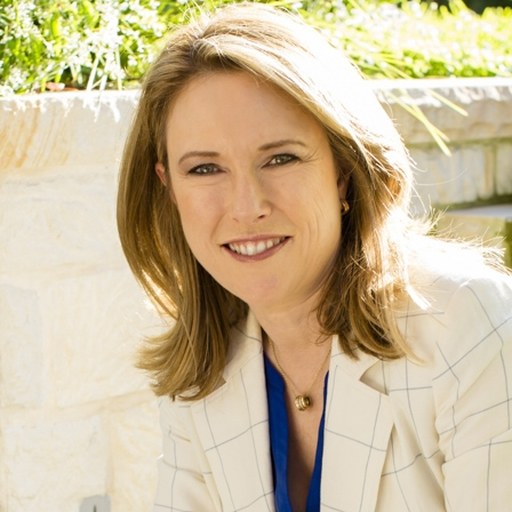
Co-host of The Elephant in the Room. Real estate agent, buyer's agent and buyer's agent mentor, co-host of Foxtel's Location, Location, Location Australia, author of Auction Ready and co-host of Your First Home Buyer Guide.
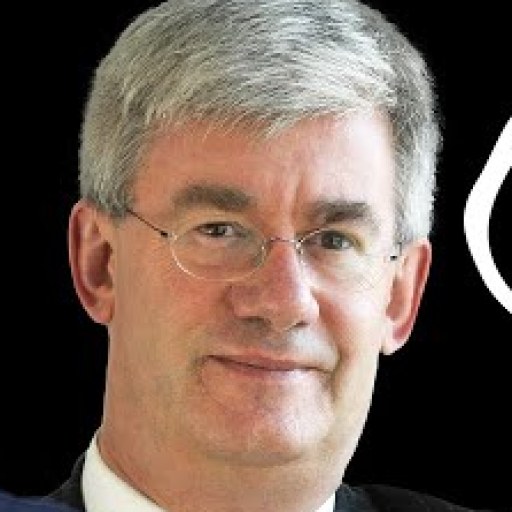
Saul Eslake on Inflation, Rate Rises and the Voter Maths Behind Housing Policy
Economist Saul Eslake unpacks what was actually driving inflation in 2022 and how far he expected the cash rate to move. He also sets out why 60 years of demand side housing help has lifted prices rather than ownership.
One thing I often hear from first home buyers is that while they're saving their deposits they want price growth to slow down and once they've bought they want the market to take off.
It's a dichotomy that resonates for me because when as a property owner I lament about housing affordability or I should say unaffordability for young generations you know is that not a little bit disingenuous? Something tells me, however, that there's a bigger issue at stake.
Is housing affordability something we should really be worried about as a society? And what's happening with inflation and interest rates while we're at it?
Welcome to The Elephant in the Room. This is the podcast where we love to talk about the big things in property that never usually get talked about. I'm Veronica Morgan, real estate agent, buyers agent, co-host of Foxtel's Location, Location, Location Australia and author of Auction Ready.
And I'm Chris Bates, mortgage broker. Before we get started, I need to let you know that nothing we say on here can be taken as personal advice. We always recommend you engage the services of a professional.
Don't forget that you can access the transcript for this episode on the website, as well as download our free full or forecast report, which experts can you trust to get it right? Theelephantintheroom.com.au.
After a year of largely unprecedented property price growth across the country housing affordability has become a hot topic. We're now also contending with rising inflation anticipating interest rate rises and low wage growth despite low unemployment.
These are issues that extend beyond the challenges facing first home buyers, and today Saul Eslake has joined us to help us understand, amongst other things, the wider ramifications of having segments of our society locked out of home ownership.
Saul has worked as an economist in the Australian financial markets for more than 25 years, including... 14 years as Chief Economist at ANZ and four years as Chief Economist, Australia and New Zealand for Bank of America Merrill Lynch.
And since 2015, he's been living the dream in Horibart, running his own economics consultancy business. He last spoke with us back in episode 152 and we're so glad to have you back today with us all. Thank you for joining us. Well, thank you for having me.
I'm very pleased to be back with you again.
Oh, and just for our listeners, go back and listen to that other episode of Soul. It's probably one of our most favourite episodes out there. It's such a great episode. But 2022 has been a real wake-up call for global investment markets, right, and consumers.
You know, we can see the price of fuel and the inflation really hitting home. You know, what's your sort of thoughts on the global inflation problem going Is it a supply issue? Is it a real much bigger, broader issue that's going to take many years to get rid of?
And how does Australia fit into that? Is it a real big problem here compared to the world or are we sort of doing okay?
Well, as we say when we come to talk about housing, as we will later, when prices are going up a lot, it's almost always the result of the interaction between demand and supply. And it's usually the case that there are both demand and supply forces at work.
And that's certainly the case when it comes to understanding why all of a sudden, after almost a decade when inflation has been lower than central banks have been pursuing, all of a sudden now we find ourselves thinking about living in the 70s where
Inflation is higher than you want it, anyone really wants it to be. And there is literally a combination of demand and supply factors. The supply of many things, in particular, what economists call consumer durable.
So that's big ticket items ranging from motor vehicles to household furnishings and equipment, ICT equipment, entertainment equipment, all those sorts of things.
Demand for those went up enormously during COVID restrictions, largely because people found themselves confined to their homes, couldn't go out and do things that are classified as spending on services like going to the gym.
or going to the cinema and the theatre and going to restaurants, so instead having to do those things at home required them in many cases to buy equipment with which to do it.
More generally, just spending more time in people's homes, perceiving a need to tart them up, to make them a bit more liveable in,
And in the case of motor vehicles, not wanting to use public transport for fear of catching COVID or not being able to or not wanting to fly in countries where that's an option for domestic tourism, all of this led to a surge in demand for durable goods.
And people's capacity to buy them was, of course, enhanced by all the money that governments around the world threw at households to help them cope with the COVID restrictions.
But the supply side was interrupted by COVID restrictions as well in places like China and other Asian countries that are important sources of consumer goods. One area of economic activity where this really came to the fore was with container shipping.
because partly when COVID hit, a lot of ships were taken out of service.
But when demand resumed more quickly than people had anticipated, what you found was a lot of stuff being put on containers out of Asia towards the United States and Europe, where demand for the things that go into containers was strong. But then there was nothing to put in the containers to send back.
So you had a huge imbalance of empty containers on ships say in ports like Los Angeles and Rotterdam, and a shortage of containers in places like Shenzhen and Shanghai, where manufactured goods are made for shipping in containers to these places, container shipping costs went up by something like 400 or 500%.
during the covert period and of course that element enters into the element of almost everything so there's this combination of demand and supply factors and then of course more most recently with the outbreak of conflict in Ukraine caused by Russia's aggression against Ukraine given that Russia and Ukraine between them are major exporters of oil and natural gas particularly into Europe
and of grains and of inputs into fertilizers and of a range of strategic metals like nickel and palladium and titanium, the prices of all of those things have gone up significantly and may well stay up for a long time depending on how this content lasts.
So you've got a lot of ingredients putting upward pressure on inflation around the world. In some countries,
particularly the United States and to a lesser extent the UK, you've also got a significant acceleration in wage inflation, which is making a very worrying combination for central banks in those countries in particular.
There's elements of that being seen in New Zealand too, which is why New Zealand and the Bank of England, for example, are central banks that have put rates up three times already. By contrast, here in Australia,
Although we're obviously not exempt from many of these forces, and some of them have probably yet to reach our shores in full, some of the factors that have contributed to higher inflation in other countries just simply aren't present here.
So unlike the US and the UK, we've got virtually no material movement in wages as yet, though that may come as the labour market tightens. Electricity prices, which have been a big factor in higher inflation in Europe, have
have fallen in Australia over the last 12 months, as have food prices, at least up to the end of the December quarter, though they have probably risen since then. We just don't have data on it yet. And prices of motor vehicles and household equipment, though they've gone up,
haven't gone up nearly as much as they have in some other countries. So here we are in Australia with a headline inflation rate of 3.5% over the year to the December quarter. In other countries, headline inflation is between 5.5% and 7.5%.
Core inflation in Australia, which is what the central bank follows, is 2.6%. And its most recent reading, that's within the target band, in almost every other country, major advanced economy, except for Japan, core inflation or underlying inflation is well above the target band.
And as I said, we're still not seeing much wage inflation here. So you can kind of understand why the Reserve Bank has been among the last of central banks in the major economies in advanced economies not yet to have raised rates.
But I have no doubt that before the end of this year, they will. Yeah. I mean, the supplies change issues around, say, you said it was a lot of big ticket items like the car and the gym and the etc.
But once you've got the car and once you've got the pull-up bar and you know, the bread making machine. You don't need to buy them again though, do you? You know, like, so maybe will you find that, you know, the manufacturers will produce more of them, you know, they'll really knuckle down.
Now's the time to make some money. And then that supply will hit the market and those prices of those goods will start to sort of fall back.
And those, you know, so maybe we've had a short term increase in inflation in these countries, but a lot of those will sort of just demand or for, there'll be more supply. Do you think that'll solve a lot of those global issues around that?
Well, that's certainly something that central bankers around the world are counting on when they forecast that after a significant pickup in inflation this year, inflation will in 2023 and beyond come down to the various targets that they have.
They no longer think they can do that without some tightening of monetary policy in the meantime, but they generally do believe precisely what you say, that the imbalances between demand and supply of big-ticket items are a phrase they've now officially retired, but transitory, and that the price pressures that those imbalances have engendered will gradually fade away.
But in the meantime, they have another concern, which is a genuine one, that...
with the prices of petrol and food in particular rising so much, and bearing in mind that while economists and central bankers might talk about inflation excluding food and energy, ordinary people don't exclude food and energy from the way they think about inflation.
These are examples of inflation that they face almost every day, or certainly every week. And the concern that central bankers and others have is that these... quite significant increases in the prices of things that are an important part of people's regular spending will in turn influence
their expectations about future inflation and businesses' expectations about future inflation, because lots of businesses have been experiencing lots of cost increases that they haven't yet passed on in full to their customers.
And the risk then, if you see people and businesses expecting higher inflation, is that they start behaving in ways that make what they fear come to pass.
that's one of the key lessons of the 70s and 80s when we found ourselves in repeated wage price inflationary spirals independent central banks were instituted more than anything else to break that cycle because in the 70s and 80s politicians used to have the last word on whether interest rates went up not central bank governors and that meant of course that if there was an election around the corner which there usually is that
interest rates wouldn't go up when they were meant to, and that's why inflation got out of hand for so long.
So hopefully the actions that central banks around the world are now starting to take, combined with, as you say, the expectation that the supply-demand imbalances will unwound and prices of things that have gone up a lot will then fall, the hope is that we can
Keep inflation under reasonable control without having to bring on a recession in order to break the back of it, as Australia and other economies repeatedly found themselves doing in the 70s, 80s and most recently the early 90s.
So how does the lack of wage inflation in Australia, and particularly how we've performed or underperformed compared to the rest of the world, I guess how you look at that, how does that play into that whole scenario, that whole cycle? And what needs to happen for that to change here?
Well, it's worth noting that in those countries where wages growth has picked up, that the it is still running behind consumer price inflation.
And so to take the United States as an example, wages growth is running at 4.5%, which is the highest it's been since 1986 or thereabouts.
consumer price inflation is at seven and a half. So although you might wish that wage inflation in Australia was higher than it's been for a long time, if that simply meant higher consumer price inflation, their workers wouldn't really be significantly better off.
I think we probably will see some improvement in real wages in Australia, however, simply because we're looking at an increasingly and unprecedentedly tight labour market.
The federal budget that will come out just after we've had this conversation is expected to forecast an unemployment rate of less than 4% for the first time since 1975.
And while the government and governments before this one have repeatedly been wrong in the forecasts that they have made about faster wages growth, the reality nonetheless is that the reality is that sustained increases in real wages can only be supported by improvements in productivity growth.
And one of the main reasons for the wage stagnation that employees in Australia have experienced over the past seven years is that productivity growth has been so poor. Now, that's not necessarily, in fact, it's usually not the fault of workers.
Productivity growth is primarily the responsibility of the management of firms where people work. And it's more a failing on the part of management than it is on the part of workers that productivity growth has been so poor.
But I would also say that by contrast with the 1990s and the early 2000s, there's been very little done by way of productivity enhancing reforms to boost productivity growth either.
Yeah, so encouraging business investment, et cetera. What's your arguments around the sort of migration impact that maybe us not importing talent around the world
um and then concrete increasing demand dramatically with low interest rates and you know government spending and etc um has is going to increase wages but then we open the borders and we start importing hundreds of thousands of people again um that'll then get us back to a point where you know wage stagnation again well i think it depends importantly on what sort of immigration we're talking about you know i have absolutely no doubt that
importing or attracting as migrants large numbers of skilled people is a net positive to the australian economy to living standards and to wages skilled migrants create more jobs through the spending they undertake and through the businesses that they run
and through the skills they bring to our economy, which we don't produce ourselves, than they take. The problem as far as wages growth and productivity associated with migration is when we bring in large numbers of unskilled labor,
that in effect put downward pressure on the wages of unskilled people who are here already.
Phil Lowe, the Governor of the Reserve Bank, attracted a bit of controversy over the past two years when he pointed explicitly to that and also noted that reliance on bringing in temporary labour, even sometimes when it's skilled, has reduced the incentives otherwise facing Australian employers to spend more on training Australian workers.
So It's undoubtedly the case that one reason why the unemployment rate is already down to 4%, which is as low as it's been at any time in the last 35 years or 40 years, is because those looking for jobs in Australia haven't had to face any competition from recently arrived migrants.
You know, there's no doubt that's contributed to getting the unemployment rate down.
But in the same way that, you know, cutting immigration to zero hasn't been a solution to the problem of housing affordability, even though there had been plenty of people arguing that we should cut migration in order to make housing more affordable.
You know, we've had a real life test of that proposition in the last two years and it's flunked it in the same way. it would be a mistake to think that we can guarantee lower unemployment by putting up the drawbridge to migrants.
I mean, the irony is that we may actually have done ourselves some damage as a preferred destination for skilled migrants by what I would describe as the pretty callous and brutal way that our border controls have been administered over the last two years.
You know, I readily concede that our border measures have saved lives. I don't dispute that. But we nonetheless have been the only democracy in the world that has banned its citizens from leaving unless they were sports stars, celebrities or politicians themselves.
We were the only democracy that rationed the right of citizens to return to their country of citizenship during COVID. The only democracy that threatened its citizens with up to five years jail if they dared to return to Australia from a country that was experiencing a deadly wave of COVID, namely India.
And my guess is that this may send a signal to prospective migrants that if there were to be pandemics again, which there probably will be.
There still is one. There still is one, as you rightly say, that Australia may not be the nicest place to be in if you want to maintain contact. Yeah. with the family that you've left behind in your country of origin.
And other countries that weren't as brutal in the way and as callous in the way that they administered their border measures may represent more effective competition for the kind of migrants we want to have here in Australia as a result of that.
Sol, you said about the oil prices. I mean, you know, we talk about demand and supply. Our country is around the world. I'm not an oil expert. I've got a friend who absolutely is, and I'd love to chat to her.
But, you know, in terms of oil supply, our country is around the world. So, okay, prices are high. Right. Should we ramp up production? Should we be taking... market share off Russia, Ukraine?
And will that then ultimately push oil prices back down and then we're not worried about this oil price driven or is just Russia and Ukraine just too much of a market loss that, you know, even if everyone else ramps up supply, we're not going to solve this oil price issue in the short term?
Well, Russia is, along with Saudi Arabia and the United States itself, one of the big three producers of oil in the world.
I mean, I don't know the exact numbers, but I think global oil production is close to 90 million barrels a day, and Saudi, Russia, and the U.S. each produce somewhere around 10 million barrels a day. Right.
You know, it's a pretty big chunk of oil production to take out completely if you were contemplating doing that.
Part of the issue here, of course, is that we've also got, for humanity as a whole, a significant climate change challenge ahead of us where we're trying to reduce our consumption of fossil fuels and partly to that end,
fossil fuel companies have been investing less in maintaining and expanding oil supply. Investors are not keen to put new capital into expanding the supply of fossil fuels. So there are probably real limits on how much
that oil production could be expanded to displace Russian exports, even if the will to do it were there. I mean, you know, there are probably legitimate questions to be asked at the margin as to why the Saudis aren't doing more than they are.
I've always wondered, in the context of the Middle East, why it is that the Saudis are the bad guys, the good guys, and the Iranians are the bad guys. I mean, neither of them are particularly nice. Right. But the Iranians don't proselytize their version of Islam in Southeast Asia or sub-Saharan Africa.
They didn't supply any of the 9-11 terrorists as Saudi Arabia did 15. They don't chop up troublesome journalists in barrels in their embassies in foreign countries like the Saudis do. And they don't. put on barbaric punishments as a form of public entertainment in the way that the Saudis do.
So why the Saudis are considered our friends in this circumstance somewhat alludes me. I mean, in the same way that our supposed partner in the Quad, India, couldn't bring itself to condemn Russia's invasion of Ukraine.
Makes you wonder how useful they'll be if push comes to shove with China.
And likewise, Israel, which is a country that's, you know, not entirely unfamiliar with the idea of invading some of its neighbours, nor being invaded itself, hasn't been willing fully to condemn Russia's action in Ukraine either. So, you know, some of the countries we supposedly count as our friends...
and haven't been quite as helpful to this cause as you might have anticipated. I'm seeing some behavioural change already with interest rates. We were seeing it late last year. I mean, people were just saying on a sec, even though we know rates are going to start increasing.
But this year, obviously, it's been all over the news and the fear of rates going up and also the actual realities, fixed rates at all the banks have... gone from, you know, 2% to all out of market.
You know, they're all over 3% now and it just doesn't make sense to fix for our clients. But, you know, the fear of rates going up, is that going to be enough with a couple of rate increases? You know, the ARPA just goes to half a percent or, you know, 0.75 or 1%.
Will that create enough reduction in consumer demand? Will people knuckle down? Will they cut their spending? Will that slow down our spending on consumables and going out for dinner and all that sort of stuff? Will that be enough to slow down our economy?
Plus with the supply chain issues, maybe oil gets sold out. Will that slow down our inflation and then not cause rates to really ramp up?
There's no doubt that there are households in Australia who will be hurt by the increases in interest rates that are likely to occur over the next 18 months to two years.
And I say that not being at the upper end of the spectrum of forecasts of how much interest rates might rise. I mean, personally, I think the financial markets are really over-egging the pudding
in suggesting that the cash rate will be one percent by christmas this year uh or that the reserve bank will start raising rates in may or june i don't believe that i think they'll start raising rates in august i think they'll raise twice rates twice this year and probably four times next year which takes me to about one and a half percent maybe one and three quarters percent by the end of next year and i'd expect all of that to be passed on to
borrowers at standard variable mortgage rates, whereas people who, for example, have borrowed at two-year fixed two years ago, they've probably seen interest rate increases of that order of margin if they're trying to fix again at two years.
I mean, some of the increases in fixed rates that we've observed over the past couple of months are a direct result of the, I think, overly aggressive pricing by financial markets of future increases in the cash rate.
But whilst acknowledging that there will be some households who will be hurt by that and who will have to rein in their spending, the majority of households with mortgages are reasonably well placed to absorb the kind of increases in mortgage rates I'm talking about.
A, because remember, households have, according to APRA statistics, stashed away almost $250 billion of additional bank deposits since February last year, some of which I guess is in mortgage offset accounts and other facilities like that.
Secondly, the Reserve Bank tells us that something like two thirds of mortgage borrowers have built up buffers by paying down their principal more quickly than contractually obliged to as interest rates have come down. Obviously, that group doesn't include anyone who's taken a mortgage out since rates bottomed. two years ago.
But thirdly, if lenders have been complying with APRA requirements, which I think they're more likely to have been doing post the Royal Commission than they may have been doing beforehand, if they've been complying with those requirements, then they will have been stress testing their customers' capacity to absorb rate increases of between two and a
And assuming that the overwhelming majority of lenders have been doing that, then there shouldn't be too many borrowers. I'm not going to say there are none, but there shouldn't be too many borrowers out there who can't cope with a cumulative increase of around one to one and a half percentage points.
I think the third point I would probably say, I agree, but I don't agree. You know, the reality is home loans out there, they do get stress tested, but the elephant in the room is that a lot of the living expenses aren't what people are actually spending.
The forensically looking at living expenses that they were doing in 2018, 2019 hasn't really existed since Westpac lost that case. Or Westpac won that case, I guess, against ASIC.
And, yeah, they are sensitising it, but they are probably undercooking living expenses because they're not forensically going through and saying, oh, minimum living expenses has gone up, but, you know, you're probably... So, yeah, and I think the stash of cash, though, is that sort of...
unfortunately um in the people that probably were never going to have mortgage debt issues in the first place you know we just we chris we simply don't know yeah all we know i mean i i'm certainly not under the assumption that there are too many households in the bottom 30 of the income distribution who've accumulated a lot of additional bank deposits is almost certainly
people in the upper two-thirds of the income distribution. But of course, sadly, there aren't too many people in the bottom third of the income distribution who have mortgages.
Well, that was actually what I was going to ask you next. Do we have a sort of a quantum on that?
And the answer is no, we don't. The only place you get insights into that is from the surveys of household income and wealth that the ABS normally does every two years. The most recent one of those was for the 2017-18 financial year.
There was, of course, meant to have been one in the 2019-20 financial year, which if it had been undertaken, we'd be getting the results, I think, come this September. But unfortunately, as a result of COVID, that survey wasn't taken and will be sometime.
Probably the next insights we'll get into these sorts of things will be when the 2021 census results are released, which should be starting to come out between, I think, July and September of this year.
So tonight's cash splash night. It's not really budget, right? We're not really running a budget for the economy, really. We're trying to win votes, right? And, you know, the Liberal are going to come out with spending lots of money that they haven't got to win the election in a few months' time.
But, I mean, they're not likely to win the election anyway. I mean, Labor are probably going to spend a similar amount of money, so it's not like they're going to be holding the purse strings tighter. But is that going to create even more inflation issues?
You know, because, you know, a lot of them are doing infrastructure, defence, you know, blah, blah, blah. And when we've already got issues with, you know, supply chains and issues like that.
So what's your thoughts on the budget actually creating even more issues by, you know, the issues around the election being this year?
If you like what you're hearing here, please share this episode with others you feel would benefit. And while you're at it, why not leave us an iTunes review? Five stars, please. Every review helps make it easier for other people to find us and hear what our amazing guests have to say.
We love hearing your questions and we're planning more listener Q&A episodes. Please send your questions in. You can send them via the website, which is theelephantintheroom.com.au or directly via email to questions at theelephantintheroom.com.au.
Well, that's certainly a risk. This is an economy, we're going to be told in the budget documents, where the unemployment rate will be lower than at any time since the mid-1970s and when inflation is clearly on the rise. So there is no grounds for net fiscal stimulus. in this budget.
And if there is a significant amount of net fiscal stimulus, I mean, if it's less than a quarter of a percentage point of GDP, well, that's a forecasting error. One shouldn't get too excited about that.
But if it's a significant additional fiscal stimulus, then undoubtedly it would put upward pressure on inflation and interest rates. And at some point, though probably not before the election, the Reserve Bank will say that. And other commentators will, of course, say it before the election.
I have no problem at all with the government providing targeted assistance to households at the bottom end of the income distribution to help them cope with higher petrol and food prices because for people at that end of the income distribution, spending on petrol and food is a much bigger chunk of their incomes than it is of people in the top half of the income distribution.
Yeah. If part of the government's response is to send checks electronically to people on pensions and other social security benefits or to provide tax rebates to workers on relatively low wages, I've got no criticism of that.
Indeed, the OECD, which is one of the bastions of economic and fiscal orthodoxy, recommended two weeks ago that that's precisely what governments in advanced economies should be thinking of doing. But they also said that those measures should be paid for.
Now, they could be paid for out of the additional revenue that the government's going to collect in taxes from those parts of the economy that are better off as a result of, for example, higher coal prices or higher gas prices, or in the case of farmers, higher grain prices.
As long as it rains at the right time in the right place, there are going to be some very happy farmers. In Western Australia, in South Australia, in New South Wales, there'll be
making more money from selling lots of wheat at much higher prices and they'll hopefully be paying some tax on that but if there are big net giveaways assuming as you say that whoever wins the next election spends them then that will have unfortunate and regrettable consequences for interest rates
Yeah, so right now you'd actually want a government to be quite, I guess, frugal with their spending, right? You know, we want to sort of take out demand out of the economy, but I don't think that's what we're going to see in budgets, right?
Well, that's not normally, doesn't normally help governments win elections. No, that's right, exactly.
It is interesting, though, that we've got such a high amount of savings at the same time as high demand for the sort of products that is pushing up inflation, right? Is that normal that you'd have those two things at the same time? No, it's not.
I mean, there were lots of highly unusual things about the two recessions, I say, that we had in the last two years, one in the middle of 2020 and the other one in the September quarter of last year when the southeast corner of Australia was in enforced lockdown.
Recessions normally make a mess of household and business balance sheets. Mm-hmm. You know, people lose their jobs, they lose their businesses, their income drops away, they have to draw down whatever savings they have in order to keep going on with life. That's what often happens in recessions.
This one was, of course, different because it was deliberately caused by governments. You know, recessions historically are usually the result of interest rates having been too high for too long and or some kind of external economic shock like the global financial crisis was. But this one wasn't.
It was caused by governments in order to stop the spread of a disease that could have killed many thousands of more people than it actually did. And perhaps for that reason, governments felt a moral responsibility to alleviate this. The consequences that recessions normally have for people by throwing squillions of dollars at them.
And in that sense, the adverse effect that recessions normally have on household and corporate balance sheets instead showed up on the balance sheet of the government.
in the form of the enormous increase in debt which it now has so if you like the counter point to the 250 billion dollars extra in household deposits and for that matter 175 billion dollars extra in business deposits with banks as well is that enormous increase that will eventually top a trillion dollars in public debt that's been racked up over that period
It's one of the big issues with this inflation outbreak is that if interest rates jump up a lot, all governments around the world, consumers, corporates are in a lot of debt. And then that's going to really hamstring the economy. And rather than the government does want a bit of inflation, right?
They do want to inflate their debt away, which they've created. But it's the issue of that is correlated to a much higher increase in interest rates. But you've got a lot of debt. Now you've got to pay a lot of higher interest rates as bonds roll off, etc.,
Well, I think the implication of the vastly greater amount of debt that governments have compared with two years ago and that households and businesses in most countries have compared with 20 or 30 years ago is that central banks don't need to raise interest rates by as much as they used to.
in order to have whatever slowdown in the economy they want to induce in order to keep interest rates under control. So, you know, I'm old enough to remember when the Reserve Bank used to raise rates by a percentage point at a time.
The most recent time of that was in 1994, which John Howard famously described as five minutes of sunshine. They routinely both raised them and lowered them by a percentage point at a time in the 1980s and very early 1990s.
But now, of course, central banks operate in 25 basis point increments. And, you know, the reality is that if the cash rate were to get to, say, 3%,
that would probably have the same impact on the economy today or next year or 2024, whenever it happens, if it does, as having the cash rate be almost 8% in advance of the financial crisis in 2008. And the Reserve Bank knows that.
So they take those things into account in calibrating how much at each move, and in total, they move interest rates by.
But also, like, if the cash rate's, say, 3% and you move it by half a percent, then that's a lower proportion than if the cash rate's 10% and you move it by half a percent. You know what I mean? It's, like, it's all relative. I remember when interest rates were in 17%.
I didn't have a mortgage at that time, thankfully, but...
You know, I knew people that were running second jobs to pay their mortgage. But if, you know, 1% interest rate rise when they're already at 16% isn't quite the same as a half percent at 3%, is it? True, but in 1994, the cash rate started from 4.25.
And it went to 7.5, I think, from memory. It went to 7.5 in the space of six months. So did you say 1994 it was 4.25? Did you just say that? I'm pretty sure that's where it bottomed, having peaked, as you just mentioned, at 17.5.
Yeah, only five years earlier, I think it was. Yeah, that's right. Rates came down an awful lot in the very severe recession of the early 1990s.
So Falinski report came out last week, so I know you were mentioned quite a lot in it, to be honest. Yeah, although I didn't have much impact on the final recommendations. I was quoted a lot. That's what my question was going to be.
I mean, when you read that, what was your honest view when you read it? Was it you were throwing it in the bin, saying that's a waste of space? Were you happy? What did you like? What didn't you like?
Well, I was completely unsurprised, Chris, because as I had said to lots of people beforehand,
um the terms of reference of the falinski inquiry more or less guaranteed that it was going to find that although housing affordability was a problem uh it was mostly the state and local governments fault and oh dear there wasn't much for the commonwealth really to do here other than use carrot and stick to cajole the states and local governments into changing their policies you know they're
Again, I'm showing my age here by referencing the BBC political sitcom, Yes, Prime Minister. But in that series, Humphrey Appleby, the public servant, would always say to Jim Hacker, the prime minister, never call an inquiry until you know what it's going to say.
And you knew what this inquiry was going to say. You know, certainly Jason Falinski gave me a very fair hearing. I have absolutely no complaint about that. He made this rather fatuous distinction in his personal introduction to the report between what he called two tribes.
One of which consisted of academics who think that home ownership is not important and that the answer was to tax property investors and the other, the good guys in Falinski's Manichean view of this debate.
The good guys were the other tribe who thought that there should be lots of incentives given to investors and others, and if you gave them enough money, then housing supply would magically increase by enough to solve the problem. And I kind of read that and think, well, okay, where do I fit in?
Because I don't neatly fit into either of those descriptions in terms of the things that I've been saying for 40 years. Now, that's not to say that there weren't some worthwhile suggestions in the Falinski report.
I mean, for example, like every other economist who's thought about this, I'm all in favour of getting rid of stamp duty and replacing it with a broadly based land tax, as the ACT is sort of...
doing, except they're using property rates rather than land tax to achieve that objective, which they can do because the ACT government is also in effect the Canberra City Council, whereas state governments, if they want to contemplate that, have to sort
slaughter the sacred cow of no land tax on the so-called family home, which Dominic Perrottet, to his credit, was willing to contemplate. But Matt Keane seems to have gone a bit cold on the idea for the time being, at least. But, you know, I support that recommendation.
It might have been good if Mr. Falinski and his colleagues had suggested that the Commonwealth maybe offer some incentives to the states to change that idea. but he didn't. Some of the other suggestions that
the Filinski report made in terms of offering bribes to the states to improve their planning and zoning laws probably makes sense. I completely disagree with their rejection of changes to negative gearing in the capital gains tax, which were obviously just put in there for political reasons ahead of an election.
I completely disagree with the excoriation of the Ardern government in New Zealand, which was a feature of the report. You know, I said to that committee, as I often do, that
you know wanting to reduce tax privileges for property investors is not a socialist plot that the american variant of negative gearing was abolished by saint ronald reagan as he is to people on the right of politics in 1986 the british variant of negative gearing was abolished by george osborne the neo-thatcherite chancellor in david cameron's government in his 2015 budget
It's not just left-wing governments that see reducing tax privileges to property investors as making a useful contribution to improving housing affordability. The other thing I think was crazy in the Filinski report was this idea that banks –
that people ought to be able to use their superannuation savings as collateral to get bigger mortgages.
I mean, that's not quite as bad as the suggestion that Mr. Falinski's colleague, Tim Wilson from Victoria, was putting about a couple of years ago that people should be able to take their savings out of superannuation altogether and use it to get a bigger deposit to in turn get themselves a bigger mortgage.
But, you know, we have, as I said to the committee, though the Liberal members obviously weren't listening, as I said to the committee, we've got almost 60 years of history.
that tells us that anything that allows people to pay more for housing than they otherwise would, whether it's cash grants, stamp duty concessions, guarantees for bits of the deposit that you don't have, anything that allows people to pay more for housing than they otherwise would, results in more expensive housing, not in more people owning that housing.
And to come back to what you said at the beginning, Veronica, the beginning of this conversation,
For all the crocodile tears that politicians like Jason Falinski and others shed about the difficulties faced by would-be homebuyers getting their feet on the first rung of the property ownership ladder, the reality is that in any given year, there are on average about 100,000 of those.
Say there's another 200,000 or 300,000 people who would have liked to be part of that 100,000 but can't. Let's call it 500,000. people who would like governments to do things that restrain the rate of property price inflation.
But against that, at any point in time, you've got 11 million people who own at least one property. Within that, you've got 2 million who own two or more properties. The last thing
those 11 million voters want is prices to go down to do anything that restrains the rate of property price inflation so you know on the one hand you know between 100 and 500 000 votes for restraining property price inflation on the other 11 million votes for keeping it going as much as you possibly can even the dumbest of our politicians and i'm not necessarily talking about a small group here even the dumbest of our politicians can do that math
And they do. Yeah, and I mean, the thing is if they can get those 500,000 people votes, they'll do things for it.
I mean, Scott Morrison came out yesterday and, you know, we're going to increase the 5% deposit scheme, which has kind of worked in a sense that sort of has been taken up. I guess that's a way you could say it's successful. Whether the price caps...
has forced clients, you know, we've done very few of them, to be honest, but probably under five in two or three years. We just don't really play in those markets. But it does force people to buy certain types of property.
And, you know, a lot of apartments in capital cities, the assets that haven't done very well over the longer term. But, yeah, I mean, you know, the government's come out and said 50,000. I mean, that's a big increase, right, going from 10,000 to 50,000 places.
You know, what do you think the Labor government's going to do, I mean, in their policies to try to win the first home buyer vote? Well, let's just on those schemes make the observation that all they do is reshuffle the queue. There are people who benefit from them.
In particular, of course, the 11 million people who already own at least one property who see the value of their property going up by the amount that's been injected into the system.
But there are people who are able to rearrange their affairs in order to take advantage of the grant and meet the criteria. Yeah, they get better off, but it reshuffles the queue.
In particular, with regard to these schemes where the government guarantees that part of the deposit that people can't raise from their own resources, does anyone remember what helped cause the global financial crisis? Yeah. You know, that actually pushing into home ownership
People who lack the resources to service a mortgage and who can't put any equity down, almost brought down the global financial system.
Not only that, but a lot of the first homebuyer grants, not so much the deposit scheme, although now they're talking about making that only available for new property as well.
They're sending them into buying exactly the type of property that is more likely to lose value and then when they go to resell it, they won't be able to get back what they paid. So they're going to be sitting in negative equity territory.
And just as interest rates are about to go up as well. I mean, this just underscores...
who the government is really thinking of here. They're not really thinking about people who are on the margins or the cusp of home ownership. What they're thinking about is the far more numerically important people who've already got lots of property and who vote with their own interests. And also...
It makes, you know, baby boomers and Gen Xers who have got kids that are old enough to buy a property, it makes them feel good that actually they're voting for something that's helping their kids. It's very short-term thinking anyway. It's just that, oh, good.
And then they might stop and wonder why their kids are still in their own homes rather than, you know, living with them, you know, expecting their clothes washed and their meals cooked and a blind eye turned to whoever they bring to breakfast the following morning. You know, it staggers me.
that there isn't more anger among younger adults about the way in which their parents and grandparents have rigged the housing system against them. You look at the most recent survey of household finance and wealth that I mentioned before.
What that shows is if you recast the figures in a way that isn't normally done, The proportion of household wealth owned by households aged 65 and over has gone from 25% to 33% between 2004 and 2018. That's an increase of 8 percentage points in a 14-year period. It's a staggering increase.
And the mirror image of it is the decline in the share of household wealth owned by people under the age of 45. So are they just going to wait for an inheritance then?
I think the inheritance argument does calm a lot of people down. So I'm not saying I'm in that camp, but, you know, people who see their parents' property go from, you know, $2 million to $5 million, they've only got one brother and sister, they know that money's got to go somewhere.
But they will be 60 by the time they get it. Yeah. It doesn't help people into their first homes, does it? Yeah, no, absolutely.
And they can live their European holidays and not worry about paying down the mortgage because that money is going to come one day and that will solve their retirement problems. But I agree.
One of the issues with that, though, is that a lot of the first home buyers disconnect because these are the issues that cause prices to go up, right?
But if you remove those incentives like, you know, negative gearing, for example, a lot of first-time buyers use that for, you know, change the capital gains, tax exemption on homes. These are the things that, you know, you would benefit from if you do buy something, you know.
And so a lot of people cause, you know, and that slows down growth over the next sort of, you know, 20 years. Well, yeah, the baby boom has got all the wealth, but you don't get any of the growth because... You pushed for all these changes to legislation, et cetera.
So, yeah, it's a funny thing when you're not in the market and you're in the market, your sort of priorities sort of shift pretty dramatically. It's the old saying, you know, where you stand depends on where you sit. Yeah, absolutely.
So if you had to sort of timeline out, and this is a difficult question to answer and there's probably six different scenarios, but if you had to sort of timeline out over the next sort of, you know, three to sort of ten years on how you're
Australia is potentially going to transition with higher interest rates. What's the impact of that going to be? Are we going to import more people? What would you say over the next five to ten years?
Are you sort of really super positive that Australia is going to grow at a pretty decent growth rate, that we're going to be okay to manage government debt, interest rates aren't going to balloon on us and we'll still be the lucky country?
Or do you foresee some really big headwinds for the Australian economy and we do need to be concerned? Well, in the next 18 months, I think Australia's economy will do pretty well because households do have that $250 billion of extra bank deposits, which is there to support spending.
There is an awful lot of house construction work in the pipeline yet to be done. And as long as builders don't go broke, you know, in the meantime, then there'll be a lot of both dwelling construction and construction
civil infrastructure construction in the pipeline that's work to be done and there are also some short-term encouraging signs about business being willing to undertake more investment than they had been in the pre-covid period and some of that's probably to do with wanting to catch up with the rapid shift in digitalization that's occurred as a result of covid some of it might be climate change related investment you know people might want to spend more on electric vehicles and things like that so
You know, for perhaps 18 months to two years, I think the Australian economy will probably do quite well.
And of course, Australia is a net beneficiary of some of the things that are bad for the rest of the world, like higher energy and food prices, because oil aside, we're a net exporter of most types of energy and of a lot of different types of food.
Beyond that, however, I think we face some very challenging headwinds. One is for reasons I mentioned before, I don't think our population growth will return to what it was pre-COVID.
And people, I think, underestimate the extent to which our economy had become dependent on population growth as a driver in the 20 years pre-COVID. I mean, we would not have been able to say.
that we'd gone 30 years without a recession if our population growth had been equivalent to the average of other advanced economies over that period, rather than a percentage point per annum or more higher than it.
And as I say, I think we've probably done ourselves a bit of damage as a destination for the kind of migrants we want to attract because of the fairly callous way in which our border controls were administered during COVID. In addition,
A significant chunk of our immigration intake has been students, and the biggest component of those was Chinese students.
And although we are willing to welcome Chinese and other students back to Australia, my hunch is the Chinese government is going to find both subtle and not so subtle ways of discouraging young Chinese from coming here as both tourists and students. The second thing is that
At some point, and I had thought prior to the war in Ukraine we'd passed it already, but maybe it's when that conflict is resolved, the stellar ride Australia's enjoyed over the last 20 years from rising commodity prices is going to turn in the other direction.
And again, most Australians wouldn't be conscious, and certainly politicians won't tell them, of the extent to which Australia's prosperity has been underwritten by rising commodity prices. You know, Paul Keating used to sum it up, as he often did, very pithily by saying Australia had been kissed on the ass by a rainbow.
And, you know, that's not going to continue indefinitely. Third, but related to that, we've derived an enormous benefit, both in absolute terms and by comparison with other advanced economies from what China has been doing over the last 30 years.
For most other advanced economies, China's emergence as the world's biggest importer of commodities and exporters of manufactured goods has been a bad thing.
Because it's pushed up the price of things that other Western nations import and pushed down the prices of the things they export or indeed competed them out of exporting them all together.
Whereas for us, along with Canada and Norway, but probably no other advanced economies, what China's been doing has been a boon, not a curse for us. But for a whole lot of both economic and geostrategic reasons, that's going to turn around. We ourselves want to decouple from China.
China wants to decouple from the West. China's growth rate is on a permanently slowing trajectory for a combination of their own demographic reasons and the political choices that Xi Jinping is making. And it's not inconceivable over the next 10 years
Depending on what China does with regard to Taiwan, we could be asked by our Western allies to stop selling the mine ore. You know, what would that do to our economic growth? Interest rates are going to be going up.
Again, Australia's prosperity like that of other Western nations and the increases in wealth that Australians have enjoyed have owed an awful lot to the fact that we have had 30 years of of a declining trend in interest rates. We've passed the bottom of that.
We know that interest rates, they might not go up very much, but there is still a world of difference in terms of impact on people's wealth from switching from a steady 30-year period of declining rates to a period where rates aren't declining, where if they do in anything, they're going up.
And then, of course, we have on top of that all the risks and challenges associated with climate change.
If we continue not to be serious about it, as we have been, then there's a risk Australia is seen as a pariah by other nations and our exports to them are subject to what they call carbon tariffs. Or if we decide to get serious about it, which I hope we will,
then we've got a bigger challenge in terms of decarbonising our economy than most other economies simply because we're so much more dependent on fossil fuels than most other Western economies. So I think we do face quite a lot of headwinds beyond...
A one to two year period where I think there's a lot going in our favor. And I think the 20s, the rest of the 20s could be as challenging for us as in different ways the 1980s were without there being the same appetite for the reforms that address those problems that Australia experienced.
I was about to say that because we don't have any sort of visionary, we don't seem to have anybody who's got any vision for anything like this or any appetite to change and make these significant structural changes required to actually tackle some of these things.
We don't seem to have any politician ready to do that. So neither of our major parties are prepared to do it. Watch Four Corners. Now, we're recording this, the budget night, so what is it, the 29th of March.
Last night was a bone-chilling episode of Four Corners, and I think anyone should watch it before they vote. And this will go to air in April sometime, so this will be two weeks old by the time we go to air.
Is that why you moved to Tasmania, though, Saul, for benefit from climate change? No, it's my home. Yeah. I mean, climate change is affecting Tasmania as well. Yeah.
Well, you've got a big hole in the ozone layer above you too.
A bit warming it up. But absolutely, there's massive issues. People can focus on the short term. Yeah, we'll be able to get through it. But unless you make structural changes, I guess it all comes down to whether we –
do um maybe it's a stephen bradbury moment for the australian economy though like maybe um yes australia is not as enticing to come to because of our border measures but maybe uk is not that exciting you know maybe the us isn't that exciting maybe and so globally we still uh and maybe we relax the needs to to the skilled and we um you know more skilled people can come here and we well maybe we actually skill our own people yeah let's try you know reinvesting in training and education that
Amazing. Veronica, earlier you referenced Australia as the lucky country, which was, of course, the title of a book published in the early 60s by the late Donald Horne. That quote about Australia being the lucky country ran on, as you might recall to say, run by second rate people.
There was a time in the 1980s and the 1990s when that wasn't true, when we were actually run by first-rate people on both sides of the political fence. Yeah, agree. But I think we now find ourselves both actually and prospectively being run by second-rate people again.
And inevitably, albeit not necessarily immediately, that has visible consequences. Yeah.
And your view, is there an economy around the world that you think that we should be sort of, you know, mirroring?
Well, in some ways, although there are huge differences in culture, if you want an example of an economy that is in a far corner of the world, that is blessed with ample resources, but has done a much better job of converting finite natural resources into lasting financial capital whilst preserving a reasonably equable society, it's Norway.
Norway, yeah. Now, Norway has an appetite for high taxes that Australians don't share. And it is, after all, 4 million people, not 25. So it's not an exact replica. And I'm not saying, you know, we could all start being like Norwegians. But, you know, there are...
better models for us to follow. I mean, closer to home, New Zealand is treading a different path in some ways, including in particular with regard to housing policy.
So it was interesting to, as I think you know, the Ardern government went much further in reducing tax breaks for property investors in New Zealand than Australian Labor ever proposed. And the interesting thing is that at least to date, the sky has not fallen in. over the New Zealand property market.
I mean, property prices have stopped rising and they've fallen in the last couple of months a little bit. And it may well be that after having risen by almost 40% during COVID that they will come down a bit further.
And I would say that's probably a good thing as long as it doesn't get out of hand.
Well, it's probably going to happen here too. It was also interesting to see that the IMF,
know which is another bastion of fiscal orthodoxy explicitly endorsed the ardern government's measures with regard to housing not just the changes to the tax treatment of property investment but also the tougher line that the reserve bank of new zealand has taken with regard to lending practices than australia's apra that was endorsed by the imf as well so you know for all the um
ideologically motivated criticism of the Ardern government and of New Zealand that was in Jason Falinski's report, you know, the IMF, which I think has higher credibility in this space, took a rather different and more positive view.
So, you know, even while New Zealand is a very different system of government from us and it's a smaller country with a very different endowment of resources and different political traditions, there might be some lessons for us from our little cousins across the Tasman as well.
so much uh enjoyed the chat so so many great insights around the real the inflation problems interest rates the felinski report so thank you so much for your time we really appreciate you coming on it's been an absolute pleasure thanks for having me on the show
If you're looking to buy your dream home or an investment property in Sydney's inner west, eastern suburbs or north shore, my team and I can help you buy without regrets. Reach out via my website, gooddeeds.com.au.
If you're looking to buy your first home, thinking of upgrading into a new one or purchasing an investment property anywhere in Australia, my team would love to carefully guide you on this journey. And most importantly, get the finance right. reach out via our website, wealthful.com.au. Thanks for joining us.
We'd love to see you again.
And remember, don't be a dumbo.
Key takeaways
- Eslake put the inflation outbreak down to demand and supply together: a COVID surge in demand for durables, interrupted Asian supply, container shipping costs up 400 to 500 per cent, then Ukraine.
- Australia's headline inflation was 3.5 per cent and core inflation 2.6 per cent, inside the target band, against headline rates of 5.5 to 7.5 per cent elsewhere.
- He expected the first rate rise in August 2022 and a cash rate of roughly 1.5 to 1.75 per cent by the end of 2023, not the 1 per cent by Christmas that markets were pricing.
- The buffers he cited were almost $250 billion of extra household deposits since February 2021 and about two thirds of borrowers ahead on principal, though both are unevenly held.
- The voter maths: about 100,000 first home buyers a year, maybe 500,000 who want prices restrained, against 11 million people who own at least one property.
- His longer view was harder: slower population growth, a commodity price turn, decoupling from China, and the end of a 30 year decline in interest rates.
What Caused the Inflation Spike in 2022?
Saul Eslake framed the 2022 inflation outbreak the way he frames property prices: a big move is almost always demand and supply interacting. Demand for consumer durables rose enormously under COVID restrictions, because people confined to their homes could not spend at the gym or the cinema and bought the gear instead.
Supply was interrupted at the same time across China and other Asian sources, and container shipping costs rose by something like 400 or 500 per cent, a cost that enters almost everything. Russia's invasion of Ukraine then lifted oil, gas, grain, fertiliser and metals such as nickel and titanium, prices Eslake said may stay up for a long time.
Why Was Australia's Inflation Lower Than Overseas?
Australia was not exempt, but several of the factors lifting inflation elsewhere were not present here. Electricity prices had fallen over the previous twelve months, food prices had fallen to the end of the December quarter, and motor vehicle and household equipment prices had risen less than overseas.
Updated: the ABS monthly CPI for July 2026 put headline inflation back at 3.5 per cent, Eslake's figure exactly, but the trimmed mean at 3.6 per cent, above the target band rather than inside it (ABS, released 26 August 2026).
Wages were the sharpest difference, and Eslake was careful about what faster wage growth alone would deliver. United States wages growth of 4.5 per cent, the highest since about 1986, still sat below consumer price inflation of 7.5 per cent. He expected some real wage gain here from an unprecedentedly tight labour market, but said sustained gains need productivity growth, which had been poor for seven years.
| Measure | Australia | Elsewhere |
|---|---|---|
| Headline inflation, year to December quarter | 3.5% | 5.5% to 7.5% |
| Core inflation | 2.6%, inside the target band | Well above target in every major advanced economy except Japan |
| Wages growth | Virtually no material movement as yet | United States 4.5%, highest since about 1986 |
| Electricity prices | Fallen over the last 12 months | A big factor in higher inflation in Europe |
| Rate rises so far | None yet | Bank of England and New Zealand up three times |
As described at 7:01 to 8:33 and 12:54. Figures as stated on air.
How Far Will Interest Rates Rise and Who Gets Hurt?
Eslake thought financial markets were over-egging the pudding. He did not believe the cash rate would hit 1 per cent by Christmas, or that the first rise would land in May or June. His own view was an August start, two rises in 2022 and about four in 2023, reaching roughly 1.5 to 1.75 per cent by the end of 2023, passed through in full to variable rates. Updated: the cash rate is 4.35 per cent, held by the Reserve Bank in August 2026, well past the peak he expected (RBA cash rate target, as at 11 August 2026).
Whilst acknowledging that there will be some households who will be hurt and who will have to rein in their spending, the majority of households with mortgages are reasonably well placed to absorb the kind of increases in mortgage rates I'm talking about.
Saul Eslake, 24:30
The buffers he pointed to were almost $250 billion of extra household deposits since February the previous year on APRA figures, and the Reserve Bank's estimate that about two thirds of borrowers were ahead on principal. Chris Bates pushed back that living expense checks have not been forensic since the Westpac case against ASIC, and Eslake accepted the cash sits with the upper two thirds of earners.
| Reference point | Cash rate | Detail as stated |
|---|---|---|
| Market pricing at the time of recording | 1% by Christmas 2022 | First rise priced for May or June, which Eslake did not believe |
| Eslake's own expectation | 1.5% to 1.75% by end 2023 | Starting August 2022, twice in 2022 and about four times in 2023 |
| Rise most borrowers should absorb | 1 to 1.5 percentage points | Cumulative, assuming lenders met APRA stress testing rules |
| Equivalent tightening today | 3% now, close to 8% in 2008 | Higher debt levels mean smaller moves do the same work |
| The 1994 cycle | 4.25% to 7.5% | Inside six months, having peaked near 17.5% about five years earlier |
As described at 23:25 to 25:47 and 35:37 to 36:55. Figures as stated on air.
Does Housing Policy Actually Help First Home Buyers?
On the Falinski inquiry, Eslake said he was unsurprised: the terms of reference more or less guaranteed a finding that affordability was mostly caused by state and local government. He backed replacing stamp duty with a broadly based land tax, disagreed with the rejection of negative gearing and capital gains tax change, and called using superannuation as collateral for bigger mortgages crazy. The supply side has its own arithmetic, because what a $10 billion housing fund can realistically deliver falls well short of the 640,000 homes needed.
Anything that allows people to pay more for housing than they otherwise would, whether it's cash grants, stamp duty concessions or guarantees for bits of the deposit that you don't have, results in more expensive housing, not in more people owning that housing.
Saul Eslake, 42:02
He also rejected the framing that trimming investor tax breaks is a left wing project, noting that Ronald Reagan abolished the American variant of negative gearing in 1986 and George Osborne the British variant in 2015. Then the arithmetic: about 100,000 first home buyers a year, perhaps 500,000 all up who want price growth restrained, against 11 million who own at least one property and 2 million who own two or more.
What Are the Long Term Risks to Australia's Economy?
For the next 18 months to two years Eslake was reasonably positive. The extra deposits are there to support spending, a large pipeline of dwelling and civil construction work remains as long as builders do not go broke, and business investment was picking up. Australia also benefits, oil aside, from higher energy and food prices, which it mostly exports.
Australia's prosperity, like that of other Western nations, and the increases in wealth that Australians have enjoyed have owed an awful lot to the fact that we have had 30 years of a declining trend in interest rates. We've passed the bottom of that.
Saul Eslake, 53:58
Beyond that he listed headwinds: population growth unlikely to return to its pre-COVID rate; damage done to Australia's standing with the skilled migrants it wants; a 20 year commodity run that will eventually turn; and decoupling from China pushed from both sides. Norway was his model for turning finite resources into lasting capital, and New Zealand, where investor tax breaks were cut further than Labor proposed, drew explicit IMF endorsement.
What Do Higher Rates Do to Your Numbers?
This episode is about the setting a purchase has to survive rather than a forecast to act on, and the end of a 30 year fall in rates changes that setting. If you are weighing a purchase in that environment, the structure of an investment property loan is where the setting shows up first.
Investment Property Mortgage BrokerSources referenced: The Elephant in the Room, episode 227, "How Inflation and Interest Rate Rises Affect First Home Buyers", released 2022-05-08. Hosts: Veronica Morgan and Chris Bates (Alcove). Guest: Saul Eslake, Economist. Figures are quoted as stated on air. Figures marked as updated were re-checked on 2026-09-10.
Press play on these