Veronica MorganIn this episode, we sit down with Kate McHugh, co-founder of the Strata Futures Stakeholder Engagement and Roundtable, what a mouthful, and co-author of the Strata Futures Report.
We talk about the growing pressure for reform in the strata sector in the wake of recent media scrutiny, including damning investigations last year by Four Corners and the 7.30 Report, which have cast a harsh spotlight on governance failures, building defects and the blurred lines between developers, building managers and owners' corporations.
Today, Kate will share what's emerged from the extensive cross-sector roundtables, why current reforms may not go far enough and what it will take to build trust and resilience into the strata system as millions more Australians come to rely on it.
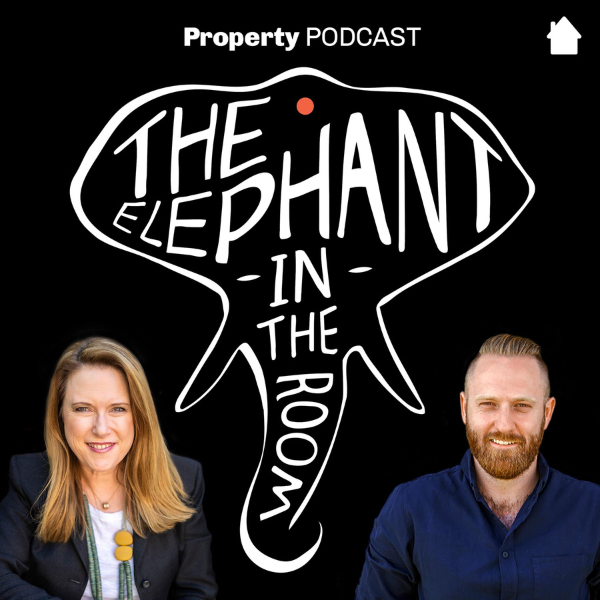
Welcome to the elephant in the room. This is the podcast where we love to talk about the big things in property that never usually get talked about.
I'm Veronica Morgan, real estate agent, buyer's agent and buyer's agent mentor, co-host of Foxtel's Location Location Location Australia, author of Auction Ready and co-host of Your First Home Buyer Guide.
Chris BatesHi, I'm Chris Bates, mortgage broker, currently ranked number three in the MPA Top 100 Mortgage Broker Awards. Before we get started, everything we talk about today is not personal advice and we recommend you engage the services of a licensed and experienced professional.
Veronica MorganOur guest today is Kate McHugh, co-author of the Strata Futures Report. And with a background in governance policy and deep experience in stakeholder engagement, Kate is working to untangle the complex web of governance, regulation and lived experience in Australia's growing strata sector.
Now, her work in partnership with past New South Wales Strata Commissioner John Minns and other sector leaders aims to reimagine how Strata can support more sustainable, equitable and functional communities. There is a long, long road to travel and hopefully Kate's work is a starting point.
I was part of the roundtable that Kate co-convened and I was heartened to see How many industry and consumer stakeholders were willing to contribute to meaningful discussions on how to improve the sector? So today we're going to learn more about the 64 recommendations that came out of the roundtable. And welcome, Kate.
Thank you so much for joining us today. Hi, thanks for having me.
Chris BatesHi, Kate. Good to meet you. We're not going to make the episode around going through all 64 recommendations, but the Four Corners, 730 Report investigations have highlighted lots of issues that have probably been hiding in the background.
I mean, why do you think it's taken so many years for these to come to the spotlight and, yeah, I guess get acknowledged?
Veronica MorganI think that's probably pretty standard for anything where there's a great public discontent or malcontent in a sector. It takes a little while for that groundswell to build.
And ultimately, there's so many complaints and people trying to find different ways to air topics and grievances that eventually the media gets involved.
Chris BatesWhat were some of the big issues you've sort of, if you had to put your hand on just a couple, what do you think is the 80-20 rule? What are some of the major issues you think that really upset a lot of people in Strata?
Veronica MorganI think Four Corners probably has better data on that particular question than me, but it's clear that people are unhappy with the way they are treated in the whole engagement. I think if we listen to the Strata sector itself, it's maybe there's some
misalignment of expectations and understanding of what strata actually is. And we'll probably get to that in a little deeper later. There's clearly some problems with arms length dealings and commissions and how strata managing agents are making money and how they're disclosing that.
And there's a real misunderstanding of what strata managing agents are responsible for in the first place. I think it's also compounded deeply by, and this has changed, but over the last 20 years, just the amount of defects in new buildings.
And while there is more recourse now than there was, say, 20 years ago, there is still a backlog of rectifications work that was never accommodated, never budgeted for, there was never a bond created.
And so there's this real rub between strata managing agents, owners committees, lot owners around who's responsible for all of that work. And obviously developers just have walked away scot-free on those older developments.
I think one of the things that I've observed about the strata sector as a whole is that it's actually difficult to pinpoint who's responsible for anything. I think that's one of the problems. And it comes right from my observation, it comes right from the very top, i.e.
that there is no national governance system. of strata. And so therefore we've got eight different jurisdictions, eight different sets of laws and eight different ways of doing things, eight different licensing regimes or non-licensing regimes. It's so varied across the whole country. But obviously this all started really in New South Wales.
You know, I mean, there were mentions of other states in the Four Corners report, for example, but it was mostly New South Wales. And obviously that's where this round table has started from. But I know that a lot of the issues will be common across the country.
But what kind of conversations would you say started happening after those reports aired? And I guess what led to the creation of this whole roundtable and the report that you and John have put together?
Yeah, so I almost fell into this by accident. I've lived in Strata for a long time and familiar with probably the owner's side of the issues and the resident side of the issues. There's a couple of kind of meaty pieces in what you've said. Obviously, constitutionally, strata sits at a state jurisdiction level.
So that creates some problems in having a national approach in the first place. And while there is a call amongst many stakeholders to have a national approach, that needs to be by agreement rather than by regulation or policy. No one can enforce that. The second thing is how did I get into this?
I've been practicing in sustainability and business optimization for many, many, many, too many years. And after the September Four Corners report, I wrote an article and people started contacting me wanting to talk to me about the article I'd written about embracing ESG.
values and principles in the strata sector, ESG standing for environmental, social and governance. And ultimately, every time I spoke to someone, they'd ask me to speak to someone else and I'd get introduced to someone else.
And eventually I was introduced to John Minns, who at the time was still the commissioner for New South Wales. And over coffee, we realized there was a real need to bring the stakeholders together. They were all saying overlapping things, not necessarily the same thing, but overlapping things.
There was a real network of issues that needed to be nutted out. Everyone was talking about each other, but not to each other.
And shortly after he and I started saying, well, it really feels like everyone needs to get a couple of really large organizations turned around and said, we want to see a national approach to this and we'd be prepared to support you pull this together.
And so we do. It is so complex, isn't it? Because there are so many stakeholders. You could say that those are the least amount of, I guess, skin in the game, if you want to call it that, as the tenant who lives in a strata building.
Then you've got the owner who doesn't live in it, then an owner who does live in it, and then you've got people, owners that are on the owner's corporation. Then you've got the strata managers, and then you've got
builders and developers, and then you've got government agencies, and you've got insurance companies, and there's the remediation builders that come in and fix things that the first lot of builders didn't necessarily created. And that was what was interesting at the roundtable as well.
It was just a real complex web of different stakeholders with different pain points, I
What was also so interesting that a lot of people I've spoken to in the strata industry really, whilst they in a way welcome the attention, because a lot of people that I know really care a lot about doing it well and they're understanding there were poor practices and have been for many, many years.
At the same time, some of those same people were not supportive of the angle that was taken in the Four Quarters story. They felt that it was quite harsh and didn't really understand the plight of the strata manager.
So therefore you've got a whole sector that hasn't really had a huge amount of support either. And then we've got a housing shortage and we've got this pressure for more and more strata development. So we can certainly see that it is a really hard nut to crack, right?
But there's also power imbalances all the way through this, right? We talked about who's responsible for fixing defects, and things have changed in New South Wales on that. And I've heard from other states comments about, well, we wish that other states had been following New South Wales' lead.
You know, with David Chandler in his spearheading work as building commissioner, now he's retired, right? He's still involved, though. You should see his LinkedIn posts. How do you see that power imbalance, I guess, playing out?
Do you see a clear pathway or what would you say is the sort of the next things that need to be tackled in order to make a fairer system?
So strata affects millions and millions of Australians already. And the sector is at a crossroads. It's a fairly immature sector, to be brutally honest. It's immature in its way of thinking. It's immature in the way it addresses governance. It's immature in the way it thinks about accountability and responsibility.
But the sector is more than just building maintenance and the sector is more than just strata managers. There's a whole ecosystem of organizations that are involved from insurers, Even like the retail lending banks, like the home mortgage sector is impacted in this.
And it's just so much more than building maintenance and the strata managing agents or the building maintenance or people who come in and repair the hot water system.
There's a real ecosystem back of a fag packet calculation is there's at least $10 billion of annual revenue just in the strata management, maintenance, insurance and financing piece that doesn't count for any of the building or development or new development.
There's real complexity in terms of existing stock and meeting the challenges of the future with new buildings. And then there is, as you say, so many different players with so much money at stake. And at the moment, it looks like lot owners and tenants are the ones with the least amount of power.
But when you consider there's $1.4 trillion in Australia of insured building value, that's a lot of money if you pull that together in terms of
power or client power we're trying to stop talking about consumers at the moment because they're actually investors and then you know there's so much money in the insurance part there's so much money in home mortgages i think michael t's recently estimated that there's at least four billion dollars at any given moment in trust funds just to manage these strata complexes so there's a ton of money in there and at the moment everybody's crying poor and everybody's sort of hands up in the air we don't know what to do and we're not responsible
So I think the pathway forward is really a task force, an umbrella to coordinate all of these stakeholders together. There won't be one body that exists that can actually tackle all of these issues. The SCA, while they're an industry lobby group, can't really represent owners. OCN, who represent the owners.
And some of the other owner lobbyists aren't big enough, bold enough or well-funded enough to do anything about it. You can't expect insurance to take responsibility for it all while they make a lot of money in this space. They have only one unique lens on the problem, equally with banks.
So I think that... The pathway forward is really, well, there's a couple of choices really. At the moment, I think the choice is the sector itself can take accountability and make a decision to improve its performance, uplift its reputation and do things a little bit differently.
And if that doesn't happen, something else will force it to change because it's in the public interest that this sector works. We can't accommodate Australia's accommodation. Like our housing problem cannot be fixed if we don't uplift our strata in sector.
Chris BatesOkay. You've had a lot of history from the sustainability point of view. I mean, you've got, like you said, all their existing stock or properties that are going through. They're getting old, right? They're building their 40s, 50s, 60s, 70s, 80s. They're
60, 80 years old now, and they're going to have to get, I guess, uplifted, I guess, for sustainability. Plus, we're going to go through a bit of a building boom. There's probably no lack of demand.
Once those fundamentals stack up for developers, whether that's prices go up or building prices come down or whatever, right? There's enough demand there. And how are you thinking about sustainability?
And when those numbers aren't stacking up now, do you think it's just going to be the thing that we're going to look back on in 20 years' time and go, oh, We really missed a trick in that building boom.
We should have been thinking a lot more broadly around sustainability rather than just trying to get them built.
Veronica MorganSo first things first, sustainability isn't just about climate change or environment. I just want to make that really clear. Sustainability also includes social elements. So people, planet and profit or environment, social and governance are the two sort of main three-pointed ways of thinking about sustainability.
And when you think about the United Nations Sustainable Development Goals and basic human rights, like shelter is one of our most basic needs and the right to shelter is one of our most basic human rights. And that's what accommodation, like having a home, is about. So that's the first part of sustainability.
And then the second part is how do we build enough? How do we make sure that they're socially cohesive? How do we make sure that we don't widen, for example, wealth gaps? We don't build into a new housing, bigger social problems as well as environmental problems. So that's the first piece.
And then the second piece is around like the environment and the most pressing and prescient part of that at the moment is the conversation around climate change. So we were really lucky that Race for 2030 came on board to the roundtable as a sponsor.
Race for 2030 are a CRC, so a Commonwealth funded research and development body that is all about decarbonising Australia. And so there's this real thought process around how do we decarbonise?
Last week, the City of Sydney announced that no new developments, I think from 2027, will have gas. We will have to electrify new buildings again.
Equally, the Victorian government has made a similar announcement around electrification of buildings and apartments in particular will be required to replace new hot water systems as they come to their end of life with a more sustainable system. versions of that.
So there's already some movement in terms of decarbonising. I think the real challenge for Strata at the moment is sustainability in this kind of environmental climate, social wellbeing regard is seen as a bit of a second order issue because there's so many more pressing issues.
sustainability happens to be one of the six pillars of the roundtable recommendations. So within that, there is a real need for sustainability to, it might not be the first thing that needs to be addressed, but it needs to be considered in terms of moving forward.
The sector really needs to understand that the light of the end of the tunnel for them is this tranche of work
different ways buildings are going to be built, different requirements that owners' corporations are going to have to have in terms of their maintenance, upkeep, what happens next when certain equipment and certain facilities break down.
So I'm not answering your question directly, but there's a whole host of issues around the sector that mean that sustainability needs to be understood by the strata sector.
But also, and possibly more importantly, the broader community needs to understand strata and what it does in order for us, the Australian population, to meet our decarbonisation targets.
Like there's no point in decarbonising our freestanding homes if we can't understand how we're going to decarbonise strata, so apartments and townhouses.
That's a problem anyway, isn't it? That's out there independent in a way of the problems that are in the sector. And it does add burden to the sector to have to upskill in that space. At the same time, as I think everyone's accepted, like you said, it's an immature sector.
So therefore, they've got to upskill in terms of their service provision and how they manage buildings.
And so I know in that room and around tables, a lot of discussion around a general lack of training in the strata sector for strata managers to be able to understand how to run a building or how to manage a building, how to run people, how to manage people. people as well.
You know, you've got a bunch of volunteers and you're trying to manage to help run that building. And then you're engaged by them, but at the same time, they don't know what they're doing most of the time.
You've also got to be really financially, fiscally skillful as well, because you're managing this huge budget. You mentioned about what, $4 billion is the estimate that's in a trust accounts, in strata trust accounts at this point in time. at any given time.
So there's a lot of money at stake and a lot of infrastructure and assets at stake. You talked about the six pillars. I do want to get to who's going to take responsibility because I think that is one of the big challenges of getting anywhere here.
But before we get to that, those 64 recommendations are really encompassing those six pillars, right? Do you want to take us through the other five?
Yeah, sure. So you just touched on two of the other pillars. The first one is public and empowerment. We really need the broader community to understand what Strata is. We have this great Australian dream of buying a home and yet there is such little information, education and understanding of what that really means.
In any other asset class, someone would need to pass a sophisticated investor test and yet we expect an Australian to chuck a million dollars at a home without understanding what that means at all. So there's a huge need for public education and empowerment.
There's lots of different levels and points of interface that needs to happen at, but the right message needs to be hitting the right people at the right time. So there's broad understanding and then there's
more specific understanding that needs to happen as people are considering buying almost like a product disclosure statement in financial services.
And that comes up in the report and then more specific information as people go from being just Joe Bloggs on the street to Joe Bloggs, the lot owner to Joe Bloggs on the strata committee to Joe Bloggs, the chair of the Strata Committee.
Obviously in New South Wales, there is some mandatory training being introduced legislatively. It's unclear what that has to cover or who's going to do it. And there's a bit of discussion even on LinkedIn happening about that today. I'm not going to reference that because it's to new, to have really thought about.
And the second part that you've touched on is an uplift in professional standards.
And so it's really clear from the roundtable, like while everyone acknowledges that it's a state jurisdiction issue and there are different standards in every state, New South Wales probably has the highest standard, but the sector itself doesn't feel like that standard is high enough in many regards.
The other thing we write about in the report is it's clear from the information that we collated
from everyone in the sector that there's an opportunity probably to make strata education a more academic field of endeavor uplift the professionalism around the sector actually elevate the services that strata provide and recognize them as
financial and legal advice rather than this transaction administrative work that people are seen to do. That would give strata managers obviously a chance to invoice for professional advice rather than photocopying and sending emails, which everybody is annoyed about.
And also it would create potentially pathways for specialization, which is probably a likely outcome in the complexity of strata and how much more complex it's going to become.
So that's two. Another pillar is regulation and policy.
So there will be a need for more government intervention in terms of regulation and policy. All of the recommendations, not just this one, require further research, but there's a real need for regulation and policy to align to effective outcomes. I know the New South Wales government has engaged
Nicole Johnson on some work into reviewing regulation here in New South Wales, but that needs to happen across the board. It was really fascinating that almost in the same breath, people in the round table were saying, regulation is too expensive. It takes up so much time. It's not effective.
It doesn't achieve what we need. And in the same breath, they would be saying, but we need more, more regulation, more regulation to help us with things. So it's really clear that the sector feels that the regulation that exists isn't adequate and enough and doesn't do the right things.
And there's more regulation required on other things that would be useful. So we talk about that in the recommendations. The fourth recommendation is data and digitization. There's a huge need for better information, for real empirical evidence, some quantification around what works and what doesn't work.
Evidence-based decision-making is really critical at the moment. All decisions are being made on kind of anecdotal evidence and the gossip mill in the sector is really, it's powerful and fascinating from a sector outside up. So there's this real need for data and digitization and that crosses four real areas, so maintenance,
Financial data, governance data and insurance data. I've talked about sustainability. And then I think the last one is really important and quite misunderstood. And that is we identify a need for ongoing advocacy.
So the role of an industry peak body such as SCA is absolutely vital for a successful, sustainable, happy, profitable, vibrant industry.
sector and that needs some help in getting to a point where it's functioning in a way that really represents strata managing agents and advocates for them in a really effective way across all of the states and at a federal level and there needs to be owner advocacy and the real challenge with that is funding that but owner advocacy is critical and my personal view well not my personal view it came out in the engagement as well is
If the sector can support owner advocacy, it can capture some of that feedback, create a feedback loop to capture the feedbacks coming back from owners about what the sector is doing well and not doing well and actually start managing its own reputation from some of that feedback before it gets to four corners.
So they're the pillars. Yeah. And there is a huge amount in that because, I mean, and then you say, where do you start?
Like you said, it could start from within the industry to say the groundswell in the strata sector, or it could be that if it gets left alone too long at some point, government's going to have to intervene and take the reins. Although that becomes problematic as well because it's state-based.
But one half of my mind says, well, we've got to cost a living crisis, you know? So The individual owners, and I know a lot of people that buy in Strata and then they find their levies have been rising, levies have been rising for lots of reasons.
One is insurance costs have been going up. And also another one is that, like we talked about earlier, some of the older buildings are requiring a lot of work. It's years and years and years of not having an adequate capital works fund balance and not having ongoing building program.
It catches up with you, right? And so there comes a point where there's a lot of expenditure and then building costs have gone up as well. So you've got this sort of environment where there's a lot of pressure on the
the cost of living, and then you've got pressure on strata buildings and running strata buildings and the costs rising associated with that. So I know that the owners aren't going to be wanting to say, well, great, we're going to pay more for our strata manager.
I'm being a devil's advocate here because I totally understand that strata managers, when they do a good job, are incredible and they bring an enormous skill set to the table. But what's one of the issues that we haven't really talked about here?
We just touched on the kickbacks that were happening, which is really what was brought to light with Four Corners and these sort of vertical integrated businesses where they're relying on all their commissions and kickbacks from businesses.
insurance premiums and various building contracts and various other secondary organizations basically in order for strata management businesses to be profitable because they weren't charging enough to the owner's corporation in which sort of made them feel like they were keeping their levies low but in reality they were paying through all these other ways.
So it was all very sort of And so getting that out in the open so people understand really the true cost of running a profitable because you've got to have a profitable strata managing business. Otherwise, you don't have a strata manager. They need to run a profitable business.
But, you know, they've got to learn how to demonstrate their value, provide that value and charge accordingly for that value. And I know that's a challenge as well.
So in that whole environment where we've got a sector that's struggling to charge what they're worth, and in some cases are not worth what they need to be charging, right? But they said they need to upskill and you've got owners and owners corporations not wanting to increase their levies.
You do have other industries that are profiting from this sector. So how do you sort of apportion the responsibility and cost in that type of environment? Yeah.
I don't have a straightforward answer for this because my magic wand didn't arrive from Amazon this morning.
But you're an outsider. So come on, give us your sort of your thoughts.
So there's a couple of things at play here and they are the things that are sitting behind the recommendation. So there's a huge amount of just
understanding what strata really is about and we're kind of getting into little bits of that the first thing we really need to understand though is strata is an investment story when you buy an apartment you're not a consumer who's just bought a widget you haven't just bought an iphone you haven't just bought something that's not working how you want it to you've invested in a property and
And that's the conversation change that really needs to happen. First and foremost is people need to understand when they buy an apartment, they're not buying a house. They're not buying a car. They're not buying a consumer product. They're buying a lot in a strata scheme. And that comes with some rights.
but a lot of obligations and liabilities. And they need to understand those really before they buy in. And we have this great Australian dream, as I said earlier, of buying a home and that everyone has this right to buy a home.
But we don't educate people on what that means if they buy an apartment or a townhouse or anything that comes under strata title. And the other thing we have in this is that comes with risk.
And if we don't improve the way strata is understood, both by lot owners, but by the government, by sustainability experts and consultants who want us all to decarbonize and
by building, by all of these stakeholders that are impacting on the way we work and design cities and the way we expect people to be housed and the way we expect people to come to work and be functional each day. Like everybody needs to understand this because it impacts people.
And so that's the starting point, right? Like when you buy an apartment, it's disappointing to find out that you have to pay strata levies. It's even worse if you find out that there's a special levy coming.
Banks need to understand that people buying, taking out mortgages to buy apartments can be hit with these. That's why maintenance data and governance data is probably really important because there needs to be an ability to search on these and understand the true status of an investment. That's not possible at the moment.
If you get a strata report, it really only is as good as the record keeping. There's no universal report. There's no universal standard. There's no specific data that gives you a really good economic risk assessment that you would get, say, if you were
an investor in a one, you know, like if you were going to invest a million dollars in a business, you wouldn't invest without seeing the balance sheet and the costs and the cash flow and all of those things.
And yet people buy into apartments without really doing a lot of due diligence and understanding that. Given how many apartments or lots there are in Australia, like it would only take a very small amount of money to invest in some good research and some good first steps in getting this up and running.
And it is in the public interest to do that. And then I'll come back to that figure that we said earlier. The sector is turning over $10 billion. It is not unreasonable for any sector to invest 1% of revenue.
into research, innovation, development and extension, that would be like $100 million per annum that should really be invested in uplifting the sector.
If you put $10 million, so 0.1% of the sector turnover aside, there's a lot that could be done to start addressing these issues. It's going to take years, whatever happens. So where does the money come from? The money is already there. Yeah.
I'm on a personal mission to help more people make better property decisions. You know, most people don't realise that they can cost themselves hundreds of thousands of dollars over the medium to long term when they make property decisions without all of the information that they need.
And what I do is help people with tricky real estate problems, which often masquerade as simple questions like, should I sell my investment property because the interest repayments are hurting? Or should I buy before I sell? Or the other way around.
You can connect with me and access all of the tools that I've created to help you make better property decisions at veronicamorgan.com.au. And there you will find resources for first home buyers, details about my buyer's agent mentoring program.
You can connect with my Sydney-based property management and buyer's agency teams, Australia-wide vendor advocacy, or ask me for introduction to the small group of buyer's agents that I would personally recommend across the country. That's veronicamorgan.com.au.
Chris BatesIf you're looking to buy your first home, thinking of upgrading to a new one or purchasing an investment property anywhere in Australia, we would love to carefully guide you through this journey and importantly, get the finance right. Reach out via my website, alcove.com.au.
Obviously, it's people buying these apartments, right, or townhouses, et cetera, and they don't know what they're doing, which is not their fault, right? So you can probably solve them. Maybe it's
really creating some way when you're buying you've got to go through some type of training or something but then you've got the three three plus million yeah people who own in these buildings already right that also don't understand their obligations right do we have to come in pretty harsh here and do we have to like a covid vaccine or no plastic bags at Woolworths do we have to basically almost do start at the bottom and put everyone through who is in these buildings a training that you know a course or an education of their responsibilities within their strata
to maintain certain standards because unless they're forced to everyone's got other things going on right i want to watch mob land tonight i don't really want to be doing a strata test but you know if you force it maybe that's just one of the easy ways to at least start to get the knowledge to be much higher because i feel like everyone's battling right i think when i've talked to clients oh we want to do this and we want to get on top of our works but we don't get along with our neighbors and the neighbor they're all sort of it's sort of everyone's sort of holding it up
Veronica MorganSo there's different levels of this. And obviously this scale of change is going to take some time. But inside the 64 recommendations are recommendations around public awareness. So having a public awareness campaign. I saw some comments recently about how to incorporate even understanding of some of these issues at high school.
There's a recommendation around product disclosure statements, not dissimilar to financial services. New South Wales obviously is starting to do compulsory training for people sitting on committees. But really there's, so there's this whole public awareness campaign that really the sector should be doing.
And that came through in the input that we gathered from the round table. I'm not a huge fan of mandatory training. Like you own an apartment and therefore you have to do a COVID vaccine kind of thing. Like I don't think that really is going to work in our society.
But I can't think of another sector that can sort of put its hands up in the air and say, No one understands what we do for them. Like that's your job to explain to your customers and clients what you do.
Like your clients don't understand the technical, like a lawyer, a lawyer's client doesn't necessarily understand all of the law that the lawyer's doing because that's why they've employed a lawyer.
But at the end of the day, I've never heard a lawyer go, oh, no one really understands what I'm doing and they don't want to pay. Like no one wants to pay anything, of course.
But you employ that person to do things that you don't know, understand, not trained, not educated how to do. And the sector needs to start talking. talking about what it actually does so that people appreciate that the sector is performing a function that they can't do themselves.
I mean, that's for bigger buildings, right? There are small buildings that have no strata manager because they don't need one. They're a small building and the four lot owners in the building can manage to get on and get shit done together. And that's fine.
Like it's not everybody, but it's like there's this need for an awareness around it for sure. Maybe not a COVID vaccine though. Wouldn't that be nice if we could just go around injecting people with knowledge? Yeah, that'd be... We should probably edit that out.
Chris BatesJust spray the buildings. Elon Musk's plans there, I'm sure.
Veronica MorganThe thing is, though, you're absolutely right because I own a building and I've owned another building some time ago and getting people to turn up to an AGM, I'm astounded. I mean, I own a building with 20 apartments and we've got the same...
four or five people that turn up to an AGM every year. And I'm like, where are the others? And so the last time, or a couple of times ago, we decided to do an upgrade and slap them with a special levy.
And we voted on what we thought, as progressive building owners within the building, we were happy to invest in that building. And I thought, oh, you didn't
you know what, you don't turn up, you don't get a say. You don't get a say.
If we decide it's going to be, we're going to pay it off quicker with higher levies, then that's our decision. We didn't get much backlash, which is interesting as well. But like even if they did, it's like we'll turn up to the meetings.
I'm astounded that in Bondi, because that's where it is, in Bondi Beach, you wouldn't have more interest in your building. So it does surprise me given the amount of value that is tied up in these buildings.
But also as a buyer's agent, when I first started as a buyer's agent 18 years ago, I thought, how am I going to learn how to read a strata report? And I started going out and trying to find someone who could teach me how to read a strata report.
And nobody was going to put their hand up for that because everyone I spoke to, lawyers, strata managers, oh, there's no rule one way and there's no rule one format for the strata report either. And there's no course you can do to learn how to read a strata report.
Over the years, I've learned through various trial and error and all the rest of it, and we've got quite a robust approach to it now. I was horrified as an industry professional that there was nowhere I could go to get guidance in that.
It's interesting you say that. I saw someone on TikTok talking about that the other day and they are a buyer's agent.
So that's, I guess, an opportunity in the sector for buyer's agents and strata managers, someone out there to come up with a product offering that says if you're looking at buying an apartment, even real estate agents could offer this. This is kind of what you need to understand.
But you've touched on a really important point, right? Strava is so much more than just building maintenance. And at the moment, it's often just viewed as small houses stacked together or stacked upon one another.
And at best, most people understand that they have to pay a levy and that levy goes towards fixing their property. But in reality, this issue pertains to financial security.
workplace productivity mental health people's safety their livability future-proofing our cities and townships and the sector also underpins property values insurance sustainability targets and the social you know the social fabric of our cities so that it's really a really important sector that is run by people who without necessarily sophisticated education definitely not any kind of
consistent education across the country and then there's this kind of really relaxed attitude about by apartment owners in engaging with strata and i'm not sure whether that's because they don't care or because they don't understand the risk or because they've got better things to do like is it more important to watch married at first sight or protect your two million dollar property investment
Chris BatesDepends what episode it is, whether it's the ceremony episodes, pretty, pretty good. I have to say I watched those ones. We're going to a building boom though, right? And this is like, I guess what I'm concerned about is, I mean, Chris Minns in New South Wales has been very brave.
They're doing everything they can to build more, which supplies a problem, right? But just me tracking DAs and looking at, you know, along the train lines.
I mean, I think there's, as soon as the fundamentals stack up, you know, and the builders can make money and the developers can make money, they're going to build. And I think there's enough buyers there with pent up demand that are, are looking for this, home buyers in particular.
So are we really got to basically scaling on a broken system? Are we just going to be adding in more and more issues that are going to get harder and harder to fix down the line?
If we go through a somewhat 2013 to 15, 16 building boom again, I'm talking in Sydney, for example, where there's changing planning rules.
Veronica MorganSo I think what's really clear is that Strata is thought about really separately to development at the moment. Like no one's really thinking about what happens once buildings are built.
It's just like, let's build, let's build, let's get people into homes, let's provide buildings for all of these people to live in. And there's very little thought that goes into the life cycle of the building. So whether that's the maintenance of the building, the materials.
Defects have only really become relevant in the last 20 years. No one thought about that until everyone, you know, got really annoyed with how poorly constructed buildings were. And so this is sort of an extension of that where at the moment the real focus is on building like
How do we solve a problem like Maria? Well, we just build lots and lots and lots of buildings and no one's thinking about what happens to those buildings once they're built. What happens to those people that move into those buildings? What happens to all of that money that gets invested in those buildings?
So I don't have a clear answer for you, but in the process of the work we've been doing, obviously engaging with government is important. We had The New South Wales government was at the roundtable. We had engagement with other governments going into the roundtable.
That continues, lifting the awareness of government around the implications of development and the interaction of that with Strata is really important, right? Like it's not... Just let's build it and they will come. These buildings have to be managed for their lifetime.
And they don't just have to be managed in terms of, you know, just the maintenance piece. But preserving the asset value is a critical part of Strata that no one's really thinking about.
If you're on the commercial side of things, people who own office buildings, they know all about this. They've got systems and tech in there, managing that, and they're fully aware of the building, the age of a building, the life cycle of a building, the maintenance cycles. It all exists.
It's just it hasn't seemed to have been applied into the residential sector. And so I guess in a way that maybe government as well. I mean, you know, I don't know where that started. I don't know if you're aware of where that started. And we are coming into, we've got neighbours ratings on.
So we've got neighbours in buildings in commercial office buildings, et cetera. And now we've got the residential building rating system that's coming in. So... That's all coming in.
And so there's actually a lot of things happening out there sort of across the sector that are out separate to this in a way that potentially could be harnessed. But it is, I guess the whole thing is a needing addressing. You've started the process.
You and John have sort of grabbed it bull by the horns. And I guess you're hoping you're going to get some take up somewhere. I mean, what's the response been out there? What's the response to this report been?
Yeah, so the response to the report is predominantly positive, ranging from you haven't said anything new, which I hope we haven't because we've just really played back to the sector, what the sector thinks and feels and says, whether it's behind closed doors or on sheets of paper at a round table.
So there's overwhelming positivity around the quality of the report, the experience at the roundtable, which you've referred to. And there is a growing number of people who see a task force as a way forward.
We're yet to get that one big party put their hand up and say, yeah, we're going to we're going to lead the charge and help recruit. some sector leaders into how to organize together. There's a misperception that we're proposing a splinter group to take over the entire sector. That's just not the case.
The recommendation really is to put an umbrella over the existing organizations in the sector to get them to work together, project manage some of these recommendations that can't be done at an individual level.
So no single party can solve this, not SCA, not OCN, not the insurance, not the finances and not the strata managing agents. They all have a role to play and they've all got some hard work to do. It's not a case of setting up new organizations.
It's a case of pulling together some real leaders in each of those, representing each of those sort of clusters of invested stakeholders to move forward. So at the moment, that's the momentum that's building. We're really keen to maintain momentum.
It would be a crying shame if this report just stopped where it is and collected cyber dust for another few years. And I think if that happens, the outcomes for the sector are going to be poor. Like now is the time for the sector to take ownership of its future.
If it doesn't, I imagine it will be regulated very heavily. And because the risk will only continue to grow over time, there's no time to sit around and wait for a couple of years to see what happens next. Like it's the reputation of the sector is poor. The outcomes are poor.
People are unhappy. That won't improve unless people in the sector take accountability for it.
So if somebody wanted to get a copy of the report, we'll put the link in the show notes. You'll provide that? Absolutely. Yep. There's a cost though, isn't there?
Not anymore. We had early financial support. The report is covered by copyright, but it's not confidential. Obviously, we're discussing it fairly publicly here and in the other forums. We were asking people to contribute to the cost just because nothing gets done for free in this world, including, you know, me.
You're not working just for pure love for the sector.
Well, the problem really is that Coles doesn't take goodwill as a payment.
And you got to pay your strata levies.
Yeah, exactly. Fortunately, my strata manager was very active in the roundtable themselves. So they've been a great contributor to both the discussion and finance.
So that's been great. We'll put the link in the show notes so people can get it.
So it's at katemckew.net forward slash and there's a form that they can fill in and just request a copy of the report. Often we just give a copy of the exec summary to start, which is because it's a lot to read.
But I encourage people if they contact me through that web page that they just write a little note about what they're looking for and the level of interest is in the work.
Jolly good. And I read the executive summary because I wasn't really going to wade through all the 200 pages or whatever they were. So to finish this up, Kate, we'd like to have a property number, an example that we can all learn from. Have you come armed with one?
Yeah, I've got three and I've been trying to work out in my head how to combine them into one story.
So my property Dumbo is, it's been really fascinating for me doing this work because when, you know, friends, colleagues, anyone I meet sort of says, oh, what are you working on at the moment? I say, oh, I've been doing this sector engagement in the strata sector.
And every single person says, oh, strata, have I got a story for you.
Chris BatesThat's true. Yeah.
Veronica MorganIt's so true, right? And yet when you talk to strata managers, they're like, oh, there's just a few bad apples in the sector. And then I was at a meeting recently with a professor who works around property and he was like, well, I just don't see what the big deal is.
I mean, everyone has maintenance. I kept trying to explain to him, but it's not the same because I have to pay levies and there's common property. And he said, well, when I buy a house, I expect to maintain my house.
And I'm like, yeah, but you don't expect to maintain property that other people are using. And so my big property Dumbo is like, this is a real me too moment for the strata sector. And it is,
Every person living in an apartment has a terrible story about Strata and yet Strata managers are still stuck on saying, oh, but it's not all of us.
And the problem is that every Strata manager is tainted by the story that every single person living in an apartment can tell, whether you think you're one of those organisations or not. And so you have a choice, right? Like...
Even if you become the most ethical, best governance, best service, best explanation strata manager in the universe, you are still going to be seen in a market where everyone has a story about how terrible the strata managing agent they had at that one time was.
And I think it's really incumbent on the sector to really bear that in mind. Like, do you want to own your own destiny or do you want to leave it to chance? Good Dumbo.
Very serious. You're very serious, Dumbo. I mean, but it's true and we can run around sort of, you know, not all of this. I think the issue in Strata, my observation anyway, is that it's actually a minority that are amazing. And I guess there's always the 80-20 rule, isn't it?
And so it's like, there's a few bad eggs. You could argue that there's a few really good eggs and the rest are pretty mediocre. And that is partly contributed to and caused by a huge number of factors. And so it's not just their fault.
It's the whole setup and it's the way the expectations of them. It's the way owners treat them. It's a whole bunch of things. but it's simply that we've only got a handful that really have risen to the top and really taking the charge.
So I'm hoping that you get the support for this that is needed so that we can have that next stage. This is step one, step two, task force is your recommendation. So put it out there and amongst our listeners, hopefully, you never know. You never know what might come out of the woodwork.
So thank you so much, Kate, for your time and for coming along to talk about this. It's a big thing. And you and John have taken this on, which is pretty impressive, really. You've really had to go out there and shake your donation tin to get some funding for this.
I know you have. So well done. And let's hope something comes of it. It doesn't just become one of those reports that sits on the shelf that nobody refers to anymore.
Thank you. Thanks for the chance to talk about it and your support and interest as well.
Thanks so much, Kate. Brilliant. If you have a question that you'd like us to answer in an upcoming Q&A episode, you can send us a voicemail or written question via the website, theelephantintheroom.com.au or you can email us directly at questions at theelephantintheroom.com.au.
If you like what you're hearing, please share this episode with others you feel would benefit. And while you're at it, why not leave us an iTunes review? Five stars would be great.
I know that sounds a bit cringy, but we have it on good authority that every review helps make it easier for other people to find out about us and hear what our amazing guests have to say.