Curious about upgrading?

Wondering where to start?

Complex questions that need answers?
Is there a better structure for you?










"They managed to navigate my complex expat income and even got my Google RSU income approved as well."
"I highly recommend Alcove to anyone looking for a mortgage broker who is responsive, trustworthy, and truly cares about their clients. Thanks again to the whole team for making the process such a positive experience!"
"As founders, we're constantly jumping between things so having a partner that handled the details & made the process super clear made the buying process breezy for us. Very happy with the experience!"

“It almost felt like it was his responsibility to make it clear to me, not my responsibility to understand it.”
“I've been pretty much fully leveraged the whole time. So the sounding board on that, in terms of what was achievable, what wasn't — I think trust is just built along that.”













"Alcove has been a great partner. They look after my audience properly, keep things simple, and deliver real value. I’ve got full confidence referring clients knowing they’ll get honest, straightforward advice."

"Property is one of the biggest financial decisions people make. Alcove stood out because they take a strategic approach to lending - helping clients structure property and debt decisions in a way that genuinely supports their broader financial plans."


Adapted from audio. This article is a written adaptation of the original podcast episode. Sources and dates are shown with each figure.

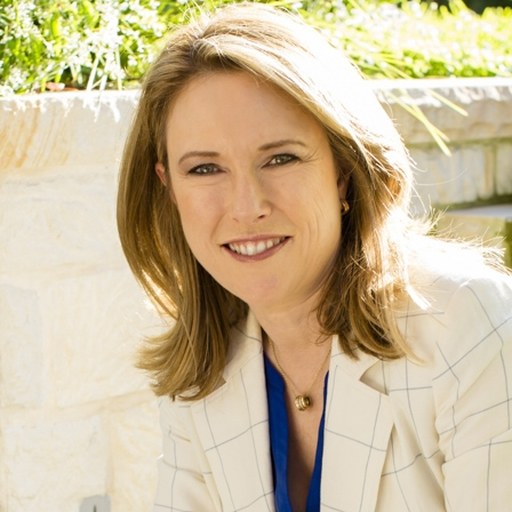
Co-host of The Elephant in the Room. Real estate agent, buyer's agent and buyer's agent mentor, co-host of Foxtel's Location, Location, Location Australia, author of Auction Ready and co-host of Your First Home Buyer Guide.

Jackson Hills on Queensland's Housing Crunch and Who Feels It First
Q Shelter's Jackson Hills explains why Queensland's housing pressure has spread from the lowest incomes into working households. He maps the migration, construction and subsidy numbers behind the state's targets, and what the 2032 Games could do to them.
In this episode, we're talking with Jackson Hills from Q Shelter, Queensland's peak body for housing and homelessness services.
And we're going to explore the issue of affordable housing versus housing affordability and examine whether we truly understand the causes of the housing crisis as it stands in Queensland and Australia and where there might be some meaningful progress with both short and long term solutions.
Welcome to the elephant in the room. This is the podcast where we love to talk about the big things in property that never usually get talked about.
I'm Veronica Morgan, real estate agent, buyer's agent and buyer's agent mentor, co-host of Foxtel's Location, Location, Location Australia, author of Auction Ready and co-host of Your First Home Buyer Guide.
And I'm Chris Bates, mortgage broker, recently ranked number five in Australia out of over 18,000 brokers in the annual MPA Top 100 Mortgage Broker Awards. Before we get started, I need to let you know that nothing we say here can be taken as personal advice.
We always recommend you engage the services of an appropriate and experienced professional.
Our guest today is Jackson Hills, Manager, Policy and Strategic Engagement at QShelter, a peak body working to influence solutions to housing need and homelessness.
Jackson has spent more than 15 years working in not-for-profit and community organisations, starting in the sports industry before spending time in local and state government roles and now working at QShelter.
He's a board member of Common Ground Gold Coast, which has been created with the express aim of establishing 200 units of supportive housing to permanently house and support individuals sleeping rough or those who experience chronic homelessness as well as people on low incomes.
And Jackson is also an executive committee member at National Shelter, an advisory board member at Collective Leisure and a mentor to young people at the Gold Coast Youth Service. Now, thanks so much for joining us today, Jackson.
We've covered the housing crisis from a number of angles over the years, but this is the first time we specifically look at Queensland and we're keen to hear your insights.
Welcome. Absolutely. Thank you for having me on the program. Yeah, look, I've followed a number of the podcasts and really look forward to the discussion today.
Yeah, I mean, I guess we want to start on the crisis question. I mean, depending on where you are in this whole, I guess, this pressure cooker, right? You could be looking to buy, so you could be a housing affordability crisis. You could have bought, so it could be a mortgage crisis.
It could be a rental crisis. If you're renting, in terms of your renters, it could be homelessness crisis. And then you've got issues with not enough development. You've got issues with... So many different elements and so much things that I guess a policymaker has to get their head around.
How do you sort of make sense of the current situation and, you know, the real issues you see on the ground?
Yeah, thanks, Chris. Look, that's a really good summary how you looked at that from all the different income types point of view, because I think often we hear the word crisis or emergency thrown around a lot. And I think traditionally we've seen that at the bottom two incomes.
So people on the bottom two incomes in the income distribution or the 40% of incomes in Australia struggling the most. What we've found probably in the last few years in particular, for some of the reasons you mentioned in the second half of that intro,
around supply rights and rental affordability in terms of lack of rental products driving prices up. That's starting to impact most people now.
that are in those markets, particularly the third income quintile, dual income households and families for the first time, really struggling to manage their mortgage payments and also being able to sustain their tenancies in the rental market. So it really is hitting so many more parts of the community.
And I think that's why it's become such a widespread and talked about issue in the public domain.
So it's not what we're talking about until it actually affects this sort of thing. And before it's been sort of hard for you to get airtime, even though these issues have been brewing for some time and they just weren't getting spots in the papers or on the news coverage.
Well, I think that's partly true, yes. You know, I can give you an example of the inflection point in Queensland that's relevant to today.
So two years ago, the Premier of the day, which is Premier Anastasia Palaszczuk, hosted a housing summit up here, an emergency housing summit, bringing all the parts of the housing system, construction industry, not-for-profit sector, various departments and agencies together.
And that was because we were struggling so much and started to creep into these other areas. Now, since that time, there's never been more focus on housing supply, housing support, and I guess housing policy in Queensland for the last two years. So that's actually a really good situation to be in.
It's not hard to get a meeting or a conversation happening now about these issues. The real question is what moves the dial the most? And in some respects, what moves the dial the quickest? Because mass housing suppliers, you guys talk about in your program all the time, It takes a lot of time.
You know, we're talking about 1,000, 2,000, 3,000 units of housing over the next four or five years with the construction environment the way it is. It's going to take a long time. So we're constantly looking at what we can do in the now bucket as well.
So things like modern methods of construction, modular housing, prefabricated materials and building materials that can be assembled quicker, reduce the construction timeline. So there's lots of focus going into sort of the tech side of construction now as well to look at how we get some of this supply in a little bit quicker.
Yeah.
It's interesting, Jackson, that you refer to that, was it a forum hosted by the state government bringing together all the stakeholders from industry and from various sectors across the marketplace that are concerned with housing affordability and supply, et cetera, et cetera.
And yet there was nobody invited from PIPA, which is a Property Investment Professionals Association. And in a way, nobody really representing individual mums and dads investors there. who have been supplying the lion's share of rental accommodation in this country for decades now.
So sort of telling really that they didn't even recognize that that's an important part of this equation and part of the solution, part of the problem, you know, part of the whole thing. One of the things that you talk about there is, you know, coming up with solutions for the short term.
And it's funny because, you know, I hear a lot of self-interest from various sectors, you know, various developer sectors, construction sectors, et cetera, et cetera. There are certain sectors that can and, you know, there's a great opportunity to make a lot of money out of this crisis.
But at the same time, you know, my natural inclination is, oh, be very careful about all these vested interests. But at the same time, you sort of need vested interests to get in there and agitate and create solutions, right? Because government likes their own devices, limited in resources, et cetera, et cetera.
So how do we, I guess...
move quickly to move the needle on the dial in a way that isn't disproportionately benefiting some sectors of our society and not others.
Yeah, look, there's a lot in that, Veronica, and I think I agree with a lot of what you said. I just want to make a real quick comment on the first part.
The omission of a couple of groups at that summit probably highlights the very fact of what's the knowledge base of who does all the heavy lifting in the housing system.
And I think you'll probably find that there was probably like a knack of knowledge of who the various advocacy groups are, what role they play, who they represent. There's probably a couple of other groups missing too, but there was about 240 different organizations and groups invited.
So it was probably the biggest representation of the housing system we've ever seen at the same time. So I think government's probably getting better at identifying who plays what role. But I think you hit the nub of it there.
And that is the group that provides, and it's the mum and dad investors that provide 95% of the rental product in Australia. Usually only one or two properties. There's this narrative that goes around that they have massive portfolios.
I think the ABS data I looked at shows about 20,000 Australians have a portfolio larger than two or three properties. The rest of them are one or two properties. They're probably quite highly leveraged. But they're providing this rental product to people that can only afford to rent, can't afford to buy.
So it's a critical part of the system. We really respect it at Q Shelter. And what we're constantly doing is trying to find ways to get the balance right between rental protection and an environment where investors can actually pay their bills too, because their costs are going up as well.
So we're very conscious of that at Q Shelter in terms of the heavy lifting that they do, Veronica. And then I think the third part of your question was about speed of delivery and what we can do now. And so the comments I made about technology is part of that.
I think the other thing is having a lot more information around properties that are available. So you hear a lot in the narrative and the Greens have been talking about this a lot too lately about vacant homes. Now, sometimes they're vacant for a very good reason. They might be partway through construction.
Someone might be living or working overseas for a period of time, whatever it might be, but understanding what makes up those million homes in Australia that are vacant every night and looking at ways that we can incentivize those owners to get that property back into the long-term private rental market.
So that's another thing we could be doing right now because that stock already exists.
Yeah, there was a lot of talk around Scott Keck, also put a bit of an article around renting rooms out and at the end, the tail end last year, you know, and potentially allowing landlords to, well, property owners to do that without tax consequences.
I mean, in Queensland, what are some of the more acute problems that you're experiencing up there versus other states? I mean... To be honest, this year, I was just chatting to a couple of people in our customer experience team, and that drive to move north is coming up again a lot.
It wasn't coming out last year, but many clients who are first-time buyers who were looking at Queensland as their way of entering the property market and They haven't got strong family ties, or even if they do, they just don't think they can stay anywhere living close. So they're willing to make that compromise.
What are the Queensland challenges that other states haven't got?
Yeah, I think you've hit on the nub of one of them, Chris, and that is internal migration numbers are much higher to Queensland than they are any state or territory. Probably the only other one close would be Tasmania.
We saw in the first year of COVID about 50,000 people moved to Queensland from Victoria and New South Wales, mostly, but from other southern states. We've got about 25,000 people, I think, per annum coming up here. So that's the internal migration.
Obviously, with the borders back open since COVID, that international migration program and international students in particular, and some of the different skills in the workforce. That's coming back in too. And then we've also just got our normal natural population growth.
So I think all those combinations mean that the problem is more pronounced in Queensland. The growth targets that we're seeing around population be the same numbers that you're seeing too, I think, in your line of work. SEQ has got huge population growth up to 2046.
We know that we're hosting the Olympic and Paralympic Games in 2032. And I've heard you talk about that a bit before too. And you know what that does to housing markets and valuations and things like that in terms of speculation and interest.
So there's some of the factors, Chris, already that make Queensland a bit different. I think the other bit I'd add to the puzzle that sort of impacts our part of the system a bit too is that North Queensland portion.
and trying to get some of those homes insured and the extra costs that sit around that in terms of flood impacts and that wider insurance market. So that's another little nuanced piece. So there's a variety of factors that does sort of make Queensland stand out a little bit.
I mean, I know that I'm from Tasmania originally, so I know that every state and territory is struggling with this issue too. I just think some of those factors are a little bit different in Queensland.
It's a good point too, because I mean, you do, I mean, I don't have any hard data on this, but I suspect you might get more than your fair share of natural disasters up there. Given, you know, the tropical, you get cyclones, you get lots and lots of flooding.
So I guess that apart from ensuring buildings that exist, then you've got the situation of housing people who've been in buildings that no longer exist or that are uninhabitable. Um, and then how to mitigate against that happening on and on and on.
So, and, and you do, it's funny cause I think a little bit guilty of thinking that Queensland is just Southeast Queensland, but it's almost like, I think there are some separations that would like to say that we need a state of North Queensland as well. Um,
Oh, there's definitely a narrative running through that for sure. Yeah. And if I could just add, it's a great point. It's something as a state-based peak body that represents community housing providers and homelessness services.
That's primarily who we represent, but we play this role in the housing system where we need to partner with building and construction and development industry and financial services and everything else. But we represent groups from the CAPE
right down to Coolangatta, right out to the NT border. So that's regional remote Queensland. It's some of the bigger regional population centres like Cairns, Townsville, Rockhampton, and these markets, central Queensland, as well as SEQ. So SEQ is going to see a huge amount of growth
But Queensland is a very regionalised market compared to some of the other states where the bulk of their population is in the capital city. So it's an interesting market in that sense.
And so to add to Chris's question earlier, even some of our regional markets have some differences to each other in terms of the push-pull factors around some of the mining booms in some locations and what that does to the housing market. Prices go up, they go down when projects leave town.
So there's lots of these nuances that sit in the regional housing market too.
only a few years ago i was up there um i've been up there since but you know a few years ago i can remember when i looked at some you know big apartment blocks and high density and there was a lot of talk about the oversupply problem in brisbane and harvard price haven't done anything and there was rental guarantees and you know there was uh people had sheets on the balconies basically saying you know you can rent this for you know uh housing our renting guarantees were really big um
Has it surprised you how much it's flipped and how fast it has? Or on the ground, could you see this brewing way before everyone else could? Because ultimately, the developers basically shelved projects up there because it was common knowledge that there was an oversupply problem in the media, right?
The developers said, I can't sell this to investors because investors are worried about prices falling, not going up, and the returns have been dismal. So how do you think that's playing into it?
Yeah, so my comment, so I've lived here for five years. I live on the Gold Coast, work in Brisbane all over Queensland. But I have analysed the data and spoken to our industry and the property development industry, and I have seen those changes that you're talking to, Chris.
So particularly in the apartments market, you certainly won't find that walking around Brisbane today. It's absolutely flipped the other way. But your point is absolutely valid. It's a little bit like Melbourne when the Docklands Precinct came on as well and things like that. where that was having that impact in the apartments market.
There was also lots of purpose-built student accommodation that came into Brisbane. There hasn't been a lot of that since. And that was all the medium to high density product too.
You'll find talking to developers now that they're really struggling to make these projects stack, particularly if it's a rental product only, because obviously they've got to fund that through with a small return over time as opposed to getting paid up front.
You know, things are costing 35, 40% more to build at the moment. So there's certain product that's just not being built. And that's just playing even further into the scarcity that's available, which is obviously they're driving up prices. So, you know, it's amazing how quickly it's flipped would be my answer, Chris.
It's been a stark flip and change.
A lot has been made of the build-to-rent sector as a solution. Now, we know that they can't possibly build enough apartments anyway, but you just touched on something there that financially it might be not that feasible either because of rising costs. And rents, whilst they're rising, they –
You know, they're not rising probably as fast as costs have been rising, right, build costs. What is your take on that as being, you know, offered as a great solution and a whole new market segment that hasn't previously existed either?
Yeah, thank you, Veronica. That's one area of the market we are quite fascinated with and interested in.
I think we know if you look further abroad and look at the multifamily market in the US, we've seen what that's done over there over time and probably in the last 12 to 15 years, the build to rent market in the UK.
We've still got a fledgling build to rent market here, as you would know in Australia. There's a bit in the pipeline. I think it's slowed through this construction issue and feasibility issue in the last 12 months. It was picking up pace with some government intervention prior to that.
I think it still needs government intervention to make it work at the moment. Certainly to have an affordable product as part of it, which I'd love to talk to you about what I mean by truly affordable products.
So we've got housing affordability that impacts all of us, including me, but I get to choose where I want to live, right? So I can decide if I want to spend more than 30% of my income on my housing costs. Some income groups don't get to decide that.
They just can't afford to spend more than 30% of their Income on housing costs. And so for us as an industry, affordable housing is for the bottom two incomes is people spending 30% or less of their income on housing costs, which predominantly means a rental product, by the way.
So delivering build to rent to that income type. doesn't stack up for developers at the moment because building mainstream build to rent to market isn't stacking up today either. So you can see how that will never work without a government subsidy. So then the question comes, well, what role does government play?
And there's been a couple of build to rent pilots in Brisbane where the government stepped in to meet the gap between market rents and subsidized rents. So there's a discount to market rental product there, but still that's not hitting those bottom two incomes. It's still in that sort of third income category.
So the only way we feel you can get there is by folding in a partnership with the community housing sector that's allowed to access a whole bunch of other concessions, tax concessions, building concessions, and a whole range of things to bring down the cost of development.
And so what we're seeing in other states and territories is developers partnering up with the CHP to do a build-to-rent product. Maybe it's 200 units. Maybe 20 or 25 of those are a mixture of social and affordable.
They then get to access a whole bunch of government subsidies to deliver that portion, which is helping cross-subsidise the rest of the development. The government's then on the hook for about 20 to 25 years for an income subsidy over time.
And then because there's affordable product built in, you can have conversations with the local government, for example, about further concessions around infrastructure charges, car parking rates based on different cohorts that might not be driving. It just brings so much more into the conversation to bring down the cost of development.
So this is one that we're really fascinated with. The Property Council put that market at having a possibility of reaching 300,000 apartments over the next 10 years if it's really unleashed. So it could be a really big part of the action.
And the other thing, Veronica and Chris, that we like about it is it can diversify the rental market. So we touched on earlier how 95% of that is mum and dad investors, one or two properties that are probably pretty leveraged.
So every time prices go up, interest rates go up, insurance premiums, strata fees, they're going to have to pass it through. If you have more institutional ownership of rental product, you can ride those waves out better.
I just want to pick you up on something. We'll get back to this institutional ownership in a sec. But, you know, you said that as rising costs hit, mum and dad investors, they're going to pass those costs on.
I can honestly tell you that landlords cannot pass the costs on if the rental market won't bear those costs. If there's high vacancies, as we're seeing in different market conditions, investors cannot pass those on just because their costs have gone up.
And this is, I'm picking you up on this only because this is part of the rhetoric that is out there that greedy investors, you know, they're just covering their costs and so that's why the rents are going up.
The rents are going up because there's not enough properties out there for tenants and then there's competition and competition is what puts rents up and then landlords can go, great, I can actually get more rent to offset some of those cost increases.
But I can tell you from personal experience and also from the data I've looked at that the rental increases have not offset the increases in interest rates, for example, for a lion's share of investors. Yep. So that's one aspect of that. But the other side of that coin is that...
I wouldn't mind coming back to that, Veronica. Yeah. I just want to come back because I want to... I'd like to... Let me restate my comment because what is probably more accurate to say is might need to... Like ideally would need to pass some of those costs on if they could.
I totally take your point that the market might not bear that. And I've seen some great data from Tim Lawless at CoreLogic. It's pointing out exactly what you're saying about the increasing costs that owners are having to carry.
And in some cases, we know a lot of property owners that aren't increasing their rents just because they're really conscious of the tenant's ability to be able to stay in the property. Quite aware of that as well.
So probably one added bit there is that it is one of the causes of a lot of landlords selling. So they're actually exiting the market. They can't pass enough costs on to the tenants to cover these increased costs. So therefore, they're actually getting out. So that's one of the reasons.
And there's been a bit of a LinkedIn argument this week. I've noticed somebody posted something that because the investor borrowing has gone up, they're saying, see, it's the media about, you know,
falling numbers of individual investment property owners is incorrect because look at the borrowing has gone up 20% and I'm like, yeah, but you're using different metrics to calculate, you know, just because an amount of an event is rising as a percentage of all borrowing doesn't necessarily mean that for every investor leaving, you're getting another investor coming in.
And so that's sort of the data has been lost a little bit. But back to...
The build-to-rent model and working in partnership with community housing providers is really interesting because, in a way, the community housing providers have already got infrastructure set up to hopefully facilitate this sort of partnership, whereas governments have been –
steadily declining in terms of their direct involvement in community and social housing for decades now, haven't they? So are governments no longer equipped to do it themselves? They need to support community housing providers and such organisations in order to be able to achieve this?
Such a critical question, Veronica. I'm glad you've asked it. And I think my first part of the answer will be that we need both. We actually need the government still to have the government have a role to play. And I'll explain why in a moment.
But I definitely think we need to ramp up the role that they're playing in partnership with community housing. So my first part of that question is we need government building. We need community housing building. We need government subsidy to allow community housing to grow and expand.
And the states and territories that have done that are getting through this problem a lot quicker. So in New South Wales, for example, just to give you a contrast, the state government actually passed over some of the state housing assets to community housing so it could go onto their balance sheet.
They were already managing the tenancies anyway. And it allowed them to then leverage those assets to borrow debt finance and build more properties. Now, the government was still building properties, but so was community housing. So you're capitalizing the community housing providers. So they become developers in their own right.
That investment is retained in perpetuity because they're always going to be a CHP. They're a not-for-profit. They're bound by the charity regulations, a whole bunch of different things. So it's a trapped investment type. and it's been well leveraged. Now, that's happened in most other states and territories.
Unfortunately, it hasn't happened to the same rate in Queensland. Now, it's just on the radar again now, and you might have seen some announcements up here recently with quite a bullish housing plan announced by the government, which I'll be happy to talk about as well.
But, Veronica, absolutely, we've got to unleash community housing to do some of the heavy lifting here. But the only way they can do it is if they have a large enough portfolio to be able to leverage it to actually then develop and grow.
I'm on a personal mission to help more people make better property decisions. And you can find out all about what I'm working on at veronicamorgan.com.au.
And there you'll find resources for first home buyers, details about my buyer's agent mentoring program, access to suburb help for investors, or if you're looking to buy your dream home or an investment property in Sydney's inner west, eastern suburbs, or lower North Shore, you can connect with my team at Good Deeds Property Buyers.
If you're thinking about buying your first home, upgrading to a new one or purchasing an investment property anywhere in Australia, we would love to carefully guide you through this journey and importantly, get the finance right. Please reach out via our website, wealthful.com.au.
Don't forget that you can download our free full or forecaster report. Which experts can you trust to get it right?
Theelephantintheroom.com.au Jackson, I guess I've been trying to join the dots here and saying the government needs to put their hand in their pocket, right? The old system is not working, right? Mum and dad aren't paying for it. The government's going to have to step up to the plate here.
But how are they going to do it? Building it themselves to sell is really hard. But this build-to-rent idea is really interesting. So we can only do this on government-owned land. Could private developers get involved with this and still make money in it?
Because if they're selling it to community housing as build-to-rent, is there still enough fat in them to want to basically realize the value of that land? Yeah.
I mean, a dream scenario would be is they could build it without all these government taxes and that would reduce the cost of their build and then they could actually hit it to the market because someone could actually afford to buy it. But unfortunately now there's no feasibilities, right?
So what you're basically saying is that if it is government land and there's all these subsidies and the cost of build is much cheaper and then they can, you know, partner up with community housing who gets those subsidies, which is a good idea. Is that what you're saying?
Yeah, more or less, but I'll just add a little bit of colour to it. So I guess what you could say today is that community housing can work with government and develop some properties, probably not to the scale that we need long-term, but it can do that in its own right.
The private development industry can do that too, but it can't access the same subsidies and support that community housing can. If they do it together... It's a golden model for scale.
So that's the first point I'd make because it unlocks some of those benefits, but you get the scale of working with maybe a tier one developer to do some stuff and start to create a pipeline over time.
This is what we really need to get happening to reach the sort of targets that we need to in the future. The other thing, Chris, there's a lot of funding programs. You would have seen a heap of announcements from the federal government. We've got the Housing Australia Future Fund.
You've got the Housing Investment Fund in Queensland. You've got Quick Starts Capital Grants. There's a lot of money flying around that people can access, but usually you'll have to partner with a community housing provider to get it.
And the whole strategy there is about building the community housing sector in Australia like it's been built in the UK. It's a significant part of the action in the UK now. It actually manages more housing than the individual boroughs and governments do in the UK. So that's what that strategy is about.
But doing the development... Opening up the land, being part of a bigger master plan community and just having a portion that's community housing, those sort of partnerships have to happen between the two, the development industry and the not-for-profit sector.
So the government's really trying to create that marriage by the way they're rolling out these programs. What I would just say, where we fit, we're the sticky bit in the sandwich in the middle. We're often trying to facilitate that marriage because you've got programs announced.
You've got developers off scoping out feasibilities in their own right. They don't know the CHPs. The CHPs don't know the developers. They haven't done the work before, so they don't know the type of feasibility that needs to be done. So there's all this work in the middle to bring it together.
And so for us, it's about proof of concept. Where's it happening at scale? Who's doing it well? How are they getting there quickly? How do the procurement processes need to be designed to facilitate those outcomes? And all these things have cost to them because there's lots of investigation. There's lots of financial analysis.
Yeah, there's lots of work done. So we're burning through a bit of cash to get there as well, but we're getting closer and some of the other states are a bit more sophisticated. So this is happening to a higher degree in New South Wales and Victoria than Queensland.
But the spotlight's really on Queensland now, leading up to 2032, to make sure that we have the right portion of social and affordable housing in the overall housing mix. So to give you some numbers, the government recently announced it wants to see the market build a million homes by 2046.
That's our mainstream market. That's the sort of numbers that they're hoping to achieve by 2046. You can do the math pretty quickly annually what that number is. Within that number of a million, they want to build 53,500 social homes. So that's about close to 2,000 per year social homes.
Last year, there were only 550 social homes built. So there's a gap still. So they're bullish targets and we've got the construction industry the way that it is.
The money's there, but it's only through these partnerships that we can find the real economic model that actually really drives it and makes it stack up. So that's why I'm harping on about it so much, I guess. Yeah.
Well, it sounds like exciting times.
I keep thinking it's a bit like an interracial wedding, you know, like if you've got someone from a very, you know, boring state, you know, Anglo-Saxon background marrying an Indian person and going to one of those four-day ceremonies with all the different rules and the regulations, well, all the traditions and the dancing and the food and the outfits and you've got someone in the middle to interpret and bridge the gap so that both sides can understand each other.
Because, you know, I imagine the ultimate objectives, Um, of both parties could be quite different and the, the values of both parties could be quite different as well.
So I imagine bringing those in alignment would be, um, could be quite challenging and, and bring out the, your, you know, your hone, your mediation skills.
Yeah, true. But do you know what I've found, though, Veronica, and I think it's been more the last two years, I've been impressed with some of the tier one developers and their genuine interest in what role they can play in this place. They won't do it for nothing, of course.
It needs to stack up. But there's a genuine interest in trying to unlock the value of what the affordable portion looks like in these larger developments. And I've found the same with the professional services firms that sit around the industry.
Those that do the feasibility work, those that do the financial analysis are really trying to offer their services at pro bono, low bono to organizations like ours. What role can we play?
Government standing up teams with experts that used to work in the property industry to try and attack this from that angle a little bit better. Everyone is sort of moving in a direction to try and make it work. There's a lot more willingness.
And I've been involved, just to give you one practical example, it's not an advertising campaign, but Now, the likes of Lendlease and Stocklands and all these developers are trying to find a way to do some of their scaled developments to have an affordable portion in them that truly meets the gap.
Not just to say that we've done a discount to market rent product, that if you're telling us that people on the bottom two incomes can't afford to live in these locations, we want to change that. But we just need to stack it up.
We need to find a way to subsidize it across the development. We need to work with government to find the right incentives and concessions. But we really want to do it. And some of them are starting to see the value of this mixed tenure model too.
And what I mean by mixed tenure, I'm not sure if you've heard this terminology referred to before, but this is, imagine a precinct that might be 1,500 units and you might have a portion of social housing in there
a portion of some market affordable housing, maybe some specialist disability accommodation, and then a whole bunch of market-based housing, different housing types.
And the social benefits in that development and those groups creating a community are fantastic as opposed to the previous model in the 50s, where we just used to build social housing towers where people of the same challenges were all just housed together in the same location. And it was a recipe for disaster.
As we've all learned internationally, that's well understood now. We still have some of those assets. But there's slowly, it's a move to this mixed tenure model. Yeah.
Well, that sounds exciting. And I'm really pleased to hear that you're having a positive interactions and experience dealing with these disparate groups, if you like. So that's the T1 developers. Is that...
Are you seeing that all the way down the ladder or mostly are you going for greatest impact and that is going for those bigger developers right now?
The way I'd probably answer that is I think there's just as much interest across the board, certainly the people that I interact with. I think the challenge for them to carry anything early in the investigative stage is just a little bit different. And what's imposed to them in different projects.
So, for example, the land lease might have a major project up here at In Queensland at the showgrounds, for example, it's a well-known major project. There's a whole bunch of towers they need to build.
There's a bunch of residential commercial development and they have the opportunity to do something around affordability in the next couple of towers coming out of the ground.
The scale of that development just allows them, I think, to kind of investigate a bit more and sort of, you know, burn a bit of time to kind of find out how this works.
Someone who might be operating at a project level where it really needs to work for them, their entire business is on the line. That's how much margin they've got in the development cycle. Probably doesn't have as much free reign.
So unless there was some more backing by the government, I think it's harder for twos and threes to kind of play in that space too much yet. What we will probably see, though, is a bit more of a focus on what an inclusionary planning environment might look like in the future.
So I'm sure you've heard this term inclusionary zoning before. Now, I know often when I say that, people cringe because they see it as a target imposed on developers that they just, for the benefit, it's a ticket to play type of thing.
We need you to build this many social homes if you want to access this bit of land. We see it differently. I think we've seen great examples in some of the priority development areas that are controlled by the state government up here in Queensland, where there's flexibility in how those targets are met.
So I'll give you a real classic example. A tier one developer might have a big bit of land that they're responsible for developing. They're releasing bits every year, so maybe 120 apartments or lots and then another 250. The target might be 5% for social housing that they need to deliver.
Instead of testing the market every year with the CHP to do two or three properties, which they're not really interested in because it's not enough scale, they might decide to do a land carve out to the value of that 5% or they might decide to contribute to a fund like an offset.
that allows a project to go ahead, just giving the flexibility to the groups locally to find out what's the best way to meet the target. And then government also coming to the party with some concessions to make that stack. So that's the type of inclusory planning environment we'd like to see in Queensland.
And I want the development industry to be part of the design of that. I don't just want to see it sort of structured up and then just imposed. I'd like all players to be part of designing that inclusionary sort of framework.
So that mechanism will have to come in place because we've got these targets in the South East Queensland regional plan to meet. And unless you have a mechanism to meet them, they won't be met. So that's something that we expect to see over the next couple of years up here.
Jackson, have you seen much appetite from the super space change? You know, we're getting three and a half trillion in our super system now. And, you know, there's more and more people entering the baby boomer, you know, retiree stage, right?
Where, you know, equities are a little bit less attractive at a regular income stream. And you've got massive, Australia's a drop in the ocean, right? Really it's three and a half trillion now, super system.
But if you go around the world, it's, you know, tens of trillions of dollars, you know, want a steady income. Do you think they're willing to be part of this solution or is it just, there's not enough potential fat in it for the risk for them to make it worthwhile? Yeah.
It's a bit of both of those things you said. The first thing is they're absolutely interested and they've already been corralled a little bit by the federal government over the last two years to focus on what's happening with the Housing Australia Future Fund.
What I think the government's trying to do is create a pipeline that they could attach themselves to. I think it's tough for a super fund to invest at the project level. They need something at scale that gives them some sort of reliability over a period of time.
And obviously in that asset allocation in their portfolio, they'll have certain things they're trying to meet. One of the things I always know when I look at my super balance, by the way, and I look at the way my asset allocation is done, I see commercial real estate in there all the time.
So in some ways, I kind of see the affordable housing a bit the same. There's some parts of the asset allocation that have a higher return than others.
So I think what the government's trying to do is structure it up where they can provide a pipeline that super funds can kind of back end a little bit with their investment and they can give them a steady return over time.
And one of the ways they can do that is through a vehicle like the Housing Australia Future Fund that's going to build 30,000 affordable homes. That's the sort of scale, Chris, I think they're looking to kind of invest in.
So we don't really see it at the project level where a fund's going, oh, look, I like this project in Gympie or this one in South Brisbane. You know, here's some money and can I get a rental return? It's not at the project level. It's at the pipeline level.
And that's where that discussion's been had. It's been quite fruitful. There's some super funds more interested than others. I think I always hear, you talked about rhetoric before, Veronica, so I hear a lot of rhetoric around this one.
where a lot of commentators say that they don't think the return will ever be high enough. I just challenge that a bit in that diversified asset allocation a little bit in terms of what I know about my super fund and some of the different risk profiles that sit there.
And I think affordable housing absolutely has a role to play. If it can be set up in a vehicle like the Housing Australia Future Fund or a trust or something that's got a bit of stability over time.
So you mentioned earlier about the difference between affordable housing and housing affordability or drawing a distinction between those terms. And you've talked about people in different income brackets, you know, the lowest to 20th percentile and up.
Is, and then there's the lowest end in terms of income and providing housing and support, supportive housing is social housing, right? And then there's affordable housing and then there's the private rental market and there's owner occupied. Is that sort of the way the tiers work?
You're very close. So that's the housing, the universal housing continuum you're referring to there. Yep.
So it's got a name. Yeah. Okay, so is the requirement at the bottom end of that, is that swelling? Is the requirement for social, first of all, swelling? And is that pushing into affordable and so on? Because societally, this is obviously an issue that we have then, isn't it?
It's not like we're just fixing a problem because we've sort of run out of houses and the people that suffer the most are at the bottom of the pile. This is about a structural problem, right?
Yeah. Or is it? Yeah, you're spot on. Look, no, no, it is. It is. No, it is. And there's a growing, well, there's a current need that's not being met and there's going to be future need in the population growth too. So you've got those two portions to respond to.
We're not even, I wouldn't say we're not close. We're getting closer to responding to the current need, but we're nowhere near it yet. Some of the plans like the ones announced by the Queensland government recently, some of the federal government programs will help get closer, but we're still not meeting the current need.
And I'll come back and explain that. And then you've got future needs. So every time the population grows, there's always a portion in there of high need, as you would probably appreciate.
And our housing supply targets at this level of the income bracket, so the housing going to those income types isn't meeting that need. So you've got current and future needs. So In the social bracket, or sometimes we refer to it as public housing, you touched on it earlier, Veronica.
You said the numbers of state-owned properties in that space is going down as a proportion of overall dwellings, and that's true. So the last 30 decades, it's actually dropped as a percentage of total dwellings. So we used to have close to 4% of all dwellings were social housing. Now it's about 3.6%.
I was looking at this the other day, just to give you a comparison, and Singapore is an entirely different market, but so much of the Singapore housing system is state-owned, and then there's shared equity programs that people come into the market, they pay down the government portion, et cetera.
I'm sure you're aware of it. Countries like the Netherlands have a much higher proportion than us, closer to 27% of the residential market. But even some of the European countries are sort of up around 8% or 9%, and we're at 3.6%.
So that just gives you an idea, and it's going down while the total number of dwellings is going up. So that's, you sort of mean that that gap's getting bigger and that's just in social housing. So then what affordable housing means is we're still talking about sub-market products.
So products that are subsidized, not market-driven products. So in that affordable category, and that's for people on the bottom two income quintiles, that needs growing too because people in the market can't afford the market-based housing.
So they're being knocked down into requiring a government subsidized product. So therefore that category, so it's like a domino effect. And I loved something I heard on one of your programs recently. You were really investigating the benefit of different interventions around home ownership.
Now, the other thing that's happening in our environment, as you'll be quite aware, is the rates of home ownership are actually going down. So we used to be up around 70% of the population were either owned a property outright or they were paying it off. That's now dropped down to about 65%.
And the projections are by 2030, and the reason I'm following that timeline is it's Olympic Games timeline, could drop to around 60%. So the percentage of people owning their home or seeking to is declining, which means more people in the rental market, and we've got less stock available in the rental market.
So these are some of the macroeconomic pieces that are having a real challenge. And when you talk about how you attack that from a policy perspective, And I know you've prosecuted the case around first home buyer grants, and I know they're attractive to the individual household for their particular purchase intent.
But every economist we've worked with so far has proven that they do inflate home values overall and can have an impact on housing affordability. So we're really concerned about first home buyer programs. What we're more interested in is shared equity programs that allow people to get in the market that
The government might take a stake in that they can pay down, have less inflationary impact. Some of the other guarantees that sit around home ownership for different income types. There's a lot you can do in the home ownership space that isn't just cash grants.
So I just wanted to touch on that as well.
Jackson, are you seeing that part of the rental story where that trickle down effect and people that potentially would have rented maybe something a bit closer, a bit more to their work, they can't afford that anymore. Now they're moving to say the middle or outer rings and
You know, typically people were, you know, maybe more affordable rentals, but now they're going, hang on a second, competing with these people on much higher incomes and they're getting completely wiped out. And then that's resetting rent.
And then everyone, basically as soon as someone comes out, everyone in that whole community is having to shift because every time their lease finishes, the rents go up dramatically. And you're basically getting this real displacement of people that have lived in an area for so many years.
There's all their friends, their work, their community in there. They're just getting forced out on mass because a whole new rental pool is coming. Like, is that something that, uh, you know, the numbers probably don't show it because maybe they have to move to a new community. Right.
Um, or they have to move in with family or if they, I don't know, like, is that one of the things that just doesn't get talked about enough is the displacement and the issues around mental health and things like that.
I don't think it's talked about enough. It does get talked about more than it used to. And one of the, I guess one of the hooks that we've used to have that conversation or drive that conversation has been the Olympic and Paralympic Games coming in 2032.
And I've actually just been overseas and one of the places I was in was Paris, which has got the Games later this year. And you're already seeing in Paris that there hasn't been enough intervention in the market to address some of the homelessness population in Paris.
And so what they're doing this year in Paris is busing people that are sleeping rough on the street out to the regional locations where they've set up some temporary housing. Now, this happens quite a lot, unfortunately, with major events. We saw it in Paris.
You know, in underdeveloped countries, I almost expect it, you know, so Rio and places like that. But even in developed economies, that is what happens if we haven't dealt with it by the time the games roll around. And so that was really disheartening to see that in Paris.
And it was all over the news when I was there. We've been talking to the Queensland state government about making sure that we're not in that situation in 2030, 2031, 2032.
And one of the ways we do that is by tracking exactly what you said, Chris, like there's probably not enough tracking on displacement. And what that looks like, it's really the push-pull impacts of the fluctuations in the market. Now, it might be that some stocks moved into short stay, for example.
Now, if some stock comes out of a long-term rental market into short-stay accommodation, which it does need to in some locations because they're tourist hotspots for obvious reasons, but it takes that product out of a long-term rental market, if you haven't topped it up somewhere, then that's a reduction in properties available in the rental market.
So the pure mathematics of it can sometimes mean that it pushes people out, both at a price point level, but also in terms of an available stock level too.
And then if they're lower income earners that maybe require services and support, they might end up in a location that isn't necessarily set up to actually service them because they're already struggling to service their own need locally.
So we're looking to set up a bit of a monitoring program, hopefully with the state government, but we're looking to get
So Hoori, who's the Australian Housing and Urban Institute Research Institute, you may have heard of Hoori, to help us look at how we can actually monitor displacement in SEQ in the lead up to the Games. I think it's a really critical thing to understand.
Is there anyone, you know, um, I mean, we had assembled communities on, um, Chris there like many years ago, um, many years ago when we were down in Melbourne, when we used to do these things live. Um, and he was, you know, sort of trying to, I guess, rebadge developments and, and
You know, it was very early days. You've got into some business now.
Anyone you think stands out in the private development space that is probably doing things a little bit differently than just building to sell or building to rent or building for downsizers that is sort of taking a whole picture view rather than a, let's just, you know, let's try to make this work and make some money.
Yeah, absolutely. Look, Assemble actually still does exist and is doing some great work. I'm not sure. I think Chris is still attached maybe through the board or something. And they're often, I mean, they're trying to, I guess, produce products that cross-subsidize themselves and don't necessarily rely on a government subsidy.
And I have said there's some other examples of that that do exist. Usually at the property level, so property by property, it's hard to kind of get that to work at scale. So at the 5,000 property level, at 2,000 property level.
So there's some really great individual projects that have been able to achieve some great things by cross-subsidizing through different tenure models, tenure types, some other forms of philanthropic investment that help with the top up and all that sort of stuff. Land concessions with councils that bring down the cost of development.
different land ownership models. So there's some really good stuff in that space. The other one would be Nightingale. You may have heard of these guys doing some good stuff in Melbourne. Sydney, I know they're scoping out up here as well.
That type of innovation, I'm sad to say, there hasn't been as much of it in Queensland, but we're certainly following it in the other states and territories. And we need that too. Like we need all those ideas to kind of really prove concepts up that can work.
I still take the view and always have since I've learned about this industry that any sub-market product requires some form of government support. That's just my ethos. I can't see how it works at scale without it.
And I really think that it's a core function of state and federal governments to provide that subsidy for that part of the market. And that subsidy can be in the form of land. It can be in the form of assistance with capital.
It can be in the form of assistance of ongoing sort of annuity payments or rental subsidy payments to make projects work. But I really think government has a role to play in any form of sub-market housing.
But yeah, there's some great models and they're some of the groups that I would always point to.
You've heard about a property Dumbo. Have you got one for us?
I do. And I've already, unfortunately, brought it up through the interview, but let me expand on it. And it's Paris. I just want to talk about that a little bit because, and you're probably hoping I could have dogged someone in here locally, but it's Paris because of where the
Yeah, well, I can think of another one if you'd like, but I'll just finish this one off. It's Paris because of what they've left themselves this close to the games. So just studying some numbers over there, it's about 2,500 rough sleepers in Paris.
If you know the Paris housing environment, you know that there's about 3 million people in the inner ring, and then there's about 11 million people outside of that in the associated urban areas. So big urban centre.
Now they haven't been able to address this issue over the last 10 years leading up to the Games and 2,500 rough sleepers in Paris. And they're now literally busing those people out to the regions for temporary housing and the communities, you know,
kind of up in arms about it, but there's just no housing. There's just literally no housing they can put them in in that location.
And one of the things that we know about moving people out of their support structures, because even if people are sleeping rough, they still have support structures, as you're probably aware, access to services and food and healthcare and those things, is that it puts them in an even more precarious situation if they're moved to an environment that they don't know.
So that's probably my number of the week.
And what's so awful about that is that if they weren't going to get it sorted out before the Olympics, they sure as hell got no impetus to do it afterwards.
But also, that is a city with a lot of apartments.
You know, we're sort of often told that part of our problem in this country is our urban sprawl. We have too much, you know, two individual houses sitting on two bigger blocks of land. Our cities go too far.
Whereas Paris is often held up as being this paragon of developer virtue, where you've got lots and lots of four- and five- and six-storey apartment blocks. That's the way the city is made up. So clearly the building of lots of apartments is not going to solve the problem.
No, and it's very true. And I noticed it was noticeable when I was there, but I did see a big difference between the type of housing outside of the 10 adornments or whatever they're referred to as, those 10 areas internally.
Yeah, it was very different outside the snail than it was inside the snail. And I think so was the price point, obviously.
I think what my observation would be, if I was to take it back to Brisbane, where we have a rough sleeping population of close to maybe even 400 and 500 on some nights in Brisbane as well,
We have some more high-density product coming into our Brisbane inner city that provide a great opportunity for us to have a portion of that being available for social and affordable housing with good tenancy management, good support structures wrapped around it.
And I just don't know that the housing environment is set up for that in Paris. I don't think the not-for-profit system is as developed. And I think it would be hard for them to achieve in that inner city ring. But we can do that in Brisbane.
And I think the sector's not looking for 100% of that housing to be at that affordable level, by the way. We're talking about around 10%, 20% and trying to make that stack within the new product that's coming into the market. So I still think we have that opportunity in Brisbane.
I was a bit disappointed to learn about that in Paris from the human side, really.
Oh, and yeah, I mean, exactly. I mean, it's just, why should they? It's kind of like having to dress up the house for a home inspection, right? Yeah, well, you're hiding the, you know. Our home isn't the street. And, you know, I just think, yeah, it's just a social question now.
Why should they have to move places? You know, if they want to live on the street, they want to live on the street. It's tidied up for the game. And putting him into communities when you're not really actually giving him an alternative is just wrong.
So hopefully Brisbane don't take that strategy, if you know what I mean. off them and, yes, try to help them. But ultimately, if they want to live on the street, you don't ship them out to the suburbs just so you can present yourself well on a global scale. I don't know.
That would be like me. I'd be one of the ones kicking off in Paris, to be honest.
I could tell, Chris. I appreciate your passion for it because we feel the same. And we feel the same. I think, unfortunately, we have seen it. So it has been kind of the M.O.s past games.
I would like to say that the Commonwealth Games around the Gold Coast, even though I think we could have done a little bit better with the housing legacy there, there was 1,252 built rent units that were the Athletes' Village in the Gold Coast that now are in the market.
As a result, there was a little bit of legacy there. So we just need to find a way that when we host these major events, we're not making the housing environment Dramatically worse. I know the property values are going to go up. We're already seeing the forecast. There's no doubt about that.
But I think what I mean in terms of the displacement impact and preserving a portion of properties for what we know are low-income earners, because our low-income earners, as I don't have to tell you guys, you would know this already, but our low-income earners are our cafe staff, restaurant staff, staff that we need in the city to service all the tourists when they come here for the games.
So we obviously need those people to be located close to where they work if we can.
And if you were sleeping rough and you did need a bit of money, when is a good time to actually potentially get a bit of help is when the city's busy and the city's packed.
So you're moving out at the time when they probably are more likely to get a bit of help from people who can afford to give them a bit of help. So it's like a double hit, right? Now they have to be where there's no tourists.
I'm an optimist, though, guys, and we are working hard with the state government to, you know, there's a big focus on what the legacy of the games is going to be. And we're talking about legacy nine years before we even host the game. So I think that's a positive thing.
I don't think we've got agreement on how we do this better yet, but there are certainly a number of recommendations we've put on the table. We did a great bit of work around this with consulting firm Urbis, who you would probably know.
And we looked at a whole range of different things that you can do in the housing market and the homelessness system to avoid this happening in the last year. But the other thing we will look to do is that displacement monitoring, Chris, you referred to.
We want to look at that every year so we don't actually wait till the last year. We actually look at it every year and find out what the movements are and how we can actually improve the situation, not make it worse.
But when you start linking homelessness to the Olympic Games, that's just, you know, those two things shouldn't be linked anyway. I mean, you shouldn't be, I guess, in my view, I don't think you should be trying, the motivating factor should be getting people off the streets. So we look great in Olympic games.
I just don't think those two that's up. I mean, you know, you should just be trying to solve the issue regardless and who cares what you look like on the Olympic games from that point of view.
Um, you should be so, so it's kind of, I dunno, I just don't think the accountability should be how we look at on a global stage where we host the Olympic games. It's kind of like. You know, yeah, you should just be worrying about that issue anyway.
Anyway, that was my thought on it.
That riled me up. I hear you. But from the position of a peak body, are you trying to capitalise on motivation?
Oh, yeah, we are. But to Chris's point, we want to fix tomorrow. So I think annually for us, it's like how are we going in the next 12 months, the next 12 months after?
We're not going to wait until 2032 to sort of magically sort of roll out of bed and things are improved. I mean, we need to be working at this every year.
And I think monitoring the displacement, regardless of the Olympics, that's just probably another pitch you can add on the end and kind of go, have we improved this problem by the Olympics, not made it worse?
I guess what I'm worried about is that we've seen some data recently from PRD and AMP and a few other people saying, who have analyzed property values around Olympic Games in the past, particularly around suburbs that are in a five kilometer radius of venues.
And we just know even outside of normal market movements, the accelerated rate of values in some of those locations and from a price point point of view, that's going to knock some people out of the market. I think naturally.
So then the question is how you preserve some product through those subsidized programs to make sure that there's some room for some of those lower income earners. So that's the other reason why we're just studying what the impacts are linked to the games, but we're not going to wait for that.
We're going to work on it every single year.
Well, we wish you every success and really appreciate you coming on and having a chat to us about this. So there's been a really informative conversation.
This is a huge topic. It's on the front pages with various angles, as I mentioned in the introduction. So I think that we've gained some greater insights today. So I really appreciate your time, Jackson.
Oh, my pleasure. And thank you both for your interest in the topic. Really appreciate it. Thanks so much, Jackson. Talk soon.
If you have a question that you'd like us to answer in an upcoming Q&A episode, you can send us a voicemail or written question via the website, theelephantintheroom.com.au, or you can email us directly at questions at theelephantintheroom.com.au. If you like what you're hearing, please share this episode with others you feel would benefit.
And while you're at it, why not leave us an iTunes review? Five stars would be great. I know that sounds a bit cringy, but we have it on good authority that every review helps make it easier for other people to find out about us and hear what our amazing guests have to say.
Key takeaways
- Housing stress has moved from the bottom two income quintiles into the third, where dual income households now struggle with mortgages and tenancies.
- Queensland carries the strongest internal migration of any state, with about 50,000 arrivals in the first COVID year and roughly 25,000 a year after that; ABS put net interstate migration at 16,528 in the year to December 2025.
- The state wants a million homes built by 2046 including 53,500 social homes, close to 2,000 a year, against 550 social homes built last year.
- Social housing has fallen from close to 4 per cent of all dwellings to about 3.6 per cent, well below the Netherlands at closer to 27 per cent.
- Hills argues any sub-market product needs government support, and that developer and community housing partnerships are the route to scale.
- Paris bused rough sleepers out before its Games, and Q Shelter wants annual displacement monitoring so Brisbane does not repeat it in 2032.
Why Is the Housing Crisis Reaching Middle Income Earners?
Jackson Hills of Q Shelter, Queensland's peak body for housing and homelessness services, said the word crisis has traditionally described the bottom two income quintiles, about 40 per cent of incomes. Thin rental supply has pushed the same pressure into the third quintile, where dual income households now struggle with mortgages and tenancies.
He separates two terms often used interchangeably. Housing affordability touches almost everyone, including him. Affordable housing, as his sector uses it, is a product for the bottom two income quintiles: housing costs at 30 per cent or less of income, mostly rental.
We've got housing affordability that impacts all of us, including me, but I get to choose where I want to live, right?
Jackson Hills, 16:45
Hills dates the shift in Queensland's political attention to an emergency housing summit hosted two years earlier by then Premier Annastacia Palaszczuk, with about 240 organisations invited. Getting a meeting is no longer the hard part; the question is what moves the dial quickest, which is why prefabrication gets attention.
What Makes Queensland's Housing Market Different?
Internal migration is the first difference. About 50,000 people moved to Queensland in the first year of COVID, mostly from Victoria and New South Wales, and Hills put the run rate near 25,000 a year. Updated: net interstate migration to Queensland was 16,528 in the year to December 2025, still the largest gain of any state (ABS, National, State and Territory Population, as at 10 September 2026). South East Queensland faces heavy growth to 2046 and hosts the 2032 Games.
The state is also decentralised. Q Shelter represents providers from the Cape to Coolangatta, taking in Cairns, Townsville and Rockhampton, where mining work pushes prices up and pulls them down when it leaves. Flood exposure and insurance add cost in the north.
Host Chris Bates recalled when Brisbane apartments were an oversupply story, with rental guarantees advertised on balconies. Hills said it has flipped. Student accommodation arrived and then largely stopped, and with construction costing 35 to 40 per cent more, some product is not being built. Presentation can also outrun the building behind it, which is why buyers should know what a pre-sale styling spend actually buys.
How Many Social Homes Is Queensland Actually Building?
| Measure | Figure | Timeframe |
|---|---|---|
| Market homes government wants built | 1 million | By 2046 |
| Social homes within that total | 53,500 | By 2046 |
| Implied social homes per year | Close to 2,000 | Per annum |
| Social homes actually built | 550 | Last year |
As described at 28:28. Figures as stated on air.
Those targets are bullish against the current construction industry, Hills said. Program money exists; the gap is between close to 2,000 social homes a year and the 550 built last year.
The longer trend runs the other way. Social housing was close to 4 per cent of all dwellings and is now about 3.6 per cent. Home ownership has slipped from around 70 per cent to about 65 per cent, and projections he follows suggest near 60 per cent by 2030. Every economist Q Shelter has worked with, Hills said, found first home buyer grants inflate values; the body prefers shared equity.
| Market | Share of dwellings |
|---|---|
| Australia, historically | Close to 4% |
| Australia, now | About 3.6% |
| Some European countries | 8% to 9% |
| Netherlands | Closer to 27% |
As described at 39:40 to 40:21. Figures as stated on air.
Who Pays for Affordable and Social Housing?
Mum and dad investors supply the bulk of rental product, usually one or two properties and often highly leveraged; Hills cited ABS data suggesting only about 20,000 Australians hold more than two or three. Q Shelter's task is balancing rental protection against owners being able to pay their bills.
When Hills suggested rising costs would be passed through, Veronica Morgan pushed back. He restated it as owners passing some costs on if the market would bear it, citing CoreLogic data from Tim Lawless.
I can honestly tell you that landlords cannot pass the costs on if the rental market won't bear those costs.
Veronica Morgan, 19:25
Hills described Brisbane build to rent pilots where government met the gap between market and subsidised rents, which still landed in the third income category. The model he favours pairs a developer with a community housing provider: perhaps 200 units, 20 to 25 of them social and affordable, with subsidies cross-subsidising the rest and a government income subsidy running 20 to 25 years.
The private development industry can do that too, but it can't access the same subsidies and support that community housing can. If they do it together, it's a golden model for scale.
Jackson Hills, 26:09
New South Wales moved state housing assets onto community housing balance sheets so providers could borrow against them and build, which Hills said has not happened to the same extent in Queensland. Programs such as the Housing Australia Future Fund generally need a community housing partner, and super funds are interested at pipeline level, not project level.
Will the 2032 Games Displace Brisbane Renters?
Hills nominated Paris as his property dumbo. With about 2,500 people sleeping rough, authorities were busing people out to regional temporary housing, leaving them more precarious and away from support structures.
Brisbane's rough sleeping population runs close to 400 or 500 on some nights. New inner-city high density is a chance to carry a portion, around 10 to 20 per cent, as social and affordable housing with support around it. The Gold Coast Commonwealth Games left 1,252 build to rent units from the Athletes' Village.
Q Shelter is working with AHURI on monitoring displacement across South East Queensland every year rather than at the end. Stock moving into short stay accommodation, and PRD and AMP analysis of values within five kilometres of venues, point the same way. The people under pressure are the cafe and restaurant staff the city needs.
Buying into a Growth Market?
Queensland's migration, construction costs and 2032 timeline are all moving at once, and they change what a purchase in that market has to survive. Our team talks through how an investment property loan is structured before the contract is signed.
Investment Property Mortgage BrokerSources referenced: The Elephant in the Room, episode 325, "Queensland's Housing Crunch: What Can Be Done to Ease the Strain?", released 2024-03-24. Hosts: Veronica Morgan and Chris Bates (Alcove). Guest: Jackson Hills, Manager, Policy and Strategic Engagement at Q Shelter. Figures are quoted as stated on air. Figures marked as updated were re-checked on 2026-09-10.
Press play on these