Curious about upgrading?

Wondering where to start?

Complex questions that need answers?
Is there a better structure for you?









"They managed to navigate my complex expat income and even got my Google RSU income approved as well."
"I highly recommend Alcove to anyone looking for a mortgage broker who is responsive, trustworthy, and truly cares about their clients. Thanks again to the whole team for making the process such a positive experience!"
"As founders, we're constantly jumping between things so having a partner that handled the details & made the process super clear made the buying process breezy for us. Very happy with the experience!"

“It almost felt like it was his responsibility to make it clear to me, not my responsibility to understand it.”
“I've been pretty much fully leveraged the whole time. So the sounding board on that, in terms of what was achievable, what wasn't — I think trust is just built along that.”










"Alcove has been a great partner. They look after my audience properly, keep things simple, and deliver real value. I’ve got full confidence referring clients knowing they’ll get honest, straightforward advice."

"Property is one of the biggest financial decisions people make. Alcove stood out because they take a strategic approach to lending - helping clients structure property and debt decisions in a way that genuinely supports their broader financial plans."


Adapted from audio. This article is a written adaptation of the original podcast episode. Sources and dates are shown with each figure.

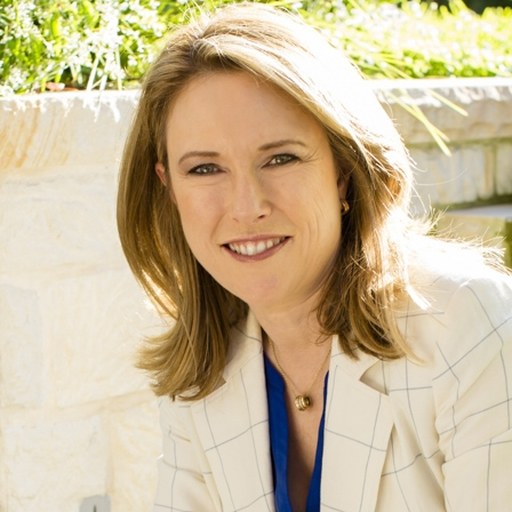
Co-host of The Elephant in the Room. Real estate agent, buyer's agent and buyer's agent mentor, co-host of Foxtel's Location, Location, Location Australia, author of Auction Ready and co-host of Your First Home Buyer Guide.

Warren Hogan on Inflation, Real Rates and a Stronger Economy Than Expected
Economist Warren Hogan joined the show in early March 2023 with a cash rate call well above the consensus. He explains why he thought the economy was far stronger than most forecasters allowed, and why the level of rates mattered more than the change.
The Australian economy seemed to be in such good shape after we emerged from lockdowns and then a bunch of external factors affecting global supply chains combined with all that extra cash in our pockets to create, suddenly it seems, an inflation problem.
Central banks across the world have responded to rising inflation by increasing interest rates and Our very own RBA was a little later than many in starting the rate hike cycle, try saying that quickly, here in Australia. And there's been plenty of debate in economic circles over whether they waited too long.
And now the debate is shifting to whether interest rates are in fact the most effective tool for controlling inflation. Is it possible that the tried and true ways of managing the economy have actually stopped working?
Welcome to the elephant in the room. This is the podcast where we love to talk about the big things in property that never usually get talked about.
I'm Veronica Morgan, real estate agent, buyer's agent and buyer's agent mentor, co-host of Foxtel's Location Location Location Australia, author of Auction Ready and co-host of Your First Home Buyer Guide.
And I'm Chris Bates, mortgage broker, recently ranked number five in Australia out of over 18,000 brokers in the annual MPA Top 100 Mortgage Broker Awards. Before we get started, I need to let you know that nothing we say here can be taken as personal advice.
We always recommend you engage the services of an appropriate and experienced professional.
Today we've invited economist Warren Hogan back to the podcast to help us understand the current state of the economy. When we first spoke to Warren back in episode 75, if you can believe it, in 2019, interest rates were falling and there was talk about a recession.
Now rates are rising and the spectre of a recession is rising again, albeit for different reasons.
Now, Warren has an extensive background in banking and treasury, and since we last spoke to him in early 2021, he's been awarded an honorary doctorate from UTS Business School in recognition of his contribution to Australian economics and his work on the economic impacts of the pandemic.
And last year, he's also set up a property research facility, shall we call it, for Halo Technologies, an Australian listed equities analytics and execution platform. And he's now producing analysis and forecasts for Australia's residential property markets. So it's really good to see you again, Warren. What's been happening since we last spoke.
I really appreciate your time. Thanks. Thanks for having me on. Looking forward to it.
Warren, I'm pumped to chat to you again. You know, I always found the last two chats super enlightening and learnt a lot. And I've been seeing your name pop up a bit, you know, as your name gets around in lots of different press, et cetera.
And I've just seen your stance being a little bit different and a little bit more... I guess forceful, a bit more hawkish, maybe a little bit more like the RBA statement this last month, right? Have you felt like that?
You've been a little bit out there by yourself when everyone else has been playing the safe lane and, you know, probably taking the more like what people thought was the general consensus rather than what you were seeing. Yeah, no, it's right.
I mean, I had my four and a half percent cash rate forecast back in August where I think the consensus was something like 3.1, which we've already gone through.
So I did feel a little bit out there, but that's not an unfamiliar territory for me because I'm not too scared of being away from consensus.
In fact, as a financial market strategist, a bond strategist for many years, the one thing I knew for sure was when everyone agreed on something that's going to happen in the future, that's what wasn't going to happen. So... Well, very uncomfortable when I'm near the consensus.
I mean, I did actually say to someone just recently that my view of a four and a half percent cash rate six months ago was my moderate view. I mean, I still think there's a risk that we can go to five or six, which of course is the last time.
and i hope it doesn't happen of course but i obviously didn't push that too hard when i was already sort of well above market but yep the markets come to us as we're speaking the money markets are pricing at a 4.3 cash rate and i've actually revised mine down to 4.35 just because you know they're obviously not going to go back to 25 bond increments anytime soon
And yeah, it's just been my reading of the economy, not a real forecast thing. I just think every other economist underestimated how much strength's in this economy. And I think the developments in the property market in the month of February highlight that.
People with jobs, interest rates of 5% to 6% aren't too bad for people who want a house. And so they're back in there. And I think that's a problem we've got, though, because we have got this inflation.
I mean, that's a really interesting point you said there around no one really, I guess, respected the amount of stimulus, the amount of built up demand, plus the problems with supply. Were you expecting, you know, last year to happen?
Because we're talking 2021, like 2022 is the year that bang, you know, the rates happened that weren't meant to happen in 2024, if you believe that, but... Yeah. Were you expecting that to happen last year or did it catch you off guard a little bit?
Just how ferocious, I guess, the increase in inflation was around the world?
Yeah, the inflation trajectory really did shock me at one stage, and we were seeing it out of the US particularly early, and that was back when the RBA was making not just the heinous crime of telling us rates were going to stay where they were until 2024, but also trying to tell us, if you recall a year ago, that Australia was different to the rest of the world, and that we didn't have the energy shock, that we didn't have the wage story.
Well, we do have now. It's just we're lagging. Look, the economy, go back to November 2020 when we knew actually once we came out of lockdowns, we bounced back, that we actually are a much more sophisticated society than a lot of people give us credit for. And we did the right thing.
But then once we could go out and spend, we did. And although we went back into lockdown in 2020. The Delta lockdowns for New South Wales and Victoria. But there was evidence all the way from the late 2020 that this was not going to cause a major problem in our economy.
And then, of course, you just look at the magnitude of the stimulus. I mean, local governments were providing stimulus, let alone state beds. I mean, everyone was in on it. It was throw the kitchen sink time. The RBA did QE, which they've been arguing for years they didn't want to do.
then, yeah, the problem is that we still don't know how bad this could get in terms of inflation.
Let's cross our fingers that it's starting to come out and it will continue to, but there's just a massive amount of, it's just a massive balance sheet shift from the public sector to the private sector. And that balance sheet capacity is showing up now in everything from consumer spending to businesses hiring.
So it's a strong economy out there. It's slowing down now because of these rate hikes and it will continue to, but it has to. We have to slow this economy down.
We're actually in the process of researching our full forecast report for 2023. And if you've ever read it, Warren, I think you're going to make an entry in this one.
We're actually looking at the forecast for interest rate rises, but also for property prices and reviewing 2022, what was forecast versus what will happen.
And actually in doing that, I was quite surprised to see that the RBA was still as late as February 2022, was still encouraging, really encouraging buyers to be confident that rates were going to stay low until 2024.
I mean, they started, the rhetoric, the words changed a little bit, but they never actually said, oh, That won't happen. And yeah, I was actually really astounded because even in my memory, I locked into 2021, they stopped, but they didn't. They kept right up almost to the wire, didn't they?
They started to soften the language, but this is the other problem with the central bank giving a public, strong public forecast.
and you know people in markets in you know traders money managers economists we all learn something early in our careers that is you don't fall in love with your view you know because you go out there with a strong view and then you just fall in love with it and what it creates is stickiness you don't change it till it's well beyond obvious you need to change it and central banks have known that this guys didn't they don't have that experience and they that that three months between
As you said, it ended in about February 22 and started, I think, in late November 21 or December 21, where it was obvious what was going on. And they just didn't have the they just got stuck. And it's really sad. But, you know, they're going to pay a huge price.
They're all going to go. They're all going to lose their job. The RBA is going to be fundamentally changed. So they're going to pay a very high price for that.
Warren, I mean, I guess, what did people get it wrong in the last six months? You know, because if you look at the markets, right, they were pricing higher rates, you know, August, September, it was a real freak out moment.
Then they really came back, you know, the expectations, which you spoke about early on in the podcast, that, you know, the market was saying 3.5, now it's gone back up to 4.3. What did they get wrong, but now they're realizing around the inflation story that The market is going to take a while.
This is going to be stubborn. It's going to stay high for longer or we're going to get wage inflation. What are we not getting that we've now finally realized?
Well, I think the main narrative that caused the banks and others to be very cautious in their views on how far rates needed to go was this idea that the rate hikes were going to knock all these mortgages out and tumble the economy into recession. And CBA was leading the way.
They constantly were saying the RBA shouldn't go beyond 1.9 and then 2.1. And the other banks weren't much different. But CBA had it as the biggest book, right? And you never listened to them.
What they missed, though, is that, sure, in a market, whether it's a bond market, a currency market, an equity or a property market, the marginal player matters because that's what determines the price. But in an economy, it's the bulk, it's the median that matters.
And of course, we've got this environment, not because of what's happening with rates necessarily now, but because we had them so low in the pandemic, where we're knocking out a bunch of people who borrowed rates at levels that they probably should have never got to in hindsight, right?
They were so far below the long-term average, which now the RBA is having to correct, raise rates very quickly, and there is marginal distress. So we're seeing a lot of distress. I'm actually surprised that the bank numbers show so little arrears. It's going to rise.
We all hear the stories of people who are right on the edge, and Australians do actually pay their mortgage until the last bowl of rice is eaten, and then they can't afford anything but. But...
there is actually a whole bunch of people in the economy, 90% of them, and most businesses, which had a 3% cash rate or a 5% or 6% business rate or mortgage rate, are fine. In fact, they're probably fine at another 1% or 2% above this.
It's just that marginal player which is in distress. And that's what they focus too much on, because we're seeing now in places like the United States and New Zealand, how much momentum these economies are
got, and we got a hint of it in the latest national accounts, which are for the final quarter of last year, but still, they're the latest we've got. Household savings are dipping because they brought up all those savings. They're eating into them like they have been in the US and New Zealand.
I think the general theme, to answer your question after that long explanation, is economists have underestimated how resilient people are, how resilient businesses are.
Yeah. And I find that fascinating too, because even just digging into the numbers as to those more vulnerable home purchases, obviously the last in, borrowing the highest multiple of earnings, the highest mortgage, loan to value ratio, all that sort of stuff. And if you
You look at, you know, there's almost 11 million properties out there and roughly 600,000 changes hands every year. So maybe 1.2 million. So that's roughly 10%, right? So would you say that that is the sort of numbers we're talking about, the margins, or is it less than that?
It's less than that because, you know, there's a lot of people who transacted who realized that this, you know, The RBA might have said 2024, but there's people like me who never believed them. And I'll tell you, there's a lot of Australians who were smart, who were experienced, who never believed them.
The sad thing is the people who believe them are those who are inexperienced, typically younger, or don't necessarily have the capability to overcome a big mistake like this. But yeah, the number's got to be lower. I'm hearing everything from tens of thousands to 300,000.
So we don't know. If you look at the bank's results that came through in February for the final quarter of last year, or the first half, the final half of last year, they've got record low arrears on their mortgage books.
So I just saw some stuff from Illion and their numbers are only just creeping higher in terms of counts overdue and stuff. And that's more generally, not just mortgages. So yeah, look, the numbers will be lower. And the fact is, I think if we try and guess those numbers, it's an impossible game.
You've got to look at the consequences. And from the RBA's point of view, the solid results for the Australian property market in the month of February are bad news because it shows you that maybe rates have to go even higher.
So I think Veronica makes a really good point, and we have the interest rate conversation, is that basically you're not affecting everyone in the economy, right? The retirees are benefiting from higher interest rates when they've got money in cash and things like that.
And your point really around the resilience of the borrower at higher rates, I think a
It's going to be this Armageddon situation where everyone can't afford their mortgages. And I think you can see with retail spending and things like that, people are still out there enjoying their lives.
They're not saying, I can't handle these higher rates, which that was the rhetoric last year, that we'd have these higher rates of interest rates and everyone would cut their spending back. And that's maybe not what's happening. So we've got to go even higher. to force people to really slow down.
I think the banks have already came out last week. I think NAB, Westpac and CBA both said that they would do all sorts of things for that 1% or that 10% that you're talking about. That's exactly right. So they're going to get enormous support.
APRA are going to allow the banks to do it. Extending loan terms, interest only, no repayments. If they can genuinely say that maybe they're looking for another job or... So...
this sort of Armageddon and the marginal buyer thing is an interesting thing. You know, Chris Joy is very out there at the moment, you know, talking about this fixed race cliff and this is going to lead to further house prices.
But then when you look at the house, the results recently, it's all coming back to that marginal buyer, right? Much lower listings and enough buyers out there willing to buy at these prices. And so that's why you're getting support.
Is that sort of your take on the market broadly where, you know, people are starting to realize that cutback in listings plus enough buyers out there is starting to support certain markets. Not everywhere, but that's what we're saying. I think so, yeah.
And I think your point about the banks, probably the banks are going to take some responsibility. I know the RBA said certain things and APRA has their buffers, but in the end, the banks are the ones lending.
our money that we deposit with them to these people they've got to take right some responsibility and if they end up lending to marginal players at a zero cash rate or a two percent mortgage rate and suddenly that turns around well maybe they need to take some responsibility so i think the hardship piece will be a big part of what's happening right here
um and then yeah in terms of the market um i think we're seeing some people who have been realized well wait a minute maybe this doesn't work for me getting out but we're not seeing genuine forced selling the banks won't create forced selling because that just undermines that whole book um but i do think i think we might get a bit of a bounce in the housing market through autumn
It won't be spectacular, but it'll stop this run of 1% declines every month that we've had through the back half of last year. I mean, the end game of all of this, remember, the ultimate goal of all of this is to get rid of the inflation.
The inflation is what's putting misery into the economy. That's what's killing low-income earners and retirees who've got no flexibility with their income. Their cost of living is going up. This is the thing that's got to be dealt with.
It's all about what level of interest rates, how slow does the economy have to be to take that inflation risk out. We don't know.
It's going to take the whole year, but I suspect it's going to need to see a significant enough slowdown that we're going to see some job losses, and then that's when we'll start to see a bit more fireworks in the housing market in the back half of the year.
I think you're right in the short term, but I still think there's another wave of distress And that's on that view that the cash rate gets up to, you know, four, four and a half in May, then they pause. And, you know, let's all cross our fingers that's going to do the job.
But even then, I think you're going to see a bit of a nasty combination of the filtering through the post-mortgage clear filtering through to people's variable rates. And then, of course, some softness in the labor market.
So a couple of things there. One is that we're recording this on the 1st of March. We'll go to air in a few weeks. And you're probably referring to CoreLogic data. They come out with a hedonic index every month.
And it actually showed a very, very small increase in dwelling values in Sydney, 0.3. And that's the first one since, I think, January last year. So that was the peak of the Sydney cycle.
And every other market is in negative, but that rate of decline has been slowing marketly for most of them, although it just picked up for Adelaide and Brisbane, didn't it? But anyway, so overall though- Hobart's not looking too good. No. So overall, we could have a whole episode on that one.
Overall, the rate of decline is slower, but also just seeing some – or in shoots in Sydney, and people could get very excited with that and run off with that.
But the reality is I know, being on the ground in Sydney, that February is typically the strongest month, often purely because you've got more buyers than sellers. And that is just a function of Christmas and the slowdown and being a largely auction-oriented market.
So that's sort of what we're talking about here, if anyone hasn't noticed that data. And interestingly enough, at the beginning of February, when CoreLogic released their data for January, which showed price falls across the board, there was very negative headlines around the property market.
At the same time, we were seeing record numbers at open houses and some crazy activity, which a month later, we're seeing that evidenced in this data. But will that survive or will that just dissipate as more listings come on the market? I guess that's probably my thoughts.
But in terms, back to the interest rate question, you know, we're saying, oh, they've got to go up, they've got to go up because a big chunk of our economy, like you're saying that the big middle of our economy is not impacted or has not been impacted by the sharpest run of interest rate rises in, well, in history or certainly in decades.
So will interest rates really bite at some point? But given that they really do impact the margins, you know, much more than they impact the rest of the economy or the rest of the players in the economy, surely there must be other tools that the RBA or our governments could utilise.
Or is it really that truly that's the only one? Oh, no, there's heaps of other tools. It's just that politicians control them and they're hopeless. In fact, you know, we've got a federal treasurer who's willing to pat himself on the back because he's not pumping more money into the economy, i.e.
spending the boom from the commodity prices that he's had over the last little while. But the real hidden one that no one's talking about is the states. Between Dan Andrews and Dom Perrottet, they're investing and throwing money at this economy like there's no tomorrow. And that is just creating so much inflation pressure.
And that is putting all the pressure on the RBA. Now, if the federal treasurer wanted to take responsibility for fiscal policy, he'd actually start cutting the public service. And funnily enough, with such big labor shortages,
throughout the economy, it wouldn't be a bad time to maybe trim the public service because they'd be able to get jobs elsewhere. But no, this isn't a government that won't do that. And of course, the states just have no political opprobrium for overheating the economy. They don't bear the political consequences of that.
And obviously, they don't care about anything but getting re-elected. It's quite disgusting, actually, what's going on in Victoria.
So yeah, the RBA is left to carry the can, and obviously they're not just carrying the can in terms of having to raise rates and conduct policy, but this government will not want any association politically with these rate hikes, so they've been thrown to the mob as well.
So you've got the media ripping them apart, and it's actually... skewed the economic narrative in this country like I've never seen before. I mean, we've had the narrative basically we're about to topple into recession going for six months. The RBA pivoted early to 25 point hikes from 50 point hikes.
I think partly due to that pressure, that pressure is partly self-inflicted because they screwed up so much in the pandemic. We've got an interest rate of 3.35% here in early March. It might be 3.6 next week, mid-March. The US interest rate's 4.75%.
The New Zealand interest rate's 4.75%. The Canadian interest rate's 4.5%. That's the biggest gap in history that we've ever seen. We are so far below the rest of the world, it's not funny.
So, yeah, look, I mean, the RBA is not only sort of being browbeaten into not hiking quickly enough and putting us at risk of an overheating economy, they're also not being helped by fiscal policy at all. But to get to the point, so that's the political economy of where we lie.
And it's sad because we've been so good at managing this economy for the last 30 years. We're now going in completely the opposite direction. But, yeah, you can do heaps to help deal with this inflation. Yeah, you could raise the GST for six months by three percentage points.
That would be fairer, wouldn't it? Well, it wouldn't be fairer, but what you could do is you could do five.
Well, it would be fair in the sense, exactly right, sorry, fair in the sense that everyone pays for it because, yeah, everyone should never lose sight of only 38% of Australian households have a mortgage. Yep. And of those, less than half are anywhere near a problem. Most people are so far advanced.
In fact, I know many people who won't pay off their mortgage because they don't want to hold their mortgage papers. They want their banks. But anyway. Um, yeah.
So if you did the GST by say, let's call it 5%, but then you use about half that revenue to compensate the lowest income earners, that would be a much fairer way for sure. But we don't have the political capability to do that.
Jim Chalmers has just talked about a 30% super tax and he's getting mobbed. You know, we've really lost our capacity to be resilient in terms of taking a bit of pain now for future benefit in this country. And that super attacks as well. I mean, talk about the margins.
I mean, isn't that basically going to impact 36,000 people or something who's such a small, that have got 3 million or more in their super balance?
I mean, I get that you don't want to muck around tinkering with super causes, a lack of trust and all that sort of stuff, but at the same time, I think that's exactly, you don't want to change it.
I think the other point is that, I think the worrying thing with that is though, is it's not indexed. So, you know, we keep getting inflation like this, then we're all going to- Oh yes, you're right. But yeah, your point's exactly right. And it's not the RBA's fault.
And the other point about this blunt instrument called interest rates is that's fine to sort of get all worried about it as you're jacking them up and causing distress then, but don't use it on the way down there.
You know, and this is my argument for over a decade is that we overuse monetary policy.
all around the world that the interest rates should be used much more sparingly and what they should be trying to do is always establish what's a neutral or an interest rate that's not going to hurt or hinder the economy and then only just occasionally deploy it where we need it but of course it's it's just interest rates have been lower than they should be for a decade now and
And now that the inflation's come, which it was always going to do eventually, they've got to deal with it or else, you know, you can't remember that if we let inflation get away from us, the cost of getting rid of it and the damage it does to the economy in the meantime is nothing we've seen.
It's nothing like that was our last recession was getting rid of inflation in the early 90s and it cost us. There's people who are scarred to this day because of lost businesses, family homes, that sort of thing, so.
So what do you think the case is, you know, like if you're in your mind, your scenarios, like scenario one, hopefully if the RBA listen to you, they bump it up to sell, right? And that puts the genie back in the bottle, right?
And then you, but you know, you just mentioned there the RBA are very blunt, right? So then they're probably just going to cut rates, right? If they get it under 3%, they're going to be like, okay, well, party's over. And do you think they're going to be rate cuts? And then...
But the worst case scenario is it has to stay at 4.5 or go higher for multiple years and we get a wage price spiral. I mean, you know, I know you're working to do a bit with Judo Bank. I mean, you're talking a lot of business owners and into business lending.
I mean, are businesses starting to say, hang on a sec. Let's not go gung-ho here on hiring and let's not borrow money.
Like, for your knowledge, because that also thinks that if the state government start doing, if people stop hiring and giving pay rises and people stop asking for pay rises, maybe because they're a bit worried about their job now. Yeah, he were doing enough.
I'm on a personal mission to help more people make better property decisions. And you can find out all about what I'm working on at veronicamorgan.com.au.
And there you'll find resources for first home buyers, details about my buyer's agent mentoring program, access to suburb help for investors, or if you're looking to buy your dream home or an investment property in Sydney's inner west, eastern suburbs or lower North Shore, you can connect with my team at Good Deeds Property Buyers.
If you're thinking about buying your first home, upgrading to a new one or purchasing an investment property anywhere in Australia, we would love to carefully guide you through this journey and importantly, get the finance right. Please reach out via our website, wealthful.com.au.
Don't forget that you can download our free full or forecaster report. Which experts can you trust to get it right? Theelephantintheroom.com.au We're getting there and we're not there yet. I do meetings with business leaders, mid-sized companies every week the last few weeks.
All our pressure is still there. It's not as severe or as acute as it was. The reality of the business community, it's not about every business slowing down. It's the fact that we're probably going to have to knock out about 5% of Australian businesses. I lose them. They're zombies.
They probably don't have a long-term future anyway. And that's where the stress is going to come there. And that releases people working for them to go and work for other businesses that need the labor. But that in the Salsa podcast, so I won't dwell on it.
But to your point about the rate hikes, to be very clear, I think that any rate hikes we get from here, will be matched by cuts within 12 months.
So at the moment, I've got the cash rate getting to 4.35 by, let's call it the end of winter, the start of the spring selling season. That'll really start to get traction. The economy will slow through the middle of 2020, end of 23 and into 24.
But then the RBA starts cutting mid 24 and they take it back down to three, something like that where we are now. I think the RBA cash rate will average about 3% over the next five years. That's, I think, a good... mind to have. We're going back to zero.
We don't want to go back to zero. That's not a good place to be. So your mortgage rate will average probably five or six. Now, fixed rates probably aren't all that attractive right now. Maybe right now, but they're going to disappear. The bond yields are going up as we speak.
And yeah, there will be that relief. But let's hope because There is this risk factor, which people don't talk about, but it's really actually what we've got to avoid, and that's letting inflation get entrenched, that wage price spiral, if you will.
It's not happening now, and it never was going to happen now, but if we don't slow the economy in a timely manner... and we do let inflation get entrenched. I mean, just think about this.
The US Federal Reserve put the US economy into recession in 79 and 81, and that got rid of the inflation. We put the economy into recession in 81, 82. It didn't get rid of the inflation.
Then we did the financial crisis to end all financial crises, or the biggest one of our 20th century in the early 1990s, late 80s, and that got our cash rate up to 17%. That's the scenario we've got to avoid. That's the interest rate going up to 7, 8, 9%.
And can you imagine if we're talking about distressing housing at 3% cash rate, imagine what a 7, 8 or 9% cash rate would do. It would destroy the economy. So the question I would pose, and I think the governor sort of tried to do this in his parliamentary testimony is,
How much are we prepared to pay to insure against that not happening? And if that's one or two 25-point hikes more than we need, I'll take it. Because, I mean, the problem is everyone's looking to just the golden outcome, the miracle outcome, and that's not the way life works. It's risk management.
We don't know the future. And the other thing is, which I think a lot of people are talking about, is the RBA do have to pause because there's lags. But the judgment of that pause has to be what's the right level.
And then this comes back to your first question, why did I think rates were going to have to go higher than what everyone else said? It's because real interest rates, that's actually what matters to economists. And at the moment, the real interest rate is negative 3%, 4%. It's miles negative.
It's got to get up to 1% or 2%. to have any chance of slowing the economy down. Now, hopefully some of that increase in the real interest rate will happen because inflation falls. And we've got an evidence in the monthly number today that that's starting to happen.
But it just tells me a 4% cash rates, you're not going to get inflation down to four for at least a year. So the cash rate has to get to at least four, if not a bit higher to ensure against this economy continuing to develop the inflation. So-
Now, I've never heard the term before, real interest rates. So I love doing this podcast. I get to learn something every time. Can you explain for people like me what that means? Same as real wages. So real wages is what we get paid minus the effect of inflation.
So if your wage goes up by... and inflation is 8%, which is basically what's happening now, then your real wage actually hasn't kept your pace. It's gone backwards. It's just the one minus the other. Borrowing power. Buying power, effectively. And it's the same with interest rates.
If an interest rate, let's call the mortgage rate 5%,
so take off the inflation rate eight percent well it's only it's negative three right and economists actually and me as an economist and all other economists use the real interest rate to model the economy but most importantly to model things like fair value in the housing market and if there's absolutely no evidence of an economy getting rid of inflation with a real interest rate
Well, below zero for sure and below 2%. In 2008, the last time we had some inflation, the real interest rate went to three. In the late 90s, it was three. In the late 80s, I think it went to four or five.
Now, you think about if we needed a 3% or 4% real interest rate and then add on, just say, 3% inflation, what's a 6% or 7% cash rate? Now, when you start looking at it in those terms, you start realizing, Jesus, actually, our interest rates are low.
And this is where people, again, have missed it. They think about the change, and the change matters because that's people suddenly having to change their behavior. But for the overall economy, it's the level that matters. And that's a big reason the RBA has changed its tune is change.
that they know that they have to get the rate to a certain level. The thing the RBA were hoping late last year was that the world economy would go into recession. Remember Jim Chalmers coming back from Washington, oh my God, the world economy is terrible and the RBA is saying it's terrible.
Well, when we went on holidays at Christmas and into Australia Day, The US economy stabilized. The European economy didn't go into an energy-induced meltdown. And of course, China reopened. And suddenly the world economy is not the end of the world.
And suddenly, oh my God, we're not going to get bailed out by a global recession like in 2008. So that's part of the reason the RBA was sort of hoping that they wouldn't have to do these big rate hikes.
And it's also part of the reason that in February they changed their tune and caught everyone by surprise.
I just had a friend visit from London last week and, you know, I was asking, you know, what's happening over there? What's the mood like? And, you know, he was saying pretty diabolical still, you know. People are very concerned around energy. They're very concerned around inflation. There's lots of striking going on.
There was last year when I visited in the middle of the year and, you know, public service and, you know, key worker roles. And, you know, we haven't really got that here, right? We haven't got that mass.
People are really upset because they can see the inflation is going to be quite sticky and stick around. And they're looking at their real wage and they're going, my interest rates are going up.
So maybe that's, you know, a thing that could be down the line for us if we do see it to stick up. You're going to see a lot more people, you know, fighting for more wage increases. And that's the last thing we'd want right now.
Warren, in that scenario where rates do go over tight and it's like a car crash, right? You understeer, then you oversteer, then you understeer and at some point you crash, right? And I think that's obviously what's happened with rates, right?
We understeered, we went too low for too long and kept them down too long. Now we've got to oversteer. If we did manage to pull it off, right, and we get inflation under control, is there a benefit to our economy?
just through that couple of years of fire inflation to our government debt, assuming we could go back to pretty lower rates. Yeah, because inflation governments have a lot of debt around the world, right?
Post COVID and even before going into COVID, that inflation eats away at that debt and then we get it back on lower long-term bond yields. Could they have just miraculously pulled off a bit of an arbitrage over a couple of years or is that sort of wishful thinking? No, no.
That's the thinking that some people think is the right way to go about it.
And I think ultimately it's going to be the reality, no matter even if you get people like me who really think that inflation is a terrible thing for everyday people, rather than just being some economic policy tool, that it hurts people.
But yeah, I think we're going to probably end up averaging 4% inflation in the next five years, and that's going to help the government's financial position, but that's not going to help the bottom 30% of our society's incomes or our retirees on a fixed income. So- I think it's the reality.
But the thing is, is that even wanting 4% inflation, you still got to get rates up and you still got to slow the economy because the risk is not 4%, the risk is 20%. Because you go back in time and look at all the inflation episodes, they're all 20%.
Whether it's World War I, World War II, 1970s, the initial shock rarely pulls up after 10%. So, yeah, look, I think there's going to be a reality. I think if we can average 3% inflation in the next 10 years, we'll have done a great job.
The problem is that Jim Chalmers and Anthony Albanese will...
put more political value on avoiding recession than getting rid of the inflation no matter even though i could try to explain to them that the most vulnerable in our society who theoretically are their core constituency at least historically they are um are going to be hurt by this but i think you know jim charmers when he worked for wayne swan thought that the greatest they were the greatest thing in the world because they avoided a recession in the gfc when we know that had nothing to do with the australian government that it was china but anyway
Yeah, China on that though, like international students and, you know, you look at migration numbers, it's going to be a roaring comeback, right? And the numbers are higher than they were, right? And they've got money and they need to be housed.
Yes. And there's an undersupply of Sydney and Melbourne apartments already starting to come through because, you know, that construction boom ended actually five years ago. It wasn't a pandemic thing. That was starting in 2018. Yeah.
Yeah, I think this is a real, again, why our economies risk being too strong, not too weak, where all the narratives have been about it's weak, it's weak. But it's not the reality, I don't think.
I mean, on that point, if you said to our economy pre-COVID and post-COVID and how economic rank, I guess, do you think that Australians are in a better place than we were? Or do you think that, you know, because everyone probably had issues.
So, you know, everyone, maybe their economies aren't growing as strongly or maybe too strong. But, you know, do you think we've climbed the ranks or not? What people don't understand is why the economy was lackluster pre-COVID.
So there's two features of the seven years before COVID that, you know, I think are the most important.
One is we were having a hangover in many parts of our country from the biggest mining boom in Australia's history and probably one of the biggest mining booms the world's ever seen in terms of deployment of capital.
And, you know, you can see that in the WA and Northern Territory propping markets to this day. Yep.
um so that kept things lackluster you know there was just projects rolling off and then the other one was was the massive shock that was the rise of china and other emerging markets in manufacturing and that only not only had the effect of keeping prices down for goods because they're all offering cheap goods into the world um it meant that our manufacturing was being off short and i did a big study on food and grocery that was just
It's just manufacturers grinding down. So if you've got a big chunk of your capital stock being taken overseas, then you're not going to get any business investment. You can't grow business investment if a big chunk of it's falling.
So the economy prior to the pandemic after the GFC was not a star-like performance, but It wasn't some failure of policy. It was a hangover. It was part of the global scene. So I actually think we're in a much worse position now.
And the main reason I say that is that real wages in this country today
have gone back to where they were in 2010. That is the biggest backward step we've seen in two generations. I mean, one of the hallmarks of modern Australia, the Australia we know, you have to be older than us to know this. I'm older than 50, I'm 50, so you guys are 32.
God love you. So modern Australia was built on everyone going up. There's this myth about real wages under the coalition prior to the Prior to the pandemic, well, they weren't spectacular, but they're up a percent every year. But the point is they're going up. And a percent every year means a lot.
It's when you take a minus 10% in three years, which is what we've just seen, that's devastating.
So I think, you know, if what you think of an economy is not just its ability to generate wealth for people, but it is about what the people in that economy experience and what kind of a society runs around it, we're going backwards. Because, you know...
But I don't think it's unsolvable, but I think we have to... The big thing that people miss is that interest rates... we're out of whack when they're low. What we're doing is putting them back into the right spot. And of course, that's going to cause pain.
But if we don't take that pain, then we're just going to elongate the misery. So look, I'm actually very positive on Australia on the next five to 10 years, because we've got everything the world wants. We're smart.
And as long as we can get our economy back on that even keel that the governor talks about, which is essentially back to an equilibrium, then we're off to the races again because we've got the natural resources. We've got the smart workforce.
We know how to do immigration effectively and handle it from a social point of view. So I'm very, I'm bullish. So look, I think another 10% fall in property prices, then pin your ears back. They're going up 30% the following 10 years. We'll quote you the full forecast report.
But the big problem with that, particularly with immigration, is this property shortfall, housing shortfall. That's putting huge pressure on rents. Yes, huge pressure. We literally just interviewed Leo Patterson yesterday.
from the Tenants' Union in New South Wales. So that'll be an interesting chat around that too for you listeners.
But, you know, and there's no real light at the end of the tunnel either, you know, because there's a shortage of supply and you've got increasing immigration and obviously the student numbers are coming in at a rapid rate of knots as well. People are living in tents and this is not hyperbole.
This is actually, this is, last night on television it says 12-month anniversary of Lismore Floods. I know that there are people still from the bushfires back in the end of 2019, 2020 summer down the south coast still living in tents, still living in caravans.
So that's people displaced by natural disaster, let alone everything else that's been going on. Then you get these state governments who want to go and build infrastructure, which that's fine, but build some houses in the meantime. Yeah, do we? What's the disconnect?
I mean, like even you're talking about the state governments, the disconnect between the federal government in terms of inflationary measures that are worsening inflation. There doesn't seem to be any cohesive approach to any of this stuff from our governments. Yeah, there isn't. I mean, they are...
Yeah. They're lucky when they get it right. So, but us voters, I mean, if we're not educated enough, I mean, this is a little bit of a- It's complex stuff. I mean- It's very complex. You've alluded some important points.
So, first thing is that one of the reasons our housing market over the last 50 years or whatever has actually performed okay is because we rarely overbuild. We rarely create an oversupply. So, remember back in the GFC, the absolute wastelands were southeast,
America, Spain, where they literally, in China at the moment, where they're blowing up apartment blocks, they overbuilt. That is diabolical because your overhang creates downward price pressure and hurts our self-balance. We don't do that.
But the flip side of that is that we don't build houses until we have a shortage, and that creates problems. Now, the normal problems is rents going up, headship rates having to rise, people moving in because of that. And it's an inconvenience. It's a cycle.
But at the moment, because of the nature of the pandemic and the underbuilding combined with the sudden opening of the borders, I think you're exactly right. We're particularly in a rental crisis mode. I think we've started it and we have finished it.
And the sting and the tail of this is that rents are the biggest component of the CPI. Yep. That's going to keep putting upward pressure on inflation, measured inflation. So look, how do we fix it?
Well, you know, maybe this is when an ALP government goes and taps Stockland and Lendlease and whoever else on the back and says, we need you to build. that suburb of 50 apartment blocks now.
Now, look, I don't think that's a great way to do it forever, but we've got a particular point in history potentially. We've got potentially some rent controls, right? That creates a long-term problem, though. Because what you do is you keep rents too low and then no one will build any future apartments. Yeah.
What's your thoughts? I mean, you mentioned there around the idealistic world is that the economy supports everyone, which I'm on that boat as well. But ultimately, the society we're building is not supporting everyone. There's real wage growth in some segments to some part of the population.
Do you think in some sense that we're becoming a little bit like America in that way, that inequality... is starting to get out of control. A lot of people have done really well over the last few years and continue to do well when real wages have gone back to 2010.
Do you think that's starting to become a real problem in Australia, similar to like... Yeah, that's the idea of the working poor. Look, I think we're going to look at... That's going to be an issue in the short term. I think it's an issue emerging now.
You can see in the wage data, the reason wages aren't moving up overall is because it's the people who are on enterprise bargainings and awards that are stuck for multiple years, and they tend to be the ones who are paid the least.
And so the people who can negotiate their pay each year with their boss, they're getting 5% because it's a pretty easy case to make. Do you want me? My cost of living has gone up. And you can see that in the data.
So, I mean, the irony of the labour market story is that in this particular shock, which it wasn't a wage-related inflation, it was a pandemic supply chain goods price inflation, is that the flexible labour markets, the ones all the left politicians, the labour parties of the world, don't like, like America and the UK, that they're too flexible, we need to give protections to workers.
Well, they're the ones where the wages were able to adjust. And it's the regulated markets like Australia and Europe where we've tried to support workers, but their pay won't move. So their real wages are being killed. There's that piece. The other piece was the nature of the fiscal stimulus in the pandemic.
Unfortunately, although JobKeeper was the right idea, it's feathered a lot of nests. These are reality. I see this shock to inequality in our country in the last few years. It's probably not going to run its course for another few years, but it's not part of our culture.
So I think we will get back on track. But it's this one-off episode. And the funny thing is it's happened against the best interests. It's because we've tried to look after people with JobKeeper. It's because we've tried to protect the people with the regulated labour market.
It's the irony of that that's caused it. That's why I don't think it's a permanent feature. But back to the original point, unfortunately, it looks like we're going to have the potential for a bit of a...
an underclass of working poor where they've got jobs, but to pay the rent and to feed their children and all the things that in Australia we take for granted, it's going to take most of their money, if not all. And yeah.
And leads to a stronger, more likely labor government over the next couple of decades, you know, like let's say the next decade and then policies like what we saw in super and that, you know, they're going to get more sticky fingers to go into other policies like capital gains tax exemptions on investment.
Yeah. You know, because, you know, that problem was growing and has only got further worse. And now they are going to get in government and they're going to get majority and they're going to potentially get these policies through.
Do you see that that'll be the story of the 2020s rather than what we saw last decade? Yeah, very much. So the super changes recently announced are going to raise $2 billion a year in extra revenue.
My estimate of what they need to close the budget deficit, not to cut spending, but to raise taxes is $40 billion. So they've done two of 40, they've got 38 to go. Hence why people are looking at that tax expenditure list as like a hit list of how they're going to raise taxes.
Yeah. I'm all for fairness. I don't believe our society works unless it's fair. That doesn't mean everyone gets paid the same. That's not what I'm getting at. But so look, they are going to have to get to work.
It's all about it from an economy point of view is trying not to undermine the performance of the economy too much. But, you know, whether it's $3 million or $4 million, I think most people in Australia say that's pretty fair enough, right? You're giving tax conditions to people who've got it pretty good.
i mean they it's not kicking in for three years it's actually a 20 30 year asset so you can change your plans but i think you with the spirit of what you're saying is right i don't think it's the next decade i think it's the next five years but it's always the case in australian history the alp will overstep the mark we'll kick them out and the liberals will come back and tidy it up and that's the cycle right all right have you got a um and that property done before i know you've been a couple of years i'm sure if there's any other stories um
A story that, you know, something happens. Ideally humorous.
You caught me by surprise. I'd forgotten about this.
I can't even remember what the last one was I said. Look, you know, I've been the economist. I like to think of the five or six properties I've bought in my life. I've got the cycle right. I actually did a little map and picked out that I'm not bad on the cycle.
I probably made, I don't know, 100 grand in total out of doing that. But my family, my sisters, their children, I try to tell them that now is not a good time, wait six months or this.
And all they do for the last 25 years is I am just known as the guy who's negative property.
But the history is that I have at least half my family members who have bought their house at the top of the property cycle, whether it was in 1989, 1999 or 2008, because they didn't listen to me. So there you go.
Well, if they bought a good asset, it won't really matter. Exactly right. And that's exactly the thing is that when you buy your own home, it's a 40-year asset and your life cycle's got to dominate your decision-making. But more and more Australians are investing in property. I believe it's a healthy thing.
Not all of us want to own and we need that rental stock. I think we really need to get that going. And it does matter then because it is an investment and you do want to buy property when it's cheap, not when it's expensive.
Well, it's funny though, but even then it comes down to asset selection. That actually trumps timing the market. You know, we've modeled that out. But what is interesting is that investors are typically late to the party. And I had to laugh.
What was I listening to only the other day anyway about investors starting to come into the market now? You know, when some people are calling it the bottom of the market, I'm not necessarily in agreement or disagreement of that. I'm just watching.
But the very fact that so many investors are coming in, apparently, according to this latest data, I'm like, well, that says to me it's... It's got further to go. Yeah, no, the bottom has passed because investors are usually late. But I'm tongue-in-cheek there. Do not take that as a prediction.
Because investors, it's like all these people that are now... Actually, if prices did just rise slightly in February in Sydney... You know, a lot of those people would have been ready to buy last year and they're all waiting for the bottom of the market. It's like, you know what?
The bottom of the market hits before you realize it. So it's, it's very difficult thing to time the market. But they do tend to pile in just before the peak.
Yeah, exactly. You don't get the call, Warren, though. Uncle Warren, I'm not going to call him because he's going to tell me not. I don't get the call. I'm just the big bear on property, apparently, even though I've done more transactions than any of them.
I'm a professional research guy, but there you go.
He's going to talk me out of it. You know what? My father told me this when I was a young boy. If they don't ask for your advice, don't give it. Yeah. So we have the same issue. Don't worry.
The amount of people that ask then don't take it and then don't ask it. Then you just sit back and think, oh, my God. Yeah.
Well, the easy decision is to be the facilitator, the positive person. No, my opinion is back, son. She'll be right. Yeah. You'll be fine. Well, another anecdote from a career of forecasting advice going through the world's biggest hedge funds, fund managers, property investors, you name it, is
When I give them something good, six months later, it was actually their idea, but I'll be remembered when I give them something bad. So I can never win because it's their idea when I go. Poor Uncle Warren. Exactly.
Really appreciate your time, Warren. Thanks for having me on the show, guys. I look forward to the next one.
Excellent. If you have a question that you'd like us to answer in an upcoming Q&A episode, you can send us a voicemail or written question via the website, theelephantintheroom.com.au, or you can email us directly at questions at theelephantintheroom.com.au.
If you like what you're hearing, please share this episode with others you feel would benefit. And while you're at it, why not leave us an iTunes review? Five stars would be great.
I know that sounds a bit cringy but we have it on good authority that every review helps make it easier for other people to find out about us and hear what our amazing guests have to say.
Key takeaways
- Hogan forecast a four and a half per cent cash rate back in August, when he says the consensus was around 3.1 per cent.
- He argues markets are set by the marginal player, but economies are driven by the median, and most borrowers were coping.
- Only 38 per cent of Australian households have a mortgage, and of those he says fewer than half were anywhere near trouble.
- Real interest rates, not headline rates, were his key measure, and he put them at negative three to four per cent at the time.
- He named state government spending, not the RBA, as an underrated source of inflation pressure.
- Real wages back at 2010 levels and a worsening rental shortage were, in his view, the bigger social problem.
Why Did He Forecast a Higher Cash Rate?
Warren Hogan came back to the podcast in early March 2023 carrying a cash rate call that had been outside the pack for months. He had put four and a half per cent on the table the previous August, when he says the consensus sat at something like 3.1 per cent, a level the RBA had already passed by the time of the conversation.
He is comfortable there. Years as a bond strategist taught him that when everyone agrees on what happens next, that is the thing that does not happen. By the time they spoke the money markets had moved towards him, pricing 4.3 per cent, and he had trimmed his own number to 4.35 per cent.
The reasoning was a reading of the economy rather than a model. Every other economist, he says, underestimated how much strength was still in it, and the February property results were his evidence. People with jobs, he says, do not find rates of five or six per cent too bad.
Could Most Households Cope With Higher Rates?
The narrative that kept other forecasters cautious was that hikes would knock out mortgage holders and tip the country into recession. Hogan singles out CBA, which he says kept arguing the RBA should not go beyond 1.9 and then 2.1 per cent.
His objection is structural. In a bond, currency, equity or property market the marginal player sets the price. In an economy the bulk, the median, is what counts, and he puts around 90 per cent of households and most businesses in the group coping at a three per cent cash rate and a five or six per cent mortgage rate.
I think the general theme, to answer your question after that long explanation, is economists have underestimated how resilient people are, how resilient businesses are.
Warren Hogan, 10:54
He does not dismiss the distress at the edges. Estimates of borrowers in trouble ranged, he says, from tens of thousands to 300,000, a number he calls impossible to pin down. Bank results for late 2022 showed record low arrears, and he expected the banks and APRA to carry much of that load through extended loan terms, interest only periods and payment pauses rather than forced sales.
What Are Real Interest Rates?
Asked to explain the term, Hogan describes real interest rates the way most people understand real wages: the rate minus the effect of inflation. A five per cent mortgage rate against eight per cent inflation is a negative three per cent real rate, the figure economists use to model the economy and fair value in housing.
On his numbers the real rate sat around negative three to four per cent, which he calls miles negative, and needed to reach one or two per cent to slow things down, some of that from inflation falling rather than rates rising. His wider point was that people fixate on the change in rates when the level is what the economy responds to.
Updated: the cash rate target is now 4.35 per cent, unchanged since 12 August 2026, while headline CPI ran at 3.5 per cent in the year to July 2026. On those two published numbers the cash rate now sits above inflation rather than miles below it, the shift Hogan argued had to happen.
| Period | Real Interest Rate |
|---|---|
| Late 1980s | 4% to 5% |
| Late 1990s | 3% |
| 2008 | 3% |
| Early 2023, at the time of recording | negative 3% to 4% |
| Level Hogan said was needed to slow the economy | 1% to 2% |
As described at 29:07 to 31:01. Figures as stated on air.
How Else Could Governments Slow Inflation?
Veronica Morgan asks whether rates are really the only tool. Hogan says there are plenty of others, they are just held by politicians: state governments spending heavily as an unremarked source of inflation pressure, and a federal treasurer content to sit on commodity revenue rather than take responsibility for fiscal policy.
He floats a temporary rise in the GST, with roughly half the revenue compensating the lowest income earners, as a fairer way to take demand out, while accepting the political capacity for it does not exist. He estimates the announced super changes raise about $2 billion a year against the $40 billion he thinks is needed to close the deficit.
How much are we prepared to pay to insure against that not happening? And if that's one or two 25 point hikes more than we need, I'll take it.
Warren Hogan, 28:38
| Economy | Policy Rate |
|---|---|
| Australia | 3.35% |
| United States | 4.75% |
| New Zealand | 4.75% |
| Canada | 4.5% |
As stated at 20:36 to 21:07, described as the biggest gap on record. Figures as stated on air.
Who Was Hurt Most by Inflation?
What worried Hogan most was not the mortgage belt. He says real wages had gone back to where they were in 2010, a fall of about ten per cent in three years, and calls that the biggest backward step in two generations.
The inflation is what's putting misery into the economy. That's what's killing low-income earners and retirees who've got no flexibility with their income.
Warren Hogan, 15:43
On housing he and Morgan agree the country rarely overbuilds, which protects prices but leaves shortages when demand returns. The same cost pressure runs through what it takes to rebuild, and a later conversation with a strata insurer traced how sums insured slipped behind construction costs on buildings owners assumed were fully covered.
With borders reopened and student numbers climbing, he saw a rental crisis that had started rather than finished, and noted rents feed straight back into measured inflation. Updated: CPI rents rose 3.6 per cent in the year to July 2026, against headline CPI of 3.5 per cent. Over five to ten years he described himself as bullish on Australia, citing resources, workforce and immigration settings.
Weighing an Investment Purchase While Rates Move?
This episode is a reminder that the level of rates, not just the direction, shapes what a property costs to hold. If you are testing an investment property loan against your own numbers, that is the conversation to have before you buy.
Investment Property Mortgage BrokerSources referenced: The Elephant in the Room Property Podcast, episode 277, "Inflation, Interest Rates, and More: Warren Hogan on the Australian Economy", released 2023-04-23. Host: Chris Bates (Alcove). Co-host: Veronica Morgan. Guest: Warren Hogan, economist. Figures are quoted as stated on air. Figures marked as updated were re-checked on 2026-09-10, against the RBA cash rate target series and the ABS monthly Consumer Price Index indicator for July 2026.
Press play on these