Curious about upgrading?

Wondering where to start?

Complex questions that need answers?
Is there a better structure for you?








"They managed to navigate my complex expat income and even got my Google RSU income approved as well."
"I highly recommend Alcove to anyone looking for a mortgage broker who is responsive, trustworthy, and truly cares about their clients. Thanks again to the whole team for making the process such a positive experience!"
"As founders, we're constantly jumping between things so having a partner that handled the details & made the process super clear made the buying process breezy for us. Very happy with the experience!"

“It almost felt like it was his responsibility to make it clear to me, not my responsibility to understand it.”
“I've been pretty much fully leveraged the whole time. So the sounding board on that, in terms of what was achievable, what wasn't — I think trust is just built along that.”










"Alcove has been a great partner. They look after my audience properly, keep things simple, and deliver real value. I’ve got full confidence referring clients knowing they’ll get honest, straightforward advice."

"Property is one of the biggest financial decisions people make. Alcove stood out because they take a strategic approach to lending - helping clients structure property and debt decisions in a way that genuinely supports their broader financial plans."


Adapted from audio. This article is a written adaptation of the original podcast episode. Sources and dates are shown with each figure.

Co-host of The Elephant in the Room. Real estate agent, buyer's agent and buyer's agent mentor, co-host of Foxtel's Location, Location, Location Australia, author of Auction Ready and co-host of Your First Home Buyer Guide.

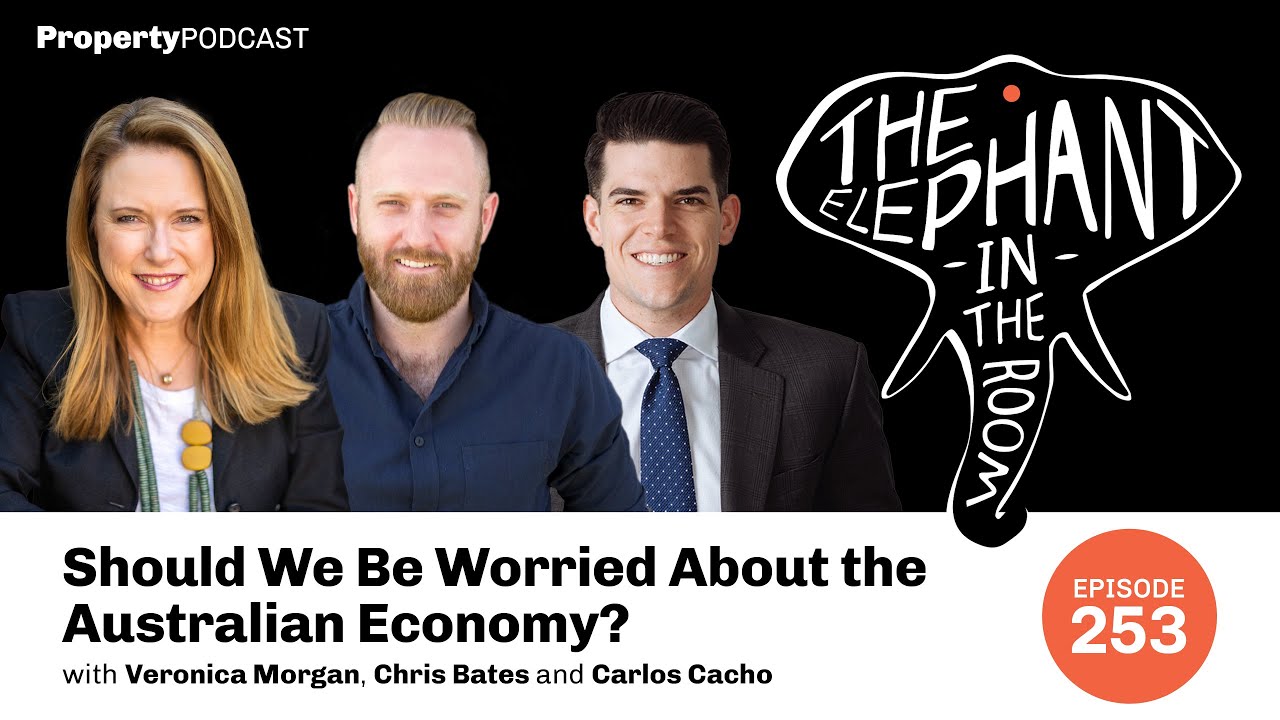
Carlos Cacho on a Recovery That Outran the Forecasts
Jarden's chief economist Carlos Cacho walks through a recovery running more than a year ahead of the RBA's own forecasts. He weighs cheap government debt, the business investment that has not arrived, and the risk sitting in very small deposits.
The strength of our economy has been a big surprise for most of us as we move through the COVID experience on our bubble island. Governments printing money and borrowing is becoming cheaper and easier, resulting in rising asset prices. How long can we expect this situation to continue?
Are there headwinds we need to be aware of? How are we faring in a global sense?
I personally wouldn't want to be buying with an LVR of 98% risk overpaying and potentially ending up in negative equity quite quickly. I don't think house prices are going to fall in the near term, but it just doesn't give you much buffer if things do go south.
And I think, I guess from the bank's perspective, they're not too concerned because it's guaranteed by the government. They've effectively got that lender's mortgage insurance, but it does leave households quite exposed if things were to change.
Welcome to The Elephant in the Room. This is the podcast where we love to talk about the big things in property that never usually get talked about. I'm Veronica Morgan, real estate agent, buyer's agent, co-host of Foxtel's Location Location Location Australia and author of Auction Ready.
And I'm Chris Bates, mortgage broker. Before we get started, I need to let you know that nothing we say on here can be taken as personal advice. We always recommend you engage the services of a professional.
Don't forget that you can access the transcript for this episode on the website as well as download our free full forecast report. Which experts can you trust to get it right?
Thank you so much for having me.
energy, renewables and agriculture markets, as well as developing and arranging trading and future strategies. And prior to Jarden, Carlos spent three years as Australian economist at UBS Australia and before that five years at Colonial First State Global Asset Management. So thank you so much, Carlos, for joining us today.
We're very, very keen to hear your insights.
Thanks for having me, Veronica and Chris. I'm keen to be here.
Great to chat.
I guess 2021 is a bit different to 2020, but I mean, how's Australia's recovery been in your view and what areas are sort of doing really strong and I guess things that are sluggish, but how are you also comparing on a global sort of standard in terms of our sort of recovery this year?
That's a great question, Chris. I think it's fair to say the recovery has surprised pretty much everyone, whether it's professional economists, the RBA, the government. We're doing a lot better than anyone expected we would be doing, even just a few short months ago.
If you look back to February when the RBA released their forecasts, They expected unemployment was only going to get down to five and a half percent by the middle of next year. We're now basically at five and a half percent already.
So we're running more than 12 months ahead of the RBA's expectations from just a couple of months ago.
We think the size of the economy is going to get back to where it was before COVID, which is a very fast recovery if you consider the size of the weakness we had last year and very fast also compared to prior recessions. On a global scale, we're also doing pretty well.
So while the US economy is also expected to get back to where it was pre-COVID in the March quarter, for their unemployment rate is still much higher. They still have 8 million more people out of work than they did before COVID hit.
We've actually got more people in jobs now than we had in February last year. So we have already more than recovered all of the jobs that were lost in those first couple of months of COVID. So that's been...
Probably the biggest driver of the recovery is just the fact that we didn't lose as many jobs as we feared and we've seen them all come back very quickly. And as you know, if people have jobs, they're going to be spending and they're also going to be looking to buy houses.
I mean, I've heard lots of theories on this, you know, one being basically you lock in 25 million people onto an island and they've got to spend money, you know, locally, not on their overseas holidays. And obviously the changing patterns of what we're spending money on.
Where does this put sort of conventional economic theory? I mean, are there new textbooks being written?
I think it's, in a way, it's kind of going back to the old Keynesian theory of government support.
It's kind of, you know, the way some people have been talking about it is it's almost kind of rewriting the rule book and saying, well, actually, no, having a recession is almost more of a political decision than an economic decision.
What the government has shown in this last year is that if you introduce the right policies and if you spend enough money, you can largely offset the effect of our quite strong kind of external shock to the economic system. Now, obviously, that's not going to work in all cases.
This COVID recession is very different to what we saw in the GFC or in the 90s recession in Australia. It's really very much kind of an external shock as opposed to something that's been developed from inside the economy. But it is showing us that if you introduce the
right policies, if you spend enough money, if you're willing to increase the debt and deficit significantly, you can really reduce the economic damage and you can really supercharge the recovery.
I guess that's the key thing though, isn't it? The debt that we've taken on to get the recovery back to where we are today. So the numbers all look great, but there's a sort of debt hangover that we've got to pay off. I mean,
How big is that actually going to be and how long do you think, there's going to be some time where that's going to impact our future growth, right? Like getting 50 grand of credit card debt and you can't spend that money in the future, plus you've got to pay the interest.
So how big is that sort of debt hangover going to be?
Look, yeah, look, absolutely. There's a lot of debt that the Australian government has taken on to fund this recovery, but it's important. Incredibly cheap for them to borrow. If you look at where the 10-year government bond yield is at the moment, it's around 1.7%, 1.8%.
So they're paying a really very low rate to borrow for a long time. If you look at where it was during the depths of the crisis, it got down to below 1%.
So, in that situation, when you're borrowing for so cheaply for so long, it's much more worthwhile to take on that debt than it is to try and bring austerity and kind of muddle through. So, we'll have a lot of debt.
Our gross debt is going to be over $1 trillion at the federal level, over $1.5 trillion at the kind of total national level once you include the states. Yeah. So, yes, there's a lot of debt, but it's still relatively low compared to the rest of the world.
If you look at Japan, US, most of Europe, a lot of those governments have debt in excess of 100% of GDP. We're now only going to be getting up to around 50% at the federal level and closer to 70%. So we're still relatively low compared to the rest of the developed world.
And the affordability of that debt has never been better. So as the Parliamentary Budget Office recently came out with, you know, they don't really see too much of a negative impact, even from these continued deficits. for the next couple of years just because it's so cheap to borrow.
I can't help but draw a comparison between the federal government borrowing lots and lots of money and individuals borrowing lots and lots of money to buy a home or investment property with sort of the intention never to pay that debt off, that they're relying or individuals buying property might be relying on capital growth
so that then when they do sell it, then they pay the debt off then. Is that, I don't know, I'm not an economist clearly, but in some sort of similar way, is there a parallel that can be drawn between that and the way governments are actually borrowing money?
In a way, yeah, I think so, Veronica. If you look at how individuals are now behaving towards mortgages and debt, I think it definitely has changed in the last few years. It used to be that we borrowed to buy a house with the intention that one day we'd own it outright.
And we worked really hard to pay it off as quickly as possible. And then we kind of had the security of knowing that no matter what happened, we always had that roof over our heads.
Now the attitude of a lot of buyers is I'm going to borrow as much as I can afford to repay today. And my end game is that hopefully I can sell it down the line for a big capital gain and downsize if I need to, if I can't repay it.
I think there's a lot of, in my conversations with a lot of people in industry, be it mortgage brokers, real estate agents. They're really telling me that there's been this massive shift in how people kind of look at debt and how they think about it.
And in a way, it's the same for the government. You know, the government debt essentially in the modern world is never really being intended to be repaid. The government talks about trying to, you know, pay down our debt.
But if you look at in all the large developed economies, all we really do is we try to grow the economy faster than we grow the debt. So as a share of the economy, it's getting smaller.
But really, there's never any intention that the federal government is going to be able to repay a trillion dollars of debt in any kind of fast or, you know, reasonable period of time.
And then you could argue, I guess, that, you know, if the Australian government, if we're at, say, 50% of GDP and other countries are 100% or even more of GDP, then, you know, we've got a fair amount of free space there for another catastrophe.
Yeah, look, we're still in a relatively good place. We're obviously a lot more indebted than we were 18 months ago, but we still have, relative to the rest of the world, we still have a fair bit of runway, you could say. I guess the key difference to think about from, you know,
comparing the household to the government is the fact that essentially the government is taking out a, you know, if you think about it kind of like an unlimited year mortgage. There's no limit on the government's earning potential. There's no, you know, it's not like the government gets to 60 years old and retires.
But obviously as a household you have to think about that risk that at some stage you're not going to be able to work and the debt you have at that stage you may have to sell assets to pay off if you still have a mortgage.
So it is a bit of a different calculation in that sense that there is a finite working life for a household while there's not for a government.
Which brings us back to employment, though. You said that we've actually got more employment now versus before COVID. Does that take into account underemployment?
Yeah, surprisingly, underemployment is actually lower than it was before COVID.
That's been, I think, a big surprise to me and other economists as well as the fact that not only have we recovered all the jobs that we lost, but we've actually seen a tightening in the underemployment rate, which pre-COVID was probably one of the things that left us being a little bit more concerned about the outlook, that even though unemployment was falling, you still had a lot of people who wanted to work more hours and couldn't.
In terms of what's driving that, I think it's a combination of things. It's the fact that we don't have the normal pool of labor coming into Australia. Normally, we've got 200,000 to 300,000 net migrants coming into Australia a year.
At the moment, that's actually negative because we've got people who've been here studying or working who are leaving and going back home, which is more than offsetting the Australians coming back. And so that actually means there's the pool of labour is not growing as quickly as it normally would.
And I think that and that's meaning businesses are having to, you know, take on more staff, give people more hours. And that's leading to shortages in some areas.
Does that challenge the belief then that immigration is good for the economy?
Look, I don't think it challenges the belief. Immigration is good for the economy in a lot of ways, but having a higher labour supply does mean it is harder to get the unemployment rate down.
And that's just, you know, the reality is when you have immigration, people are coming here, they're working, they're earning money, they're paying taxes, they're spending, they grow the economy, but it also means that the unemployment rate is going to be higher than it would otherwise be, and wages are probably going to be a little bit lower than they would otherwise be.
So, There are some negatives and some positives, depending on how you look at it.
While we're on the debt conversation, I mean, you've got governments have taken a lot of debt on, consumers are taking a lot of housing debt. I don't think they're taking on a lot of consumer sort of short term debt. You could answer that question for me. But what about the corporates?
To get the unemployment rate down, they've got to invest in staff and they could fund that out of future cash flows, which may or may not be confident, but they could also take on debt to fund this and other spending, investment, et cetera. How is corporate Australia's attitude to debt changing?
That's a really great question, Chris. And it's really the missing piece of the puzzle at the moment. Business investment's been pretty anemic in Australia for quite a long time. And that's still the case. At the beginning of COVID, we saw a big drawdown in business credits.
So we saw businesses taking on a lot of debt.
Yeah.
outlook and saying, I don't know what's going to happen. I'm not sure if I'm still going to have access to this in a month or two.
So I'm going to be prudent and I'm just going to draw down my facilities, draw down whatever loans I have available and keep it in cash just in case.
Then what we saw over the next few months after that is that a lot of the businesses, when the outlook turned out to be not be so negative, they repaid that. And we haven't really seen any increase in business debt since then.
In fact, business credit growth, so the total value of outstanding business debt, is minus 2.6% year on year at the moment. So it's been actually declining. However, the outlook is looking a lot more positive.
So yesterday, which was the 10th of May, we got the National Australia Bank Business Survey, which is a big survey of national businesses about how trading conditions are, what their confidence is. And the confidence measure in that survey was the highest since 1990. 1994. That's a really positive sign for business investment.
If businesses are optimistic about the future, they're more likely to go out and to borrow and invest. So our expectation is that we should see business investment pick up ahead and business borrowing pick up, but we just haven't seen it yet.
I guess a lot of businesses have pocketed JobKeeper, haven't they? So the build up a buffer at least, maybe they don't need to invest or borrow to invest when that's the case.
Yeah, there's definitely some of that too.
We've seen the cash flow boost to businesses from programs like JobKeeper, from the other business payments the government brought in with the stimulus, as well as things like the accelerated depreciation, which gives them an extra tax back if they buy assets, has meant that there's businesses that have had a big boost to their cash flow and they haven't necessarily needed to borrow as much as they might normally need to.
I guess the conversation is once the businesses potentially do do that, that's gonna be the other fire, I guess the other piston for the economy that's probably been holding us back.
Yeah, absolutely. I think that's really what the RBA and what the government want to see is they wanna see businesses start investing and really to drive the next leg of the recovery. This first leg has been driven by all the fiscal stimulus, which has flown very quickly into the housing market.
But we haven't really seen the business pick up the next step. And that's really going to be the key for this year, is how quickly and how much does business investment pick up.
If it does pick up strongly like the leading indicators, like confidence suggests, then that's going to put us in a really good position to get back to the trajectory we were on pre-COVID and hopefully improve on that. Because we forget about it now, but...
The economy really wasn't in a great place before COVID came along. The RBA had already cut rates twice. You don't cut rates when the economy is looking great. So really, hopefully, a pickup in business investment can help us get out of the rut that we were in beforehand.
So does that mean that potentially rates could rise shorter than the three years the RBA said they'd be on hold for?
Yeah, look, it's entirely possible. The RBA in a speech last week actually reiterated that their guidance is all about the state of the economy. It's all about where the unemployment and inflation rates go. So they don't expect they're going to achieve their inflation target of 2% to 3% until sometime in 2024.
But if they achieve that sooner, and if unemployment comes down faster than they expect, then they could be hiking rates potentially in 2023. And in fact, if you look at expectations that are priced into financial markets, the market's expecting a rate hike more in late 2023 rather than in 2024.
And I know consumers have got a lot of cash. And so you've got clients who've got lots of money in offset accounts that You know, low rates have created an opportunity for them. You know, people are a bit more pessimistic or a bit more conservative, you know, around their employment.
So they're like, well, I can't spend money on holidays or, you know, big consumer goods, et cetera. How big is the sort of cash pool sitting there with the consumers, I guess? And how are they going to get to have the confidence to go and spend that money en masse?
It's pretty big. It's certainly we've had a big run up in consumer deposits at banks. So if you just look at deposits at banks, household deposits are up by about 130, 140 billion dollars.
since December last year, sorry, December 2019. So we've had a big increase now and that's up about 14%, oh sorry, 12% year on year. So that's been a pretty solid increase. There is a lot of cash sitting there.
On top of that, as you mentioned, there's also been a big increase in offset and redraw accounts. So the RBA put out a great chart in their financial stability review in April showing just how much that had increased.
And so pre-COVID, we were probably seeing on average, I think households were two years ahead in repayments, I think now it's jumped to almost closer to three.
So there are a lot of households with a lot of cash on the sidelines, whether it be in deposit accounts or whether it be sitting against their mortgage.
And their property prices are rising, right? So the wealth effect, do you think that, is there we actually seeing the wealth effect play out yet? Or is this something that you could see play out? Is there a lag, I guess?
And how long till we could see consumers start to spend their property price growth?
Well, so last year what we saw is we saw a big boost to household incomes because of all the government stimulus.
So despite being in a recession, we actually saw household income go up because there were just such huge flows into households from those programs like JobKeeper, JobSeeker with the COVID supplement, the one-off payments the government gave to households. And so a lot of that flowed into spending on goods.
So we saw household goods, things like furniture, furniture, fridges, you know, desks, laptops, all of us setting up for work from home, really, you know, just spiked well above normal levels. That was a real boon for the retail space.
Now we're seeing that somewhat normalized, but what we're seeing is, I guess, the second wave of that, which is now everyone's spending more on services. So people are going out there, going out to dinner more, traveling, domestic holidays.
I can tell you, my wife and I are, you know, recently booked a trip to North Queensland over the winter to escape the cold and Finding accommodation is actually really tough. Obviously, everyone is, without being able to go to Bali or Thailand or somewhere else, we're all stuck here.
We're all heading up north for the warmth. So we are definitely seeing signs that consumers are spending that cash. In terms of what really drives them to continue that, I think it's a combination of factors. It's confidence, which is around record levels. So that's a tick. Yeah.
And it's also that, yeah, the wealth effect. So it's house prices going up, people feeling more wealthy, feeling like they can treat themselves, they can splurge, you know. Unfortunately, there's been some issues that have stood in the way of that.
One of the most correlated areas of consumption to wealth effect is spending on cars. Now there's a global shortfall of cars because of the shortage of computer chips. And so even though there's strong demand for new cars and used cars, We actually haven't seen dealers be able to keep up to that.
If you're not familiar, I'm talking to people who are looking to buy a car at the moment. In some cases, you're waiting two, three, four, five months to take delivery, whereas normally you'd probably be able to maybe get in a couple of weeks at worst.
So that's one thing that's actually standing in the way of consumers spending their money, these supply chain issues we've seen as a result of COVID.
And I mean, just keeping our borders shut. I mean, they may be shut for a year. I mean, the government's optimistic that they may open next year, but I mean, let's say they don't open up for a couple of years or three years.
Is this really going to impact our economy or do you think that, you know, like Veronica was saying, that we'll spend the money on local tourism, we'll spend the money on local services and we'll be fine, I guess?
Well, I think overall we'll be okay, but it's not an even outcome. If you look at the tourism sector as a whole, Australians actually spend more overseas than international tourists spent here. In 2019, before COVID hit, Australians spent about $60 billion on international travel.
International tourists spent about $40 billion here. So in a purely just looking at tourism, that's a net gain of $20 billion a year. The problem is that Australian tourists and international tourists don't necessarily go to the same places. Yeah. Exactly.
Regional New South Wales is booming because we're all, everyone in Sydney is heading up to the south and north coast, going to the Blue Mountains, et cetera.
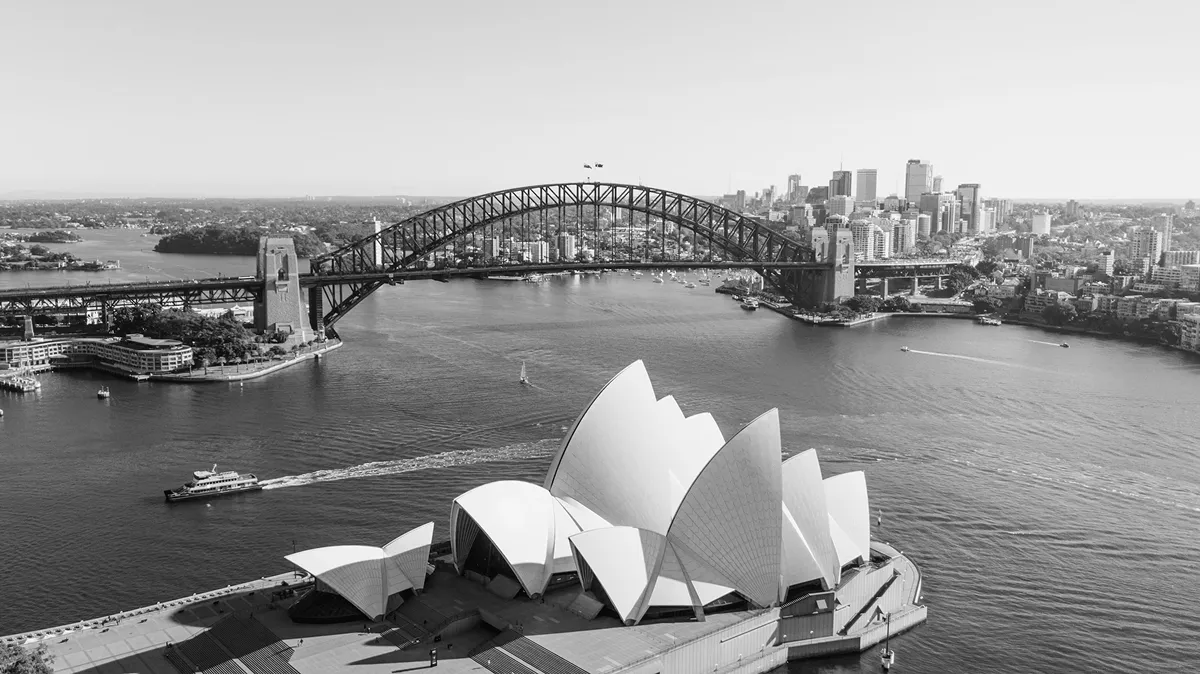
But, you know, tourism in Sydney is still struggling a bit, the operators here, because, you know, you're not necessarily going to do a bridge climb or go into a souvenir shop. as a local. So that's one of the issues.
The other one is that there's other parts of the economy that rely on international travel that's not tourism. So education is the biggest one. Education prior to COVID was our third largest export. And we've basically seen that the tap turned off there.
Students who are still in the country are still continuing their studies, but they're gradually leaving or completing their studies.
And while there are some students who are taking up distance options, it's certainly not the same economic benefit as people actually moving to Australia to study that three or four year degree, renting out apartments in inner cities, going out and spending, and also working often some of these jobs in cafes and hospitality, which is a sector that's really struggling to find employees at the moment.
So that's probably the area where you're looking at that's going to be more impacted by the closed borders is education and also those areas of the labour market that are particularly reliant on those international students for workers.
So any new markets that have been created through the border closures, I expect, do you think that, I mean, I guess A, can you highlight any and B, would they be sustainable or are they sort of temporary markets?
Well, I think some of the new changes, I guess, it's a combination of border closures and COVID and work from home. And as you are both, I'm sure, well aware, we've kind of got this trend of the sea change that's, I think, really had a fire lit under it with people
looking to move close to Sydney, but a little bit further out than they might have normally looked at doing pre-COVID. And I think that's probably something that continues. I think people looking to those nearby regional areas as a kind of urban adjacent areas probably continues.
and i think tourism to those areas also remains fairly solid i guess the question is you know how how long till the till the world starts looking a bit more normal is really going to be the the determinant there you know if it's in 12 months time everyone's vaccinated and it's all fine and the borders can be flung open i suspect there's going to be a lot of australians who are jumping on a plane and trying to get over to europe or the us or or southeast asia
If it's a slower grind and only some countries are opening up and it's kind of limited and you might have to go into quarantine when you get home, then we'll probably see some of that boost to domestic tourism continue for a little bit longer.
I mean, what's your view on Aussies returning home, speaking to friends in London and other parts of the world? I mean, a lot of them do want to come back. It's just the complexities of trying to get that sorted is hard and there's only limited spots.
Do you foresee a lot of Aussies moving home and that'll boost our migration numbers and, you know, basically catch up the population growth that we've lost?
I think we are seeing quite a few, but as you suggest, it is a challenge, whether it's even just getting on a flight or in a lot of cases, getting a job.
If you're a high-flying executive working in finance or law or something else in the UK or the US, it's not necessarily easy to find a comparable job in Australia. I think where people have been able to find those employment opportunities here, they've been quite happy to move back.
I know in my own organization, we've had a lot of senior leaders join us from London, from Hong Kong, from New York.
And it's really been, I think COVID has been the opportunity for them where they've really enjoyed and loved working overseas, but the opportunity to come back home to a good role and the lure of more or
versus life in London or New York at the moment has made it much more attractive. So it's been a good opportunity, I think, for Australia to get back some of our lost talent because generally we often see some of our best labor move overseas because there's just greater opportunities there.
I do think that'll continue a bit. I also suspect once borders do reopen, we're going to see strong levels of skilled migration return. I think this has made Australia a relatively more attractive place. The key thing is going to be, I guess, when that happens.
The government's talking about now not till 2022 that borders reopen. The big challenge, I think, politically is it's very hard to bring back or to bring in skilled migrants if you still have Australians waiting for the flights home.
And so you really need to clear that backlog of residents and citizens who want to come back before you can start opening the door to new migrants.
I wonder, I mean, just, you know, can you replicate on a global scale what's sort of happening on a local scale? And I'll give you an example, say,
Quite a lot of people apparently are moving to Brisbane where they have had, you know, bigger roles in Melbourne or Sydney, you know, more high paid roles. And because of work from home, the ability to work remotely, they said, you know, I don't even need to be in the same city anymore.
Obviously, they're in the same time zone for most of the year or for half the year. But they're only an hour difference the rest of the year. But will people actually start to say, well, actually, I can keep my job in London.
I just will live in Australia and sort of work on hours or, you know, do you think that that will happen?
Well, in some cases, you may see things like that happen. I mean, I think certainly in the, you know, the tech companies, we're seeing talk of work from home being permanent and allowing people to work where they want.
If you look in the US, there's definitely the same kind of regional shifts that are happening in Australia going on.
I think I saw recently that the fastest growing housing market in the US was some small lakeside town in the Midwest where you basically had a lot of people leaving the big cities and moving to these regional communities because one, they could work from home and two, they had a lot more freedom, a lot more outdoor space and they just got a lot more for their money.
So I think you do see some of those shifts continue. I think there will be a push
governments and cities to bring people back into the CBD. Obviously, you don't want to lose that vibrancy and people going into the city to work also supports a lot of jobs. But I think we've definitely see a shift that we're not going to go back to the old way.
We're not going to go back to everyone working the nine to five in the CBD. There's going to be the new normal will be a bit of a hybrid balance where a few days a week you might work from home, a few days a week you're in the office.
And if you're particularly skilled and good at your role and you've got a good relationship with your company, then you can probably work from anywhere if you want to. So I think there will be some opportunities for that, but it's probably a bit more select.
Yeah, I guess if that was more, I mean, because in Brisbane, for instance, that's led to an increase in house prices. So that there's a real globalisation of that, then obviously that brings more higher incomes into cities that may not have had them before.
So, but if you say it's more select, then it's not certainly going to be a widespread movement to push prices up even further, perhaps.
I mean, anecdotally, we've got a client who was earning a lot of money in the US in trading, basically, and moved back to Australia just around COVID and got kids and work. So we don't want to lose you. And they basically allowed him to continue and salary hasn't changed, et cetera.
So, you know, his hours are a bit different because he's, you know, he's working to US hours and, you know, maybe a bit early nights and early morning sometimes. But yeah, that's sort of an example where the talent, you know, they don't want to lose these good people.
And if they want to go home,
potentially they'll keep paying them yeah carlos i guess there's a huge opportunity for the australian government to go down the renewable section which i know you guys do be consulting around but you know what's your sort of view on the government's attitude to actually embrace that opportunity when it does make a lot of sense to electrify everything and all the other things so are we being optimistic to see some massive change to government's view on those things or we just yeah we've got to wait a long lot longer
I think what have been pre-announced from the budget looks like it is a positive change. We're seeing some investment for carbon capture and storage, for hydrogen, for renewables.
But it's probably a little bit smaller than I think a lot of people would like to see and that probably you'd argue we need to see. I think what's really driving the change is not the government, but it's just the technology and its businesses.
Businesses are much more, you know, are getting pressure from investors, but also from their own boards wanting to be more environmentally responsible and active on climate change. And they're really leading the way here.
And it's the technology, the fact that it's now cheaper to install renewable energy than it is to build a new coal-fired power plant. So the private sector is just not investing in those old technologies the way they would have previously.
The other thing that's really going to, I think, drag us to the rest of the world is what's going on globally. In Europe and the US, they're both talking about the idea of potentially bringing in carbon import taxes.
where essentially they would tax higher emissions countries' imports on the basis of how much extra carbon they produce and something like that, which the government is fighting or is arguing against, would have a big impact on, you know, I guess, you know, dragging businesses towards lower emissions, whether or not there is a policy response to support that.
The government is so reactive on this. It's like, you know, they haven't wanted to do anything for so long and it's like they've been forced to because everyone else is just taking matters in their own hands. And I love it as in business and, you know, other countries. I mean, it was mortifying.
I mean, we're going sort of down the tangent here, but, you know, Scott Morrison's presentation to Biden's forum thing, It was mortifying. How embarrassing, you know, getting up and saying we don't need a target. We'll just muddle our own way. Anyway, let's not divert. Let's not go down that path.
If you like what you're hearing here, please share this episode with others you feel would benefit. And while you're at it, why not leave us an iTunes review? Five stars, please. Every review helps make it easier for other people to find us and hear what our amazing guests have to say.
We love hearing your questions and we're planning more listener Q&A episodes. Please send your questions in. You can send them via the website, which is theelephantintheroom.com.au or directly via email to questions at theelephantintheroom.com.au.
I'm curious, you talk to a lot of agents and you get out there and actually talk to people on the ground and gauge what's happening in the property market. What have you been hearing?
A few different things depending on where you look. Starting in Sydney, I think what I'm hearing is particularly in the east and the inner ring,
It feels like things have reached a bit of a peak or a plateau where up until March, you saw just that rampant, crazy price growth to the extent that even the agents were surprised and were shocked by it. You know, 20% in six months, that sort of stuff.
And they're now kind of saying that, look, it's bringing more supply online. You have people who were sitting on their hands, were a bit unsure about trading in this sort of market, the risk of, you know, you sell and not be able to buy.
And the price growth we saw was just so much that they said, you know what? screw it, let's sell and we'll figure the rest out later. We've made so much money on this house. We just want to take advantage of that timing.
And now it feels like things have reached a bit of a plateau where they're slowing. Still a very solid housing market. But I think that supply coming on board and people maybe reassessing where the prices are has led to a bit of a levelling out of the momentum.
In the West, I think you're still seeing a bit more uplift coming and that's being driven by still that COVID shift where people are maybe reassessing where they want to live.
They might have been living in a city apartment and they've realised, you know what, if I'm working from home two days a week, that commute into the city for an hour plus isn't so bad and we can actually get a nice family home out in the western suburbs.
So you are still seeing some support there. Along in Melbourne and Brisbane, I think we're still seeing the strong recovery in prices or a strong kind of lift in prices continuing.
particularly in melbourne given the lockdowns kind of delayed the recovery there the other interesting shift down there is that i think the lockdowns really scared or shifted perceptions of a lot of people and they're seeing really strong shifting to the nearby lifestyle areas so areas like the mornington peninsula reportedly absolutely on fire you know you're seeing people sell up in inner ring suburbs and move to those lifestyle areas where you're still close enough to the city if you need to be there but you're outside of that ring of steel and you know if
restrictions were to come in again and you're free to go about your business. And then in Perth, I think the market there is absolutely booming.
So just funny on that with Victorians, a lot of people that I've been speaking to saying, you know, when you are restricted to be able to move within a five kilometre radius of your home, then where you live becomes so much more important. And I think that's probably leading to that.
If you don't have a good park within five kilometres or a beach or whatever it is that's outdoors and is pleasant to be in, then they felt very, very hamstrung and contained versus those that lived in those areas where there's got greater outdoor areas.
And I think that that's so fascinating to think that that's then leading to more of an exodus there because of that.
Yeah, I think you're absolutely right there.
I think being stuck within 5Ks for months on end has really led people to, I think, reassess where they want to be and what kind of amenity they want around them, as well as that working from home shift where, you know, if previously you only really got to enjoy your neighbourhood on the weekend, now if you can enjoy it an extra two days a week, you might decide that you want those extra, you know, you're willing to pay up a bit more to be near parkland or near the beach or just somewhere where
the strongest one we're seeing at the moment, talking to developers and agents there. You know, it's a combination of mining is absolutely booming. They've handled COVID quite well. You've got massive subsidies from the federal and state government, which are covering in some cases, you
And you're just seeing after the better part of a decade in the doldrums, you're seeing the Perth property market really take off very strongly.
And that's a big shift from the story that we've seen for the last 10 years where there was always talk of Perth finally entering recovery, but they just didn't manage to get there.
Now with iron ore over $200 a ton, you're just seeing a lot of money flow into both individuals, but also the government's coffers. So that's probably going to continue in the near term.
So clearly that's still quite vulnerable though, right? Yeah.
Well, I think that in terms of the exposure to commodities, look, there still are. But the thing is, the risk of iron ore falling back down to $20 or $30 a ton is very, very low from here. The risk of it falling back to $150 or $120 a ton, that's pretty real.
But even at those levels, that's a massive positive compared to where we were over the better part of the last decade. So I guess it's all about the risks around it. And I think Yes, there's some downside risk, but even in that downside scenario, it's still looking pretty good.
I also think the thing is that they've kind of been underbuilding for a long time. We saw this big spike in construction around the mining boom, and then there was a huge glut of supply in the market, particularly for apartments and house and land in the outer suburbs.
that rapidly taken up. We've seen people, as soon as home builder was announced, you saw a flood of people rushing out to the suburbs and buying blocks of land that developers in some cases had had sitting around for sale for years.
Absolutely. I mean, that's, you know, finally, we've got a bit of demand out to those sort of areas.
I've got clients with places in Perth that, you know, bought them maybe five, 10 years ago, and they're still underwater, but they've been waiting for some type of demand shift because the supply has just been sort of weighing on the market there. You said you've been speaking to some developers as well.
We don't really talk too much to them, but what are they sort of seeing in terms of pre-sales, especially from investors?
It's very much a bifurcated market between houses and apartments. On the housing side, they're still seeing pretty strong demand even after HomeBuilder expired. So you're kind of seeing that buoyancy in the new housing market continue even without the subsidies.
For investors, they are definitely seeing inquiries pick up and they are seeing some purchases, particularly for products like townhouses, where it's a little bit more affordable than a house, but better than an apartment from it, given the outlook.
So they are definitely seeing more interest there, which is a change from what we've seen. Where they're still struggling is apartments. You know, there are some projects which are going ahead and are seeing
good take up, but they're certainly few and far between compared to what we saw over that 2015 to 2017 period where developers would sell off a whole parcel of two or 300 apartments in the space of a few hours.
So that's really the part of the market that's still missing in action in terms of new housing.
How short are people's memories?
I think in some cases they can be quite short. I think We look back at the aftermath of the last housing boom and the issues around valuations coming in below settlement price, building quality issues, flammable cladding, et cetera.
And I think there was a realisation from Australians that actually buying off-the-plan apartments aren't actually a great investment, if they didn't know that already. I know that you two are big advocates against off-the-plan apartments and I think in general there are a lot of issues there.
But I think what's starting to override that is affordability and FOMO. We're seeing price growth to such an extent that people are being priced out of the house market. So in some cases, apartments and new apartments might be the only option for them.
And we've got that real strong fear of missing out coming into the market again, the kind that we saw in 2016 that led a lot of people down that off the plan path because it gave you an opportunity to buy something that you couldn't afford just yet.
but that you would be able to afford in a year's time when settlement came.
There's also that lack of competition and that becomes appealing to buyers when they're missing out over and over again and they just go, oh, I just want to buy something that's easy. Oh, that's it? Great, thanks. There's five of them to choose from? Excellent, I'll have that one.
And then the relief of just sort of the search and the agony of it all being over with, that's immediate, but then the real problem then begins.
Yeah, absolutely. I think that's going to drive a lot of investment lending. It's not really true investment lending. Someone's got a house and they've paid that mortgage off and they've got lots of equity and they've got great cash flow and they say, why don't we buy an investment property for our future?
A lot of that investment lending, I think, will come from people who would have been homebuyers that got frustrated with the journey, prices have run on them. They're not willing to compromise on location or the type of property that they want.
And they say, well, let's just buy an investment property instead of a house. And In the last couple of weeks, I've had to talk a few people out of that where that fear and that frustration of missing has led them to, I'll just buy an investment property.
And it's really dangerous because they take their Sydney Rose glasses on and then look for someone who's going to advise them on investment properties. And we know that there's no shortage of people willing to sell the dream, I guess.
Absolutely. I think, you know, in my conversations with real estate agents, I'm hearing that there's been a real shift in the type of investor they're seeing now. It's not the traditional property investor. It's very much those higher net worth households who have quite a bit of equity built up in their family home.
And they're looking to unlock some of that and take advantage of the rise in property prices, either because they're happy where they are and they don't need to move, but they just want to, I guess, ride the boom, or because they just can't afford to move where they want to and they want to try and take advantage of the current environment.
Some housing measures were already announced regarding the budget. What are they, I guess, and what's your view on them?
Well, so I guess what we should say is we're actually recording this the day before the budget's released.
The morning of the budget, so...
We won't be releasing this episode until a couple of weeks' time. So this is going to be quite interesting to see how good your crystal ball is.
Well, the government has become the tradition. The government has leaked a lot of policies ahead of the budget. So we know a few things that are going to be coming out on housing tonight.
So they've expanded the first home loan deposit scheme, which allows buyers to buy with a 5% deposit without paying lenders mortgage insurance. So they've got another 10,000 places on that.
They've also increased the super saver scheme, which allows you to put in $30,000 into super and then take it out for your deposit, picking up the tax benefit on the way. So they've made that, they've increased that to 50,000.
And they've also brought in 10,000 places for the family home guarantee, which will allow single parent families to purchase a house with a 2% deposit instead of five. So an even smaller deposit there.
There's a lot of criticism of that one. What are your thoughts?
Look, on the whole, I don't think the policies are going to make a massive difference overall. I think definitely for some individuals who are really struggling to scrape together a deposit, it can be that difficult. little bit that gets them across the line.
But, you know, you're talking about still in for the first home loan deposit scheme, about 20,000 places in the last 12 months, we've probably seen over 150 or 200,000 first home buyers. So it's a relatively small share of that.
I also purely, I guess, from a risk point of view, I see those 5% and 2% deposit loans as being quite risky.
And in a really hot housing market, I personally wouldn't want to be buying with an LVR of 98% risk overpaying and potentially ending up in negative equity quite quickly.
I don't think house prices are going to fall in the near term, but it just doesn't give you much buffer if things do go south. And I think, I guess from the bank's perspective, they're not too concerned because it's guaranteed by the government.
They've effectively got that lender's mortgage insurance, but it does leave households quite exposed if things were to change.
And do you think there'll be like an apartment builder sort of policy coming out in 2021 where they're trying to stimulate that part of the market? Because you said that's very sluggish.
Yeah, so Michael Sukkar, the housing minister, did say a couple of weeks ago at the UDIA conference that it's definitely something they're looking at. We haven't heard anything that, you know, any policies being whispered, talking to people in industry.
And looking through prior budget proposals from the property sector, what seems to be the most likely route is potentially another sort of first home buyer grant, specifically targeted at apartments. So home builder didn't really do much for apartments because of the time pressure that was built into it.
Or the other option could be looking at supporting the build to rent sector. So we're starting to see this new type of home building come up, build to rent, where where developers build an apartment and then they manage renting those apartments out. So they kind of maintain it long term.
They usually provide extra services. The rents are usually a bit higher because you're getting a more premium experience and product. The big issue for that is the tax implications, is the fact that the withholding taxes is quite high. And so in a lot of cases, particularly for foreign investors, it doesn't make sense.
There's been a lot of lobbying on behalf of the industry to try and change some of those taxes so that we can see that sector grow more.
Indeed, if you look overseas, it's a massive driver of construction in the US and Canada, in the UK, in many parts of Europe, where the household landlords are not the norm like they are in Australia. So that's definitely another area that they could look at supporting.
It is interesting because we interviewed, I can't remember his name, but he was general manager of Mervac Build to Rent a while ago, back before COVID, because we interviewed him in the studio. And he said that one of the big hurdles is the land tax. Yeah.
But that's the state government thing. And, of course... I'm fully in favour of encouraging that. I think that's a great thing for governments to be supporting because that's being built for institutional owners and you can expect the quality to be better.
It's more incentive to build a better building.
Exactly. I cannot agree more. I think if the developer knows they're going to retain some ownership stake of this apartment and have that in 5, 10, 20 years time, they're going to build it to a higher standard than if they know they're not going to have any residual exposure within 12 months.
So there's a lot of talk just a few months ago around regulation and macroprudential sort of limits put on lending. What's your thoughts? If your sort of belief that maybe the the strongest growth in the inner rings, let's say, or growth does slow down just naturally with more supply.
Do you think there's still going to be the pressure on the government to sort of try to put restrictions around lending and try to slow things down, even if rates stay low?
Yeah, I think that if we see growth naturally moderate, then there's probably less risk of seeing any kind of macroprudential tightening. In terms of what we know from the regulators, APRA and the RBA have been pretty clear that they're not worried about house prices on their own.
They're worried about the riskier types of lending and making sure that lending standards remain sound. So the key thing that APRA is watching, who's the banking regulator, is basically what's going on for those riskier types of lending.
So things like investor lending, interest-only loans, higher LVR lending, so where people are borrowing more than 90% of the value, and also high debt-to-income lending, where people are borrowing more than six times their income. And all those measures, while they've increased recently, they're not at levels yet that would have them concerned.
And if you look at things like investor credit growth and interest-only loans, they're still well, well below where they were when they intervened last time in 2015. investor lending is picking up, but it's from a much lower base for credit growth than it was back then.
And it's still, if you look at even on the loans growth numbers, the numbers we got out for March last week for investor lending were really strong. They're up almost, I think, 12% on the month. but investor lending is still down 20% or 30% from where it was in 2015.
So while owner-occupied lending and total lending is at record highs, so they're a much smaller share of the market now than they were last time they intervened.
So I think probably for the moment they'd be content to sit on their hands, but if we get into late this year, early next year, and we're seeing investor lending pick up, we're seeing more high LVR loans, there is a risk they could come in. to try and cool things a bit.
Yeah, to put it in context there, so I think from memory, investor lending back in 2015 was around 55% of total lending. Would that be right?
Yeah, so in New South Wales in particular, we saw investor loans were more than half of all loans. Yeah. That's what got APRA really concerned is that they view those loans as being, that sort of lending as being inherently more speculative.
And they usually, their view is that investors are more likely to sell in a downturn. And so that it just creates more risk within the financial system.
And then now as a proportion of total lending?
It's probably around, I think it picked up to around 30% again, which is in line with
the Australian housing market as a whole, roughly a third of us own outright, a third of us own with a mortgage and a third of us rent. So about a third of the housing stock is owned by investors.
So it's in line.
Yeah, roughly. It was over 50, I think it's come right back. It was in the 20s and now it's probably back to that 30s. And we do need investment lending because that's also creating accommodation, rental accommodation, especially if you're
few years time we start to open up the borders which is naturally what the government's going to want to do um is grow our immigration dramatically carl's i guess a bit of a difficult or maybe not so difficult but what sort of the headwinds i mean it's been quite positive to be honest and um you know what are some of the big things over the short term that we just don't know about the australian economy that could really have a huge impact but also longer term like structurally what are the big problems that we're creating for ourselves
I mean, in the short term, I think one of the biggest issues is just our trading relationship with China. That's obviously been quite troubled. They're our biggest trading partner. What happens there? Look, I don't have a crystal ball. I'm not sure. But that's certainly a risk that it's worth being cognizant of.
We've already seen, obviously, action on some of our exports. Unfortunately, iron ore, which is our largest export, is still flowing freely into China, and I don't expect that's going to change anytime soon. I think the other key thing is really the vaccine rollout and the opening of international borders.
The vaccine rollout's been going well behind schedule and that's going to delay, obviously, any return to normal international travel. And I think that's the risk is that even though the economy is doing very well, just being a domestically focused economy at the moment,
The risk is that as the stimulus is withdrawn, as that kind of pent-up cash and pent-up demand works its way through the system, not having that international exposure is going to see those parts of the economy that are reliant on international arrivals, international tourism, international education atrophy.
And, you know, if we lose them, we might not get them back to the same extent. So I think those are probably the two big things. The other one is, you know, just around the housing market. If things get too hot, if regulators decide to step in.
But I think in the near term, that's probably a pretty small chance at the moment.
Maybe long term, like, you know, say 10, 20, 30 years time where you think, okay,
australian economy is really missing a trick here or this is going to we're going to create uh too much service base and not enough manufacturing or too commodity driven you know is there anything sort of a macro level that you think that we we need to be really thinking about the biggest issue over the last decade has really been productivity growth productivity growth in australia and and also to be honest and most of the world has been pretty pretty poor um
Hopefully, part of the solution to that is this pickup in business investment that we're hoping for. If you do see that, that should support productivity growth ahead. The other one that I personally worry about longer term is what housing affordability means for the future of our cities.
you know, and intergenerational inequality and things like that. If you think about it on a long-term perspective, where are essential service workers who are servicing those, you know, very high value parts of our city going to live?
Are we going to be busing in nurses into Prince of Wales Hospital in Randwick in the future? Or are we going to be creating affordable housing for essential workers? I'm not sure, but that's a big problem that we need to figure out how best to deal with in the long-term for our cities.
Yeah.
So how do other global cities, you know, expensive cities like New York and London and even Hong Kong deal with that?
Well, some cities like New York have pretty extensive affordable housing initiatives.
So in a lot of cases when new developments are built, a certain portion of those will have to be rent controlled or affordable rentals and that ensures that there's, you know, sufficient housing within the kind of metro area for those workers who need
aren't getting paid as much but who are essential for the functioning of the city. Other cities, I'm honestly not so sure what they do in Hong Kong, but I think there is also quite a large social housing program there.
And that's probably something that's been arguably missing in Australia for the last couple of years since the GFC when we had that boom in spending on government housing. we've seen pretty weak delivery of public housing.
There is some more in the pipeline and there is a bit more spending in the budget for that. But I think that's probably something that we need to figure out a better way of delivering.
And that's another area where we could potentially see reforms to support the apartment sector if we could maybe see this co-development where the government's footing some of the bill for private developers to build a mix of private and affordable housing.
And that's probably something that, you know, we really need to see more of to ensure that our cities remain vibrant and, you know, can get those essential service workers where they need to be.
That's a build to rent as a solution there as well as part of that.
Yeah.
Overall, you know, part of that build to rent is a big part is affordable, say, for example, in near hospitals or, you know, near key employment hubs. Carlos, have you got a property Dumbo for us?
Yes, actually. I do have one from when my wife and I were looking at houses last year before we bought ours. We were at an auction in an inner west suburb. And it was fairly slow going. There was one very keen couple who were in the lead.
At one stage, the auction hadn't been called. They'd been going once, going twice. The agent went in to confer with the vendors. And then he announced the property was now on the market and a new bidder came in.
The previous leader at this stage, basically through their hat in, sorry, through the towel in, they decided that, no, this is unfair. We should have won it. I thought you called it for us. I thought it was already ours already. And they basically refused to bid.
So they got one bid from the new entrant and no reply from the other bidder. And in the end, I think the vendor got a lot less than they were hoping for. The agent didn't get the bidding role they were hoping for and the potential buyer who was in the lead missed out.
So I think there were a couple of dumbos in that situation.
A number of them. What month was that? Do you remember?
That was June, so that was right kind of at the bottom of the market, and I suspect that young couple, if they haven't bought something already, may be kicking themselves for giving up that chance.
Yes, and also just not understanding what happens. Maybe they'd never been to another auction. Maybe they'd never seen it. That's what auctioneers do. They bluff. They try to flush out the bidders. It's hilarious, really. They then jam their foot in. Or maybe they were a stooge.
Maybe they were a dummy bidder and that was always part of the plan.
Our guess was that, yeah, they didn't really know what was going on. It's probably their first auction. They didn't necessarily know how it works. But I also think the agent could have done more to kind of talk to them and to manage them.
Instead, the agent was just focusing on getting the new bidder in. They weren't worried about keeping the current bidder in. And so in the end, they got one but they lost the other.
And, of course, in a two-horse race, if one horse pulls out, then it's not going to be a great outcome for the vendor.
Oh, yeah, yeah. God. We're on the face there for everyone, right, because they're going, well, we've got two. We know we've got this other investor. They wouldn't have obviously put it on the market. They knew that they probably needed an offer prior to auction, maybe more than what it's selling for now.
So they were very confident that they'd have two people bidding. But they obviously, one, didn't understand the rules of engagement.
Yeah, yeah, absolutely.
I'm glad you didn't say choice of mortgage broker there, by the way, Carlos.
No, we had a very good mortgage broker.
Am I guessing there might be a prior relationship with you two? I was actually talking about auction dumbos. I was at an auction last weekend and we were actually registered. There was five registered parties including us, so not huge. It was for a client who... Wanted to go for this property.
I actually didn't like the property, but some of our clients do go for properties that I don't like. That's okay. As long as they've got open eyes as to why. Anyway, we had a fairly good limit for it. We should have bought that property really.
And so I opened it at more than what they've been quoting. They've been quoting 1.6%. throughout this campaign. And I watched the other bidders and all the rest of it. And I thought I'd made a calculated opening of 1.73, I think it was.
And that was around really where we started to see value when we done our pricing research. So I thought, look, that hopefully will knock out at least one or two of the others.
Anyway, the guy that took me on, he had actually rocked up just before me and he had tried to register for his daughter. He didn't have any of the documentation. It's the first time we'd seen the property. The daughter lives overseas. He's just decided he's going to bid. They're online.
They're trying to get authorities signed up over internet, et cetera, et cetera. They managed to do that in that half hour prior to the auction.
So he's the guy that bids against me and I'm bidding, I chose seven as my number and I was sort of bidding in either a seven or maybe a 17 or a 27 and sort of mixing up and down and all the rest of it.
He gets to $1.9 million and I've put in another $7 million on top of that. He says, no, she can have it. I had a little bit more in my gas tank, not a huge amount, and that was fairly big money. I thought that was a very good price for that house.
And given that they were quoting $1.6 million, And so then the auctioneer starts this bill because you could actually tell it wasn't over the reserve. And I could tell that because of the language that the auctioneer was using.
And he started talking about, well, you know, you will be the first right of refusal, the first right of negotiation, et cetera, et cetera. So you're using all this language. And I'm like, you're kidding me. This is not actually over reserve yet.
The agent comes up to us and starts trying to gee us up to bid more and I just turn around and say, look, you need to go away. You know, we've got our instruction. Oh, sorry. And then this guy comes back. So we're at 1907.
Then this guy comes back while this is going on. He then bids 195, 1950 on top of our bid. First time he's ever seen the property, you know, like for his daughter, just comes in out of nowhere with this big bid on top.
I'm like, well, you can have it, you know. And so then it's still not over reserve. And then the agent comes up and starts trying to hassle us. I said, go away. We are out.
And I cannot believe the reserve has not been met and we are now $350,000 over your quote, you know. That's $190,000 over what's legal for you to be quoting.
Um, you know, it was just ridiculous. Anyway, the guy actually, they finally got the reserve dropped and they sold it to, and I realized nobody else was going to bid, but, um, he turned to Rachel who works for me.
And so as he's sort of walking into sign up, he says, Oh God, I think I paid too much.
You're kidding me. Nah, really? I was just madness that people, it's almost like walking the dog and just decided to buy a house. Just nuts.
we're seeing that at the moment unfortunately uh clients that are still you know fear of missing out maybe they've sold something just this morning i'm trying to calm a client down it's sold and um you know they're out of the market now and so they've got the settlement in you know eight ten weeks then buying in a new suburb they've seen a property they're in love with it um and you know that it's ultimately they just want to get a deal done right because their potential could be homeless in you know six eight weeks time and
you're already very emotional at that time and they haven't seen that many properties and it's easy to just go and buy the first property to solve that pain. But is that the right property for them? Is it a good value? Is it, you know, et cetera.
It's hard to get that, those reference points when you're very new to the market. And so, And Clyde's buying with our contract checks and building impests and coming to us after and things like that. And it's rampant when the market's sort of hot. Carls, that's been amazing.
So much great gold there for our listeners. Really appreciate you coming on.
Thanks very much for having me. It was great.
Thank you.
We want to make you a better elephant rider. And this week's elephant rider training is...
Let's talk about this idea of a rising tide lifts all ships. You know, I've heard a lot of property experts say this. I hear a lot of agents say this.
And certainly when I was a sales agent, I used to believe it too, that, you know, if you bought a property on a main road in a suburb that, you know, you'd still do okay because the whole suburb rises and so therefore yours would rise as well and you'd get it for a bit of a bargain on the way in.
When I became a buyer's agent, I started really investigating that and really looking deeper into it.
And I guess what I'm distressed by at the moment is I'm seeing and hearing a lot of agents and, as I said, even some experts saying that, you know, it's okay to make those sort of compromises, to buy in those really poor assets fundamentally because ultimately, you know, the gap isn't that different.
It's not that bad. And however... It is.
But there are times, if you time the market perfectly, you can maybe make a real win for, but you have to know what you're doing and you have to absolutely understand the market and the movements of the market and the signs that the market gives just before it's going to turn.
And I tell you what, I used to, you know, when I was sort of just looking at this academically, I'd go, right, well, I could definitely see that properties such as on main roads are they don't go up in long periods of time. They underperform compared to other properties in a given suburb.
But there are short periods of time within that where they will outperform and severely underperform.
And so I think for a little while, I'm thinking, you know what, in a downturn, I'm going to go running out buying all the dumps, all the stuff that nobody will touch because in a hot market, they'll go up disproportionate amount. And so then I'll flog them. And it sounds great in theory.
And if you look at isolated sections of time, you know, these properties can be seen as outperformers. But in reality, over long periods of time, which is what we should be thinking about with property, they are outperformers. absolute underperformers.
And if you don't know how to read the market perfectly, which I will guarantee you don't, because even I don't, then it's a folly or it's a real risky strategy to try to be buying and selling properties on main roads or other highly compromised properties.
Yeah, we had a client literally yesterday trying to buy property that was backing onto a train. And I kind of, you know, through an email, I just said, look, you know, these are the real concerns here.
You're going to be paying, A, a lot of money for that because the market's hot right now. And there's other issues with the property, but just focusing on that issue. And it really, what matters is once you buy that property, it's when you sell that property will determine whether
you know, your financial gain, I guess, and you're going to be going in at a high price, you are going to underperform the better streets.
And what you've now done is lost control of the sell date because if you want to sell it in the market when the market's not hot, you know, it's a 2018, the market's all compromised properties are really getting discounted. No one's going to compromise anything. for that sort of property.
And you just don't know when you're going to sell and that's the risk. So you may overpay on the purchase because you had to buy a poor asset in a hot market.
But then if you have to sell a poor asset in a poor market, you can be absolutely smashed and you can get stuck because you can't sell it in that market. You've got to wait for a better market.
And then when you wait for the better market, the property that you want to upgrade into grows on you. So Just be very careful buying those compromised properties at big prices because you lose control of the sale date, really.
That's such a good way to phrase it, actually. You lose control of the sale date. I'm going to remember that and steal that if that's okay. I've spoken to Meighan Wells a bit about this in Brisbane. It's the similar vein.
She's saying that properties that are known to be flood affected are now not selling for a big enough discount against the Those that are known not to be flood affected in some cases are selling for the same price.
And they're exactly the sorts of properties that are going to fall dramatically in price when either the next flood comes or, and then for a period of time, you know, people don't have short or people in that short period of time where people do have a memory or when the market slows down, because then it becomes important.
These things become important and it's, So for any commentator, for any agent to be encouraging you to just get into the market, doesn't matter what, just get in the market. You just got to get on the ladder. But to be pointing you in the direction of those heavily compromised properties, danger, danger, danger.
Yeah, absolutely, especially if it's an investment house that's encouraging you to buy an investment and saying, don't worry about the main road because the main road won't grow, it can't grow that much less than the other streets, just buy it anyway.
That extra potentially 1% a year is a lot of money and so just avoid buying compromised assets as an investment. The other conversation you mentioned there, Veronica, about making money off poor assets, if you time it perfectly, absolutely, you could have bought a
really compromised property in 2018 and sold it in 2021 and probably made arguably maybe more money than, say, the better street just over that three-year period. But the problem is by actually doing that trade, you've also got to pay 5% for stamp duty, selling costs, sunk costs.
And so it's hard to make money trading property because of the ongoing cost and also capital gains tax. You know, you made 40% but you lost 10% of that in capital gains tax, 10% in, say, fees. And then you've got to go and buy another asset.
And so in this market, you go, well, the good stuff's going really hot. Then you want to sit out and then you lose growth because you're out of the market. And so I think it's very fraught with danger.
Flipping is the same sort of issue like buying compromised properties is you've got to keep on doing it to keep on making money that way long term. And that sort of buying in poor markets, selling in good markets is you don't get those opportunities constantly.
You only get them for a certain period, for a certain maybe three years in 10, rather than all 10 years in a row.
Which basically means all your capital and your borrowing potential, borrowing capacity, has to be sitting there just waiting for a crap market so that you can pick up some junk stock.
So then you can hold on to it until the market takes off again and then flog it and, you know, and then pay the tax and the costs and the rest of it. It doesn't actually make sense when you think about it that way. But it's the only logical way to approach it.
And so I guess that's the thing. Academically, it was like, this is what I'm going to do. And then in practice, when I sat down and worked on all that sort of stuff, it was like, that's folly.
That's the difference between being, you know, and look, the classic bit that Warren Buffett had about ETFs versus active share trading. It's the same thing, really. It's like the equivalent here is you buy a really solid asset and you just let it do its job.
As long as it's a good quality asset, let it do its job. That's the equivalent of buying an ETF with low costs and you're effectively buying the market if you choose your asset well.
And as opposed to this flipping and trading and all this energy around it but burning a lot of costs in the process and also taking on a hell of a lot more risk.
Yeah, and what ends up happening is people don't ever make those full returns. They don't ever buy that compromised property at the absolute lowest part of the market because you need luck more than skill to do that.
So, you know, we kind of knew that maybe the election would have been a turning point, so maybe you would have bought – But it kind of market moved maybe late 2018, not early 2019.
So you had to be pretty fortuitous to bought that property right at the lowest price and then to basically sell at the highest price. And a lot of people sell too early. So they buy too late. They may have bought after the election, so maybe 10% of growth they just missed out on.
And then they potentially sell too early. They maybe have sold late last year and then they missed out the growth this year.
Well, they sell too late, really. Yeah.
Absolutely, exactly. They get too greedy. And the same thing happens with share trading. You know, a lot of people would have thought in March, April time, you know, market's down 40%. I'm going to wait for the stock markets to keep falling. That was the consensus view.
And then they would have sat on their hands. A couple of months later, the market's up 20%. And, you know, they've missed that boat. And then they go, oh, should I chase it now? Oh, maybe no.
And so it's really hard to time in markets because unfortunately emotions play too much of a role in that decision.
Please join us for our next episode. We've got Martin North joining us again. We've got him out of the bear cave. We're keen to find out his perspective on the surprisingly buoyant property market we're experiencing at the moment.
What happened to the JobKeeper cliff and where is pain being felt amongst property owners amid the haze of rising prices? If you're looking to buy your dream home or an investment property in Sydney's inner west, eastern suburbs or north shore, my team and I can help you buy without regrets.
Reach out via my website, gooddeeds.com.au.
If you're looking to buy your first home, thinking of upgrading into a new one or purchasing an investment property anywhere in Australia, my team would love to carefully guide you on this journey. And most importantly, get the finance right. reach out via our website, wealthful.com.au. Thanks for joining us.
We'd love to see you again. And remember, don't be a dumbo.
Key takeaways
- The RBA's February forecasts had unemployment reaching five and a half per cent by mid 2022; it was already there, putting the economy more than 12 months ahead of those expectations.
- Underemployment was lower than pre-COVID, helped by net migration of 200,000 to 300,000 a year turning negative.
- Gross federal debt was heading past $1 trillion, above $1.5 trillion including the states, at a 10-year bond yield of around 1.7 to 1.8 per cent.
- Business credit growth was minus 2.6 per cent year on year, while NAB survey confidence hit its highest reading since 1994.
- Household deposits were up about $130 billion to $140 billion since December 2019, and households sat closer to three years ahead on repayments.
- Cacho would not buy at a 98 per cent LVR in a hot market; the government guarantee protects the lender, not the household.
Is the Recovery Ahead of Forecasts?
Carlos Cacho, chief economist at Jarden Group Australia, said the recovery had surprised almost everyone who forecasts for a living. The RBA's February forecasts had unemployment reaching five and a half per cent only by the middle of 2022. It was already there, more than 12 months early.
He expected the economy to regain its pre-COVID size quickly. The United States was also recovering, but with eight million more people out of work than before COVID. Australia had more people in jobs than in February 2020.
Underemployment was the genuine surprise, lower than pre-COVID when it had been the number keeping economists cautious. Net migration of 200,000 to 300,000 a year had turned negative as students and temporary workers left, so businesses added staff and hours instead. Migration has since swung the other way, with net overseas migration of 301,000 in the year to December 2025. (Updated: ABS, National, State and Territory Population, as at 31 December 2025.)
Does the Trillion Dollar Debt Matter?
Chris Bates put the debt hangover to him directly: the numbers look good, but somebody has to carry what was borrowed. Cacho's answer rested on price. The 10-year bond yield was around 1.7 to 1.8 per cent, and on his view borrowing that cheaply beats austerity.
Gross federal debt was on track to pass $1 trillion, and $1.5 trillion with state borrowing counted: roughly 50 per cent of the economy federally, closer to 70 per cent all up.
Veronica Morgan drew a parallel with households borrowing with no intention of repaying, banking on capital growth. Cacho marked the difference: a government has no retirement date.
There's never any intention that the federal government is going to be able to repay a trillion dollars of debt in any kind of fast or reasonable period of time.
Carlos Cacho, 9:10
Why Is Business Investment Missing?
Business investment was the missing piece. Firms drew down credit lines early in COVID, repaid them once the outlook improved, and had not borrowed since: business credit growth was minus 2.6 per cent year on year. The NAB business survey released the day before showed its highest confidence reading since 1994.
The first leg of the recovery came from fiscal stimulus that flowed into housing; the next had to come from business. On rates, the RBA did not expect its 2 to 3 per cent inflation target met until 2024, though a 2023 hike was possible if unemployment fell faster. The cash rate target now sits at 4.35 per cent, held there in August 2026. (Updated: RBA, Cash Rate Target, as at 10 September 2026.)
The economy really wasn't in a great place before COVID came along. The RBA had already cut rates twice. You don't cut rates when the economy is looking great.
Carlos Cacho, 15:34
Where Is the Extra Household Cash Going?
Household deposits at banks were up about $130 billion to $140 billion since December 2019, Citing the RBA's April financial stability review, households two years ahead on repayments before COVID were now closer to three.
Some of that cash was being spent, on goods first and services after, with domestic accommodation hard to book. Closed borders cut both ways: in 2019 Australians spent about $60 billion overseas against about $40 billion spent here by visitors.
On housing, agents told him Sydney's east and inner ring had plateaued after about 20 per cent growth in six months to March, while the west was still lifting and Perth ran strongest with iron ore above $200 a tonne. Regional markets took the overflow, and buyers there sizing up unfamiliar suburbs hit a data problem, since crime counts and suburb averages hide more than they show. National dwelling values have since turned, falling 0.9 per cent in August 2026, a fifth straight monthly fall, with Sydney 7.1 per cent below its February 2026 peak. (Updated: Cotality Home Value Index, as at 31 August 2026.)
Should You Buy With a Small Deposit?
The episode was recorded on the morning of the 2021 federal budget, the measures already leaked. Cacho put the first home loan deposit scheme in proportion: about 20,000 places over 12 months, against 150,000 to 200,000 first home buyers.
| Measure | What It Allows | Places or Cap |
|---|---|---|
| First home loan deposit scheme | Buy with a 5% deposit without paying lenders mortgage insurance | 10,000 extra places |
| First home super saver scheme | Contribute to super, then withdraw for a deposit with the tax benefit | Raised from $30,000 to $50,000 |
| Family home guarantee | Single parent families buy with a 2% deposit instead of 5% | 10,000 places |
As described at 41:34 to 42:14, the morning before the 2021 budget was handed down. Figures as stated on air.
His reservation was about the borrower rather than the market. A 2 or 5 per cent deposit leaves a very high loan to value ratio in a market that has already run, and the guarantee covers the lender.
In a really hot housing market, I personally wouldn't want to be buying with an LVR of 98%, risk overpaying and potentially ending up in negative equity quite quickly.
Carlos Cacho, 42:58
On regulation, APRA was unworried by prices themselves and focused on riskier categories: investor loans, interest only lending, loans above 90 per cent of value, and debt above six times income. All had picked up, none to levels that had triggered action. Investors took $37.1 billion of new housing loan commitments in the June quarter 2026, 38 per cent of the total and down 10.2 per cent on the quarter. (Updated: ABS, Lending Indicators, as at 14 August 2026.)
| Measure | Around 2015 | As Described in the Episode |
|---|---|---|
| Investor share of lending | More than half of all loans in NSW | Around 30% |
| Investor lending volumes | The level APRA acted on | Down 20% to 30% on 2015 |
| Interest only loans | Well above current levels | Still well below 2015 |
| Total and owner-occupied lending | Lower than today | At record highs |
As described at 47:10 to 49:12. Figures as stated on air.
Further out, what worries him is not the cycle but affordability, intergenerational inequality and where the workers who keep a city running will live. He pointed to New York's rent controlled apartments in new developments, against weak public housing delivery here.
Weighing an Investment Purchase in a Turning Market?
This episode is a reminder that a small deposit and a fast market are a risky pairing, and that lending rules can change with the cycle. Alcove works through the investment property loan sitting behind that decision before the deposit is committed.
Investment Property Mortgage BrokerSources referenced: The Elephant in the Room, episode 177, "Carlos Cacho | Australia's Economic Recovery", released 2021-05-23. Host: Chris Bates (Alcove). Guest: Carlos Cacho, Chief Economist, Jarden Group Australia. Figures are quoted as stated on air. Figures marked as updated were re-checked on 2026-09-10.
Press play on these